LIVE Podcast With David Carpenter - CYC Challenge
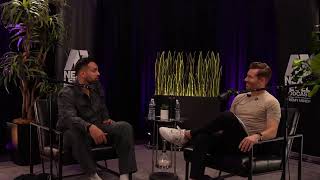
Jeremy Miner interviews insurance sales leader David Carpenter about building a seven-figure career. Carpenter went from waiting tables to nine years in insurance by mastering persuasion, hiring leaders, and generating referrals. He emphasizes that sales requires skill development and coachability, not natural talent.
Chapters
Okay, that's my main one.
This is my main one. Okay. I thought you were pointing me at that one. So I'm going this one. I'm just kidding. I'm just kidding.
All right, this one's you. Cool.
Oh, we're already live. All right, we're live. I didn't know we're live. Jeremy Miner, founder of, well, Seventh Level. There's a company called Seventh Level and Next Level podcast. David Carpenter here, this guy's one of the top five, has one of the top five organizations in all of a o Globe Life, which is one of the top, say, 10 insurance companies in the world, if that, you know, United States in the world. And I want to ask you a lot of questions. We got a lot of questions about sales, persuasion, influence, because that's where everybody follows me. That's why they're clients. And watch. Awesome. I want to ask you this first question because I've met you several times. What's the biggest lie being told to people getting into like insurance sales or selling? Now, what would you say is a big lie that people are told?
I think the biggest lie is that it would be easy. You don't have to work a lot that you can escape from having to get a toll, you know, a lot of no's. I also think too, that people want instant gratification. So I think the biggest thing is that people want to chase numbers or chase money versus chasing a skill set. And I think that if people understand that if you're going to come into insurance, you have to learn persuasion questions.
Yeah. Would you say any type of sales position? You probably want to learn about the profession, how to sell and persuade what causes people to feel like they can get into sales and once they get the sales job, like, then they're going to learn how to sell. Because are there any other professions where you learn the skills once you get the job or maybe you've learned before?
It's a good question. I think that most people don't know where to start. And obviously Seventh Level is a great way to start.
Sure.
And understanding it. And I think jumping into sales is okay. But like you said, you're going to. You're going to bang your head against the wall a lot until you understand the psychology of it. Which questions. Until you get enough reps where things come more natural.
Yeah.
Like through that conscious level versus sub,
like reading from a script or something. Sound like a telemarketer. What do you see from like new salespeople getting your organization? What are the differences between the Ones who maybe have some of that skill level coming in compared to ones that are just like, I'm here to figure it out.
Well, they do a lot better, a lot faster. Yeah, yeah, yeah. I, I think that no matter what sales company you're part of, learning the right skill set will help you in every single company that you're a part of. Sure. It's the same principles, the same framework in every company that you, that you work with. So the people that haven't already acquired those skills.
Yeah.
Especially with the right mentors, they have the right coaching, they have the right, you know, team that supports them, those people are going to do a lot better, a lot faster.
And what caused you to, like, how long ago did you get into, like, sales, life insurance, all that stuff?
Nine years now, but I did network marketing for five years. I served tables for a couple years and I was looking for the right sales.
So you serve tables?
Yeah.
And then you're like, I'm gonna get into network marketing. Or did you go to, like a meeting and somebody, like, got you to enroll? Like, what happened? Tell us more.
Yeah, it was. I was, I did network marketing for five years. Since I was 17. I. I knew that I wasn't going to go play professional sports or sing, so I knew sales was it. And I saw someone who was really successful in the network marketing space, was young, did it for five, five years, but never made it a lot of money. And then the company actually went under. It was a company that was founded here in Scottsdale called Vemma.
Oh, I remember them. Yeah.
Remember, long time ago, still a friend of mine.
Yeah, yeah. Okay.
And so I was looking and I took my time and I was serving tables and eventually found a mentor who had everything I wanted. He had passive income, residual income. He was travel, you know, he could travel the world. He was present father. And he showed me what he had built. He ran like 18 different offices and he's like, hey, I could retire right now. Multimillionaire from all my passive income. And I was like, that's what I want, you know, because a lot of times people get into sales, but they don't have a strategy to build or scale a company outside of that or in the company. Okay. So that was my number one reason to joining insurance was the residual aspect.
Yeah. What caused you to join? You know, I've met some of the owners or partners of your company. Great guys. They flew me out to Seattle and stuff, like, took me out on this 1955, like, wooden yacht that they had redid like amazing experience. What causes. You see a lot of people come to organization like let's say a year or two later after they're in a year or two. What causes, what's the difference between the person that a few years in is still making 40 or 50 grand a year compared to the person who is now making 4 to 500,000 a year? What are maybe two or three differences that you notice?
It's really good. I would say a couple things. Number one is leverage. Like someone who's really excels at a high level. They have, number one, they've got the mentorship. Number two, they've leveraged, they have bookers, they have mentorship. They, they're pouring into themselves, they're developing themselves. They have the right systems in place too. Systems. What I mean by that is they have the right habits. They built this, this machine. Like the top people who sell million make millions of dollars in our industry. They have so much support. So I like when you start into the business, it's 100% you. You're dialing, you're flipping. Sure. But I think what really separates the greatest people is yes, it's their skill set, but they're not, they're okay with spending some money to save time. They're super efficient and dialed in with their, with how they're doing it. But also they're, they're having more presentation.
You said something really brilliant there. They're willing to spend and invest money to save time.
Correct.
Why is like hiring a mentor or somebody who's already done the thing you want to do, how does that save you time compared to the people that just are there trying to figure it out?
Because you, you're going to replace like you can look at a mentor who you're following and you, you already know the future where you're headed. If you do what they do, say what they say, you're going to have exactly what they have over time. So if you're listening to the top 1% in the industry, you're eventually going to be there as long as you're committed to actually doing in the work. But in terms of knowing the right things, you're going to avoid so many just landmines in the business. You can save yourself so much time.
Okay, so you're saying like you don't necessarily want to learn from your mistakes. I think smart people learn from their mistakes. But like you said, the smartest people, the top 1% in any profession, let alone sales, they don't want to learn from their mistakes. They want to learn from other people's mistakes so they don't make the same mistakes themselves. So by default, they're successful 10 times faster because they don't go through the trial and error.
Correct.
Now, what did. How did you see that work out with you when you first got into the industry? Like, what were you doing to get to your level so quickly?
Well, I found out. I found out what the multipliers were. What I mean by multipliers. There's. There's people that do things that add to their income every year, and there's people that do things that multiply their income every year.
Give some examples.
So the multipliers in our business is hiring. The hiring. Hiring leaders. Second one is showing big running referrals. Those are the highest close ratio lead I'm pretty much anywhere is finding, you know, finding a referral and making sure that you're cutting out the things that are not getting the results that you want. And this could be long hours of dialing. So being very intentional with how you're calling, what you're sending out the text and learning how to maintain and scale a team where you're not, you know, you're not losing a lot of people. You. You have to have the right training
because if you recruit all day, but if you're losing 75% of them within two or three months, you're kind of spinning your wheels.
Exactly. So I think that that's what the mentors helped me do. So they're like, hey, watch out for this. Hey, you know, hey, I saw you present. Here's some feedback. Hey, the way you led this call, you came off a little cocky. You know, hey, you're getting a little too far.
Okay?
There's so many things that a mentor that you can learn and just studying. Like the way that my mentor sounds, like I sound like him, the questions that he asked, how he leads through questions, how we make it about someone else's goals rather than our goals, how we lead someone through accountability based on what they want.
These are things you might not know getting in. I always say, what's the biggest problem in sales or really in anything? What's the biggest problem in life? The problem that you don't know you have? Just like he just said, they're like, hey, just, you know, you came across a little bit cocky. The way you presented. You might not ever know that. And you might go five years doing the same thing and turn off a bunch of people. He just saved you five years, literally. That's crazy. Just something small like that. Okay, straight question. Do you believe somebody can succeed in sales or insurance or anything purely on hustle, or do they need like the right opportunity or is it like they need the right skills? What do you, what do you think puts people ahead?
I think everything. I think you need to have, you have to find the right opportunity because that does matter. You got to find something that you can understand because understanding comes certainty comes conviction. So I think if you find the right people that understand the products, they can teach you where you're so focused on solving other people's problems, you can get convicted behind it and work turns into purpose. And if you could show up and you're, you're willing to show up every day and you're, you're mission focused, what do I mean by this? Like, for us, I love that we solve widows problems. I love that we get to take care of orphan kids. I love that we get to make sure that on the worst day of someone's life when they're going through literally hell, they, we, we get to be there for them. We get to help them with that claim. And on the other end, I love helping people make money. I love help solving people's problems where without me, like, what I love is that without the right mentor, they don't need you. Like a great mentor doesn't. You don't need more clients, they need you. And I love being able to pour in and helping someone else shorten that learning curve and watching them break through and get what they want.
You said something really important there that a lot of people might not realize that you said, you said that you have to be passionate about what you do. Why is that so important for you to like, really believe in what you do and have a purpose, like you have to have a purpose in what you do compared to, I'm just here to make money, what's the difference?
Long term, so good. I believe that there's transactional selling and I believe that there's selling to transform or to really help someone. So I buy in on am I actually going to help this person? And when I can truly believe this is where the conviction comes through. I can have a tough conversation with someone. I can ask the right questions where it's easy. I can walk you through this situation that you're about to not you don't even know you're going through. But I can ask you these questions knowing that your money spent here is truly going to help your family. And that's impactful. That's serving rather than just, well, it's
not like they're might not die. It's like just win. There's no if. Like a lot of times we train like different life insurance companies or agents. It's like, well, if something bad happens, I'm like, no, you need to say like when something bad happens. Because it's not a matter of if, it's just when.
My mentor told me on your paper, write the next day.
Yeah.
And frame it that they're dying tomorrow because you're not God and you don't know. Yeah. And the thing about life insurance is they have to qualify based on age. It's health, it's the cheapest it's ever going to be today. And they're the healthiest they're ever going to be today. And if you come into the situation every, every time knowing you don't have that crystal ball, you don't know when someone's going to die, you could be the last conversation they have to protect their family. And if you walk into that conversation, obviously the skills help. But just having that backing and that belief and knowing you're serving that certainty comes through.
Yeah, I love that. Okay, so let's say if somebody's brand new and they ask, I want to build, somebody asked this, I want to build a seven figure income in insurance over the next three to five years. What would you tell them? Step by what? That step by step pathway realistically would be three to five years.
It's really good. There's two aspects of it. Number one, we'll start with just the producer pathway, just selling life insurance. I would get around the top producers in your industry tried to take out the number one producer or work your way up to getting to him. And I would, I would be okay with paying him money, take him out, you know, see what he would charge you. And the big one is apply what he's telling you. You can hear all this stuff, but if you're not going to apply it, none of it matters at all. Right. Knowledge without action is, it's really just
well and how to apply it. A lot of people get knowledge but they don't know how to apply it.
Correct. True. Yeah.
It's a big difference. So how would you say, okay, so they apply the knowledge. What's the step by step process?
Step by step is, number one, get a 10 out of 10 on your presentation. 10 out of 10 is learn the tonality, the right questions, the right pace, understand why it's important, understand the psychology of what you're saying, master the presentation. Number two, try you need to get in as many presentations as possible. This is where leverage comes in. So if I was them again, I'd spend a little money to save a lot of time. So I as I'm starting to make sales, I'm not just going to over leverage my lifestyle. I'm going to take that same money. I'm going to get some bookers. I'm going to get someone to maybe help me fill out the application.
What's a booker? In case you're not like a booker
is someone who sets the appointment or flips them on Getter. Exactly.
Okay.
Because at the end of the day, there's three ways to increase your income in this industry. Number one is sales size. So you got to be able to show big, show a lot of value, be able to learn any pq, ask the right questions. Right, sure. Number two is your close ratio. Okay. And number three is activity. And one of the easiest ones to, to get good at when you're not that good is activity.
Sure.
And obviously you got to go through
the numbers to, to learn and stuff from. Yeah, I agree. 100. Okay. So they get good at that. And how do they build out their team? So we're talking about a three to five year plan. Like, what's the next step? So start going through more reps.
Okay, that's good. Next one is build a brand. People don't, people don't want to get on camera. It's uncomfortable. You know, collaborating. It's a lot of work. Like, you working a lot. I'm working a lot. But building a personal brand is how you build influence. It's your resume.
How would you say they could build a personal brand if they're like selling insurance? Like, what do you, what do you do? Yeah, like what do you do that first? What did you do that first couple years? So I build your brand.
It's good. Good question. I started documenting everything and be vulnerable. I think too many people try to just show the highlights. I think it's so relatable. I think you just did a podcast with someone that was like the funny guy that was dancing and has a rejection.
Oh, Julie.
Juliano Giuliano.
I love that guy.
I mean, just like how authentic, you know, how real that is. Authentic. He has fun.
You know, he's 18. He just graduated high school six months ago.
That's nice.
I'm like, dude, you're, you're. I love what you're doing, man. I love it.
So I would do that, you know, like be okay with showing that and showing the progress and, and, and being able to see, get them eye to eye and have people. When they see your full journey, people know they can do what you've done. You put yourself on a pedestal. You just show up randomly and you're like this seven figure earner and post Lamborghinis or whatever. Like no one can relate to that. So I just showed that and documented all of it.
Okay.
From my first couple sales, letting people know to my first couple agents. And doc, from the, literally the moment nine years ago, I had a kid camera person. People thought I was insane, but I have footage from every single like level of income, every single like downfall. Everything's documented and I just shared the journey.
So it helps people really identify with you because they're like, wow, okay, they see you on a pedestal now, but like maybe seven, eight years ago, you're kind of like just them.
Yeah.
And they're just like, hey, if I, if I do what David tells me to do, if I follow what he's showing me how to do, I can be like him.
Yeah.
I love that. I love that. Okay, so what are some, the couple questions audience want to ask, what are some warning signs that someone might be in the wrong sales environment?
That's good. I would ask, is the people you're around, are they better than you? Do they bring the best out of you? I would ask also, is, are they big thinkers? Do they limit you based on what they think is big and you really know that you have already outgrown that environment? I would also say, is, are they, are people around you? Negative negativity spreads like a wildfire. It's like cancer, it's contagious. I would also say that is your environment constantly getting better and looking to get improvement? Are they up with the trends? Are they looking to integrate AI and new technology? Are they growing? Yeah. I would also say, is how are your leaders getting better? Do you see them improving or is it the same message over and over and over again? Do you see your mentors continuing to pour more into you and you're learning from them consistently?
I love that. That's really good, actually. Okay. Other things you're asking, what percentage of people would you say want success? Actually do what it takes and invest the money to get that success?
Not very much.
What would you say?
It's like maybe 5%.
Why do you feel that is so everybody watching us right now, you guys in the live stream watching us, all of you want to do what? You want to have more success, Right. You wouldn't be Here. Right. Nobody wants to get worse. We all want more success. So what are the blocks that prevent somebody from following through on what they really want?
I think it's their. Their limiting belief. I also think that it's the patterns. Like, it's so hard to break a pattern that you've already been doing your whole life.
Like a behavioral.
Behavioral pattern. Correct. Yeah. And also, there's patterns in the way you. You speak and the way you think. And someone could have a desire to do really, really well, but they fall back into that lazy pattern. Or, you know, hey, like, I start this, have this great idea, Jeremy, I'm going to sign up and to work hard. And then it's like they also get distracted with other things.
Shiny objects.
Shiny objects syndrome. Okay. Like, think about it. I've been here for nine years, and I've had, you know, it took me five years to make my first seven figures, but even when I dipped back down and I've had, you know, people quit on me, go to different companies, all the same stuff. I just stayed planted. And I continue to just persevere and. And take ownership, too. If something, like, was wrong, if I didn't do a good enough job, take that in account. I'm coachable, and I'm like, I want to get better.
You want to get better. So rather than blaming everybody else, which obviously does not help you progress.
No.
You're like, okay, what did I do wrong?
And.
Because there's always two sides to every story, right? Anytime there's, like, people leave your team or something, there's always like, you know, maybe there's stories they've made up in their mind, but there's also probably some stuff that you could have done better as well. And I think a lot of leaders, like you said, are that get this big ego and they think it's everybody else's fault. And typically, those leaders, like, never go anywhere. They just kind of stay. So what. What's. Yeah. What's caused you to be like, I'm not a know it all, or like I always say, committed to master. I'm not a know it all or, like, I've got to learn how to be better. Why do you have that drive? Where does that come from?
The moment you. Because I fell a lot and very hard. I've had swings of like 700 grand. Like, I went from one year, you know, actually it was like 500 from like 1.4 million to 900 grand the next year to 700 to back over a million. And those swings happened because I Felt like I knew it all. And I got very comfortable. I stopped doing the things that got me there and was hanging out with people that were just you. You start to read your own, you know, press clipping and. And you're like, you stopped improving, and you're just. You're just there. And when you're in that place of just, I guess, comfort or. Or. Or you're not growing, you don't have a purpose behind it. You don't have a fire. It's the most deadly place to be.
It's ego. Ego's the biggest killer of dreams, really is. Because. And I. And we even. You even see people who have large egos that don't do anything in life have egos. Right. And maybe they make a hateful comment on one of your stories, like, oh, blah, blah, blah, blah.
Yeah.
You know, why do they do that? Yeah.
Yeah. I think it's. I mean, a lot of it is internal, and it's like insecurities. It's. It's a lot easier to blame other people. It's a lot easier to look down on other people or what, you know, this and that. And judge when you could take that same energy and put it into a skill set.
Yeah.
You take that same energy and work on improving yourself and. And understand everyone's flawed. Everyone makes mistakes. We all fall 100%. But come on, like, it's about getting up, and how quick can you get up and keep going? Yeah.
Psychologically, that's what's called projection. So anytime somebody makes a hateful comment on one of your stories or just, you know, this random stuff, you're like, oh, you know, Jeremy's ears are. Look big, like, dumbo. I'm like, okay, why would they say that? Maybe they do. Who cares? You know? But it's like, why would they say that? Because it's projection. So anytime any. Any of you get a hateful comment by somebody that makes a hateful comment on it, never look at yourself. I always say look at the other person. Because has everything to do with what's going on internally inside them where they feel the need to project on you their insecurities and their angers to make themselves feel better about themselves. It's crazy.
And it helps to, like, understanding that where you don't get offended because it could steal your energy too. Yeah.
If you're ever building a brand, that's the first thing you have to get over is like, you will you always. I think some people have more critics than others. Sometimes if you say, like, crazy things you have more critics. So as a sales training company, we don't say, like, really crazy things. I don't say we have a lot of critics, but you have somebody that will make a hateful comment here and there or whatever. But it's like the first thing you got to get rid of is like, hey, has nothing to do with you. Everything to do with them. Like, hope they have a better day. Like, what's going on over there?
You know, Such a great perspective.
Yeah, I love that. Okay, so how do you. How do you help your team stay committed to following the process and not going off track?
That's such a good question. I. There's a couple, Couple things here. Number one is you have to identify. I look for four things. Number one is, are they coachable? Do they have a good attitude? Are they committed to getting better?
Let's go back to coachable.
Yeah, coachable.
What causes somebody to be coachable? What do you mean by coachable?
They're. They're doing the things that you've asked them to do.
Okay.
And I'll take someone with less talent that's more willing to do all day.
Okay.
And I've seen some of my top, top producers are not the most talented, but they make a lot of money because they're willing to do whatever it takes. And they're, they're.
They'll eventually get, they'll get there if they just follow. Okay. So they're coachable.
Okay.
Good attitude.
Good attitude. Okay.
What's a good attitude?
Good attitude is they, they get hung up on. They understand it's a part of the game. They're quick to getting on to the next one. They have a. They're showing up. For instance, like, I've went over 15, and that's tough. But I looked at that, I looked at my training. I was like, okay, like, you can give up, but I'm going. And like, at the end of this week, we're going to write a lot of business. Like, I don't care. It's going to happen.
Yeah.
So someone that just like, really is, you know, someone that is just. They know that they're going to get through no matter what it is.
Okay. So they're committed.
They're committed. Yeah.
They're committed to following the process because they know if they follow the process, they could. They're going to get this type of result. They just follow through.
They're committed. Yeah. And they have a positive outlook, too. It's. It's like, you really do have to be optimistic where, you know, all, all hell could be breaking loose, but you just already know that you're going to get through. And it's just a season. So someone that really is like some of my top guys, it's like, yeah, I'm all for 15 and then they'll go on a run for 15. For 15.
Yeah.
And. But it's, they're like not, there's no anxiety. They're like, yeah, I'm good, I'm ready to go.
So it's like in the NFL, Tom Brady throws a interception. Like you're, you know, what did I do wrong? Okay, I'm gonna fix that. Go back out and throw a touchdown.
Yeah. And they'll ask for help, they'll send recordings. Another one is like they're. One of the things we do is like we'll have them record their presentation, send it to us and we'll book a time and we'll review it with them. And, and it's pretty obvious, you know, looking back and you can just ask questions along the way. That's a really good thing for them to write down. I think the next one is their, their focus on the multipliers. For us in our business, the multipliers, our conversion of referrals and also personal recruiting, finding people of influence, people that are in insurance. What's one leader worth to you? One leader is worth a thousand top producers and someone with influence that if you take care of that person of influence and you teach them sales, even if they're not amazing, you can build through that person. And what someone that's stagnant in the insurance space, they find one leader, everything changes for them. Sure. And they have to also be ready and prepared to be able to take care of that leader long term for them to stay with them. But that's how you multiply.
How do you find that leader? Like what are some things, attributes they have to have for them to recruit a high level leader?
It's good, I would say leverage until you have a lot. So all my guys bring me on the calls and I'll ask them questions because what's great about insurance is if it's virtual, you provide the leads. You sit there, you, all you have to do is figure out what they want and tell me about your vision for your life. What do you want? Why is that important to you? Get, get the pain points of what they're currently doing versus when they step into the opportunity with you and what your business can provide and how you're going to support them. And the last thing I love to do is take their goal, what they need to make, and work it backwards. And I'll give them the numbers and I'll simplify it to the smallest, where it takes this. Like, once you break it down, they have a goal and they have a vision, and they're willing to do what it takes. I think once it's simple enough, they're confident to make the switch.
Okay, that makes sense. Love network marketing as well. I give you some bunch of my network marketing stories. That was my third industry. I sold it.
Did I ever tell you? No, I didn't know that.
I had a downline of like 450,000 people.
That's crazy.
Google my name. I'm still in the network marketing hall of fame.
That's crazy. I never knew that.
You didn't know that? Well, there you go. There you learn something new.
That's awesome.
All right, so someone's watching this feel stuck in their job. What's the first decisive step they should take to get into a real opportunity? I'm stuck in my job. What do I need to do about. What's the first step to decide what's a good opportunity for me?
I would follow. Like, a good opportunity is following good people. Do they have a great track record? How long have they been there?
I think that's an important thing. Do they have a good track record? What is a good track record? Because a lot of people don't have, like, they have track records. They don't have a track record. They have a track record of six months or a year, which is not a track record. It's like you're. You haven't even ran. Like, you're running a mile race. And you, you just went the first 100 yard dash. That's not a record at all. What do you. What is a record?
I love how you said that. Because the. One of the biggest lies is that if it looks greener on their side, it is.
Yeah.
And it's like that. Oh, if I just, like, I don't have to work on my skill set. I can just go over there. I'm gonna make more money and these guys will spend. I have guys that nine years later, they're not. They've never built momentum, they've never lifted, and they've been in the insurance space for nine years not making anything.
Yikes.
So what I would say, like, you're saying track record is. What is someone. How long have they been making that? Because at one year. How long have they been there? Like, what have they been able to accomplish who have they been able to duplicate? And I personally would look and do a ride out with the leader, go see their sales process and then go ask questions to some of their top people. And if you can do all those and you see that it's simple, you can do it, they're going to help you. You trust them. That's a person of integrity, character, where you know you're gonna be.
Everybody says they have integrity and character though. How do you find out?
Go ask around. I always say, like, look at the fruit. It's like if someone's, you can look at their content and tell someone to really, truly care. Yeah, you know, that's a good point. That genuineness is, is you could pick that up. So go look for that.
I'm gonna ask you some rapid questions, but I maybe expand on them. Okay, I'm gonna, I'm gonna throw a knuckle curveball here. Top three favorite books, Top three favorite books.
That's good. First one, I got to say the Bible, I get all the.
Why the Bible?
There's so many principles in the Bible, so many patterns in the Bible that I've learned. Like my leadership style is. I've, I study Jesus. Like he's so good. And I looked this up. It's funny, Jesus is the biggest NEPQ person there is on the planet.
He was probably.
Yeah, he asked, he was asked 186 questions. He, he asked back 317 questions. He only answered three.
He reframed them.
Yeah, he reframed. He's a great storyteller. Sure.
So then look, just like the apostle John says, if all the books in the world that were written about what he did could be in, you know, it would fill the whole world. So like we hardly know anything about Christ. It's like this. We don't know anything really.
Yeah, very small.
I love that. Okay, so the Bible, obviously, number two.
Number two, I would say the rich dad, poor dad.
That why rich dad, poor dad.
Because it, it helped me understand that having a big business and leveraging the skill and scaling it out is how you create passive income. Passive income creates freedom. So it's cash flowing assets. So I love accumulating cash, but I love flowing, like cash flow. The more money I make, the more I want to leverage and I want to continue to, to scale. And I didn't have that mindset until I read that book. And I think that so many people, they have great skill sets, but they never learn to eventually turn that into passive income.
How to leverage those skill sets.
Leverage those skill sets to create passive.
That's a valid point. Okay, so number three book.
Okay. Third book. Third book, I would say, offend a lot of people.
You offend a lot of people. I know it's always hard. Everybody, somebody asked me, like, what's your favorite book? I'm like, I don't think I have a favorite. I've got like 75 favorites. Yeah, just throw one out. It doesn't matter.
Say 21 irrefutable loss Johnson.
Okay. Why that one?
I love, I love his principles. It's caring, integrity, doing the right thing, asking questions, learning to understand. Before you just jump into conclusion. There's just, it's principle based and I love principles because it's, it's automation. It automatically works. And I can just, I know that if I apply that, it's going to, it's going to be a firm foundation.
Recognize the patterns.
Yeah.
If you understand principles, you recognize patterns and you can go anywhere and do anything. All right. Single rapid fire question. Work, life, balance. True or false.
I think there's seasons. Seasons where you go all in. Like, we have our March Madness month. Like, what's going to be all work. And I already. And it's my girlfriend's goals too.
What's the March Madness month? I got to know.
March Madness is.
I know the basketball.
Yeah, for sure. It's. It's like four times a year, like pretty much every quarter. We're gonna have one month where we'd be blitzing.
Okay.
Everyone's working like basically 12 hour days for like a whole month. But in this month, we turn our annual income into our monthly. And in these months, like, I've tested myself, I've grown, I've seen what I'm capable of. And, and it's good because. Gets you out of your comfort zone. Like if you have that type of push. And it's exciting to see as you elevate throughout the years, how much better those results are, how much more money you can make. So those months are exciting.
Okay, so you got that? Okay, so I like that. Okay, so another rapid fire question. Let's say they're a young guy or young, young girl, you know, 20 to 25. Should they focus on getting married and have a family or should they focus on their career?
That's so tough.
I'm just going to ask you a lot of tough questions.
I would say if you don't already have the person that you really love, go focus on the career. And I was always chasing, like, oh man, I'm gonna be Single forever. Like I'm going on these dates and it was so distracting. I spent so much money, such a waste of time. And then I focused on my career and I took a year of like just no dating. I was locked in and just doing my normal routine. The things that I do, church, gym, meal preps, run normal things like that. I ended up meeting, you know, my current girlfriend now and she was already doing the same things I was doing. We were on the same path, going in the same direction and there was alignment there. It made a lot more sense. So if you don't currently have a girlfriend or, you know, a boyfriend, sure lock in on your career.
Both at the same time.
I think that.
Is it a black or white area
or is it a black or white? I think when the right opportunity like comes, you got to take advantage of it. I think you, you find the right partner, they'll elevate you. But it's understanding you're gonna have to sacrifice. It's relationships are about serving. So it is going to take time and it is, it is a lot of sacrifice when you're just getting started. So my suggestion is if you don't have someone now and you're just getting your career going, go build your base, go all in, Take that time. Because you'll never get it back once you have that relationship.
I love that. What's your biggest asset in life?
My biggest asset in life? I would say it's wisdom. It's past experiences, it's things that I've learned because I can apply this to any company anywhere and you know, God gives me that. But that, that, the wisdom, the experience, the skill sets that I build is the greatest asset that I have.
I like that. I think wisdom is one of the greatest assets that a man or woman can have because it's something that never be taken away from you. Right. So if you have wisdom from a skill level, you can really go do anything. Let's say the life insurance industry disappears tomorrow. Unlikely. Yeah. What would you do next?
Something that I can scale. That'll build some passive, that'll help a lot of people. Something I can really believe in. I'd have to like, really look. It's so crazy, I'm so tunnel vision that it's like nothing else matters. Eventually I'll do some high ticket selling.
Why, why is the, the tunnel vision so important to have to be a top producer? I always call it horse blinders. Like, hey, put your horse blinders on. Like, stop looking at the shiny object syndrome. Yeah, like you got to go forward and become a master of one rather than like a jack of all trades, because they never master anything. Why is it so important to succeed?
Look at the pattern. Go look and ask 10 people that are focused on five different things and just see where they're at.
Yeah. Now some people like, well, Elon Musk is focused on five different things.
Yeah.
But you're. What's the difference there?
What's the difference is he's locked in for so long and. And that's okay. Once something's really up and going, you can dabble into other things, but your main thing will always be your cash cow.
Yeah.
Always be the thing that always makes the money that you can go invest and do other things.
Yeah. He would have focused on PayPal and then made, I don't know, whatever. He made 100 some million dollars or whatever. And then that gave him leverage to be able to hire more people, to be able to focus on other projects. I think a lot of people don't realize that in the beginning and they try to focus on five different things, but they don't have enough funding for those five different things to roll.
Yeah. Yeah. You can't compete with someone who's all in on one thing. Like, you got 100% of focus and you're taking 25 year, 25 here, 25 here. You're never going to get the momentum and get off the ground on the business.
How. How much of your day do you spend learning new skills to help your business move forward? And it can be anything. It could be marketing, sales, it could be operations. Like how. How much time do you put in that per day to get where you're
at every day, all hours. I would say two to three hours a day. And especially in the morning. That's when I'm like diving into my word. I'm diving into personal development, books or audios. I'll listen to some of your podcasts. Like, I want to learn and I don't want to over overkill. So I love that like hour, two hours a day and time where I can actually think on and actually have my own thoughts kind of come to me and you know, and really I can. I call it like a revelation. Right. You catch like a revelation. Like one idea will come in on that time and I'll be able to apply that and go farther in my business.
Why is that, like so critical for them to be able to, like, have that time to learn? And I wouldn't even necessarily say, I think you're just like me. You don't have to like, oh, I have to learn for two hours straight. Then I can do everything else. I might listen to something for 15 minutes while I'm, you know, freaking ironing a suit or something, you know, or whatever. Or like, I'm eating my cereal and I might sit there for five minutes and listen to something. But throughout the day, five minutes here, 10 minutes or 15, then you have an hour. So why is that so critical for them to succeed that they continually feed their mind?
Because you're sharpening your mind. And one person can say one thing that gives you an idea that changes everything for your business. It's not about, like, taking exactly what they're doing all the time, but one. One thing can trigger an idea. And it's happened to me so many times where I've applied it and like, I've seen massive breakthrough.
Give me an example of that.
For instance, listening to. Listening to a call on. On. On someone that was. Had a booking company with his team. And one of our lowest hanging fruits is like, we got to get people more appointments. Right. We want to have more sits because obviously more sits more often. Sure. So one little thing like that where I'm just seeking more information and how can I improve this? Another thing is like this AI technology right now, I'm like dabbling into this and finding some people that we've cut so much time, we've been a lot more accurate because of just being able to listen to certain things. Another thing, too, hopping on this. There's. There's principles that people can apply that we went over that they're not doing in their insurance business that can take them to eight figures, they can help, that could take them to the next.
And I always say, like a book or a podcast, that kind of gives you an overview of what's possible.
Correct.
But obviously you don't have enough time to go into the tactical on a podcast or a book. You know, it's hard to go into the tactical. So it's almost like you're given an overview or like an opportunity of what could be possible. What's beyond just listening to a podcast or reading a book? Because we all know you never master anything from listening to a podcast or reading a book. Never master anything. What's beyond that that you found that's really helped you.
You're not going to get the how to from the podcast. You're going to get why. You're going to get the overview. But the how to is where things really change.
Yeah.
Because that's where you Dive in on actually understanding something and being able to, 1, 2, 3, apply. It's a completely different thing.
Yeah. And knowing how to apply it.
Exactly. And knowing how to play it. Yeah. And also, you know, being familiar with. With your business. What I love is that you have coaches and someone you can ask questions to, because it's also, while you're applying it, you also, you know, you got to be able to go to the source and say how, you know, hey, I'm getting this or I'm not getting this, and be able to figure it out along the way. I think those are so important. You don't get that on a podcast.
What's something that anybody listening on here would not know about you?
Something that no one would know about.
Yeah. Nobody in your team, no one in AO Global would know. Nobody watching you would know right now.
That's a good question. I don't know. I'm pretty transparent.
Got to be something.
Gosh.
But something they wouldn't know. Something that they wouldn't know, wouldn't really know about you. Maybe something you like, Something you do. I don't know.
Okay,
we know you like restaurants in Miami.
Yeah. Love traveling. Love. I love speaking, I think. All right. Something is like, you know, I'm doing a ted. TED Talks. Tedx talks here.
Okay.
I want to dabble.
What are you going to do about it?
Probably. Probably dive into some leadership.
Okay.
Yeah, I like that. Some leadership.
Okay. So you. You want to get into, like, some public speaking or you like to speak and so you want to develop that.
Yeah, I want to develop it. I'm going to do some public speaking. I've done podcasts and things like that. Another one, too, is we're launching our podcast that's coming out. No one really knows about that.
All right, let's go. We'll announce that. So what's caused you to feel like, hey, I want to get into public speaking? That's a whole different dynamic.
That's like, now. That's. Now we're tapping into passion, and that's natural. I love to do it. And when I. It's different when you're here. Yeah. When I'm on a stage, something like, comes out of me that's just completely different. And I just. And I'm in the zone. It's like this different flow. I love it. You just feel so alive. And I love watching transformation. I love the way the client, like, people in the crowd eat it up and they're engaged. And I love moving a crowd, moving the emotion, storytelling. And you Know, I had, you know, I've had dreams of it. It's a passion of mine, so insurance has helped me be able to do that.
What's like, one of the. The craziest stories about a lead that you were on the phone with? Like, what's one of the craziest stories about a sale you made or lead you talked to? We all have those.
I sat with an older lady and got her daughter as a referral, called the daughter. She cussed me out for, like, probably 12, 13.
How do you cut somebody out for 12 minutes?
They're just like, you know, every. Every time I would try to talk, I let her vent, let her bent. If she just cut me off and it go off. And then eventually I was like, hey, I'm, you know, I'm just. I understand where you're coming from. I want to let you know, like, hey, I've been doing. Your mom's been a policyholder for so many years. Like, she just referred you in and I told her how busy we are, but we want to get these out to you. Didn't mean to offend you. I'm so sorry about all the experiences you and by the end of it, ended up sitting with her and selling her. But it was such a long process.
Yeah.
And I. I think it's like. Like you said, even though someone's offended when you have that level of understanding where you take yourself out of the. You know, you just get where they're coming from.
Yeah.
Seeing eye to eye with her allowed her to kind of relax, drop her guards.
Just disarming them.
Disarming.
Calming their nervous system.
Correct.
Yeah.
Able to book it and sell her and. And turn into more referrals with. Was great.
I love that, brother. All right, so where can they learn more about what you do? Like, where would they go to learn more about. Maybe. Maybe they're looking at getting into life insurance or where would they. Where would they go to learn about what you do?
I have a website they can go to David Carpenter.com and Instagram. That's where I'm like, mostly on. I'm launching YouTube. I'm launching other areas, but you're gonna. You're gonna be able to get most of the information from Instagram. You can message me. I'll get back to you. And the website is the easiest way if you want to apply to the team, Go on there. And there's some questionnaires to see if there is a. Is the right fit. We are looking for the right alignment.
I like that. All Right. A couple rapid. More rapid fire questions that just came into my brain. Favorite movie? Oh, man, don't tell me you never watch any movies or tv. No, everybody's like, I never watch movies or tv. Stop. What's your favorite movie?
Oh, let's talk.
What. Or favorite type of.
I could say, yeah, comedies. I love. I love laughing. Yeah.
Really?
Yeah, I love. I love laughing. Rom coms are awesome. My girlfriend's, like, super into rom coms, so comedy.
I love that. Okay, all right, good.
Relax. Have fun.
Favorite type of music?
Every type of music, man. Like, this point in my life, it's worship.
This point. Okay, so. But the gospel music.
Yeah, like, the gospel, like, worship. It's like, it puts. Puts me in a good state of being. Like, it's like, calms me down. I would say, like, maybe when we're going out, some reggaeton. Like, I got a Latina girlfriend that loves to dance, so that's valid. Yeah.
Okay.
Some music.
Best city to live in. Miami or Scottsdale?
I'd say Miami.
Oh, they're Miami guy now. He's from Scottsdale. Moved to Miami. All right, brother. All right, so everybody make sure you go to his website, check out David. Hey, thanks for being on the podcast with us. Really valuable information that you shared with everybody about having the right mindset. It's mindset, it's skill set. It's how to apply that skill set. And as long as you're committed, you know, we always talk about committed to master. As long as you're committed to mastery, as you are, it's really freaking hard to fail. That's what we say. Like, if you're committed to mastery and you learn the right skills, you learn how to apply them, you have the right mindset, you, like, almost have to try really hard to fail at that point, so.
Never seen anyone not win.
I know. Very, very hard to fail at that point. All right, everybody, we love you. Until the next time. Jeremy Miner, we'll see you then.
And cutting all around.










