Stop Sending More Info To Prospects (Do This Instead!)
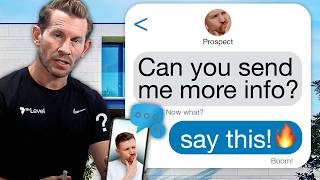
Jeremy teaches sellers how to respond when prospects ask for more information. Instead of sending materials, use situation questions to qualify them, repeat back their problems, and secure a next meeting. Tonal neutrality builds trust early.
Chapters
Foreign.
How many sales do you lose? When the prospect says, can you send me more information and I'll get back to you if I'm interested, you type out the information, you email it. Whatever you do, you send it, and lo and behold, you try following up all the time. Magically, most of them don't get back to you. Now, if that's you, you want to pay attention to what I'm about to show you, because I'm going to help you prevent this from ever happening to you again. The first thing that you want to do is when they give this reaction, you want to disarm them. You've got to get them to let their guard down. So I'm show you what to say, and then if you'd like, I will break down why you're saying this. So my first job is to do what? Like I said, disarm the prospect. So I just agree? Oh, yeah, for sure. Now, just so I can send you the right information, what are you hoping to actually see now? See how I'm putting it back into their court. Okay, so I'm going to agree. Help skip the guard down. All right, and then this makes sense why I'm asking. Just so I can send you the right information, what are you hoping to see? Now, why am I saying what are you hoping to see? Because I'm showing you how to get the prospect to start qualifying to you rather than you qualifying to them. Because who has the problems, you or the prospect? The prospect does, not you. Who has a solution to solve it? You do. So you don't want to qualify to them. I'm going to train you how to flip that frame where they now qualify to you. Now you're going to let them respond. Okay, you're going to get different responses depending on what you sell, obviously to your prospects. Well, I'm hoping to see XYZ or I'm hoping to see blah, blah, blah, blah, blah. Okay, now I'm just going to agree. Now, this will be tweaked based off what they say here. But rule number one, if you just agree to send out information, what's the likelihood they're going to get back to you? Like 1% chance, if that. So don't do that. You know it doesn't work. You also can't argue with them because you know that doesn't work. So it's got to make sense to them in their mind why you need to know more details to know what information to send. Okay, so I'm going to go, oh, that. That makes Sense. Now it might make more sense for you before I send all that over, if I knew a little bit more about what you're doing with xyz because you might not need us. Like who do you actually use for? And I go right into the next question. Okay, now this has to make sense. Now it might make more sense. Notice I'm neutral because how much trust or credibility do you have in the first minute of a conversation? Not much. Right. Gotta get the guard down. Now it might make more sense for you. Notice I said for you, not it might make more sense for me. You want to say for you, because we're focused on them. We want them to feel like we're there to help them, which you are. That's what selling is. Now it might make more sense for you before I send all that over, if I knew a bit more about who you use or it depends on what you sell, what you do for or how you do this. And then at the end, notice what I did just to see if we can do anything for you. Because maybe you're better off staying with who you already have. Now you're only going to say maybe you're better off staying with you already have. If you're selling something where you know that company or that consumer already would have something that does what your thing does, but maybe your thing does better. You're not going to say that if you don't know if they have a thing. It depends on what you sell there. Okay. It's going to be different for different industries. I could say just to see if we could do anything for you, because you might not even need us. Who do you actually use for? And then you go into the next question. Now you're probably saying, jeremy, why would you ever say because you might not even need us. Here's the reason why and here's why it's so crucial for you to master this. What is your first job as a salesperson? To get the prospect open up to disarm the prospect. That is your first job. If you can't disarm them in the guards up, what's the likelihood they're going to open up to you? They're not. And more than likely they're not going to buy. And I want to ask you this. When you first start talking to that prospect, prospect, do you know you can help them? Yeah, pretty much. You know, you can probably help anybody. But the question is, does the prospect really know you can help them? No, they don't know you from. They don't know who you are, they don't know you can help them. How much trust and credibility do you have in that first 30 seconds? First minute, two minutes? Not much. Okay. So my first job is I got to get them to let their guard down. And after I do that, after I build that gap from where they are to where they want to be, and they feel that pain, and they feel that pain, that fear of future pain, then I can get more assumptive in my wording. In the beginning, I'm more neutral to let the guard down. So because it might not even make sense. It might not even. Because you might not even need us. Now, you don't pause there. I see a lot of people will pause there, like clients in our virtual training in, like, our training courses, okay. Where we get into the details and industry specifics of this. Sometimes they'll forget and they'll pause and they'll be like, well, I'm looking for this. You don't pause because you might not even need. It's like, who do you actually use for? Or what do you have for? And depending on what you sell is dependent on what you ask next. This is called a situation question. Now, if by chance they do something like this, you say that, and they're like, well, I just don't have a. I don't have a lot of time. Can you just email it over to me? Now what do you want to do? I'm going to show you this. This is called selling the exit. Right? So if they say I don't have a lot of time. Yeah, I'm so sorry, I don't have a lot of time. Can you call back later? Oh, yeah. And just so you know, I've only got a few minutes before my next appointment, and it might not even make sense for you to even call me back later. Who do you guys actually use for? And you go right back into it. See how I'm doing that? So I'm selling exit. I'm just agreeing, like, oh, yeah. And just so you know, I've only got a few minutes before my next appointment. Now, I will tell you after you start really getting good at this and you start reframing your questions like we teach in our courses, okay? And you start mastering tonality. Guess what happens a few minutes later? They forget about the time because now they're emotionally involved. Okay? See how that works? Now, there could be a few differences. Now, at the end of this, after I start going through the questions, like, for example, who do you guys use for? And now I'm Getting into that conversation, okay, if I'm selling to consumers, I'm never really going to need to email them information because usually it's a one conversation close. Whether it's on the phone, whether it's virtually, whether it's in person, on the doors, whatever you sell most of the time, not all the time. That's not a straight jacket interpretation. Depends on your industry. If I'm in more of a B2B environment, I'm selling to companies or organizations, especially if they're big organizations like enterprise or mid level. There's a little bit of a sales cycle. There could be anywhere from weeks to a few months to a year. It just depends on what you sell. So at that point I will have that first conversation and I will need to book a next appointment. You never send out information. Rule number one, if you're selling to companies, never send out information without what a next step appointment on your calendar. Because you already know when you do that, they don't get back to you 99% of the time. So you already know that. So don't do what doesn't already work. That doesn't work. Okay, so you book that next appointment and if you have to still send out details, be careful what you send. Okay, Just depends on that conversation. And then at the end of that, after you book that appointment, then you can say something like this, okay, so what I can do is I can get together on, you know, putting together those details for if you'd like. Now let's say that after our next appointment and you guys going through the details, you and your team feel like, hey, maybe, you know, this company can help us solve XYZ problems so that we can ABC result. What would you want the next step to be or what would you see as the next step for you guys? Now here's why you ask that question. Now, like I said, you typically don't ask this to consumers because you're typically closing. In a one conversation close. If you sold like luxury pools though, and you have to have a first call conversation discovery, you have to have a second call, they come into the design center for the design and a third call proposal, it's a little bit different. So once again, it depends on what you sell. But in a B2B situation, at the end of that notice what I'm doing here, we can help you solve. You don't say your problems. That's too generic. You actually repeat back what their problems were that you got out of them so that you can. And then you repeat back the actual end result they want. So let's say if you're selling for a marketing agency, you could plug this in. That we can help you solve, like getting, like higher quality leads and more volume. So you guys are able to scale to $2 million a month. If that's what they said, that their leads are no good. They don't get enough leads and they want to scale to $2 million a month. I'm just repeating those things back in now. It's more customized, it's more relatable. It feels real rather than using generic terms. And then at the end of that, what would you see as the next step? At that point, if they tell you anything, but we would definitely do business with you. If they say, well, we then have to see if we have the budget or, well, we then have to talk with XYZ advisor that's on the board. We do that before making decisions. At that point, it tells you you have a lot more work to. Are you with me on this? Okay, now you've probably got questions on how to tie this in for your industry or what do you do if they. If they don't open up here? Because there's other things you're going to have to do. You're going to have to learn how to loop around and ask different questions and reframe them for what you sell. So you probably have questions. Text me 480-637-2944. We'll get back with you with some answers. I hope that helped you commit to master. Hit the subscribe button and I'll see you in the next training.










