The 3 Phrases That Ruin Your Sale (Stop Saying Them)
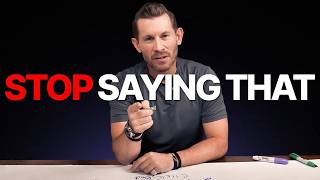
A sales training video transcript in which the speaker identifies three common phrases salespeople use that harm their chances of closing deals. The presenter labels these as “trigger words,” explains why each phrase creates resistance or lowers perceived status, and offers alternative phrasing and examples to break predictable patterns.
Chapters
Today I'm going to go over three words, three phrases that most salespeople use that cost them deals, and they don't even know that it's costing the deals. Now, why do I say this is important for you? Because I had to learn this the hard way. When I first got into sales, these were common words that I noticed salespeople say around me all the time. And I just kind of started picking up those behaviors and those habits. And little did I realize that it was actually causing prospects to stay surface level, emotionally close up and give you vague, generalized surface level answers. I want to prevent that from happening to you. All right, so let's cover the three phrases, phrases you might not even be aware that you've been using. These. It's going to shock a lot of you. So three phrases.
Or words.
You want to stay away from. Okay. Number one, this is a big one. I see a lot of salespeople use this just to be honest.
With you. Okay, now, we might not think this is anything wrong. We just kind of say it. But subconsciously, what does it imply that you're not always honest. Because if you're saying, well, hey, honestly, I would do this. So it implies that you're not what? Always honest. That is something that is seated in your prospect's subconscious part of their mind. You don't want them to think that you're not always honest. Okay. So instead you can use a different word. I'll show you kind of how to replace these words. And by the way, I actually call these. These are a term that I came up with a long time ago. My first sales job, selling door to door home security systems. Trigger. Write these down. Trigger words. These are trigger words. We want to stay away from the trigger words. We don't want to trigger sales resistance. Okay, so the second phrase, the second.
Words I see a lot of salespeople use, I was once guilty of this myself until I learned that these are trigger words. Is anytime that you're following up with a prospect, when you get them on the phone or you email them or text them, what are some predictable words that most prospects are used to? Salespeople that say, hey, just following up. Following up, just checking in, or just circling back. Now think about every time you got an email from somebody that tried to sell you something or a text message from somebody trying to say something, they said, hey, John, I'm just checking in, or, hey, John, I'm just circling back. Instantly, what was triggered in your mind? Salesperson trying to sell me something. Now, why does that happen in your brain because these are predictable words that everybody is used to salespeople using. And you probably don't want them to associate you with other salespeople that have tried to sell them something. Right. Because how are salespeople viewed generally in society? Would you say they're viewed as high status or more lower status? Lower status. Right? Now that shouldn't be that way. We should be high status because without anything being sold, there's no economy. Right. So we should all be high status. Right. But these are words that they're used to. So instead of saying following up or just checking in, I can just kind of change that verbiage. Actually, I want to go back. Let me show you something here. Okay, so instead of saying just being honest with you, I can just reword it to something like this. Let me use this marker. I can say, well, John, just so you're aware. So I could say just so you're aware.
Now for all you spelling bee nazis, if I do something out of place, don't worry, you know, just so you're. Just so you're aware or just so you know. Yeah, just so you know, the way that they told me it works is blah, blah, blah, blah. So it means the same thing. But you're not implying that you're not always honest. That should just be a given that you're honest. Right? You don't want to say that. Okay, so instead of saying following up or just checking in or circling back, I can change it around a little bit. I can simply say, let's say if I called the prospect, okay. Like it's a, it's somebody didn't buy like four or five months ago. Let's say if I just make up something. Let's say if you sold for a marketing agency and you found out that their main problem was they wanted to get higher quality leads so they could scale their business, that was their problem. Okay. So I might call back and start in the conversation something like this. Okay. Now we would change this, tweak it a little bit, depending on what you sell. I might say, John, it's James, James Miller. I think we, I want to say we talked, what was it, three, four months ago about you guys were looking at like getting maybe a higher quality lead so you guys could scale the company. And I think we were supposed to have a conversation, but for some reason it got rescheduled. Did you guys give up on getting a higher quality lead to scale or what actually happened? So I'm just changing the verbiage. Alright, so All I'm doing there is I'm breaking the pattern, alright? Human beings recognize patterns. Our brain is built to recognize patterns. And when you sound like everybody else and you use the same verbiage when your tonality sounds like everybody else, your prospect picks up on that. And you don't want to sound like every other salesperson has ever tried to sell them anything. Okay, number three, let's go over here. This is important here. This is a big mistake that a lot of salespeople use. And Mama always taught us that we need to be polite to strangers. But in a business setting, this actually lowers your status if you're late to an appointment. So let's say you're late to a zoom meeting with a prospect or a company that you're selling to, or you're late to getting to. Like, if you're selling at a homeowner's house or in a business office and you're late, what do most salespeople say? They say, I'm so sorry.
So sorry.
That I'm late. Now, we might think like, oh, well, what's wrong with this? I'm just being polite. I'm just apologizing. However, do you feel like when you say, I'm sorry I'm late, do you feel like that really raises your status in their mind as an expert or maybe lowers your status? I would say probably lowers your status. I had to learn this the hard way, okay? So instead I can relanguage that to something like this. What if I said this? What if I said, hey, I appreciate your patience. I'm just a bit behind schedule today. I was just with the client. Okay? See the difference there? Now it kind of raises my status. I appreciate your patience. I'm a little bit behind schedule. Sounds better than I'm sorry I'm late. Because when you say something like, I'm sorry I'm late, basically what you're doing, you might not be aware of this yet, is you're actually qualifying to that prospect, okay? Now, why is it important for you not to qualify to a prospect? Because who has the problems? Does the prospect have the problems or do you have the problems? The prospect is a prospect has the problems, they have the emotional needs they solved. Whatever you sell, who has a solution to solve those? You do. So you want to learn how to relanguage what you're doing and get the prospect to start coming in qualifying to you because you're the one that can actually solve their problems. Now, you're probably wondering like, hey, are there other words or phrases that I might be saying right now that are costing me deals. And if you're wondering that, that's smart of you to think, because there are literally hundreds of other phrases and words that most salespeople do not realize cause the prospect to go surface level. And you might notice when you ask questions that you thought were good and maybe they're good questions, do you notice that a lot of times you get vague, generalized surface level answers? Well, there's a reason for that. And there's certain trigger words that you're still using. Not your fault somebody taught you those. Or maybe they're just words out of your mouth that you never really thought about it from a psychology point of view and that we want to eliminate. So you've got questions, we've got answers. That's why salespeople and companies come to us from every industry. So just text me if you need help on that. I'm going to give you our number, 480-637-2944. So just text us and either myself or one of our sales trainers will answer some of your questions. I hope that helped you today. And you want to learn how to sell more. You want to master this thing we call selling, which I believe you are. That's why you watch me. Make sure you hit the subscribe button. Just share this with people that you love. Don't share with your competitors. You don't want them learning these type of skills. Hope that helps.










