You're Losing Cold Calls in Less Than 30 Seconds (What Top Earners Do Instead)
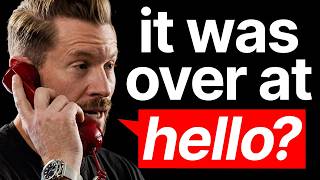
Jeremy Miner teaches how to keep prospects engaged past 30 seconds by using pattern interrupts and the NEPQ framework instead of typical sales scripts. He shows how tone, curiosity-driving openers like "I'm holding a copy of your," and "selling the exit" lower a prospect's natural resistance. Includes scripts for SaaS, medical AI, and recruitment.
Chapters
I'm gonna show you exactly what top 1% of salespeople are doing right now in 2026 to crush cold calling even in the first 30 seconds. Now, what I'm gonna show you works in every industry, and by the end, you're gonna be able to use it for what you sell as well. So you wanna pay attention to this training. Most salespeople lose a sale before they even finish the first few sentences of that conversation. How you came across, the tone triggers what's called fight or flight mode in that prospect's brain. The prospect's guard goes up. We're not interested, we already have somebody, and it's over at hello. Look, I've spent the last 25 years studying the behavioral science behind why people decide to trust, buy, and commit at the highest level. And once I show you how, selling will never be the same for you in a good way. Let's go ahead and jump in. So here's what happens. Prospect answers the phone. Within the first 3 or 4 seconds, the subconscious part of the brain is already looking for patterns. Now, why is that? The brain is asking one question: Is this person someone I can trust? Am I safe? If the answer is yes, it triggers curiosity and they start to open up to the conversation. If the answer is no, then the sale is pretty much over. It's dead. Most salespeople have been told that selling is just a numbers game. Call as many people as you can, you know, get all those nos to get that one yes. And look, that sucks. Like, nobody wants to get rejected 99% of the time, but nobody tells a surgeon just to do more surgeries and eventually one will work out, right? They have to get the skill right. Now, why is this so critical for you to understand? The rep who talks to, let's say, 10 prospects that has the right framework, the right skill level, is going to outperform the rep who talks 50 prospects that doesn't have the skill level every single day. All right, come over here with me. Let's go over the numbers game strategy most people have been taught. There's typically two ways. Number one, it's the standard, hi, my name is, I'm with XYZ company, and the reason why I called was, and then we try to say as much as we can to get as much words out of our mouth information and hope and pray the prospect is going to be interested. As you know, most people are like, we already have somebody for that. I'm not interested. Is this a cold call? And it's pretty much over 99% of the time with this approach. Lots of rejection. You don't want to stay here. Or this is— I've heard this, you know, probably in the last 5 or 6 years. This works a little bit better. The answer is like, hey, John. Hey, full disclosure, my name is blank. This is a cold call. If you can give me 2 minutes of your time, I'm going to go over how we can do XYZ, and then you can judge if you want to keep talking. Fair enough? Or something like that. Now, I would say this works a little bit better. But you're still going to get rejected most of the time. They might even hear you. Typically, they'll hear this out maybe 30 seconds or maybe a minute or two. And at the end, when you go through what you do, they just say, I'm not interested, or we already have somebody for that. The question is, why do they not work? Okay. When this happens, your prospect's brain recognizes patterns just like we all do. Our brain keeps us safe. So if, you know, if we hear something in the jungle back there, like a tiger lurking around, we hear a noise, we immediately react to that. In our day and age, What is not safe? Salespeople trying to manipulate, sell something to us that maybe we don't want. Does society in general view salespeople as like high status or more low status? Low status, right? So when we hear somebody come across, hi, my name is, I'm with XYZ company, the reason why I called was, instantly our guard goes up. We've heard that or some type of that before, and instantly we're like, salesperson, danger, guard goes up. So we want to eliminate that. That's just a defensive mechanism that we are triggering by what we're saying and how we're saying it. I'm going to show you different word tracks to use to stop that from happening to you. Okay, if our tone sounds like a salesperson, especially if it's monotone— Hi, is this John? Hey John, it's Jeremy Miller with XYZ Company. Hey, the reason why I called you was— the brain instantly guard up. Monotone sounds like a telemarketer. Or if I'm way too excited when I call— I don't mean be boring, there's a middle ground— or if I come across more like timid or nervous or anxious, it triggers the brain to get their guard up. Okay, throw out objections. We don't want that. We want to show you a different way. So how do we learn how to trigger curiosity even in that first 5, let's say 10, 15 seconds in the prospect's mind that causes them to want to engage with us? That is the million-dollar question. This is called a pattern interrupt. I'm going to show you different pattern interrupts. I'm going to show you generic pattern interrupts, and I'm going to show you different industry-specific ones to help you craft one for what you sell as well. So you want to pay attention to this. The pattern interrupt, and how do we use what's called a familiar tone. And sometimes, depending on the context, we might even use a little bit of a confused tone. Now, when I say confused tone, I don't mean like, you know, you're 107 and you got dementia and you're like, oh, I don't know how it works. Confused in like you're not quite sure if they're the right person you should be talking to. That little bit of that confused tone. I'm going to show you examples of that as well. So I want you to write this down. This is called an NEPQ problem statement. Now, if you're not one of our clients yet, NEPQ stands for neuro-emotional persuasion question. It's the methodology I developed in my years going to to become a psychologist and in the 17 years as a salesperson before I started this company. So the prospect answers and you're immediately going to go into it. Mary, hey, it's Jeremy. Jeremy Miner. I'm holding a copy of your blank. I was wondering if you could possibly help me out for a moment. Now, one thing I will show you that we train our clients, but when you cold call, quite literally, you can hold a copy of something. And when you say, I'm holding a copy of your blank, I'm crinkling the papers. Now, why does this work? Because the prospect hears crinkling of papers. And when you say, I'm holding a copy of blank, let's say, I'm holding a copy of the 2025 regulations for XYZ. I was wondering if you could possibly help me out for a moment. I'm holding a copy of your property tax records of the house there on Willow Lane. I was wondering if you could help me out for a second. It just triggers massive curiosity. They hear the papers, so it sounds like what you're saying is real. When I was on the floor as a salesperson like you, I heard so many reps that would just go through the motion calling lead after lead. Hi, is this blank? Hey, I'm with XYZ. And it just sounded monotone like telemarketers. And they wondered why 7 out of 10 of everybody I talked to was booking to the next step call where they were getting maybe 1 out of like 50 they talked to. There's a big difference in that. Okay, so I'm going to write into it. Hey, it's Jeremy, Jeremy Minor. I'm holding a copy. Now, why do I have these periods here? That's called a verbal pause. I want you to write that down. This is a familiar tone. So I want you to write down familiar tone. Now, why do you want to use a familiar tone when you're cold calling? If you ever got a call from somebody like, hey, it's Bill, Bill Smith, how are you? What do you do? I'm good, how are you? And then your brain, as they start talking, does what? Who's Bill Smith? How do I know Bill Smith? He sounds familiar. You never say, who is this? Because their tone, their voice sounds like they already know you. So your brain is analyzing. It gives you more time. It's a pattern interrupt. It's breaking the pattern of the prospect's brain, where it's like, who's Bill Smith? Did I meet Bill Smith at a networking event? Did I meet him at a dinner? Who is this person? And you just go with it. You've probably done that before yourself. Okay. And so I'm holding a copy of your blank, and I was wondering if you could possibly help me out for a moment. Now, let me show you this. These are pattern interrupts here. Okay. So I could say I'm holding a copy of your blank. Okay. I could say, let's say if I'm a marketing agency, Yeah, I'm on your website looking at blank, and I was wondering if you could possibly help me out for a moment. Okay. Or I'm holding a copy of the new 2026 XYZ law on blank. It's got to be something that has to do with what you're calling or something that you solve for them. Okay. Or I was looking at your blank and I was wondering if you could help me out for a second. Okay. That triggers curiosity. It triggers engagement. Now, the important thing here is when I'm doing this, yeah, I'm holding a copy of your I'm calling about your 2026 property taxes on your XYZ Willow Lane home. I was wondering if you could possibly help me out for a moment. See how I'm a little bit confused? I'm doing that because I want to trigger curiosity. Now, here's my question. Is that something you're doing to people, or is that something you're doing for people? Well, you're doing that for people because if you can't get their guard down in that first 10 or 15 seconds, they don't open up, they get rid of you, and they don't buy what you're offering, you can't solve any of their potential problems. So I have to learn how to disarm them to get them to open up. If I can't, I offer them no value. So you're always doing that for them. Okay, selling something for them, not to them. Now, right when they do that, most of the time, like especially if you use this familiar tone, yeah, it's Jeremy. Jeremy Minor? I'm calling— See, see that little verbal pause? It's Jeremy. Jeremy, Jeremy Minor? Like, they should know me. Okay. Now, right when that happens, this is really critical for you. Okay? You have to have certainty in your voice. I see a lot of reps try to do this, especially if they're not clients, because they don't understand the ins and outs of this. They don't know how to roleplay with this. They're not trained how to really apply it. They just hear it on a YouTube video like this and they think they're going to master it. So you want to be able to have certainty in your tone, like you are the expert. You're there to help them. A lot of reps sound really uncertain. Like timid and nervous, and the prospect's like spidey senses go up and it's over. So right when that happens, they're like, sure, how can I help you? Or they'll say, sure, who is this again? Yeah, it's Jeremy. And I'm not even sure if it makes sense for us to talk. Now, there's different openers here I can do. One thing I want to do right here, and I want you to write this down, this is called selling the exit. Now, why is it important for you to learn this? Because what's my first job when I cold call? To get the guard down. If the guard's up, it's over. So I want to sell the exit. Well, I'm not even sure if it makes sense for us to talk. See how I'm kind of pushing them away? Or I could use this frame here. Well, I'm not even sure if you're the right person I should be talking to. I called to see who would be responsible in your company for looking at any possible hidden gaps in your blank that could be causing the company to blank. Hidden gaps in what? I'm going to show you what to plug in. Usually the hidden gaps. Let's say if I'm a marketing agent, hidden gaps in your, you know, lead generation or hidden gaps in the quality of your leads that could be causing the company to lose sales they could be making. See, I'm going to repeat back the consequence, the negative thing that I can solve for them. Now, why do I do that? Because that triggers more curiosity. Are you with me on this? Okay, this is very important. Then at the end, I'm going to simply say, who should I be talking to about that? So let me go through it with you again, okay? Yeah, I'm not even sure if you're the right person I should be talking to. I called to see who would be responsible in your company at looking at any possible hidden gaps, like in your, like the way you guys are running your cards that could be causing you to overpay every month. Who should I be talking to about that? See how I'm doing that? So I'm focused on a problem and the consequence of a problem that most most people I'm talking to— this is key, right? I'm going to come over here— that most people I'm talking to can associate with. They know about this problem, they talk about these issues. I always want to plug that right in. Are you getting that? Okay, very important here. Let me give you a few examples of how this might look, okay? And once again, pay attention to the framework, not the industry stuff. I'm just going to give you 3 or 4 industry-specific examples. They might not be yours, but if you pay attention to the framework, you'll be able to plug in what you sell in this. Now, if you sell door-to-door, there are some tweaks to this. This is mainly for the phone. There are some tweaks if you go into person and if you go door-to-door. I'm going to try to get to those in this video, if not another video. Okay, so write when they answer. Let's say if I sold some type of software, I'm in SaaS and it has to do with AI. I pulled this example from one of our big companies that we train, and what they do is they have an AI device that basically dictates all the doctor's notes for them. Automatically. Now, why is that good? Because typically most doctors have to spend an hour and a half to 2 hours every day manually dictating their notes. That means they can't see as many patients. Hospital makes less money. Okay, maybe the dictated notes weren't accurate, and maybe they got prescribed the wrong medication, and something happened with the patient. To prevent that, AI does all that for them. So right when they answer, same format. Hey Mary, it's, it's Jeremy. Jeremy Minor. I'm looking at a copy of your online reviews from some of your previous And I was wondering if you could possibly help me out for a moment. See how I did that? I'm looking at a copy of your online reviews from some of your previous doctors. Now, why would I say that here? Because maybe some of those doctors complained that the way they were dictating notes took too long, whatever, okay? So I'm instantly triggering curiosity from that prospect. See how that works? Then I go right in here. Uh, sure. What's this all about? Who is this? Well, and I'm not even sure who I should be talking to. I called to see who would be the person responsible for the, like, helping the doctors, like, maybe reduce some of their time they're having to dictate their notes that might be preventing them from seeing more patients, getting more billable hours. Who should I be talking to about that? See how I did that? It is really hard for a prospect to not be curious about what? Who's being responsible for this, okay, that is preventing them from seeing more patients and getting more billable hours? If you're a hospital, you want more billable hours, meaning you want to be able to see more patients, you make more money. Does that make sense to you? Okay, so take what you sell and look what we're doing here. Now, I called to see who would be the person responsible. Why am I using the word responsible? It's really hard for them to say, oh yeah, I'm not responsible, that's Bill over in XYZ department. Really hard for them to do that. Okay, that's why I'm using that word. Then I'm gonna go right into it conversationally. Responsible for helping the doctors like maybe reduce some of their time they're having to dictate notes that might be, and I'm gonna repeat back the negative consequence. Notice I'm neutral, I'm not assumptive yet, okay? That might be preventing them from seeing more patients where the hospital can get more bill blobs. Who should I be talking to about that? Instantly triggers curiosity, okay? Let's go to a few others here. Let's say that you are an investor and you're calling distressed properties. Okay. It might look something like this. Once again, just pay attention to the framework so you can plug in what you sell to this framework here. So right when they answer, same thing. Yes, Sally. Hey, it's James. James Miller. I'm holding a copy of your property taxes there on your little lane home there in Savannah. And I was wondering if you could possibly help me out for a moment. It is really, really hard for the process of not interested or we already have somebody for it. They can't. Now, why can't they do that? Okay. Because in this industry, you can actually print off property tax records, like county tax records of a home. So they're going to be like, oh, how did you get my tax records? Or who's this all about? They don't know if you're the IRS. They don't know who you are. So instantly I'm triggering curiosity. That is an example of a pattern interrupt. Okay, see how I'm interrupting the pattern of what their brain is looking for? They don't even know the brain is doing it. It just automatically does it. That's how it works. Okay, they're gonna be like, yeah, who is this again? Or how do you mean you got my property techers? And then instantly, what am I going to do? Remember we talked about it? We're going to sell the exit. Okay, now why do we sell the exit? Because we have to get the prospect's card down. So if the guard's up guard up, hard to get them to open up. Guard down, very easy, as you know. Well, and I'm not even sure if it makes sense for us to talk. I represent a group of buyers and they're purchasing, I want to say, let's say it's like 5 or 6 different properties in that 4-block area where your Savannah property's at. And after they had me kind of look at some of the specs of your property, they had me call you to see if you'd be against maybe having a brief conversation about getting an offer on the home. Would you be opposed to having a brief conversation around that? Really hard for them to say, yes, I'm opposed, or yes, I'd be against that. Very, very hard. Now, I'm going to break this down for you, why this works. Here's the exit. Well, I'm not even sure if it makes sense for us to talk yet. See how I'm pushing them away? Like, I don't even know if it makes sense for us to even talk. I'm saying basically, I'm giving you permission that this might not be what you're looking for. Looking for. But I'm doing that in a way where I control that frame, where their guard goes down. Now, here's the question I have to ask you. Do you know you can help the prospect? Yes. Right? Does the prospect know you can help them in the first 30 seconds of a cold call? Unlikely. Why? Because how much trust and credibility do you have in the first few seconds of a cold call? Zero. So after I build that gap from where they are to where they now see they could be, and they feel that pain, all right, they emotionally connect, I can get far more assumptive at that point. But my first job is simply to get the guard down. Once you get the guard down, selling becomes very, very easy. Okay, you want to pay attention to that for sure. So right here, I'm going right into this. Yeah, I represent a— and notice how I'm reading the papers here. Yeah, I represent a— notice how it's conversational. I'm not like trying to roll out a bunch of words to see if something sticks like most salespeople. Yeah, I represent a group of buyers. They're purchasing, I want to say it's like 5 or 6 different properties there in that 4-block area where your Will Lane home is at. And after they had me kind of go through some of your property specs, they had me reach out to see if you guys would be, I don't know, maybe against having a brief conversation about maybe getting an offer on the property. Would you, would you be opposed to that? Now, why am I not saying would you be open to that? Let me tell you why. What is the number What's the number one word that a prospect wants to tell you on a cold call? That a prospect wants to tell any salesperson? What's the number one word? Would it be this word? Would it be the word no? So I want to work with their brain rather than work against it. Now, if I said, would you be open to that? A lot of times it's like, no, no, no, we're good. But if I say, would you be against that? Or would you be opposed to that? Or would it be completely unrealistic to have a brief conversation around that? Would you be completely closed off to have a conversation around that? It's really hard for them to say, yes, I would be completely closed off, or yes, I'm against that, or yes, I'm opposed to that. It's very hard because their brain is already going here. So the no leads to the eventual yes. Very, very important you make that shift. Let's say that you sell SaaS and some type of software that basically helps companies that are hiring truck drivers. Weed out bad ones. It's a big problem in that industry. They'll place ads on Indeed or LinkedIn and they'll get like hundreds of replies, and a couple people have to manually go through them, call them, interview them, and most of them, from what I understand, are kind of flaky. They get their license, they drive out for a couple weeks, they decide it's not for them, they pull the truck back in with all the cargo, and what happens? The company loses $100 a day because it doesn't get delivered. Trucks sit in the parking lot, Not good. So the software solves that, does it all automatically for them, saves them tons of time, weeds out the bad candidates. Okay. So let's say that I call and let's say an assistant answers the phone. Hey, ABC Company, it's Wanda. Wanda, hey, it's James, James Miller. I'm holding a copy of one of your recent ads on Indeed about looking for some like reliable drivers. And I was wondering if you could help me out for a moment. Now, does Wanda know who I am by doing that? Notice I'm saying I'm holding a copy of one of your recent ads on Indeed about looking for reliable drivers. Okay, she might think I'm a driver myself. She might think I'm somebody calling about that. So she's not like, who is this or what's going on? The guard starts to come down. Are you with me on that? Okay, notice I'm shuffling the papers, all right? And then, right, when she's like, yeah, sure, how can I help you? Now I'm going to do what? Remember, I'm selling the exit. Okay. Now, why is it so important? Because I've got to get the guard down. If they think I'm going to take a lot of their time, the guard goes up. If they think I'm going to take less time, the guard goes down. Now, as I get into that conversation and open them up, guess what happens? They lose track of time and they just go with it. Okay, you'll see once you do this. Okay. Well, I'm not even sure who I should be talking to. I'm trying to reach the person who's responsible for, like, overseeing, like, you know, any possible hidden gaps, like, in your systems to recruit, like, better drivers that might be causing you to hire some that end up quitting. Who should I be talking to about that? Now, if I know kind of a general problem that most of these companies have, see how I'm putting that, systems to recruit top drivers, that, notice I'm neutral, might be, I don't want to assume yet, I'm gonna get the guard down, might be causing you to hire several that end up quitting. Most companies have that issue. So they're immediately gonna be like, yeah, well, what do you mean? Or how do you do that? And instantly I'm triggering curiosity. Okay? Does that make sense? Okay. Now, who should I be talking to about that? Okay? Now, if they're like, oh, that's Bill over in XYZ department, Here's what you do. Should I have you transfer me over to their voicemail to leave a message so they can call back later if they'd like? Now, why did I say that? Why not say, can you transfer me over to Bill so I can talk to them? Because they're used to that pattern from salespeople. So notice I'm basically doing the same thing because if Bill's at his desk, he's going to pick up the phone. So it doesn't really matter. So I said, I give, I'm asking for permission. Should I have you transfer me over to their voicemail to leave a message? So they can call back if they'd like. It's hard for them to say, no, you can't. Okay, most of the time you're going to get transferred over. If the prospect's there, they answer the phone. I'm going to start at the same, there's a few tweaks. Uh, Bill, hey, it's James, James Miller. Um, I'm holding a copy of one of your recent ads on Indeed about you guys looking for reliable drivers. I was wondering if you could, uh, help me out for a moment. So let's say Bill's like, yeah, sure, who— what's this all about, or who is this? Well, Wanda in dispatch transferred me over to you. She had mentioned that you might be the person responsible for looking at any, maybe some possible hidden gaps in the recruiting that could be forcing you guys to keep several trucks vacant because some drivers end up quitting. Are you the person I should be talking to about that? See how I'm doing that, okay? I'm referencing back Wanda, who's the one that transferred me over, okay, to develop that rapport, and then I go right into that problem statement, recruiting that could be forcing. Notice I'm using the word force. Nobody likes to be forced or made to do. It's a very emotional word. You'd have to keep several trucks vacant because some drivers end up quitting. That is a problem for those type of companies that that software solves. So see how I'm going into that where it connects the dots. Who should I be talking to about that? That's me. And then you go into the conversation. So what's your next step? Go hit the subscribe button. I typically release one of these training videos every single week. And if you're the type of person who's committed to mastering these skills so you can persuade more, you can sell more, you can influence more. Go to 7thLevelU.com right now. This is a community we just started a few months ago. We've got thousands of people in there who are just like you, covering everything— persuasion, influence, sales at the highest level from A to Z. We even go live in there 3 times a day, 15 times a week, and we even give you the first month for free just to help you out. 7thLevelU.com. Hope that helped.










