You’re Losing Sales Because You Keep Doing This
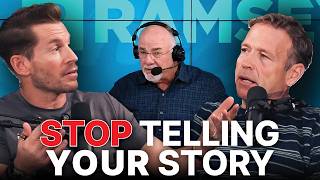
Transcript of a live Q&A between Jeremy Miner and author/business consultant Donald Miller covering AI in business, writing and copy improvement, challenges implementing the StoryBrand framework, naming/rebranding (Department of Defense → “Department of War”), and guidance on using personal backstory when positioning a brand. The format is audience questions with concise answers and examples.
Questions this video answers
480-637-2944
35 employees
73 books
23
Chapters
What question would you ask if you had the chance to talk to a New York Times bestseller who has helped grow over a million businesses? Today, we get to see five audience members do just that. So I want to take some questions from the audience for about 10 minutes. Keep them crisp. What has been the largest unlock with AI to your business that you utilize now in a functional way?
Oh, you know, I have 35 employees, and I insist that they use AI. I insist that they lean into it, you know, as much as possible. I was against AI at first because it's going to take my job. But then when I used it a few times, I realized this is the writing partner I have dreamed about all my life.
Helps you duplicate yourself.
Yeah, it helps you duplicate yourself. But also, it's like, there are times when I'll write a great deal and then. But I'll take one sentence, and I don't like this sentence. This sentence is too feminine. And so I'll put it in ChatGPT and I'll say, have Ernest Hemingway rewrite the sentence for me, and then I'll plug that sentence back in. You know, all sorts of little fun things that you can do as a writer. There's not a single book that I've written yet that has any AI in it that that will be my next book. But I did turn the one I'm working on into my team to have them look at it. And Josh Landrum, our marketing director, pulled me aside and he said, this is your best writing. And I'm like, well, sort of.
So it can dramatically improve your writing. I will say that if you ask it to write something without thousands of words of prompts, I mean, you really. You wouldn't believe how long the prompts are that I put in in order to get a paragraph back. It's a terrible writer. Yeah, it's very boring.
Stacks, slogans. It's often. I mean, I'm very, very critical of writing, and it's just not a good writer yet.
100%. Let's go. That's a good question. Let's go. Just time. Let's go to the next question.
All right. What would you say is the biggest challenge for entrepreneurs implementing the story brand format? I would say the number one challenge, the number one thing that people can do. It's really. I'll frame it this way. It's the number one opportunity. And I've said it earlier in this interview, if you want to grow your business, own a problem. Own a problem. For instance, if I was a dog trainer, I would Advertise myself as a dog trainer, but I would own the problem, for example, of when somebody knocks on the door, your dog barks incessantly. And I would just own that one problem. And I guarantee you I could figure out within 24 months how to make $1 million a year solving that problem for people. You own a problem that's fairly universal, that's really, really annoying, and that that person can't solve. If you own that problem, you're going to succeed. So I would say that is like whenever you do marketing consulting, you need to figure out with your client, what's the one problem you guys are going to own? And then you need to come up with a messaging and marketing campaign that allows you to stake claim to that. That mental real estate. Right. Thank you.
Great question. All right, who we got?
I love writings of Churchill. I think he uses words with a purpose. Yeah. And a specific wording that he uses. So how do you know what is good? What are good words? How do you know if it's good? Yes, that's a great question. Because I've met a lot of people who think their words are good and they're not. And so how can you be sure? I mean, that's a subjective question. Obviously, I think if you write something that is good, human beings are going to respond to it. So if it's marketing copy, people are going to buy. If it's a book, people are going to buy that book and people are going to pass it around. That's the test is, do human beings respond to this? And I would say that a good writer will write. 10% of their work will be good, 90% will be bad. And so you got to write a lot. Churchill wrote 73 books. Churchill did a book tour of the United States and Canada when he was 23. He was a writer first. He was not a politician. How you know that your writing is good? I, I, you know, you like it. And now let's see if other people like it and respond to it. You got to get out there and test the words.
It's just like, like if you're a speaker on stage, like, you don't really know if people, if you're a great speaker just by people standing up and clapping for you, because a lot of people do that. It's like how many of those people pull out their wallet to want to buy what you offer? That's how you know you're really great speaker.
You know, people will say, well, there's a lot of great books out there that don't sell. Not really. Not really. I mean, a good book is going to. A good book is usually going to find its way to its audience. People will respond to really, really good writing.
I love that. I have a question about the recent.
Rebrand of the Department of Defense. They rebranded to the Department of War. What is, what is your take on that? The Defense Department is really great, right? I mean, it tells us, in terms of naming, you know, an institution at the Pentagon. That's, that's great. I don't know why Department of War seems, I mean, I'll just say it. That seems like very much in character with Donald Trump. And that's not a bad thing. It's just that Trump leads with strength, he leads with power. He leads with a threat. He leads with I have the ability to hurt you. And then he plays the nice guy.
I believe it used to be called the Department of War all the way up to like into World War II. And I think, I think that's when it switched to Department of Defense, which is more like easy going. It's kind of like the irs, right? Internal Revenue Service. If it was called the internal taxing service, we probably wouldn't like it.
Right?
It's Revenue Service.
Right.
So it seems a little bit easy going.
I will say, like if, you know, with, with what Xi Jinping is doing in China, with the autocrats getting together, Xi.
Kim, Jong Un, Vladimir Putin.
Several others in South America, they're creating a network that is very, very threatening. Brics. Department of War is probably a pretty good move. Thank you.
That's a really good question. Hey, guys, Jeremy Miner here. Look, a lot of you leave comments wanting me to help you somewhere. So the easiest way to get a hold of me, the quickest way is to text me. So text me right now.
You.
It's 480-637-2944. So 480-637-2944. Listen, I started this company to help you learn how to close more deals. But do it the right way. Text me right now. Let's get back to the training video.
Okay, I have a question about positioning and with branding. So I know when you're forward facing your, you know your brand and you're communicating with other people, you're making it about the other person. They're the hero and you're the guide. What about when you're talking about your own personal story on how you got involved in the brand itself?
First of all, if somebody comes to me and says our business has such a great story, we really need help telling that story? My answer is always, it's not going to help you grow your business. You do not need to tell your story. It is not important to tell your story. You need to invite customers into a story. You know, if you ask Dave Ramsey, what's your story? He'll say, well, you know, I had a lot of money, and then I made some stupid decisions and I went bankrupt. And then I read the book of Proverbs, and I came up with these principles, and now I'm rich. And I help other people get rich by using these principles, too. You think you just heard Dave Ramsey tell his story. You don't know who he's married to. You don't know where he went to college. You don't know how to kids. He did not tell his story. What he did was he said, I used to have the same problem you have, and now I don't, and I can get you out of that. So he tricked you into thinking he told his story, but he actually entered into your story. Does that make sense? So therefore, the only part of your story that I recommend you ever tell is the story about how you struggled in your past with what your customer is struggling with now and how you no longer struggle with that and how that you can now get them out. Yeah, that's the story that matters. That's the only story that is powerful.
The story has to relate to their problems and how you had the same problems, and this is what you found, and now you can help them.
It's called the backstory of the guide. The backstory of the guide is the current story of the customer. And if you don't have that backstory, don't tell your story. Tell somebody else's story. So actually say something like, well, the reason I care about this issue so much is because my uncle. Point of your story, if you're going to tell your story, is, here's why I care about you. Here's what happened to me that caused me to care about your problem. Yeah. For example, I was trying to help somebody recently. A woman in my mastermind. She has a unique business. She goes after insurance companies to get them to pay people. Pediatricians. That's her whole business. That a pediatrician will often not be paid by the insurance company. And so I said, you know, she said, well, I, you know, my story doesn't have anything to do with that. And I said, well, why are you doing this? Like, how did you get into this? And she goes, well, my mother was a pediatrician. And I said, okay, well, tell us about that. Like, what. What happened? And how did you discover that insurance companies weren't paying pediatricians? She said, because they weren't paying my mother when I was a child. And that created all sorts of tension in our home. And it's like, what kind of tension? And she said she ended up in the hospital. Like, she almost died because of the stress of not being paid for her work. And then I said, what happened? She goes, well, my dad took over the company while my mom was in the hospital and discovered that insurance companies weren't paying us, and so he figured out how to get them to pay for us. And I said, pay us? And I said, what happened? Then she goes, everything was great. My mom got out of the hospital. She never had a health problem again. Our family was great, and we actually opened a couple other franchises. And I said, do you realize that the reason you do this is because you're trying to. Trying to heal a childhood wound? And she just goes, I never realized it.










