22 Questions to change your year, life and results KAMCon 2023 Presentation Made with Clipchamp
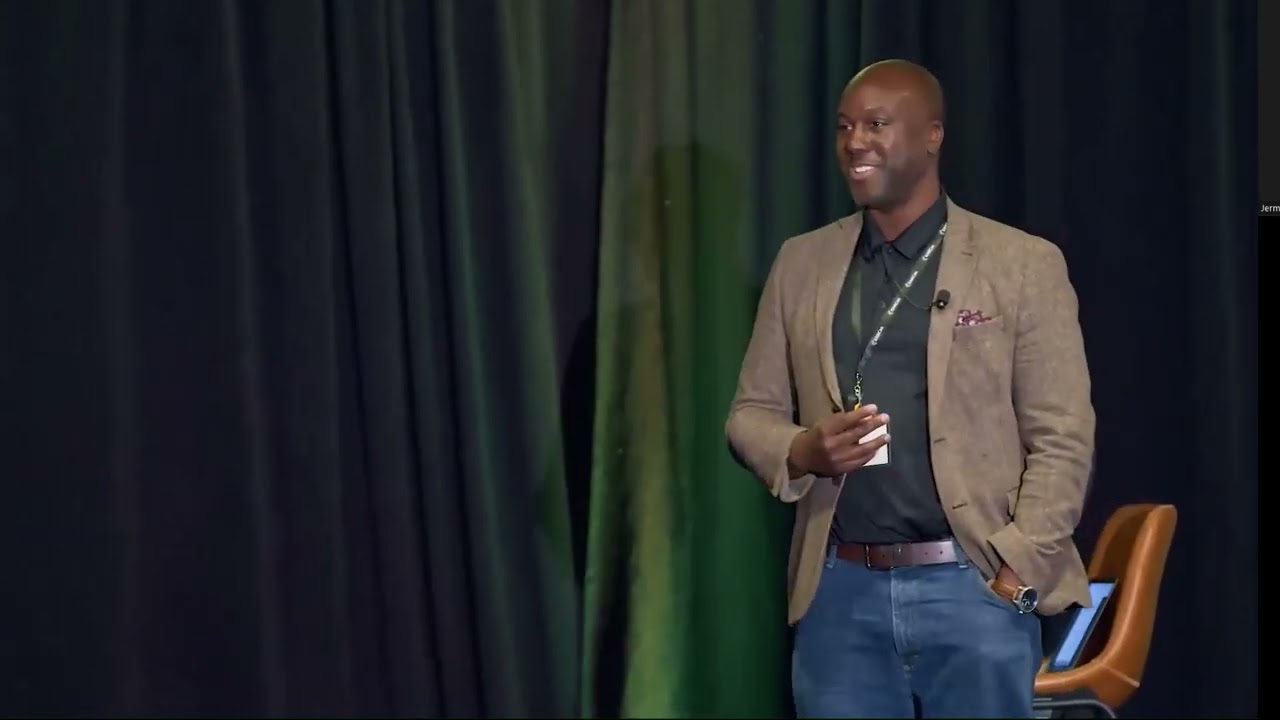
In this KAMCon 2023 workshop, Jermaine Edwards guides participants through a personal and professional growth framework built around 22 probing questions. He begins with a personal story about balancing rapid business growth with family time, illustrating how his core values (family care) and limiting beliefs (hard work equals success) shaped his behavior and led to overextension. Edwards introduces a six‑category model—values, beliefs, behaviors, skills, resources, relationships—that underpins the 22‑question exercise. Participants are asked to define their desired end‑state (the "B"), articulate what must be true to achieve it, consider the experience they want others to have, and identify what their teams will accomplish as a result. He emphasizes the importance of aligning values and beliefs, confronting limiting beliefs, and using targeted questions (AQ) to surface honest self‑assessment. Edwards shares how he funded six companies by partnering with customers, highlighting the strategic use of relationships and resources, and even discusses forgiveness as a critical relational question. The workshop is interactive, with attendees writing down concrete goals (e.g., launching an operational Airbnb, promoting a team member) and the conditions needed for success. Edwards stresses that leaders must consider the impact of their pursuit on others, avoid compromising team experience, and regularly run this annual questioning process to accelerate growth and alignment.
Chapters
22 questions. We are going to come to this. I'm going to reveal those 22 questions in just a moment. But Peter actually mentioned something really interesting. He talked about the team, customer, and self. And we talked a lot about the team and the customer and how you show up potentially with leaders to talk about the things that you need and how you can progress the success of your teams within your organization. This session is just about you. It's about you directly. It's about the voice of you, not just the voice of your customer, the voice of you, and listening to the things that are going to help you make the biggest difference this year. So before we go deep, I'm going to talk about myself, and it's this. So about 10 years ago, uh, you'll see Sukaya, my daughter's in the front here. Sukaya, that's her in the blue outfit there with my son, my oldest son. I have 6 kids. 5 girls, 1 boy. And so, thank you very much. It's all my wife, don't worry about that. So about 10 years ago, we were at this place in Kent, a wonderful place in England. And while we were there, we were having fun together. I was getting my butt kicked at mini golf. And while I was there with my wife, and she was obviously grating into me that she was kicking my butt at mini golf. She asked me a question that she knew I would always respond to. And at that time, I'd been working sales for a number of different years and had been toying with a range of different businesses on the side. And so she came to me and said, what would it— what would need to be true for you to have more time with us as a family, for it to feel, look a bit different for us as we can grow together? And so at that point in time, I was actually leading a team in a very small business in the training education field, and we actually grown that business from about $3 million to $25 million in in 24 months. So we had gone this just tremendous growth, and I was at the forefront of really helping to see that work. And so things felt really good where they were, but my time was actually really constrained. In fact, in 2018, I actually visited 22 countries in one year as part of that. So I was away quite a bit in different capacities. So the question, what would need to be true, is always something that really resonated with me because it created the sense of what I call possibilities. And this, this whole place of possibilities is the place where I want to bring us to today. What would be true for us to have the year we always dreamed? What would need to be true for us to have the relationships that we always wanted to have? What are those things that we need to begin to really think about intimately and more deeply together? And so a mentor of mine who met me at that point in which that question was asked began to ask me some questions around these possibilities. And these are some things I'm going to bring to you in just shortly. But what that meant for me at that point in time, which perhaps my wife didn't know I was going to kind of suggest, was that I should start some companies. And starting a company, it would mean I'd have more time because I wouldn't be constrained to somebody else. Lo and behold, that was far from the truth. I started 6 companies in 8 years. Because one of the big values that I had, I'm gonna come to why values, beliefs, and some of these things are gonna be so important to us today, was care for my family. Huge values, top values, care for my family. How do I help them, support them, how do I love them well? One of the beliefs that I had at that time was actually working hard would be the thing to go do that. Creating new opportunities. And that led to a series of beliefs around what I should do and behaviors that showed up. But what behaviors showed up? When you start to work more, even though you care about the people that you really care about, what happens? You start to actually drift yourself away from your family. And so I had to think differently about some of the things that I was doing in order to capture the real possibilities that were there, which is how can we get the same results with less time and more time with my family? So that's why my daughter is here with me today. So, Let's explore this because I think what's gonna happen here is that right now, wherever you are right now, and the results that you have are attributed to 6 things, and we'll walk through it at the moment. And it's attributed primarily to this place of the known, the things that we know and have available to us right now, the things that we can think, feel, see, and experience today. What we wanna do is press into the unknown, the places where all of these other resources and relationships exist and the possibilities of what could be, for our customers, for ourselves, for our families, and so forth. In order to do that, we need to explore the BE. And so I'm gonna ask you, if you got paper, do you have paper in front of you or something you have? 'Cause unfortunately you don't have the notes paper. I just want you to write just in a middle circle, just circle in the middle of a page and put BE, B-E. And all that BE is, is bringing into existence, bringing into existence. And so you have this known place You have this unknown place, which is the place you've always wanted, the thing that you can really realize in your head potentially, what you want for your family, your results, and otherwise. And in the middle there is this bringing something to existence. But the thing is, what is that thing that we need to bring? So my mentor said to me, he said, "You need a Plan B." I said, "Well, Plan B? I'm a Plan A guy. I don't go to Plan B." But what he really meant here was that I need to ask a different set of questions about who I was trying to become. And we're going to talk about this a little bit. Who are we trying to become within our organizations in order to attract and become and achieve the things that we want primarily in our lives, in all aspects of what that is? And so this A to B aspect here is, A is where are we today? And B, who do we need to become in order to achieve the thing that we want to in the future? Very simple concept, right? A and B. However, there are 22 questions that my mentor gave me And this happened really at the, I think, I want to say 2019 going into 2020, had a number of different kind of places that I'd gone to, and it was just before the pandemic. And my wife asked me another question. I did a post on this on LinkedIn some weeks ago, and she says, I think it would be a good idea if our eldest kids traveled with you. I said, "Oh man, that's gonna be tough." Like, I would need to change a whole lot of stuff for that to be the case. A lot would have to change. And so I brought this woman to say, "Look, this is what I'm thinking about here. I would like this to be true about my life, about the things that I'm doing, and still achieve and accomplish the same things that I'm doing today." So he gave me these 6 things, and these 6 categories are what we're gonna have a think about today. That actually everything that you want, and arguably so, will stem from values, beliefs, behaviors, skills, resources, and relationships. I'm sure exactly how this fits together, but let me just kind of walk you through what happened in that first premise. When my wife asked me what would need to be true for us to spend more time together, my high value was this: I I wanted to go serve my family, but the beliefs about how to get there put me in a hole. And so sometimes the high values that we have are still good, but the beliefs that we hold may stop us from really achieving the thing that we want. And out of those beliefs, those behaviors, those behaviors show up that we may not necessarily— we may believe is helpful in the moment, but may not necessarily be the thing that's sustainable for us in the future. And so every one of us have these things today. Every one of us have a set of values, meaning the standards that you hold to yourself and we sometimes hold to other people, right? So when you get triggered by somebody, what's really happening is a value has been violated and an expectation hasn't been met. That's what's happening. It's a standard that we hold for ourselves and we impute to other people, a value. The beliefs are what we believe need to be true about the world for those values to exist. So our beliefs then get kind of held out, our behaviors follow. But our beliefs are changeable. We can change these beliefs about the things that we hold to be true or perhaps not true. So we're going to go through these 22 questions I'm going to offer you. These 22 questions are really arbitrary. There could be 50 questions. These are 22 questions that I was given at the time. I actually have taken my clients through this exercise. Actually, last year we had 20 people go to a place called Canyon Ranch. Have you been to— Canyon Ranch? Check, yeah, Canyon Ranch? Really, it's a beautiful place. I mean, if you wanna go and impress your clients, Canyon Ranch is the place. They walk in, they start the renew. That's how good it is. And so we're gonna have a think about these questions today. So step 1, I'm gonna give you a couple of things to think about, and I'm sorry the handout isn't there, for us to talk about what is your actual B. Exercise in front of me, so I'll make sure I have it here. So the first question here is this, as you've got the B in front of you, so next to, just put an arrow next to where that circle is, and I want you to ask for the question this: What is the personal professional result you most want to achieve this year? That's it. What is the one thing, personal professional result, you most want to achieve this year? I'll try to pull these up on here while you're talking. Oh, okay. Yeah, that's fine. Thank you very much. Personal professional, what you most want to achieve this year. So what is the story you want to be able to tell at the end of this year that you haven't been able to tell before? What is that specifically for you, personally or professionally? I don't care where you begin. What is it specifically that you want? I'll give you a moment just to write that down, whatever the personal, professional result you most want to be able to achieve this year, and write that down. Yeah, hands high, do we have something? That we have roughly in our minds that we may want. If you don't have it, I'm gonna challenge you just to put something in anywhere. We can always walk backwards from that, but the exercise is super important here. So just pick something directly. I'm gonna share some stuff that I have about myself as well. So next to that, I want you to have a think about what things would need to be true in your life for that to be accomplished. What kind of things would need to be true? Just write down a few, just jot ideas, just ideas randomly, throw them all down. Or down, and we'll come back to that. What things do you think would need to be true about life today? Your relationships, results, and things like that, skill sets. What do you think would need to be true for that to be accomplished? Okay, do we have that, right? So just a couple of ideas, just really quickly. What things do you think would need to be true for that to be accomplished? Yeah. Okay, so now that you have that, fantastic. I want you to have a think about this second piece. And it's this: what do you want others to experience consistently around you in pursuit of that goal? Okay, all right, last question in this first section here. Okay, what do you want to help your team or teams or people you in your life accomplish as a result of who you'll become and the thing that you achieve at the end of that? So an example of that, I'll give you a quick example. So this year I said that one of the things that I wanted to hold as a high goal for myself would be to help my teams accomplish the goals that they want in their life in pursuit of my own business outcome. So an example of this is this: I have somebody on my team, and she says, I always wanted to buy my, my mom a house. That's gonna cost us about $250,000. I said, great. I said, here's— so in order to do that, the business needs to be doing this for you to go do that. So me as a leader, then I said that thing I want to be able to achieve at the end of this year is to have the business do X so everybody in my team can buy a house for their mom. That was it. So I said— so I went back from that, I said, what would need to be true for those things to be in existence? Who do I need to become? Thinking about those things, and then what would need to be the thing that my team would accomplish as a result of that? So I'm thinking about those two things together. Why is that important? Okay, so we've got this big picture of the thing that you're pursuing, the thing that you want most, the experience that you want people to experience, and what other people will accomplish as a result of you going to that place. The next place I want to think about is this, um, this quick story here. When I was 8 years old, 8 years old, my grandmother came to me and she asked me a very important question, a question I'm gonna kind of pose to you, and it's this place around, "Who do you want to become, son?" She used to call me son, my grandmother, before she passed. She said, "Who do you want to become, son?" I said, well, at 8 years old, I didn't really have an answer for her at that point in time. I just said, "A good boy, Grandma." And she said, "Oh, that's a good thing, but what else?" And so I gave her, started to give her this list of characteristics. I said, "I want to be somebody who people can look up to." I started to name these things. And as she heard me do that, she wrote it down, and she actually sent it to me in a letter later on. And I've kept that letter. It's something I've held from when I was 8 years old. So why is that important in the context of this? Well, this B question, or the art of bringing something into existence, has nothing to do right now with your current talent and skills. It has everything to do with choosing the kind of person you want to become. And the kind of person you want to become is everything that moves you towards what that is. So you could be building skills right now, you could be building resources and building teams, but if your values and your beliefs aren't lined up, if you don't have the right relationships and you're not thinking about those things, you're not thinking about the behaviors that you have congruent to that, It's very likely you're going to find yourself sabotaging certain things in your life that you didn't realize would be sabotaged or slowed down in specific areas. And so, the exercise we just went through in that worksheet gives you a frame to start with the end in mind. Who am I trying to become? What do I want to accomplish? Why is that important? What things would need to be true? And what is the impact to the people I care about in pursuit of it? What is the impact of that? And we'll come back to why that's so important in just a second. So that's the first part of it. And so as we do this, I just wanted to kind of just highlight something here. I'm sorry, obviously, like I said, the worksheet isn't there for you to look at. But in that first question, what do you actually want to accomplish this year? Who here wrote something down really concrete and clear? Like you knew exactly what it was. Do you mind sharing? I want an operational Airbnb. An operational Airbnb. Okay, fantastic. And why that specifically? It's a project that I'm working on already. Project you're working on? Okay, awesome. We'll come back to that. Somebody else? What do you have? I want to promote someone on my team to a director level. I'm sorry, say it again, please. I want to promote someone on my team to a director level. You want to promote someone on your team to a director level? Absolutely. You had somebody at the back there? I'm sorry, to have the most clients you've ever had. What is that number? 55 clients. Great. And so when you went over to the right-hand side, you said what things would need to be true. What kinds of things do you write down? Throw out some stuff for me. What kind of things do people write down? What would need to be true? What kind of language, what words came out? I'm sorry. So opportunities. You need more opportunities. I'm sorry. Yeah, Jerry. Different. Something would need to be different. Yes. Connectivity. I'm sorry. You need to have. Okay. Anything else? I'm sorry, say that again. Right people in right roles. What else? A promotion. Okay, so notice as we're kind of, I guess, walking out these words, what you're doing is you're defining the context of the conditions that need to be true for these things to be alive and well. The challenge is in pursuit of those goals, we often don't necessarily think about the impact to other people in pursuit of those goals, which is why the second question is so important. As in, what is the experience you want other people to have for you in pursuit of that goal, because it's going to define the values that you set, the parameters, the standards, the conditions you put on yourself. So in pursuit of doing all the activity and in pursuit of really pushing and working hard, what you're not going to do in pursuit of that is to compromise the experience that other people have of you in pursuit of it. And that's why we have that secondary goal or secondary Condition. The third condition around what are people actually accomplishing in pursuit of that is actually as, as you set the conditions of the values, you set the conditions of what we need to be true, what's going to happen here is other people, as you begin to pursue it, as you get better in the process of that, other people will start to get better in other areas as well. They'll either get better or they'll actually just get worse or stand still. I see this in leadership all the time. We can push for a specific goal, and I made these mistakes as leaders at times, is that I had this value and I said, "Hey, look, performance is really important, guys, and accountability is super important, and then the process here is that I'm going to push you to the point in which you tell me you can't be pushed anymore." But that was a really, really poor way for me to go get the thing that I wanted, and what they— because I knew they wanted to achieve goals and do the things, but the way I was doing it was just not the right way to go do it, because I hadn't thought about the experience I wanted them to have as me as a leader in pursuit of that goal. So that's why we have that there. So really important as you're thinking about the goals that you want, if you don't think about the experience other people have of you in pursuit of that, it's likely you're going to compromise some things along the way. And that's not what you want. You want to be thinking about how do other people get better in pursuit of this thing, as your teams, as your families, and so forth in those areas. So hold that thing in mind, we're gonna walk through, it's all gonna come to fruition. Next thing I want you to think about is something called AQ&B. So we talked a lot about questions and the importance of questions in this. And this is a really common picture here of the iceberg. And everybody knows that underneath the iceberg is where the depths of what we think about, the kind of thoughts and beliefs, really exist. The challenge with this is this, is that it's really difficult to really think through what I actually believe and value without the right questions being posed to you. So the reality of personal growth is this. It is very, very difficult to grow faster than your willingness to accept where you are. It's very difficult to grow faster than your willingness to accept where you are, meaning you have to be really real about where you are really. What my skill set is, where my resources are, where my relationships are. I need to be super honest about that, because if I make these assumptions about where I am, where I think, think I'm doing, or what I think my team thinks of me, or what the experience of me we are going to have the wrong data to go on in order to make a meaningful difference. So the 22 questions we're about to go through in just a second here is about that. It's about getting super real, super true, super honest about where we are so we can go faster and more effectively to the place we want to get to. That make sense? Yeah? Okay. So questions for me are like a bridge. They are illuminator, they're a mirror, they are a guide. And that's what these questions are here to support us doing. So AQ to B is how it is. Where we are requires questions that help us to get true to ourselves, true and really honest about where we are, so we can become the kind of person that can accomplish those goals. So I'm a big proponent of who, not how. So if I think about the 6 businesses that I built over 8 years, all of them were were done in partnership with my customers. So every single business was funded by my customers. And over time, we actually generated about— I raised about $10 million in revenue from my customers being partners with me in building the company. And so I started with this premise of, here's what I wanted to do: create these businesses, create opportunities, create space and opportunity for my family moving forward so I could build that equity into the future. But I knew I didn't have the capital to go do that. I said, well, who could I partner with that's already doing business with me? So I just walked through this strategy, which I now teach my own clients, in how do you actually get your clients to fund things that you don't want to fund right now that was beneficial to them in the future. And so every single business has been funded by my customers. They are my primary resource and relationships when it comes to investment vehicles. But that's something I intentionally began to set up years ago. And I can do that now with— I go and teach my clients how to go do that stuff. But what I'm saying is that you don't have to do this alone. And so these next set of questions are about thinking about these resources and relationships in really specific ways. And it may be that you need to just make some real clear judgments on things that you need to do, but oftentimes it's thinking about how you do that with other people. So relationship resources, same, same exercise questions. You'll find There are some really interesting questions on here that you wouldn't necessarily believe are important but could be. I'll give you this first one: "Who do I need to forgive?" That's a really interesting one. I remember being given that question by my mentor some years back, and we had to really wrestle with some stuff. We really did. There's a managing director that I was working with who just did something deplorable. But she had access to something that would help to move something forward. And so it wasn't necessarily giving her a pass, but it's understanding human behavior to the point in which I could say, I could understand why people might make those decisions. I don't agree with them. But I needed to have forgiven her to move on because I recognized that that bitterness between her and I was just getting in the way. That was a real conversation I needed to have. A very real one. So sometimes the question that you see here that you may just pass over may actually be more relevant than you think. So let me just state this. This is not a perfect process. It's a process that makes progress. This is something I walk through. My teams are involved in this exercise. We do it every single year. Man, it's just so, it's such a refreshing process because we just don't do this, right? Who does this every single year? Who goes through a set of questions to challenge yourself like this? No. So I made it a mandate. I said that all of my clients that go through onboarding have to attend this workshop. So they all attend this workshop. We go through this process together and I say, here's how we're going to help you get better. And we're going to walk through this process. So we had 25 executives that show up. We have this conversation. Over a day. And it's just phenomenal. They leave and go, okay, we need to have all our teams just go through this. Because just that thinking about that relationship stuff and all these things, it's just life-changing. It really, really is. Once you really understand what is the context of the values we have in our business, how does that shape our beliefs, how does it move in our behaviors, and actually, are we asking the right questions? In pursuit of those things. And when we hear our teams come to us with excuses, they're not really excuses. You shouldn't just— they're actually beliefs that we need to address that stem from a set of values that have either been either just not aligned quite correctly or whatever that might— it could be something else. We need to get super curious about that. Same with my kids, same with my team. If they come to me with a set of excuses, I go, oh, this is interesting. Set of beliefs we can go tackle. Let's go at it. Let's go have a look at where this is coming from. Because often what lies beneath is really something more than meets the eye. So we've gone through the worksheet, we've gone through some thoughts. A quick recap. So we've got to really, really know our B. Where are we actually heading? Who's the person we're trying to become? I'd be asking this to your teams as well. Like, what is the story you really want to tell at the end of this year? Other than yourself, who else would be super excited at your success? Who else do you need to show up for? Who else do you need to be successful for? What does that look like for you? These conversations that I have to really shape this B, right? And then we need to get really real on the AQ, the questions that help us to know where we are so we can go faster to where we need to go. Yeah, to get to that B. And then we need the game plan, which is simply to understand what are the drivers, what are the things that we need to go do, what is stabilizing the accountabilities, and where are the blockers, just so we can see them a ways out and go, "Oh, that's the iceberg that's coming." That's what we need to go and address. We need to either steer the ship or take a new course, whatever that looks like, but we need to address it before it arrives.
More from Jermaine

Turning Problems Into Advantages #accountmanagement #customersuccess #business

Becoming A Chief Value Officer #accountmanagement #business #keyaccountmanagement


Mastering The Customer Response Triad #accountmanagement #customercentricity #customerservice

Mastering The Art Of Uncovering #accountmanagement #customercentricity #customerservice

Uncovering Conversation Summary #accountmanagement #customercentricity #customerservice

Unlocking Insights With Stimulus Questions #accountmanagement #customercentricity #customerservice

Unlocking The Power Of Social Awareness #accountmanagement #customercentricity #customerservice

