A fantastic bespoke strategy for the newer trader! Beginner Series Video #3
Module 3 of a beginner trading series (instructor Jerremy Newsome) teaching how to input broker orders and profit when stocks decline. The transcript explains position terminology (buy to open / sell to open / buy to close / sell to close), four primary broker order types (market, limit, stop-limit, stop market), when to use each (market for immediacy, limit to buy low/sell high, stop-limit for breakout entries, stop-market commonly for stop-loss exits), and practical tactics (using limit "puke/stink bids", reading hammer candlestick traps to identify shorting opportunities, and navigating the bid–ask spread). Instructor mixes live chat Q&A, examples (Kohl's, Boeing), and trading metaphors.
Chapters
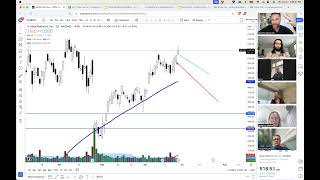
Hey, what's going on, Scott? All right, team. Honestly, I hope you are all strapped in. This is going to be a cerebrally intensive program. I mean, really strap in. There is a lot to tonight's class. Our mission, as you all know, is to enrich lives. We do that by educating the world how to profitability safely and consistently trade the markets. We are in module three at this precise moment in time, Module three, we are going to be discussing how to input broker orders and how to make money when a stock goes down. I generally wouldn't specifically talk about shorting stocks in a beginner's program, but with the market the way it is right now, I feel like it is probably a pretty decent time to discuss when the market's going down, how to make a little bit of money. What do you all think? Type in a 3 if you're fired up and a little bit excited about that. Module four, which is the next program. We're gonna talk about brokers. We're gonna talk about risk, we're gonna talk about rules, we're gonna talk about strategy, and we're gonna build that trading plan together. Just a little bit about me just in case. I'm gonna try to give you some tidbits. Every single program. My favorite band is Queen. I am currently training to complete an Ironman. I love rock climbing, hiking, running on the beach. I love hugs, dancing horribly and public speaking. And I'm 100% addicted to the to trading and everything stock market related. Michelle says, which Ironman are you going to? Most likely the one in either Panama City, Chattanooga or Texas. I had to reschedule the most recent one because of the coronavirus. So yeah, Emilio says. And snowboarding, Yes, I do love snowboarding. Here's what's cool. I'm gonna dive right into this if that's fine. That was my little intro. And here we go. We talked a lot about hammers in this particular program thus far. We described and discussed their sentiment, their meaning, how people feel, why they feel that way, how they feel that way, and so much more. Would you all agree that that candle that we're pointing to with the blue arrow, is that a hammer candle? Yes or no? Yeah, I would say that's a pretty delightfully delicious hammer. Therefore, how do you think people feel when we close below that hammer? It's a very good question, but how do you think people feel when we close below that hammer? Because it is a really nice hammer. And what was interesting is this. This was actually the Friday before the giant coronavirus sell off. Started. So you actually had a little bit of a warning signal when that happened. And I did mention this was a Thursday in the afternoon swing trading room that I provide. I thought that was just a normal day, nothing too crazy. And I simply said, all right, folks, well, as long as we don't close below this candle, everything should be fine. We should just bounce up in here and continue as is. That was exactly what I said on that particular day. And I didn't know anything was going to happen. But when we closed below here, it was definitely one of those things. We're like, all right, well, it's time to be a little cautious, just in case. And that is one reason, one reason why we started selling off so dramatically is because that particular candle trapped so many bulls. It trapped the bull on this day, it trapped the bulls on that day, and it trapped all the bulls that bought up on that particular lower shadow. And that's one reason, just one. But a reason why the market did, in fact, drop so tremendously is because so many people were trapped, and therefore the stock started going a little bit lower. Interesting, huh? Now, if that happens, what's really interesting to know is if you're looking for hammers, the reason I'm bringing this up is since you were looking for hammers, you know what they look like, you know how they're formed, and you know their sentiment. Since you know that, couldn't you take advantage of it? If you find a hammer and you find that the stock eventually closes below that hammer, wouldn't it be useful for you to know, wow, this is a really good time to potentially short it? Now, what does that mean exactly? Well, let's kind of talk through that and discuss a little bit about that particular topic. How do we make money as a stock goes down? This is called shorting. Now, again, if you're writing notes down, this is a good note to take, because last class, I asked many people, have you ever heard of shorting? And most answered, no. Being short is being bearish on the stock. Being bearish means you think a stock will go lower. The question is, how do you make money as a stock declines in value? Because some people think that you make money as a stock goes down because you're buying it lower, right? You buy it lower, and then you buy it lower, and then you buy it lower, and then if it eventually bounces, you're able to sell it for a profit. Type in a 1, if that's what you currently think. And again, it's not a bad way of thinking. That's oftentimes called dollar cost averaging, and you can make some money that way, but that's not actually how you profit from a stock going down. Let me dive into two terms really quickly. These two terms are bullish and bearish. The term bullish means you expect a stock to go higher. Why is that? Bulls attack their prey from the bottom up. So if you have a matador in the ring and they're trying to, you know, do whatever matadors do, a bull will try to put its head down and throw its matador 15ft in the air. And the term bearish comes from, well, bears. Bears means you expect it to go down because bears, they stand on their back legs and they attack from the top down. They pull their prey to the ground, and as they stand on the back of their legs and claw lower, type in A3. If you learned that for the very first time just now, that's pretty much where the terms come from. That's really it. I'm just throwing that out there so that you have it, but that's where it comes from. Cool. We got about 47, three so far. That's great news. Someone learned something new. That is my plan. That's my goal. All right, now, you probably remember this example. This example is a very recent example that we talked about where we were discussing Kohl's, and we mentioned, hey, if you had bought Kohl's in 2001 and held all the way through 2019, you'd kind of be at break even. Now. Possible. But if you also remember this example we were discussing taking Kohl's bullish, and you all might remember this really, really massive, exceptionally exciting, big, ginormous number right here where we talked about how many times if you played Kohl's the exact same entry and sold at the exact same price four different times, that you would actually have made a 261% gain. Well, what about if you also potentially played the downside? Rob says you're not about to suggest being bullish, buying low, selling high, and then being bearish and hitting the downslope. Yes, I am. In fact, here's the next slide. Mr. Rob Thomas. What if you were trading Kohl's both bullish and bearish? Rob says, what? Yeah, man. Oh, boy. Rob just had a little bit of a click. Had some. Some knowledge, brains going off. So if you took both, all of them, right, the downs and the ups. Now, again, same exact thing as you're just playing the down slopes at the same exact price, you could have almost doubled your Potential return. Now, that doesn't mean that that is exactly what I did. I did not trade Kohl's during this time like that. I did trade Kohl's a little bit, but you get what I'm saying. The reason I didn't trade it is I was, I think 13 years old in 2001. I wasn't trading the stock market much back then. But you get what I'm. You have the opportunity to do. So that's the reason I'm bringing this up. That is why this is really exciting stuff. Therefore, if we're going to go forward, had some slides that we're getting there. What we're going to do is we're going to talk about broker order types so that you actually know how to do this. And we're going to go through the broker so that you can see the exact way to input orders into any broker. What is really interesting and exciting about that is simply this. A broker is a lot like a vehicle. Once you know how to drive a vehicle, you're pretty much good to go. Most of you. When you were 16 and you got your very first vehicle, by the way, what was your very first vehicle you started driving? Throw it in the chat pane. Mine was a 1992 Plymouth Laser. Are you jealous? And I started learning how to drive with a Plymouth Laser. We got a 67 Mustang, Jeep, Wagoneer, Plymouth Horizon, 1988 Camaro. Beautiful. Very cool. 1972AMC Hornet. Yeah, that sounds cool. But the thing is, once you started driving, you were a little bit afraid, right? You were kind of scared, a little bit terrified, a little bit worried. But, you know, four or five months into it, you had your friend in the passenger seat and you were like talking on the phone or eating a hamburger or drinking some soda or whatever else, and, you know, you're feeling a lot more comfortable. That's pretty much what happens with a broker. Once you learn how to create orders in a broker, they're never really going to change. And the terminologies and the structure are the exact same, by the way, very random story. When I was younger, like a lot younger, I thought no drinking and driving meant no drinking anything and driving. So at one point my mom was like having an iced tea and I wigged out on her. I'm like, mom, what are you doing? You can't drink and drive anyway. There are generally two functions in the market, and these should be relatively obvious. These two functions are simply buy and sell. Nothing crazy here. In most brokers, you're going to have those Two functions, I hope. If you don't have those two functions, leave that broker. Now, every now and then, a broker will come along and it will actually distinguish what you're doing, because there is a difference. If you are buying to open something, that means you are getting into a trade generally bullish or long. If you're going long, shares. So buying to open means you're buying that thing, whatever that thing is. The reason I'm bringing that up is because you could be buying an option, and sometimes options, we're not gonna get into that right now. If you're buying it, you want it to go up. Always type in one if that makes sense. It doesn't matter what you're buying. If you buy something in the market, you want it to go up. That makes sense. Now check this out. If you sell to open, you're getting into a trade bearish or short, which means always and forever. If you sell to open anything, you want that instrument to go lower. Now, if you are selling to open a position, you're getting into a trade bearish. This is how bearish traders make money. They sell to open a stock. We're going to talk about that in just a moment, I promise. The way a bearish trader gets out of a position is very, very important. Who can guess how you would exit a sell to open? How would you exit a sell to open? Well, you have to buy. But which one is it buy to open or is it buy to close? The answer is you have to buy to close, right? It's just the opposite. That makes sense, right? If you sell to open something, you have to buy to close to get out of that thing. Just like if you buy to open something and you want to get out of that position, you have to sell to close. Get it? All right, cool. So selling to close is always and forever. Forever and ever and ever exiting a bullish or long position on a particular instrument. Always. So if you're selling that thing, your goal is to have sold it for higher than you bought it. If you sell to open something, you want to sell it as high as you can and then buy it back later. I promise. A lot of light bulbs are going to go off in just a moment, so stay tuned. There are four main types of broker orders. There are many more, but these are the four main types. Think about this like a steering wheel in a vehicle. Oh, boy, that's me trying to spell steering wheel. This one's like a gas pedal. This one is, I don't know, handbrake. And this one Is the brake pedal just as a. Just as a. You know, you get the point. So they are pieces of the instrument, they're pieces of the vehicle. You can use them interchangeably. But there are. These are the main four market limit, stop, limit, and stop market. What we're gonna do now is we're gonna talk about what the heck these things mean. A market order should be relatively simple. We're not going to spend that much time on this one. It gets your order immediately at market price. All right, folks, so let's just go through some basics. Can you buy at market order, yes or no? The answer is obviously yes. You guys all know this. You're not too. Can you sell at a market order? The answer is obviously yes. Of course you can. You can do anything in a market order. You, you can get in, you can get out, you can do anything you want at market order. The problem is this should actually be a very rare type of order. I almost never use market orders unless I have to be really, really quick. Chris says the market dictates the price. You are exactly right. So, for example, Chris, let's say you wanted to sell your house and you just went to a random place. Let's say you went to Wendy's and you said, hey, guys, I'm gonna sell my house. First one that throws out a number gets it. Now, that's a little bit of an exaggeration, but it's kind of close to an extent. When you buy or sell anything at market, you're paying or selling always at the absolute worst price possible. The good news is these orders will fill immediately. So if you want to get into something or get out of something within two seconds, you can do a market order and you will get out always. At least in my experience. I have never in my entire life attempted to sell or buy anything at market and where it's not able to get out. Scott says, like Mark to market accounting. No, no, not specifically market orders. Just the broader market. You're trying to sell something, it's going to go through immediately to whatever the masses and the general public would expect to get in or get out at that price. So it's in market order. Now let's talk about a limit order. Limit orders are fun. I use these all the time. We're gonna have many, many, many examples with limit orders. Now, a limit order is simply a type of order. A limit order allows you to buy at the price you selected or lower. My friends, would you agree that whatever you're trying to buy, you always want to Buy it at a lower price. Right? I mean anything in life. If you're going to get a massage and you're like, alright, cool, I'm down to pay $300 for a really, really nice massage and then you get like a gift card and you have to now pay $200, are you not going to go? If you're going to get like a milkshake and the milkshake instead of $6 is $2. Whatever the case is, if it's a ice cream cone, candy bar, house car or telephone, you want to buy it at a lower price. Always. If it's the exact same product and there's no change in the product and you can get it at lower price. Phenomenal. That's what a limit buy is. Truly it is. You are trying to buy that position at a lower price. Therefore, if a stock is trading at $100, you could do a limit order at 90, are you going to get filled at 90? And the answer to that question is only if the stock goes from 100 to 90. So the answer is possibly. If it never goes down to 90, are you ever going to get filled? And the answer is no. If it never goes down to 90, you're never going to get filled. That's just the way it works because you're trying to buy it at that price or lower. And if no one's ever selling it at that price, you're not going to get it at that price. A limit sell means you were selling at the price you selected or higher. Everyone here would agree that if you're trying to sell something, you want to sell it for as much as possible. For example, type in A1 if you're a business owner of any kind. All right, shout outs to the business owners. Thanks for being here, team. If you are a business owner, you would like to sell your whatever you're trying to sell it for as much as possible, Right. If you could sell whatever you're trying to sell for $1,000 or $10,000 or $100,000, like whatever it is, you would be happier than pie. By the way, quick shout out to one of my services if you ever want to work with me, I can help you sell your products for more. That's what I specialize in. Greg says is a limit sell. Like an ask. Well, yeah, Greg, you're asking for someone to buy your product from you. So you're trying to sell it. Yep. So you're asking for a particular price. So what Greg is saying is that there are two particular types of Orders. You have the bid and you have the ask. Yep. You have the bid and you have the ask. Bid and ask. So your goal is generally you are trying to buy as low as possible and sell as high as possible. Therefore, a limit sell allows you to sell something as high as you possibly can. Therefore, let's say you bought something at $10 and you did a limit sell at $41. Is that a good thing or a bad thing? Again, depends. Let's find out if it gets up there. I don't know. Right. No idea if it actually gets up to that price or not. Maybe it does, maybe it doesn't. I have no clue. But if it does get up to 41, you will sell your shares at 41 or higher. So let's say there's some type of really weird news story and whatever, whatever. And the stock opens up at 43. What price would you sell it at? 41 or 43? And the answer is 43. Yep, exactly. So when you're talking about bid and asks, right, your goal is to obviously sell at the ask because the ask is the higher price and the bid is the lower price. This is called a bid ask spread. And a bid ask spread is the market value for what something is trading at. So generally, let's take General Motors right now as an example. Right now, General Motors is trading at 2150 for the bid and 2168 for the ask. In between these two numbers is called the bid ask spread. And I'll tell you guys a funny story. There was someone who once thought I was saying something else. And I know this is a kid's program, so I won't drop that particular word, but I have a little bit of a slur every now and then, and someone thought that I was saying something different other than bid ask spread. So anyway, that's what I'm saying. Bid in the ass. So your goal, obviously, is to buy at the as low as you possibly can. And if you're day trading, pennies matter. But when you're buying something, if you buy it at market, you're gonna buy at the ask. Always, Right? If you buy at market, you're gonna buy at the ask. Now, if you buy, let's say, a thousand shares of General Motors at the market price, your investment will be $21,680. And at the exact moment in time when you clicked the button, when you clicked the button, you would already be down money because the ask, which is the amount that you could currently sell it for, is only 21,500. So all you did was click a button and you're automatically hosed. Doesn't that kind of suck? Yeah, it does a little bit. Now, how do you avoid that? Well, you avoid that by using limit orders. Yeah, so if you do a limit buy and you come in here and you throw in an order at, let's say, 2160, all right, that'll offset that price pretty dramatically. Now, it won't. Won't happen a lot, but you could literally save $80 just by taking this exact program, looking at this exact slide, going through it, and saving yourself some money on some shares. Does that make sense, ladies and gentlemen? So again, you're always buying at the ask, you always sell at the bid, and in between is called the bid ask spread. And the way you navigate the bid ask spread is by using limit orders. I always use limit. I use limits all the time for both buying and selling. Limit order buys are very, very fun, especially when the market's just absolutely hemorrhaging because you can get some really good stocks at a super, super steal. Like the other day, the stock. The stock market was just doing this. I mean, it was just really, really going low on Monday, Monday and Friday. And there was a stock that was trading at $25. I was like, no way. Like five, six months ago, it was just trading at 70. So I threw in a limit order to fill it, 25, and now it's at 41 already. That's crazy. I mean, that's how fast these things can reverse. I mean, that's a really, really quick thing. So if you can go in and kind of track down a good stock that's really, really plummeting and throw in a limit buy, maybe just to see if you get filled at a price that you think is reasonable. You can catch those. I sometimes call these puke orders. Now, there's a lot of terminologies for this, I promise. This is just kind of what I call it. But a puke order is just throwing in what's also called a stink bid. Really terrible, terrible word. I like mine better. But you're throwing in extremely low limit buys just to see if you get filled on something that you think is a reasonable price. For example, Boeing was at 93 $3 three days ago, four days ago, and now it's like 1:48 Boeing, right? Went from 93 to 148 days ago. How amazing is that? I mean, that's an incredible, incredible return. That's amazing. That's immaculate. That's huge. It's Terrific. All right, so I think you guys got limit orders. Now what we're going to do is we're going to add one word to a limit order. That's all we're going to do is we're going to add one word. The limit stays the exact same. So we have a limit. Greg says a stink bid can be at the price of a lower wix price. Yeah, exactly. You can put in a lower limit, whatever you want. I mean, you're the one with money, right Greg? So you can throw in an order as low as you want on anything ever and that could be that what creates those lower shadows, right? So if a stock is right here and it opens and starts running, running, running, running, running, and then it falls into a giant order of puke orders and stink bids and everyone's piling in, all those people start to buy up the stock and that's what causes that lower shadow to bounce. You're exactly 100% correct. Now a stop limit, again, a stop limit order is the same thing as a limit order with one other word on it. A stop order by itself is a function in your broker that says stop what you're doing and execute the order at my limit price. We've already talked about limit price, right? So keep that in mind. We've already discussed what limits are. A stop limit simply allows you to tell the broker when the order goes live. Because a limit order is if you put a limit order out there in the market, it's live at all times, it's always active, it's always hunting to get filled. If you put a stop limit order in, it's only going to become active at a particular point in time. This is the type of order you're going to be using for your hammer candles, Right? So a stop limit and you're gonna be buying because you're trying to make money on the upside if you're doing a stop limit sell. I don't, I don't use these for exit exiting trades, but I will get into them on a bearish trades. We'll talk about that in just a moment. Alright, so we're gonna go over here to stop market orders. A stop market order just simply says to the broker, hey, stop what you're doing at this particular price. I want to order and try to trade this particular stock at a particular price. So a stop market order is a market order that only goes live when you tell the order to go live. I'll show you a promise. It's coming up some very specific examples Tyler says, so you will not see this order on the exchange. Incorrect. You will see the order on the exchange. Yep, the order can be seen. It's just not live until it triggers the stop. So you can have a stop market buy. Right? A stop market buy allows you to get into a trade at what price, ladies and gentlemen? The market price. But it will not go through until a particular price is met. So, for example, let's say that this pink line is a resistance line. And this is the price that you want to get in. And let's say you want to get in at that particular price at $100. And the stock is doing its thing. Stock is doing its thing. Stock is doing its thing. And then bloop. It pops his head above the order. If you have a stop market order, the order will go live at 100, my friends. Would it be possible, since you had a market order, to get filled at $1? Yes or no? Since you had a market order, would it be possible to get filled at 101? And the answer is yes, Absolutely yes, you could, because you were doing a market order. You had a stop order that said, only get me into this trade at 100. Once it reaches 100, I'll buy it at market. That's what you're saying. If you have a stop market order, that's a buy. You're saying, get me into this trade when it hits 100, but after that at any price, I don't care, I just want it. But not until it reaches 100. You can also have a stop market sell. These are often called stop loss orders. You've heard me mention stop loss orders a lot in this program so far. But a stop loss order is often a stop market sell. A stop market sell is generally your emergency brakes to exit a losing position. Right. A stock market sell is when you get in bullish right here and then the stock starts doing this and just starts going down, down, down, down, down. You don't want to lose tons and tons and tons of money, so you bail and you get out here, right? That would be a stop market sell. It gets you out at market, but it happens immediately. Aaron says, when do you do stop limit sell versus stop sell? I almost always use stop limits for entering trades. Stop limits are for entering stop markets are for exiting for a loss. Does that answer your question, Aaron? So stop limits, I use them all the time for entering a trade all the time, every single day. A stop market I use all the time, every single day. But for exiting a trade for a loss, I Had a losing position today. I'll probably get a chance to show you guys at some point later today. All right, now you're all totally lost right now. That's absolutely fine. So let's do some quick examples, shall we? Let's talk about the difference between when we would use a limit buy versus a stop limit buy. Because again, the only difference between the two is the fact that one has a stop order associated with it. It. A stop order tells the broker when to do something. That's all a stop does. A stop says to the broker, hey, stop what you're doing and then do this. All right, let's talk about this. A limit buy is you're trying to buy at a selected price or lower. I use these for bullish trades to buy on a pullback to our limit price, AKA on a retracement, AKA on a pullback, AKA on an S curve, AKA on a retracement when it pulls back. So what you'll notice is we had this big stock moved up and then it came down, and then it went up again, and now it looks like it's coming down. Right. So a limit buy is when you're saying, okay, I want to get in as low as possible at a particular support. Any questions about that? I'm gonna hang out here for just a moment. This is simply a limit buy order. I want to get in at a price as low as I can or lower. Mark says, AKA buy the dip, AKA buy the salsa. Those are all accurate. So you're trying to buy at a lower price. I think you all understand why you would want to do that. Limit buys, in my opinion, are amazing for investments. Limit buys are amazing for investment. That is because you are able to tell the market at what price you want to buy something at, and you're okay to wait for a long time before you buy there. You generally do not rush into an investment. You look at it, you take a breath, you wait, you wait, you wait. You set up a limit order, and then you get filled. Make sense? Aaron says, when the order is live, is the order stored on the exchange? That is correct. Ali says, did you choose that specific place because that's the direction of the trend line. Absolutely, Ali. Well done, rockstar. You got it. So Ali noticed something like this, and she said, well, it's come down there before and bounce. So are you saying that you want to buy it if it gets back down there again? And the answer is yes, ladies and gentlemen, do you know for sure that it's going to bounce at that price. Oh, man, I wish I knew anything for sure. Most of the time. I don't know much for sure, man. Is that. Is that a southern phrase or what? Boy, I sure don't know much for sure, man. I'll tell you that right now. I don't know much for sure, but I know this. I don't know much. All right, let's go to the next slide then. Here's the next slide. A stop limit is used when you're waiting for a bullish trade to go higher before your entry. AKA the breakout, AKA this hammer strategy that we've been talking about for the last two days. You're gonna be using stop limits because you are waiting for the order to go higher. There are times and places to do this. Now, this is the exact same chart we looked at earlier. Since this is the exact same chart we looked at earlier. Do you notice the limit buy would have filled? Did you guys catch that? And the answer is yes, the limit buy would have filled. You are always going to get in at a lower price with a limit order. Limit orders are intended to get in a lower price. That's what they are created for. A stop limit order is a really beautiful functionality to give you a little bit more time to let you read a little bit more candles so that you can maybe catch some type of breakout, some type of pressure build and then a pow and you get in on the breakout. That is what stop limits are designed to do. And I use these all the time for both bullish and bearish trades. So what I'm going to do is I'm going to see if there's any questions. Buy limit equals wait for a lower price. Buy, stop limit, wait for a higher price. That is correct. And you're trying to wait for the higher price because you want to catch that momentum. You want to catch the breakout. Notice right here how great it would have been to had a stop limit buy order right there. So you could have caught that beautiful, beautiful run. And if you didn't catch that run, you'd have had to wait all the way for the pullback, which is fine, not a bad thing. But I like catching breakouts because it's a fast momentum type of play. Michael says, can you go back to the limit order definition again? Sure. Norby says, so you. So you use both at the same time. Not at the same time. No.