April 23rd, 2024 Ultra Wealth / Calendar Spreads / Ratio Spreads
A recorded Ultra Wealth options class (host: Jerremy Newsome; participants Garrett, Joe, Scott) focusing on ratio spreads and calendar spreads. Jerremy defines ratio spreads (different contract counts per leg) and calendar spreads (different expirations per leg), shows bull and bear put ratio examples, and walks through live pricing math using ARM (e.g., buying 10x 105 June puts at ~$14.20 = $14,200; selling 5x 85 June puts reduces debit ~ $2,225). He contrasts debit vs credit structures, explains how ratio spreads expose partially naked obligations (e.g., 10 bought − 3 sold = 7 naked puts), and covers risks (max loss = total debit on debit spreads; avoid letting options expire in-the-money unless you want assignment). For calendar spreads he explains buying long-dated options and selling short-dated options against them to lower cost basis and collect premium; shows a JP Morgan example (buy 6 Jan 2026 190 calls, sell 3 four-week calls) and tells an anecdote about a SPY calendar that resulted in assignment/margin call when short-dated calls expired in-the-money. He emphasizes time decay, shorter expirations move faster and can produce higher ROI but more timing risk, and recommends buying more time if unsure.
Questions this video answers
Approximately $14.20 per contract (so 10 contracts ≈ $14,200 debit).
About $2,225 (reducing the net debit from ≈ $14,200 to ≈ $12,000).
Buy 6 January 2026 190 calls and sell 3 four-week calls (a bull call ratio calendar).
Chapters
Of it. Welcome to Tuesday. These are the advanced option classes. We got another one next week. And we got a doozy today. Nothing too intense, but it is kind of. Give me four seconds.
Pull it up.
Just make sure I know where we're going.
Okay.
All right, here we go.
Foreign.
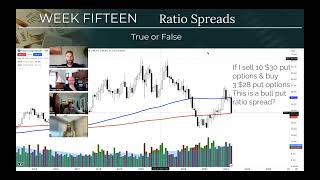
Today we're talking about ratio spreads and calendar spreads. Next we're going to talk about option collars, where we blend the whole thing together. I do use these, although rarely. This is not again, the most frequent strategy I use. I kind of went into when we started talking about spreads, right? From most to least. So credit spreads I do pretty frequently. I would say at least. I usually do a crispr once a month. Debit spreads, probably once every quarter. Ratio spreads and calendar spreads. When the time's right, and it doesn't have to be right always, but when it's correct, when it sounds and feels good, I do it. So I will do ratio spreads much more than I do calendar spreads. A pure definition of a counter spread is when two options that you're trading have different expiry, different strike prices and expiration dates you want. Let's just say expiration dates, different strike prices, different expiration. A ratio spread is when you have a different number of contracts. Simple as that. So we're going to talk about both of these and kind of why you do it. So we're going to start with ratio spreads. So ratio spread, pretty basic, pretty simple, nothing overly complicated. It's when you have a different amount of contracts on either leg. So in this example, you have bought a bear bearish debit spread. So you bought 10 puts, but you only sold five puts against those 10 puts. That would be a 2 to 1 ratio spread. Pretty self explanatory. Now ratio spreads can be debit spreads, Tom, or credit spreads. It depends on how it's structured, right? Depends on which one you bought and which ones you sold. And obviously depending on the ratio simply determines how bullish or bearish a trader is. So if you have more purchase puts and less sold puts, that would mean that you are more bearish. And then if you have more sold puts versus more bought puts, then you're going to be more bullish. So none of that really changes. It's all going to kind of come down to what you are and where you think about it. But it does allow you to really kind of stagger in and kind of ladder your position. All right, so let's do a quick true or false. I want you to type into the chat pane for those who are Here at the got the legends in the building. If I sold a $30 put, this is on Intel. If I sell 1030 put options when the stock is at 35. So this is a real chart, real time chart. Did it last night. If I sell 1030 put options and buy three 28 put options, this is a bull put ratio spread. True or false put in the chat thing. This is a bull put ratio spread. Nice. All right. The answer is true. And the reason it's true is because you've sold 10 and you bought three. So a bullpen spread is when you sell a put and buy a put underneath it always. Because that means that you are protecting your downside.
Right?
You're buying reinsurance on the insurance that you're selling to somebody else. So in this example, to draw it out, the, the blue line is the put that you're selling. That's the insurance that you're selling to someone. Right? Giving them the ability to buy an insurance policy from you that starts at 30. But you say to yourself, but Intel's kind of tanking and I want to have some protection. So I don't want to just sell 10 naked puts. So you buy three $28 put options and that will decrease the amount of margin a little bit, giving you how many naked put options in this example? And obviously the answer is seven, right? 10 minus 10 minus 37. So you still have seven naked puts in this example that are requiring your full margin. But this is a ratio bullput spread. Because you're bullish, because you're only going to make money if the stock goes up sideways or down just a little bit. But you still have some insurance just in case. Does this basic concept make sense or there's any questions that you have on this piece?
Why wouldn't you buy enough to cover your sell position.
In this situation, you're just a little bit more bullish. You don't want to spend the money on the insurance. That's really it.
You're betting more money that it's not going to drop anymore lower than 30. But just in case if it does, you're trying to cover yourself.
Exactly, dude. Exactly. And I, I would say the reason on this exact trade potentially is because intel traded down into the 200 simple on a monthly chart. Right? Which is a really, really strong support. Huge support. So 200 simple on a monthly chart, Intel's gone from 50 to 35. You're pretty bullish on it. So you don't necessarily want to buy the entire insurance cost. Like, you know what I'll get some insurance, but not a lot. So that way I can capture a little bit more of the money. That's it. Ratio, bull, put spread. All right, so let's do a quiz. That was one quiz. Here's another one. If you buy 10105 June puts on this nice update that we're having in the broader markets and sell five $80 June puts, what would this be called? That's dumpy, guys.
It's a debit spread.
Yep. Debit spread. Okay.
That's a. A variation.
Debit ratio spread.
Yeah, I think it's the opposite there. Yeah.
Yep. Bare put ratio spread. Now, the. The name, again, to be clear, is relatively irrelevant. You can call it whatever you want. It is called a bear put ratio spread. But in the case what Joe mentioned said it's a bearish debit ratio spread, and she's correct. Right. So it's a bearish. Because you. You want to make money. If you go down because you have a 105 put, the $80 puts, my friends, are going to offset the cost of those 105s a little bit. Right.
Foreign.
Let's actually go look at this exact trade on ARM today just so we can all see how much this would cost, because I know that a lot of you right now are feeling much better on your overall accounts than you did yesterday, and that's because it's going up, you know, the full moon and, you know, buy low, so high. So long story short, at this exact juncture, there is going to be probably, in my opinion, some relatively decent times to get some bear exposure. Tom, if you were terrified of the market dropping and you're all scared, you know, 48 hours ago, and now there's a little bit of a discount because the markets are kind of getting a little bit of a rally. This is probably a time to pick up some insurance positions or some protection. On the downside, if you really didn't like what your accounts looked like two days ago, this could be one of those situations where you could do something about it. So I'll pull up thinkorswim really quick. Me one second to locate that.
Right.
Some little random screens. All right, so arm. Okay. So if we did June just so we can look at it. So the 105June put on arm right now would cost. We could probably get it for 1420. So if I was buying 10 contracts, Scott, what would that. What damage would that do for me? Which would that cost?
$14,020.
You got it, brother.
Yep.
So let's just do that that way. So $14,200. So that would be approximately the total debit if we just bought the puts by ourselves. Now, maybe that's a little bit. Maybe that's a lot. Maybe that's nothing. Who knows? Whatever. All right, so 14,200. Now, if we sold five of the 85 puts, what would that bring in?
You're selling it or buying it?
Selling it.
So it be 4200.
Almost.
So you're selling 5. So it's 500.
Oh, 5. Sorry, I thought you said 10. Half that. So 2100.
Yep, exactly 2,225. So that would be the decrease of your costs. So you're decreasing your overall $14,000 purchase, and you're. You're decreasing that purchase by 21,000 or 20 $100. So you're, you know, you're spending 12 grand and some change. All right, so going back to the slide for a second, what are the benefits of this particular trade? Well, the benefit is you make money. If ARM goes down, that's the benefit. So this is still a trade that if ARM drops, you still make money. And if this particular stock went to zero, which I know it won't, but if it did, you would still be able to print money on these 105s, because you have five that are uncapped, right. You have five options that have uncapped potential. So you could capture the entire drop of and of five of your put options, because five, you can only make money down to 80. So once it goes below 80, since this is a debit spread, your maximum profit would be if ARM goes from where it is today down to about 80, that would be your maximum profit.
Go. So, quick question. The when you buy the 10 shares at 105. Well, I don't know how that would work. It's confusing in my head. If you hit your target, if you were to buy a put and you hit your target on it, you automatically get back your 14,200. I know it gives you the break even because you got to calculate that $14 into that Scott comment.
You need me?
Well, I mean, it can depend. So let's say if you. You get the $14,000 back whenever you sell it, as long as the contract costs more than $14,000.
Right?
So if you. So if you buy a car for 14,000 and you sell that same car two weeks later because you cleaned it for 16,000, did you get your 14,000 back?
Yes. But if it doesn't hit. I'm just trying to.
So keep in mind, it doesn't have to get. It doesn't have to hit anything. It doesn't have to. It just has to go down. Because you could get out of this position in 17 minutes if you wanted to.
Right.
Because if you buy 10 of the 105 June puts, if this particular stock goes down at all, once you bought it, you can then get out of those positions at any time for more than you got them for, if you want to.
So say it went down a dollar and you made 10 contracts. You made a thousand dollars in your account. Yep. And you exit. Would you still eat that 14,200 or would you. You would only really profit. You'd have only spent 13,200. Right. Because a thousand is only profit.
No, no, no.
You.
You still spent the 14, 000. Your thousand would be profit. So you would have $15,000 of cash flow that would come into your account. But you spent.
Okay, you spent 14 exercises that you lose it, right?
Yeah, correct.
But if you close it, you don't lose. You only lose what the theta has taken.
If it took. If it took any.
It took anything.
Yeah, but if you exercise it, you lose all of them.
You lose all of it if you exercise it.
Correct. But if you don't exercise, you just sell the contract. So it's just like buying a car or buying anything else, Scott, if you buy it and then you sell it, as long as it's more than you sold it for, you receive that premium, you bring in that. You bring in that amount of money. It doesn't have to. It doesn't have to go to 80. Doesn't have to go to 70, Tom. I mean, literally, it could drop, like you said, a dollar that same day. And if this options right now worth 14, let's just say, right? 14,000 per contract or 1400 per contract, and you bought one of them. And if the stock dropped a dollar and this was now worth 15, you could sell it instantly. And that's all puts always and forever. That's always how it'll work for the rest of your natural born life, which is really cool. It's good to know like that certainty.
That is a guarantee in my mindset. I had to make the 14 back, and then I was making profit on top of that.
Nope, you made profit on anything above 14. It's just how much. How much is how much the market drops. Just like, just like anything else, Right? Like if you buy. If you buy. Yeah. Now just go back to the car. If you buy a car for 14 and you sell it for 16, $2,000 of profit.
Yep.
That's the good news. With options, it doesn't, you don't have to make that whole 14, you just got. It just needs a move. And so that's what's cool about this particular trade too is the. Here's what's the fun, the risks of this trade. The risks are the stock does this. Right. That's the risks. Because if the stock just goes ballistic north, how. What's the most amount of money that you can lose? Joe.
You're what you paid for the puts.
Yeah.
So what?
You sold exactly your total debit. Your total debit is your max risk to Scott on an option. So you buy a car for 14 grand, your max risk is 14 grand. So you buy, you buy a bunch of options. This is a debit spread. So it's a limited risk strategy. Your absolute mask. Total risk is the total debit that you spent. That's it. That's your biggest, worst case scenario. So if the stock markets, you lose your debit that you lose the money that you spent, which in this case was 12 grand if you bought 10 contracts.
So you should always just spend the extra money and buy more time then. I do because I, I bought this, but I only did it for the week.
I love buying.
So it was like 800. It was like 850 or something like that.
Okay.
I bought five contracts and of course it's two updates. So. But we knew we're talking it was going to retest that line, which it did yesterday. So I was hoping for a pullback today and it hasn't yet. But I'm hoping that'll come down. But if I would have known in my mind I had to make that back and then to get my profit. So then, because my break even says it's supposed to be at 34.50 or something like that, if I look at my chart, I mean not 3450, it was like 84, 83.50 maybe or something.
I have to pull it up. Yeah, but that's if you hold it all the way to expiration, that's the only way. That's the way you break even. But again, you're buying something of value. So anytime you buy something of value and you sell it at any point in time for more than you bought it for, you're always going to make money.
Hey Jeremy, I thought that same thing before and in practical application of it, what, what I was seeing is that I paid more for an option and that was Great. But my risk was a lot more because I paid more. And when it went against me, I lost more. So is it. I mean, where's the. Does that make sense?
No.
Like $10 for something, for the, you know, $100 put, you pay $10 for a month, or you pay $5 for two weeks. Your risk is either, you know, $5,000 or $10,000. Right, right. So if you're risking $10,000, you have to be prepared that if you lose half of that, you lost all of what you would have risked on the shorter time.
Correct.
I'm just saying that because I got confused on that, doing it not too long ago, and it hurt me when it went the wrong way a lot more than it would have hurt me with a shorter tone, so. But you went the wrong way. If it goes the right way, then.
Yeah, exactly.
Better to have the longer term one because it, you know, it. It appreciates faster.
Exactly.
And there depreciates faster, too.
Yeah.
And there's the crux of trading really, at the end of the day because, you know, it's like an. It's like an insurance policy on your house or let's say a wedding ring. I mean, if you, if you call your, whatever, your, your insurance agent and you want to ensure your wife's engagement ring, I mean, do you really want to tell them, you know, like, I was like, yeah, $300,000. Like, you can. But if it was only worth 50, why are you going to tell them over 300? Because you're going to be paying for 300. Like, you're going to be paying more. So you kind of, at some level, get to choose. Because ultimately for me, I would like to buy time, because time is how you make the most amount of money in trading. Because then in time, then you know, if the trade worked or not or what's actually happening. Because, you know, given a day or two, the market's gonna do whatever it wants to do.
Right.
Over. Over a course of two or three days, it's gonna do whatever. But you gotta get the direction right. If you get the direction right, it's gonna work out. Regardless of what option you get, the shorter time frame, the options will always move faster. We're actually gonna talk about that next. But the shorter the time frame, the faster the options move. So, Scott, if you want to make money very, very quickly, you gotta get the timing correct. Like, you gotta get the direction correct. But you can buy an option. So let's go look at a chart really fast.
Yes. So. So basically, if you're gonna buy an option with short time from how you're explaining it right now. Be very sure on that setup. If you're not 100 sure on the setup, buy more time to give yourself that extra fluff.
That's what I do. Yeah, that's exactly right, ma'.
Am.
I don't know where my train you just disappeared to, but okay, so yeah, let's go look at just, just a random example again, regard, kind of regardless of, you know, the, the timing or whatever is correct. But let's go look at Carvana. And I know Joe's excited about this move today, Tom, but let's say if I pop into a three minute chart. So I'll ask you a question, Scott. Could I have bought that 10 EMA set up right. First bear candle above the 10. Could I have bought a 7350 call option that expired this Friday because today's Tuesday.
Yes.
And sold it when Carvana got to there and made money.
From what you're saying now? Yes. I thought I had to make back that cost of that option. So if that option was 7.30, it was going to cost you $730 for a contract. That's what I was thinking in my head. So it didn't go up in my mind. It wasn't going up that high. So I would have lost money.
Yeah, no fair point. And, and you would only do that if you want to make a 100 return or hold the trade to expiration. Because if you're going to hold an option to expiration, then you're going to want it to really, really move that far ultimately. Because that's why callers are so effective. Because if you know when it expires and expires in the money, something's going to happen to your account if you want that to happen to the account. Otherwise you need to get out. And, and we'll show you really quick just so you can kind of see. This was the appreciation today of, of that option we just talked about. So the, the $73 call of on Carvana again, just so we can see it, you pop it in thinkorswim, you can paste that option. Right? We talked about that recently. That option today, today went from $3 to $5. So if you bought it at 3, so you buy a car at $3,000 and then you sell it to your buddy for $5,000, you made $2,000 all day, every day. That's the cool part about options. That's a cool part about trading. That's cool. Part about math, it's just like it all boils down to numbers and those numbers never change. And I think.
Sorry, I just, I was going to say. And should it kind of be tied into like the time frame you are trading? Like in the day trading, you'd want to do shorter term to have the bigger moves, whereas in the longer term you have more room for that to go up and down. If you go the length on the day one, it's not going to move enough.
Bingo. My girl. You nailed it. That's absolutely right. So now let's go look at. Just so that we can drive Joe Joe's point home. If I go look at a June $70 call, right, essentially the exact same call option, more or less that one today, you would have bought it when you bought the other one at three and sold it at five, you'd have bought this one at 14 and now it's worth 15. So the faster one, not only was it cheaper, I mean the. The one that expires this week moved 50%. ROI, yes or yes, moved 50%. When the stock moved three and a half, the option moved 50%. And this one, right. Moved a dollar. Boo. Not even a 10 return. How lame. That's options for you. The shorter you buy an option, the faster they move.
So if me and you have the same target and I have a shorter time frame than you do, I'll make more money at the end of the day, even that it moves the same distance.
Will you make more money? Maybe not. Maybe not more money. You will likely make a bigger return on your investment.
Oh, because I'm not spending so much up front, Right?
Right.
You get all of that back anyways if you were to exit at the same time as me, right?
Potentially, yeah, potentially. So let's just use this exact example, right? On Carvana, the exact example. So if you would have bought 10 contracts of the what, it would say $73 call. So you would have bought it for, what was it? 3. You buy for 3 and sold it at 5. So 10 contracts on anything is a thousand shares. So you'd have made two grand if I bought ten contracts. Your investment, by the way, your investment investment was 3,000 and you made 2,000. So whatever the ROI is on that. Now, if I did a longer term option, I bought 10 contracts. So I bought 10 contracts and I bought them at 14. I invested 14 grand, invested $14,000. I sold same exact trade, right? We did a day trade, I sold at 15. So I made $15,000. My ROI term investment was well, that's the formula. My profit was $1,000, so I did a thousand divided by 14. When you did 2,000 divided by 3. So we made almost the same amount of money, right? You made 2000, I made 1000. Your return on investment was a lot bigger than mine. Is that making sense, brother?
Yeah. However, if it would have went the other way, you would be a lot safer than me. I would have lost a lot more. You would have been still okay with yourself.
And there's the option game, dude. Yep. So, you know, and it. It all comes down to risk, because if you're like, hey, I think Carvana can move today based on whatever reason, you know, and you. You know, you made the $2, but could you have lost the 3? And the answer is, yeah, like, if it didn't, if it went straight down today, I'm only down probably a dollar, and you're down three. And I still got a whole two months for that trade to come back for me, and you don't. So devil's in the details. Indeed, indeed. That's why the timing of these things are so crucial. Great question. Good job. This is awesome. This is such a fun class. All right, so now we're going to talk a little bit about this concept, too. But let's just imagine that this did happen for a week. So ARM pops really strongly. Garrett, since ARM popped strongly and you sold these puts, could you. And they. And you. And we sold them for how much? In that example? 4.35 that we just looked at. How much. How much could you buy those back in? Let's just say three weeks? If ARM popped up to 110, as a rough example.
They would be almost. Almost free at that point. But your other ones would have lost.
A lot of money. Yeah. So this one would be worth probably, let's just say, for example, 45 cents, right?
Yeah.
Okay. And then the June 10, 105 that they were originally worth, we said 14. They'd probably be worth six. Five.
Six. Yeah. Okay.
I guess so now earnings comes around. And again, just as an example, earnings comes around, and then stock drops again, goes back to 90. Scott. At that point, the options that were now worth six potentially would be worth what? Let's say 15. And if you bought them at 14 and sold them at 15, you made a dollar per share profit. Plus the sold puts that you also purchase back. You realize that gain as well, and that was a $4. So technically, on this trade, you would have made $5 of profit per share, And that's what's interesting about rebought that call though, right?
You could have recall. Sorry. You could have rebought the sale put at 80.
We did, yeah, we, we repurchased it. Yep.
We, we rebought 45 cents. I got you. Okay. Sorry.
No, no, no, you're good, you're good. Yeah, you're exactly right, brother. We repurchased that sold put when it started to bounce. You're exactly right.
So it's good when it, if it moves the wrong. The direction that you weren't planning then to. Yeah, close, close the sale side while that's in profit because the, the other side's almost negative and. Or it's very small anyways and see if it comes down again or not.
See, and that's why I kind of like debit spreads every now and then. It's like, what if you kind of get the timing a little bit wrong or whatever? It just goes totally opposite you. You, you don't get as hosed in the face. I mean, again, just something to consider, just something to be aware of because it allows you to just know that this exists. And, and the cool feature of this particular trade is, you know, when you have the 105 long put and then the 80 sold put, if the stock really does do this and this, which, you know, that's my expectation anyway over the next two, three weeks, if that actually happens, then you still have five uncapped, you know, options to make a really, really good return on and you're capped. So if it goes all the way down to whatever 55, you're capped on five of them. So those, you know, you made your most amount of money that you could make and then the other five are uncapped. But the whole trade itself still reduced your overall investment without really ultimately affecting the trade at all. There's no real ultimate negativity. Unless of course, this closes in the money, which we've talked about a million times. You don't want this to close in the money at expiration because if this closes in the money you bought 10, you sold five, five of them are going to cancel each other out. You have the other five that aren't attached to anything. So you have five long puts that expire in the money. Your broker is going to auto sell 500 shares of ARM, and if you don't have shares to sell, you're going to be short 500 shares. So, so it's like that's, that's options for you don't let them expire in the money ever if you don't want something to happen to your account, and if you do want to sell 500 shares because you own those 500 shares, then good. This is essentially a. Just a cheaper way to have insurance.
For. If you end up short. Does that mean that, like, you're just. They take the money out of your account as well as you bought them to. To sell, like to sell them short or.
No, it would just be regular trade. Right. Because when you sell a sock, short money comes into your account.
Oh, okay.
Yeah. So you would have the cash of 500 shares on ARM, but your negative shares. So if drops, then it's just a regular old short position at that point.
So they put money into your account.
Yep.
Anytime you short money comes in and shares are owed.
So. So if that did close in the money, it would be the same as the other scenarios. You would have to do the math to say, is it worth owning or not owning at that point to cancel and take the hit on your account.
Yeah. Because in this. Exactly. You always want to just make sure, you know, because you. Essentially what I'm saying is you could do this trade, and if you had 500 shares long of ARM, you have no risk other than you have to sell those 500 shares. Right. If the uncapped five options expire in the money, if it's just a regular old debit spread, 5 and 5 or 10 and 10, and it fully expires in money, it has all the. All the appropriate options to cancel each other out. If you have 500 shares of ARM and this stock in this position, this exact position, closed below 105 in the money, you have to sell 500 shares. And if you have 500 shares to sell, that means you're going to be short 500 shares. Your cash balance would increase and you'd be negative 500 shares that you have to then buy to cover with all the cash that you got, just like a regular short position. But that's not because of the strategy. That's just what a put option is. Right. If you let a put option expire in the money at expiration date and you don't have the shares to sell, you're going to be short. That has nothing to do with this strategy. That's just what a put does, because a put is the right to sell, and your rights become obligations at expiration. All right, let's have some more fun with that. Dun, dun, dun, dun. All right, Garrett, here we go. He's. He's. He knows all about calendar spread. So if you Have a bare put spread, which we talked about earlier. Right. Bearish debit spread. So you bought 10 puts for June, but you sold 10 puts for May 17th. Same amount of contracts. This is a calendar spread because of what exactly? The different expirations. Now why or what's the point of having different expirations? Well, let's do a quick little example. This is not a trade that I did. This is just purely a chart example. So Scott, you buy a call option with 365 days to expiration. Is that, Is that call option going to move fast or move slow?
Slow.
Gonna move slow.
Yep.
Correct. But you can hold it for eight, nine months. Correct. All right, so let's say you buy a call option and you own a call option at the blue arrow. Are you profitable after it went up? Yes or. Yes. All right. And the answer is. Yeah, you're exactly. Your call has increased in value. And Joe, you're going to love this.
This, you're.
This is so much fun. So you have a longer term call. You own that longer term call. It's an asset that you purchase. And what do you do with it? You sell two week call expirations. Now you own one with 365 days. How can you sell a call option with a different expiration against a call that you own? That's because you own the underlying asset, the call option. A call option is the right to buy the stock. Just like a stock. That's what a stock is, right? You own the right to buy the stock. So when you sell a two week call expiration, the reason they're not naked calls is because you own the right to buy the stock at a lower price.
Are they at the same strike then? No, they don't have to be.
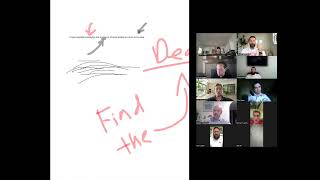
No, no. Totally different strikes. So this one, this one down here is the 120 call option. Tom, this up here, you sold a 130 call option. So I'll flip this on your head for just a second because we're gonna talk about this again more next week. But here, let's say you just bought the stock, right? Joe, you're familiar with that. So you bought the stock, stock goes up. Can you sell a option that expires in two weeks? A call option?
Yep.
So now imagine instead of doing that with shares, just do a call option. Same exact process, but you just don't own the shares. The call option that you sell gets attached to what? This call option that has a longer term expiration date. So effectively, if I do the math here for a second, this option, let's just say cost $20. When the stock was going up. You sold three separate times, Joe, a two week expiration. So how much money did you bring in in this example? With your experience on a 130 stock, would you bring in selling that call option?
A couple bucks. A couple bucks?
Yeah.
Let's say, let's say $2. Exactly. So that was, that was $2. Let me do this in red. Hold on. Okay, so this one, this one's two bucks. How much is the other one? You sold another one later on down the road. Is that also $2?
Probably similar, yeah.
Okay, so let's say that one's two. And how much is the third one?
Probably about the same, just because I'd be doing them at a bit higher price if it was moving up.
All right, so that, that means that you have made how many dollars selling calls total?
6.
Huh?
You follow me, Scott? Now how much did the regular call option cost you?
20.
So you have essentially effectively decreased the cost of this option from 20 to 14.
That's a lot cheaper than buying shares.
And Joe just said the key word. It's a lot cheaper than buying shares now at expiration. Joe, can you still exercise this option and end up buying the shares and own the shares if they have gone up in over time?
Yeah.
You sure?
Yep.
Yep, you're exactly right. So you already own the call option. So if you really want shares, you can have them, but you don't have to because you could also just sell the contract, can't you? You don't never have to take possession of the shares error if you don't want to. So that's why this is a current day chart, by the way. Family. I was like right here. You still own the long term call. Could Joe, after she has been in it for six months, could she sell the call option here? She bought it for 20. Could she sell it for 45 and also have made the total of $6 between these three expirations? Yes or yes?
Yes.
And that is the calendar spread. Sc.
I kind of seen them before, but not really. Like use them like this over getting a big long term one and then doing that.
Yeah.
Is that your opinion? Works better that way than the reverse, like buying a shorter one and selling a longer one. Because that didn't work out so good for me.
No. Yeah, you don't want to do that. No, definitely not. This is the right way to do it. Yeah, this is the right way to do it. I got a store.
It was a, it was an effort.
Well, hey, at least you, at least you tried.
It was a learning experience for sure.
That's okay. Yeah. So this, this is definitely the right way to do it. And, and this is how I do calendar spreads. So on the slightly rare event that I buy a nice long term option, call or put, doesn't matter. Now, you guys know I usually buy my calls. Not really a put guy. Whatever. I do this a lot and I mean I got one of these on Silver just recently. Silver had a big pop. I was profit on silver calls and so I sold some calls against Silver and those have different expirations and those had short term expirations. Now Joe, why do you want to sell short term expirations on your longer term position versus selling a really, really long one?
Because overall the stock market will go up or you're thinking the stock is going to go up overall.
Right. And, and the shorter your expiration, the faster those options move. And so if, if instead of I the reason I have a two week expiration here instead of two months, if it was two months, it would take a while for those options to really do anything. And so I'd have to hold through all of this and all of this and all of this, I wouldn't be able to, you know, but since I sold two weeks, it's like, oh, you know, those expire pretty quickly. They just move really, really fast. All right.
It'd also be good if it just goes sideways for a while. Then too if you're selling it on the highs because then it just brings your cost basis down in case it doesn't go up.
Precisely. You nailed it.
So if it does land in the money like you bought it, say at the 100, simple moving. And then it, you thought it was going to hit that and then break down and then it continued to go up. What happens to your long call?
Good, let's talk about that in just a second. That's two. I got a story before. Before the story. Yeah, before this story, just for fun, can you have a ratio calendar spread?
Sure, why not?
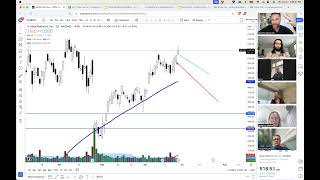
So this would be an example right here. This is a current day chart of a trade that I looked at last night that I actually kind of like. So this is JP Morgan Chase. It's in a strong uptrend, just had a big pullback. Look at all the volume that it's trapping and you know, it's JP Morgan. So this red line is a drawing of what I think JP Morgan probably will do over the next year and a half. That's what the red line is, the purple line is. So you'll notice, look at the, look at the information. I'm buying six January 2026, 190 calls on JP Morgan. I'm a buy six of them. When we have a pop up into 195, I'm going to sell three four week call options. So six and three is a ratio and if it's a four week call option and I'm buying January 2026, obviously that's a calendar. Right? Because the long, long, long, long term call I have and I can sell the shorter term data calls against it. And my expectation is, you know, JP Morgan will kind of, you guys should take a picture of this, by the way. You know, if come back to it in five or six months and this is what it's going to look like. Just let you all know. So the, the ultimate approach of this type of trade is you can own this nice long term core, you know, good position, and you can still sell positions against it the whole time to kind of slowly chip with your cost basis. Kind of like you do on your shares just cost a lot less, right, Joe?
Yeah, it'd be easier to make it down to zero for the cost of the calls then.
So this is called a bull call ratio calendar spread. Don't you just feel smart now? Isn't that fun? Like you know what that means. And so if you ever see one of these and people are like, oh yeah, I, I and it's almost they're on stage and they're making you sound all cool now. You're like, oh, okay. You just, you bought a call and you sold calls against it. Different expiration dates with different amounts of contracts. Congratulations. It's not that cool. Sounds smart, but it's really basic because the, the reason it's a bull call is because I'm bullish and I'm selling calls against the calls that I own. That's why it's bullish. Just like if you own shares and you sell covered calls against your shares, you're bullish on that position. You want that stock to go up. All right, again, as I mentioned, ratio spreads don't really have anything scary about them other than if it closes in the money. But that's just options in general, right? So don't let options expire in the money at expiration unless you want something to happen. I talk about that all the time. Counter spreads can be super fun and useful if you own them. But that's why I do want to definitely tell you a quick Story. Here's the story. All right, Scotty boy. So your boy knew some in 2014, was like, oh, man, I know everything, dude. I'm so cool. So I bought a bunch of calls on Spy. They're long term calls. It was like a year, year out. And I sold calls against my long calls. And this is actually the. This was actually the trade, because I'll never forget it. And was selling calls. Was selling calls, was having a blast. And right here, the. The last one where it says X, it broke out of this resistance and just kept running. I sold calls against it, and look what it did. Just kept running, crazy run. And I got what's called a margin call because my broker was like, hey, Mr. Newsom.
Yep.
You owe $568,000 on a margin call. I was like, why do I owe that amount of money? That seems. That seems like a lot. Yeah, why do half a million? So I didn't know.
Not now.
Yeah, no, I didn't know Garrett back then. So I just couldn't just call Garrett and like, yo, bro, can you loan me half a mil, dude, real quick? So here's what was interesting on this trade. I had long calls, and I was selling my calls against my long calls. My calendar short call closed in the money on Spy. And I had a few contracts, right? Like 35. So that's 35 times 100 or 3,500 shares short on Spy. Now, this will happen to you on a calendar spread if it expires in the money. Because when you sell calls, what you're doing is you are selling an obligation to do what? Exactly, brother, Exactly. Sell the stock. So you're selling obligation to sell the stock. So that's exactly what I did, is I sold 3,500 shares of SPY short. And I was like, well, that's. That's not good. I was telling the broker. I was like, what I do about that? Because the thing is, I did know how this worked in air quotes. I was like, I. But I have my long calls. And he's like, yeah, dude, but they're different expiration dates. They don't do anything you gotta take. Exactly. You have to take assignment of these short shares. I was like, well, I don't have $500,000, dude, to just, like, assign a bunch of short shares. He's like, well, here's the only thing we can do then. We will have to exercise your bot calls, but it's going to cost you. And I was like, oh, oh, dude. Like, how much, bro? He's like, $135. So I was like done. What a gift. Like, absolutely, of course. So what they did is they went to the broker and they auto. They, they exercise my deep in the money long calls because a call option is the right to buy. Right. So they prop. They did this. My shares were short. Since you have short shares, how do you get out of short shares you buy to cover them? So I had a deeper in the money right to buy that fulfilled the higher shares short. So I actually still ended up making money on that trade. Not a lot, but I did end up making a little bit of money after I spent the $135 commission check for them to exercise this option. The reason I'm sharing the story is because that will happen if you are in a calendar spread. And even though you have a long call and long call is the ownership of shares, if that call has a different expiration date than the calls that you sell, they will not off balance each other and you will get your option exercised.
Was it the same amount of bot calls?
Yeah, it was. Thank God.
Yeah.
I wasn't, I wasn't practicing with ratio spreads yet, but same same amount. So that was the. Now, now here's a good question, Joe. It could have been. It could have been. Let's say I bought 35 bought calls. Would the margin have been less if I only sold 25 soldier?
Yes.
Yeah. Correct. The answer is yes, because I would, that, that would have been a ratio spread at the time and I would have had to only owe instead of 3, 500 shares short, I would have only had to do 2500 shares short. So they would have still done the math. I still would have ended up paying a commission. All that stuff would have still happened. But I would have, I would have kept 10 longer term calls that I would have been able to hold on to for that little pump right there.
Does your broker have the right not to do what they did to you?
Yeah, they do. They could. Just me for sure.
So I.
It can, it can depend on how stringy they want to be, man. Yeah, they could have. Here's the truth is in that exact situation, I could have done the margin. I would have had to exit every, every position that I was in. And so if you have, if you have $250,000 of equity in your account, which I had at the time.
Right.
How much margin does that give you technically for swing trades? It gives you half a million. So I could have, I would have just had to sell some long term positions. I would have had to sell some short term positions. I could have been okay in the situation, but again, could you have gotten really sticky and this could have been a big problem. And the answer is it can be.
Yeah.
It could have been like, like Joe was thinking if I had sold like something crazy, you know, like what if I had sold 60 calls against my 35 long calls? That would have been ouchtown. That would have been bad. I don't really know what I would have done in that situation, but I didn't do that actually. So that's nice.
So the money that you made on your 3500 calls from basically 75 bucks, $175 all the way up to 195.
Yep.
That was a $20 difference. Wouldn't have covered the cost.
It did. That's why I still, I still made money on the trade. But it wouldn't have covered since they're.
Buying at the peak at that point.
Right? Yeah, but, but yes, correct. But since the expirations was different, I still had to take assignment of 3,500short shares. So I still made money on the trade because the. I did own long calls that were very profitable. But the short calls, since they close in the money, I had to take ownership of the short shares because the expirations are different. If the expirations were the same, which is what we're going to talk about next week, then all would have been good. They just would have close them. They would have close everything out. The this call would have satisfied this call and it would have been a debit spread and all good. I would have made whatever made on the trade $1,600 and that would have been that. Now the, the cool part about this trade is I did still make money on these, on these four. You know, so that was like. And that was really like literally probably thousand dollars on each one. So this was a, this was a scare that, that taught me some things. So next week as we're. We're kind of building into option collars. It's all we're building into. So I'm not going to overwhelm you, but option collars, that's next Tuesday is where we just go with everything that we've learned so far. With the option positions you can do with never owning shares ever. And if you want full protection and you know, the expiration dates and all the things, I'll kind of walk you through and give you some guidance on how that can look and how that is shaped out. Okay. For those on this call, if you want to send me some homework and just go look at a chart and send me what you could have done or where or when or epic or a live trade that you would like, you know, reviewing on. On a debit spread or a ratio spread or a calendar spread. Feel free to. And I'm happy to look it over for you. Great job buying back your Lulu spread, Joe. And well done on the Google caller. Did you do that on all of your shares or just 100?
Half of it. Yeah, just 100. I have 200 of them, so I love it.
Beautiful. Beautiful. Well, keep me posted. If anyone needs anything, I'm here. I'll be here on Thursday. And Thursday Tesla earnings tonight. So.
I bought a couple of contracts on that from yesterday's call, too. And I'm like, my. Every time I buy options that whatever I do, just do the opposite of me and you'll be all right.
Make sure to let us know, then.
Yeah, let us know, Scott. All right, family. I'll see you guys.