April 4th, 2024 Ultra Wealth COVERED CALLS
Recorded live teaching session (Apr 4, 2024) hosted by Jerremy Newsome reviewing members' option trades and explaining three primary option strategies he uses: put sales, covered calls, and collars. The transcript walks through real examples (Tesla, Google, Roblox, Apple, AMD), explains key mechanics (expiration/theta, rolling, assignment/what happens when options are ITM), risk management guidance (buying protective puts, avoiding naked calls unless approved), and gives practical homework to practice covered calls. The tone is instructional, conversational, and practice-oriented.
Chapters
Beautiful. Thanks everyone for being here. Switch microphones. Wonderful. Sure you can still hear me?
Yep.
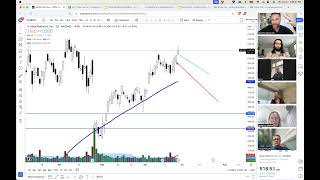
Okay. You can still hear me. Lovely. All right, fam. Welcome to Thursday. The best day of the week for me is when I get to hang out with you special humans and individuals. So thank you for doing life with me. Let's go and review some of the markets and talk about some strategies. Again, as a reminder, most of most of you said yes that you want more option info. So Tuesdays starting next week, we're going to dive into the more additional strategies and how everything works and how we can use them and trade with them. But also, that being stated, I'll make sure that in this particular portion, I'm going to stick to the main three, really go deep with those three, practice them back, trade them, just to make sure that you're also very comfortable with my main strategies because I don't want to mix and match and get anyone confused. The put sale, the covered call and the collar are the three things I do the most for wealth, without question. Everything else is kind of like a bonus. I happen to know it. I'm not going to overwhelm you with my options knowledge because you can do everything and then do nothing. So I just want to make sure that you know that this, these are the components that are really, really, really going to help your game. All right, that being said, here we go. Okay, perfect. Just for three minutes. Let's go review some of your trades and charts. And we're going to start with Sue's charts on Advanced Auto Parts. She did the daily chart all the way back in 2009, which is really cool because she was trading Advanced Auto Parts during a depression and didn't get put shares. How fun is that? So she was selling some puts and she was using the long term moving averages. She was using the daily chart, selling about four weeks worth of time and again, never got put some shares. It's good just to practice, just to see where you would do certain strategies like that. Great job. Let's go look at Jeremy's. So dollar tree. Good old dltr. Sold some puts, didn't get put some shares, sold some puts, didn't get put. This was a great one. These two down here. I love that you kept the same price point. That's kind of the, that's kind of the job of a great trader, right?
If it works once, just like, let's go again. Why not?
No, exactly. That's kind of the point, right? If it works once, why re, you know, complicate it? And it looks like you got. This was my favorite part of your analysis. But you got put shares here.
And.
Look at you taking profit.
And the. And I would have held it, but it was late last night and I was like, I'm just gonna take profit here so I can get my 10th foot in and then I can go to bed.
Yep, that's fair. That's the good type of homework when you're like, dude, Newsom, I'm sleepy.
Start.
Stop it. Yeah. Great job. Great job. And. And it was a cool gap. And again, looking at it too, you can probably see. And now you all start to notice that this is obviously a wave 2. The gap up was the start or a formation of a wave three to some degree. And that's why I can kind of continue higher from there. Anyway, great job, man. I love that you got put some shares. That's beautiful. Random time for Dollar Tree 2017. How did you pick Dollar Tree? Who's. Who's back trading Dollar Tre?
I was, I've been, I've been watching it because there was a nice setup, but then I forgot about it. And then I was like, what, what? I think someone else did Walmart. I was gonna do Walmart. And I was like, I'll do the dollar. Why not?
Perfect. No, that's. That's what I'm talking about, man. That's what I love. That's what I love. So good job. And we all know what Dollar Tree is. We all know how it works, right? So again, shout outs to companies that we, we interact with on a frequent basis. Okay, good stuff there. Give me three seconds. Our girl Nancy Jones back from Antarctica. And you did it again, Nancy. You won on everything.
Yeah, I would have thought I could.
Have got put chairs at some point in time.
It didn't happen.
Amazing. So this is a good reminder for all of us who are here, and I said this in our very first class, don't expect to get ultimately crazy rich with these things. Right? These are cushions to your portfolio. These are when the markets are boring, when you can't find good trades, when you're doing scans and you don't know what else to do, you could always make some money on put sales. And last but not least, if you're really busy, if you're selling millions of dollars of real estate like John, if you're flipping millions of dollars of real estate like Eric, if you're doing million dollar deals like Jeff and Scott and you just don't have time to day trade or actually swing trade, could you just Pop in, sell some puts, leave the market alone for two or three weeks and make 1 or 2%. And the answer is yes.
That's what.
That's what's stunning. It's about knowing how the process works. Right? That's the truth. And for anyone who's in a slump, this is usually one of the. That I give them. It's like, hey, sell some puts. Because it. You got to do something wrong to mess this one up. Like, you have to do zero analysis to mess up a put sale. You know, like you just got to really be a dum dum and just do something totally wrong to mess up these bad boys. So, Nancy, great job. Beautiful work. I loved this one. That was again, good. I just loved all of them. It was a good, good job. And again, this was Netflix 2017. So just a random time, random practice. Okay. Jeremy, Sue. All right, perfect. Now, Eric, walk me through if that's okay. If you don't mind sharing how you made so much money on this Tesla put sale, can you please walk us through on this? When did you do it? Why? How'd you pick these prices?
Well, I just remember the rule of when there's three or more down days that, that it would be good to do puts. And I looked at the 150 level and I thought to myself, I wouldn't mind owning some at 150. So that's the level I did it at. And then we had the bounce and I closed it out today. A couple hours ago.
Do you remember what day you sold?
It worked great. Yeah. That big. I sold it four days. Four days ago with that big. When that, see the hammer candle there got. Was towards the bottom of that hand or hammer candle, I would happen to.
Be that day right there. Yep, got it. So. So third down day in a row, what you're saying?
Yeah. Yep. And everybody's loading up on Tesla now. So I thought, well, I, you know, essentially it would have been about a hundred and forty five dollars per share purchase if I ended up with it, so. But I made 300 bucks in a couple days. Four days. I was.
Let's look at this really quick. Okay, so walk me through it. So when you saw this midday, which strike did you sell and which expiration?
I did. May 17th expiration, $150 strike.
Beautiful. Beautiful. And you bought it back today because it was five trading days and you got your 50.
Yep.
Awesome. I love it. Garrett did the exact same thing today. Garrett sold himself some puts as well. Or on this pullback mid intraday. So when it retested the hive yesterday, which crazy that this retest gap retested. I would never have expected that. And pulled into the high of yesterday and bounced off the high of yesterday. He sold some puts at 160. And when did yours expire, Garrett?
Those were 426 puts.
426. So late April. So you bought those back for 50 off today as well?
Yeah.
Killer. Great work.
Matter of fact, I just sold some new 160 puts for next week.
Oh, nice. Do it again.
And paid for my 170 foots. Completely.
Great job, man.
About, just about five minutes ago.
I love that. Well done, well done, well done. That's awesome.
I got out of there, I got other shares at 175 and I've been picking them up on the way down now. And I actually made money on the way down because those puts I had.
Yeah, congrats.
And I'm back in again.
Almost.
I'm back 80 in.
Okay.
The Tesla long and I've got my, my 170 puts that I bought still. And now I have 160 puts that I sold.
Again.
Okay, sweet.
Sold them again down there. And now you know, it's paid for.
So.
Yeah, it worked out really good.
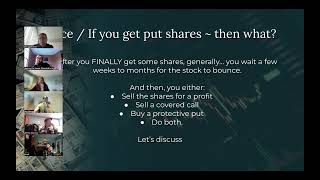
Great work, great work. So foot sales. We, we, we've. I think we probably have all at this stage kind of more or less mastered or we're understanding of them, we're aware of them, we know some of the rules. I, I think most of you at this stage have probably done some with either real money or at least definitely virtual money. And if you have any questions, let me know because the big, the big question may be, might be. All right, so if you get put some shares, then what? Right? What if. Because again, keep in mind these, this is not a strategy that you're going to use to make a bunch of money all the time. Depends on how much you want to be in from the computer, of course. Right. When you're selling your puts. But when you get put to shares, if you get put to shares, then kind of like Garrett just said a moment ago, well, then you can sell your, you can sell your shares for a profit. I mean, you own them, right, Jeremy, that's what you did on your stock. So that's, that's a pre, duh, duh, no brainer move. Or you can, after you're in the shares, you can sell a covered call because you're in the shares. So if you sell a call, it's covered. You can buy a protective put or you can do both. And that's what we're going to be walking through, really, for the rest of the month, is just kind of continuing to practice some of the timing mechanisms of these, because timing is everything. And the way you get really, really beautiful wealth is, again, we start blending all of the components of. I really love this trade, Tom. I'm selling some puts, I'm getting put some shares. I'm also potentially most likely buying shares independently of the put sale, Right, because put sale is just. Just your. The sprinkle on top of your stake, right? And you. You got some share ownership. So now that you're in those shares, my very first strategy ever, other than obviously just buying stock, was the covered call. My girl Nancy says. So as long as the sold puts and bought puts are different strikes or different dates, they can be in the same account. Correct. And we'll talk about that on Tuesday when we get more into debit spreads and calendar spreads. But yeah, that's a great question. They have to be different strikes or different expiration dates, and they can be in the same account. Yep, great question. So this was. This is just an example chart. I did not do this trade. This is on Roblox. So pure example stock. So selling a call option above where you bought the stock, you're going to get a credit for this transaction. So selling calls brings in cash into your account. So imagine you're doing a put sale. You get put some shares, and this is the big takeaway. Anytime I talk about owning shares and getting put shares, this happens in September. A month and a half later, you're up on the position, and then you start selling some calls. Joe, can you imagine waiting a month and a half to be profitable on a position?
They've done that once or twice.
It's like seven weeks. Seven weeks of waiting. So it's a good reminder when we're backtracking that sometimes it takes time. It's okay. It's a good reminder for you to know that I also am doing this. I will get in a position, ladies and gentlemen, and I'm just waiting for three or four months. This is the portion. This is how you do it in real estate, right, Eric? You got to buy a house, you got to put a little bit of work into it, and you got to wait a little bit. Usually it doesn't happen within days. And this is just. It can be. Oftentimes it's just less stress. Now, this is true as I. I did not put shares on Roblox, but I am in shares of Roblox and I have been selling cover calls at each one of these purple, purple arrows. So each purple arrow I have been selling some call options and most recently I'm in a May expiration on rblx. So this is a real trade. I am actually in some chairs. And very, very similar to selling puts, right? This is a, a contract that kind of does its thing independently of a stock. That's what a lot of people forget is options. These are still insurance positions. So a call option is an insurance for a short seller. The contract increases in value as the stock goes up, AKA they become more profitable the higher the position goes. In my opinion, the only real goal of a covered call is to sell a call option higher than where you bought the stock. Because I care about liquidity. That's one of my, like my values in life is like loyalty, punctuality, and liquidity, like my three values. Because when I sell a position, if I get called away on that position, I'm going to get called away higher than I bought the sock. So why do I really care? Because if there are so many deals out there, right? Family, if there's thousands of stocks to choose from, just go find another one, do an hour of research on the weekend and go find something else. And as mentioned previously, I usually try to sell about two months or less worth the time on a covered call. And my aim is to receive around 1% of the stock price for the option. So, two months or less. Who can tell me and tell everyone else here why you think that number is different than the put sale number? Okay, the answer is puts will always be worth more than call options. That's why. So when you sell put options, you always, you always be able to bring in more money. Who can tell me why that is?
More risk?
Nope.
More risk.
Let's move faster.
People are scared of stocks going down more than they're scared of stocks going up, right? You ever heard of the slope of hope? Like right now, when the market's going up, it just goes up and up and up slowly. Everyone, whatever, no one panics. But one down day and everyone freaks out, right? One little blip of selling and everyone loses their mind. So puts are always worth more than, than calls. I mean, 98% of the time. Because people are just generally more afraid of stocks going down than they are afraid of stocks going up. They're, they just have more fear. There's more panic out there. So that's a reason why I generally will sell longer. But I don't always have to. I'M always, ladies and gentlemen, going to go through some of the expiration dates and just look to see what's available. Because write this down if you're taking notes. I will always sell less time if I can. If I can get the same amount of premium, roughly, I will choose less time because then I get paid to wait, I get paid to be patient, and then I get to see what the stock did after that progression of time. Any questions so far? Okay, cool. So check this out. Three of you have already asked me about this term, so I'm about to demystify a term for you, and it'll be worth the whole class. It's called rolling. Rolling the covered call. So rolling actually, when you have rolling an option, realistically that's in black four seconds.
All right?
Rolling any option simply means exiting the option and getting into another one. That's what that means. There is no button where you're like, I'm just gonna roll my contract like that. That means you're getting out of it and then you're just getting into another one. And as Nancy said earlier, it's, it's generally 99 of the time. Another expiration. So when Eric, when Eric sold a put sale a couple days ago and bought his put sale back, if you were to later today sell a put sale again, same expiration, different expiration, different strike, that would be rolling the option. That's the technical term. So when I roll an option, I still follow all of my option selling rules. Which means when you sell a call, right? Keeping in mind, anytime you sell something, that's the most that you're going to get for it, when you sell it, that, that, that rule kind of applies. So when you sell an option, you want the option to decrease. So you sell a put, sell a call. Same exact transaction you have in a value. Once the value is locked in, you want that value to decrease. I sell a call. If it decreases more than 50% within five trading days, I will buy to close the sold call. Does that make sense, Eric? Same exact thing you did on your put sale, except instead of a put, it was a call option. Then if my sold call decreases 75%, but I have more than two weeks left on my expiration, I will buy to close my sold call. Pretty, pretty simple, pretty self explanatory. So that usually means it's happened after this, right? So I've been in the trade for two weeks now, and the premium is evaporated and I sold it for a dollar and now it's worth 25 cents, I can choose to buy it back because I have more than two weeks left until expiration and I'm already captured 75%. Now this one, just so that you know, is how I operate. I know there's some super cool traders that do things differently and that's fine. Like anyone can do whatever they want to do, but the only time I roll my call option is if I can do so for a profit. I don't roll losses. That's not how your boy operates. Because if I sold a covered call, I want to get liquid. So get me out of the stock. Fair. I don't care. Whatever. Get me out. Because the likelihood that I'm going to be able to buy back lower or sell a put later and get the stock for cheaper if I get put to shares or at least make profit on the stock again is like 99.5%. It's a huge number. And again, that's why I say right here, if the stock gaps up and just whatever, like, like Carvana, right. And goes and closes above whatever, does whatever it wants to do and I get called away, cool. I'm liquid. I sold a position. I can reinvest that cash into something else because that's the thing that people forget about. Compounding interest. If you take an account from 300,000, you turn into 340,000 in a month. And now you're trading that 340,000. You're not trading 300,000 anymore. So you make a 10% return on 340,000. Poof. Now you got 375. And that can happen in a month. Sue says the great part is it frees up your cash to go to another trade sooner. Exactly. You're a liquid girl. Jason Chase loves liquidity. That dude, that dude is moving some positions.
I got really lucky on smci. That was one heck of a trade.
Yeah. Hey man, luck is good. I'll take a look.
I'll take it. I'll take it. I bought, I bought calls right before it got listed on S P. Yeah.
Well done, buddy. Wow, that's awesome. Okay, so we'll, we can talk more about rolling and we're going to practice rolling with options because this is really again the big term that, you know, a bunch of YouTubers will use. Like I just rolled my option into another one and got paid a credit. No, they exited the option. They took a loss or a gain and they got into another one. That's what they did. So I don't, I don't really use the term rolling. I Just say I got out or I exited my position and I got into another one. So now we're going to step into practicing the covered call. And I think most of you have probably nailed this piece, but I'm gonna go pick on a real example. Let's go look at Google. And I was chatting with my boy Scott. Scott and Joe are both in Google, and they both have the same covered call because they both love money. So, team, walk me through. I'm gonna go with Scott. Scott, walk me through what happened or is happening to this particular option right here. What did you sell it for, when did you sell it, and how much did you sell it for? And how much is it worth now?
I sold mine on March 22, it looks like. Is that it? Yeah.
Gosh, Joe, you're so good. All right, Joe sold on a strong, powerful update. Beautiful. How much did you bring in?
$2.
Amazing. $2. And how much is it worth now?
I think it's like 225 right now still. Maybe. Or actually haven't looked since it came.
Oh, it'll be. It'll be a lot less than that.
Yeah, just thinking earlier today, but. Well, it looks like it's $1.94.
Perfect. $94. That's going to be some beautiful premium evaporation tomorrow. Does it. Does it expire tomorrow or. It's next Friday for you, right? Or two Fridays from now?
Yeah, 19.
Yeah, you'll still get some good. You'll get some good premium evaporation tomorrow. Tomorrow on Monday. Because that. That one's going to start tick, tick, tick, tick, tick, tick, tick. It's gonna. You're gonna love to see it just, like, slowly fade away into the distance. It's awesome. All right, Scott, what about you, big guy?
So I says the average cost basis, it. Mine's at $131 right now.
I'm so sorry. Mine was at 250, not $2.
Got it. Okay, so 131 for Scott. That's what the option is right now, or that's what you sold it for?
That's what it is right now.
Okay.
How much do you sell it for?
I haven't sold it. Oh, when I put it in?
Yep.
When you sold it initially, it says.
It'S A$28, which I don't understand because it says I'm up on the call, but it's going backwards, right?
Well, that's correct. So the reason it says that you're up is because you bought it for A$28 and it's worth A$31. So that means that you're. The call option itself has increased in value because Google went up after you sold it. So that means that you sold it on one of these days in here.
Yeah.
And since then Google has gone up in value because again, the call option is an independent contract. So if Google goes up, the call option is going to go up. But yours expires tomorrow. Right. And yours is also 155 or 150.
We lost here.
I know you're locked up there for a bit.
Oh, sorry. Can you, can you hear me now?
Yeah.
Okay. What? Yours is 155 or 150, Scott?
155.
Beautiful. So tomorrow you're going to see the option is worth a dollar 31. At open tomorrow morning, this will be worth like 80 cents. And then at noon it'll be worth like 50 cents. And then by one o' clock in the afternoon will be worth 10 cents. So all of this premium is going to die tomorrow. Who can tell me why that's going to happen? So this is really perfect timing that you guys are in these trades because we're, we're going to get to see these covered calls, really plan out as it's happening. So Scott's expires tomorrow at 155. Jeremy, walk me through what's happening with that contract. Why did I mention it's going to die so quickly tomorrow?
I. I don't. I'm not entirely sure, honestly.
Well, you're about to. You're about to be. So the answer is for him. Go ahead, Scott. Let's see if you can do it.
I was gonna say just because it's so far, it. When it moves farther away from your target, it's worth more because the likelihood of getting. They want to pay you out to get or try to pay you out for less or something.
I don't know.
I really don't know.
So the. The answer is it's all about the expiration. That's the key. And there is a particular type of option, Greek, that we will be exploring as time goes on, called theta. And there is one humongous rule, Tom, one large rule. With options at expiration, it will be worth zero if it's not in the money. That is a hard and fast, always will be accurate rule. So in the money means the contract strike price for either a call or a put needs to be above or below the actual stock price, depending on if it's a call or if it's a put. Who wants to tell Me. What is Scott's break even price on Google for tomorrow?
155 plus 128.
Exactly. Yeah, you got to, Joe. 155 plus 128. So that means you don't even need to do anything tomorrow, Scott, unless it's above 1:56 and 28 cents because you're going to be breaking even all the way up until that price. Anything above there just means that you're losing out on money you could have made. That's all. That means if you did not have the call option, but tomorrow Google will close below 155. And that's because we did the wave count a long time ago. Remember Jeff, on the hourly chart together, Remember that wave count? It was perfect. We did 1, 2, 3, 4, 5. That was, that was weeks ago. In fact, we, we literally did it on that gap up right there. So we have a wave five. We've made a new all time high. We had a gap down this morning. People are selling to lock in profits and the stock is pulling farther and farther away from 155. Scott bought a call option which literally says I have the right to buy this thing at 155. After this particular day, which is tomorrow. If Google is not above 155 tomorrow, which it won't be, that means that the option's worth nothing because he has a contract that he sold to someone else that has the ability to buy Google at 155 when Google presently is at 1:51. Why would someone want to buy something at 155 if they can buy it on the open market at 151 on the day they need to do that. And the answer is they wouldn't. There's no value to that. If it has more time, maybe. But since the tomorrow is Scott's expiration, that's not going to happen. No one's going to pay for that contract. Therefore the option that he sold becomes worthless. He keeps all of his money. And true or false, he can do that exact same covered call again next week.
True.
The answer is true. So this, this option rule right here is humongous because with covered calls, this is actually why I do them so often, I really, really love this particular perspective because right here his, the option that he was, the option itself was showing probably a, a negative number right there. So on that day his option was showing a red number, but his shares were showing a green number. And that's because Google is above 155. So the stock itself was going up, but he sold a call option and this stock was above 155. So the call option was losing value, meaning it was less valuable. Sorry, it was more valuable than when he sold it because it's a independent contract that moves and moves however it wants to, depending on the stock. Meaning this is. This kind of feels like worst case scenario. Sorry, sorry, sorry, sorry. Best case scenario for Scott, worst case scenario for the call buyer, because it's almost expiration right tomorrow, and Google's pulling back from that resistance, which is what Scott wants, because he wants to keep his shares and do some more of these things because Google's going to go higher over time. And since earnings is coming up, what do you all think Scott should do? Should he sell a call before earnings that expires before earnings, and then as earnings approaches, he gets into a nice little collar, which we're going to talk about on Monday. Yes or yes. And the answer is yes. So he wants to stay in these shares, keep owning them, do another covered call, bring in some more cash, and then right before earnings. So we can actually look at the expiration and we can see that he would be able to do a regular April expiration, which is the one that Joe did Friday the 19th. And then on Monday, April 22nd, Scott and Joe will be able to do a collar on Google, protecting it from what's likely going to happen, which is going to gap down and then go higher. Now, why do I say that? It's like. Well, that's just what happened the last two times. I don't know. It could gap up. And if Google gaps up on this earnings. Go ahead and write this down. If Google gaps up on this earnings, it's going to rampage. How do I know that, Jeremy?
It'll be going into another. Because we expect like an ABC correction. And then it could be starting like another up wave. So like a wave one into a bullish Elliott wave.
Is there anything. That's one correct answer. What else?
Is there anything to the left of it?
There you go. Good job, Joe. Good job, Garrett. There's nothing to the left at all. All right, let me pick on Jason Chase. Jason, give me a fundamental reason why.
Because it always does. When it gaps up. It always runs.
Nope.
Let me look at the chat.
Yeah.
Give me like a. A numerical reason why it would move so big or like a fundamental news story reason that would crush if the gaps above.
Can I ask a quick question about the covered call?
Yes, sir.
So see Google, right? Say I had an offer and I needed to cash out my shares to get some liquidity. And I cashed out of Google and then my covered call was going to expire and now I don't have shares in it. Does it buy shares at that point? Same thing as a put would do to close it or how does that transaction work?
Good question. So I would suggest you do one of two things, but I will answer your question. So let me, let me go off the screen share for just a moment. So the answer to your question is if you just close the stock today, sell your shares, you have liquidity that comes into your account, but you now have a sold call, and that call has no shares underlined to it, which means it's a naked call that's actually going to increase your margin and decrease your liquidity. So you probably don't want to do that. Now. You could wait for later tomorrow because later tomorrow you'll be able to buy back that option for a profit, realize cash on the option sale and then, then sell your shares and bring in profitability and liquidity on both transactions. That's what I would do. Now to answer your question, if you have a sold call without any shares and the stock goes into the sold call and you have no shares and expires in the money at expiration, what happens to your account? And the answer is, since you sold a call and you're naked, a call, you end up with short stock at that strike price times however many shares you sold. So if you have a naked call on Google at 155 and Google closed above 155, and if you have 10 contracts, how many shares would you be short? Google at 155,000. Yep. So just like a sold put, if you have a sold put, a sold put does what gives you stock ownership, a naked sold call does what? Shorts the shares for you? Yeah, it's a great question.
So never, never double up then. If I only have like Google, I only have 100 shares in that. So never buy three contracts then. Because if it goes in the money, I'll sell the 100, but I'm going to buy 200, right?
Bingo. And it's not, it's not that you should never do that. I wouldn't say never. What I would say is if you have high enough option approval in your account, you will need the max level of approval to do that, because that's a naked call and that's the highest option approval rating that you need. But if you want to sell naked call options, I would say just make a bunch of money for the next five years and then start doing it because you want to, you want to be really, really crystal clear on that strategy.
Gotcha.
Yep. That's not one you want to play around with. But next week and the week after, I'll show you if you want to do that strategy. Because here's the cool part, guys. I have a strategy that's never talked about, that I'm aware of that's even more cool than a covered call. And it's the same thing as a covered call and gives you still upside protection. Just hang in there. It's going to be sweet. I'll show you guys next week. It's really fun. So anyway, what we're going to go through is that particular aspect. I think that's a great question. I'm just letting you know I would wait just to buy it back because you'll be able to buy it back tomorrow essentially at close of market or right around market for nothing. And then you'll be able to sell your shares of Google.
Yeah.
Good job, man. Okay, any other questions about either Scott's covered call, Joe's covered call, or covered calls in general? This is, this is a solid discussion. This is what we're here for.
So earlier you had it written out like Scott sold his covered call for a 128 or something like that or, or, or whatever it was. And he's selling that to somebody that wants the right to buy his shares at whatever price. Right. And then if it expires, worthless. What if it doesn't expire worthless, I guess is my question. Is it just.
So the only thing it can do is it has to either expire worthless or expire in the money. So if tomorrow, Google. Yeah, Google has a rampaging day and closes that. Let's just do some math. 155.50, right? Jeremy, here's what's really cool. I love when this happens. I love when this happens. It's my favorite because our boy Scott sells his shares at what price? Yeah, 155. Because he has the, he has the 155 sold call, just like Joe. So that's where he sells his shares. But he got paid A$28. So his, his effective price of sale for him is 15628. So he made free money of 78 cents and still sold his shares for a profit at 155. Does that make sense? Yes, because if it makes sense, it should make dollars. And that is. I love when that happens right there. That's a big, big. That's super fun for me because the likelihood that the stock, whatever Monday or the Tuesday or whatever of next week, let's say the stock goes back down to one. You know, it's doing what it's doing today, so it goes back down to 153. Could Scott buy it back for less than he sold it for? Yes or yes. And the answer is yeah, well, obviously. Right, because it's lower than 155. So he sold it for 155. His actual effective sale price, though, was 156.28. Got himself an extra 78 cents and then was still able to buy back Google for less than he sold it for. Making money all the way around the board. That just jacks me up when that happens. Gets me all fired up.
Thank you.
Yeah, no, great question, man. So that, that's what's cool about options. They're binary. You only have two outcomes. They either close out of the money or in the money at expiration. That's it. And in the very, very rare case, I mean, it is rare that Google closes at 155 on Friday, it's a coin flip. It's a coin flip. Like, it's like, I don't know. I don't know what's gonna happen. There's no, there's. It depends on if somebody wants to take ownership at 155 that they paid a dollar 28 for. And it's. Who knows? But if that, if that happens, if they sell his shares at 155, it's. He still makes money.
Right.
So it's like.
And so like what? Sales are just like the inverse of this, basically. And you get, if it closes at your. Or below it, I guess, in the money, then you just get put the shares.
Bingo. And so then once you get put to shares and you have that share ownership, then you own the shares. And then after you own the share. So let's say, for example, Jeremy, you sold some puts on Google because remember when you did your original account, you thought Google could go one more time lower, right? You're like, okay, could do this. Imagine if you're like, all right, well, here's what I'm going to do. I'm going to sell a put at 130, but just in case, I'm also going to buy 100 shares of Google at 135. So that way you have the, the exposure to buy 200 shares, but you're only in a hundred. Well, you make money from the put sale because that, that one expired, worthless, because the stock never went down to 130. So that one's a. That one's a dud. And since Google did in fact go higher, you're making money on your hundred shares. And as it goes up, after it hits this resistance, you start selling some call options. And what you're doing is you're. You're essentially renting out your stock, just like you're renting a house. That's.
That's very cool.
That leads me to a question.
Let's go.
All right. Can I share my screen?
Oh, dude, please. All right, give me three seconds. I'm gonna stop sharing my screen. Go for it, my brother. Okay.
Oh, man. It's making me do all my password stuff this first time I've done it on here. See, Zoom may not be able to record the contents of your screen until it is quit. I don't know what that means. Did it share?
Not yet. No. There we go, brother.
Okay.
All right.
There.
Here's what I got. This. I own a bunch of Apple that I bought at 183, which. Which was right here because this before the Elliott wave count month, maybe I.
Bought it over here.
Anyways, it's just like a rental house. Like, just like what you said. I own a hundred and some thousand dollars worth of it, but it's not making many any money on the way down. So I looked up the call sales and this call sale is a buck 45. This doesn't meet your. This was a couple days ago during this big spike during the strong bull candle. This doesn't meet your criteria of, you know, this should be like a 185, right?
It's close. Yeah. Close.
Do I do it anyways just because this thing's probably coming down to here and that let's, you know, I can do it, get a buck 45 and then maybe it's going to be half of that in a week or two. Probably is some way to generate income on a bunch of stock that I own, even if it's not that great. Would you do that?
I would.
Okay.
And. And here's why. So you also have long term moving averages, overhead as well. And 185 is higher than where you bought the stock.
Right? Yeah. So I can't go. I won't lose money. If it does happen, I'll make a couple two or three bucks a share.
Yep. And if it doesn't, then you just make the rental income.
Mm. And here's one day that I could have done it.
Oh, it went Back to your. Okay, so I'm just seeing a. Your background on your computer.
I don't know what's going on.
That's okay.
Is that, is it on now?
No, but I mean, we remember the chart. Yeah, I can still tell you.
Yeah. I'm gonna stop sharing. I don't know what's happening here. Oh, it's you. Yeah. Those days that it went up two, three days in a row, I could have completely sold covered calls all of those days and made a couple bucks and then it tanked again. I could have got out of them at 50%. Do it again. Do it again. Could have maybe done it every other week or. Every week.
That's correct.
All right, I'm going to do that because I feel kind of stupid on an Apple when I got so much stuff into it and it's not making any money.
That is okay. But yes, that's what the COVID calls are there for.
They.
I tell people, they get, they pay you to not be a right where it's like, hey, don't, don't, don't bail out of your good company. It's Apple. Right, Eric? It's going to go higher.
Yeah, yeah.
Just a matter of time. So, like, in order so that you don't get panicked and sell it right then you are. You're all good to go.
Yeah, exactly. We know it's Apple, so we'll just hang around until it corrects. But in the meantime, I can make a couple bucks.
Precisely.
All right, thank you.
My pleasure, brother. And I'll see you soon. All right, Jeff, what you got for me, dog?
So I, I kind of in the same situation as Eric, but on amd, it's just will not stop going down right now. But luckily I, I've been every day I've done a covered call on it, and because it's dropping, I've just sold it out. I made like 700 bucks this week just selling covered calls. It doesn't hurt you to keep just like doing it? Like, I just placed one before this meeting and because it's still tanking, I, I'm already at 50% profit on the COVID call. So should I just keep getting out of them, making a 50% and keep going and making the limit tighter.
Essentially. And again, remember, as long as. Right. As long as you do that and you're selling the call above your cost basis or you're watching it very closely.
Because, I mean, at some point, if, if. So if that stock stayed, let's say just vertical.
Right.
Or horizontal. I meant not Vertical. If it just stays on a line and you're at like an Eric or my position where you're just like at a loss and you just keep renting it, eventually one day renting it, you're going to be above your loss because you're making so much money on the COVID calls.
That's correct. That's correct. Yeah. Because that brings up the cost basis.
Would that, would it make more sense to keep doing that or just do a collar and just hold on. Or, or protect yourself with puts. Can you protect yourself with puts and do a cover call? I know that's a caller, but can you sell the top and just keep the put protection?
Of course. Anytime you want, right?
Anytime you want on AMD just before the meeting here.
What's that, Joe?
I sold a put on AMD just before the meeting here, too.
See, there you go, dude. She, she's buying what you're selling. Look at me. Look how that is. All right, so let's just go look at AMD since we got the market closed in 8 minutes.
See, what was the answer to Google?
Oh, Google hasn't had its AI story yet. That's the fundamental reason they haven't come out with their new flashy thing. No one really, they're keeping it under wrap. So when they, when Google says, oh, here's our AI robot that comes in and, and sends all of your emails for you, makes you more money and answers all of your customer service phone calls so you can. Right, right. Yeah. When Google has its AI story, it's going to fly.
That's story in crypto. Everything AI is selling.
Yeah.
So AMD good. You know, definitely pulling back. And so like as, as Jeff was saying, imagine you bought AMD at 180. Okay. And this is your cost basis for the stock. If you sold an option, let's just say for $3, and then you bought it back, it doesn't really matter, but you bought it back for one. You're obviously capturing a realized gain of two. Yes or yes. All right, so your realized gain of 2 would decrease your cost basis, Eric, from 180 to what, 178. Now, when I say decrease your cost basis, these are all things that you should be keeping track of on your spreadsheets because your, your broker is not going to keep track of that cost basis for you, for your taxes. Keep that in mind. So that's a you thing, not a broker thing and not a tax thing. But what Jeff is saying is imagine you keep selling calls, you keep selling calls, and you Keep selling calls. And could you hypothetically sell enough calls to get this cost basis to zero over seven years worth of time? And the answer is yes. If you're good enough, if your timing is impeccable, you can definitely do it. And there are certainly times to do it.
If you keep. Jeremy, if you keep selling a covered call over your cost basis and the stock keeps going down and keeps going down, I mean, how bloody does that get?
As bloody as you want.
You're only getting like pennies or at some point you can't even get a premium.
That is absolutely correct. That's absolutely correct. So that's why buying low and selling high is so important, number one. But, but number two, how do you protect yourself if a stock goes down?
Five puts.
Yeah, yeah, five puts. So that if, if whatever position we're in, because all stocks go down at some point. Right. But if, if AMD is going to be dropping down into some overall support, which just for all those who are there, it needs slash needed to pull back into its long term averages, which is around 155. Just, just too hot. So again, from a wave count, this was the four. This was the five. And now we're getting abc.
You keep your put, but you just keep selling calls.
Yeah.
And your put would cover you as you're going down. You would just keep selling calls to make money while you're like, like his Apple stock. Right. Like Eric's Apple stock. If he had puts, he could just be selling calls and making the call money and not losing money on his stock.
Correct.
Okay.
So I get a little more riskier. I don't go at my cost basis. Like I'm, I'm pulling tighter to get the higher premium. That's where I'm doing it different. Even though I know the risk is it's going to sell out. I'm watching it, I'm thinking like, well, the premium's $300 higher to tighten that lineup. And I, you know, it's expiring in three or four days and I just weigh out the risk and I just cash out. I watch what you say.
Yeah.
When I see. Climb up to 50% or more, I don't take the risk. I just get out of it and take the profit and get back in.
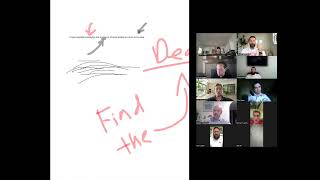
Yeah. Beautiful. And, and what's amazing is also, I don't know how much we'll talk about this in this class. But there's also very, very easily the capacity to at some point, depending on your cost basis, sell and in the money or at the money Covered call. So if we do a. Try to do a whiteboard, my computer's just dragging butt a little bit. But if I. If I did a covered call. So let's say my cost basis on whatever stock is 150.
Okay?
All right. Whiteboard. So cost basis of whatever is at 150. Stock went up to 180. So I bought the socket 150. And I'm like, oh, man, this thing's about to plummet for whatever reason. And so it went down. It went down to 165. You could sell a 160 covered call and get paid a bunch of money because is 160 above 150, obviously. So if the stock keeps going down in that situation and you get paid a bunch of money for the 160 and you bought a 150 put, you're in. You're in hog heaven because your call sale made a bunch of money. You use that bunch of money to buy a 150 put. And if. If the stock ends up going down. So whatever, 135, your choice is what? You either sell the stock at 150 or you just sell your puts. Right, Eric? Because you bought them because this is your put. You sell the put, bring in cash buy to close the sold call that you did at 160 bring in cash. And now you just have shares at 135 that have a loss on your broker statement of 15 a share. And so then at that point, you got to make a decision. All right, what do I do? Do I buy some more puts if it breaks support? Do I keep holding for a bounce for to sell some covered calls? You could still sell calls above 150. Maybe do like a 152 call sale, which is you get into the thing that Eric's talking about now. And then you can still just spend some money to buy some puts if it continues to go down. Yes or yes. And the answer is yes, right? If it's breaking support or whatever, and it's like, oh, man, this thing's gonna really pull back. It's like, okay, so you're saying if.
You buy a put and it's in more money than what you're or close to what you have your loss at for the original stock, at that point, you're washing away your losses or get out of both.
I didn't say that. I'm saying you could, though. So it's really up to you. It's all about how long you want to be in that stock ownership because potentially, and this isn't, this isn't any of us here, but if you have enough shares where you're a shareholder of a major company and you can't sell your stock, Scott, that's the way to still make money. Even if the stock goes down, it's just to be in a bunch of puts and then you sell your put. But if a stock has gone down a bunch and your cost basis is way the heck up there, but your put protected you, you can sell your shares at the strike of the put and that way if you bought the stock at 150 and you sold the stock at 152, you don't lose as much money. Yeah, it's a great question. So here's the good news for this particular section of class, right? Mondays and Thursdays for this month, we're just going to keep rehashing this stuff. Different possibilities, different timings. I bet you know what your homework is. So your homework's gonna be really, really easy. Pretend you own a bunch of shares of a stock and just sell covered calls and see when and if you get called away and just kind of practice it. If you want bonus points, you can buy a stock that you know is in a downtrend and kind of practice covered calls that way because that's really hard because you're gonna have to hold through a bunch of losses and get very, very, very, very small amounts of money as the stock is plummeting. And then when it bounces and starts ripping again, do you get called away for a loss? So that's gonna be your double black diamond, my weirdos out in the group. If you want, if you want to give yourself some anxiety other otherwise, just buy a stock and practice doing covered calls. And again, if the stock goes above your strike price at expiration, you're called away. And I would love to see if y' all can do 10 covered calls without getting called away. That would be a really, really fun thing. If you can. If you can't, it's all good. But just try. That's your homework post your charts just like you did your put sales. Okay? So Mondays and Thursdays, all we're going to be doing all month is really nailing down on Monday. We're going to get into the collar and the protective put and then we're just going to keep rehashing that on Mondays and Thursdays. For anyone who wanted the additional brain destroying information on options where I go really deep and really gnarly, that's gonna be on Tuesdays for the rest of the month, just extra bonus sessions because I love you. And I'll be going through other pieces of credit spreads, ratio spreads, day trading spreads. All kinds of fun things that I still implement, but rarely. And I say rarely. Once a month, twice a month. Sound all right? Family, you're amazing. Love you all. See you soon.
Thank you.
Bye. Thank you.