Credit spreads / ULTRA WEALTH April 9th, 2024
This content was created by Jerremy Newsome. This content was uploaded by Jerremy Newsome. This is a YouTube video titled "Credit spreads / ULTRA WEALTH April 9th, 2024" featuring a detailed discussion led by Jerremy Newsome on trading strategies, specifically focusing on credit spreads, options trading, and risk management. The session involves multiple participants, including Garrett, Joe, Scott, and Eric, who engage in a Q&A format to explore various trading techniques and strategies, such as bull put spreads, bear call spreads, and iron condors.
Chapters
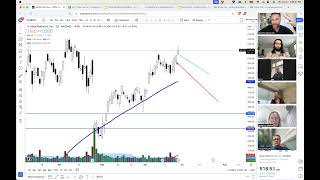
Okay. You're here for those who are going to be here and I will. I mean let's celebrate that trade for a second Garrett, because that is, that is awesome. Again just following your really fall in your plan. Where did my trading view go? Well, you know what, I'm sure I'll look it on thinkorswim. So this was, this was really cool. So on Tesla, Tom, I've been watching this one really strongly the last two or three days. So we had a decent little bear volume spike, right Eric on Friday. So Friday had some, some pretty good bear volume that came in. It was relatively high.
Yep.
And then Gary, like you and I talked about in the WhatsApp message, right. That was a really good gap on Monday that just showed a decent level of trapped bears essentially. So you had some bears that were trapped, had some people that were kind of terrified a little bit. But that also posted a really good one White Soldier. That was the other strong portion of that was a really, really good one White Soldier. Yesterday. Here's the trading view that I found and today we just kind of got to follow through realistically. So got the big volume trap out of support, got the close above that volume the very next day and then anytime you play a one white soldier 99% of the time you, you get in above the high of that one white soldier which is really the day trading strategy for Tesla anyway. Right. Waiting for the high or previous low to get taken out. So yeah, good little push. This was my day trade on Tesla was at the 10 EMA and that was, that was essentially it. So took out the high of the day. Three bear, three bull candles, hammer inside bears. One of my favorite setups. And then just 1.2 on the day trade. I know a lot of you guys have your Tesla long term. Joe, do you have any put sales on Tesla or are you just good with just show them with your shares?
Not right now. I tried to get in one but didn't catch it.
Oh good.
All good. Well here's what's cool. So again to discuss additional option stuff. Here's what we're talking about today. And again just a reminder the the goal of the Tuesday's classes are just are really to that to go super super deep on the options world for those of you who want some, you know, deeper, more unique, more cool different strategies. Ultimately I do not tell people that they have to do these strategies to make money trading. You don't. You can crush it with put sales, with COVID calls and with callers can do very well with just those basic strategies, that's what we're going to be really, really repeating for everyone Monday and Mondays and Thursdays. However, there are some really fun nuances and some fun strategies that I'm going to cover on our Tuesday calls. Just extra for all of you in the Ultra wealth program. So thank you. And here we go. So today we're going to talk credit spreads. Next week we're going to talk debit spreads. All right, so cred spreads and debit spreads. So the risk that scares a lot of traders from selling a quote unquote naked option is the fact that you don't have any downside protection. So if you sell a put, the lowest the stock can go is zero. And when you sell a call, the highest a stock can go as infinity, essentially. And that does slash, can scare a lot of people because could a stock go to zero? And the answer is sure. And so when you're getting into that position, the overall risk can be a little terrifying sometimes, ultimately. So how do you go with Scott? Scott, how do you protect yourself from a stock actually going lower?
From a stock going lower?
Yep.
If you have shares or no shares, doesn't matter. You could always do a stop loss if you're worried about going to absolute zero. You can do different call strategies to help protect you on downsides. That's all I know.
And you can buy a put. Yep, yep. You can buy a foot. So that's the, that's the big one.
Which I chickened out on this morning, and I should have did it on the one I sent you because it's tanking.
Well, so why'd you get chicken on it?
Just the cost of it. And then I'll second guess it myself. Like, is it really going to go there or not?
Sure, yeah, I can respect that. But yeah, I mean, that's, that's really. The piece is, you know, it, they're just insurance costs. You know, the, the good news is when you buy a put, the absolute most money you can ever lose is the cost of the insurance. That's the good news. Right. Can't lose more than that. So your, your downside is the cost of whatever insurance you buy. Ever. So this is how you protect yourself from a stock going lower is you buy puts. Right. Use your analysis, spend the time doing the research. You're like, oh, this is going to go lower. You can buy put to protect yourself in case the stock goes down. So if we're looking at this example on Lulu, this is a, you know, a backdated chart that I'm going to walk you all through. So the downsides to put sales really is even if you want to own shares, you still have a lot of risk. But the big one is it's a lot of margin. So if you're doing a cash secured put, you have to have all of this cash out of your account. Being on hold for a stock that, yes, maybe you want it, but what if the stock never goes down there? Or again, if you have a naked put sale, Right. There can definitely be just some of those levels of fear, even if you really want to own a stock, but the stock keeps going down, down, down, down, down, and it goes a lot lower than your put sale could. Do you think that there's the chance that as a potentially newer trader, you might freak out a little bit? The answer is there's a chance, right? Even if you're right, like I, I want to own the stock, but it's like red, red. You can kind of cause you to panic a little bit. Potentially. Potentially. So, Eric, how do you protect yourself in that situation?
You'd buy a put even lower, but underneath your sold put.
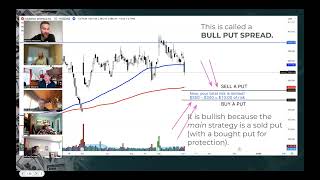
That's correct, my brother. And that, ladies and gentlemen, is called the bull put spread. That's the official name of it. Bull put spread. Now, insurance companies do this all the time. This really effectively. Garrett, I know you know this is called reinsurance, right? So you are buying insurance and then insurance companies do this all the time. That's why insurance companies never go broke. They sell insurance to people and then they buy an insurance policy just in case they actually have to pay out the insurance. And so what that does is it creates a limited risk, limited return, high probability strategy. So a put sale, again, if you do your analysis remotely correct, you should win on those pretty frequently, especially if you hold them all the way to expiration. I mean, some of you are doing your homework and you didn't get put shares for like a whole two years on some stocks. So if you're doing this right, then you are going to be set up into a position where you should be able to again, same exact strategy as the put sale, but you are buying a put which now totally protects your downside and your risk is limited to the amount in the middle. Jeff is correct. He said TD Ameritrade calls this a vertical, vertical put spread or really essentially a vertical spread. And you have to just know what, which one you're doing. So I'll show you guys how this looks in Thinkorswim for sure. But it's called A. This is the name of it, right? This called a bullput spread. And again, I do wish that brokers just kept the, you know, the strategy synonymous with everything. But the reason it's called a vertical and a spread. So the reason that we have a spread is because you're getting, you have two option legs. So anytime you have two option legs, you're now entering a spread. So you have one leg, you have another leg. So just like, you know, that's what, that's what it is. If you have two options, it's always the spread. And the reason it's a credit spread is because you actually are going to receive income from this particular trade as long as you do it correctly. So this is what an example would look like in Lulu, right? So you have, you have sold a 350 put and you buy a 340 put. So your risk is now 350 minus 340 equals $10. So that becomes the amount of margin that is on hold in your account. So I'll pause there. Any questions about that?
Did you have to execute them at the same time or can you do one and then the other and the margin off that way?
Great question. Yep. You can implement this whenever you want. Yeah, totally.
But you could sell a put and then later buy a put, and that mitigates the margin still. Okay?
Yep, yep. So when you first sell that put, and let's say you did it for a week, your margin is going to be on hold for that week. Then a week later, when you buy that put, that will decrease the margin in your account. Absolutely. Great question. Anyone else on this particular slide? Potentially, for right now. Okay, so keeping in mind this particular strategy, it is a bullish strategy because it makes money if the stock goes up. And it's bullish because the main portion of what you did is you sold a put, which we all know is a bullish strategy. Now, right, Eric, you sell a put, you're like, okay, I could get put to share. So here's a fun question for you, Eric. If you do a bull put spread, which is again, just simply a bought put for protection below a put sale, could you still do this and still potentially get put shares just by leaving it alone and not doing anything?
You could. It'd have to land in the gap in the money.
Exactly. It'd have to land in that gap inside the spread. That's the only time that you would actually get put to shares. Now, if you buy a put, does it decrease your profits?
Well, you bought something and that Cost money. So your broker account would go down, whatever that premium was that you paid.
Yep, exactly. So your ultimate goal, family, is to sell a put for whatever and then buy a put for whatever minus the cost of this. That the value that you brought in from the put sale. Right. So in this example, if you sold a put and this was $4 and you bought a put and that put cost you $2.55, your credit is the difference between those two numbers. So you subtract 4 minus 255. Right. So you get a $45 and then your return. Return on investment is the strike spread. Spread of options divided by credit difference. It should be an equal sign. Okay, so let me just walk you through that for a second. Spread of options. So you have 350 minus 340 equals 10, obviously. Okay, so $10. And then you divide that by the credit difference. So if you do $4 minus 255. Right. So you guys can kind of all see the math. So what would the return on investment be in this hypothetical example?
$6.89 per share.
No, No, hold on one second. 10.
That's what I get on that formula.
I might, I might have. Oh yeah, I mixed it up. One second, sorry. That's the. You gotta. I gotta flip it.
Flip it.
Yeah, you do this one first. Then you divide it by 10.
Sorry, 14 and a half percent.
Yeah. $4 minus 255 divided by 10. There you go. Let me delete this really quick. So ROI equals net credit divided by strike spreads. So yeah, 4. $4 minus 255 divided by 10. That'll come up with 14 and some change. So that would be a 14 ROI. Return on return on. I usually say actually return on risk. It's not really a turn on investment to return on risk because that's how much money you're risking. Does that math make sense? Family, pretty basic. Okay, now, now we've elevated from second grade, though we are into fourth grade. Keep. Just make sure we're all aware. That's why I was messing it up. I was like, oh God, we're in fourth grade. I got to be in fourth grade math. Okay.
So I was, I was taking the, the cost of return that I was saying I would make on it and I was dividing that into the cost that I, I put into it. So if it cost me $800 to buy it and I was getting a $200 return, I would divide those numbers into each other to get my percentage. Is that wrong?
Yeah, yeah, that's Incorrect. There's a lot of. There's a lot of people that teach it that way, but that's really not accurate because this is still the amount of money that you're going to lose if the trade doesn't work. So it's. You really got to calculate it based on that. And anyway. Yeah. So don't do it after like, okay, this is how much money I brought in. You still want to just do it on the overall total strike spread to get. To get the much, much cleaner, much more accurate return on risk. Yeah. So again, what's cool about this particular. As Jeff said, vertical spread. Right. Vertical put spread is this trade wins as long as it stays above 350. What is your worst case scenario on this particular trade? Let's go with Garrett. Garrett, what's worst case on Lulu on this particular setup here? Oh, you're muted, buddy.
Sorry. I said if we sell the spread.
Yep, yep. You got into the spread. What's your worst case?
Worst case is that it exceeds your sold foot spread section.
The purchase one. Yep. Yeah, yeah, yep. That's your worst case. So worst case is your, your maximum loss happens if Lulu goes down below 340 and closes.
That's exactly.
Yeah. That's your worst case scenario team. But the good news is, again, you know that risk, right. So you will. You're still going to lose $10 in this particular example. So your 10 bucks. 350 minus 340 on however many contracts you did. So you did one contract, that's $1,000. You did 10 contracts. 10,000. Right. It's just the math. But that will be your worst case scenario. Now, again, is it worth.
Jerry, is it. I mean, is it worth, you think doing that? Because would you be better off to just set some sort of a. An exit plan instead of buying that extra insurance or whatever you're doing in that case?
Sometimes. I mean, sometimes. But a lot of times, for example, if I'm doing a put up, I. I want to do a put sale on a larger company, let's say Adobe Netflix. I'm like, man, that's gonna take a lot of margin. It's like. But I'm pretty sure it's going to trade sideways down a little bit. I don't really, I don't really want the shares.
So it's more about buying power extended out your.
Yeah, exactly. Yeah, then, precisely. I'm generally doing this. That's a great question, Gary. I'm generally doing this on a little bit more expensive stocks. Yeah, yeah. I'm not Gonna do it on a cheap stock. Because I was like, all right, I'll just tell all the sell a put and I can just put a stop and that'll be that. Yeah, this, this particular trade is usually for a little bit more pricey companies. And, and the cool news is again, just by, just by basic definition, put sales and, you know, strategies like this, this will work as long as, as long as it does something like this. Right. Like that. By definition, if it goes up, if it goes sideways, that's two out of three. And if it goes down a little bit. So without no analysis at all, zero. You haven't done one shred of analysis. This strategy should, should work 66% of the time. So, Eric, do you think if it works 66% of the time already, do you think you can get that number up to 8590 with just some basic 10 minutes of analysis? Yep. Correct. Yes. Yes, yes. And of course, same rules apply, right. With your option sales, meaning if this particular option. Same thing we've discussed earlier. If this option brought in a dollar and 45 cents of credit, right. This is the amount of money we receive. This is the profit from the spread. If this credit, Jeff, goes down 50% in two days, would you buy it back? Yes or yes.
Yeah.
Shaking his head yes. Yep. So those, those rules still apply. So if I'm getting into a vertical spread, if it's a credit or a debt, you know, if it's a credit spread, if I'm selling options and my risk begins to become higher. Because you're always going to have a higher risk when you sell something you don't own. Right. That risk is always going to be more. I will still get out of these trades early. Now, we're not going to go into that, we're not going to go into these extremely in detail until later, later, later in the month. But when you start doing this, I know a lot of traders that are very active, and it requires you to be very active and be very much in front of the computer. But zero DTE index spreads, I know a lot of traders who do 40, 50, 60% a year just doing those, but they're day trading and they're day trading option sales. And it's, it's a whole different ball game. And I don't personally do that, but I will talk about how that kind of works because it is quite fascinating. And because if you have zero, I mean, the option expires that day, right? So it's like, very stressful. It's stressful. But if you can get the timing correct, I mean, again, it's, it's going to work out pretty frequently. So long story short, you can do really, really good returns with option sales. And you should have a good win approach as well. You should be winning more than you are losing. So here's a current trade that I like a lot, and this is on Expedia in case you want to do some analysis on this company. But some of you asked me about selling naked calls a few times. We talked about that. Scott and Jeff, like, if you get out of position and you're in a position naked, right? Selling naked calls is by definition the riskiest strategy anyone can do. So selling a call, though, like, we all know selling a call makes money as long as the stock doesn't skyrocket, right? So when if Scott was, you know, a giant chicken turd on his SMCI and he's like, I don't want to make money if it goes down. So maybe it goes down, maybe it doesn't. That's fair. But if he's like, I don't think it's going to skyrocket, he could sell call options and he'll be right. As long as the stock doesn't skyrocket, right? But by definition, selling naked calls is the riskiest strategy of all time. So let's go with Jeff. If you're selling a call, Jeff, how can you protect that sold call in case the stock goes up? Buy a call. You buy a call. That's it. My dog. You nailed it. So now you're going to be buying a call option. So if you buy a call option. So here we go. Let me delete my drawings here. If you buy buy a call option above, you create a vertical option spread. This is a vertical call spread. And the name of this vertical call spread is the bear call spread. Calls, because that's what you're selling spreads. Because you have two different strike prices. And it's bearish because you only make money if this stock doesn't go straight up. You make money in every other scenario, right? As long as it doesn't go above your call sale. This is a pretty fun strategy. If you again think a stock could trade sideways down a little bit, you don't necessarily want to gamble on it going down. So you're not going to buy a put or you're not going to short the shares and back to the bull put spread. Joe, do you think I do this strategy on a little bit more expensive stocks where the put options are pretty pricey? Or it's a lot to short the stock.
I do.
And you are correct. You're correct. So if the stock is pretty pricey, I'm like, Damn, it's like 25. It's like $2,000 to buy one put option. Because a grief. Right. If it's something like that, I'll just hop into a bear call spread and try to make some money. As long as it doesn't skyrocket. So let's go look at an actual, an example just really quickly. Okay, so this was SMCI and we did do some of this research and some of this, you know, charting together. But the best time to sell puts is when the stock is going down. Eric, when's the best time to sell calls?
It's going up in the morning is.
When it's going up. Exactly. So let's imagine for a moment on SMCI that you thought yourself, okay, this could be a double top right up here, right? Boom, boom, boom, boom. We break lower. When we're down, we have a retest gap, which was a bear candle gapping down. So you expected that we're going to retest. And then when we retest, your thought process is okay, at this point, I think we're going to, we're going to rest.
Right.
Like chips are getting a little crazy. I think we need to chill out for a second. And you sell a call spread 1200 by 1300. What that means is you would be making money on SMSMCI as long as it doesn't do this. Anything other than that, you would make money on that trade and you actually get paid to take on that risk. So you don't have to buy the put and you don't have to spend any money. In fact, you actually receive money to take on that risk. Just like when you short shares. Eric, does that make sense or do you have any questions about that big dog?
If it does go follow your pink line straight out and you end up, you would just lose the premium gap. That's all. Because you'd get taken out. What if it.
Yeah, yep. This is, you're, you're correct. This is. Second worst case scenario is it does.
This and you end up with them.
Yeah. Second worst case scenario is the stock expires somewhere in the middle. Now we talked about this just the other day. If this happens, do you let this expire in the money at expiration? Nope. So you're setting alarms on Fridays, right? Gentlemen, we don't have to worry about Joe. Joe's fine. I'm talking to Scott and Jeff, Right. You guys better be making sure that you got that alarm for Friday.
You said that yesterday. Jeremy and I, I've never been given negative shares before. I was given negative shares because I did the strategy and just shit locked the. I got put shares and the thing went down and I made $800 and I got out of it. So I just like paid attention to it. Two hours later I'm like, oh my God, I made hundred dollars on accident and I got out of it.
Yeah, hey, that's. I mean, glad that worked out, but yeah, exactly, that's. That's the big one, right? Those Fridays are important, Scott.
So I talked to my broker and he said anytime you buy an option or a call or put whatever it is, he said even if you cancel your contract, you can still get called out on your contract. If you cancel it.
How?
If you buy it back or sell it back, it's gone.
Same thing. Like if, like for Joe's situation where she's in Google, Google's above right now. She may not get called away if there's not enough contracts to buy it. He said if there's over contracts and people cancel, they can still pick you to at a random too.
Oh, this is true. As long as it's in the money, that can happen. That is correct. So if it's in the money and she still has the option available, if she closes that option though and the contract is off the table once that order is fully closed out, that's. I've never heard of that happening. I'm not saying it's impossible, but I, I've literally never heard that occurring in my life. Could, Could Joe get called away early? Absolutely. But even that, that has never happened to me in my 15 years. I'm not saying it. It has happened to traders though. But again, keep in mind, in this situation, that's a good thing because Joe has no. Like, she would just get liquid even faster. So ultimately like, hey, all good. She would just sell her shares today, but she wouldn't be upset with that. Right. Because she sold a covered call and she's okay to get called away if it's a profit.
So if you cancel any of these options prior to expiration, there's no way for them to call you back on it then. So he misspoke to me.
Yeah.
Or you don't know.
That is correct. He definitely did. There's zero. I have literally never heard of you. If you close out of an option contract before expiration and you're done with that contract, you've bought to close or sold to close, a call or a put before expiration, that contract is null and void, dude. It's game over as long as it's before expiration. I think what he was saying was if it's in the money before expiration and you haven't canceled or you haven't you have an order to cancel it and it just never filled, then you can still get exercise early. That is, that is possible, although extremely rare.
Or could he have been talking about at expiration the stock trades like at like a close of market it doesn't look like it's going to be exercised but you know, aftermarket it moves so that it is in the money. Then it could be exercised.
Then that could happen. Exactly. So let's say for example next Friday Google closes at 15498 right. And then post market there's some movements after market. So the expiration close out of the money at 4 really cash close is 435 eastern. And so you have 35 minutes after market. Did I say 4:35:30 whatever time it is, 35 minutes after market close that cash secured close. It can still, some stuff can still move after hours and so that is definitely a possibility. But even then you'd be getting called away at a, at a pretty good price. Right? I mean it's like if it closed at one foot in this example, right Joe, if it closed at 1 4.98 and on Friday it expires and you know, out of the money but it pops up 10 cents. Good for you, you know, because you got paid $2 for the contract. So your, your cost effective sales 157 and you got, you sold it at you know, good. You made the most amount of money you could make in that case. And then you can just buy it back on Monday if you wanted to.
Yeah, I just remember hearing about that a while ago where it happened to somebody who sold a naked call and it was Tesla I believe. And then there was news after hours. They thought they were good and then getting, yeah, got a huge margin.
Yep. So I like this and I'll, I can, I'll show you all how to set these up in, in thinkorswim in just a second. This is the bear call spread. Now I know you all probably know the strategy but just in case, how cool would it be to simultaneously get into another spread and still keep the same margin requirements? Now this is where this is cool. Exactly. This is cool. This particular strategy is when you have two credit spreads simultaneously that you that, Joe, you can get into it at separate times. That's the best part about the strategy. You can get in at totally separate times, and the margin requirement doesn't change at all. So you get into the bear call spread first. You see how my lines are different. Different times. Like the starting of the line. That. That's why. Because when this trade comes up into the 100 and it hits the 100, hits that resistance, you guys can see the gap down, right? Whatever. You implement the bear call spread because the stock was going up, it ran into a resistance, right? Garrett runs up, hits a resistance. You sell a call spread, stock begins to drop. You have a few days of selling, and then what do you do? Few days of selling is the greatest time to sell some puts. You get into a bull put spread. When you implement this and you already have this one, it doesn't cost you any extra margin. Why is that, Scott? Can you tell me?
Basically, because you have maximum risk on the other one. So they know, I think.
I don't know. I mean, you're not. You're close. You're close. You said they have.
They know they have maximum security on you, basically.
Almost. Almost. Jeff, any guesses?
Yeah.
Well, it's a. It's a. You're going to win either way. So even if you. The real only way to win is to stay in the middle. But if you go into one or the other, they're just going to take the amount of money with the one that they're just going to take that money from you anyway. Because I've lost on that strategy before. It's kind of like an iron condor, right?
So it's literally an iron condor. Yeah. This is the name of it.
So I've. I've done this, and I've lost and won, and they took the value of the put sale. I mean, the put vertical versus the call vertical. So they just take the one that's worth more. Am I wrong?
You're correct. They take the one that's worth the most if they're. If the strikes are the exact same. So 5 and 5 or 10 and 10 or 15 and 15. The reason that this trade doesn't cost any more margin, my friends, is because it's impossible for the stock to close both up and down simultaneously.
So one wins, one loses, the other wins.
It has to. There's no way the stock can close at 155 and 110 simultaneously. So I'm not saying you can't lose on one. That's definitely not what I said. I Have. Hi, I'm pain. I, I, I have run up the markets when Jeremy had an iron condor and thoughts? The markets are going to trade sideways forever. So you can absolutely lose on a position but your margin is charged only for the largest spread because a stock cannot close up and down simultaneously. Your broker knows this. So only one margin is applied, whichever is the biggest. When I say the biggest, I mean the most amount of contracts and or the biggest spread I it When I do this trade 100 times out of a hundred and I've never ever done this, I always, always, always, always do the exact same strike size and the exact same amount of contracts. So I don't get fancy with a condor. Because why there's no point, right? It's a free trade if you do it correctly. Once a free like there's no additional margin. No additional margin and you just make more money. So if you time this relatively correctly and it closes anywhere above this one or below this one, you're good to go. And if you implement at the right time, you just make more money for free. You spend the commissions, which is nothing, and you're good to go. So if this is a, if this is a five dollar spread, you want this to be a five dollar spread or vice versa. You know, if one's 10 or 15 or whatever and however many contracts you do do the exact same amount of contracts, I do not add risk on a condor personally. Does that make sense? Okay, so now what I'm gonna do is I'm going to show you how to do it, how to set up a spread in, in thinkorswim, there's again a million different platforms, but I know most of you guys use thinkorswim to some degree. And then of course what we will do is we will go and just kind of look for one, just kind of see what the premium is in real time. And then next week we're going to talk about debit spreads and then we're going to talk about calendar spreads. Calendar spreads and ratio spreads. Okay? So last thing, take note of this. I'm going to talk a little bit more about it at the end of April. But I did promise you that I would tell you one of the coolest strategies that no one I've never heard anyone talk about this strategy. The covered call is the coolest thing of all time. But the one downside to a covered call is the stock continues to go higher, right? Stock continues to go higher and you miss out on a bunch of upside. So you can always add a bear call. Spread onto your stock, and that removes that from happening. You get paid less money because you have to spend money on buying the option, but you still make money. And if the stock does this and it runs, runs, runs, runs, runs. Well, guess what? You have an out of the money call option that's making money. As the stock goes up, you get called away from your sold option. Right. Just like a covered call. Same thing. You get called away on your covered call. And if the stock continues to go higher, you have this buy to open call that's making you money as the stock goes up. Brilliant. Now Joe was scratching her proverbial beard. All right, Joe, what question?
Well, I was just kind of thinking that initially when you're saying like, if it closed past the buy called, that would be worst case scenario. But I wasn't, I was thinking like, well, wouldn't that be good if you still had that for the call to go up in value still as you hold it?
Yep.
So kind of what you're saying, I guess, but exactly.
So if you have shares. If you have shares, they will still call this and it'll separate it. I guess it may or may not, but as long as you.
Okay, so I guess the difference is if you have shares.
Yeah.
If you have shares that they've taken away at a price that you liked, but you still have the benefit of the lot, call.
Okay, can you do a number? Like a real example of how that would work with some numbers and a. Yeah. On the chart.
Can you do Google?
Because I have some Google.
Let's do it. Let's do Google. All right, so let's say you got some Google and you're like, okay, I got some shares of Google and you want to do a bear call spread on top. So again, imagine you're doing a covered call that doesn't change. So you got some shares of Google. Let's go sell a 160 call. Okay, so we go into an option chain, pull up Google, and we want to sell a regular may call option at 160.
I did one this morning at 170. A May 3rd. Well, if it doesn't matter.
But yeah, it doesn't matter. But yeah, let's look at that one. No big deal. Okay, so May 3,170. So you got good. Good for you. So you probably got a good. A good little payday from that, Tom.
I got buck 75.
What a legend. What a legend. All right, so $1.75 on that particular option. Okay, so as of right now, Eric, you already have a Sold call, and you brought in a dollar 75 of net credit. If you wanted to, you could spend 20 cents on a 190 call, still make money. And if Google crushes between now and May 3rd, that call option becomes more valuable. And if Google closes above 190, because it just starts skyrocketing, you have the option to buy Google shares at 190. So if it's crushing and it goes up to 210, you didn't miss out on all the juicy upside with your covered call. You still made money because you had a call option. So you either sell the call option for a profit or exercise your call option and take the shares. Yep.
And you can sell them immediately.
Yeah. You can do this simultaneously, correct? Yeah, you can do it simultaneously. Although I actually do like it. When I sell a call, the stock drops a little bit, and then I go and buy this one. I usually don't do it the exact same time because if I sell a call, my expectation is the stock is probably going to drop a little bit. Right. So if the stock drops, the call becomes cheaper. Yes or yes.
Yeah, that's true.
So this is a perfect example of what you did here. As you can see, you're already up. You're already up 30 cents on your sold call because you sold Google when it popped because you're smart and you study. And so then if you buy another call now that Google's dropped a little bit, this call will be a little bit cheaper. So I do this strategy family generally only over earnings, because that's when the likelihood that the stock is going to pop the most. Right.
Yeah.
So I will oftentimes do this over earnings. And so here's what it looks like. If you did the whole thing all together, you go into 170, you click on the bid. Again, this isn't thinkorswim. It works very similar to other brokers, though. You right click, you go to sell, and you select vertical. Now, the key is you have to simply know when or. Let me, Let me rephrase. You should know the numbers ahead of time before you go and sell the vertical. Meaning you should look at the chart right, Garrett, and just know which option you want to sell. So when you click on vertical, you. It's your responsibility to fill out these numbers down here. So if he, if he did a 170, he wanted to buy the 190, like as I was mentioning, you have to scroll down, just select 190, and you'll see that if he did this trade right now, he would still receive a credit. So you're still bringing money in.
And.
You get more money if the stock goes higher because you don't miss out on all the upside. So you get to kind of play a little bit with how much do I think the stock can move and all those kind of fun things. This is a little bit of an advanced strategy, but I really do like it. And when I say advanced, I just really. You're just adding one additional option. So I do this over earnings because that's when a stock can really fly. Right, guys?
What's it. What's the strategy called?
I don't even know, honestly.
Okay, well, you can coin it then.
It's up to you. No, I. I'm sure no people. There's definitely someone teaching us somewhere. But I could come up with a random name for it, and no one would know what I'm talking about because it is very, very rarely discussed. I mean, in fact, I've literally never heard anyone talk about it in my life. I'm not saying that no one is aware of it, but, yeah, it's a cool strategy.
Yeah, I've done that before.
But you do it with a collar also.
Sorry, I was just gonna say it's basically a bear call spread over earnings.
Then as long as you own the shares. Exactly. You own the shares. You do a bear call spread over earnings. You have no additional risk. None. You still bring in credit. It's still a covered call. You're all good. And your option will make money if the stock flies higher. What a gift.
You'll lose money if it. You'll lose more money if it goes down, though. Will you lose more money than the covered call is worth if it's going down, though?
Always. Always. All. You'll never. You'll never make more on the covered call than how much the stock can go down ever. But that's. That's the risk of a covered call, right? The. The covered call adds zero additional risk to the trade you already have. I mean, for example, right now in Eric, right, The. The stock has already gone down more than a dollar 75. Anyway today. From. From the high, right? High to low, it's already moved $3. So from hot. From high to low. So, yeah, the covered call sale will never, ever, ever make more money than the option could lose on an earnings gap. It just helps.
So if it gapped down, you would be in trouble because you would lose.
Money on the call and the stock at that point. If you bought a call, you're losing money on the call you bought. Plus you're losing money on the stock. So you're really losing money at that point.
No, because remember, you got a credit when you do this trade. Right. You're still bringing in money. So if we go back to this is, this is the example right here. So you're still bringing in money on this exact trade on Google. If you do this trade right now and you had shares of Google, you're still bringing A$32. All that means is if you did just the covered call, just a covered call, you'd be bringing in a $50. So you're losing out on essentially 23 cents of extra premium that you could make. But yes, if Google goes down over earnings, you are 100% correct. You're going to lose money on the overall stock, but this option becomes worthless. And then you can just either leave it alone and let it expire out of the money, or you can buy to close it. But going back to yesterday's class, in the previous class, if you're afraid of a stock capping down on earnings, what strategy can you implement to protect your downside? That's it, bro. And then if you just buy a put for less than this net credit, if your cost basis is lower than that, you're good to go. So looking at Google right here, if you, if your cost basis on Google is less than 141, you would actually be able to buy this option for A$16. And you have now effectively limited your downside risk at A$41. Sorry. Yeah, 141. So if Google gaps down on earnings, that option will have gone up in value and you have protected your downside. Even if Google has a huge, huge, huge gap down on earnings, would it.
Make sense then to do a caller on an update and then when it dips down, add that bot call?
That is the exact time to do it. Exactly. So going back to a chart, let's just look at it for a moment. Imagine you get into a collar on this day. Collar being you sell a call and you buy a put because you want to sell calls and you want to buy puts on updates. You guys are gonna have so much fun with options. Oh my God, this is so cool. You can sell calls, you buy puts on updates. When the stock drops, you do whatever.
Buy the higher call.
Exactly. You can buy the higher call when the stock drops and then get into that bear call spread against your overall shares. Yeah. Now, we will talk about in just two weeks, but I'll go ahead and tell you guys now. So cool. When you buy the put, you have an asset. Right. When you sell the call, the sold call pays for the put purchase. Right. And that's what a caller does. You sell, you pay for the put. When the stock drops, you can sell a put against the put that you bought, creating a debit spread, which we're going to talk about next week, and literally decreasing the cost of your insurance even more so you can get paid even more money to not lose money. It's the crate. It's so bananas. It's so fun.
Just has to be at a different strike.
Just has to be at a different strike. Yep. Or in two weeks, we'll talk about calendar spreads. And it has to be a different expiration. Again, I told you guys, we're going to go advanced. So that's what. It's Tuesday. You signed up for this. You could just be doing collars. Right. You signed up for the next level stuff. This is. These are all fun strategies, but again, timing is everything. If you buy calls on updates and sell puts on updates, it doesn't matter. You're going to lose money eventually. It's timing is everything. It's all like, you got to buy calls on down days and buy your puts on updates and sell your puts on down days and sell your calls on updates. If you do it that way, the propensity for you to make more money is huge. Okay, let's go look at Nvidia really quick because I'm crushing Nvidia short right now. I'm just absolutely murking this thing. And I mean, mostly because you had four bull candles below the 10, Tom. All right, so on Nvidia, today is probably today and. Or tomorrow is gonna be a good day to start looking at a spread. We have a ways to go into earnings. And again, I. I don't know. I don't have Garrett money. Okay? I can't just go sell a bunch of puts on Nvidia at 7:20. Right? Like, who. Who has mountains of cash that they're swimming in? So what I'm gonna do is if I don't do the 720 put sale, this is a real example, by the way. Guys, let's go look at Nvidia right now. And we always want to sell as little time as possible. But let's look at next the 17th of April, and let's go look at a 725. So here's a 725. I'm going to click on it. Sell vertical. It's going to automatically give me the Very, very next strike price down, tom. And this 7,25. 720 bull put spread is paying $0.30, $0.29. And here's the cool part. Once you do this a time or two, you're already gonna know what, what a premium looks like. This is $5. 10% of $5 is 50 cents. Always and forever. That'll never change. Right, family? So I know that this is not a good spread to get into. Not yet. Because there, I mean, you. You want. No one asked me this, but I'll tell you now, on any credit spread that you do, you want 10 to 15% returns, return on risk. That's what the number you're going for. If it's higher than that, something's up. Go a little bit farther away. Now, again, if it's lower than 10%, like this spread right here. So this is a $5 risk and I'm getting 30 cents. That's like seven. No 7%. That's like six and a half percent. It's not good enough. So you should be able to get around 10 to 15% on a vertical spread. Too much more than that is like something's fishy. Doesn't mean you can't do it, but, you know, just know that someone knows something.
The Delta there being $5, you're looking for at least 50 cents.
Precisely. Exactly. Exactly. Exactly.
But if it's more than 75 or 80 cents, that's too much. Or more than a dollar, that's too much.
What are you saying? Exactly. I'll start going lower if that's the case. If it's more than a dollar decrease further out. Exactly. I'm gonna go further away.
Why is that, you think? More likelihood that it's going to hit.
Precisely. You are correct. So this one right here looks kind of interesting. The 690. 680. So if I do sell vertical. 690, 680, this is a $10 difference. And we're, you know, still getting paid 20 cents. That's only 2%. So there's not enough money in Nvidia yet. Not enough people are scared on Nvidia presently. So maybe one. One more down day they might be. So that. That's how we can start measuring fear. Does that make sense, Eric, or does anyone have any questions about that?
So if you get a return that you like, like to say it's like the 50 cents or whatever, is that the max that you make on it then just that premium, or do you like out of it at different levels to make more? Because like to me, like to do something for $50 is almost like that would take forever to build, build up, well, stuff, right?
Precisely. Yeah, 100%. You're absolutely correct. So that's, that's the most amount of money you receive on the spread. It's, it's very, very much like put sales. Right? Because like remember, put sales, you're not, you're not getting rich doing put sales, Tom. But if I know that the likelihood that this goes something like this eventually is pretty high because it's in a bull trend and I want to make money from that potentially happening. I just don't know when instead of selling a put and tying up a bunch of margin, I can do a bullpen spread and just make a little bit more. Sorry, decrease my, my margin capacity a little bit more. But yes, you do not get rich doing credit spreads. In fact, if you try to, you're going to get burned unless you do. You're really, really, really aggressive with it. Like Tony, Tony's very, very aggressive with his credit spreads. So that's just not how I, that's just not how I play them. I plan more as these are relatively high probability. You don't know exactly what's going to happen. So again, kind of like Scott's trade on smci. Scott was pretty sure that the stock would go down. He did his wave count. He spent two or three hours researching it.
Tom.
But again, if he was still a little bit like, well, you know, I don't know, maybe once this bear candle comes in, closes below the bull candles there and then we retest the low on that candle there, that would have been a time he could have gotten to a bear call spread and said okay, cool, you know, if the money is there, then he makes money as long as it doesn't just skyrocket. So he doesn't have to be exactly correct that it goes down. He could just want it to just not go up a lot and still make money. Does that make sense? Family, again, workday, I'm not in this trade. I had another trader who got into a credit spread on work day when it hit this gap. So the credit spread, you guys tell me, did he get into a bear call spread or a bull put spread? It go ahead and type into the chat pain. Bear call or bull put? Just for nomenclature purposes. Which spread did another trader get into on workday? Bear call or bull put? Yep, you guys are correct. Bear call, bear call spread. So he sold, he sold the 280 and he bought the 285 so his risk was $5 and he was able to capture 75 cents on that credit spread. And usually when you're capturing your premiums, as you all know, you're doing a limit sell, right, Eric, you're always, you're always selling with a limit. So just try to capture that extra couple pennies. Why not? Just moving the buttons over and knowing what a limit cell is allows you to make more money in your spreads or option sales in general.
When he's doing that, does he own the shares too or is he just. No selling bread.
Exactly. Just selling spread. He doesn't own shares at all.
And what's that, what's the, the, you said the risk is the $5 there or, or in this case, what was it for?
Yeah, it was 5. 282. 282, 85.
And he, and he made 10 of that 50 cents or something. So that means his, I mean if that's your target, is the 10% 10 to 15.
Yeah, he made exactly. He made 75, 75 cents. He did 10 contracts. So his risk was 5,000.
Like so isn't your risk then 10 times your, I mean, isn't your, your risk 10 times your reward?
Correct.
Isn't that scary? I mean, that's, I, I can never understand why somebody would do that.
Yeah, well, that's the thing. It's like you're not gonna be doing these a bunch, but the, the truth is they win a lot. I mean that, that's the thing, right?
You have to win 90 of the time.
Right.
To.
And I do break even. I can win 98, 99 of the time on these things.
Okay.
Okay. There you go. Oh, yeah, very easily. Yep. Good timing. Sell calls and updates. Sell puts on down days. Use your long term moving averages. Use your knowledge of gaps. I mean, let's go look at Tesla as an example. You know, Tesla had tons of premium for bullput spreads and stuff like that down in this gap. This, this orange, orange thing. Because here's a gap down here and it's below all the moving averages. So people are kind of freaking out. So there's good money in both put sales and bull put spreads down this general area. And so if you've been selling them on down days, I mean, you, you, the likelihood that you've already done five or six correct since March is that means essentially 100%. But I agree with you, the risk reward's not amazing. It's really not. And so I don't do these a lot, but I want people to know that they Exist because there are definitely times where you can do them. And Nvidia is going to be one of those for me. Right? One or one more strong push. And I'll be getting into some bullpen spreads into this gap because I don't want to do it. And any put sale that I do, I might do some put sales, but I'll be doing some put sales down here just because the stock is so pricey and then it just becomes a margin thing. So these are definitely a strategy that you don't want to put the gas pedal too hard on, as Garrett is absolutely correct on. You got to win 90 of your spreads to make money. But you can with, with the analysis that we have worked on Team, again, your Elliott wave gap, your multi time frame analysis, every one of you can win 95% of the time on on spreads. Just got to make sure you do them at the right time. Make sense? Okay.
Yeah.
Sweet. So your homework is pretty basic. If you want, just shoot me a message, send me a chart of some credit spreads, Bullput spreads, bear call spreads, or Iron Condors. Because Garrett, you start slipping into some Iron Condors on these strategies and starts increasing your likelihood of winning because you're going to win on both sides. So you know you can win on nine in a row pretty fast. Yeah, well, I'm getting that. And then you build in a cushion and then after you've win nine in a row, you can build in a cushion for the one that's going to lose at some point and so be profitable. So again, just a different tool in your tool belt. It's a fun little strategy. I do use it a lot. Next week we're going to talk about debit spreads and the time that I get into debit spreads. Debit spreads is a whole different, fascinating beast. Really, really, really interesting, really cool math. And I think you guys are going to like debit spreads a lot. So if you have any questions, let me know. Your homework is simply just direct message me so we don't fill up the ultra wealth chat with a bunch of credit spreads for those who are like, hey, I don't want to do anything too deep. And you know, obviously it's going to be on our playlist anyway. But I hope this was helpful. Hope you learned something new and found something cool today and I'll be back on Thursday. Okay. And we're going to keep repeating the collar and just going over the protective puts, the covered calls, looking at some option chains, things like that on Mondays and Thursdays. All right? Yep.
Thank you.
Thank you.
Thank you.
My pleasure. You guys are up. Good bye.