Divine Kings Wealth Q/A 9 18 2023
This is a YouTube Q&A recorded Sept 18, 2023 (Divine Kings Wealth) with Jerremy Newsome hosting a group discussion featuring Josh, Rocco, and Matt. The conversation centers on acquiring and turning around small businesses (especially struggling franchise/automotive shops), practical operational fixes that quickly raise margins (cleanliness, waste reduction, pricing and commission incentives), and multiple real-estate strategies (multifamily underwriting, NOI-driven refinancing, interest-only loans, niche assets). Participants also discuss deal-sourcing (buying corporate-taken-back franchises), private-equity style exits, and networking/mastermind approaches for scaling deals.
Chapters
It.
Forgot to record. Josh, tell. Tell us everything you know about buying businesses. Like, how does, how does it work from, like a financing, like, money standpoint?
Well, I'm fixing to learn that. So I've been, I've been lucky and I've been financing them from corporate, so I've been like smacking the, out of them and getting like, I usually get like 1 point below prime, and I make them carry them for six, six months or six years. I mean, but now this one, I'm gonna have to, like, figure out what to do. I don't think I can go SBA because I don't think you can have like a half a dozen go sba. So I don't know, man. I was gonna call my, my lender. I, I hate going through just grenades and flows everything down. So I think my strategy with this guy is going to be, you know, I kind of learned it from Brittany. You know, she's doing a lot of stuff with different resorts. It's like, hey, how much cash do you have to have today?
Right?
So I think a lot of the time, if you can give them the cash they want on an exit and then say, hey, man, we'll pay you this much a year. I just finished a private equity book and they're saying every time you sell business, you should leave 33 in the tank with private equity and get to sell it again when they take it to market, you know.
Interesting. So when you say, I don't know, man, but when you say corporate, you're making deals with corporate. Like, what is, what does that mean? What does that look like? Exactly.
So I buy, I get the floundering ones, the ones that are in the toilet that corporate just can't make money on. So I make them cut me a sweetheart deal and I buy them from them and I put 10 to 25 down, depending on how good it is and what they have. And we kind of look at the assets and see what we can get, like the ones in Little Rock, but I bought those. I could have sold all the crap in the building and made my money back. So that's kind of, that's kind of the easiest, fastest way to get a business is to find one that's floundering that corporate's taken back.
Because.
And all these franchise agreements, they have first writer refusal. So most of these franchises that I'm seeing, a lot of people that have good six figure incomes think they can buy a franchise and they're going to make money very easily and they start losing money and they get so upside down, they're like, fuck it, I'm walking away. And that's when corporate takes them back. They make it a corporate store. Usually they run in the ground, or they run it about half of what it can do. And then obviously you get a recession, they're like, hey, man, we got to clean our books up. Let's get this shit off there. Especially if they're publicly traded. So that was kind of the thing here. Ours is owned by Icon Industries, Carl Icon. And their. Their shit's really in the toilet. Like, they lost 250 billion last quarter. So they're, they're. They filed bankruptcy on one of. Their whole automotive sector is going down. So they're offloading these things left and right.
Now. How do you find specifically the ones that are floundering?
Man, it just landed in my lap on this one. And once we. We had a call with the CEO and it was kind of. This one was really showing what we've done. Like, I showed them the chimney industry. I was like, look, man, here's what we've done. Here's our growth, here's what we're about, here's our core values, here's how we elevate our people, and here's what I think I can do with your store. And once you get your storytelling down. And they, they took a chance. They sold us two, and we ran with it. We went 50 up at one store that was already top performing. Then we went 400 on the other. And then it became like, hey, we got these other stores. We got these and this and this. So the last round we did, we had to really negotiate because I wanted this one store that was very profitable. They made me buy the two turds that weren't profitable just to get it. So there's a lot of back and forth, and it's a slow process. It takes about six months to close.
One of these.
Which, if you know me, you know, I hate going slow.
I can't stand it.
Every single time we're about to close, I tell my partner. I'm like, that's it. I'm done them. I'm done with them. And then we'll close the next week.
Nice. Yeah, that's funny.
Yeah.
From.
So from a revenue standpoint, what do you find is the most effective and the most speedy at increasing revenue in one of your shops?
Oh, man. This is what. This is my gift. So I'm a master implementer. I'm very impatient. I can design systems, but I can't get complex with it and I don't like enforcing them for longer than at most like two or three months. So I come in and I'm kind of the smack around guy. So Billy will come in and kind of the first week, get everything on track, meet and greet. The guys build moral authority. Like, hey, I've been a mechanic for 30 years. Then I come in and I immediately look for basically loose standards. Like I'm all about cleanliness. If you've got a clean shop and your guys look good, you're half the battle, right? You could be the dumbest mechanic out there. You're going to look good. So I come in, I get the standards up, just clean the shops out. And I spend freaking weeks doing that. Like it's, it's bad. Most shops have cars sitting in their parking lot that are not making money. They're just sitting around. They got auto parts stacked up everywhere that I literally drop dumpsters. Then I look for waste. Like a lot of these shops, the operational waste, like they were spending a thousand dollars a month running gas heaters in the shop. 75 degrees in the middle of winter with the doors up, I was like, this shit's going away. So we put in programmable thermostats, we put in the auto light things. We fire all the uniform companies. We start getting our supplies from Amazon dropship. We save a ton of money that way. Then we come in and we pay the employees a little bit more. I give them a couple bucks an hour more. And we give them an opportunity to earn commission. They get eight bucks a service. So if they're selling services, they're almost doubling what they make an hour a lot of times. So we just kind of do that and then really just hover and enforce standards and just give support and along the way try to kind of get these guys to be better functioning men. And it typically. That'll get you 30% right there.
Fascinating. I love it. So you're focused on just the basics, like be beautiful, be smart, be clean.
Like don't overcome very basic. And Then usually like Q2 maybe we'll start looking at sales process like I'm looking at now. Then I'll come in and do like for instance, our computer software is antiquated, dude, I've seen Atari systems more complex than that. So we're looking at going digital. You know, we're looking at lead accounts, I'm looking at following up leads forward, scheduling, maintenance services. So then we start getting a little bit more complicated, trying to increase the average ticket and sell more to our Customers they're not looking for. And of course, when we come in, we do raise prices. They're not charging enough. They were doing oil changes for like $22. Like, I can't do that. So we raise those prices, we raise the hourly rates, and we usually shake out about 30 of the customers. Because what I find is all these corporate shops are so worried about car count. They just want to get a thousand cars a day through there. They're not slowing down and making money, they're losing money. So we slow everything down, and that's enough to put. Typically, you can run on these shops. We're getting like 28 to 30 margins after everything, you know, so you're looking at. I think one shop, Broadway is probably gonna. It's at like, I don't know, it's probably at 600,000 sales for the year. And we're probably already cleared maybe 200,000, 150,000 somewhere in there. I gotta look at the numbers and see. I mean, you can make cash on a shop real quick.
How many shops?
Five.
All in Tennessee?
No, I got two in Arkansas. Those two are losing money, though. Those were the. Those were the shitty ones I had to take.
It's really out of my portfolio. I don't know how to do that stuff.
Well, I saw. I turned wrenches when I was in 2002. Like, I worked at Midas. That's where I met my partner. You know, I met him in 2003 at Midas. And I'd been working on all our own vehicles for the chimney company. Like, we couldn't get done. So we literally. That's how we ended up with that building I sent you. We bought that because we made it a shop because we had 20 something trucks. And I was like, I'm tired of dealing with these dumbass shops. So we started literally fixing our own vans. And that's how it started.
Wow. It's amazing, man. Cool stuff.
I mean, what's amazing about Arako and. And for everyone who's listening or watching the recording is this. This. This translates to all pieces of wealth, right? Like, you can essentially do everything that Josh is mentioning on anything. You could do it on dry cleaners, you could do it on coin laundries. You could do whatever you're interested in, whatever you know about, right? Josh isn't doing it with donuts donut shops, but he could be.
Not yet.
Not yet.
I want to do food, man. I gotta meet a food guy. I'm a big fan of finding your expert. You know, Billy was the Expert. He was a mechanic forever. I had to teach him to kind of think like. But I really require that expert to come in and build moral authority and be able to be on the level playing field with the guys. And that was kind of the problem I didn't have in my last business.
Is I played both roles.
And you really just can't be the in the dirt guy and the executive. It just doesn't work. So I need my food person.
Sure. Yep.
What do you, what do you plan on doing with those, Arkansas. The, the two turds. What do you plan on doing with those?
Oh, we'll turn them around. I mean they actually hit decent numbers last week. We' turn those around. I'm gonna sell them all. I'm a cell guy.
I'm.
Man, I. The more I look at private equity, it makes sense. I gotta do it. I'm a cell guy. Three years. I'd like to sell in under three years. I'm gonna try to take them to market in two. But I, I'd like to do private equity deals but be ethical, you know, Like I said, I finished that cool book, the Private Equity Playbook and that guy's the CEO and he kind of gets brought in by the private equity to turn these places around and he's really good about balancing out the margins also with taking care of his people. And I kind of like that. But I'm a fast guy. I have no desire to have lineage of we own this many businesses. I'm going to give it to my kids. I want to sell this and move on to the next thing.
Yeah, for sure, man. I know the private equity guys, they. They know how to do. They. I, I met one of them in a seminar. So they do a lot of startup running for like about three, four years and then they, they sell that couple million and they started. That's what it is.
Yeah, that's what I. And that's like, I.
What.
They're strong. It's what I struggle with. Like, they're really good with their analyst and like making all the plan. I'd like. I'm more the guy like you call to send in there with the plan. Like I can make it happen. I can go in and I fired an entire store in Arkansas. I have no problem doing it. Like, I'm the guy that boots on the ground and I really find it intriguing of how much planning those guys can do. Like, it's really interesting.
Yeah, that's. It's pretty cool.
Matt, tell us about what you meant, what you got brewing out there, brother. What do you, what wealth game you gonna start building?
Well, I'm intrigued with the setting up something with the RV parks, but I really haven't seen anything that makes, makes sense as of yet. I went to that conference down in San Diego for the multifamily real estate and there was actually somebody that, that had had a proposal for doing an RV park and from, from my, my perspective, it just didn't seem like it was, it was a, a viable option because it's land in California. It's so darn expensive trying to. In California.
Yeah, that's tough.
Yeah. Yeah. So that's, that's kind of where, where I'm looking and also seeing if I can do some other multifamily projects around the country, possibly in like North Carolina or South Carolina.
What did you learn at the conference? Well, some of your bigger takeaways.
There's a lot of opportunity with Multi family more than I thought there was like in terms of just the deals that are out there and understanding that I don't have to be in that locale to, to actually have a project. A lot of the people that I came got to know, it's like they've got projects all over the country and like I, I didn't realize like ULSA is like this becoming this big, huge hub for tech. And so it's, there's a lot of opportunity in Tulsa right now. But the big takeaway for me was like just that. Right now there isn't much on the out there for multifamily that will work out like pencil wise.
But.
I, I want to get into it. So what I'm planning on doing is to learn through working with some other people on, on some of their current projects. But it, it's going to be in the next, I would say few months that we're going to see more opportunity because a lot of the, a lot of the people that took on some of the projects recently, more recently like the last couple years are having, are going to be having to refinance and a lot of them went in with hard cash. So there's a lot of opportunity to pick up some of those at a discount. So just trying to position myself in a, in a spot where, where I can take advantage and, and be part of, be part of one of this project.
Right on, dude. That's cool, man. Do you have any questions for me about the multifamily piece or aspect?
Not yet. Not yet.
I'm very intrigued about it. I hear the money is in Multi Family Are you in any of those, Jeremy?
Multifamily and in New York especially. Okay. Minimum rent here. Look, in New York everyone is pretty much on top of each other some areas. So you know, think a basement, people rent out a basement and we know basements are illegal. People rent out a basement for fifteen hundred dollars a month. Now think about you renting a one bedroom apartment. You don't have eighteen, nineteen hundred. You're not, don't even think about going there. Three bedroom, I have a three bedroom right now that the government is willing to pay 33, 1300 for a three bedroom apartment. But a guy don't want to deal with the government, you don't want to deal with no section 8000. He's stupid though even and he's a smart guy. And we see over the years people don't want to deal with this program because they had nightmare. They go in, the tenants go in, trash the place, smoke weed, drink, do all kind of nonsense like especially people come from the shelter that because that's what it is. New York is a sanctuary state so they're trying to get people out of there and find housing for them and the city pays for it through tax dollar. So a place that is good for that right now to make money in a multi family rental, it's Ohio, Pennsylvania, Connecticut. I can tell you off the bat, guys go up there and grab up properties for like but 250, 150 properties run down or they probably get a hard money guy go in there, pick it up and then they rent it out back all section eight to the city. They don't even need to be guaranteed money coming in every month to you and they pick it up for like what, $0.60, $0.70 on the dollar.
Yeah.
So family is something that I see. It's definitely money coming in, making good bucks on that.
Yeah.
Jimmy, are you in any multis?
I, I, I'm not investing personally.
Huh.
Josh was asking if I'm invested into any multi families. I don't have any personally and the only reason is because it's too boring for me.
Boring.
So what is, I know there's these apartments have a lot of people in them. So I was always just wondering like, you know, what does it look like? Is it usually hard money people are going in with or are they sharing financing? I mean what kind of deals do they do?
Yep.
So I've raised money for multifamily a few times and, and that I have done what's really cool about multifamily but really what's what's interesting about most, let's just call it, you know, commercial real estate. Even though there's a really great argument that multifamily is not commercial, but let's say it's commercial real estate is, it's viewed as a business by a bank. And that's what's really, really quite fascinating about multifamily. And the reason it's viewed as a business is because it has, like you mentioned earlier, Josh, and that's probably one of the things you would like a lot about it is it has a noi net operating income. And the net operating income is very easily calculated, right. Like you what's all my expenses? And generally for most multi family projects, let's call it whatever 100, 100 unit apartment complex, you have property manager, so someone who's on site, you have a maintenance guy or girl, you have all the parts that go into fixing whatever and then you have all the general miscellaneous expenses and also all the, let's say you're doing rehabs. Like all that gets factored into the operating costs. And the net, net operating income is very, very easily calculated as like, okay, after you have your expenses and you have your income from your rent, what's the net? And the higher this number is, the, the better you're going to get your banking system and your banking arrangements situated. So very, very, very frequent. Very frequently, what people will do, kind of like what Rocco's mentioning is they will have few people that will come in with $100,000. And those people are referred to LPs, limited partners. And if you have, let's just say 10 people that come in as limited partners, right, they bring a million dollars to the table. Well, with a million dollars you can go buy very easily a four million dollar apartment complex. And then to reiterate what you mentioned earlier, Josh, about cleaning, you know, cleanliness of the shop, cars are parked everywhere. The biggest question that you have when you own an apartment complex really at the end of the day is how can I increase rent or how can I decrease expenses? So if you do one of those two things, either way that directly impacts the net operating income. And the higher you can get the net operating income and the, and the percentages with all those, the more that, the more that property becomes worth instantaneously and then again it's viewed as a bank. So let's say hypothetically you have again this 100 unit apartment complex. And I'll give you guys just some general quick math. So our boy Rocco mentions Ohio. So you get 100 units. Each one of those units is paying, you know, 1195 per month. And that's kind of like what you're operating as for 100 units. So if we just do this really quick, let's see, 100 times 1195, so that's 100 911-9500 monthly income. Then we have to just simply decrease and deduct all the expenses per month. So let's say every. All the expenses are $70,000 a month. Now, this 70,000, generally what most people do is they factor in the payout to their investors. So these guys, right, they factor in the payouts to themselves. They factor in all the expenses, all the overhead, everything, and then you're left with the difference, which is $49,000 monthly net. And that then gets divided equally by however you create the operating agreement, right, the oa. So the operating agreement is how you, as the manager and all of your limited partners get paid and what you guys do with the money. So do you put the money into a savings account? Do you put it back into the facility? And that's what a lot of people do, is they'll put it back into the facility and they'll start building out ways to increase this. So let's say, for example, you put a covered car park in the parking lot. And so you spend whatever $70,000 putting in a covered car parking lot. Josh, will people pay a little bit more per month to park under a covered parking lot?
Sure.
Yeah.
So not every one of them, but let's say now you have 50 more units. And 50 more units, those units now pay. Instead of 1195, they pay 1215amonth. And that super, super small number change is dramatic because a bank will view that as, hey, you can blend that out over the next five years, and you can show a bank how that just one small impact will impact the net operating income, which is available for them to pay the debt, which literally this number right here by itself, without doing anything else, anything else, just increasing the rent will make the value of the property go up. Because people buy the value of a property based on how much it's making, right? The net operating income. And if we increase rent by $10 on 50 units, which is $5,000, right, a year. Now, the building, when what you bought it for four now becomes worth essentially 6.5 overnight because you've increased the rent. And then what people do is they will refinance, right? They'll go to the bank, the refinance. As long as the net operating income can pay for the refinancing of the, of the debt. You refinance the debt, you pay back all of your investors because your investors put in a million, so you pay them their money back. So you give them their million plus 100,000 so they get a 10% return. And then depending again on the operating agreement, you can build that all into the operating agreement. How long do they stay? Go ahead, Matt.
Sorry, Jeremy. That, that piece right there where they refinance, that's the piece right now that some of these people that have come in recently didn't do, like what you're talking about, explain, you know, what you're going through with this underwriting information. They didn't, they didn't calculate it in a way that the refinancing would work. So now a lot of people are stuck in this. In this stage.
Exactly. Yeah, he's, he's precisely correct. So what a lot of people did is they came in expecting, hey, we're going to build the house, we're going to build the proper, we're going to fix the apartments, we're going to do all the things. And then when we refinance, we're going to refinance at a 4% interest rate. But now they're going to have to refinance and they're going to get called their pants down because they're going to have to refinance at whatever, an 8% interest rate, and that's going to throw.
All their models off. And so I was reading, I was reading Grant Cardone's Gig and they were saying he does interest only the first four years. What is that? What's the advantage of. Why do people do that?
Interest only from what an investor perspective or from what perspective?
Yeah, he's got it. So he's got a fund and he'll say he'll buy all his buildings. They'll do interest only the first four years. And they were kind of criticizing it, saying that's way, way risky.
No, not at all. That's.
Tell us why rock?
So pretty much, if I'm financing a property, especially if it's an investment property, why should I go paying the principal when I can use capitalized on the interest? So I'll just do the interest only for the first four years. And that way I'm writing out that loan. I'm only paying an interest on that loan. So, for example, if I finance a property for $2 million, interest on the property is 4%, 5%. All I'm mainly concerned about is to pay the Interest on that loan for the next two, three years. I don't care to touch the principal. Now I am, I am stacking up on equity on this property here. Come around four year time, I'll refine back that property with a profit now and then fix it back for the entirety. Depends what my exit strategies are. If I want to keep it at a point in time, I'll refinance and fix it then. Now the property of equity, so I had four years or two years, whatever it is ahead of time, paying just pennies on the dollar while my property is accruing equity. So I'm not doing, I don't have to pay on the principal, just, just the interest alone I'm paying on. So it depends on your, your strategy. What's your game plan within the next two to three years. Upon that, if you want to keep it, then I would say when it comes to the point of maturity for the interest, you sorry, negotiate a bank, look at other options and then you fix it and keep. If the property is performing, if it's not performing, you liquidate at that point of time. So you're exiting out completely without even touching the principle of that loan. So yeah, yeah. And.
But what's cool is too like the value of the property again will go up. So we're talking about refinancing. And again, what Matt mentioned is a lot of people didn't think they're gonna have to refinance at a higher interest rate, but people are making it sound a lot worse than it is. Also some people will get caught with that issue, but some people won't because the value of commercial real estate can increase so dramatically. One of the greatest things that anyone can do. According to Dolph Delaruse, who's like the godfather of commercial real estate, one of the greatest things you can do is find a tenant for a commercial property. That's it. He's like, if you can do that, you can make so much money it's insane. Because you can get the commercial property, right? Come up with a, essentially a lease contract for it where you get the actual property when it's vacant. Because if a commercial property is vacant, it's not worth anything, right? And then. Exactly. And then as soon as you get a tenant inside this building, the value of it increases dramatically. Because now you're get. That's what the commercial real estate's for. It's literally for creating that wealth through the tenant paying you guaranteed lease premiums or whatever. And so it's like if you can Go find an empty building or an empty warehouse or an empty commercial unit and then find someone to go in that unit, sell it to them. Essentially you can get an incredible, incredible wealth just by obtaining the contract to actually lease that building to the tenant because you're getting it out of steel. So sub, essentially.
Yeah. There was one, one project in Tucson these gals were talking about is that they were taking over apartment complex. It was like Roughly, I think four or five million dollars, I can't remember is like 20 or 30 doors. And they looked at it and analyzed it where they could roughly not double the doors, but at least get at least 10 more doors out of it because the size of the, the apartments allowed for them to basically come in and split them in half. So I mean right there just doing that in itself was, was, was a complete game changer when they, when they ran the numbers like, oh, that's cool. I mean they come in, buy the property, you know, and double the size. Not double it, but close to doubling the size of it.
That's fascinating.
Wow. Have.
Yeah. You know, one of the things that blows my mind is the, just the amount of ways to make money in the world. It's crazy.
Jeremy, let me ask you in respect to. When you said real estate or commercial real estate is kind of boring for you, what do you mean by that? Are you looking to be on the, on the financing end of things like, like the hard money side like an investor or you just don't have the time and patience to, to do like a rehab or something like that?
I, I don't have a great capacity of patience for rehabs for sure. It's not like something that I love to, I love to do. It's not something that I'm passionate about. I don't really get energy or benefit, you know, like a drive from it. But here's what I do like. I love, I love bringing people's, bringing people together for a particular project and accelerating that project. That makes me excited because that's, that's explaining something to people. But to really, really answer your question, the reason that multifamily is boring is because so many people do it, so many people understand it and it's very, very easy to just like you're making somewhere between 6 and 10% a year on your money and then you're going to make 3, you know, 3x your investment over the course of what, 15 years maybe if you guys hold it or you're going to make somewhere between 30 and 40% return on your investment. Over the course of five or six years, if you guys sell it but you're not doing anything, right? Like if I just take my money and give it to somebody and now I'm just sitting there and like my money is slowly growing, but now I have to rely on them to do all the work correctly. And it's a control piece where it's like, for me, I can make 40%, I can do it myself. Interacting with the markets, which is exciting, right? It moves different every single day. But real estate, what I think real estate is boring is if the numbers work, the deal works. And so there's nothing really to even do. There's no excitement, there's nothing that's going to happen. There's nothing outrageously weird that's probably going to take place. It's like if the numbers work on real estate, the deal probably is going to work. So just do it, which is fine. But I don't know, man, Everyone and their mom knows all about multifamily. Everyone always talks about multifamily. Everyone does multifamily. It's like multifamily is the thing. What is it? What is it? 90% of millionaires are made from real estate, but 100 of billionaires are made from equities. I just like the other side. It's like the other side of the coin. It's just more exciting.
Here's a little suggestion I have. I would like to get where you are. Of course it'll be, I'll be a rock star, I'll come hang up with you one day. But my suggestion to you is find one good realtor where you are. He must have the drive, he or she must have the drive to know how to finance and structure deals. Okay? You don't have to get your hand messy with that. Must know how to structure, deal, must know how to negotiate, Put stuff together. And all you're focusing on is two aspects of the real estate. You're not going out and list and selling. That's not your game plan. That agent must be able to know how to fix and flip, look at equity, private equities, funding and be able to five or ten times fxx that, that, that those numbers in, in the funding. So if you are looking at a single family home, market value is 200. Your exit strategy has to be a minimum, minimum of 100k before it makes sense to you. If you don't have 100k, just walk away from it. Okay? Get the agent to know what he's doing. Employ that agent, make him a partner, 20, 30, 40, whatever numbers you guys come up with and let him handle that while you are handling the private funding of those transaction ends, I promise you, you'll see a different, a different arena of the real estate game. It's not just thing. And I, I get it. You're a trade guy. And for the real estate side of things, you don't have to get into like a multi family and says or more you want to call it commercial and said, you know, income, expense net operating income, that's the number I don't need to run about. But the way I look at it, and this is just my opinion, is that if something can actually make money for me without my hands are dirty with it or I have to point it, then it's a profit day for me all day long. I don't care how you function. I don't care. The main thing, I get one plus one equal two. I'm good with that. Keep it moving all day. Let that agent handle that. And you can probably a side gig for you if you want, you know, but two things you need to know of who are you, who you're hiring and your market. And it will change an entire strategy, in my opinion. You don't need to get your hand messy with it.
Yeah, no, you're totally, you're totally right. And I have for me, from a real estate perspective, what does intrigue me is things that people either don't talk a lot about or don't have a lot of experience with or don't. Don't openly know a bunch about. For example, I was very, very, very close to pulling the trigger on a large ice vending machine company where we bought and installed ice vending machines all over Nashville because there's really not that many here in Nashville.
That's so boring.
That one's boring. But no one talks about it, right? No. You don't know anyone that has a bunch of ice vending machines either. And so it's like finding that information is a lot more, a lot more challenging. It's like that, that one is a special. That's a very. I'm talking about a niche part of real estate. Those are the things that, they excite me, right? The ones where like people don't know anything about it. You have to look up, you have to look about it. You don't even know who does it. Those are cool. Like wedding venues. Owning a wedding venue is awesome because you rented out a wedding venue.
Oh, venue.
Yeah, yeah, those are cool because you, you can rent it out six times a year and make all of the money, all the exact same money that anyone else is going to make with a multi family project. You can do that with a wedding venue and you only have to rent it six times a year. But those are.
I would like.
How many people do you know that have a wedding venue?
Why didn't you do the ice deal?
I don't know the ideal stuff. I'm not feeling that one.
I was telling that story the other day. I mean, you told me about it and I was like, dude, that's a slam dunk.
It's a slam dunk, dude. The only reason I didn't do the ice deal is because I can't find Josh. I can't find good work in Nashville, man. I can't. I can't find anyone who is willing to actually do anything. So, like, I need a plumber and I need an electrician and the electrician.
You should have called me. That's what I'm good at.
You're good at plumbing, electricity.
No, I'm good at managing subcontractors. I'm right underneath Brittany Turner. She. I think she's got me beat because she's like, you don't see her coming. But no, I can. I can get done. Yeah, dude.
I mean, that's a. That's a fun one, man. Like, we can. We could still do that. I mean, long story short, it's like selecting the property, which isn't that hard. Find the property, contacting the property owners, which again, is not that hard. And then once you contact the property owners, then you come up with an arrangement to put in plumbing and electricity at the, like, side parking lot spot. Whatever you get the, the wires and the plumbing and everything, you know, routed to there. And once you have all that done, then it prints money. And if it doesn't, for whatever reason, just pick it up and move it and put it somewhere else. So it's.
Yeah, man, that's what. That's what I. I mean, that's the hard part. I still have a contractor's license. Like, yeah, you gotta. A lot of those guys, which I've got contacts, they're probably a Knoxville because we're going to use them in Nashville. But a lot of those guys, it's just moral authority, man. If you can talk the language in the lingo and know you can't them. And then the other half the battle is getting them to actually show up and get estimates. I'm guessing you had a hard time just getting them to show up and here's the other thing is now that things are slowing down a lot, they're going to be showing up more, and you're going to get a better price. So you may have a better chance now because they're slowing down.
Yeah.
You know, so commercial building is not as. And at least in Knoxville, it's not moving like it was. I'm getting more subcontractors that are calling my brother up, going, hey, you guys got any work?
Yeah, yeah. Well, here. Here's what's cool. I've been telling a lot of people this, man. I was like, if. If I was really young and really hungry and. Or I want. I knew someone who wanted to be, man, like, manual labor jobs right now, dude, if someone wanted to make half a million a year and was really comfortable with that number and was okay to work 50 hours a week, the amount of manual labor jobs right now that you could get is unfathomable. Unbelievable, dude. Like, if you knew how to do tile, you can make as much money as you want right now. As much money as you can.
That's what I told guys. The only reason I got asked, because I realized which it was to say I told my brother, I said, we can literally get rid of everyone here, and you and I can make a half. Half a million a year. But I realized my platform was never going to get as big as it needed to, and I was never going to go where I needed to go because that's where I started, and that's what I was really good at. And it was my lowest level of training. Right. I was always going to be comfortable, it was always going to be easy, and I was never going to have a big stage. So that's why I had to leave it. I was too good at it. And in my opinion, to play at $100 million level in construction and service industry is just ungodly, unreal. And I know a handful of people that have done it, you know, oh, it's very hard, very hard versus, like, retail. And I meet a lot of guys that got big portfolios or just a bunch of different stores and businesses. And I'm like, that makes more sense with the same principles, right?
Yeah.
Construction's a whole nother animal. It actually has a lower multiplier. When you go to sell it for private equity, it's harder. It has a lower, like, multiplier. Like your construction. If you're under probably 1 million EBITDA, you might get a 2 multiplier. You know what I mean? It's just not what it, what it is because there's so many freaking variables and it's so hard. Now I'm not saying like home building. Home building is different.
Home building is different. Yeah, yeah, yeah, for sure.
Home buildings. You're an accountant. I tell my. A good builder is an accountant. They are not swinging a hammer. They are facilitating and looking at numbers. There's a lot of money in building. I think a lot of people build wrong. Know, I learned in construction it's all about the sequence. And I think that's what Brittany learned is like it's all about the order of when you bring people in. And that's why women do very well at building.
100%, dude. Totally. No, it's, it's fascinating. It's fascinating team. But one of the things I've learned and, and, and Grant Cardone was talking about this the other day. I forget randomly where I saw it doesn't really matter. But he said if I could tell my 20 year old self something, it's like be the best at whatever it.
Is that you're doing.
And the innovator and the interviewer was like, yeah, but what would you be doing at 20? He's like, Bro, it doesn't matter. Whatever it is that I would be doing or anyone's doing, figure out a way to do that thing really, really well. You can always, always innovate. So I was thinking about tile. The reason I keep bringing up tile. I'm getting a bathroom redone in my house and it's taken two months. It's like 80 square feet. It's. It's unbelievable.
And the, the tile pain like $25,000 to get it done correct.
Oh, bathrooms. At least 40.
Yeah, this one's smaller. This one's a little bit smaller. 80 square feet. It's like a, it's like a half bath. But the guy does two tile a day. Like he, like, he'll lay like two tile squares.
Two tiles.
May, maybe, maybe too. And I'm always just like, I wonder how long he's been doing. And I want. I almost thought about asking the other day. Sarcastically, I'm like, hey man, you obviously care so much about this because you take so long doing it. I would love to know your pro, like, can I watch you like what you do all day? Because I, it blows me away how meticulous you are and how slow you are. I would love to know.
But he's not normal. By the way, those guys do that tile in like one day, then they'll come back the next morning.
And grab it, do it.
Yeah.
If it takes a week, you're.
Yeah, 100%. It's not normal, but it. But it is one of those things. Like that guy could innovate. You know, there's. There's so much innovation that can occur at every level of our. Of our businesses. And so whatever it is that we're doing right now, whatever it is that we want to do, we can figure out our industry, we can figure out what to do. And like. And like Josh said, if he. If he keeps thinking about how to increase the price of oil changes or services or giving commissions to his worker, which is genius. Every single worker can offer certain opportunities to other people that are coming in for other deals and situations and things to receive for an extra 8 bucks. 10 bucks, 12 bucks. Like, dang, this one blow up big time. I think it's cool.
100 stores by December 7th, 2025.
Okay.
Yeah.
Jeremy, you were at. You were asking about what my big takeaway from that conference was. And I think the biggest thing. It wasn't multifamily. It wasn't the opportunity. It was seeing the people networking and building teams to execute. And a lot of the people there were doers. They actually were doing projects, were actively doing things. And that was the big, biggest thing for me. I was like, this. I can see. I can see this is an opportunity to get involved.
Yeah, that's it, man. Totally, Totally. Totally, Totally.
That's the part of the. The part of, like, think and grow rich. And I read it again. It's like the second time I read it, and I gotta build my Mastermind group.
I don't.
I gotta.
I've gotta get my people that believe in what I do and want to go the same direction. That's the biggest thing I flounder on is really networking. I. I click with about. I click with everybody I see, but I really follow up and click with like, 1 out of 20 people. I need to get better about that. Yeah. I mean it.
For. For sure.
Mastermind is where I'm floundering.
It's not.
Yeah. Stuff.
It's not ideal. It's just one of those things.
That's why I'm moving to a bigger. I feel like if I move to a bigger city, like Nashville, I'm gonna meet a hundred more people that are doing what I'm doing. So I've got better odds, I think. Yeah.
Agreed, agreed, agreed.
That was the strategy. But, yeah, I just move so quick. I'm like, man, I don't ever stop and be like, hey, I need to follow up with so and so. You know, he likes this. I like this. Let's schedule a zoom. Like, I just don't do that, and I think I need to do that.
Just set reminders on your calendar, ma'.
Am.
That's the easiest way to do it. And. And get as many people as you can in one room, right? It doesn't have to be follow up with one guy. It's like, reach out to a bunch of dudes, like 15 dudes, and go, hey, I'm gonna meet here at this place with a bunch of buddies. Like. Like, let's just all go chat like that. I get hit up five times a day. Like, hey, let's go to breakfast. And I'm like, all right, cool. But I'll go to breakfast. When I go to breakfast, I'll tell everyone, hey, man, we're gonna go to breakfast, and all seven of us are gonna go to breakfast at the same time, you know, or let's all go on a walk together. It's like, let's. Let's all go on a walk and. And everyone collaborates. And, you know, it's an hour and a half walk, but you got eight people that you're chatting with now.
It's like, you're a master at this.
You're very good at it.
This is my. This is one of my special.
Yeah.
Thank you.
But.
But it. But she's like, get everyone in a room. I. I learned shared experiences are one of the best ways to accelerate growth in a business.
Right?
So even just like, your employees, your officers, your. Your CEOs, your whomever, get them all in a room, get them all in some type of shared experience and, like, watch everything grow. It's. It's incredible the way it works. So speaking of experience, in this room that I'm about to go crush, got three days of a trading conference in Nashville, Tennessee. So it's going to be really, really sweet. And then, Matt, I'll be seeing you, and I'll be seeing a lot of you guys in just a couple weeks. About a month away in October.
I only got the Tesla one now. I. I didn't buy back anything since. Anything to work on this week, but.
Just keep buying that one, bro. That's what's awesome. You don't have to do anything else. You can just keep buying one asset over and over and over and over and over until you have a lot of money in there, and then you can start renting it out. Like you rent out a house and then Once you can rent out your stock like you rent out a house, you bring in monthly income, you can use that monthly income to buy more shares, you can keep buying more shares until you got like $10 million of one stock. Keep buying it. That's usually my answer.
Got you, bro.
That's a good question, Jeremy. What are you looking at this week?
I'll be day trading Tesla today and probably no.
Tesla.
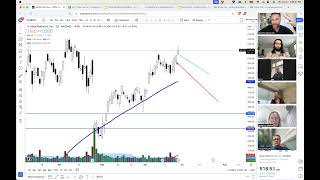
And Coinbase. Yeah, Coinbase. The crypto market's up right now and the rest of the markets are down for whatever reason, I don't have to know, but the crypto markets are going up. Bitcoin's up 3% today and right now it is actually, and there's a lot, few others. So Coinbase is going to move. Crypto is going to move for the next couple days. Big Fed announcement on Wednesday, so I'm expecting them to increase interest rates again just a little bit. So if they don't really interest rates at all, we'll keep going higher. If they interest rate, if they increase interest rates massively, then we're going to dump and then if they increase them very, very small, then we'll probably just stay the same. So shoot me a message on WhatsApp.
Guys, if you need me.
I love you tons. Thanks for being already. Appreciate you, Rocco. I love you, Josh. Thanks, Matt. You guys are awesome. See you boys. Yeah.