How, When and Where to sell Naked Puts: Real Life Trading Advanced Trading Class #1

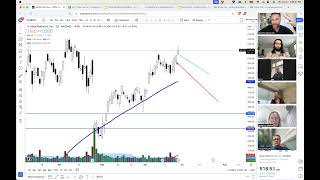
Lecture by Jeremy (Real Life Trading) introducing Module 1: selling naked puts and credit spreads. Defines options basics (calls, puts, premium, theta, implied volatility), motivates put-selling as "selling stock insurance," and states high-level rules (sell puts on down days, prefer ~1% premium for ≤6 weeks, sell strikes at/below strong support and SMA). Covers mechanics (max reward = premium, assignment rules), position-sizing rules (match contracts to risk R and ability to own shares), margin vs cash-secured, and protective alternatives (bull put spreads, buy puts/calls, unravel/roll/exit). Includes multiple real examples (AMD, SPY, Tesla, LYV, CEMI) and broker screenshots and Q&A. Speaker claims a 99.8% win-loss ratio on put sales over 3.5 years (stated in talk).
Chapters
Live from Music City, Nashville, Tennessee. This is your motivational, sensational, inspirational, educational, aspirational, international, keenly awaited, highly anticipated edition of Advanced Trading Module 1, presented by Jeremy Alexander Newsom. That's me. And this company is called Real Life Trading. Our friends, my friends, your friends, followers, fans, family from around the world. Our mission is to enrich lives and we do that by connecting a global brand, assisting people towards fully understanding and achieving financial freedom in many different aspects. But of course, you know, it can absolutely apply a little bit to the stock market. The module goal, this particular module, this is module one and we're gonna be describing put sales and credit spreads. Now, the Advanced series, we're gonna have a lot of different discussions. The first three modules we're gonna talk about in just a moment. So I'll kind of show you what that all is. A little bit about me. My godson shares my name. Shout out to Levi, Jeremy Cadden. Ricky gave me a nice shout out one of his slides so I had to give him a shout out one of my slides. But good old LJ repping the double R down there in Brisbane, Australia. So lj, thanks my man for sharing that with me and being a part. I don't know if you'll ever watch this, but if you are, thank you very much for being here. I appreciate it tremendously. Lucian, he says, long time no see. I know it feels like minutes have gone by. I do have some Nemesis stocks. I had a lot of people ask me what are some Nemesis stocks? Baidu, autozone and Dropbox. Don't know why, but I can't trade myself out of a paper bag on those particular stocks. I also never trade Ford, BlackBerry or any of the large banks. Don't really specifically know why other than I just don't really make money trading those. So I kind of stay away, I guess. And I have a niece named Gabrielle, my nephew Zachary, who are two incredible souls in my life. I love pouring into those humans. Incredible. And right now I am training for a last man standing event on June 20, 2020. To give you a lot of idea of what a last man standing is, there's something happening in Nashville, Tennessee on June 20th and you run one mile with a very steep hill in it and you have to run that mile in 20 minutes, which doesn't sound that insane. However, you do it every 20 minutes until you are the last mil man standing. So that's what I'm currently training for. And by training I'm doing a 4 by 4 by 48 which is a David Goggins challenge. That was a challenge that you run four miles every four hours for 48 hours, which equates to 48 miles. And right now I am literally halfway through. So I have done 24 miles in the last 24 hours. And I'll start another round tonight. I'll be waking up at 1:30am then 5:30am, then 9:30am and 1:30pm so by the time I get here tomorrow, I will be doing and have done 44 miles, presenting another class. Then I'm gonna run out and finish my last one. So if I'm extra excited, that's why. Okay, here's what we got. If you want some slides, if you're interested in getting this presentation delivered to you, you can text the word Newsom to 55444. Or if you live in Canada, you can text Newsom to 312-487-3550. You'll get slides automatically from each day's class or get a free real life training dashboard. You'll load up your custom dashboard with lots of courses and premium tools. One other phenomenal little exciting update, I had a gentleman coaching student, good friend of mine named Santosh, like two and a half, three weeks ago. I was like, jeremy, you should write another book, man. It's been like a. It's been like a year since you've written another since you've written a book. And I was like, bro, they're not the easiest things in the world just to sit down and just crank one out. Boom. Yeah, it is that simple. So, ladies and gentlemen, brand new book, co author by myself and one of my really good friends. His name is Michael Thompson. He is actually the world's most popular option seller on the globe in the entire planet. It's called the Naked Trader because it's talking about doing options. Naked options. We talk about the risks, we talk about the rewards, we talk about the brokers. It is the real cover. Yep. That is absolutely what it looks like. It is supposed to look bad. That is kind of the point. So it's a great book for options. Yes. If you are a fan of options, which we're going to be going into in this particular class. It is on Amazon. Robin says I just bought it. Beautiful. It is an ebook right now, my friends, ebook form. So I don't know if we'll make it an actual paper book or not. We may or may not, but actually, I don't, you know, it's possible. We will see. We'll see. But if you want it, it actually is quite good. It's a little bit of a tongue in cheek, you know, sarcastic, but very useful, you know, book. And we have a lot of great trade setups inside the book. We'll actually talk about going forward. We can look for your plans, things that nature. Jeff says, I read it yesterday. Was it a good read, Jeff? Could you kind of feel like the back and forth humor, was it enjoyable? Jeff says yes, yes and yes. All right. Awesome. Very, very cool. Very, very cool. All right, well, here's where we're at. Here's where we're going. The first three modules are going to be a lot about options now, as most of you know and we will talk about in this class. I have tons and tons of free material on options for everyone on the Internet. So I have tons of option videos on YouTube. If you don't have any option knowledge at all, you can go get some on real life trading YouTube channel. There will also be in the future, I'm sure, a basic options course, but for the most part I'm going to get you up to speed and then we're going to go down an immaculate hill of profits together. So this is an entirely free program. There will not be any massively overtly large sales pitches in this program. If you guys want to buy stuff, cool. Otherwise, enjoy, sit back, relax. We have put in about 400 hours of man power and woman power into the courses and product you're about to see. So I will give a shout out to Robin Steckle and, and Matt DeLonge for helping me put together these slides. I'd also like to thank Jason Smith for doing a lot of the video editing. And if I'm leaving anyone out, I apologize. But Dennis, thank you. I don't know if you're watching this video. Alex, thank you for making a lot of the quizzes and the content, the features. And again, each and every one of you, thank you. There are. Wow, there's a lot of you here right now. Oh, that's very cool. Well, I appreciate you all being here. Alan, thank you so much. Benjamin Epps. Thanks, Chris. Valerie Sochi, Tracy. All right, so here's where we're at. Module one. Let's get into it. First, I'm going to define two really quick terms. Options are insurance contracts for stocks. That's what they are. Literally they are insurance contracts. There are two types of insurance. Theoretically, you have an option contract, an insurance contract called a call option. Those were created for people who short stocks. If you short stocks, you want the stocks to go down. Type in A1, if that is correct. If you short stocks, you want it to go down so that you can make money. Perfect. So people who do that, they have a risk. I mean, there's risks and everything, but you can mitigate that risk by having what's called a call option. A call option gives traders the right to buy something. Now, this is an option contract that blows eventually everyone's mind. It is called a put option. And at dinner parties and Christmas parties and Thanksgiving parties and holiday parties, instead of, you know, doing a magic trick, I tell people about what put options are. That's my. That's my magic trick. And a put option is an insurance contract for people who own stock, which is, I don't know, 85% of the United States population, something crazy. A lot of people own stock. Not necessarily a lot, but people do own stock now. And put option gives traders the right to sell their stock. It is literally an insurance contract. Just like a life insurance contract, health insurance contract, car insurance, home insurance. It gives you the right to sell or Rebuild. Type in A9. If you understand that insurance doesn't necessarily make you money. Right. If you have insurance on your home and your home burns down, you don't necessarily get paid for that. Well, the cool part is in options, you can. You can make money from these contracts. A lot of money. There are so many phenomenal things that you can do with options. We're gonna be covering them in this particular module in the next two and three modules, actually. And I'm looking forward to tons and tons of questions. You will hear me use this term all the time. Premium. Premium is the amount of money that you receive for selling any option or the amount you receive or pay for buying an option. All right, so it's either the amount you receive or spend. I'll just update that really quick to spend just to make sure it makes more sense to everyone else. But yes, it is the amount that you spend or receive. So again, if I say, man, my health insurance premiums sure are high. Everyone understands what that means, right? You guys all get it. If I say, man, my car insurance premium is really high. You guys all know what premium is now in insurance? I used to work at Insurance. Nationwide is on your side. Used to work Nationwide. I was the phone guy for a long time called Nationwide. I picked up and I understood the insurance portion of the world for a very long time. Still do insurance contracts and insurance. Selling insurance is a great way to make money if you mitigate your downside risk. True or false, ladies and gentlemen, the Person who sold you your car insurance does not own your car. That's obviously true. Now, the person who sold your insurance gets paid a small amount of money in hopes that you do not crash your vehicle. Is that true or false? That's also true. So what I'm going to show you tonight is arguably one of my favorite strategies of all time. To show you how you can get paid money, cash, currency, to sell insurance contracts on something that you don't even own, AKA you are about to become an insurance company and your goal is instead of the car not crashing, you don't want the stock to crash. That's the goal of tonight's process. Now, to go over just some basics really quick. Simply stated, if you want to make money when a stock goes up, these are three things that you can do. Now, if you don't know why yet, it's okay. But if you're taking notes, just trust me, these are all correct. All right? These three things are 100% accurate. If you want to make money when a stock goes up, you can buy stock. You all know that. Buy a call option or sell a put option. That's it. Next slide. If you want to make money when a stock goes down, here's the three things that you can do. You can sell a stock short, you can sell call options, or you can buy put options. Again, if you don't understand it yet, we'll get there. But make sure to realize that those are accurate statements. It just is true. You don't have to understand why yet, logistically. But stay with me because you will. All right, sounds good. Any questions? Initially, we're doing good on time. All right. I think we're still broadcasting on YouTube. Yep, everyone's good on YouTube. Hey, everyone on YouTube, welcome. If you're here live, thanks for being here. All right, next, so here's what this looks like. Call options, you are buying them to open. If you are bullish, you are selling call options to open if you are bearish to neutral, AKA the red box, a put option, you are buying to open these if you are bearish, meaning you want the stock to go down. And you sell put options if you are bullish to neutral. So go ahead and take a screenshot of this if you want, jot it down. This is again how it works. A lot of times for many of my coaching students or people that I will work with or whomever, traders, individuals, sometimes I will sit right down and go, listen. Just here is how it works. Click the button, get into the trade, let it go on your positions tab and you can see it. And we're going to have a lot of those examples. Type in A4 if you would love to see some of this in the position statement because we're going to be doing that right in this program. I'm going to show you exactly what a lot of this looks like. All right. Getting a lot of fours. Good. So again, I would argue that this is probably my second favorite strategy, selling puts. That's what we're going to be really discussing tonight. And again, in the book the Naked Trader, you're welcome to snag yourself a copy of that. We talk a lot about selling put options, selling puts and strong bullish uptrends on companies that I like. That's the strategy, by the way, in a nutshell. This is, this is my second favorite strategy. My first favorite strategy is covered calls. All right, number one, covered calls. So they both implement and use options because options give you leverage. So let me read to you my second favorite strategy, selling puts. I guess I could have a comma, but I don't necessarily need one. Selling puts in strong bullish uptrends on good companies that I like. Ladies and gentlemen, type into the chat pane, what are some good uptrending companies that are going higher that you like? Apple. All right, a lot of people said Apple, Lulu, Shopify, Zoom, Facebook, Square. Yeah, you guys all kind of get it. AMD, DocuSign, all accurate statements of that. Now let's pick a stock right now that is not in an uptrend. Would you all agree present day that Delta Airlines is not in a bullish uptrend? Would you guys all agree with that? Agree. Would you all agree that General Electric is not in an uptrend? Yes, we could agree with that. By the way, is General Electric a good company that you like and enjoy and use frequently, Right? Probably not. Ford, Boo. Bed Bath and Beyond, Boo. Macy's going to zero. Sears, bankrupt. JCPenney bankrupt. So again, uptrending companies now, true or false, at some point, every uptrending company will become a flat or down trending company and the answer is true. At some point. Even Apple at some point will lose favor. It might be 100 years from now. Okay, it could be a long ways away, but it'll happen at some point. It's just the nature of the way things work. Businesses have cycles, the universe has cycles. Energies have cycles, stars have cycles. Selling puts is bullish. What you are doing essentially is you're selling the right to buy the stock at a lower price when you Sell puts. Selling puts has the exact same risk profile as owning shares. When I say the exact same risk profile, what does that mean exactly? What is the risk when you buy a stock, any Stock, Boeing, Twitter, DocuSign. It can go to zero. That's the risks. Realistically now, will it go to zero tomorrow? And the answer is no, right? Even LK Luckin Coffee took like three weeks to go to zero. But generally it will not go to zero overnight. Even Enron took a few years to go zero. Lehman Brothers took a three and a half, four months. Okay, so selling puts. This is what it intrinsically is. Realistically, when you sell a put, ladies and gentlemen, you sell stock insurance to someone. When you sell car insurance to someone, what do you want not to happen? I don't know if that's grammatically correct, but I think you guys get the point. You don't want it to crash, because if it crashes, you have to come up with the money to fix the vehicle. When you sell a put, you are selling stock insurance to someone. I have a 99.8% win loss ratio on put sales over the last three and a half years. 99.8. It's pretty cool, huh? It's a lot of money to be made. Even with COVID That's right. Even with COVID 99.8. Because here's the point. If you want to own the stock anyway, you can get paid to be patient. Spelled the way it should only be spelled. P, A, Y, T, I, E, N, T. Patient. If you want to own the stock anyway, you can get paid to do literally nothing. Here is where traders go wrong. I make it sound really cool. Wow. 99.8% win loss ratio. Newsom. Yeah, guys, I'm really good at these things, all right? I can sell a point in my sleep. However, here's where traders will go wrong. So everyone who is here, please type in A one that you will not do. What I'm about to show you, I'm gonna show you how you can mess this up really bad. I've done it. I've messed it up as bad as it can be. Messed up all the things that you should not do in stock trading and have been told not to do. I've already done times. Four worse. I was a hellion on wheels back in my younger years. So here's where a lot of traders go wrong. Here's the risks of selling puts. Number one, stock keeps going down. Number two, you can't afford to own shares. Oh, what does that mean? Well, if you sold too Many contracts. As most of you likely know, one option contract controls 100 shares. Let's say you have a, I don't know, $5,000 trading account. Can you buy 4,000 shares of Macy's at $40 a share? All right. The answer is probably most likely, mathematically, no. No, you cannot. Now, that's just what a lot of people initially do. Could you sell one contract of Macy's at really anywhere in here? And the answer is you could, right? You could. You could do that. Because again, One contract controls 100 shares. So let's just hypothetically say if you bought 100 shares of Macy's here, the absolute low, 100 shares of Macy's would have cost you, what, at $20 a share? Math is pretty simple. 2,000 bucks. Can you afford $2,000 on a $5,000 account? The answer is yes, you can. Now, if you had done that, would you have had the opportunity to make money on Macy's? The answer is absolutely right. Over that period of time, Macy's did actually go up and kind of did his thing. Now, I think most of you here could have made the easily relative statement that Macy's was on the struggle bus for a while. I don't think that that was a massively unique statement to make at any point in time. Pretty much, once this began to happen, once that pivot came in, Macy's was on the struggle bus. Why? Who can tell me if we go back to the intermediate series, which you probably just finished watching, based on this pivot that I'm circling kind of in that purple, why was that an issue? Why was that a problem? Why at that point would you have gone, I don't love Macy's right now? Because you have a confirmed lower high at that point over the course of two years. So over two years. Now, the question that you have to ask is, well, newsome, when would you have known that? And I would say somewhere over here in the red blob. Somewhere in the red blob, you'd have gone, oh, man, that is a lower high. Like, you had a high here and you had a lower high here. Like, it's not making higher highs, it's not making higher lows. This is a problem. So, Newsom, are you telling me that not up until 2017, would you have gone, hey, let's not trade Macy's bullish? I'm not saying that. But what I am saying is I personally haven't invested in Macy's ever. I don't shop at Macy's. I don't know many people who do shop at Macy's. I don't go to places and hang out with people and go, oh, man, that's a really cool outfit. Where'd you get it? And they go, Macy's. So since that doesn't really happen that often, I just never have invested in the stock ever. Now, I'm not saying that any of you shouldn't or couldn't have or wouldn't have. All I'm getting at is it was not until about 2017 ish that you have said, yeah, this is a little bit of a problem. There's a little bit of an issue here because of that lower high. And then another year and a half goes by and it still has not made a higher high. Would you, at that point in time, ladies and gentlemen, said, yeah, this is again, a little bit of a problem. Yes or no? Christopher says, they are more well known for the parade than the close. I would agree. So all the way, that 2018 period, that's when they make that another lower high. That's when you have to be really, really, you know, really challenging. So what a lot of traders do is they will become too financially zealous, too monetarily optimistic, or too fiscally aggressive. They will sell too many contracts. They will get into too large of a position that they can't afford because selling puts is boring. It's extremely boring. It is the most boring strategy that you can possibly think of because you're getting paid such little money. I mean, it's like someone walking up to your house, handing you a $100 bill every week, and then just leaving. It's boring. $100 a week ain't gonna get anyone rich, at least quickly. It can compound over time, though. So this is where most traders get into problems, is they go, ooh, I like it. Let me sell all of it, right? Because remember, it's not greedy. In my opinion of the world, it's not greed because in your brain, you're thinking yourself, man, how cool would it be If I made 2000 extra dollars next week? And then me and my wife could pay off this particular credit card bill? And then me and my family could go out, have a nice dinner, and I could tip the waitress 200% and everyone's happy. It's not greed. The vast majority of the time, if you tell your brain that it's greed, you automatically don't want to make more money. You guys have all read my book. It's true, though. It's a very true statement. If you tell yourself you're greedy ever. It becomes a lot harder to make money if you don't want to be greedy. Guess what, though? If you openly want to be greedy, you can make a lot of money. You're not going to be happy because you're greedy. And greedy is to save the soul. And you never actually become happy ever. You just become really rich. All right, soapbox removed. This is what is the challenge for a lot of traders. They'll see a stock just train wrecking, okay? Getting absolutely roadhoused. Just going lower and lower and lower. And they'll go, macy's got to stop right there. And they'll sell a bunch of puts and it won't stop right there. And it just keeps going down. And then they buy to cover the puts for a loss right here. And then it bounces because they couldn't afford the amount of shares anyway and they get host. So please do not sell stock puts in strong downtrends until you have at least six years of experience doing this. Just more profitable not to do that. Don't sell too many contracts if you cannot afford to actually own the stocks until you have at least six or seven years of experience doing this. And then you can start doing some margin if you want. Yeah, I got Margin call back in March and I was like, all right, well, let me just put some more money in because I want to own these stocks. Turned out well. It worked out, right. I wanted to own some shares, so I did. Awesome. So here's some notes. When do you sell puts on the charts? When do you do it? Well, 90% of the time for me, I'm going to sell a put on a down days. So 90% of the time I'm selling a put on a down day. I would love to say 100% of the time, but Matt DeLong found a trade that I sold one day on an update. And he messaged me and got all. He was like, bro, are you breaking your rules right now? I was like, wait a minute, Matt. 90% of the time I sell puts. It was a. It was a strong update. I sold a put and it expired worthless. It worked out fine. But Matt knows exactly what I'm talking about. So 90% of the time I sell a put on a down day. Now, here's a really, really cool aspect of selling puts that you might not have thought of, but I promise is really useful. If you sell puts on a down day, it helps train your brain not to be afraid of dips. Now, I agree that at some point in time, buying the dip will stop working and the US will go into a depression. I don't know when that's going to happen, but it has to occur at some point is called a cycle. It will occur most likely in my lifetime since I'm going to live for another 68 years. So I'm dying on my 100th birthday the night of. But on and in a depression, yeah, it's going to get a little scary. You're going to have to realize, oh man, there's a lot of stocks breaking major supports. Things are terrible. We're making lower highs. Let me be calm, cool, collected and patient for about a year. Let me do a lot of day trading. Let me do some other strategies to make some money. When the market goes down, you'll still probably sell some puts, you'll still probably get put some shares and you'll most likely have to hold through some stocks. But if you want to actually own the stocks in the first place, and you can afford to own some stocks in the first place, it shouldn't be be a massive issue. All of you who are here remember the whole COVID 19 thing. So when the market absolutely catapulted lower, some stocks have already rallied and some stocks haven't. The ones that are flexible, stay at home related work from home software type of companies have all done extremely well and have fully rebounded and then some. Right? Wix is up 200% since COVID happened. And then you have companies like Royal Caribbean, American Airlines and Southwest which have huge overhead, massive infrastructure, tons of employees and it's gonna be a little bit harder to get them off the ground. Selling puts on down days increases the amount of money that you will receive, aka currency, aka premium. When you are able to collect around 1% of the stock's price per the strike at a location you would love to own near support. That's another time when I live to sell my puts. So I love to sell puts. When you're at. When you are able to collect around 1% of the stock price per the strike at a location you'd like to own anyway, what does that mean? 1%. Well, let's go to the next slide and we'll talk about that. So if I'm looking at AMD and this was a trade that we recently did together in the trading room that worked. I mean, why would not work? I have a 99.8% win loss ratio on these things. So if I'm looking at this. So yeah, full disclosure, all the put sales work in this entire class. They all worked. So is this a good time to sell puts? Ladies and gentlemen, looking at the rules that we just talked about, what do you guys think? Yes or no is all I'm looking for. Is this a good time to sell puts? We got one yes. We got another yes. We have another yes. And the answer is unequivocally without question. No doesn't depend on the time frame. Doesn't matter. None of that is correct. It's not a good time to sell puts at all. Not even close. Now, why is it not a good time to sell puts? Well, let's ask us this question. Is it at a support level? No. Is it a down day? No. Is it near a resistance? Yeah. What do stocks do that are at resistances? Usually? They usually go down some. If they go down some, would that be a good time to sell puts? Yeah, but not right now, because you're at the resistance. You don't want to sell puts there now. It doesn't mean that it won't work. Okay, if you sold a put on this day and you sold a put down here, let's say you did a $40 put sale. All right? So the stock at that point was $54. And let's say you sold a $40 June put sale. Will that trade work? Most likely. And the answer is yes, most likely it will. But as I mentioned, you want to sell puts on down days because you get more money. And everyone here loves money because money is amazing. It's incredible. Such a great thing. Christopher says, could you sell calls? You could sell calls. It'd be better than selling puts at that resistance. Yep. So let's go forward another candle, and let's talk a little bit about this, because as we're looking at this, this is a question I gotta make sure that we all understand. How can you calculate the risks of a put sale? A lot of people say there's a mathematically no way to calculate risk on a put sale. And I go, nay, nay, bust out a calculator. Let's go back to second grade. It's actually very easy to calculate the risks of a put sale. It's extremely mathematically sound. You can use the premium of the option as a guide or you can use the stock price as a guide. Those are the two ways to do it. I usually go with number two. The heck does that mean? Newsom? Let's get into it now, my friends. Is this a good time to sell puts now, initially. Hold on, hold on, hold on. You gotta stop answering for a second. Stop answering. Type in a 2, if your brain initially said, no way, I'm scared. Be honest with me. Come on, give me some twos. All right, there we go. That's what I thought. Now remember, selling puts on down days helps train your brain to go, ooh, piece of candy. When you see a stock drop a lot, it helps you go, wait a minute, let's not freak out here. Let's take advantage of an opportunity. Because someone once told me, buy low, sell high. So on this day. That sounds very proclamatory. On this day, a $36 May 15, 2020 put sale was bringing in 38 cents of premium. Now, what in the. What in God's green earth am I talking about? A 36 May put sale, ladies and gentlemen, is 36 down here in this red line. Yes or no answer is yes. You can look at the right side of the chart if you need, but it's. It's 36, so it's. It's far down there. If AMD is at 54, would you mind owning it at 36? Some people are saying they would not mind it. Some people saying they would mind it. I wouldn't mind it at all. It would not bother me one bit. AMD is at 54. Get it at 36. Is there a recent time in history based on the chart that you can notate a time where AMD was down there and his bounce before? Is there possibly a moment in history where AMD was out of support and then bounce? Okay, so if we're Talking about a $36 put sale that brought in 38 cents, is that 1% of premium, yes or no? And again, this is first grade math, ladies and gentlemen, but the answer is yes, right? 36.1% of 36 is.36. Feel free to math track me on that, but I think I'm close. Now, if you sell 38 cents, what is your maximum reward? This is going to be a great question. If you sell 38 cents, what is the maximum reward? And the answer is 38 cents or $38 per contract. That's it. You're tapped out. That's the most you're going to get.38 per contract. Because again, one contract controls 100 shares. So, ladies and gentlemen, are you going to sell 100 contracts on AMD? Most of you here are probably going to go no, right? Because 100 shares again, unless I'm really bad at math, 100 contracts times 100 shares is 10,000. Now, if you can afford it, let's go. Boo. Boo. Make that paper all Right. If you got a $4 million account, let's roll. But if you can't afford it, you probably shouldn't do 100 contracts now. 100 contracts? I mean, how much would a hundred contracts bring in? If we're just being honest. If we're being honest out here, if we're just really just shooting the breeze, two friends talking it out. How much money would you make if you did a hundred contracts? $3,800. Yeah, sign me up for that. $3,800 with a 99.8% guaranteed win ratio. Who doesn't want that to happen? Sign me up. No, don't sign me up for that ride, because that is a disaster waiting to happen. That is a disaster. That is the financial optimism, the monetary and fiscal aggressiveness that will get you in trouble at some point. So I'm sorry, but you do not want to do that. And if you do that, please have many, many years of experience before you pull something that large. And if you pull something that large, you better have the liquidity for this. All right, you guys are with me on that. That's real talk. J.D. says an IRA would require 5 million. Mm. So, again, I'm just letting you all know, like, just being real here. Okay? But you get the point. 36. Strike price 38 cents is 1%. Now, let's be honest. What is the max risk? Max risk is $30 per contract. Will AMD go to zero soon? Let's say in the next two years. Two years. Is AMD going to go to zero? No, not. Probably not. It won't. I'll stake my career on that. You can come back two years. If AMD is still in business. You're like, okay, cool, Jeremy, thanks. AMD is not going to go to zero in two years. Now, could it go to zero in 10 years? Anything is possible. I mean, most likely not, but, you know, Magic ball says no, says Jay. All right, so here's kind of what we can do if we're going to use the option premium as a guide. Check this out. Here's a little bit of math for us. If your Mac gains 38 cents per contract, each contract controls 100 shares. One contract will bring in 38 bucks. Now, remember, $38, is that going to get you rich immediately? Nope. No, it will not. I'm not dumb. I know your bills. I know my bills. $38 is not a lot of money. But if Your R is 100, could you sell three of them and bring in $114? Now, a lot of you will go, absolutely not. No way. Couldn't do it because I'd have to own shares at 36. And if I own shares at 36, I don't have enough money to do that. Well, maybe, maybe not. Because if you place your stop loss at 76 cents, would that give you a one to one risk reward ratio? I mean, I'm just asking for math purposes, you guys tell me. I don't know if I did the math right, but if we got 38 cents right, if that's the maximum gain and then your one to one risk reward ratio, you put a stop loss at 76 cents, it's going to give you a one to one risk reward ratio. So that means that you could potentially make $114 to potentially lose $114. That's a one to one risk reward ratio based on $100 risk without actually having to control the shares and theoretically giving you a pretty high share probability win loss ratio. Maloney says, Jeremy, why would the market maker have premium at these low prices? I mean the probability of shop going down to 300 is not as high and there's still premium. Anything is possible. Maloney is the answer to that question. Anything is possible. It's very unlikely. When Tesla was at 800 a few weeks ago, I was selling puts at 400, 450 and 500, you know, so anything is possible. It's low chance, but it's possible. All right, so we got the math on that one. Beautiful stuff. William says, in your experience, do you get a sign if the Stock goes to 36 or to take the stock to go to 3562 to get signed? Yeah. If it closes below 36, you're getting assigned. So the amount of premium doesn't matter that you're bringing in. It's a great question. So Williams is asking, Philip is saying if the stock does go down all the way to 36 and closes below 36, are you gonna get put to shares? And the answer is yes, 36 is in the money. So if it's 36 or lower, you're getting put shares. So theoretically, if it went down to 35, 99 and closed, there is that kind of more or less best case scenario. And I would argue yeah, because now you get the shares that you wanted and it's a penny lower than where you wanted them. So the very, very next day when the market opened, if it opened at like $36 and I don't know, 75 cents, could you sell those shares the very next day and make $0.75 per share if you wanted to. And the answer is yes, right? Absolutely, you could do that. So again, Kevin, if you're using the option pricing as a guide, you can mathematically come up with a way to determine risk. Set your stop loss so that you lose a controlled amount of money. It is doable. Slash achievable, slash calculatable. Calculatable definitely has to be a word. Now, if you're. If Your risk is $100, right. Remember, that's what R stands for. Could you sell 10 of these contracts bringing in $380 and place your stop at 48 cents? I mean, you could mathematically, if you guys are doing the math with me, you can. Because again, your. If your risk is $100 and you have a $38 contract, it goes to 48. You have 10 contracts, that's $100. Now, why would I not personally do this trade? Who can guess? Why would I not do this trade at all? No chance would I do this trade, this exact one with the. With a stop loss of 48 cents. Who can tell me? J says the probability of getting stopped out is too high. That is correct. The probability is way too high. A 10 cent stop loss on an option is. I mean, you're just, you're. That's. Wow. I'm getting tongue tied even trying to come up with a word for how disastrous of a plan that generally is. Options fluctuate way too much. I mean, they are. They are wild, wild little vixens. Functorious. There you go. That's what it is. That's the word of the day. It's a great word. I feel like with a glass of red wine, though, that word becomes totally different. Gotta be careful on that one. So that's why I would not do this functorious trade. That is correct. Not personally. Now here's an interesting one. All right, again, just talking theoreticals. If Your max gains 38 cents, if your R is 100, could you sell three of these, bring in, again, about $114 and some change? And could you place Your stop at $2, giving yourself a negative 6 to 1 risk reward ratio, John says is a stop loss order, just like on a stock? Yep, that is correct. What do you guys think? Could you do this trade? Place a $2 stop loss and have a negative 6 to 1 risk reward ratio, which meaning you're just risking more money than you're making. And the answer is, of course you could do anything. I wouldn't again, specifically do this, but you can, because if you Have a really wide stop. I mean, think about it. If you have a 99% win loss ratio, you can have a pretty ugly risk reward profile and still get paid. I mean, shoot, if you have like a 90, 90% win loss ratio, you can do a pretty rough risk reward ratio. I mean, if you win on all of them, 90% of them, if you're a winner, one's gonna be a loser as long as you lose less than you win. You know what I'm saying? So again, I don't personally do that. That's not really my jam or my peanut butter. But it could be done. J.D. stone says, Would you even use a stop? So let's talk about what I generally do. This is what I do. JD put sales are very high probability trades. 98% of the time. I only sell puts on stocks that I do not mind owning. So I had to be very careful with Matt's along because he's reading all my slides. He's my trading buddy. So 98% of the time sometimes I'll sell a put a little aggressive, maybe a little bit of extra money that I technically can't afford to own the shares if it's mathematically just a no brainer and I kind of have to. It's a rare event, but I've been known to do it. I've been known to fly up to New York City and go on a very public financial network and tell people that I'm selling puts on Tesla at a hundred dollars a share when Tesla was at 175. Getting paid obscene money for that trade. It was just bananas. Anyway, I sell the strike of the price at which I would like to own the shares. Dustin says I love the fact that the guy in the picture is coding on an iPad. Dude, if you haven't coded, if you haven't done some Ruby Rails on an iPad, what are you doing with your life? You know, that's my question. If you haven't investigated Pearl on an iPad, like what are you, what are you doing these days? Do you just have a copious amount of time on your hands? You got, you got the flowchart fine. The one image that is not an actual photo I get made fun of for. That's fine. It's okay. It's a good point. Oh man. So the strike is usually. Now this is, this is a really, really important bullet. Actually. The strike of the option that I sell is usually at or below a strong support along with at or below the 102 or simple moving average on the Daily, weekly and or monthly charts. If you do this and sell puts on down days and do six weeks or or less of time, you'll win arguably on 98% of these. All right, so here's some rules, because someone asked earlier, If I capture 50% of my premium within five days of selling my options, I will buy to close the put sale unless it has a week left expiration, then I'll just let it expire worthless. So what does buy to close with 50% mean? If I sell a put and let's say I sell a put and I bring in a buck, good old buckaroonie. And for some reason the next day something cool happens and the president does something and whatever, and the stock goes up and now the option is worth 43 cents the very next day. Math nerds. Is that 50% of my premium evaporated? Well, let me rephrase. Is that more than 50% of my premium? And the answer is yes, it is 57%. So the next day, if I sell an option for a dollar, the president does whatever, something happens to the stock and it goes up and I'm able to buy it back for 43 cents the next day. Do I? Do I do it? The answer is yes. Always without question, no hesitation. Unless again, it has less than one week to expiration, in which case I'll just hold expiration. But If I capture 50% of my premium within five days of selling, I will buy to close a put sale. If I capture 75% of my premium at any point, I will buy to close a put sale unless it has a week or less to expiration. Because if it has a week or less expiration, then generally I'm going to be fine on that position. I mean, by generally I mean pretty frequently. So think of put sales as mailbox money. It's tough to get rich off of put sales, but they can add an extra 2 to 3% a month. Now what do you think? Do you think that people could specialize in just only selling puts and get pretty rich doing that? Well, the answer is, of course the market rewards the specialist. If you are a specialist at selling puts, you can make hella cash selling options if you do the right thing at the right time. Will you get margin called? Eventually? Yes, you will. That will happen. Christopher says. What happens to your account buying power if selling naked? Will it tie up money? It will tie up money, but not as much as a cash secured put. So I talk about the margin requirements in this class. I also talk about it in the Naked trader. But we'll get to that in just a moment. How are we doing on time? Oh, wow. That's coming up on an hour. Type in a six, if that fact by itself is mind blowing. Oh, my goodness. I thought that was like 26 minutes an hour. What is going on, man? All right, so here's how Newsom does it. I just refer to myself my last name in third person poor form. So this is what's going on. Using the stock as a guide. Here's how I rock and roll. If My R is 300 in this example, which is not. But if. In this example, if my. If I risk it is 300, here's what I asked myself. Where would your stop be on the stock if you got put shares? I'll repeat that. Where would your stop be on the stock if you did get. If you got put shares at that strike? So if you got put shares at, let's say in this example, 38. Even though I think the original example is 36, I might be in a typo there. But let's just say I got. Let's say I bought the shares at 38, and my stop loss would be $35. That's $3 of risk, right? Would you guys agree? Difference between 38, 35, 3 bucks. So $3 of risk. If I have an R of 300. 300 divided by 3 equals how much? 1. So 300 divided by 3 is 100. 100 shares equals one contract. That's how many contracts I would sell, and I would not have a stop loss at all. No stop. Why am I not. Why don't I have a stop on this thing? Because I literally want to own shares. So I don't care. If I get put shares, then I care. Otherwise, I don't care. So, again, generally, as you guys all know, at this present point in my life, my risk is a thousand. So how many in this particular trade would I personally sell without a stop? Three or four. I would go with four. If we're. If we're being truthful, I would sell four now. Four. Right again. Four contracts times $38. No one's getting insanely rich off of that. But that's an extra $152 coming into my bank account. Coming into my trading account with such little work, it's insane. Like, this strategy would take me truly, in full honesty, like, 19 seconds to do. So if I just had an account laying around with money in it, and I was like, yeah, let me just do this. Boom. Done. All right, cool move. On. Awesome. 152 bucks. Bill paying money. Now that is a bill paying money, isn't it? $152. I mean, now you're talking about your utility bill, okay? Or you're starting to put a dent into some random credit card that you have or I don't know, maybe your cell phone bill or maybe diesel for your truck or maybe like 10 really cool life changing books on Amazon. You know, buy one book that changes your life forever for 10 bucks. It's worth it. That's how I personally do it. Any questions while we're here on this slide? This is just how I roll. So I would do four contracts. I wouldn't place a stop at all. None, zero, zilch, no stop. John says, so the example you're selling to, sell one option in this exact example, if your risk is $300 and your stop loss would be 35 if you get in at 38. That is correct. That would be one contract. Rick says, what if you do not want to own the shares, then Rick, you missed the entire class, this entire presentation and the point of the whole program. But if the answer to that is you don't want on the shares, then do not sell the put. That would be the answer to that question. Lucas says, so will you make money when the stock goes up or down? Yeah, you'll make money regardless of it, what it does, as long as it does not go down to 38. Eve says, how did you work out the stop of 35? I just looked at the chart, Eve, honestly, and since the stock has never been to 35 in the last year and a half, I just figured that would be a good place for the stop loss. Does that make sense? She says, okay, cool. Yeah, pretty easy. Pretty, pretty simple. Cindy says, how do you set the stop stop market? Just same, same exact thing and I'll show you in a second. But it's just a stock market or like anything else. Lita says there's one problem. Your broker will be holding a margin requirement on each and every put you sell. That is correct. Yep. It's not necessarily a problem if you have the margin and you're okay to own the shares. Right? It's not that big of a deal, but yep, margin is absolutely required to do this. Some type of margin or cash if you're doing a cash secured put. Michael says, the put sale is a credit. Yes, it is. That is correct. Yeah. Jose says, I guess you can sell many puts on stocks so that you can make a living. Yeah, you can absolutely can be Done. Matt says the buying power effect on a naked put is a dynamic formula based on how much, how many days of expiration, how far out is in or out of the money. It also depends on how much premium you receive as well. And I'll talk about that in just a moment. But there's tons and tons of calculators to do this. PO says, do you still receive the money even if you get put to shares? Yes. Rick says, do you change the strategy if the Stock went to 34 while you were holding the naked put? So if that happens, Rick, and you want to get out of the trade again, if it hasn't expired in the money, I continue to wait because again, you got to look at the company, right, rick, this is AMD. So if AMD went from $54 all the way down to $34 in May, do you think it has the chance of bouncing at that point, even just a little bit? Rick says, yes, exactly. So personally, I wouldn't do anything. I would wait until expiration, and if I got put shares at expiration at $34, I would go, well, you know what? I'm down a little bit more than I wanted to be, but it's not outrageous. So we have tons and tons and tons of down days in a row. Let's see if we balance the next two or three days and kind of go from there. It might look scary. But again, the point, Rick, is do you want to own shares of the stock? Michael says, is it good to sell puts on Delta? No, sir, it is not covered that early in the class. Delta is in a downtrend right now, not in an uptrend. Albert says the owner of the put could potentially exercise the option before expiration if it's in the money. Is that possible? It is. It is indeed possible. It's very rare, but it is possible. It can certainly happen. But again, Albert, do you want to own shares of amd? Yep. So generally it happens around dividends. When dividends come out, that's oftentimes when you can get put shares early. If a Lucas says, how can you lose on this trade honestly? Honestly, man, the only way, the only way you're gonna lose on this trade is if the stock did this. You panicked. Bosses up bought to close your put for a loss, and then it bounced. That's the only way that I'm gonna ever lose on put sales is by panic exiting. That's really it. That's the only way you lose on this particular put sale. If you sell a put and you are okay, owning the shares and you sell a proper amount of contracts. Now, what if you sell 50 contracts, right, and the stock starts dropping and you have a $10,000 trading account. Can the broker auto liquidate your position? Ladies and gentlemen, what do you think? And the answer is yes, of course. Absolutely. It has happened to me before. It has happened to a lot of other traders. It can absolutely occur. So that's why I mentioned what rule number one, don't sell too many puts on a stock that you don't want to own. Sell the amount of contracts that you're actually okay owning or have a stop loss to mitigate your risk. Brandon says, bad day? Yeah, it sucks when that happens. I got so mad when that occurred to me. David says, so premium goes down as stock price increases. That is correct. So here's what happened three days later, ladies and gentlemen. Lita says the broker would let you take that trade. The broker would not let you take that trade in the first place on a $10,000 trade. I wouldn't be so sure on that. I've seen it happen. You could, in interactive brokers, if you have a $10,000 account and you told the broker that you have a lot of liquidity and tons of cash and tons of options experience, you can actually do that. You really could. You could have more margin. The only way a broker will just absolutely not let this occur is if you're soaking up more than 4 times your day trading buying power. And if you do that, then the broker will not let you do it. So 50 contracts would be what, 5,000 shares? 5,000 shares times 36 would be. 180. Yeah. So you couldn't do that on a $10,000 account. You are correct. Yep. So Lita is absolutely right. So if you had a $10,000 account, you could not sell 50 contracts anyway. But you probably could sell 10. Well, you're not probably. You could. You could sell 10. And that could still put you in a little bit of a world of hurt. Lita says you have day trading buying power on a $10,000 account. Remember, Lita, there's a lot of other countries out there, my dear. There's a lot of other countries. So the answer is yes, you can. Especially in Canada. Canada, they don't have the sec, so they can do all kinds of things. So yeah, it can absolutely occur. You just want to make sure that you really, really know the risks of these accounts, of these trades, go through the process and you understand how the application works. So again, for me, I only suggest having the amount of money that you are okay with buying the shares on the stock. So again, that's just my. That's just my basis. So if you have $100,000 in cash or $10,000 in cash in your account, regardless of what the margin is, you should still have enough money to buy the shares. And understand that even if you're doing a naked put and the margin requirements is not that much for a naked put, you should still have your money in line to actually own the shares. Jay says a Canadian. Oh, A Canadian owes 9.5 million on USO on a 77 grand account. Yeah, man, that sucks. That's. That's brutal. That is brutal. But, yeah, Canadians, they have no sec, so they can do all kinds of stuff. And yeah, Australia, Europe, I mean, there's all kinds of companies out there, all kinds of. All kinds of countries. Now, ladies and gentlemen, for this particular trade and example, three days later, the 38 cent option that we sold is now worth 8 cents. Per my previous rule. Do I buy to close? Yes, I do. Now, could I leave it alone? Sure, yeah. You can do whatever you want. But that's the rules. Did I do that trade in real life? Yes, we did. Very easy, very simple. Gorgeous trade. Whoo. All right, check this one out. Now, you have four down days in a row. So here's a question. I remember that we recently sold a put at this exact same price before. So if I'm looking at the chart, ladies and gentlemen, you all tell me, based on the chart, based on what you're looking at, based on the moving averages, based on everything we talked about so far, where would you sell your put on this trade? Where would you do yours? Rob says 40. I like that answer. Christopher says 43. I like that answer. Rodrigo says 36. I like that answer. Eve says 36. J.D. stone says 45. Albert says 40. 38. So you guys get the idea. Could I sell one here? Answer is you can if you really want to. I mean, you could. You can do whatever you want. Your account. But where would I sell it? And the answer is, yeah, just down here. I would do somewhere down there. Again, 38, 40, 41, 40, something like that. I mean, just. Just rinse and repeat. It's not. It doesn't have to be that hard. Okay, so there is 46 cents for the 46 put, regular May expiration, which means that there's only three weeks to expiration. Only three weeks. Now, there is 42 cents for the $42 put for May 29, 2020 expiration, which one do you like? Now, you don't have to type it into the chat pane. Just select whichever one you would go for because the answer is it's really up to you. It depends on your risk tolerance and what you like. Right? 46 is right here. 42 is all the way the heck down here. Which one would I sell? It's 42. William says, how do you know if there's enough premium to sell the put? Well, that's what we were talking about. I like to go for 1% with six weeks or less. Philip, do both of those option expirations qualify and meet that criteria? Right. We're in May and both of those are 1% of the stock price and six weeks or less to expiration. So the answer is yep, they absolutely both meet that criteria. Good to go. This one and this one both are good. So if that's 1% in six weeks or less and I want to own shares of the company, it's in an uptrending stock that I want to own, that I know exactly how they make some money. It's a win win for me. So I did the 42. May 29, 2020. That's the one I did. Oh. Now check this out, ladies and gentlemen. We have another down day. So here's what's interesting. I want to show you the change in the option premium from here in the green line to here in the pink line. There is 46 cents for the 46 cent. May expiration is now worth 85 cents. It is now doubled. More. More or less. More or less doubled. The 42 strike price is now worth a dollar thirty. Why is that? Amy says people are scared. Exactly. People are freaking out. People are terrified. Is this an even more no brainer trade at this point? So if you had not sold a put before, is it like, oh my goodness, I have to do this now? So yeah, I sold another one. I kind of had to because again, I don't mind owning shares at 42. I'm like 42 seems like a good price to me. I only have five weeks expiration I'm getting. And how many more did I sell? I sell a hundred contracts more. That's a one contract more. One. Right, One contract. But Jeremy, you're not making a lot of money with one contract. I know. This is just how I do it. I don't make that much money selling options generally somewhere between one to $2,000 a month. It's nothing outrageously crazy. I make all my money from stocks, day trading and swing trading. Option Sales is a little bit of, you know, that's kind of cool. That's nice. Well, extra something something. But money is money. I'm not going to throw away $1,000 if it's given to me. You guys see what I'm saying? Does that make all sense? Any questions from here? Because so far the questions have been ridiculously on point. But what I wanted to do is I wanted to show you how quickly this can escalate. Christopher says, assuming you avoid earnings, six weeks or less, but never hold over earnings. Correct. What if you want to own the shares of the company, Chris, does it matter? Nope. So if you want to own shares, then who cares? Yeah, I'll hold over earnings all the time. Now here's the interesting thing on this chart. Let me move the chat pane. For those watching the recording. On this chart, can you see another time in history where AMD had five down days in a row? Rick says, wouldn't you have gotten stopped out if you had to stop on that? That is correct. You would have gotten stopped out if you had a stop. But me, I don't have stops on my foot sales, so I'm totally fine. So again, back to the question. Has there ever been a time where you had five bearish days in a row on AMD on this particular chart so far? Let's see. So you have two here, you have two here. You could say that's a down day. So three. No, at least I can't see five bearish candles in a row at any other point in time. Lucas says, so when the candles are down, you sell puts, meaning you make more. Is that correct? That is correct. All right, beautiful. So this was another one, another good example. So the real reason why Amy said it perfectly, but when the stock market or when something drops, implied volatility goes up. Implied volatility goes up. People start freaking out. People are afraid that the stock is going to crash. They become panicked. And I'm not saying the stock doesn't crash. It definitely can. But again, if we're going back to the whole COVID 19 thing, if you got put shares down here at 40 for AMD, are you really that upset? Now, again, if you sold 50 contracts, you and you can't afford 5,000 shares, then you're hosed. Welcome to Hoesville, population. You. Maybe Dr. Seuss will write a book about you and your stupidity. Aka Jeremy Newsom, circa 2011. All right, Jay says, do you sell puts? More if it had a double top. I mean, this is a double top right here. And I sold puts on that day. So I guess the answer is yeah. Chris says higher implied volatility is good if you're selling puts. That is correct. Philip says, you probably answered this, but I got the 1% of the stock price. But is there a time frame requirement? You can find 1% on a put that expires in a year? Yep. So I did answer that. I said six weeks or less. Mr. Philip Williams, six weeks, which is a month and a half or less is what I like to look for for my 1% premium price. Yep. If you want to sell more time for more premium, can you? And the answer is, of course you can do whatever you want. It's your money. I mean, you can light it on fire and slide down like the Joker in the Dark Knight if you want. It's up to you. I do not personally sell that long of expirations because generally I have no idea what the stock market's gonna do like three, four months in the future. John Saxton says, I sold the June 70s on Marriott for $1.56 for about six weeks of time. If they expire worthless, that works out to 19.4% annualized interest on the $7,000 cash securing the puts. Sounds about right. My friend Rodrigo says, what if you sell puts for $42 and the expiration date the price did not reach the strike price? What happens at that point if you mention it? Forgive me, I did mention it. And the answer is you keep all of your money. That's exactly what you want to happen. That's literally precisely 100% the goal of the whole put sale thing. That's what you want. The options expire worthless and they go to options heaven. And you keep your money, you keep the premium, Nothing happens and you do it again. Cindy says, why did the price of the 46 put sale go up by the same ratio as the 42 or even a higher ratio? Oh, sorry. Why didn't they? Because the $42 put had more time on it. Cindy, that's literally it. The longer your insurance contracts, the more they cost, right? All right. Steven says, I just bought back the puts on Marriott for 90 cents. That's a pretty high return for a couple of days. I agree. Rob Thomas says, I recently snagged a nice 5% premium on pinput because I sold it right before it blasted off ice. Aaron says even if it goes in the money, you keep the premium. Yeah, guys, you keep the money. Regardless of what happens, the money is yours. The cash will come into your account regardless of what happens? It's there. So if you get put the shares or not, the money is still in your account. The cash is still there. You make money from selling the put regardless of what the stock does. All right, cool. So let's go back to the guy coding on the iPad. Notes to remember. Implied volatility is something that increases on down days, fear and panic days. Implied volatility is really what you sell when you're selling options. In all honesty, Theta is another fun part of options. Theta is the amount of money that the options will lose or can lose daily. And here's an option and stock fact for you. If an option is out of the money at expiration, it will expire worthless, meaning it goes away to options heaven. It evaporates. You never have to worry about it again. It goes off your positions tab, gone forever. Never to be seen or heard from again. Most of my options are eventually bought to close. I do let some expire worthless if there is seemingly no chance that the stock will drop that hard. So I'll repeat that again. Most of my options are I eventually buy to close. But I do let some expire worthless if there's no chance that the stock will go down that low. Example, let's say I sold a $500 put on Tesla, which I did, and it expires in one week, and Tesla's at $900. Ladies and gentlemen, am I buying to close that put sale? No. No, I'm not. Tesla's not gonna drop $400 in a week. So what? I'm just. That's just mathematically not gonna happen. I mean, during COVID biggest drop ever, it wasn't. It was like $300 in two and a half weeks, but it was $400 in a week, no nip. So I'm just not gonna. I'm not gonna worry about it. But if I sold puts at Tesla at 500, do I mind owning shares? Generally not. Yeah, so bring it on. I don't really care anyway. Now, there is a term called cash secured versus margin. Selling naked puts has insanely large risk potential. If you sell too much. I hammer this home enough. Right, guys? I want to make sure that you're all fully aware that there is massive, massive, massive risk. You can and will go broke if you sell too many puts. You will get absolutely murdered. You will get pillaged, and your money will be stolen from you because you are not good enough to handle the risks and you don't know what you're doing. Do not stick too many contracts when you're selling puts because it's really easy to do is in when the whole Covid thing was happening. Oh, man. Boy. Boy, oh boy. I was like, I wanted to sell so many puts. I didn't have enough money to sell all the puts I wanted. I was calling friends and having them sell some puts. I was selling puts on Spy, April and May, like 150. When Spy was at 250, I was like, what is, what is going on? Why am I getting dollars of premiums? This is insane. Because you can and absolutely can and will get margin called. If you sell too many, you can get hosed. Please don't get hosed. The way to avoid getting hosed. If you can't afford the shares, don't sell them out of contracts until you at least minimum have like four solid years of making money every single year. If you've been doing it every single year and you're just rock steady, then sure you can take some risk at some point if you really want to. It's your money after all. So you guys all with me on that. So here's a way to determine the amount of margin required to sell puts. Is that on the next slide. Cash secured is very simple. It's just return on risk. The return on risk is terrible, but cash secured, I mean, you know, if you have the cash, the broker will put it on hold and that's it. So if you sell one contract at $500 for Tesla, guess how much money your account is going to place on hold. 50 grand. Right. That's called a cash secured put. So the return on risk on a cash secured put is not great. Lucas says. So if the price for the put is higher, is it better when you're selling it? Yep, that is correct. It's better to sell for a dollar than for 38 cents. You always want to sell higher, Lucas. Always. That just makes all the sense in the world. So there is a. There is plenty of formulas that you can use, but here's one that I mentioned in my new book, the Naked Trader. This is a naked options margin calculator and it's pretty spot on. So let's just go look at someone type in a stock form really quick. First person gets it. Lyv all right. L Y V Live Nation Entertainment. Okay, let me just turn off all the indicators for a moment. And that thing looks like it's about to go higher. Why is that not going away? All right, so if I'm looking at Live Nation Entertainment, first and foremost, is it a down day? Yes. Or no? The answer is no. So full disclosure, I would not specifically be selling a put here. Right. I wouldn't sell a put at this price on this day. But let's just go look at if I want to own shares. Rob says he wants to own shares at 38 or he's already owned some shares at 38. So let's just go look at 40 and let's go look at a July lyv. Live Nation $40. July strike price pays a $1 40, man. So if it pays $1.40 for July, can we go lower? Yes or no? Sure we can. Oh man, there's a lot of premium on this thing. Geez. You could go all the way down to 3250, which is down here for July. And you could get paid 40 cents, which is again 1%. So that's for July, which technically is six weeks away. So let's just hypothetically say that we're gonna do the 40. July. Alright, so we'll come over here. Underlying price of the stock right now is $50.60. Option contracts. Let's just do one strike price. 40 put and $40. Calculate margin. This is how much margin will go on hold in your account. $400 after the proceeds from the short put of 140. Williams says cash secured puts is how my thinkorswim account works. Is that because my account is at a lower trading level? It could be a lower trading level or it could be in an ira. Philip. But since I know you personally and you're one of my coaching students, I can tell you that it's because you have a lower options approval level. Yep. Because I know you're not trading in an ira and you might not also have requested option approval level as well. You know, but I know you also have. So you really should just ask them. But this would be. I mean, again, here's what's really cool. If you are doing a put sale and you are okay owning the shares, technically the margin that's on hold is $400. Nelson says margin required equals buying power. No, no. Margin required is how much money the broker will put on hold for you to do this trade. Buying power is how much money do you need to buy 100 shares at $40, which is 4,000. Right. So the margin requires where people get in trouble because they lose track of how quickly and how small that number is. I mean, guys, $400, you're making $140 off of $400 risk. Technically, you know, it's a pretty good Return on risk overall, as you can see, I mean, it's like 30, 35% return on risk for this trade. That's huge. So if you only have $400, I mean, you could soak up all of your buying power very quickly. Christopher says, so if you have a cash account, your buying power will be reduced by 400. No, sir, my friend. You might notice the word margin here. So if you have a cash account, you're not on margin. You have a cash account. So you'd have to have enough cash to cover 100 shares at $40, which would be 4,000, Which is not. I mean, you're still going to make $140. And if you don't mind owning the shares, then who cares? But again, yeah, if you have a smaller account, let's say you're trading with a $20,000 account and you got to put $4,000 on hold. It's not that great. So, yeah, guys, you're absolutely right. So here's something we want to talk about. How do you protect a put sale from this debacle? So if, I mean, the stock just starts crushing. Rob says buy a call. No, because buying a call would also lose money if a stock goes down. Right. So what instrument, ladies and gentlemen, goes up when a stock goes down? Can someone remind me a put? Yeah, put options go up when a stock goes down. So let me introduce you to the bull put spread. The bullpen spread is a trade that requires margin. So, ladies and gentlemen, if you do not have margin, can you do a bullput spread? No. So there you go. It requires margin. I'll say that again, but someone will still ask later. It'll require margin to do a bullput spread. This is a very profitable, very fun, very exciting, very easy, limited risk, limited reward, high probability trade setup. Let's talk about it. You sell to open a $75 put. Now, why in the world would you sell a $75 put here? Is there any reason? Well, it's at a moving average. It's at support. It's a few down days in a row. So I'm gonna sell it now. What if I don't really want to own shares of Yum Brands, which I do? Yum Brands is. I mean, why would you not want to own kfc, Taco Bell and Pizza Hut? For being honest. But if I sold a $75 put, how can I protect myself? And the answer is by buying another put for the exact same expiration. Now, you sell a $75 put, and you buy a $70 put. What's the difference between those two numbers? Who can do that math for me? Really quick? Who can do that math? Mark got it first. That's a $5 difference. Well done, folks. This is the math they should teach in school. Would you guys all agree? Hey, little Johnny, here's a $5 difference. And now we're talking credit spreads. So the risk on this trade is $5 per contract. So if you sell one contract, what is your true risk on this trade? One contract would be $500 of risk. Okay, very cool. Very cool. Now, here's how the math is gonna work out for this. The reward on this trade, when you sell a $75 put, as we've been talking about, the entire, literally in the entire class, you're gonna receive money. But if you want to buy insurance, does insurance cost you money? Ladies and gentlemen, the answer is always 69 centurinos of cost. So you bring in $1.11 for the $75 put sale. You spend 69 cents for the $70 put purchase for your protection. The $75 put is sold to open. You buy to open the $70 put. Same expiration, May 29th, 2020. Now, you might notice down here, we're already at May 17th, 18th, something like that. So this is only for, like, a week and a half. Therefore, if you do the difference of math, $1.11 minus $0.69, what do you come up with? Time to bust out my calculator. $11. My 69 cents. I'm just hoping I did the math right. Oh, nice. I did 42 cents. Does everyone see how I come up with that number? I'll pause here for just a moment for questions. Any questions from the audience? Right, so again, this is a bull put spread. It does require margin. This is known as a credit spread. Why is it called a credit spread? Because it brings money into your account. It's called a credit. All right, 42 cents is the premium that you bring in, aka the credit. What is your risk? $5. Therefore, 42 cents per contract divided by $5 per contract of risk equals an 8.4% return on risk. Is that good or bad for a week? One week. One week. That's good. Fantastic. Pretty fan. Pretty. Pretty amazing. Now, how does this trade make money? The answer, as long as the Stock stays above 75 at expiration, That's how you make money on that trade. If it stays above 75 by the day of expiration, you win. The bullpen spread is a trade that requires margin. You're gonna have to get A higher level of option approval in your broker in order to do this. It is a limited risk, limited reward, high probability trade setup. I win on over 93% of my credit spreads. Here's another one that I did on the spy. You guys all know what the spy is. So this was a real life trade. Spy. William says, I know it's high probability, but risk 500 to make 42. Do you have a minimum risk to reward ratio guideline? I do. Generally, I like to return at least 8% and no more than 20 because if I'm getting more than 20, then I will just sell one farther away. Now again, there's a time and a place for cred spreads. They can be used. I personally sell more naked puts than I do credit spreads. But I do credit spreads ever so often, especially if it's a stock like spy, which I don't really want to own any more. Spy. So I'll do a lot of cred spreads on SPY because I don't really want to own more shares. If I had to, I will, but I generally preferably don't want to. Okay, cool. So in this example, I sell to open the 270 put and I buy to open the 268 put. Same exact expiration. The reward on this trade. Here's how it works. I got $3.80 for the 270 put sale. My friends. Was that a credit, yes or no? The answer is yes, it was. Money came into your account. $3.40 for the 268 put sale. Is that a debit, yes or no? The answer is yes, that is a debit. The difference between 380 and 340 is a credit of how much money? $0.40 and $0.40 divided by $2 of risk equals 20% return on risk. And again, this particular trade was for a week expiration. Eve says so 340 would be a buy. That is correct. This is a purchased option. Yep. So buy to open. Deepak says isn't return on risk $0.40 divided by $1.60. I generally don't do that math. Deepak. Yep, you guys are correct. There's a typo. I see what you guys are confused with. Okay, put buy. Thank you. Apologies for that. So, yes, I generally go with full on risk, Deepak, because that's how much the broker puts on hold. Now, I know you're receiving a credit, but I don't factor that into my risk capital. Because the broker is going to hold $2 of risk. So it doesn't matter if you get paid to do the trade or not, they're still going to hold that risk. Open that margin, still going to hold on for you. Lucian says what happens if you're in the spread at expiration? That is worst case scenario and you will get put to shares because again you're gonna close below a short put. And if you sell a put and the stock closes below a short put, you will get put to shares. So if you do not want that to happen, don't let it expire in this in the middle. If you don't care and you use the bullput spreads as a nice way to decrease the amount of margin that you hold on a put sale, then go for it. Because you can do a bullpen spread and still want to own shares and just get a much reduced amount of premium so it doesn't tie up as nearly as much margin. And if you do that then it literally doesn't matter. John says on the earlier example with 38 puts and risk at 35, you would sell a 35 put to cover, but then you could have 400 shares if it goes down. Or is this like a bull put spread where you buy the 35? Yep, you could buy in that example. John, you're absolutely correct. You could buy 35 put, sell a 38 put and you'd have a bull put spread. That is absolutely correct. Albert says we have to pay interest for the margin amount before expiration, right? That is correct. If you use margin, you do have to pay margin interest. Diego says can you get out of the trade if it looks like it's going against you? You can. We'll talk about that momentarily. Lotta says would you set a stop loss here as well you can. We'll talk about that momentarily. Okay, so here's what happened two days later. So to answer all your questions, well, not all of them, but Lottie and Diego's question. Is the trade going against you right here? Yes or no? Yes. Would you be losing on this trade? Yes. Should you hold? I mean because again, remember this candle is a giant, giant bearish candle. At one point Diego says it's a nice hammer. I agree. So can you hold? Do you have the opportunity to hold? Do you have the ability to hold? And the answer is yes, it's a nice hammer, the trade down to a support. So again, when does this expire? Well, previous slide was a May 29th put sale. So you're on May 17th or whatever that was. So you don't have that much time left and it just trade down to a Support level. So you would be read, you would be showing a loss here. This is where traders will freak out. If they don't have a plan, if they don't have a practice, if they don't really get any experience doing this, they will wig out, see a loss, book the loss, take the loss and turn a winning trade into a losing trade. Cindy says you're at support long lower wick. There are buyers. That is correct. So I would hold. John says, how are you losing here? You're losing because the stock went down. John, stock went lower and you sold a put. What happens when you sell a put and the stock goes down? You're gonna have a realized, sorry, an unrealized loss on the short put. The puts going to increase in value. So since you sold it and stocks going down, the options are going to go up, showing a unrealized loss. Mark says even if the price goes lower, you could be out of the money at expiration. Yep, absolutely. So again folks, could the stock do this? And the answer is yes, of course it could. Could do this? The answer is yes, of course it could. Could it do this? And the answer is yes, of course it could. So generally for me, the reason I sell options below a support is why? Can anyone guess? Because I want support to hold the stock up. And if support doesn't hold the stock up and then we close below support, could I get a reason to get out of the trade? Right. If we close below this candle, this wick, this hammer, if we close below this support, would the bull traders be trapped? Yes or no. And the answer is absolutely. And if they're trapped, then we could exit that trade. We could mitigate our risk and we'll talk about that. So here's what happened, by the way. So again, the options, 69 cents for the 270 short put, 59 cents. Now for the 268 long put, 30 cents has evaporated from the original 40. So there's 10 cents left on this spread. Would you be losing on this trade now, yes or no? And the answer is no. No, you would not. Do you book your gains here and again you can. It's up to your rules, up to your plan. It's a maybe because this expires in just a few days. So can you hold? The answer is yes. Should you hold? It's up to you. It's up to your plan. It's up to your rules. If you want to know what I did, I held it because I figured, okay, we only got nine days left. Expiration I still got, I still have 10 cents left to go in this option. So I'm hovering around that 70% mark with only a week left. So let me just give it a few more days. So let's look at some brokers and talk about that. This is a particular stock Chimbo Diagnostics did a random scan, 100% totally random and found Kim Bio aka Chimbo. Kim Bio Diagnostics. Chimbo Diagnostics. Now if I'm looking at this particular stocks at 1102 do I want to own shares at 750? And the answer is I don't know. Maybe. Maybe you do, maybe you don't. I don't know. But here's what it would look like if you wanted to. So this is your option chain in any broker ever. This one happens to be thinkorswim but this is just what the broker looks like. Now can someone tell me why 750? Why 750? Why would we sell that strike price? Eve says it's at a previous resistance, Aaron says it's below the gaps, Rob says it's around the moving averages and Mark says it's a buy low spot below a gap. Exactly. So you take all four of those answers, you blend them together and boom. Kimbrough Diagnostics. Now the other part is $0.20, 1% at least of the stock price of if you got put shares at this price and the answer is yes, right. 20 cents is well over 1%. 1% would be 7 cents. So this is like a 3% return. So what you do ladies and gentlemen, if you wanted to sell this option is you click on the exact strike price that you want to sell and you go in and you sell it. So if you wanted to own 10 it's going to have a negative number because you see where it says sell has a negative 10. How many contracts, sorry, how many shares does negative 10 control? A thousand. So if you were to get put shares of Kimbrough Diagnostics, how much money would you eventually have to put up on this trade? $7,500 exactly. Now for some reason I had this as a 15 cent limit and I don't know exactly why that is but it was supposed to be 20 cent limit. 20 cent limit did eventually fill but anyway I guess it's beside the point. Now if you want to put a stop loss you do the exact same thing but in reverse. So instead of sell, would this be a buy, yes or no? The answer is yes. And right here the order you see where it says limit that would Be a stop market order. That's all you have to do. Change it from a cell to a buy and then change the order from a limit to a stop market. If you want to get out of a trade with a stop loss, That's it. So this is a screenshot of what it would look like to sell this exact contract at a 15 cent limit. It'll tell you the break even stock price is $7.35. Your absolute max profit is 150 bucks. Your max loss is $7,350. Why? Lita says, how does one get to an advanced options course without knowing how to sell a put? Who? Girl, I wish it was that case. I wish. There's about 97% of people here have never done this before. So the answer is in this max loss situation, this would be going to zero. That's why that's here. If the stock went to zero, that's why you would be this max loss you get put to share, stock goes to zero. And that's the case. All right, here's your commissions. Here is your buying power effect. So if you do have naked option approval level, this is all you have to quote, unquote, put up to actually do this trade. So if you have the money to buy the stock and you literally don't care at all and it doesn't bother you or you or frustrates you or concern you, then you can just sell the put and see if you get put shares. That's pretty much it. So as of this exact moment in time, like right now, this particular option on CEMI, so this is a June 750 put, this exact option right now is down. It's the bid is $0.20 and the ask is $0.45. So you would have a realized, sorry, an unrealized paper loss at this particular moment. But again, if this particular Stock closes above 750 on the third Friday of June, that option will become worthless. It will lose all this value. And here's what it looks like in your positions tab. So remember we talked about it was down, right? So right at this exact moment, you're losing money on it. So notice how it says quantity negative 10. You sold it days. That's the expiration trade price. That's how much is on the. That, that's how much you're trading for. Mark is how much is on the market. P L and P L on the day buying power effect. So it's showing you a negative loss, like you're losing money. So a lot of people when they Sell puts, they freak out because you will show a negative P l on like 80% of your put sales. At some point. At some point, you're gonna have a negative P and L on your put sales. That's what you have to remember. What's the point of me selling on my put is I want to own some shares, so why worry about it? And the answer is don't. Don't worry about it. Don't freak out. Get put shares of a stock that you want and all is gravy. So here's what they all look like all added together if you guys need to take a screenshot. Any questions on this, my friends? Now, again, this is in pretty much every broker. It's the exact same. It's all it looks like. And pretty much every broker out there. Rick says, do you ever look at the spreads or open interest? Always look at the spreads. I mean, that's. Yeah, absolutely. Because that's where you're making your money, is selling the spreads and the difference and open interest. I do not look at open interest. No. All right, team. So if a bull puts spread is bullish and we can make money as the stock is going up, sideways, or down a little, is there a way to do this on the bearish side? What do you guys think? I'm dragging your brains to the mud right now. I know, I know. Trust me. I'm with you. So a bull put spreads bullish, and we can make money as the stock is going up, sideways, or down. So is there a way that we can do this on the bearish side? The answer is yes. Introducing bear cost. Red bear cost spread. That's what this is called. The bear call spread also requires a margin. There's also a limited return, limited risk strategy. The goal of a bear call spread is for the stock to go lower, sideways, or up just a little bit at expiration. We want the instrument to close below the sold call. So example, SPY is hitting a resistance 100200 SMA on the daily chart, expecting SPY to go to likely go higher. Right? So if you expect the spy to go higher, which it is, and we all expected it to do, so I hope you could be in calls on spy, you could be in shares on spy, you could be input sales on spy, or you could be in a bullpen spread on spy. But if you wanted to hedge, potentially, you could be in a bear call spread. Even if you're net long and you think the stock is going to keep going higher, which SPY is and will, if you think we're gonna keep going higher. Could you get into a bear position just in case it does one of these guys for a little bit and then goes higher? The answer is sure, Totally. You can. Absolutely. So here's an example. Sell to open the June 8 $308 call and then buy to open the June 8309 call. The risk on the trade is the difference between 309 and 308. The 308 call sale brings in A$31.63 worth of premium. The 309 call purchase cost $1.39 in premium. That's a $1 risk, which is the difference between 308 and 309. You're going to receive 24 cents of credit per contract. So what would the risk be on 10 contracts, my friends? On this particular position? 10 contracts, what is the risk? Yeah. $1,000. Right. Really easy to calculate because the risk is a dollar. So 10 contracts, 100 shares. So thousand dollars would be your margin. What would your Reward be on 10 contracts? $240. Bingo. Yep. 24000. So 24% return. So that's the reward on 10 contracts. 240 buckaroonies. Yeah. Nice. Okay, cool. So how do we win on this trade? Lucas, Lucian, Tanya, Sandra, Brooks, Santosh, Beth Dolas, Ariel. How do we win? Williams says better risk reward on call spreads recently because the market's just going higher. Yeah. So you're getting a better return right now because the stocks are going up. So if the spy closes below 308 on June the eighth, that's how you win on this trade. Or if spy hangs out and trade sideways for a little bit and you can eventually buy to close and exit. So if it goes down, we win. If it goes down hard, we win. If we trade sideways, we win. And if it just goes up a little bit, but doesn't Quite get to 308, we win. Long as it stays away from 308. So here's what it looks like on thinkorswim. There's a little bit of a quick way to do this. So I'll show you the quick way. What you do is you go and find the strike price that you actually want to sell. So you go to the strike price that you want to sell. Right. So in this example is a 308. You go down to sell and you click on vertical. And what thinkorswim will automatically do is it assumes since you're selling, that you want to get into a call spread. So it'll Create the next strike price up for you. So if you click on the strike price that you want to sell, click on sell vertical, it'll take care of it for you. And this is what will automatically pop up. So the question for each and every one of you is if you did a 308 call that was the one that you're selling, could you change and update the 309 call to anything that you want? The answer, the answer is of course. I mean it's again, your money, your account, your trade. You can make 309 whatever you want. And thinkorswim and all of other platforms. If you just go to the automatic strategy builder, it'll give you the next strike price available. So in this situation, 309. Now notice the 308 is a negative sign. The 309 is a positive sign. This one says sell. This one says buy 308, 309. They're both calls, they're both the same expiration. And here is your credit where it says credit spread 24 cents. And you're going to do the order as a limit. Good till cancel. Mm, Beautimous. So this is what it would look like on the order screen. Cell 10 vertical SPY 100 weeklies. 308. 309 calls for 24 cent limit break even. Stock price is 308 24. Max profit, $240. Max loss, $760. So again, because the money is coming into your account, so that's your max loss. JD says, do you use two strikes for management? Yeah, exactly. I don't. I never sell naked calls, especially against the market. So that's correct. Andres says is it not better to do the spread separately so if the stock goes against you, you can keep the bot call and have more flexibility? You can do that whenever you want, Andres. You can just get out. You can exit any of the options legs whenever you want. All you have to do is click on the leg and just get out. So I personally don't do the spreads separately. That's just me though. But yeah, I mean if you ever want to get out of a spread, you can just, well, get out. So this is what the order function looks like. So again, that's the example. And here is what a credit spread, AKA bear cost spread starts looking like if it starts to work a little bit. This is what a winning profitable bear cost red looks like before expiration. So again, trade price is where it actually was traded. Right? That's the actual position. Trade 18. Today's expiration. This is what's currently trading at, Right? And this is the difference in the change and what you'll notice right here, $65 change in the P and L, $45 total. P and L. So that's the two differences of those two numbers. Aaron says. So you do the sell to close body close separately. We haven't closed the position yet, Aaron. This is opening the position. So we were just getting into it. So yes, you get into this together, you can do them separately if you want, but that's going to require a little bit more flexibility and a little bit more knowledge of options, margin, and management. Generally, when I do a credit spread like this, I do it all at one time, all together. Good stuff, good stuff. I like it. So again, this is what a winning, currently winning credit spread looks like. So I have to talk about this before we can. I can let you guys go. I gotta talk about protecting yourself. On credit spreads, there are realistically three ways to do it. Exiting, unraveling, and rolling. Here's how you can play defense if you're getting into a bear call spread. One way to play defense is buy calls if the stock breaks or closes above resistance, right? Because again, calls go up if stock goes up. So if you have a bearish position called a bear call spread, you can also buy shares if the stock breaks or close above resistance. So you could do that as well. You can also buy to close your short call and hang on to the long call. This is known as unraveling. So, my friends, easy question. Which of these is the short call? Which of these options is the short call exactly? The sold one. The one with the negative sign. The 308. That is correct. The negative quantity is the sold call. So if you want to exit that, you would have to buy to close that option and hang on to the long option. So if you hang on to the long option and the stock is going up, up, up and up and up in value, the long call will go up in value. Now you can also simply exit the position simultaneously buy to close the short call and sell to close a long call all at once. This is known as exiting. So if you're like, you know what, let me just get out of this spread and either take my gain or take my loss. Let me just get out of this trade. I'm gonna close it out. I'm gonna buy to close my short call. I'm gonna sell to close my long call and just get out of the trade. And then for some unknown reason, to me, everyone on the Internet makes this sound so cool. Rolling. Oh, just roll it. All you have to do is roll it. Just roll it. So rolling it is when you exit the position and get into the same or similar position with more expiration. And generally you do that for a credit. So the reason it's my least favorite is because if a stock is continually trading poorly and not doing what you want it to do, generally if you continue to extend the pain, it's oftentimes not a great thing. So if you just extend the pain and keep rolling and rolling and rolling, the stock can keep going higher, keep going lower, can just make bad money worse, you know. So I generally don't personally roll. I either unravel, I exit, or I do one of the other two, which is I'll buy shares or buy calls as a protection. Now, same exact thing how to play defense on the bull put spread. This was a bullput spread that I did on Budweiser and it's the exact same thing, right? If you want to play defense on a bullput spread, you can buy puts if it breaks or closes below support. So notice the put sale that I did here. I sold the 36 put and I bought the 35 put. My support line on Budweiser is $37. So am I going to do anything with Budweiser unless it closes below $37? The answer is no, I will not. I literally will not care at all. So if Budweiser does this, this, this or anything in between, I don't care if it closes below 3738. I can buy puts to protect myself. I can sell shares short. I can buy to close your short put and hang on to the long put, which is called unraveling. I can exit the position simultaneously buying the closest short put and selling to close long put. Or I can roll, which is exit position and get into another bullpen spread with more time. Those are really the main ways to protect a credit spread. The one I do the most is exit. I just take the loss and move on. If things are getting really, really weird, I will unravel. If there's just an obvious, like my analysis was just totally wrong and the stock is just getting smashed, I will unravel. Yeah. So ladies and gentlemen, here, here are my option selling rules. If a stock is in a super obvious trend, do not sell an option countertrend just because you think it cannot go that far. AKA don't sell a bear call spread against an obvious uptrend or a bull put spread against an obvious Downtrend, you're welcome to print this out and laminate it and put on your trading desk. These are my option selling rules. Only sell naked puts on the stock that you're willing to own or if you do not actually want to own it, make sure you have a stop loss in place. Sell puts on down days and sell calls on up days. This is a great rule. Rule number four if the broader market, Dow Jones S and P and Nasdaq has not had a 5% pullback in the last 13 months, be cautious on selling naked puts, aka wait for a retracement. So if we haven't had more than a 5% pullback in the last 13 months, I wait. So I do not have many put sales right now because we haven't had a 5% pullback in the market like two months. So I'm waiting. I'm waiting for the next 5% pullback to really sell a lot of puts. If you're selling naked options, try to get at least 1% of premium for six weeks or less. Anything longer than six weeks, try for 2% or more. Only sell naked calls if the stock has two instances of lower lows and lower highs on a weekly chart. Unless you were selling them over earnings and you have a naked put as a hedgehog, which is called a naked strangle. Always know your risk and worst case scenario and every option selling and be okay with it. Remember, you can always buy options to protect your sold ones. Plan to buy to close your option if it has 50%, 75%. We talked about that one. When I sell a credit spread, I personally expect the stocks to go in the spread at least one time. I do my best to not wig out when that occurs. That's a very important rule. If I sell a credit spread, I fully prepare myself for the stock to go in that credit spread at least one time. I love number 10. Make sure you get as many check marks as possible when you're doing a credit spread. Go through and check as many moving averages as you can on every major timeframe. Hourly and higher. So hourly, 2 hour, 3 hour, 4 hour, daily, weekly, monthly. Check them all. Get as many instances as you can when you're selling a credit spread. To go. Yep. I can see nine reasons why this stock should not go down to this price. Or I can see nine reasons why the stock should not go up to this price. I aim for 9 to 19% return on my credit spreads with less than 8 weeks until expiration. That's normally how I roll. So let's go do a few real life examples. One or two, I won't stress you guys out too hard. Let's go look at 3M. So 3M, could you have sold a put on that day right there? And the answer is sure, yeah, of course you could have, right? You would have been down a little bit. You'd have had a negative unrealized loss the next day. But if you sold a put at a spot that you don't mind on, the shares, obviously that put would have expired. Worthless. Let's go look at Tesla. Because Tesla was a really fun one recently. It's been very, very, very profitable to many, many traders and will continue to do so. So when Tesla had this drop right here and Tesla was at 700, could you have gotten into a bull put spread down here somewhere? Yes or no. And the answer is yes, you could have. And I did. Again, very high probability trade setup. By the way, Tesla is going to just absolutely start skyrocketing soon. So keep your eyes peeled for that. Should you sell a bullput spread today on Tesla, yes or no? The answer is not really because it's an update, right? You want to sell puts on a down day if we're following the rules. So if Tesla has a day that looks like this tomorrow when we retest, could you then get into a bullpet spread down here, maybe expiring Friday? And the answer is sure, right? But now it's a down day. Now you get a little bit more premium and now you have a little bit better risk reward ratio. So, ladies and gentlemen, I know that was a taxing event on your brain. What questions do I have? David says in your options newsletter are put sales the majority of your recommendations? No, but we will start to include option sales in our newsletter. David, right now we just have directional options, but we are working on creating a product that has option and credit spread sales in the newsletter. Albert says, awesome. Yeah, it's gonna be sweet. Nathaniel says, I would love that. All right. I cover option sales in the afternoon swing trading room pretty much every single day. And again, if you have enough money to sell puts, you should probably be in the afternoon swing trading room. Tanya says, that was fantastic. I look forward to watching it again and again. Well, thank you, Tanya for that kind of those kind comments. I know it was a hefty little exercise for the brain. Victor says, as a beginner I better start off with swing trading stocks, right? That is correct. You are absolutely right. Rick says, Jeremy, it's a true advanced topic and you did amazing. Well, thank you My friend David says, thanks for your time and energy and teaching us noobs. You're welcome. Eve says, thank you. Andres says, fantastic work. Thank you for your efforts. You're welcome. Mary says, I need to rewatch this. Beautiful. Michael says, thank you. Terry, you're welcome. Thanks team for all the kind words and all the thoughtful comments. I really appreciate each and every one of you folks. We got four more classes coming up and keep in mind this is a really profitable strategy. Practice it, paper trade it, get it in your tool belt because it can bring in some extra income every single month. Maybe 3, 4, or 500 extra bucks a month, depending on your account size. Maybe a thousand, $2,000 for very, very minimal effort. Extremely minimal. Lucian says, enjoy your next four miles. You will do, my friend. I'm starting them in about four minutes. So folks from around the world, thank you all for being here. You are the true heroes of this program. Remember, our mission at Real Life Trading is to enrich lives. Thank you. I will see you back for module two. And until then, love life. Love life and trade it. Bye.