ULTRA WEALTH 4 11 2024 BACK TRADING OPTIONS & COLLARS
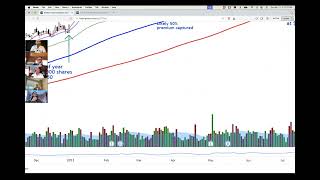
Workshop-style YouTube session led by Jerremy Newsome (with Garrett, Joe, Jeremy, Eric) focused on back-testing and practicing options strategies—especially collars and covered calls—using the thinkorswim "Think Back" tool. The host demos reconstructing historical option chains (examples: Visa 2013 collar; First Solar 2017 trades), discusses timing (earnings, ~30–38 day horizons), trade-management choices (selling calls, buying protective puts, dynamic/differential sizing), and practical tips for practicing/back-testing. The session mixes live walkthroughs, Q&A, and actionable heuristics for retail traders.
Chapters
You'll like this. Look at, look at. This is the, the Tesla trade for me today we, we took out the low of yesterday. It was like right around there. Had this little double bottom looking thing, bare inside candle, clean as a whistle, dude. So nice. Yeah, because, because I from yesterday, like I knew we were talking about that 175 level, right. It's like just, it had it so to just press back up into there.
That's fantastic. Good job, man.
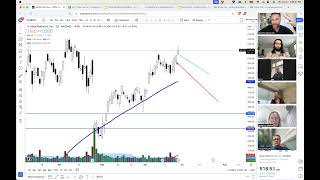
Thanks, dude. Thanks man. All right, fam. Well, here's what we got. I know we're all hanging out on Tuesdays and Mondays anyway and you know, today will be no different. We are still going to go over some callers and I think the three of you that are here through the computer, we'll already know some of the things we're talking about today. But that's okay. It's always a good refresher at least. All right, give me eight seconds. There we go. All right, let's do a quick slideshow. So again, Mondays and Thursdays we're just going to continue to practice and specialize in on the collar discussing that and on Tuesdays that'll be again just our really, really focused, super extra unique additional strategies when it comes to options. And what we're going to do today is really two or three basic things. We're going to go over how to practice option trading. We're going to talk about how to practice your back trading with options just so you can really get a good groove and knowing and understanding of the prices. Just in case you didn't know. Then we're going to do some of that together. Then we'll go look at the broader market to see what positions you're in and just make sure that you're all comfortable and you guys are all good to go and see if you have any questions and needs or thoughts. So the funnest tool that I am aware of that I love using is this one. So this is thinkorswim. Now if you don't have thinkorswim, I suggest getting it just for this tool. It's a really, really great way to spend a couple hours a week or a couple of hours a month just practicing and back trading your options. What you're going to do inside thinkorswim is you're going to click on the Analyze tab. When you click on the Analyze tab, it's going to open up this which is Think Back. So you open up analyze and you click on Think Back. And what you can do, Jeremy, is you're able to put in whatever ticker you want, the back, the, the back testing date, and you can start seeing what the option chain looks like at that time in history so that you can kind of verify your data from your back trades and then you can get real numeric information on how much your option costs, how much your option sales brought in, things of that nature, which is really, really great. It's an awesome, awesome practicing tool. The one downside that I'll mention verbally is it doesn't really take into account splits. So I know a lot of stocks have split. So if you go too far back, it, you know, you're not going to totally verify exactly what it is that you're looking at because of the stock. If they had a couple splits or something, then it's not really going to show that, that accurate of data. All right, so what we're going to do is I'm going to walk us through an example and then I'm going to have some of you do it and we'll go look at the broader markets. So let me stop that screen share. Give me eight seconds to pull up this. Oh, where did my thinkorswim go? My think or something has disappeared. Okay, all right, 20 seconds. I don't know how that closed. And I'm going to use Joe's back trading. Thank you, Joe, for doing that homework. And I'm going to use her chart and I'm kind of show you all how I back trade my options. And again, really, it's still effectively using everything when it comes down to analyzing, viewing, practicing. That way, as you're building your strategies, you're able to base it off of actual numerical information, which is always. That's, that's the point. Okay, so now let me actually share my screen. Okay, here we go. I'm gonna click on analyze and you'll see right here. Or think back is already selected. So here's think back. So now I'm going to pull up Joe's chart. So Joe did her chart on Visa. So if I click on Visa, here's her trades. So she's all the way back in 2013. And you'll notice, so start of the year, I bought 1,000 shares of Visa at 3,750. How'd you choose a thousand shares? And why'd you choose a thousand shares, Joe?
Just a big number to play with to see how it looks.
Yeah. Did it bring you excitement or you think it was.
Yeah, no, that's fun.
Yeah, of course. All right, so 5,000 shares of Visa stock runs up, set up caller on fourth bull day coming into earnings. So there's your fourth bull day. So we're going to go look at this. This is 2013. All right, so now what I'm going to do is I'm going to pull up trading view, think maybe. And now I'm going to go. We're going to go back, trade Visa together really quick. And again, just going to show you how this whole process works of, like, practicing everything and all that jazz. All right, so we're going to go 20130101 click on play. And so Joe did this collar on this day here. So this day is January 9, 2013. So January 9, we're going to go in and actually look at what the option chain was at that particular moment. So we can actually kind of see it at that time. Okay, so January 9, 2013. So I'm going to come over here, enter the symbol in the thinkback Visa, and then we're going to type in, oh, 1, 19, 20, 23. I guess I'm not going to type it in. Select it. All right. Am I frozen? No, think your swim is frozen. This is a really bad day for technology. Just. Okay, that's weird. All right.
Well, you made it shy with your recommendation.
I guess so. That is super bizarre. It's actually never happened before. All right, anyway, I'll put up again in just a second. If it doesn't work, it's probably a bandwidth issue for some re. For some random reason. So don't. Don't be too scared if you can't find it. If it doesn't work the very first time, don't. Don't think it's just because it doesn't work. All right, logging back in. Sometimes I move too fast. I think that's another thing that computers don't like me for. I'm just. I'm really pressing buttons. Ten years from now, guys, it's just gonna be a neural link. It's just going to be implanted in our brain to think something is going to pop up.
Did you see that guy with the neuralink?
Yes.
He could play chess and video games, bro.
It's terrifying.
We're able to control his wheelchair soon enough.
Yeah, it's wild. Wild. All right, so here. Here it is. We got January 9th. You can see I just put the date in the. I put the date there. And now we can look at the actual option prices. And so if I go back to Joe's chart, you'll notice that she was doing February over Earnings caller where she sold a 43 call and she bought the $39 put. So February was February 15th. Right. And click on that. And again, notice again, since Visa had a split, you're not going to have the exact numbers that's on her chart, which is okay. Which is fine, Tom, but we're still going to be able to just generally kind of see a little bit about how that particular option looked. So boss, some shares, how to get a run up four days. Question can we get into a caller for a profit? And the answer is most likely if you buy, sell this 165 call. So here's the 165 call. You could, you could sell it somewhere in the middle of that spread, right? You got that bid ask spread. So it's a $86, a $93. So you could probably get a $90 for that with a limit order. And then here's $1.65.
It's not one. Oh, okay. Sorry, never mind.
No, you're good.
I thought you said the price was 165, not a $65 for that.
Yeah, call. All good. And then, and then we're gonna go look at the one 50, 50 put in the 150 put. We're going to get it right in the middle at 132. So one of the questions you got to ask was a great question was do I have an amount of money that I'm trying to receive from the collar? And the answer is not really. My favorite time to do a collar is definitely over earnings. My second favorite time to do a caller is when I'm profitable on a position and if I'm profitable in a position and it's over earnings, like it's, I'm going to do it. I'm going to do a caller because I don't know why I wouldn't like I just protect my downside. And on Tuesday we're going to talk a little bit about debit spreads. And so you can also ultimately at some point get into a collar because you bought this put as an asset and then you can sell puts against that asset to lower the insurance cost even more. So all kinds of crazy concepts here, but it's like it's really, really reasonable to get into some type of protection over earnings. So this is February 15th is the expiration which is 37 days. That was another question like what's my average time horizon for collar or cover call? And it really is about that 38 day mark. So we'll go back to trading View. And we'll see where we are here. You had four updates in a row. This is the highest Visa has ever been. And again, you're coming up into earnings. So I'm gonna draw a vertical line. And this is again how I mark up my screen. Like, I just do it like it's, you know, it's real time. So here's the. Here's the lines. And then I would draw in again some option like a line like that and a line like this, which is just going to represent where I'm getting into the trade. And Joe, which I'll do an arrow. Joe bought her position on this day right there. So where she bought the position, you can see that the strike, right. Is going to be above where she actually bought the stock, which is the. The epitome of the collar. And then we're gonna go forward to a couple days just to see if there's anything interesting that really transpires. And there's nothing really. Let's go look at this down day here just to see what happened to the option price itself. So this is January 18th. So I'll go back over here to trading view. Go to January 18th. Click on that. You scroll down here. And what we're going to notice is, check this out. Jeremy, you're going to love this. The 165. So there's the cost of that option, and here's the 150 put that we purchased. So the options are just simply slowly decreasing in value. Right? Because we're getting closer and closer to expiration. But now we're able to see that. Right. Ten days have passed, and we're able to see that both options have just really slowly decreased in value. So this means that we wouldn't want to sell or do anything with this particular option with the 150. Right. There's no profit to sell it. There's no reason to sell it. So we would just kind of leave it alone. And it just looks like we'd leave this collar alone right now because everything is just slowly kind of hanging out. Okay, so continuing on a little bit, Tom, let's just see what happens on this day. So this is January 29th. Go back over to here. January 29th. Click on this. Look at February and the 150. All right, so the 150 option is a little bit higher than it was a couple weeks ago, but it's still lower than when we bought it. And look at the 165 call. The 165 call is really getting decimated. So that Option that we sold has just gotten absolutely smoked and that's because the stock is trade started to pull down pretty, pretty significantly since we got into the trade. I'll pause there for a moment. Any questions about that, Jeremy?
I don't think so. Okay.
Cool.
So pretty pre self explanatory, right? But it's awesome to see it. I mean it's really, really cool. We're getting closer to the expiration, all that stuff going back over here to trading view. Right. A few more days forward compression, a bunch of bear candles. Trading down, pulling down. And there's earnings. Let's go look at that. February 13th. So now earnings is over. Earnings has happened. Let's go all the way to February 13th. Click on February 13th. And the 150 options worth nothing. The 165 options worth nothing. So at that point we got two days left expiration. So we're gonna go two days more into the future. One, two. Okay, options close. We get a bear candle where we're just kind of hanging out. And it kind of looks like now we're getting something like this, some type of pennant pattern, some type of compressionary event. And what we did during that trade is that trade just bought us a month that we don't really have to care about our position. That's the, the beautiful part about the collar. This allows us to go build something, to go create something, to go write your best seller, to go hang out with your kids, to do whatever. Like if you're in a big, big position on Visa and you want to just leave it alone, you know that in that situation you could have walked away even with earnings approaching and not really cared about anything else because you're, you're protected, which is, that's what we want. And so now I think at this point, if we start to break above and break out of here and, and start to go a little bit higher, we certainly can. You'll notice that we're also lower a little bit price action wise than where we were when we got into the collar. So depending on again a few different things. But if you wanted to keep the exact same. So this will be a trivia question. If you wanted to keep the exact same, put downward risk protection on, you still want to receive a credit and you still wanted to be able to sell it at a higher price than you bought it for and you still wanted the put to be fully purchased by the sold call. Since we're lower than we were the last time we sold the position and we don't have an update. What would you have to do, Eric?
You'd have to lower the strike price on the sold call to get more premium.
Or what else.
Longer dated.
Yeah, that's correct. So we'd either e you, but you are correct. We'd either have to lower the call option that we sell or we just do a really nice far longer dated call option. Something that's nice and nice and chunky. Right. Really put some time on it because since earnings is over, I mean we could put a decent amount of time in that position again, let it ride into the sunset. So here's what that would look like because the reason I'm doing this particular example is this is not a spread because you own the put and it's a covered call. So there's no real ultimate risk of something negative happening to your account other than your worst case scenario, Tom, in this trade is stock closes below the put that you bought at expiration and you have to sell your shares for a game, although just a very, very, very small gain. So again, let's just go look at. In this random example, this is February 19th. So we're going to go to February 19th, which is a Monday, Tuesday. I'm going to look at a nice longer term dated call option. Let's go look at. Looks like June's the only thing. I don't think that that's totally correct, but it just says June. So we'll look at June 122 days. So we got June 122 days. A 170 would pay $2.50. So that's something like probably up here. And then if we still bought protection for March, we buy the 150 for $0.80 or maybe $0.79, $0.78, which is exactly where the same price that we bought it here approximately. And that's only, that's only a one month expiration. So what I'm going to do is I'm going to draw a. I'm going to take another trend line and I'm gonna do something like this. So I'm gonna click it, drag it, and this expiration is good until March 15th. Let me make sure that's correct. Yeah, March 15th. So this is how we know how long the insurance is good for. So we got a March 15th protective put. And then we got this sold call up here that expires in June. That's nice and far away, that pays us two dollars and some change. And this is over earnings and all the stuff. All right, so there we go. Nice long expiration and now, again, just for learning purposes, I press play. And when we get to the end of the expiration, so here's the end of the expiration, you'll notice that the stock is slightly higher. This put option would have expired, worthless. So all the money that you paid for is gone out the window. You still have sold this way up here and that's still sitting up there. So if we go look at that day now, let's go look at. This is Friday, 15th of March. March 15th. Go to the Friday look at the June option. The June option, we sold 170. It's about the same price. We sold it for 240 and it's only 220. So it's only lost 20 cents of value. But now, again, this protective put has evaporated. So now we have no insurance whatsoever. But the stock has also gone up a little bit higher. And so if we wanted to at this point in time, maybe we're back from our vacation, we're back from our cruise or back from whatever, we could simply say at this stage, okay, I'm going to create an alert. I'm not going to buy insurance anymore. I'm just gonna have an alert that if it drops below this price, then I'll buy a put. And if it doesn't, I don't have to do anything. And we can play with that system and that strategy for a little bit. So we'll press play, right? Obviously got a nice little pop. There's earnings coming into June. Or like the option right now is in the money. And here's your June expiration. June expiration was June. And again, based on this, we can't tell exactly if it closed in the money, but we're going to say it did. We'll say it. Closing the money. But again, you had this alert now and the insurance that you paid for expired, worthless. And once you got this bounce, you're probably going to feel really, really comfortable just letting the stock do its thing.
Right?
It broke out of that resistance, came back retest that resistance, had a really, really strong move. Right, Jeremy? Super good gap, really good bull candle, probably a what? And then a choppy, ugly sideways move. And then, oh, no, that's crazy. I would never have thought, oh, weird. So, yeah, this is how I practice this stuff. And again, ultimately, the goal for every single person here in your trading is you're going to continue to refine what you do and when you do it. Because for me, I really do like paying for insurance, but I don't want to pay for A bunch of insurance a lot. And so a lot of times I'll have an insurance policy and I'll do something like this where I can sell a little bit of a longer term call option a little bit farther away, and I have a little bit of a shorter term dated put option. It's still an asset, right, Eric? Since I bought it. And that gives me a little bit of. A little bit of protection. A little bit more time has gone by. I can continue to see what the trend of the stock is doing. I can pull up the moving averages, all the things. Right. And really just kind of keep an eye on what it's doing or what. What it did. And that way, as long as it doesn't break below a certain threshold, then I can just go, okay, cool. I'm just gonna have an alert to get into some protection if that happens. If it doesn't happen, then all good. All good in the world. Does that make sense, Biggie?
It does.
Sweet. Ms. Joe, do you have any questions, Rockstar?
No, I don't think so.
Wait.
Okay.
Cool, cool.
So I'll stop. Share. Hit me, bro.
Okay, this is going back almost a year now. We're at the. That restaurant with Pat, and you said. And I couldn't. It could be foggy, but I'm pretty sure you said Mark. Why is his last name Mark Cuban?
Yeah.
He made his money off of callers.
Yeah, well, not entirely.
He.
He's very famous for making a really big collar trade on aol. That's not how he made his money. But when he made his money. Right. AOL bought his online streaming platform. They. They paid him a few billion dollars, but they gave it to him in AOL stock.
Okay.
Yeah. And then he put a collar on and protected when AOL crashed, and this is 2000, the AOL went to whatever, $8, and he had a huge collar that prevented him from losing tons. I mean, billions of dollars.
Okay, that makes sense. All right. I was just wondering if he just, if he was making. Because he had tons and tons in stock, if he just kept doing collars over and over again or selling calls or something and made a ton of money that way, but because he could probably have thousands of contracts or more or something.
Yeah, Crazy, right?
Very crazy.
Crazy stuff, man.
Like Buffett with his coke dividends.
Yeah, exactly. Like, but like good old, good old wb. Good old wb. Yeah. So that's really, ultimately something that's really fascinating because I think for me, knowing that that's. That's how he got paid was in shares so if. If Garrett right here does a big business deal and gets paid in shares of a company this public, I mean, I hope that happens for you one day, Garrett. I'm sure it will get bought. You know, get some shares of a big old company, and they're like, all right, man, here's. Here's your billion, but we're gonna give it to you in stock, and it's not liquid yet. And he had. He had like, a lockup period, and then he got into a collar, and then AOL tanked, but he. But, hey, he had the shares, right? So it's like he got into a free collar, he got paid money to protect billions of dollars. Like, it's. It was one of the greatest collars of all time. Just a great trade. Super cool. All right, who wants to do this? Who wants to do a back trade session?
I don't think I have the bandwidth.
Yeah, your Internet's always a little sketchy.
Yeah, especially at the office.
Bearded Jerem. What you thinking, homie? You want to try it?
Let's give it a shot.
Let's do first solar ticker symbol fslr. And I want you to go back to. Let's see what I want you to go back to. Nothing too crazy. Go back to March 2017.
What? Okay. It's not quite, but.
Yeah. Perfect, perfect, perfect. All right. Do. Do you have think or swim?
I don't. Those would be my next question.
Yep. It's all good. Time to get it. Just because it's fun to do, but we'll. We'll do it together. You tell me what. You'll tell me what you want to do with. With an option, and I'll tell you how much it costs.
Okay, So looking. We're above to. I don't know, be looking in, like, the. If talking collar, like 48 to 52, looking for something in there. And then I would look if I was going to buy a put. Look for something below the 100 to 200 here. So, like the $30 range.
You want to buy the put?
Assuming I'm like, I'm assuming I'm in shares right now, and I want to do a call.
Okay, got it. You're already in the shares. Got it. Okay, got it, got it. All right, so you want to do. You're in some shares. You want to do a collar. Okay, let's go. Pull it up. What's the actual date on the calendar for me?
I guess right now we're at June 27th.
June 2017.
Okay. 2017.
Yeah.
All right. So a July. Wow, it's pretty good. A July 33rd put option costs only 12 cents. July 21st. And a July 45 call option pays 36 cents.
45.
Yep, 45 and 33.
That's that in a second.
Cool, man. Okay, and when. When's earnings on this one?
July 27th.
Perfect. So this way we can get our. Our option collar can expire right before earnings. So that's one of the things to keep in mind, too, is I. This is really my ultimate goal, is to get into some protection, have everything set up, get a little bit of a payment where I can either make money or make money. You know, if we bought it lower than 33 or even close to it, and then we'll be able to get into another caller right before earnings gets there. So sweet, man. Let's go to Istanbul for a month and click play and just see what happens. All right.
Like, where'd it go?
So that. Yeah, expiration. Expiration was a little. A little to the Left was the 21st. You want to take that blue?
Oh, I thought it was the 28th. Okay.
Oops.
You're good. 21st. Yeah.
So that closed, like, Very close.
To.
A coin flip, huh?
Yeah, super close. What. So what did it close at on the 21st? 45.
15. 45.
15. Oh, you're gone, dude. The shares are toast. The shares are toes. So we would have gotten called away in this trade, which is cool. All right, so walk me through, Eric. What type of gap is that right there?
Retest gap.
Bullish gap. Yeah, bullish retest gap. Now, you could have on this candle here some of these down candles considered selling some puts over earnings all the way down to long terms. So let's just go look at what type of premium was right before earnings. What day is that, J. Bones? One more over the big. The very, very last candle before the gap up. All right, July 27th. Okay, so July 27th. So if I sold some August 35, 36 put options, I could have got 36 cents. So what do you think? Would you. Would you have done that trade? Eric.
Can you say it again?
Yep. So on this day right here, you're able to sell the. The. The August $36 put, and you would have been able to make 36 cents. You would have used the limit to fill that order.
It's 10%.
Almost 1%, but yeah, 1%.
Yeah. Yep, yep. I may. I may do it if I really wanted them for solar. Check it out.
But, yeah, that.
That's a deal. It meets the criteria. It's probably not going to get there based on the trend.
Yeah. You don't think so?
Well, no, man.
She said it like that. Yeah, well, but exactly. I mean, that's the thing. It's like if it does. If it got down there, I mean, you have. You have those huge moving averages. Yeah, right. You got those big moving averages. You got this gap over here. You got a support. I mean, if it moved, what's the percentage move? Show us, Jeremy, really quick. From 44 to 36. So, yeah, that's. That's 30. 20. 20% discount again. You're absolutely right. As long as you either A, you want the shares or B, you're comfortable with the shares.
Right.
There's. There's always that approach, but I mean, from a 1% perspective, we're. We're getting paid 1%. If we just made a profit, we could sell. We could do a put sale so that if the stock went to zero, we only lost our profit. Right? That's also a possibility. But after that gap happened, as soon as earnings is over, it has that small gap up, all that premium is gone. Right. So we'd be able to buy back that option that very next day, which is the good news. Okay, Jeremy, so we're out of our shares. We want to get back into some shares, Help us get back in some shares of First Solar and do this whole thing again.
Okay.
I'm just counting real quick because I see a couple waves. Let's move forward, see if the gap fills. Now, would you be. Would you sell, Jeremy? Would you sell puts higher if you wanted to get back in, just to see what would happen and maybe capture some premium while, like, you're waiting to get back in.
Yeah, totally. It just depends on how bad you want the stock. But you could sell some puts. You could sell some puts up here for September. I'd probably start getting to some. I'd probably do. Do a little bit of share purchase with that gap fill right there.
Y. That's what I find.
Some shares maybe do a little bit of a breakout. But yeah, you could. You could ladder it. Right. You can always do some shares and do some put sales, get into a little bit of a pyramid.
But yeah, I was thinking the same get into some shares around here was like 46.50 or 47. Okay.
Yep. Okay, cool. So let me go look at some post sales. What day is that? August 10th. All right, August 10th. Isn't it fun, though, that we can. We know what the option premium is. I think it's so fun. So September 8th. Oh, wow, that's some good premium over here. September 8th, you can do a 42 put sale and get 50 cents.
Wow.
Yeah, so it's like selling right there and then snagging some shares. I was like, okay, cool. Get some shares here, and then if it ends up dropping, you know, get some shares. And obviously this will be the spot where we get them, you know, as well, but there we go. Okay, now, how many shares you buying, big dog?
10,000.
10,000.
I knew you're gonna up me.
Hey, 10,000. All right, sweet.
So what, like, bias buy in 5,000 here? 47. And then do that. 50 contracts with a put.
Yeah. Yep. Okay.
And see what happens.
Let's see what happens. Okay, so you're filled on the shares. So if you got the shares here, is there anything you want to do with them?
Well, if I put. If I sold the. Sold the puts, I. I guess you could sell a call too, right?
Sure, why not? Yeah. So. And what's even crazier is if you have this put sale here, if you got into a collar, if you sell a call, even though you have this put sale, you can literally buy a put anywhere you want. And the only thing that will happen is your margin will get reduced because you're buying a put if you needed to. Right. So you can have a put sale and still be in a caller also. Isn't that cool?
I was thinking about that yesterday, or when I was doing the homework, I was like, can you do that? If you're like, well, I don't see why not. But yeah, because there were some things where I was like, well, you could sell puts here and be like, hey, I'd love to pick some more shares up here and just. And if it doesn't happen, you capture the premium.
Yeah. Wow.
Okay.
Do you also, like, when you're setting up the callers, would you do it for your entire position or just some of it? Like, I'm just speaking for Google. Like, I have 200 shares, and I did the put sale on. I just did one put sale, thinking, if it goes up higher, I want to leave some to capture more, potentially.
So, sure. No, great question. I mean, if I have. I came up with the term, and I know Garrett was going to ask me this question earlier today, but it's like, if you. This is. This is my term. Not that it's correct or not necessarily, but however many shares you have, if you have 200 shares of anything and you only insure some of them, I call that a dynamic Collar, because here's what you can do. And Eric, you're going to like this. A dynamic collar, which again, that's, that's a made up term. Don't search for it. It's if you do a covered call on all of your positions, but either don't do and then you do only half of the insurance. So you sell a call against your whole position, bring in maximum profit, and then use that profit to only buy one position. Right. One put protecting your shares. You're in a dynamic collar because you're not insuring your whole position, you're just insuring some of it. But there's definitely a lot of case studies where that can be very viable, Joe, Especially if you have a super low cost basis and you're like, dude, I've been in this thing forever, right? You're like, there ain't no way I can lose on that position. Kind of like all of Garrett's, you know, investments, it's like you bought them so low, so long time ago. Like the, the cost basis is so little. This like it could go down 50% and I'm still above my cost basis. I don't, I don't need that much insurance. Right. So if you don't need that much insurance. Yeah, absolutely. You can sell as many calls as you want and ensure a smaller position than what you actually sell for. And there's nothing, there's no real downside to that.
Okay.
But yeah, I didn't sell all the calls either, so.
Yeah, that's okay. Yep. Yeah, totally. Great question. Great question.
What I've been noticing is that the, the protection of it.
And I don't.
Know, maybe I'm looking at it, you know, on a more granular scale, but like the seems to me that if I have the protection, doesn't really completely protect me, obviously, but, but if I don't decrease it and I increase the number, then it has a greater effect on protection. So If I have 10 shares, but I, I, or I have 100 shares, but I buy, you know, two puts, then I'm for sure going to be protected. And that's a little bit too much of a ratio. But you know, if I have a thousand and I buy seven puts and.
You know, then.
I buy more puts, then I have shares, then it helps protect it on the way down. Is there a ratio to that or is there some sort of formula for success in that or.
I think, yeah, to, to be absolutely 100% insured is 18% more of whatever amount you own. So for example, if you own 2,000 shares you'd want to be in. I believe it's 1,001. That. Yeah. 10, 11, 80.
Yeah.
So 20, like that amount of protection value at least. So realistically it's two. This will be a two for.
Yeah.
Your puts.
So 20. 20 exactly.
So at 20 you'll be fully insured dollar for dollar. Unless you buy a really deep in the money put. You know, if you buy delta of one, it's just hard to find those bad boys.
Yeah.
But it can be done. That's what your girl, she buys those one delta calls.
Then the premium so high that you've got to overcome that also. And.
Correct.
Not only the loss, but the premium.
Yep, correct. You're absolutely right.
But that's assuming too that you're selling calls also and it goes against you. Then you're gaining off the calls.
Right? Correct. Yeah. If you don't have any calls at all, you want a full protection. I believe it's 35%.
Okay.
Yeah. 1.35. 1.35.
1.2. If you've got calls. Generally.
Yeah, yeah, generally, Yep. Awesome. All right, so you still got your shares bearded J. You do anything with them or just chilling and. Or your put sale expired. So what's your plan now?
Put sale it buy. So originally I was thinking for whatever reason, because we had a nice bunch of updates here that would have been great to like at least sell a call, but I was just clicking buttons at that point, just trying to get to this laugh.
Yep. It's okay.
But now I'd be looking to get into a caller because why not?
Right on. On three down days in a row?
Well, no, I'd be waiting.
That's why I said, oh, looking to get in. Got it.
Wait, what?
So are you going to sell another put and you just going to chill?
I. I'd sell. Well, that's right, because I want to get 10,000 shares to 10x Joe and I sold a put for 50 contracts. Yeah. So three down days in a row, I definitely sell another put.
Right. All right. Yeah. So let's go. Let's go explore October. So we're on February. Oh, sorry. September. Okay, so we're now in September. We're on September 18th. So if you sell a regular October. Wow. A regular October forty dollar put sale brings in 50 cents. Wow. Geez. I remember these days when, when first solar was super volatile. It still is sometimes, but they can have some good premiums.
October.
What? Yeah, regular October. This was October 20th, 20.
And then now I just be waiting what question when I had. We're doing the homework. When you get into a caller, do you, does it matter if it's when you buy your, your puts, if it's three updates or down days in a row or is it, is it better to buy it since we're not trying to sell a put, is it better to buy. Do the opposite and buy a put after several updates? Yeah, that was, that was a thought or a question that I had.
But yep.
So it kind of can coincides when you want to sell your call too, right, because you want to do that on updates.
Yep, exactly. So same time you're selling your call, it's a great time to buy buy the put. So. Yeah, exactly. On a nice update.
Perfect.
Yeah, you're exactly right, buddy.
That's only got like two oops. So September 14th, okay, if I were looking to get into a caller or at least sell some, if I.
If.
I'm looking to buy puts, but I have, I, I sold puts, Does it matter where I should, should it be above where I sold them or is it just relative at that point relative to whatever my cost basis is?
Yeah, it doesn't really matter. Which is really, really cool because if you buy a put, let's say buy a put on this day, right, Sell a call and buy a put. If you buy a put above the put that you sold, it'll just cost some money. But then that creates a strategy that we've, that we'll talk about on Tuesday called a bear put spread, which is actually a debit spread, which is totally comfortable and there's nothing wrong with that at all. And then we talked about it on last Tuesday if you would have bought it. If you buy a put below here, then that's referred to as a bull put spread. So it just kind of depends on. It does depend on where you buy the put. Like if it has margin or if it doesn't have margin, this one would require a little bit of margin in order to do that trade. But if you buy a put above here, all good, like you're fully toasty. In fact, your margin will decrease significantly because now you're protecting yourself even more. So this, because this trade would soak up some margin. So if you bought a put above that strike price, you're correct, your, your actual option value would decrease. So let's go look at First Solar Regular October. On September 14th, you could sell a 5250 call for $0.80. And you could buy a $40 put for 60 cents. Oh, you already sold the $40. Now we got to do something more other than the 40. So then you would buy. You could buy the 3750 or the 4250. The 4250, you. It would start costing a little bit of money, so you. You'd end up going with a 3750 put that you buy. So you really don't have awesome protection on this exact trade without exact expiration. So we probably. We probably wouldn't even buy a put.
Right?
I was going to say, would you even buy a put at that point and just. Would you sell the call?
Yeah, I sell the call.
Okay.
Yep.
Sell the call.
Yeah, because we. And also, like, we got in at 47, too, but.
All right, let me go. Oh, nice. Nice little retest gap, right, Eric? It's good. It's so good to see those retest gaps.
Retesting 87% of the time.
That's right, baby. Wow. Nice, long lower. Look at this. Jeez. Let's see what that option's doing. Let's see what that $4 put sale is. What's today's date?
21St.
21St. All right, so 21st.
What percent of the time is that, you say? 80 something percent?
87. Is it that?
Really?
Wow. Gosh.
Crazy.
That's awesome.
Wow. That 40 put has even more money on it. It's now worth 63 cents. Oh, so there's. Yeah, this was when first solar was super volatile. So, hey, all right, cool. We're just. We're just hanging out, then. Nothing. We're not doing anything. It's leaving alone. Wow, look at those. What a day trade that would have been. Garrett, that. That's the day where my boy's just not going to school that day. Like, you're. Oh, my God, you're missing school today, bro. Sorry.
No kidding, Eric.
Why is that a great day trade? Or why would I have known that's also a great day trade?
Because of all those hammers and then the other big one closing above the 10.
Yeah, yeah. So you had a bunch of hammers, which is, like, giving you a little bit of a process of, hey, there's a lot of people who are going to do something interesting. And then the open of this candle is amazing because it opened right above the high of that hammer. Right. So you had three hammers. They're all above the moving average. Nice lower shadows, nice upper shadows. And then that candle opened above the high of that hammer.
It retested or went down. It faded off right in the at the Open down.
Yeah.
And then. And then it came up. Would you. You think there's a 10 EMA play in there somewhere if we went to.
The 3 minute 100? There is, absolutely.
Okay, well, then all that. All that all stacks in order to.
Exactly. Yeah, yeah. Oh, yeah. I'm watching that one all day. Even if I lose in the beginning of the morning, I'll lose on that trade. And I'll take another one, because that one, that one's a very high probability trade.
Just like your Tesla two days ago.
Yep. Correct.
Okay, awesome.
If you're really good, you could have made money short on Tesla that day.
I'm only good, though. I'm only. I'm not really good. But Garrett somehow. Somehow made money up and down. It was pretty impressive.
That's awesome.
Pretty impressive.
Oh, I think he's talking about that day that it just went up and. And I was short, though. Like, remember I took those two short trades at the top?
Yeah, yeah.
The next day I. I did the up and down thing, but that was a Monday, I think, and I. It went straight up and I. I went short.
Love it. All right, what day is this? October 1st. That put sale's got to be getting weak at this point, dude. October 1st. Let's see. $40 put sale. All right. Yeah. Now it's only worth 17 cents.
Okay.
Premium starting to slowly evaporate. Now this the one that's starting to tick, tick, tick, tick, tick, tick. Yes. Now just play it on out. Let that. Let this expire. Let the call sold call expire worthless, and the sold put expire worthless. Look at that. 100 coming up there to protect it. Yeah, Beautiful trade. And then. And then we have a huge. So this one I'll talk about a little bit. Just. Just so the glossing over so that you guys are aware of the strategy. I do, since I cover this one a lot in the free advanced classes. But here's what we got, Jeremy. We have earnings coming up, as you can see, and the stock has traded sideways since last earnings for the most part with definitely some big moves here. But really, we've traded very, very flat since earnings, and we know earnings is coming up. What's the strategy that we could get into to capture profit if we have a big move on earning? That would be a strangle. Buy some out of the money calls and buy some out of the money puts. So out of the money puts are going to be cheaper and out of the money calls are going to be cheaper. Right. So you're not spending that Much money. And then if Spur Solar has a really, really big push in any direction, up or down. What do you think the goal is, Jeremy, for the options themselves?
The goal for the option themselves?
Yep.
Expire, worthless.
Be profitable.
Yeah. One of them, one of them probably isn't expired. Worthless. It moves really big. But ultimately, when you buy an option, you know your risk is only 100% of what you purchase. So if you have an out of the money call, how, how high can call options go?
Hi. Infinity.
Yeah, exactly. More or less. Right. It's almost like an unlimited potential. Like they can go up 5, 6, 7, 800%. I mean, any option can move dramatically. So realistically, the goal is, if you do that, this particular strategy, which is buy out of the money calls or buy all the money puts, when something's been trading sideways and consolidating, what that really means is if you get a big move, hopefully these calls will earn more than you lose on the puts. So if, to keep it simple, if this costs a dollar and this costs a dollar, your total cost is $2. Right. Or 200 bucks per contract. And if. Go, go three days in the future. Because I think First Solar has a big gap up here. I'm cheating a little bit because I remember trading it. There you go. Yeah, I took, I actually took that trade. Some little cheating a little bit. But the out of the money calls, well, shoot, I wish there was a way for us to know what the prices were. Right. So you're able to see like this 5250 call before earnings cost. And if you bought the November calls, which is $30, those cost.
Yeah.
A dollar 1.25. And then after earnings, obviously they're worth $7. So you had a huge, huge, huge move. You paid a dollar for something, now it's worth seven.
Wow.
Does that make, does that make conceptual sense, though?
Yeah.
And so this is one of those times where I probably would not have gotten into a collar. I mean, I might have, but there are some times where you don't really want to get into one because you have so much sideways movement. I probably just would have protected my downside position with a put option and. Or as we're going to talk about on Tuesday, a bear put spread, which is a debit spread. So the position just cost you less money. And then you have a big, nice upside wide open sky in case it really starts to move. Does that make sense, Joe? Yeah, really, it's just all about compression. Right. If you get a, you know, if you know you're going to get a big gap potentially, and the stock hasn't done anything for a long period of time. You don't want to sell a call here and be underwater if it really moves like this. And then obviously on the gap up, you know, a bunch of people are trapped. So you're just going to leave it alone and not do anything and let all those people get squeezed. And then towards the end of the day, get into a caller on that day and it's the greatest day of your life. Now, how would you know that by yourself? And the answer is by doing this, right? By doing this exact example and go, is there a way for me to have known to not sell a covered call or a collar on this trade? It's like, well, maybe, maybe not. But if you have a lot of compression, where stock is really, really tight, coming into earnings and you're profitable on that position.
And all.
Everything is bullish on all time frames because you're above every moving average on the world known to humankind at that point. On First Solar, it's like, well, protect your downside. Leave your upside wide open just in case you get a good move. And so on Tuesday, we'll talk about the strategy that you could use to still protect your downside and just spend less money. Sound good, Famous? Yep. All right, so homework is the same. Just practice your back trades with your callers, but this time just use think back so that way Erica didn't see any charts from me. Dude, I gotta get some charts so I can learn. So I got. I gotta learn what to do.
Yeah.
All right, so use some of those. Yeah. Again, use think back so that way you can start marking your options and you know what prices they are, more or less. Right. Don't. It doesn't be exact if it's a split like I said earlier, but that way you can just kind of start practicing in real time and really just kind of know, feel and see and understand what the emotions of the chart and the option, all that kind of good stuff are. All right, beautiful people, go have yourself a great weekend. We'll be back on Monday to review positions that you guys are in. There's any charts or questions that you need assistance with, please let me know. Always happy to help. Tom will be on Monday, and we're gonna go look and scan through the markets and really find what positions we should start buying for some future callers or what positions you guys are already in for your callers or what you want to do or what stock is setting up all that good stuff.
I just want to say, I sold a put this morning at for on Carvana, and it just closed. I just got out of it for 55.
No way.
Yeah. What?
Wait a minute. You sold a put and on the same day you closed it out?
Yeah, I kind of sold it right at the bottom of that candle there.
You're silly.
It worked out good.
What put did you sell?
I was a little aggressive with it because I wanted to get back in, so I sold the April 75s.
Yeah. Beautiful. Beautiful. Good job, champion. Well done.
Thanks.
Cash flow is king. That is so cool. And you got the 50 EMA on the monthly right there, too. I mean, it's like. It's a good spot to sell some puts, so.
Yeah. Yeah.
Well done. Well done. April's gonna be a big payday for you, all these options. All right, fam. Keep me posted if you need anything.
Thank you.
Thanks.
Thanks. See you.