Ultra Wealth April 1st, 2024
Live coaching session (Week 13) led by Jerremy Newsome focused on practical options income strategies — primarily put sales, covered calls, collars and the "wheel" — plus a preview of upcoming topics (trader psychology, real estate, taxes, and 24/7 markets in June). Jerremy emphasizes risk management and timing (sell on down days, prefer 3+ down days, use support levels), gives explicit put‑sale rules (sell 6 weeks or less, buy-to-close at 50% premium capture within five trading days, usually buy back before expiration), and walks through historical examples and a live back-test (Micron). The session repeatedly stresses conservatism (do not over-leverage; put sales are slow/boring, expected portfolio contribution ~12%/yr; personal target ~30%/yr overall).
Questions this video answers
April 9, April 16, April 23, April 30 (Tuesdays).
Options execute during regular market hours: 9:30 AM to 4:00 PM Eastern (no extended-hours execution for options).
Always buy to close a sold put if its premium has decreased at least 50% within five trading days of the sale.
He typically sells puts with six weeks or less to expiration.
He aims for roughly 30% per year on his whole account (personal target).
Chapters
All right, super cool. All right, family. Well, can I give you a quick little overview for April? So again, just after chatting with a with a couple of you, my ultimate goal at this stage for April again is to definitely review a lot of option strategies. And April and May, we're definitely going to be sprinkling in some trader psychology, some mindset pieces, some things we can do to better this guy, the thing between our ears, or this girl, the thing between our ears. And also talk about real estate a little bit because hey, it's called ultra wealth, right? So you can't have a bunch of wealth without a bunch of real estate. So real estate, stocks, investing, we're going to start dabbling in the taxes a little bit. April and May. Also June is when we talk about 24. 7 markets, Tom. So crypto markets, futures markets, forex markets, just so you're aware they exist and how you can interact with those and make some additional money also. And in April, my goal for the majority of you is to review the three main option strategies that I use the most to make wealth and income trading, which are put sales collars, covered calls, combination of those three. I did add extra classes for anyone who wants to learn more about all the other cool option strategies in the world. I've already invited a few of you to it. So if you know, you're like, hey, I'm pretty comfortable with those three and I want to learn other ones more than welcome to. I will add extra classes in April for all of us to go through some of the other strategies that exist in options world too. And if you're like, bro, I'm still kind of new to options. I don't really know fully how they work. I haven't done them a bunch, but I would like to just really make money and I don't want to learn everything than just stay with our normal Monday and Thursday class because Mondays and Thursdays will be going over put sales covered calls, collars and we'll be, we'll be diving deep into them, right? We'll talk about option Greeks and all the fun aspects of different unique rolling methods and things like that. We'll be diving relatively deep into put sales covered calls and collars. So it's not going to be very, very high level, just repeating stuff over and over. But for anyone who wants to do some extra options work, I will have extra options and additional classes for all those who are here. So just a quick little update. Does anyone have any questions or thoughts about that? If you want the additional classes, just let Me know. And I'll just add you to it to the calendar for those. I believe right now they are listed on Tuesdays. So April, April 9, April 16, April 23 and April 30. So we just have four new classes. Yeah. So just shoot me, shoot me a text if you went in on those and I'll add you to them. Scott, can you.
While we're talking about options too and everything like that, I know I trade on two different platforms and one's drastically better than the other. So like fidelity, I can't do stuff after hours. So while you're talking about that, if you place options after hours or who to use on that stuff or you can't extended. No extended hours on options.
No, sir, not on any broker that I've ever heard of or been aware of. Now you can place a trade, but right like that, post or pre market, there's nothing you can do. No, you can't. Can't fulfill anything. It's only 9:30 to 4:00pm Eastern, but. Yeah, good question. Great question. Lonzo, you're looking jacked. Dog bringing the gun. Looking good. Okay, cool. Sweet. So let's go ahead. Give me eight seconds. I'm going to pull up our.
Do this.
Minimize this for a second.
Close that.
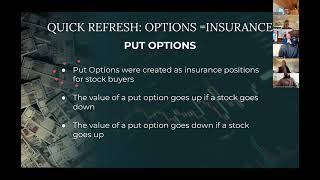
Okay. 5, 4, 3, 2, 1. Boom. Screen Share is on. Recording's on. Fantastic. So here's what we're going to start discussing. Week 13. It's where we're at, believe it or not. It's crazy, huh? This has been such a fun group though, right? Oh my gosh, I love it. So amazing. So much fun. So here's what we're discussing. The collar put sale and the wheel. As I said, this is, this is session one, but this is what we're going to be covering Mondays and Thursdays all month long for those who want just again to. To really, really master and nail this stuff. So we're covering. We'll just cover the depths of it and definitely can sprinkle in some of the things kind of as we get towards the end of it. But what we're going to talk about is this little strategy here called the wheel. That's the term for it. And we're going to dive into that in just a second as a refresh. I know most of you know this just so we can touch on it. Options are insurance. That's what they are. Call options were created as insurance for stock short sellers. So for people who are shorting, because there's two ways to make money in the markets, right? You can either go long or you can go short. So people that go short, they need insurance too. That's what a call option is. The value of a call option goes up if a stock goes up. This is very important to know because for those of you doing covered calls, if you sell a call and you're wondering why, it shows a red number in your call position if the stock is going higher, that is because call options go up if a stock goes up. So the value of that option, you could have sold it for more if the stock goes higher. And that's just. It is. But the value of a call option goes down if a stock goes down. And these are, I would say, probably 99% accurate. There can be very, very small instances where it's not accurate, but it is. Those are some things and some nuances that we'll kind of talk about as we kind of get later in the month. They're really generally pretty. Pretty close, being spot on. Same thing with put options. So this is one of the first positions that I really cover for people because I think everyone essentially understands what an insurance position is. So life insurance, house insurance, car insurance. Right. The vast majority of people understand buying something to protect that asset, protect the value of that. And that's what a put option. Right.
Is.
Put options were created as an insurance position for stock buyers. So the value of a put option goes up if a stock goes down, and the value of a put option goes down if a stock goes up. One of the first times I ever thought about put options is when I realized, what are you? Some of the most valuable companies in the world are insurance companies. You want to find a company that doesn't lose money. The ones that have been the ones have been around since the 1800s, you got banks, you got insurance companies. It's hard for those two to lose money. Although you've definitely heard of banks going under, you haven't heard of many insurance companies going under in 2008. Yeah, a bunch of investment banks go under. How many investment insurance companies went under? None. Government bail those out. Because if an insurance company goes under, oh, now we got a real big problem. So insurance companies, those are. Those are some interesting ones. And I like that because as insurance agents, we have the ability to create our income from interacting with insurance products. And the most easy insurance option, in my opinion, to interact with is the put option. Once you really, really master using that as an insurance position, and we become insurance sales agents and we can create income through selling puts, stuff becomes really nice. So here's A quick little chart just in case you want it. If something is bullish, right, you're going to sell to open a put option or you're going to buy to open a call option. Those are the two methodologies to make money in a bull environment and in a bear environment. You need to buy to open a put option or you need to sell to open a call option. Those are the two methodologies to make money as markets go down. And the good news is, that's it. Now, the weird part is there's all kinds of different strategies you can use because options have expiration dates and a lot of different strike prices. So we're going to go over all of that throughout the month. So there's tons and tons of different, different strategies that can be implemented. So it's really, really fascinating just to kind of know, see and understand what's available once we really know what direction we're going to go down. Now, the fun part is, I guess, lastly and ultimately, any trade that we're doing, it doesn't actually matter the strategy. If you get the timing incorrect or the direction incorrect, it's not going to work. That's why we worked a lot on understanding the timing and the direction. Eric, didn't you love how much Elliot Wave helps with our timing of a position?
Yep. Absolutely.
It's so fun to just really be able to kind of concrete build in and even this accidentally as I drew, I promise this wasn't intentional when I drew this chart. Looking at it, it's an Elliott Wave. Like, I. I didn't even do that intentionally, but there it is, right? It's just, just the coolest stuff. It all works that way. And if you get the timing wrong, it doesn't matter. You're going to lose money unless you understand options. When you understand options at a really complex level, there are capacities, my friends, to get into trades where you're like, I don't know what direction it's going to go. I have no idea. But I can create an option strategy that allows me to either profit from a move that you don't know what direction is going to move in yet, or make money in a direction that it doesn't move if you don't know what it's going to do. And that's fascinating to me. So if you're looking at a chart and you ultimately have no clue what it's going to do, you can make money using options, or if you kind of know what it's going to do, but you don't know when you can make money with options. And here's the unfortunate part. Once you really master these little puppies, you're going to see an opportunity on every single trade for the rest of your life. Which means that you need to be even more selective because every single chart you pull up, hold on, these lights are like strobing. Give me one second, I'm gonna turn them down. Weird. What I was saying is even if and one once. If you know all the option strategies that are available to you and you know that you can do anything, you still have to have a plan for it. You still have to know what you're going to do and when you're going to do it. Because you just like, and I'll say this 46 different times in April, you can very easily run out of money with options. All your money's tied up. You are invested to the gills because the opportunities never go away on just one stock, you could trade just Tesla for the rest of your natural born life. And once you know all about options and you know everything, if you wanted to or force yourself to or had to, you could tie up every dollar of your capital on just Tesla with all kinds of different option strategies. So the strategies are always irrelevant, right? You can make money if you just buy stock. And that's all you do for the rest of your natural born life, just buy stock. You can make money that way. I really do enjoy options though, for primarily one reason. I do not like to lose money. And for me, I will come up with strategies once I'm in a position. I don't care about making money. I care about not losing it. Because I know at some point, if I don't lose it long enough, I will have a lot more. And if I can continue to not lose it long enough, I'll have even more. And then the numbers compound. Because when I was teaching this 10 years ago to people, I was doing it with a hundred thousand dollars. Awesome. Amazing. But when it starts to compound and you start doing it with $10 million, it's just you just added two zeros. That's all you did. But now, 30% on 10 million and 30% on a hundred thousand doesn't matter. It's the same exact number with extra zeros. Because then you really start to understand that I don't want to lose a bunch of money. I don't care about making it, I just want to protect it. Right? Because the larger the number has, the more that you can make. Because it's all math. Market doesn't care. Your $10 million doesn't even show up on the radar. That's the best news. They don't even know you bought shares, Garrett. That's the coolest part. You put in 10 million. They're like, oh, was that a fly? Was. Did a fly land on the counter? Someone get a. Someone get a fly swatter. Someone's bought $10 million worth of stock. They don't even know. And that's. That's the funnest part about trading, is like, doesn't matter how much money you have. You're so insignificant. It's. You're just having a good time. So, any questions about this slide? Go on. No, you guys are good. Okay, so this technically is the name of the strategy, Eric, if you ever hear me say it or you ever read about it, it's called the wheel. And this is what we're going to be practicing. Because the other part about this particular strategy is it is very, very frequently quite boring, and it doesn't happen quickly. But the wheel is a strategy. It's the name of a strategy where you sell puts to eventually get put shares. Once you get put shares, you own them for a while, and then at some point, you get into a covered call and. Or a collar. And the reason they call it a wheel is because you just kind of repeat the process over and over and over, right? Like, you get put shares, you turn around, you do the COVID calls, right? You sell the shares for profit, and then you do it again, and then just kind of repeat that forever. I had a mentor who did this. Only this strategy, this is all he did on the Q's, which was the NASDAQ etf. That's it. That's how I made his money. He made a couple hundred thousand dollars a year, and he was very happy with that. And then he worked at an insurance company because they provided health care coverage, and he didn't want to be home with his wife. What he told me. So he's like, I'm. I work here because I don't want to be at my home and my wife all day. And they pay good insurance. But he made a couple hundred thousand dollars a year just doing options, selling puts, getting put shares, doing cover calls on the queues. That was it. Trading can be as boring as you want or as exciting as you want. It's up to you. But anyway, that's the name of this particular strategy, the wheel. So this is an example on amd. I know I wasn't working with a lot of you yet, but in late 2022, I got put some shares on AMD. We'll do some charting in some in a moment. But I've been selling puts since 2020 on AMD. Never got put any shares. Finally got put some shares over here. And then I started implementing a collar strategy and I got called away for a profit. And again, I missed the same amount of money. At some point that you're going to miss on any stock, you're going to miss some positions. I'm not here for the all of it. I'm here for my 30%. Does my. My brain's always like, I'm trying to get 30% a year. If I can get more than that, awesome. That's really my ultimate goal. Lose 0, make 30 per year on your whole account. If that's kind of the mindset like lose as little as possible and ultimately make 30, you're going to do really well in trading. There have been some years I've done better than that, but it wasn't because of me. It was just because of the markets. Okay, so that's the wheel, or at least that's the name of the wheel. Here was kind of like a chart breakdown. You'll see this chart a lot, or at least today, but going through the put sale. Selling puts is selling stock insurance to a willing buyer. This strategy works because someone is fearful that the stock will go lower, maybe rightfully so. So when you sell a put, ironically enough, what you're doing is you are creating actually when you sell options in general. I've talked to a few Chicago Board of Options Exchange traders and the way they have explained it to me and the way I currently understand it is when you, this is important. When you sell options, it will always go through because you are creating the market. When you sell options, you are creating a market for that option. So this is what I've been told by Chicago, Mark cboe, Chicago Board of Options Exchange. And what happens is the market will facilitate that option trade for you. But it puts it into a basket. This is neutron draw basket. All right, Looks like a box. Okay, there we go. So you create a basket or a box. I don't know the difference in drawing it. And what happens is when you sell an option, the option goes inside here and that is called open interest. So it doesn't matter what, because there's only two options you can sell, right? Calls and puts. So if you sell an option, you are creating the market for those options. You are creating an open interest. Because when you sell an option, ladies and gentlemen, you will Always sell to open that option, always and forever. So when you sell to open, you are opening a new contract and the market will facilitate that order generally with some type of commissional trade. And it will go into a basket that is that option contract for that particular strike price for that particular expiration date and you will have an open interest for that option. So we're going to go through this again in a lot more detail over time and I will be using your brokers and our, my bro, I'll be doing all the things. So just, you know, be ready to screen share at some, some point in time. But what this means to you is the order will always fill if you do a market price.
Right?
So if you do a market order, you're always going to get, it's always going to go through because you are the one that is creating that contract if you're doing, and we're going to talk about the actual limit orders and all that stuff Thursday, but as you're going through everything, when you sell an option, especially if you do it at market, it's going to go, it's going to fill. So you're creating this basket of orders and the bigger the orders, the more open interest, the more that people can actually interact with that particular option. So then people can buy it and close it if they want to because you have created more volume for it. All right, so to kind of continue what we're going through. This is an example of me selling some puts on amd. This is a big one that I was taught by a guy named Jim Oliveira decade ago. Your risk of selling puts is the same risk as stock ownership. So those two risk levels are the same. So if you tell people that you sell naked puts and they're like, wow, you're an idiot, that's ultimate risk. No, it's the same risk. You just gotta make sure you're doing the math correctly. That's the big part. Because the one underneath here is you have to be willing to own a hundred shares per contract that you sell. That's how people get in trouble. Has nothing to do with the risk, it has nothing to do with the strategy and has nothing to do with your capacity for risk. If Eric sells 40,000 put contracts on Tesla and he can't afford to get put 40 million shares of Tesla, he probably shouldn't do that trade. So you have to be willing to own or at least have the money somewhere in your life to own that amount of shares, because that's how traders get burned on this particular strategy. And really that's the only way is they sell too much on positions they don't really want to own and they don't really have the risk scheduled for it. They don't really have the money in their account scheduled for it. But the good news is it's the exact same risk as long as you know that if you get put shares, your position can go to zero. Jeff, hit me, brother. Thanks for the first question.
So it let's use the example of like the 40,000 Tesla shares. Let's say you read the chart and you say, I think it's not going there. I want to make this five grand on this naked put. And you see that it's going there and it's basically there. You can always just get out of it and take it lost in the trade and not pay the $4 million for the shares also, right?
Correct. Yep. You can, you can exit and that's a great position. But yeah, you can exit these option contracts at any point. And that's the thing I love about options is even if you do have big exposure, you can, like Jeff said, you can take the loss. Right. You can just bail out of that position, realize the loss and your loss isn't as big as it could be. So on any option trade, you have the ability to get out before expiration. And that's a beautiful, beautiful recognition. And that doesn't mean that that can be on naked calls, that can be nail naked puts, that can be on ratio spreads, that can be on in the money calendar spreads, all things we'll talk about it can be on anything. Just make sure you close before expiration because once that expiration hits. Hi, Jeff. Hey, buddy. Yeah, man. So I need you to transfer $2 million into this broker, please. Yeah, that's a scary phone call to get. Now I'll also walk you guys through if you do get that phone call. There's always things that you can do. It's not as terrifying as it sounds. So margin calls aren't the scariest thing ever. I'll walk you guys through as we go through all this stuff, how you can. It's really not that big of a deal. Okay, so here in on amd, these green lines were puts that I was selling that just never got put some shares. And there in the orange is where I finally got put some shares of amd. Now I got put those shares just for posterity purposes. Here was like at 70, so I got put in like the month before October, September. And so I had to hold through red all the way through here. So I had to hold through that. I was negative, I was below, I was in the red. I was a sad panda. But during that time I was, you know, day trading or watching AMD pretty closely or just keeping an eye on the protection level. And then I, I thought to myself, and it sure does seem a little bit low, maybe did a wave count? Maybe not, I don't know, possibly. And thought to myself, man, this looks like at least worst case scenario should have like an ABC retracement. And so we did, we started getting a little bit of a retracement. And then once we got back above my put sale, I breathed the breath of a couple hundred breaths of fresh air and started getting into some protection strategies and then all worked out. All right, so some rules for your foot sales. Oh yeah, here we go. These rules are sponsored by Pain. Hi, I'm Pain and I've lost you a lot of money. I'm a really great teacher. Make sure you use me well. All right? So rule number one, always sell on down days. This is you're going to make more money and you're going to lose less money. Even if it's an update, I will wait. It will be more profitable to sell after three down days. So if you're gonna sell on, if you're gonna sell a put, just wait for a down day. Simple as that. You're going to be in a better position, things are going to work out better. But if you have the capacity to wait, it's really good to wait for three plus down days in a row. Then you're going to be in a really good position. Obviously you're still going to do all the analysis that we worked together on month one, two and three. You want to do your daily, weekly, monthly analysis prior to selling a put to make sure the sold put is at or around. Strong support can be below it. But the reason I want to do that is because I generally, if I get put shares, I want to expect the stock is going to bounce. And if I sell a put near or out of support, that will be my expectation that it's going to bounce. Right. 99.999% of time I, I can't remember a time I haven't done this. I sell 6 weeks or less worth of time. And then number five, this is a hard and fast rule. I always buy to close the sold put at a 50% premium capture if that occurs five trading days after selling. So if I sold some puts today, which is Monday, between today and Tuesday Wednesday, Thursday, Friday or Monday of next week, if the premium has decreased at least 50%, I will buy it back 100 of the time. That's a hard and fast rule. So just to do an example, and again, we're gonna be doing this a ton all month of April. So if you're like, I'm still not sure how all this stuff works, we're going to do in tons of either paper trades or real trades, everyone you guys want to do. But if you sell an option for $3, let's go with Jeremy. Jeremy, if you, if you can sell an option for $3 and two days later that options trading at a dollar, can you. And should you buy that option back per rule number five? Yeah. Yes, yes. Because, well, that's more than 50% of the premium. Right, so. Exactly, exactly so and the key is like, if you sold it for three again, this is, we're talking about before expiration, you sell an option for $3 and some type of gap or whatever happens overnight and a couple days later, the options worth a dollar, that is, that is the decrease of the premium. This is the most amount of money you're going to get for that option. Once you have sold it, you have locked in your best case scenario. Just like if you sell a house and you agree upon a house or you sell a car and you agree, once you've agreed to sell something and you got the handshake, that's the most amount that you're going to receive for that sale. It's not going to get better than that. Scott says, will you be able to do an option if you don't have the cash or margin to perform? Not usually. If you don't have the margin, no, usually not. Most brokers wouldn't allow you to do that, but depends if you're buying it or selling it. Because if you're in a position, if you're in a stock position and you're selling a covered option. So a covered call or a covered put, you're bringing in cash and that doesn't add any additional risk to your account. So since it brings in a net credit, you would be able to sell a covered call even if you don't have any additional margin. Yeah, because it doesn't cost anything. It's a net credit to your account.
So, so in, in this situation, Jeremy, you're, you know, you're essentially saying the stock's on sale at a dollar, so you, you are okay with adding more positions at that. Is that what you're kind of saying? Because you're not getting the extra money to rent it, you're losing money to rent that.
So. Good question. So in this trade, if you're selling a put and you sold a put for $3 and the stock started going.
Up.
This put option, since stock is going up with decrease in value. So if you sold it for three, that's the most amount of money you're going to make on that position. When you buy to close it for a dollar, you're going to Capture a realized $2 per option and that's going to be your maximum gain on that trade. So you will realize. Yeah, a two dollar credit.
I see what you're saying. So you're just, you're saying you don't even go for 100 profit on them. Once they're 50, profitable, you move on and go to the next one.
If it occurs five days after selling. Okay. And that happens a lot too, which is cool because I generally am selling on down days. And what will happen is after I sell a put and you get two or three days where it kind of pops back up and you sold it at a good level, the option would just get sucked out. And this happens to me very, very frequently where I'll sell something for three, Tom, it'll now be worth a dollar. I buy it to close, I realize a $2 profit minus commissions. So this is, I guess, gross. Do you have any questions on that, Biggie?
Yeah, I do. You got to be in with some size, otherwise you're only making 200 bucks. That right. You got to buy more contracts. And I was just leaning in to look at the share price because every time you do that, I think it says 47 buc. Whatever your first spike price was, that ties up 4700 bucks.
Well, that's the cool thing is you, you are correct. But this is, this is the amount of money regardless of how much the stock price is. Like. So the stock price is $2 or 200 or $2,000. You're still going to be capturing, like you said, $200 per contract. That is correct. And that is why my next rule, rule number six, do not try to get really rich from put sales. Okay? These are slow, boring, and should only add to about 12% a year to your profits. And I repeat that to myself every day because you're right, eric, it's only 200 bucks. So why, why are we doing this? Well, the reason we're doing it is because we don't mind potentially owning that stock at a lower price. And we're Very comfortable with the math to do so. But if it doesn't happen, we're okay with that. You do not want to force this. And I would say this rule is a very good rule for all of you until you've been doing it for 10 years. And once you've been trading for 10 years, you're like, okay, I know in this situation, I can go a little bit heavier than normal because, number one, I have a lot of profits. And number two. And I'll show you some examples where I've done that. But number two, the math far outweighs the potential risk, because as we start talking more and more about put sales, there are some factors. There are some option Greeks that you can start studying where the math and the likelihood of you losing on this option is negligible. It's essentially far less than 1% that you can even lose on this trade. And if I get into a position where I can, I mean, without stating it too bluntly, not lose money and it's almost a guarantee, then I'll. I'll sell a decent portion. But that's pretty rare, man. It is. I probably would say maybe twice a year, I will do that. You know where I'm like, I'm going off. I'm calling. I'm calling my boy Jeremy and getting a loan. Yo, bearded Jeremy, send me a loan, dude. I need to. I need to sell some more puts on this thing because it's just too good of a trade. It happens, like, twice a year, maybe. Good question, ma'.
Am.
That's a. That's a rule that I literally repeat to myself weekly. I just repeat this number. It should add 12% a year. So again, rule number seven. Make sure you can own 100 shares per contract that you sell. Number eight, I'm just saying it again. These are slow, boring strategies, right? If you want to lose all of your money. I guess I should have said this like, 30 minutes ago. If you want to lose all of your money, options is the way to do it. If you just want to light all of your net worth on fire, these instruments will do that because they will bring out the gambler in you. If you'd like to gamble. Hi, my name is Jeremy. I have a gambling problem. So that's why Scott has a gambling problem. That's why. Like these. These are amazing, amazing strategies. But you have to follow your rules. If you don't follow your rules, you will lose money. And if you. It's okay, you'll hear me say that, and you'll say that to yourself. And you'll say that to me one night when we go to dinner. It's just the way it is. And it's okay. Right? Don't stress about it. But it'll happen. All right, so rule number nine. I buy to close my put sales 89% of the time before expiration. So that means that they've either decreased 50% in five business days. Right. So I'm always buying them back if that happens. And then as we get closer and closer to expiration, ultimately, unless something really weird or unique happens where I'm in a put sale and then, you know, I've been in it for two weeks. Right. Because I sell six weeks or less, I've been in for two weeks, and then option has a huge gap in the direction I like, and the option's essentially worthless. I'm like, there's no way. I don't even want to spend the commissions, Tom. I'll just leave it alone for four weeks. But again, this is a pretty big number. So we're talking a lot of trades over a long period of time. This is. This includes every trade I've ever done on a put sale. It's a lot. So It's a high number. 89 of the time I'm. I'm going to get out of this put sale before expiration. Because what that does is it does help you speed up this really slow, boring strategy. Because if you're holding these things, expiration, that's even slower and even more boring.
Eric, how often do you close out of them within the five days? Do you know that? Is it.
Yeah. That rule. Actually, I don't know. If I had to get off the top of my head, though, if I had to guess, It'd be over 70%. Okay.
Wow.
Yeah. These quick.
Yeah, I'd probably be. It'd probably be like 70, 72% of the time if I had to just check. Totally guess. But it wouldn't be extremely far off. Okay. Most of them. Because again, I'm usually. I'm waiting. I'm waiting, I'm waiting, and I see boom, boom, boom, a bunch of selling, and then I'll sell a put. I'm like, there's a lot of fear here. I'll just kind of take advantage of that fear. I'll hop into a put sale and yep, I'll be able to buy it back. Great question. Who else has a question? Garrett.
I'm good.
I get it. Miss Nancy. What's the percentage of time you actually.
Get put the shares?
1.5%. I don't get put shares very often. It's pretty, pretty, pretty rare because again, 89% of the time I'm closing out for expiration against there. The other 9.5%, 8.5%, 9.5% I'm going all the way to expiration and they don't get put at all. And I get put shares very rarely essentially. And this will be the same too. If you guys even start remotely doing this correctly, you're only going to get put shares in a bear market or a recession. That's the good news. If you, if you start working on and you got your Elliott waves down, you got your long term moving averages down, you got the daily, weekly, monthly down, you're able right. You're waiting for down days. All the things I, I got put shares of AMD and a few other companies, Nvidia and a few others. But it, it took 2002 to happen. I didn't get put shares during COVID right. Like I didn't get put a lot of shares. And the only time I get put shares is in a straight up. I mean it was a bear Market in 2022. Some of you might have known that. But the, the tech markets went down. Nasdaq was down 33% in 2022. That was a good pullback. And there was a lot of companies that didn't make it. A lot of tech companies that didn't make it, some of them are still down 80%. So yeah, that's a great question, Ms. Nancy Scott. Hit me, brother.
I expired on some of my calls and puts that I was doing on the 28th. Have you ever seen where they go above your value that you bought it for by like 20 bucks or 10 bucks or whatever? It looks like they're slightly over, but maybe when you cash out it goes. That's the recognized fee or something.
Yeah, I mean I guess you'd have to look at it, but yeah, it most likely is probably some type of commission structure. Walk me through the math of it. Exactly. Again, if you know it.
I'd have to pull it up on my broke. But I did one I was gonna sell. I sold the call on AMD and it dropped so much that basically it was at face value within a couple of days. And then I think I got paid out like $20 more. But I didn't cash out. I just let it expire. Is that because I didn't get charged the, the contract fees and I let it expire.
Get paid $20 more. Did you get paid $20 more than you sold it for or $20 more than you thought you sold it for.
$20 more than I thought I sold it for.
Yeah. So that would be. My assumption is most likely that was when you got filled. If, I mean, that's my guess is you got. You did either some type of limit order or you just got filled a little bit better than you thought that you got filled at. Because that can happen sometimes. Or that's. That's what sounds like. I don't, I don't usually commissions aren't going to round up to 20 bucks unless you did 20 contracts. Yeah. So I think you probably just got filled for a little bit more than you thought when you initially got filled. That's my guess. Sue says. So you will usually only get put shares when you actually want to own shares. Otherwise you get out before expiration, profitable or not. Great question, Sue. So really what I'm hearing you say is, will you always get out of a position? And the answer is no. Because remember, if I sell a put, I do want to actually own the shares. And in the very small percentage of me doing a put sale on a stock that I don't actually want to get, put the shares. You are correct. I will always close out that put before expiration for a win or a loss. And I cannot currently remember a time I've sold a put on a stock that I don't want to own shares on or I wouldn't be comfortable owning shares on. I should say, like, I've sold a couple puts on First Solar. I don't really want to own First Solar, but I would. It's not like I really want that company, but I wouldn't mind owning shares. But I. I currently cannot remember selling a put on a stock that I absolutely did not want to own at all. I'm sure there's one. I just can't remember.
I was going to ask that because in order to do the wheel strategy, you have to get the shares at some point in order to do that, right?
Yeah, exactly. And that's really the definition of a wheel is like you're going to get the shares at some point and then now you own the shares. You can then do your thing. But again, you're not going to get rich to input sales. These are boring. In fact, Eric, would you agree? Or Garrett, you don't get rich from rentals either unless you have a bunch of them. You normally get rich from the appreciation of the house and. Or you use real estate tax advantages to buy more real Estate to get a bunch of rentals. But you don't really get rich on the rental income unless it's, you have a bunch of properties. Yeah, there's no appreciation value. It's not really worth the, the return on the rental is pretty low. Mean annually it's 10% or less.
Generally.
You wait for it to go way up and you do exactly what a call sale is. You throw it out there and somebody pays you a lot more than you're into it. You do it and you go find another house as you're buying undervalue and you repeat the process. That's how you make money.
Gotcha. Yeah, so I mean that's, you know, it's just a very, very similar thing. And so there's, the numbers are going to be kind of similar and again it's just a scale and a portfolio size at that point. But so that's a really good question. Yeah, it's a really good question. I, I, I do always sell puts on stocks that I don't mind owning again, I'm sure there, I'm sure one happened in 2011. I just don't remember which is rare, which, I mean I'm remember my trades. I can't remember one. That's probably a pretty good thing for me. I'm impressed. All right, so these are more guidelines than rules, I think and we're going to continue to progress more on what this stuff means. I'm giving these guidelines now because I can't teach you everything I know about put sales and a 90 minute class. Right. So that's why we have all month and, and really for as long as I'm alive, all of you know that you can just reach out to me and I'm happy to help you. Question. I personally always sell out of the money. Put sales out of the money means that the strike of the option is below the current stock price. The reason I say personally is because I know a few traders that sell at the money or even in the money put sales to make more and there might be some times to do that. I, I, I just haven't ever done that because I don't know why you would because it just. If I sell an at the money or in the money put sale, I'll just buy the shares and make more money because you're all, you'll always make more money buying the stock. I'm gonna say that twice. You'll all, you will always make more money buying the shares than doing a put sale. So if you want, if you're doing this for money. Buy the stock. The put sale is because you're generally bored or you don't mind owning the stock at a lower price. So you're just going to throw it out there just in case. But you're definitely not doing this for excitement or for money. This is a very, very boring strategy. It is not cool at all. Now the great news is when selling options, generally the option Greeks do not matter. There's a bunch of different option Greeks. I'm not going to go through all of them in this class. I will go through a couple and the ones that we'll spend a decent amount of time on in April are implied volatility and theta. Those are the two option Greeks that we will be covering. As we do more deep dives into collars, covered calls, put sales. We'll be diving a little bit into those two. Those are the ones that matter the most. Gamma doesn't really matter. Row doesn't really matter in my opinion, ultimately, especially when you're selling right? This is the key when you're selling an option. And based on rule or guideline number three, I made this one for my boy Jeff. Don't just go sell puts because it has high volatility. Because yes, you can do scans.
And.
Find out which options have really, really high volatility. And you go sell those high volatility options and it's going to work really well until the FDA comes out and announces that the drug didn't work and then the stock's down 87% and you get absolutely murder housed because you sold a put just because it had 8% premium return and now the stock's down 70%. So I, I don't generally love to scan for options that do that. I will like, I do like to scan for stocks though. And then if I can find a good stock and I can see the stock that I like, know, use and understand and that has a lot of high implied volatility, then it's a good bonus. And there's ways to tell it has high implied volatility without looking or scanning. And there's also ways to find it out individually otherwise. So I'll pause on the guidelines for put sales for a little bit. Any questions about these? And some of these will become a little bit more detailed soon. You guys are good. Okay, so what we're going to do for the next 30 or so, well, 20ish minutes, because I know we want to look at, you know, live markets and review anything that you were all in also is I'M gonna do two things. We're gonna back trade some put sales in just a moment for like 10, 15 minutes. But we're also going to go look at some previous put sales that I've placed just so you can kind of see them. So make sure you go ahead and log into Trading View, you're not already logged in because I might call on you and I'm a heavy back trade. All right, so what I've done is you'd be proud of me ahead of time. I went ahead and pulled up some put sales that I've done just so we can kind of see them. So this put sale. So there was two. We're going to go look at these. This one. Look at this. Nvidia 2018. So we're going to click on this. So here's Nvidia. And yes, it looks exactly like. It looks like right now. It's almost the same chart. I know. But what we'll notice is you had some downtime, right? We had some little down weeks. This was December 19, 2018. And I sold a December 21 put sale at A$35 because there was a lot of implied volatility. And so here's some of the comments. So what we'll notice is if I click play, what was super nifty is yes, it did actually gap down that big. And when you're like, oh, this is good for you, Newsom. Didn't feel like it didn't feel like it at the time. But again, don't sell puts on stocks you don't want to own. Right. Get that in mind. All there's a bunch of companies that can go down a lot overnight. So I had to soak it up that day. And that was a little bit of a burn sauce. But I got put some shares in video and guess what? It ended up working out.
All right, here's earnings.
Yeah, it was over earnings.
Yep.
Okay.
Yep. So here's a put sale on Boeing. Now this was cool. So this one, again, this was a very high probability put sale. So what we're doing is we're going to walk through some of the numbers on this one just so you can see it. This was April 14th of 2020. I do not personally mind owning shares of Boeing. This was. Does anybody remember March and April of 2020? Anybody remember that? Weird season of life. So Boeing was down like 82% or something. And at the time, Boeing was trading at 141. Notice Scott and Jeff, you guys are gonna like this. Down day down, day down Day three down days in a row. Ultimate fear, selling it over earnings. And when we're looking at this particular chart, Boeing was 46% away from this put sale that I was selling. So Boeing had to drop 46 more percent and look at the numbers. So I was doing 10 contracts. That's just happening. So I was writing this out for everyone. I would not be afraid of owning $75,000 worth of Boeing at 75 per share.
Tom.
I got paid a dollar and 70 cents for a four week put sale on Boeing. This was a really nice put sale. I remember this put sale. It was yesterday. It was so good. I was like, wait a minute, $75? Are you kidding me? Like, wow, that's amazing. And all it has to do is close above 75. So here's what ultimately happened. If I just. I'll kind of go to the left for a second and so you'll notice that nothing really happened over earnings. It just kind of ended up dying. And I was able to go on and sell a bunch of put sales on Boeing in this general vicinity for a while. And we just never got put some shares. So even though Boeing was doing its thing, there was a lot of people scared. I was simply saying, if it got down to 75 when it was at 140, I'll still sell some puts. This was one of those times. And Covid was one of those times. I still didn't get put shares of COVID because I was just following a lot of my rules. It was a fun, fun market to sell some puts.46% away from the stock price. Can you guys imagine right now selling a put on whatever Nvidia and getting paid 50%? You're like, all right, I guess I will still go down 50 for me to get put shares and still getting paid a dollar seventy. Like that's over 2% of the stock price. That was awesome. Okay, so those are two put sales. Nvidia 2018 over earnings. And I got put shares on this one. I didn't get put shares on this one. Jeremy. Yes, sir.
When it, when it had that big pop with a bunch of bull candles, weren't you at full base contract at that point? So you could have just cashed out.
Yeah, this one I was, I was able to buy this one. So I sold it April 14th. I was able to buy back April 30th. So I went in and actually made that update. So whatever that is. Two weeks. So April 30th is.
Yeah, I've seen that. Whereas like four bull candles in a row goes up to like 230 or 240.
Oh yeah, I was, I was able to buy way before then, so I bought back on that pink arrow right there. This move here, I actually did catch some of that in the market. I, I went all the, I've been all cash in my portfolio two times in the last six years. All cash, 100 cash. And I became, quote, unquote, slightly Internet famous again. It was June 8th on a Monday. I said I'm selling everything because every stock in human existence. This was right around like Biden stuff or whatever. And there was a bunch of announcements happening and I don't even know what was going on, but everything was up like 220% in two weeks. Apple, Nvidia, Boeing, Caterpillar. Like it was a like Norwegian cruise lines, everything. It was the most, it was unreal. But that happens after market crashes, right guys? That's why it's important. Remember January when we studied market crashes? When you get a huge, huge, huge, huge drop, run ups are a little bit faster. And because the stock is so cheap, you're going to get some really, really fun movements. So I did, yeah, I went all cash everything. June 8, 2020, because it was just, it was too far, too fast. And so I was able to call the top on a lot of positions. But I, I did, I was, I was able to capture a little bit of the profit on that one. Norwegian. I'll show you Norwegian. That was actually one of my bigger trades. Pure luck. Obviously had nothing to do with this other than just being in. But one second. Here was June. So look at this. This was the run up I was, I got some shares down here at that support and look what it did, you know, went from 10 to 24 in like two weeks. That's crazy. It was unbelievable. And it did. It ended up hitting the 100. That was June 8, right there. Now I didn't sell it at the end of the day. I sold most everything at open to be fair. So don't think that I'm that good. I didn't sell it at close on June 8th. I sold everything at open on June 8th. But like this is too, too profitable anyway. Yeah, man, cool stuff. Cool, cool stuff. All right, so I got some other ones for you. So those were two put sales and just kind of. It's good to go back in time. That's why I like that publishing chart idea. Here's another one. This is when things start getting really weird on Tesla. I was selling puts. So this is one Eric, where I did. I. I was. I was leveraging some money that I didn't have at the time. 2018 on Tesla. Check this out, dude. Tesla was at 270 and there was premium at a hundred. A lot of premium. 1.4% for two months. I mean, this. I was like, I couldn't sell enough puts. Because, I mean, we can look at it, we can see it's out of support. This is what I mean by. Remember in the Rules Team where I talk about down days. So if I zoom in, when I say down day, I generally mean like one big down day. So Tesla had gapped down and I. I'd have to go back and check. I think. I think this is the Joe Rogan experience where Elon went on the show and had a little bit of weed and some cigars. You guys remember that? People are like, Joe Rogan and Elon Musk smoked weed one day and everyone's like, what? Oh my God. And everyone just freaked out. I was like, bro, this is a grown man in a state where it's legal. Like, I'm really confused why people are freaking out. But everyone was like losing their mind. Elon Musk got a little high on a podcast. And anyway, so this was a big gap down overnight. It was down like 11%. Yeah, 11% at open. And this was. If I zoom out, yeah, October. So one month away, $140 away from the stock price. There was put sale for. Can you imagine being in that situation? It's crazy on Tesla. So that put sale ended up working out just fine. The reason is showing it. This is because it would been a split that didn't actually happen. This is just where the stock price is currently. So anyway, this was the. This was very, very close to the bottom. Very close to the bottom. So that was a put sale on Tesla. And then here's a few more. I want to go through all of these, but this is one. These are relatively a little bit more recent. That's why I want to show some of these. So these are a little bit recent. Let's go look at. We'll do this one. PayPal. So this one I did end up getting eventually put shares. I didn't get put shares on this exact put sale, but I did end up getting put shares on PayPal. And this is. Or did I get put shares here? I did. That's right. I was like, I knew I got put shares of PayPal. I did. I got put shares here. And so this is. If I scroll down. So 12-13-20, 22, and then 12-31. So two weeks later, right, I got put shares and I start going through my comments and I talk about getting into a collar, right? Implementing the wheel strategy. So if we zoom in here for just a moment, I know that this looks really cool and it's like, good job, new summer, whatever. But on this day, we had a big down day right here. The big. The big bear candle and the red heart. That's the day I sold a put. Now, what you'll notice is it says expiring this Friday. So that this big bear can was either Monday or Tuesday. Tuesday. So I sold on Tuesday for that Friday, Wednesday, Thursday, Friday. So three more business days, you'll notice I only got 40 cents, right? Only got 40 cents. So not quite 1%. But $70 was the strike price that I was selling. I was getting paid 40, 40 cents, so that's almost 1%. For three days, I got put some shares of PayPal. And you'll notice it did end up coming down to that support curving up. Tom, I got into some covered calls and some callers got called away somewhere over here. And the rest is history. Right? Buy low, sell high. So that's PayPal. Let's go through just a few more. Again, I'm just showing you these so you can see them. I hope those are helpful. This is not me bragging. This is just me showing you some other put sales. So here's one on Coinbase. This is about a year ago, right? Out a year ago? Yeah, March 2023, when no one thought Coinbase was cool. So this was March 22nd. And I ended up buying this, this one back, I think two or three days later. So I was selling puts on Coinbase at $47 a share. Right, Eric? It's like, who would want to own some Coinbase down there? And remember, guys, think. Think about this way. If you sold some puts on whatever stock Coinbase, and let's say you made some money. I made $120 per contract. So if I did 10 contracts, I made a thousand dollars. Could you then go buy a thousand dollars worth of shares and you. There's no way to lose on those shares. Yeah, right. It's just. Just a way to think about it. So even though, Eric, it might be small money, you can still use that small money and then just go buy some stock with it. You'll also notice this was a down day. And again, we're going to kind of talk about this a little bit more in advance, but you're always going to make the most money selling your options at open. So this stock was gapping down. This was real time bear candle gapped down and I sold the put expiring two weeks away. A dollar twenty for a 47 strike price. So right around 3%, my write ups was I would love to buy shares at this price. This seems like an overreaction. And this is what ended up happening is it just traded sideways for a while and ultimately came down to 47 where I did buy some shares. So that's always good, right? If you want to sell puts there, if it ever goes down there, buy some shares on. So that was Coinbase, right? Here's another Coinbase. Jeff says, will I ever sell a naked call? It's been a long time since I've sold naked call. I don't sell naked calls, but I will have a naked call if I'm getting out of the shares. And I don't think the call is going to be an issue. I have done that. Yeah. Where it's like I have a call sale. Stock is dropping. I want to get out of the stock because the stock is dropping. I get out of the stock and I just leave the call sale alone. I have done that. All right. And last but not least, this was a very recent one. I did this one with my boy Eric. Actually remember this one, Eric? So this one was a very, very, very high probability put sale. I, I marked this one at a 99.999999% likelihood of winning. So I sprinkled in a little bit of extra cushion on this one for a little bit of extra premium because I was getting paid 1% for one week on Palo Alto. So this was, this was just two days like a month ago. This was back in late February. So just a really good, nice little old reaction, nice little put sale. And I got a bunch of other ones, right. So I mean like I, I tag a lot of them. This was FedEx again, big overreaction, big gap down post earnings. Jeff. Right? Huge gap down. So I sold a put that expired in two weeks. No, no, no, no, no. Sorry, sorry. That was that day. Yeah. Gap down on a Wednesday. I sold the put for that Friday. So this is a two day put sale. Got a free 35 cents just. And again, it did trade down to that level and then ended up bouncing. I didn't buy shares of their FedEx. But put sales are awesome. This one I actually did get put shares on. This is Winnebago. This is when I started dreaming about Traveling in an RV was about 20, 22 April. So I started selling puts on Winnebago. I eventually got put some shares of Winnebago, and then the stock ended up popping pretty strongly. And I did a cover call and got called away and made enough money to go buy an rv. There you go. That was Winnebago. I didn't buy a Winnebago. But sue Sundays you sell six weeks or less. How do you decide the expiration? It is usually premium. And. And then just being a wizard, right? Meaning you get to. You're. You're a wizard of your own destiny. Right? So you. At some point, you're just gonna have to kind of choose. You'll have to feel it out. Like, do I really want to wait this long? Or if there's really good premium for two weeks and it fits that 1%, it's like, I will always sell less time if I can. Always. I'll always sell less time if I can. But it is that. That's. That's really the answer. Is this premium is premium based? Yeah, this was a really cool put sale because it's Winnebago. They also pay a dividend. You know, there was a lot of things I liked about that. All right, so now I'm gonna show all of you how. How we back trade put sales. And I'm gonna call on Joe. Joe's gonna back trade some put sales for us. So let's go back trade micron. Pull up micron on the daily chart. Ticker symbol mu. And pick a really far, long time ago year, whatever year you want.
A long time ago. So we're just a bit slow. Turn off a few things here because it's a bit ugly.
Jeremy, while she's pulling that up, do you. When you say 1%, are you doing 1% of the difference from the call cost to what your account or what your R is?
Yep. I'm doing 1% of the strike that I'm selling. So if you're selling a hundred dollar strike on a put, I want at least a dollar for that premium.
Gotcha.
Okay. All right, let's see what we got. Perfect. Okay. This is recent micron.
Oh, I thought it went back. Sorry.
No worries. I can tell that gap from a mile away. That thing. All right. Oo 2014 May. Okay.
It's not going back to it. Why is it not going to it? I'm doing something wrong. Yeah. Let's do it this way.
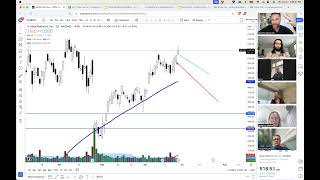
All right. Cool. Perfect. Perfect. Hop into a daily chart. Wonderful. All right. And the good news is we don't have to do this for super long because again, it's so easy. All we're doing is we're waiting for a down day or multiple down days and then we sell some puts at support and that's really it. And then we just. And when you're back trading team, all I do is I just draw a line and go, would I've gotten put shares or not? That's it. You don't have to make it more complicated than that. Like would I've gotten put shares here, yes or no? There is a tool inside thinkorswim and it's worth getting thinkorswim for this tool. It's called and we're going to prep practice this over time this week. It's called think back. And so you can actually go back in time and analyze the price of every option trade so you can see what it would have been. So we will be doing that some together. So if you don't have thinkorswim, you can download it just for that tool by itself because it is worth it. My girl Nancy says when you sell the put, does the broker subtract the amount of shares would cost from your margin? Yes. Yes, they do. Great question. All right, Ms. Joe, let's see when we sell some puts. All right, I'll pause here for a second. Yep, that's a, that's a down day. So this one too right here also is or was a down day. Wasn't a big one, but it gapped down from open. So if you guys will notice. So that, so it gapped down. That was from the close. That opened a little bit lower. That would have qualified as a down day for me. And if I, if, if you had sold a put. So let's go ask Scott on that day and then we'll, we'll look at one here. If you sold a put at 14, what would be a 1% rule for you?
14 cents.
That's it, dude. Yep, exactly. So if you get more than 14 cents, even better. But 14 cents at least it would have been that 1%. Yep. All right, so this is a nice down day. Joe, what you thinking here?
It is good down day, but it's kind of been on an uptrend. I might wait to see if it go. If you get a couple more, get another one in a row or something.
All right, cool. So we're going to wait. Looks a little bit high.
Down day. Potentially. Looking like it's getting better. Yeah, we're kind of getting into some resistance here. Take a shot Here or wait still, you tell me. Okay, so now we have to do, I guess our looking at the month, day and week.
Yeah, definitely can do that. Absolutely. All right, so you got some things.
Yeah, that's a decent level there.
Which is super nifty. Huh? Big support.
Have some overhead with the 200 there on the weekly. Back to the daily. So still a bit of a room down to that big support there. Then on the monthly. And wait a bit longer, I guess, and see are coming up to earnings too. So.
Yes, I like that. I like the so. Or you notice the earnings is close. So in this situation, we have a huge support down here. Right. Based on the monthly chart, you've had a few down candles in a row. And if you sold sometime in October, what strike price would you sell? Unless. Let's practice it. Let's see what would happen.
Okay. If I wanted to share, it's probably around $12, I would guess right around that good support level. There. Also, it's also looking like a probably maybe an ABC that we've got the 1, 2, 3, 5. So. Oh, shoot to go down.
We even got a wave count up in here.
Awesome.
Okay, so you're so. So what I do. And I do like a put sale is. Yeah. My whatever line I have, if I'm practicing, I'll draw it with certain colors and I'll start it on the date I sell the put, just like you did, and I'll end it on whatever expiration date and then I'll just click forward until the. Until it's over. And I just go, what would have happened? This is exactly how I back trade. So I'm going forward. We're going forward. There's earnings. Earnings are done. And right here, there's your expiration or at least close to it. But what's cool. What's cool is you can see that the stock was going down. It came into a support. And while you might have been a trader that was freaking out during that particular perspective, like, oh, I might be missing the stock or, oh, I don't know if it's going to balance or whatever, you still make some money. And so here's one of the cool takeaways is put sales is the strategy I'll get traders into that are in a slump. Because if you do the analysis right, even basic analysis, and you look at the math and you're like, okay, cool. And if Joe would have gotten paid 1% or more to sell this put, which I think she actually, I do believe she would have, if that would have happened. She just made a free 1% or a couple hundred bucks. And for traders that are in like a big slump, that's a lot. But at that same juncture, practicing put sales this way and practicing your timing with options and following certain rules, man, it sure is helpful. It sure is helpful. And then you obviously got that huge rally. Truthfully, all the premium would have been out of that put sale on that day right there. And that's because that you, you were over earnings, right? Earnings was done that. That was, that's what. That's always going to have higher option premium because of implied volatility. So because of implied volatility, it's always going to be pretty profitable. Sell options over earnings. Although you don't always want to slash, you shouldn't always do it. But there definitely can be certain situations that you can. For example, if you sold puts over here on the last earnings on Micron, right. You probably would have gotten put some shares. But if you got put some shares, you can see that you may have had the ability to get out of those put sales for a profit or get into a covered call or get into a collar, depending on a few different circumstances. Depends on how you sold it and where you sold it. So timing, timing on this is definitely key. Really good gap up here. And that would have been the day where you could have bought back the put sale right here and now, obviously, we're just waiting on a downswing again. And so let's see if we get another one, see what the next good down candle is. Good bullish volume coming in. About to hit the 100. There's two down days in a row inside bull candle. Another update. Hitting the 100. Another down day. Another down day. Another update.
Just retesting that lot. Oh, there's a good day, right?
Yeah, strong down day. Beautiful. So when would be. Where would be a good price to sell a put and what strike price and all that kind of good stuff?
Probably look at the similar level again, kind of the same where I was looking to get in.
Right.
Previously.
You do the same one again?
Yeah.
Wait, what? Just, just make money doing the same thing twice? Yeah, that's fine if it works once, right?
Yeah.
Beautiful.
Yeah.
Again, it would depend how far you go out based on where the premium was and stuff, but huh.
Yeah, exactly, exactly. And so this one, because the volume looks pretty good. This one you might have to sell maybe a full six weeks potentially. Like again, it would just depend on that situation. But you got the absolute, you got the location absolutely correct. And Great job waiting for the down candle. That's really, really awesome. Beautiful work. By the way, team. I'm sure you can know this, but this is how. This is how you practice this stuff is by actually spending a little bit of time on it and coming up with rules and strategies and systems for how you interact with price action.
It up to the six weeks. Okay.
Yeah, sure. Let's keep on going.
I'm thinking somewhere around here you'd probably be. Yeah, a lot of the premium would be.
The crazy part is. You are correct. But the crazy part is if you sold that this put on that day, I'm 96 certain you could have bought back that put sale there for 77 of premium capture and then you'd have been able to do it again. Yeah, that's what's really nifty is again, you sell some puts and two or three weeks go by and you get a bunch of buying candles. You gotta see how there was like three buying candles in a row. So three buying candles in a row right into the 100. And this is all stuff that we're going to be practicing as we get it more and more into options. But you already know this. But you could have sold some calls up there as well and started creating this really beautiful. I'm going to win regardless of what direction it goes, as long as it doesn't go up a lot or down a lot. And then you can just get paid to be boring, which is super cool. I love options.
Does that kind of make it a collar then? No, it wouldn't be like if. If you don't have the shares at that point you'd sell a call.
Good question. It's not a collar. It would be called an iron Condor. We'll get into that. We'll be getting into that soon. But yeah, it's. You don't even need that. Don't even need shares. It's like I'm. I'm making money on the stock doing nothing until I get the shares. And then once I get the shares and I can also make money with the stock doing nothing. It's just so fascinating. Just love this stuff so much. But again, it. It all comes down to practice and rules team. And this is none of the stuff that Joe's looking at is anything that we haven't studied before.
Right.
These are just moving averages on the daily chart. And she also went into the monthly chart and found big support down here. So that's another reason why she's selling puts down there. Like it's not overly Surprising. So it is, it's really, really cool to see how all that kind of comes together and blends together. So here's some of your homework. Your homework is I want you to pick a random stock. I don't care which one. Pick any stock you want and go back before 2017. I want to be a while ago so that you can't remember what it does. I want it to be the daily chart. And I want to do, I want you to show me 10 successful put sales in a row. So you might have to be back trading for a little bit to get 10 in a row, but kind of do it like again, you share your chart. Even if you get put some stock, that's okay. It's only going to be a successful put sale if you end up selling those shares higher than you got put the stock. Okay, so there's going to be a lot of charts, a lot of arrows. But this is the stuff that we're going to be practicing together is you can a lot of people get really stressed out about like, oh, how can I practice options when I'm going back in time? It's like, practice the charts. That's all you need to do. And as you practice the charge, you'll continue to develop the systems. Use my rules, and you can just say, hey, I would have bought back this option just like we did with Joe. I sold it here. I would have made money. Two and a half weeks later it was going up, I would have bought it back. That would have count as a successful put sale. I know you don't know the numbers yet, but we're going to practice that as we continue. We'll really get into that some next week on our Mondays and Thursday sessions. Again, Mondays and Thursdays is going to be for the basic boring put sales. Collars, covered calls. It's all we're going to practice. The additional sessions is where we will learn together all the cool stuff just to make sure that your brain hurts so that you feel like you're learning all the strategies and you're not feel like you're missing out on things. But if you already know, you're like, hey, I just want to make sure I master this and make money with this. That's what we're going to cover all month in Mondays and Thursdays. All right? And the next month, that's when we do trader psychology, real estate taxes. That's where we're going to get into it. So may is all the mine stuff, some tax stuff, some real estate stuff. And then June 24. Seven markets. Crypto, futures, forex, crypto. Crypto, Crypto. Because no one cares about futures and forex. I'm really just gonna be talking about crypto because it's the coolest. All right. You're amazing family. I'll see you later. Looking forward to seeing your homework. Post some charts. And obviously, if you have any trades between now and Thursday, just let me know.
Thanks.
Yeah, thanks. You're rock stars.