Ultra. wealth April 30th, 2024

A recorded Ultra Wealth session (Apr 30, 2024) led by Jerremy Newsome covering advanced options strategies. Jerremy explains options collars (prefer same expiration), calendar and ratio spreads, legging into multi-leg spreads like iron condors over earnings, and timing rules (do not buy long-term options on downtrending stocks; prefer buying calls on uptrending stocks). He gives concrete examples on Google, Tesla, Nvidia and Amazon, compares option vs share cost (Nvidia example), and discusses active management to reduce option cost basis. The session closes with member Q&A and a note that May will focus on real estate.
Questions this video answers
April 30, 2024.
About $14,000 per contract (quoted as $140 per share / $14,000 per contract).
$35 per contract (difference between the $95 and $130 strikes in the example).
Chapters
Yeah. Congrats. Congrats, joe. How are you, dear?
Just dealing with some work stuff right now too, but we'll try to listen.
Yeah, all good. Yep, no worries, no worries. There's the other Joe. Got two Joe's coming in.
Yes.
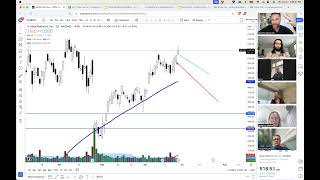
Yeah. All right, so the recording is on. For those of my ultra well team who wants to review today's discussion, we have Eric and Joe here live. And again, you're welcome to ask or answer any questions that, that you both have while we're doing this. But what we want to discuss and talk about today is something super exciting. I love this topic. It's really fun. It's inquisitive, it's unique, it's, it's different. But we're going to talk about advanced option strategies, enhancing everything that we've discussed so far, just so that you're aware, just so that you know that it exists. And we're going to talk about the options collar, because that makes Eric smile. Every time I say the word collar, he just gets all excited. Now, the thing that's, that's really unique about this whole piece and boiling everything down that we've learned in April that you probably all know everything that we can do with shares, you can do with options. In fact, you never actually have to own shares if you don't want to. Now, saying all that to say, I love owning shares. I think owning shares is great. I think it's an incredible way of wealth. But if you buy a nice long term meaty option, it can move just like a stock. And if you want to do everything that you've learned about shares, you can do that with options. So let's just do a quick example on Google. I did not do this trade. This is just an example. But we have talked about last week, we talked about calendar spreads and ratio spreads, right? And calendar spreads are when we had different expiration dates and we discussed the pros and cons of having different expiration dates. A true options collar that I have used and I do use currently very, very often have the same expiration date, although as you likely know, they don't have to. I prefer them to have the same expiration date because it makes everything easier in my mind and it's a lot less stress and it's a lot less to worry. So an example, one year ago today, if on Google, again, literally a year ago, right end of April, you buy a $95 call option that expires in November. So you buy six or seven months worth of time. Now, looking at this particular Chart, we can probably see why someone could have done that. Right? You're breaking above the 200. You have a little bit of a double bottom. You have a good volume increasing here, potentially a wave. Maybe you thought it would be a three wave, which it turned out that it ended up being. And then it pulled back into the hun, you know, 200. So you bought some, you bought some long term calls. Well, if you bought November, right, $95 call and the stock went up really nicely and now you're profitable on that particular position. If you sold a 130 call option, that would be turning it into a debit spread. And the fact that it's the same expiration is what allows that to not be a calendar spread. When you sell the call against the call that you own, since it's the same expiration, it reduces the risk dramatically. Meaning you can just leave it alone, let whatever it wants to do, let that happen. And then Tom, concurrently, remember again, this is all a $95 call option here. After Google went up and increased in this example, you then buy the November120 put option. Well, just like in a stock, right? If you buy an insurance contract above the price that you buy the stock, you create an unlosable position for the expiration date of that contract. You can do the exact same thing here with an option. And this allows you to again have the same control as you would have in a stock. You have the ability to buy the stock if you want to. But ultimately what you're doing this scenario is once this option becomes again, from a math standpoint, it is most profitable for you to wait for the trade to have equity in it. Once the position has equity and you hop yourself into a collar, you can now sail into the sunset. And since they have the exact same expiration, Joe, if this does close above 130 on November, the trade just cancels each other out and you ma you maximize and capture your max profit if it closes above 130, if it does not close above 130, but it does close above 95 again, since it is an option, is an expiration date. If you do not want to buy the shares, you need to sell that option before expiration date if you don't want to take ownership of the stock. Because once an option expires in the money, and I know I've mentioned this all month long, but if an option expires in the money at expiration, something will happen to your account. If you don't want that to happen to your account you need to exit that option before expiration. Unless again in this example, if Google closes above 130, the 130, the 120 and the 95, all those. Because 120 would, it's a put, right? So that expires out of the money. The 130 call would expire in the money, the $95 call would expire in the money, those two would offset each other and you would walk away with a realized $35 gain total per option contract because it's ultimately a debit spread. And the reason it's $35 is because there is $35 of difference in the strike price. So again, just like a stock, when you buy a stock and you sell a covered call, the sold call is the cap of where you're going to sell the stock at, right? So if you have a covered call, you sell a covered call, the stock closes above your covered call, you sell your shares. It's the exact same way in this position, except instead of selling shares, you're going to sell your option and you're going to lock in your maximum reward. But that's really the visuals of how this looks. So as a quick quiz, Ms. Joe, I know you're the one who loves these quizzes. Just to make sure, can you have a ratio calendar, options collar?
I'm sure you could.
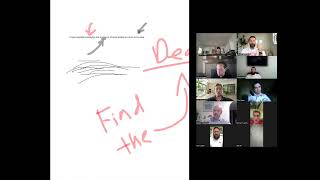
Why not, right? So you. Exactly, you can. That's the thing. So this is how this would look. Again, I did not do this particular trade, but you can have a, you can do everything. That's why options have a countable infinity amount of strategies. So again, my goal in this whole month is definitely not to teach you all the strategies that exist. Believe it or not, I've literally only scratched the surface, which is crazy to think about, Tom. But yeah, this is an example of again, this, the expiration on this particular trade, as I was looking at this is, this is June. So if in June you bought 10 December call options, so again, you're just now at that point, just straight up, you're buying calls, right, Eric? So if you own calls, they only go up if the stock goes up. So you bought a call option, stock goes up, you're making money. Once the stock goes up and you have a December call option, that particular options owner could have sold five July calls. So again, that's a ratio spread because you have 10 options that are available to sell against. You only sold five and then you buy three July week one calls, right? Which again is now turning that into a debit spread. So the answer is yes, right? You can literally do anything with your options. The most important aspect with any option, as all of you have probably thought through of, is just timing. And that's why we spent so much time in January and February and March really going through some of the technical analysis pieces, because ultimately with an option trade, you can actually do anything. There's a countable infinity. I mean, so it's four, four, four times. Four times. Four times every expiration date imaginable, right? So it's, it's almost infinite. It's a very, very, very large number. And so as we're, as we're talking about all the possibilities, with an option, you can really essentially do anything, but if you do whatever it is at the wrong time, you're going to lose money. And if you do the right thing at the wrong time, you're going to lose money. So timing is still very, very crucial. But just know that if you want to get into an options position where it is a collar, or you want to do it as a calendar caller, or you want to do it as a ratio, so you only have half of your optimum sold against it, you can literally do anything. It is all still going to be based on time. And so it's a fascinating awareness to understand that we have access to all these possibilities. So as we go do some examples. I know this is all of our favorite part. Let's just go look at. I mean, shoot. Let's just go look at Tesla for just a moment. So with Tesla here, kind of, I mean, what a, what a perfect day. Yesterday was such a very, very fascinating, fascinatingly interesting day, Tom. Yesterday was really, really great gap. We retested beautifully. We traded right into the 100 simple on the daily chart. Really, really fascinating that. I mean, to the penny. To the penny. We failed the 100 and had a really great drop for a day trade possibility there. But if you were looking at this particular trade, right, and you're thinking to yourself, okay, I want to, I want Tesla to go up, Tom, you can make money. I want Tesla to go sideways. You can make money. I want Tesla to go down. You can make money. But if you do a down, as you all know, if we do a down position on that day right there and Tesla goes up, you're going to lose money. Doesn't matter what option strategy you do, if it's a bear trade and you do it at the wrong time, you're going to lose money, Tom. And if you do a bull position here, doesn't matter what the position is you're going to make money. And it can come down to your risk tolerance, it can come down to your speed, it can come down to your aggressiveness, it can come down to your account size and your portfolio size. But you can make substantial amounts of money as well, like we talked about on Monday with out of the money options. But if you do those out of the money option strategies at the wrong time and you don't hold them long enough or you don't buy enough expiration date or you don't buy enough time, then you can lose money as well. So there's so many things we can do and I really, really do actually truly love option callers. I truly do. The one big, big, big rule that I've given you and we've talked about is I do not buy long term options on down trending stocks as the one big rule. Now that one took me a long time to learn and a lot of money lost because my brain says, oh, you're going to make so much money if the trade works. And you will, you will make a lot of money if the trade works, right? If the stock turns around and runs to the moon, you make so much money. But timing of that is very difficult. And it's a lot easier if we change a couple of these words in this sentence in this rule in this paragraph, right, Joe, it's so much easier if you simply change this to I buy long term options on uptrending stocks. Your whole portfolio changes. Like all your money changes. It's a dramatic shift. It's a dramatic shift. And once we all realize that the one in red is better than the one in black, you will make more money. And so if you at all want to ever buy buy options that are go up as a stock goes up, AKA you want to buy call options, you're going to make more money buying call options on stocks that are uptrending. And if you're going to be going bearish, you can make a lot more money going bearish on stocks that are down trending, right? Timing. So everything timing is so crucial. Timing is so important. But the ultimate realization is for, for me, the reason that I do not try to buy the bottom of Tesla with call options is because I have learned that lesson over time that you're, you're not going to get the right time. However, once you can verify, hey, we're in an uptrend, right? Like if we go look at Tesla and imagine that you, you miss this whole move, right? You don't catch any money at all during that whole two and a half years. And then all of this pullback happens and you have to wait through all of that. But right around here, you finally realize that it's in an uptrend and you finally realize how to play bullish positions. The amount of money that you can make on just that one up thrust there is inconsequentially large. So to really, really drill down the realization that if you want to make money as stocks go up, regardless of the option strategy you want to use, just make sure that it's in an uptrend and you will make a lot more money. And if you're doing options, if you're doing shares, it can debate, it can depend on again, obviously the trend. But ultimately I buy shares and downtrending companies because I want to own those companies. So like Boeing and Tesla right now, those are two that are obviously in downtrends that we're buying shares of. But we got to be patient, we got to be calm, we got to give it some time and eventually can turn around. Once we're back to an uptrend, I can be a little bit more aggressive on those positions, make a little bit more money. But as we really, really dive down and analyze it, we want to make sure that we're just aware of what the trend is. And that's why we want to spend so much time, energy, effort on really, really doing the homework on a stock and knowing what it is, what it looks like. And then when it eventually turns around, we can, you know, take possession of it and start interacting with it. PayPal is a great example of this. So PayPal is really, really working hard on breaking out of this 100 simple on the weekly chart. Once we get above here and this becomes an old resistance, new support, we will have made new highs and new lows, and that will be by definition eventually starting to tom again break out of this perpetual strong downward move that we've been in. And as we can start getting above this resistance, we have the ability to start playing some directional, some directional trades. But if you're trading call options, essentially since 2022 on PayPal, you are losing money, you have made no money. But if you're buying shares and you're being slow with it and you're timing it correctly and you're aware that PayPal's yes, absolutely, in a downtrend and you're starting to build a base of positions, it can, it can work out to your benefit. I haven't read through a lot of the earnings yet. On PayPal, I need to spend a little bit of time doing that. But they're still, I mean it according to the numbers, right, the three, three or four quarters in a row of $7 billion of revenue. And that's still quite incredible. And if we go back to 2019, right, it was 4 billion and if we go to 2018, it was 3 billion. So they're still, they're still making good revenue. And that's, this is definitely one I'm keeping a very, very, very close eye on it as it starts to kind of break above that hundred on the weekly. It'll be an impressive, fun trade start taking advantage of. But this would be a good example of if you're going to get into an options collar and you buy a long, long, long period of time, Tom, it's going to have to go up. And then Once slash, if PayPal goes higher, then you can hop into an options caller, right? Sell your calls. It's most convenient and easier for everyone if you have the exact same expiration. So that way you don't have to stress about it. And once they have the same expiration, if you're in an options position. The thing that I think is really unique about the options collar is that if you do want to actually buy the shares, you can, you have that capacity because you have the call. And that's what a call option is by definition, right? Gives you the ability to buy the take ownership of the stock itself. So I guess now it's really just kind of looking at and kind of analyzing the individual companies and coming up with a position. I think Nvidia from an options collar perspective, probably a really good candidate because it's really expensive to buy shares, as Joe will tell you, right? So I was like, you're gonna buy 300 shares of Nvidia? It's like, well, you, you better be very wealthy. Like that's gonna require some serious capital. But can you buy three contracts of Nvidia and it's like, well, yeah, that's actually a lot easier. And if you do so on a down day, right, On a big, nice down day where options become a lot cheaper, call options become a lot cheaper. You buy those longer term calls and then after Nvidia has a little bit of a pop, you start selling calls against the calls that you own. So again, just to go look at that example, let me go pull up thinkorswim just so you can all kind of see what that looks like specifically. Okay, here's Nvidia. Let me share my screen so if we go into Nvidia and let's go look at December, and when the stock dropped, let's say that you bought an $800 call just to kind of go and look at what that looked like when the stock was down a lot. So when the stock was down, okay, you're buying that call option, and you're spending $140 per contract, Tom, on a December call option. So just to kind of reiterate on this day here, that really, really big drop, you would have bought an $800 call option. So $800 is right here. So while the stock was at, let's say, 770, if you bought an $800 call, so just a little bit out the money, not a lot, it would have cost you $14,000 per contract. But the shares, right. If you want to bought. If you bought a hundred shares, a hundred shares would have cost $78,000. So if you spend $78,000 on this stock for just a hundred shares or you buy one options contract for $14,000, you can see the difference in price. Now, at this exact moment in time, that particular option, the same one that we're looking at, is worth 192. So you would have had $50 of equity in, in the. In the course of a week and some change. So you would have made $5,000 on a $14,000 investment. It's currently worth 19,000. After that would have happened, you now would have the ability to sell a call. And so let's say that you sold the 910 call option. A 910 call option would be approximately receiving the same amount of money that you spent on the option. So let's call it $140. And then since you bought it when it was at 700 and some change, if you go out and you buy an 8:15 put option for $95, right. It's just like the stock itself, where you have the ability at that point to not lose money on that trade because you have an 800 call option, which is now in the money, you buy an 815 put option for $95. You sell the 910 call option and bring in $140. The 140 -95 still gives you a $50 credit, $45 credit. So that money comes into your account as cash and you have protection on Nvidia. If Nvidia drops below 815, that's okay, you have the ability to exit that position or just like on a regular option. Joe, I know you know this, but you can sell that put option, bring in cash flow from that particular put option and still have the 9, 10 call if you want to. Or just like a regular stock collar, you can buy to close that sold call, capturing a profit. Right. And now you're just in a call option and then you can get into an option collar against that longer term asset later in the, later in the year if you want to, in June, July, August, and just do either the same expiration date again, you can do the exact same strike prices again, or you can do a different strike price, you obviously will get different premium most likely, but you can do the exact same expiration, you can do the exact same strike prices. You just have to be exiting that position beforehand.
So kind of just bringing down your cost basis of the original call then too.
Precisely. Yeah, exactly, exactly. And if it costs $140, you know, if you can, if you can chip away at that $140 through selling calls, buying puts, and then, you know, actively trading that position in and out effectively, you can, ultimately it's a lot easier, but. Well, I should say it's a lot easier, it's a lot less time intensive to ultimately pay down that entire option and own it for free because it's just less expensive. Right. So I got to jump into a meeting. I'm going to watch the rest tonight. Yep. Love you, big guy. Have fun. Thank you, Bye. Yes, yes, yes, yes. You got Joe. So that's the thing is like you can just actively trade that option, effectively decreasing the cost base of the actual original purchase, which is really, really fun. And this is the best strategy that I'm aware of is from, from a timing perspective, right, where it's like big down day, buy a little bit of an out of the money, longer term call option on an uptrending stock, let it pop. Once that option pops, then you get into an option caller with the exact same expiration date and sail into the sunset. Just like a stock option, except it's just cheaper, a lot cheaper.
Yeah, that's very cool.
Super cool. Yeah, absolutely. So for example, like Google, you know, I mean, same thing, like Google, Amazon, Apple, it's like all these great companies. I mean, let's go look at an options trade on Amazon. Interested to see what it looks like because earnings is tomorrow or tonight. Amazon, December. So just as an example, you know, for you, if we bought just a little bit of an out of the money call option, so let's say we bought a 190 and we would spend $17.50 and then immediately, same time, we sell a 230 call option, we bring in $5 and 35 cents, and then we buy a 135 put for 320. It's like we know our maximum risk. We know the credit that we're bringing in, and we have that trade going. Okay, cool. This is what this is until December. And we have the ability to exit any of those options at any particular point in time since we bought that put, and we own it. As you now know, once you have that insurance and you own the insurance, you can sell an option against that insurance position, decreasing the insurance costs even more. And then you have an options collar over earnings, just like a stock collar. Just so. Just so.
Fascinating lot to work my w mind around, if it all makes sense.
But yeah. Oh, yeah, yeah. Exactly. Exactly. So, yeah, let's go look at Square, because Square, are you in that trade that the Condor.
No, I didn't get in that one. I was just watching it.
That's okay. Well, I mean, yeah, you still can, though, if. Even if it's just a paper trade. Yeah. So pop in. Because right now, like, this is. This is exactly what you want in an Iron Condor. I mean, what's happening right now in Square is picture perfect because at this point, we're. Well, you know, earnings is right around the corner. PayPal gapped up a little bit and then traded down. So I think Square will probably gap down and trade up. But even if it gaps down, I mean, the Condor is all the way down here. And the Condor is again, the composition and the creation of the bear call spread up here. So sell that call, buy that call, and then the bull put spread, Sell that put, buy that put. And the. As we discussed, the broker can't charge 2 margins on that because it can't expire up and down simultaneously. It has to close past one of them. So even if it does this and just crushes earnings and just destroys the market and really, really goes higher and we lose on this spread, you're. You have to win on that one.
Yeah.
But with the Condor, we have to make sure that we do it on a stock that we don't think is going to really move that much. So that's the other component, too, is just the timing piece. But yeah, I like this. I like this one right now, this particular stock, because we are. We're just trading sideways, and with earnings after earnings comes out, I don't think much happens on it. And then we. Then I'll just close. I'm just going to close out the spread, essentially. If it doesn't have a huge gap and just does whatever, you know, small gap up some, I gap down, opens flat, then I'm just going to exit the whole trade because most of my premium will be. Will be collected and that'll be that. And that's what we were trying to do on Lulu, but like you said, there just. There's just no premium, which is fine. Not a big deal. Not a big deal.
You got into the square one all at the same time though, right? You're gonna. You're legged into it.
Y. Exactly. Great. Great question. But it was on this day here, April 17th, I. I do like to leg into them. There are certainly, definitely times that I try to do that. But there was. Since there was enough premium on that day, since it was specifically over earnings, that's the time where if you don't leg into a condor and you're actually going to get real legit premium, that's usually where and why you will get good premium is because you are doing it over earnings. And the reason and the time that I will do that is generally based on those moving averages where my expertise or my opinion or my thought process is that it will not have a really huge move on earnings and if it does, it runs into some type of moving average that hopefully causes it to bounce.
Yeah.
Yep, yep, yep. So what positions are you in? Champion. That you want me to review for you?
I sold an ALB call. Yes. Or Alba. Keep saying ALB call yesterday.
We're about to buy that back again.
Hilarious. Yeah, no, I got the 50%, so I did the 135.
Okay, cool. Yeah, I did the 140.
Cost basis is a bit lower, so.
Perfect.
Perfect. And then just sold a couple Mara puts this morning. We'll see what happens with that at 15.
Perfect.
What.
What days do those expire?
Regular May.
Regular May. Got it.
I got 83 cents for each of those, so.
Wow. Yeah, good job.
Seemed okay, right?
Yep, yep, yep, yep.
And I'm still on my Google caller, which expires this Friday, and I have Tesla call for May 17th. A 200 call.
Congrats, by the way.
It's not as good as you. Not as good as yesterday, but it's still up for sure. So.
Yeah. Yeah. Did you sell any of your calls that you bought yesterday?
I sold the May 3rd one. The 180. May 3rd.
Got it, got it. She locked in that profit. Yeah, that was. That was a great trade though. Those are really cool. Really cool.
Yeah, I think that's all the options that I'm in right now. Not in that many, but I do need to think about doing the longer term ones like that. So just in my mind, it is less money, but it just. Options are more volatile, so it seems like more risk if it goes the wrong way. So having to wrap my head around that. So I'm still.
Yeah, exactly. No, precisely, precisely. It really still does ultimately just come down to like preference, really. That's how options are. It's like, do you, do you want fast speed? Do you want flexibility? Do you want a little bit more uncertainty? For sure. Again, I, I still always prefer, always prefer stocks over options unquestionable because like they can't expire. You know, I know my risk. Worst case, I might be able to get a dividend. But the cool part is, and again, the reason I want to spend this time on this class is if you ever do get into an option that either is working or not working or whatever, you still have choices around that particular option that you can decrease the cost and, or protect yourself and you don't have to just hold it to zero. Right. If we buy an option, like, man, this thing's not really working out the way I want it to. It's like, okay, fine, you can get into a collar, you can sell calls, you can buy puts, you can, once you buy an option, it's just like a stock. You literally have the capability of doing anything you want on that position.
Okay.
Yeah. Yep, yep, yep. Okay. Let's see what else is interesting out there. Yeah, the, the Tesla move was really, really, really cool yesterday. I'm thinking with that interaction with the 100, we probably do end up bouncing in between here for a little bit. But this was, I mean, this is a huge move for Tesla, like from an up perspective. Right? I mean like this was a 40% move in a week. And that's a big, big, big, big, big deal. So I think again, we'll kind of bounce around and chop around here for a little bit and that'll be, that'll be really good for day trading. Yesterday was a really fun day trading day because you had this, the pullback into that gap fill that we talked about. And then your favorite pattern ever, that double bottom 10 EMA crush and then trade. Look at that. Isn't that technical analysis the best? Like it just died. It dies, right?
I was trying to, trying to sell a call there, but I should have just. It didn't quite pop up to my level. So.
Yeah, yeah, it's okay. That's okay, Well, I had 550 and.
I think 545 was the high.
Oh no.
Started falling.
A nickel. Damn. Dang. Yeah. When did you sell the ALB call? Was it that open or later in the day?
A little later in the day, yeah.
Yeah.
Oh yeah. Close to. Close to the high there. It bounced around there. Like it bounced up and down quite a bit to begin with. So yeah, so it was after it came down and then got back up there, I just kind of put in a limit and looked later and it did get back up there. So.
Cool. Yeah. Let me see if there's anything else interesting. It stands out. I don't think so. I mean, I know we've got some big earnings on Apple and Amazon right around the corner, but really the big ones, Meta's already had it. This will be a. This, this one's gonna be really interesting to watch I think because this is a gap fill that's like 99 certain. I'm just really, really trying to get some at 400. Yeah, yeah. That would be sensational in my opinion. So I just don't know if it's going to get down there like 400, 390 around this 200 before the gap fill, you know. So if it really does have one of these before it actually comes back up to, there will be a very, very high probability trade. This is one that I, I did look at the other day talking about a condor to leg into. There's just no money at all for a bear call spread or in a bullet spread.
I just picked up a few shares in case it decides to fill the up gap first.
Yeah, yep. Yeah, of course. You know, let's see. Yeah. So no, not. So not a ton of day trades for you currently, huh?
No, not a lot. Yeah. Cross training at work and doing some, you know, I find watching the options and doing the calls and puts me away from the day trading a bit. But yeah, I have kind of realized this much which has been fine up to like this month with, with not so much long term and option stuff happening. I can't just rely on that. I need to make sure I'm doing getting the day stuff going for the cash flow too. So.
Yeah, yeah, like I said, it's a good experiment. It's good to know and like ultimately that's the thing. It's like, hey, at least, at least you know how everything works. Like that's a big deal. Just, just knowing how to interact with it.
Yeah. Figuring it out for sure.
Cool. Very, very cool. Any Anything else? Anything else you think that you need a review or you want to talk about? I have questions on.
Not at the moment. I'm sure I'll think of something as soon as we disconnect, but.
All right.
I appreciate you being available, so.
Of course, yeah. My absolute pleasure. Well, for everyone who's watching Recording, thanks so much for tuning in. If you do have any questions about anything at all, let me know. We will be again, we'll still meet on Thursday just as a good wrap up for the April, April months. And then in May, we're going to start really discussing just real estate, just talking about it, just being aware of it, coming up with really cool strategies, talking about how some of those things work so that we can, we can have that awareness. Because like Eric said right before he hopped off, right. He's been making $100,000 in a particular real estate deal. Real estate's a great, great way to make wealth. It's very, very certain. There's a lot of certain aspects to it. It's a lot of components of stocks are similar to real estate. Like, as long as the numbers are there, you're going to make money. Just like a collar. It's like you just have to do the numbers. And if the numbers make sense, the deal makes sense. That's what's really, really cool about real estate. So we figure out ways to blend both. We kill it. So. All right. Joe, you're amazing. Love it, girl. Let me know if you need anything, okay?
You bet. Thanks so much.
Yep. See you, rockstar.