ULTRA WEALTH April 8th, 2024 COLLARS
Live Ultra Wealth session (Apr 8, 2024) led by Jerremy Newsome teaching covered calls, collars, and put sales. The class reviews student homework (example trades in Tesla, Meta, Pinterest, Celsius), explains practical rules for entering collars (aim to have put paid for by call premium, put strike at/above cost basis, prefer buying short-dated protective puts), and fields Q&A on option mechanics (exercise at expiration, open interest, strike selection). Homework: backtest collars on Visa (pick any start in 2013, end by 2016).
Questions this video answers
ULTRA WEALTH April 8th, 2024 COLLARS (YouTube live session led by Jerremy Newsome).
Backtest collars on Visa using daily data between any start in 2013 and any end in 2016 (practice sell covered calls + buy protective puts timing).
Sold Tesla puts at the $150 strike with May 17 expiration on April 2 for $6.27; bought the position back on April 4 for $3.28.
Chapters
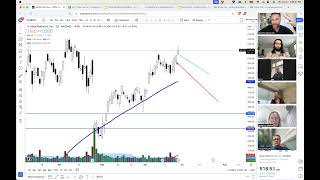
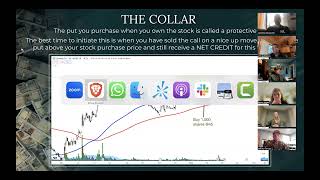
Beautiful. We will go through some of your homework that you some of you posted in the WhatsApp group. For those of you didn't get a chance to post, feel free to do that later this week. No, no big deal. Just go ahead and kind of practice doing some of your covered calls. Practice the timing of it. We'll go through some of that today. And just reminder we do have a a new kind of just if you are okay to contain more information about options tomorrow we will be doing some more and every Tuesday for the rest of the month. But for our Mondays and Thursday sessions, just really mastering the put sale, the covered call and the collar. It really is my favorite, you know, combination of my favorite strategies and I think when done correctly at the right time, at the right size, it just allows so much ease and simplicity for your trading and really for your investing in general. So let's go look at some homework first and then we will begin the slideshow. Let's go check out what you guys did. Okay, sweet. So here's Joe's covered call on Tesla. All some of her homework. So I'm g zoom in really quick. So buy shares at 339 on a down day after earnings. So you snagged. That was a good purchase. Bought some shares. Stock runs up, sell a four week 430 covered call after several bulls. Yep. Close for profit on huge bear day. Four days later definitely were able to buy for profit. Now here's the cool part again and we'll practice this later as the month progresses especially in our back trading sessions. Now we're going to be using and I'll show you guys how to use. If you don't already know how but show you how to use. Think back to kind of see what the option prices were at that time which is super nifty. And then again of course for me what I generally tend to do, depending again on how much money I receive from either doing covered calls or collars or whatever is I really do like to, I like to buy some shares if with my premium that I made, you know. So again obviously it depends on the credit and how much money you actually brought in. But like that was a really, really big drop and again could have been an opportunity to slide into some more shares with the profits that you made from the covered call number two sell four week 430 again at the same level as before. So you can see the stock ran up and dropped buy after three down days. And you'll notice too that how, how we got those three down Days, and then the very next day you got that hammer and then you got the three up days in a row. So you got bull candle. Bull candle, bull candle. So three down candles. And then you got three up candles and then you got a rollover. Again, Beautiful. So expire worthless. Expire worthless. Close. Close for a profit. Expire worthless by 24 cents. Close for profit after three bear days during support. Close for profit. Got it. So this is a beautiful example of Joe doing proper and accurate and adequate and profitable covered calls. But at the very, very end, you'll see here she's like, all right, well, I've done a bunch of covered calls, but now I'm underwater on the shares, right? Which is why we're talking about today, Tom. And I know you already all know this, but, hey, just in case, today we're talking about collars. So ultimately, again, my thought process is if you have a decent amount of equity in your position, and I would, I would classify decent as 10% or more. But really, ultimately, if you can get into a collar for free, where it doesn't cost you anything, and you can buy the put at or above the price that you bought the stock, What a gift. It's one of those, like, if that happens, it is generally, in my opinion, just an absolute no brainer. Why would you not? And again, a lot of traders, a lot of investors will say, oh, well, you know, it's because if I get into a collar, then I am, I'm giving my upside away, right? Like, if I get called away, then the stock can go so much higher. Which is, which is true, I guess. But I kind of was talking to some of the people in Miami this weekend during the options retreat. I was kind of letting them know a mindset shift that I had when it came to real estate with one of my real estate mentors. So one of my real estate mentors told me, jeremy, you never want to sell a house at the very, very, very, very top of the market the highest price ever. Because giving equity to the person who buys your house from you is a gift, right? You should always want to give the other person buying your business, buying your house. And now, right, buying your stock, you always want to give them equity because that means that they get to make money, right? And I really like that perspective because if you're always worried about, oh, if I get called away and the stock goes higher than I miss out on profit. But if you flip the mindset to, okay, I got called away on my sold call, right, for my covered call. But I made profit, and then the stock went higher, which means the other person is also making profit. That means everyone's winning. Everyone in the whole transaction is making money. Awesome, right? Quick little mindset change. So let's go back to. And again, I know Joe well, I actually do know Joe that she's very familiar with the, the, with the callers. And the homework specifically was just to do covered calls, right? So she did 10 over the course of essentially two years and never got called away once. Crazy. But how cool is that also, right? So when to implement a collar. And the cool part is we've discussed selling calls and we've discussed selling puts. I generally, generally look for the ability to sell my covered call. As we mentioned, after one large update or three or more updates, that's what I'm looking to sell, my cover calls. And again, as I mentioned, if you can sell that call higher than you bought the stock, yay. Right? That's amazing. That's awesome. Like, that's kind of the goal. The goal is liquidity. Because if you can get liquid, if you sell your stock at a higher price than you bought it for now you're liquid now, you can then go in and rebuy something else. Either rebuy the same stock at a lower price or just go buy one of the other 95,9500 stocks that exist in the market. And then to come back over to the collar, as I just mentioned a moment ago. But just to write it down for you, when I am selling a call, I will always explore the cost of an option because it's free cost of a put option. So when I say explore the cost, that just means I'm gonna go look at what is the actual debit. What is the actual cost of buying a put here? Just so that I know, right? Just so that I know what is actually happening. And can I get into a position where I do really, really protect my downside? Because that's really the goal, right? You don't want to end up underwater on a position. You never really want to lose money if you're going to avoid it. So I think that's where having puts are really, really beneficial and really useful. So when I'm selling a call, I'm going to go ahead and explore the cost of the option because it doesn't cost anything to explore the cost of the option. And then as I mentioned earlier, if I can sell a call for a profit and the shares would be profitable when sold. When sold. And the call sale pays for my put put Purchase. And the put is above the price I bought. I always do the collar. If I can move that before I make it final. No, I guess not. Right. So if I can sell the call for a profit and the shares would be profitable when sold right at the call sale and the call sale pays for my foot purchase and my put is above the price I bought the stock. It's a 100% of the time. I do this strategy because my thought process is why not? I don't know the downside at that point. I don't, I don't see why would I not make money and then have essentially no downside risk. So I'll pause there for just a moment. Any questions on that concept?
This is something that you look to do over earnings though too, in case of things dropping.
Yeah, great question. Absolutely, absolutely. Especially again, especially if all these are true and usually, usually they are. If again, you do have profitability in your position. Right. So if you have equity, this will be an interesting. Let's, let's kind of look at this position for you right here. So my assumption is the ending red line was your expiration date, right?
Yeah, yeah, yeah.
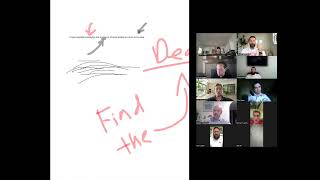
So I thought so on this trade, stock runs up, it gets above your covered call. Right. At that point in time, the covered call is probably losing money. Right. The actual call sale itself, stock drops and, and probably right here you would have been able to buy that option back. And again, we're going to practice that all month. That's, that's really what we're going to be doing is just looking at option prices and knowing when to get in, sell, buy back, all the things. But 99% of time you probably would have been able to buy to close at that moment for an actual profit. And then when you had those three strong updates in a row, you would have been able to sell another covered call. But at that moment in time when you're selling the covered call here, you are above your cost basis. And you know that earnings is kind of around the corner. So that could have been one of those situations again, either there or somewhere over here where. Yeah, absolutely. You're just looking at the prices, you're looking at the value and you're saying to yourself, I'm, I'm most likely going to get into a collar here to protect because earnings is kind of around the corner. It's not, not super, super far away. So I do, I'll always kind of plan out ahead of time. I'll just look to see essentially when earnings is that I could attempt to Have a caller over earnings in this situation. Let's say that this option expires worthless here and then you have to get into another one later. A lot of times, again, just looking at this exact trade that you did on this particular day right there, as the stock during the day is profitable. So bull candle, Bull candle, Bull candle. You're coming up into this resistance. You have a nice little push for three or four days, knowing that the earnings is again just a couple days away. There's certainly a chance that now that I'm not ultimately profitable. So you guys can see that you're below the price that you bought that stock in this position. This is one of those times where I want protection over earnings. But you might have a hard time making money on the call sale and the put purchase because now you have a little bit of a negative position. Now you have a little bit of a negative equity because the call isn't going to be ultimately that profitable if you sell it. So what could you do in this situation? And my answer is sell a lot more time. So just to point out, with bigger arrows here, we're going to look at this portion right there. So essentially, that candle where Joe is underwater a little bit on her shares. Not a bunch, but definitely a little bit. She's underwater on her shares and earnings is around the corner. We want to have some protection of earnings, but you don't really have a bunch of updates. Although you had again, some level of push that was bullish, which would have been nice. It would have been that situation with earnings right around the corner that I probably would have sold a covered call that that had like three months worth of time on it. Because then again, if I get called away, still profitable. But I'm going to bring in a lot of money for that call option. And that money for that call option, I would then be able to. And I know this wasn't part of the homework, but I would then be able to buy a protective put over earnings and give me that protection. And I'd probably be able to buy what. Generally what we're going to talk about today is I generally try to buy a month or less for my protective put. A month or less. Sometimes I can buy more. I mean, I'll. I guess it depends if I'm traveling or I'm not gonna be around the computer or if I really, really think it's gonna free fall. I could buy more time if I really wanted to. But does that concept make sense? Family? You can just sell a lot more time bringing a Lot more cash. And then use a lot more of that cash to buy your protective put. And that way you money, even if you're underwater on the position a little bit.
So you do them on different time.
Frames, so different expiration dates. Yep, exactly.
Okay, so then if your protected put.
Goes into the protected put, closes out, then you can then buy back your covered call because the price is so low.
Okay.
Yep, exactly, exactly. So what Joe, Sorry. What Nancy was saying is if the stock, so again, let's say the stock really, really well, essentially does this, does what Tesla did. So if, if you have the collar and Tesla does that. Eric, would you agree that at this price down here, that put that you bought over earnings is worth a lot more? Yep. So the put's worth a lot more in value. And then the option that you sold, that really, really long, you know, three, four month option that was gonna, that's gonna have decreased a lot over time as well. And that's because. And we're talk more about implied volatility probably next week just to kind of show you what you can look for on certain situations. But when earnings is approaching, options are always worth more because there's a lot more uncertainty. And so that's another reason why I really enjoy earning season. And earning season is just two or three weeks away. But I really like earnings season because there is so much implied volatility. And when you have really big, big, big implied volatility, well, option costs more. So if you sell a nice longer dated option, you can bring in more money. Scott.
Would you still sell your covered call if it becomes more than 75% profitable?
Yeah, absolutely. I would still buy to close the COVID call even if it was 75% profitable. But at that point I'm still going to do a little bit of math just to make sure if I do buy it back, I still can make more money than the put cost. But as long as, as long as I can still make more money than the put cost because I always want to attempt to buy my insurance for free, I will. Yep. So yeah, Even if, so even the 50 rule. Right. Would still apply in that situation if again, the premium was there. So again, let's say we have, we have earnings, you know, earnings right here. Again, just as an example, if I sell a lot of option time on the calls and then I have a put and then the stock drops on earnings and two days later this covered call sale has decreased over half. Right. So I sell it for 10 and it's worth four. Well, then I would just Go look at, can I, can I make money on my put sale or do I want to keep it? I can do either one, but if I own a put and that put is increased substantially in value, Tom, and I can still buy back this option for 50% off, I will. And then again, I know, I know this is all hindsight in this exact example, but you can still see you're battling this little resistance here. I mean, you could have known at some point within a week that there was a lot of resistance there on Tesla. So as it was kind of slamming its head against that level at some point intraday, I would like to think that I could have sold another covered call above that, maybe for another month or so. And then when the stock drops, if, if I still have my put, right, then again I would just be able to buy, to close this option for a profit. And then as a reminder, I know you already know this, but a put, as we discussed, is the right to sell your stock. So keep that in mind also that if you do buy a put option on a position and you no longer want to own that position, you can just call your broker and have them exercise the put so that you're, you sell your shares at that level, right? So let's just again look at Pinterest really quick. Let's say that you bought Pinterest here with that little 10 EMA play. Stock has a big, big push, three huge days in a row. And you do what? Right, you sell a call and you use the premium for that call to buy a put. And the put that you buy is higher than where you bought the stock. You bought the stock at the, at the hearts. So you sell the call, you buy the put, you're in the position, stock starts plummeting, does whatever. And down here, earnings is coming, right, as you guys can see. So here's earnings right around the corner. So you're negative in the position, sorry, your stock is negative. It's lower than where you bought it. The put is in the money, the covered call, you're, you're bought back for essentially nothing, right? So that one's, that one's gone. You're just in the put. And if that earnings is coming up and you already have your put purchase, what can you do in that account? And the answer is you can call your broker and you can exercise if you wanted to, your put option. Because your put option is the right to sell your stock, right? So if you know the stock is down, you don't want to hold over earnings for whatever reason. Maybe you do, but you're like, I don't want to hold over earnings. The put is in the money again. In the money means it has become more valuable. There's actually a value associated to that option. You call the broker, exercise the put, and the broker will sell your shares at the strike price of this put. Any questions about that?
Yeah, I thought when it got to expiration and you were in the money, I thought it automatically exercised and it would sell your shares. Are you talking about early?
Correct, Correct. Yeah. So you're absolutely right, though. If, if at expiration, day of expiration, you have an option that's expiring in the money, and it doesn't even matter what the option is if you have a bought call or the fun one. The fun one, Eric, is if you have a bot put on a stock that you don't own. Right. So let's say, Scott, you buy a put on whatever Dell because you think it's going to go down and you don't have any stock, and you hold on to that put and you forget about it. And that put expires in the money. Your broker will auto sell shares of Dell in your account. Now, if you're like, well, I don't own any shares of Dell, dude, to sell. I know, so you're going to end up with short shares of Dell. So that one's a tricky one because a lot of people forget. It's like that's what a put is. It puts the right to sell an option. And so if an option expires in the money at expiration. Right, Eric, something's going to happen to your account. And it could be something that you want, or it could not be something you want. But that's why option expiration is so important, is if it closes in the money, something's going to occur.
Even if you bought a put.
Yeah, dude, that's what I'm saying. Even if you bought a put. If you bought a put, you don't own the stock at all. You just own a put, and that put expires in the money at expiration date, your broker will auto sell the shares at that price for you. So you'll end up with short shares.
And then the next day you can buy them to close it for a profit.
Yeah, absolutely. Of course you can. Totally. So it's not like ultimately like terrifying. Just, you know, if you wake up one day, ask me how I know. But yeah, that's. That is, that is the exact thing. It's like, it just, it just happens and so, same thing for a call option, though, right? I've learned this all. It's all fun. I bought a bunch of call options, expired in the money, and I got a margin call because I had a bunch of shares that I now had to go buy on that particular stock. So what I had to do is I had to tell the broker, I don't want those shares. So if you can afford the shares, it's going to happen. If you can't afford the shares, there is a chance that your broker will margin call you. But if you can afford the shares, it's happening. Don't even worry about it. It's going to occur automatically. So I think that's kind of an interesting concept.
Per question.
Yep. Hit me, brother.
When you're, when you're talking about having multiple covered calls out there, what happens if one is triggered? You get called away. Do you automatically have to go and cancel the other ones because you don't have any shares left at that point?
Yeah, you'd have to buy to close them. Yep. Great question. Yeah. If you had, you would have to.
Take that in consideration before canceling that cover call. It would call you away, huh?
Yep. You're going to want to take that into consideration for sure. Yes, yes, yes. Great question. Okay, let's go look at how sue did it. So here's your Meta chart. So sue is drawing lines. Okay. She had to hold through some red. This is nifty. Because she sold some cover calls down here that she didn't get called away on. Then right here, called away at 197. Sue was that. Do you remember if you bought the sheriffs? Was that profitable for you? And then looks like she got back in the position, got back in Meta and then did some more covered calls, then got closed up here. So she got called away as it kind of went a little bit higher. I love some good covered calls. So again, very, very similar situation right here is, you'll notice, you know, stock was going up. Obviously, we can see that. This is Covid March 2020. And in that situation, again, if, if you had the ability up here, I mean, how fun would that have been? And what was interesting is Covet did actually have a pretty good. Let's go back and look at Meta just so I can show you. I didn't have positions of Meta at the time for no particular reason other than I don't have that Nancy Jones money yet. You know, I can't be. I can't be in. Everything here was. Here was Meta before earnings. And so what a really, really cool opportunity to see how this one played out. Because before earnings, you'll notice you had three really, really strong bull candles. And this right here was essentially the highest it's ever been. Meta was, it was right at the all time high. Three strong bull candles in a row and you know you have earnings around the corner. So if that's the situation, what strategy could you implement to give yourself some protection? A caller. There you go. Exactly what we're discussing right now. A collar. Precisely. So the covered call would bring in money. But the one thing I don't like about the covered call is, although it can bring you in some money, that's it. It brings you in very, very little bit of money. So on this particular trade, just as an example, if you were selling the covered call and you brought in whatever $5, you are decreasing your cost basis by $5. That is true, right. You'd have made $5 on the call, but that's it. You still have 230 minus 5. So you still have $225 of downside available risk at your disposal in your portfolio. So the way you would protect yourself in that situation is you use that $5 to buy a put, hopefully above the stock, above the price you bought the stock. Jeff, hit me. My dog.
So I have a question. So let's pretend you owned 3, 400 shares of Meta and it went up to that level. You recognized that huge volume candle at the high and you're like, boy, it's been climbing consistently. I just got a lot of volume at a high. Why would you not, instead of doing a caller, say I'm exiting three quarters of my shares or something like that, and then do a covered call and make money as it's going down on the covered call. But at least you locked in your profits. Why would, I mean, would that be a better move than just saying, always thinking like, I'm just holding it long term, get out and you can always get back in on March 16th or whatever when it tanked 100%.
Dude. Yeah, I mean, yes, for sure. Yeah, absolutely. And, and the thing is, you will, by the way, make more money and sleep better at night. I would probably say 80% of the time if you do what Jeff mentioned. So I think it would just kind of come down to your cost basis in that situation. Because if you have a, if you have a low enough cost basis, let's, let's just say hypothetically that you bought the stock down here at 190. It's like you could easily, easily, easily get into a collar, because what if it gaps up on earnings and you can make more, right? I mean, we didn't know it was going to gap down. So if it gaps up more on earnings, like, hey, keep going higher. But if your cost base is all the way down here, you'd be able to get into a collar where, you know, you sell like a 230 and bring in some money and buy a 207, 50, which is still, you know, $17, where you bought the stock and you're home free, like, you're good to go.
So the one thing, one lesson I kind of try to stick to in life is greed will ruin anyone. So if you're just greedy, if you like. I always try to set, no matter what I. In life, I always try to set like, I'm happy with this. And once I get to that level of happiness, at that point, I'm always thinking of leaving. Because when you always think, like, I can get more, I can get more, usually you get less. That's just my life to me.
Totally, totally, totally. Dude, I love that perspective. Love that perspective. And yeah, I, I agree with you, man. I agree. And, and what was beautiful is I loved how you noticed the volume, right? You're like, dude, this is huge volume, Three bull candles, highest price ever. I feel like I should just sell my shares. And I would be like, yes. But again, what if you're so on the flip side of that, Jeff, what if you're Mark Zuckerberg and you can't sell all of your shares, right? Or you lose control of the board or whatever. So random, random suggestion thought that I know that none of you guys will probably fall into anytime soon, but always just something to consider. It's like, yeah, you can definitely sell your shares, absolutely lock in profits. I'm always for that because that just creates liquidity. And then in this protect, in this particular perspective, what is cool is if you did keep your shares, the put value increases dramatically. So as the put value increases, if you ended up selling your put, let's just say around here, somewhere on one of these days, if you sold the put on one of those days, you would have made money on the put purchase. You've been able to buy back the call sale for a profit. And then you'll notice when it filled the gap, what did it do? We've already talked about gap fills and stuff like that back in February. So it filled the gap, but look how it filled the gap. 1, 2, 3, 4 Strong bull candles in a row. It filled the gap. Earnings is over and you know that this is a gap and go. So you know that there's still some people pretty burned by this. And like Jeff said, there's a lot of people that were a little too greedy at the top and then try to hold for too long. So these people are right there. Gap got filled. Could you, if you did hold your shares, could you have gotten into a collar or another covered call around that day there at close of market once that gap got filled? And the answer is obviously yes. And then again you can see what happens, right? So it's really fascinating to see on, on Meta before COVID there were still some really interesting signs as to where you all would have or could have or potentially even should have been able to protect a physician and still done it. Where you would be able to bring in capital, right. Bring in money for the upside, protect your downside and you would have, you'd have had insurance over Covid. That's really, really wild to see that the pattern still pattern still shaped shames out. Foreign.
I've got a question.
Yes, ma'? Am.
On your calls and your puts, when you're buying and selling them, is it better to buy on the zeros and the fives versus, you know, like 66 or 67, is it better to do 65 or 70?
That's a really good question. So I'll, I'll re. Answer the, I'll re. Ask the question just for those who might not be totally familiar. So in the, on the option chain, you have all different types of options. And let's just take Meta here for example. I'll go back so we can just kind of look at the, the date and the time. So if you come back to here, right, you, you might have had the, the 220 strike might have been available, but depending on the expiration, you could have had the 221, the 222, the 223, the 224, the 2 2250. You could have had all kinds of different strike prices back then. So Nancy's question was, you know, have you found any insight or is there anything particularly specifically better versus, you know, a 220 versus a 225 versus a 223. And my answer is not that I have found or nothing that I have noticed. I haven't found notice or seen really that there's anything particularly specific after tracking a bunch of, you know, closes, it still seems to be pretty random. So sometimes, sometimes you will. There'll be more. There'll be more open interest and there'll be more volume which we're going to talk about as well in this month. But there'll be more open interest, there'll be more volume in the, in the 225 versus the 228 50. So I mean take that for what it's worth. But yeah, not good question. I will look, I'll do a 221 versus a 220 because that's a dollar more of premium that I could make on the upside if the 221 still pays for my put. Yes, I'll pay. I, I have no problem picking super random strike prices as long as they pay me more then my put purchase. Yeah, great question. Does anyone else have a question? Go ahead.
That's good to know because I thought for some reason the zeros and the fives were magical or something.
So.
No, yeah, great question. No, I wouldn't specifically say so yeah, that's a great question. I've sold many very weird strike prices before. Like yeah, like 222 on spy or something versus a 221 or 220. Yep. Beautiful. Anything else? Any other questions? Okay, sweet. Let me exit this replay mode. So now let's, let's look at, let's look at Meta right now. All right, Jeff, so what would you do brother? You got, we got two and a half weeks until earnings met is at the highest price ever. It's never been higher. And let's say you had 100 shares and you bought those hundred shares right here on the pullback right here off the 10ema. What would you do in this situation.
Say by a 480. Me personally, I'm selling just because that's a big enough profit for me and I'm not really. I mean the only stocks I really hold long term are the Q's. Spy vu like stuff like that. Other than that, like Meta wouldn't for me be a long term play and I hate Matt Zuckerberg so I wouldn't invest in him anyway. But yeah, I mean I would personally sell but if it was let's pretend it was Spy or something like that. I love the COVID call option that that's probably my favorite strategy you've taught me. So I would just keep doing covered calls all the way up and at this point I would expect it to pull back. So I would definitely ever be exiting. But if I didn't want to for your class purpose, I would do a caller if I bought it.
I love that dude, that's why, that's why I asked. Because what's beautiful is we can always hear, see, and know other people's perspectives and opinions. And, and what I like is I'm hearing Jeff saying I will trade in and out of a sock all day or whatever. That's an abundance mindset because there's always another stock you can go buy and research, right? There's thousands of them. But the socks he will hold long term are the broader market indices, Spies, Cues and Vanguard, which is the zoo, Tom. And we haven't talked about this a ton, at least yet, but one thing that's really, really cool and, and pretty brand new, I'd say within two years, maybe, maybe three, but it's, it's new in the grand scheme of things. What's really nifty is you have options that expire every day on the SPY and the queues every day. So if you got a hundred shares, man, and you're like, wow, this is a really good gap up and you think it's going to fade down. Let's look at two recent examples and, and I'm a blow some of your mind here in just a second with this. So let's take a gap up that you have a pretty good idea is going to fade. This one, right? Two strong bull candles gapping up into an all time high. Or this one, right? This one, this one. Or the one that came in on Thursday. All right, two bull candles gapping up to an all time high. So on those days, you sell a covered call that expires that day, right? Now here's the best part. Jeff, you're going to like this a lot, dude. You know how people say you can't beat the market? Like I can't be the market. Stop trying, stop trying, stop trying. If you own a bunch of shares of a broader market index and you sell one covered call profitably, you're literally beating the market that year. Like, if you just leave it alone for the rest of the year, don't do anything else and just own the SPY and do nothing else but sell one covered call a year, right, Eric? You're going to beat the market, even if it's by 0.3%, which I know is not a lot, Tom, but that is a mindset shift where people always tell you that you can't beat. It's like, well, if I own the market, which is the spy, that's, that's the, the benchmark for the market. If you're in the SPY and you sell a cover call and you Bring in an extra quarter or a nickel or 30 cents, you're going to bring in more income than anyone else did. I think that's really cool. But, yeah, these are really, really fun to do. All right, my girl Nancy had a question. The chat pane Nancy said if you sold the shares before earnings, you sold the shares, would you buy a call with some of the profits in case the stock goes higher over earnings? Girl, you know I would, yes, if I got that, If I got enough money for it. Yeah. So we go back to Meta. So Nancy's saying if you bought the stock down here, right. 4 70, and it went up to 520. I mean, that's. If you bought a hundred shares, what is that? 70 to? That's $50, $5,000. So you're definitely, definitely able to buy some out of the money call options. Right. With $5,000. So for me, Tom, I'd probably. And that's when I do go with nice, round, even numbers, generally is I would go buy a $600 June or July. And let's just, let's just, for hypothetical examples, just go look at what that's costing approximately right now, just so we can see it. All right, so let's go look at Meta. All right, so this is the option chain and thinkorswim, which we're going to be studying a little bit more week after next, next week. So if I did do that and I went and bought a June 600 again, just as an example, that only costs 1400 bucks. Now, this is what we're going to talk about on Tuesdays. But could you also, Nancy, if you bought that $600 call option for 1475 and now you own it and it's an asset, could you then also sell a 700 call and decrease your cost of the call that you buy at 600 even more?
I guess I could, but I would not have thought of doing that. That's why I need Tuesday's class.
Yep. So that is super, super nifty stuff because again, that, that's, that we're, when we talk on Tuesdays about calendar spreads and, you know, things like that, that's, that's always just possibilities and things that we can do. There's, there's always, there's always, literally, there's always options. There's always things you can do. And in that situation, I mean, just let's, let's just look at that on a chart. Right? I mean, you would buy, you bought shares because remember, family, as I mentioned earlier, you'll always make more US Dollars like actual gains from buying shares. Simple as that. Your cover calls and your option sales and things like that, they can be consistent, right? Like my boy Jeff says, and he's making money on option sales all the time. Like, awesome. You can make consistent profits in option sales, but it's just not going to be a whole heap ton of money. But that's okay. So if you bought Meta here off of the hundred, and you still got it, right, those hundred shares, and what Nancy was saying is you take your profits, you made five grand, you buy this bad boy for $14, and let's just say it was 55 cents. So that's only $1,455 tom of expense. It's not that bad. Because if Meta has some kind of crazy gap up and opens at 640, which I guess at this, in this market right now, anything is possible, how much is that option going to be worth at minimum? If it opened at 645,455, probably, but I mean absolute minimum, it'd have to be worth exactly. It has to be worth at least 40. You are correct, it would be worth more than that. But the bare minimum. And that's what, that's what you can guarantee. It's going to be worth at least 40. Because you have a 600 option and the stock is. Sorry, yeah, you have a 600 strike price and the stock is at 640. But you're right, it probably would be worth 54, 55. But how cool is that, right? It's like, then you're getting paid. Like you got paid. The option didn't cost you any money. So if it continue to work out in your favor, then like, oh, wow, I made money to buy an option that I made money on. Yeah, it's really, really cool stuff. Any other questions about that? And we're going to keep going over some practice examples.
You mentioned. Like you don't make a lot of money selling the options and that sort of thing. But when you do stuff like that, like actually buy the puts or the, or the calls, they do move greater than the stocks typically. Like, you can get a better. Went out of that, right?
Get a better return. Yeah, yeah, you get a better return. You don't make more money though.
Okay.
Yeah, Returns always greater. But the actual cash on cash that you would make. Because again, like right now, like if you bought, you know, the same thing, if you bought 100 shares, which is, that's what a contract is, right? It controls 100 shares. So if you buy 100 shares right now of Meta and it went to 640. I mean, that's $12,000, $11,000. But if you bought that call option that we're talking about, I mean, the ROI on the shares, you're up like 35%. But if you bought that option, the return, the ROI on the option would be like 350 if they ended up going to 640.
Yeah.
So ROIs are always cool. And that's what people love to brag about. They're like, they love like, oh my God, a new 500 return. And what's crazy is you can make a 500 return on, on an option on Apple in a day if it moves enough. That's what is fun about options, for sure. That is one of those really, really just awesome aspects, is the return is so much more exhilarating. That's also what brings out like, kind of like Jeff was mentioning earlier, that's what brings out the gambler in people is the percent moves that options can make because they can make pretty, pretty crazy wild movements. So what I'm really, really excited about, I mean, I'm, I'm so happy it worked out this way because what we're going to be doing going into earnings season, earnings season is my favorite time to trade options. Because as we learn about options and again callers we learned, we talked about put sales. Could you begin to start looking for and planning stocks that are going to have earnings that you would like to own more shares of and find them at really good prices and sell some of those puts over earnings? Sure, you could, right? Again, as long as you've really researched the company and you really want to own some more shares and you think it'd be a really great idea. Let, let's just take Apple as an example. We don't have earnings until May, but let's say Apple slowly potentially keeps going down a little bit more. It goes down to like that 165 price. Although I did buy three more shares of Apple the other day because we're at rather strong support. So I'm just, I'm adding to them slowly but surely. If Apple did trade down to 165, right, Eric, coming into earnings and we know earnings is like a month or whatever at that point, two weeks away or a week away. Could we sell some 155 or some 150s for the first week of May? Yep. The answer, sure, we could. And it's like, okay, then you start figuring out, all right, Apple has to Gap down strongly for me to get my shares put to me because it's already made. And this is what, this is when chart charting comes in. Stock came up, you had your wave four. This is your wave five, Tom. And so as it came down, you got your wave five, right? Three, two, one. So, 1, 2, 3, 4, 5, you have your way. Five, you got your extension, you're out of support, and you still sold a put 8, 9, 10% away from the price action. You know, it's like, oh, man, this looks like it's. The likelihood of getting put is probably pretty small, Tom. And the only way you get put the shares is if Apple gaps down on earnings. And if it doesn't, then you. You're probably good to go. All right, good stuff. Sue says random question. When you're looking at option prices and there is zero other people that bought that strike, and the next strike has 20 purchases, does that mean anything on. In your decision? I mean, I know it's a random question, so I know, like, the numbers aren't specifically exact. I, I haven't really found oftentimes that there's an option that has zero volume, Tom. But I guess maybe if you're trading a really, really, really light stock, you might be able to find something with, you know, with zero volume. If, if I'm looking at two different options, I will say this. Let me pull up the option chain really quick. This is the open interest, or what we're looking at right now, meta. So this is the open interest of Meta. Open interest means that the option is either bought to open or sold to open. So anytime you do an open trade, right, buy to open or sell to open, you're creating the liquidity pool. And you can go in and you can actually see that there are some option contracts that have a lot more volume relative to other ones. Now, there is, there are some theories out there that if you have a lot more open interest on, let's say in this example, you have a lot more open interest on calls that are out of the money versus puts out of the money. Then there are, there are some trains of thought. They're like, oh, that people expect this to go higher over earnings because you have more out of the money calls than you have out of the money puts. And I've still only found that to be correct 50% of the time, which means it's like an irrelevant indicator to me. I have, and I have guys spent like six years studying that and, and I've collected the data and I've watched the Videos and the articles. I've read the books and I just can't see that to be accurate because, because you don't know why they're getting the option. So if you get, if you have a bunch of open interest, it doesn't mean that you can't see. When you have a large order buying or selling, you can see that just like you can see it in stocks. But just because some random person buys a large amount of a particular option doesn't mean that they know it's going to go higher. They're just taking a calculated bet. But if you have a bunch of open interest, you don't know if they're buying to open or selling to open. So if you have a large block of open interest like this on Meta, you don't know if those are people who are doing covered calls or if they're buying the call options. Because if you sell a call to open, you create open interest. And if you buy a call at open, you have open interest. So I guess, long story short, not really, Sue. Although, although if I am going to trade one option versus another and it really makes essentially no negligible difference which one I trade. So let's just take the 550 versus the 5:45. If it really doesn't make any overall difference, I will go with the 550 because it does have more open interest and therefore it'll probably trade with a little bit tighter of a bid ask spread. So it'll be a little bit more of a fun option to trade. But again, I, I wouldn't really consider that to mean anything. That's a great question though. And we are going to continue to dive more into option chains and, and Greeks and some of the stuff. Basic, very, very, very basic stuff for our callers as we practice and then again for our slightly more advanced stuff on Tuesdays that none of you guys have to join and you don't have to do those strategies to make money, but I do would like, you know, I'll teach you what I know. There can be some things that you can see in the options chain that really stand out to you, but it's all, it's all based on numbers anyway. So yeah, great questions. I love it. I love it, I love, I love it. Keep hitting me with some more. Any other questions on collars, put sales or covered calls, which are my three for sure. Without question. Favorite option strategies, put sales, covered calls and callers.
Jeff, do you ever practice covered puts?
Yeah, practice covered puts.
I've never done is that is that it's the same thing as a covered caller. Right. Or covered call.
Yeah. So you're. You're short shares and you sold the put.
But you have the shares, obviously, instead of doing a naked put.
Right. So. But you gotta have. Well, you don't. You don't have them. You're short, but you. Yeah. You have the shares in your account, I guess, essentially. Yeah. Yeah. So for example, like that situation and the reason I. I don't do it a bunch, Jeff. And they're fun to practice, or why not? You just have to make sure you find a stock in a good downtrend that's also kind of like Tesla, unfortunately, or amd. Well, amd. AMD is in a downtrend of like a week. But I wouldn't. I wouldn't call it an actual downtrend. Yeah. So. But Tesla, I mean, Tesla's below every single moving average that it has available, so that, that's by definition a downtrend. But yeah, a covered. A covered put is you're shorting shares, expecting stock to go lower, and then you sell a put. Because the way a put works is when. Right. If you sell a put, what happens is you end up buying the shares if you don't have them, but if you do have them, that means you buy to close the shares that you do have.
So it would work just the opposite. So if the stock fell below your covered put, your shares would disappear.
Yep.
But you actually would. You make money, though. So if you. So let's say you had a. In this example, the 168.50. I did a covered put there. Let's say the stock tanked to 148 and it would just sell out at 168. Which is better for me because I own the shares at 175, let's say. So I wouldn't lose all that money all the way down. Or would you lose that money all the way down? How would it. How would.
Exactly. It's the same math. It's the same exact math as a. As a covered call, just in reverse. So if you short the shares at 175 and you sold a 16850 put, you receive this premium of the. Of the COVID of the sold put, plus whatever the value of the option the stock is. So you would make. Was that $6 and 50 cents? Yeah. So $6 and 50 cents of profit from your short shares plus whatever you received for selling the put is your max gain. So let's say that was $3 so your max profit on that covered put is $9 and 50 cents, regardless of how low Tesla goes. Right. Tesla goes to zero. Same exact thing on a covered call. If you buy a stock, you sell a covered call. You're only making the money between where you bought the sock where you sold the call, plus the premium cover puts. The exact opposite. But same math, right? Wherever you sell the shares and wherever you sell the put, that's the most amount of money you're going to make plus the premium.
So. So you don't have to stare at the stock. Then if you're like, I just want to get out of. How about if you have the mentality of, I want to get out of this stock, but I want to make money to get out of it because it's on a downtrend, it wouldn't matter where it went, essentially. Right. You would just be like, whatever, just go below the line and I'm out of this thing. Could you think like that or.
Of course. Yeah, 100. Exactly. The. You're totally correct. The exact same perspective of the covered call. You're like, all right, well, I'm gonna sell a covered call higher than where the stock is. So if it goes higher, I'm gonna sell it for a profit. Whatever. Same thing with the short. Yeah. Covered put. Now, here's a fun question for you, just since you're theorizing for a second. Can you do a short collar?
I guess you could. You could. So you could sell. You would sell a put and buy a call is what you're saying.
Yep, exactly. So your short shares, right? So you want to make money as the stock goes down, and then you have a call to protect the upside. And you have a sold put that is supposed to pay for the purchase call. And the sold put is lower than where you short the shares so that you can create an unlosable position on a short trade. Crazy cool, right, Joe?
I guess if you. So if you're going on vacation or you're going. If you're away from your computer, that'd be a good way to. Because I always think of that, like, if I'm not. Because I'm not always staring at my computer. So that's. Good trick to know.
Precisely. Yep.
Wouldn't it wash itself out if you had shares and it was dropping? I know you're making money on the co. On the put, but you're losing.
Money your short shares in that example, right. So you're making. If the stock is going down, your short shares are increasing in value.
Great.
Question family. Now, I will say this. I haven't been in a short collar in a very long time just because I'm generally a permeable and I, I always see things. Rosy colored glasses. That's a downfall. But it also is useful at some stage. So, Eric, you're gonna walk people through your. Oh, Nancy. Oh, you want to hear that again? Okay, cool. Well. Well, really, again, I mean, a short. A short. When you're shorting shares, you're making money as the stock goes down, Right? So your short shares. So if you're short shares, you always make money as stock goes down. You know how that works. Now, the only way you can exit a short position is you have to buy to cover. And the two option strategies that allow you to buy is selling a put, right? Because selling a put allows you to buy the shares and buying a call. So buying a call allows you to buy as well buy the shares. And so that's the. It gives you the way to exit the position. So if the stock keeps going down, you make your money on the downside, and then you. It gets capped at your sold put. And then if the stock rallies and really, really runs, then you're protected on the upside from the call option, which is again, why call options were created. So again, keep in mind, team, I was just kind of answering the question. You don't have to ever do this strategy. I haven't done a short collar in years. Like literally like eight or nine years. But if you ever want to do one, you can make an unlosable position, even taking a trade bearish, just like you can do it if you take a trade bullish. Because options were created as an insurance position. And so a call option gives you the right to buy the stock. Selling a put option gives you the ability to buy the stock. So both of those options allow you to exit a short position.
Okay, thank you. I was confused because I'm okay when I buy the shares and then I can, you know, buy, sell the COVID call. But I had to get the backwards thing going in my head, and that was where I was confused. So. But yes, thank you for taking it a little bit slower.
Oh, yeah, no worries, guys. That's totally fine. Totally fine. All good. It is really cool, the amount of option strategies out there. I mean, it's a countable infinity. The amount of option strategies because you got to multiply four, which is the sell bot, sell top of buy to open, body close, sell to close by 12, which is the amount of months in a year by 52 which is the amount of option weeks, times then the amount of individual strike prices that are available times the day of the years because you can buy and sell them per day. Times the seconds of the day because you can get into a new option trade every second. So it's a countable infinity. It's a very, very, very large number. I'm sure Jeff will figure it out and he'll come up with a prime number for that or something. You know, he'll get a Nobel Peace prize for math. Eric, walk me through your put sale. I think you sold a put on Friday. Did you not on Tesla?
I did, I did, yep. So I, I sold puts at 150 for Tesla with a May 17th expiration and I sold them for $6 and 27 cents and I did that on the 2nd of April.
Yep, yep.
When everybody was scared and I got in towards the candle when it was still black because had that big gap down and it was actually going down and I've noticed that that matters like what part of the day. If that candle turned white and it's headed up on a daily on a five minute chart then you know the price isn't that great for put sale but when it start and it's in a downtrend then it goes up. So I just happen to be sitting here, I did it at 627 and then two days later on the fourth I, I bought it back for $3.28. So roughly three bucks couple days.
Amazing. Amazing. Very cool man. Did you, did you sell another one on Friday? A brand new one.
Did a whole bunch of stuff on Friday but it wasn't in Tesla. I did some stuff in. You know, we're sitting there in class and Google was, I could sell one for at Google. I just made a couple bucks just because it expired the same day.
What did I do? Nice O selling same day expirations. What?
Yeah, it was like eight after commissions it was $8.95. It was just like a few hours. I'm just like hey, I'm not going to do anything else. I might as well just do this. And that was good.
So love it. That's cool.
I was so mad about Tesla on Friday. Well, I was trying to sell when it was down at the low I almost got. I was getting right to my sell prices around six bucks for end of April. It was a good price for that and it was just about there and then it spiked up like in five minutes. Had it got done I would have been able to close it within Five minutes for like just missed it.
Dang. Yeah, that was a, it was a super fast move like, like instant rally. Which. This, this, this is good. This shows me something. You know, I don't know what it shows me, but it shows me something. Yeah. Yeah. Cool. Okay. So that's what we got. Yeah, very. Should be a pretty cool move today. I mean there's a lot of bear volume down there, so if we can again, if Tesla can start spiking above it, that could be nice. Yeah, let's go ahead and look through any positions, I mean like I said earning seasons around the corner, which is awesome. Does anyone have any, any position that they want to look at? Any stocks they want to review? So speaking of Google. So your, your covered calls expired. Worthless. Scott and Joe or. No, Joe's next week. Scott said your years expired.
Yeah, mine's. Mine's just bouncing around, so we'll see.
Cool. Yep. Scott says gone. Did you have any other calls or anything as firing Scott?
My arm expired on Friday as well.
Your arm fell off. I'm kidding. Yep.
And then this week my amd. But I'm gonna probably get out of that early because I, I didn't. By the time we talked, the market was closed. So AMD is down again. So it's probably going to be a good day just to get rid of that and then we get back in.
Yeah, sure. Right on. And Joe, Joe sold some puts on AMD on Thursday. Joe, because you had a big, a big panic day where everyone's freaking out, right? The, the world's ending. AMD is going to zero. No one's going to use chips anymore. What, what strike did you sell?
160.
For what? Expiration.
426.
Nice.
About 345 for that, so.
345. Wow. Yeah. Okay. Watch out ladies and gentlemen. Joe is not playing around. All right. And Celsius had a decent bounce. Watch now get put chairs again. That'll be so funny.
I know.
Ms. Sue, did you end up getting your put sale on Celsius? I know that you were talking about it on these two days. I think it was either Tuesday or Wednesday. I just can't remember did all these down days in a row. No, it popped before I could. All right, gotcha. Right on, right on. Yes. Nice little, nice little fear. I mean, you know these two days there was definitely a lot of fear out there on Celsius and it just pulled down to the 50 and started bouncing again. So surprise, surprise, I guess. What's the numbers on that One for you. Joe, walk us through. How did you. It's regular April.
Celsius.
Yeah.
Yeah, it's regular april. Yeah. An 80 put. And I got $2 on that.
Sweet. Nice. How much is it worth right now?
I'd have to check. I don't know right now. There's a little bit in the money on Friday.
Yeah, I'll check for you. Let's go, Celsius. Let's go, Celsius. Regular April. So Joe's got 11 days left. 80. So at close, you're profitable. And it'll be a little bit more profitable at open. So it'll probably be worth A$35.5 or 10 minutes after market open. Cool. Deal. Very nice.
And I've been playing with ALB still, so I still been selling calls and then pull and then getting the premium on them, too. So I currently have a 130 call on that again for this Friday.
For April 12th. Okay, cool. Got that one. Be bright. Sweet. All right. Awesome. What about you, Miss Nancy? Did you ever. Did you call your Mara Marathon Digital Holdings?
No, I. I thought I did before I left, but I ended it, entered it incorrectly. I didn't have the good to cancel, and it was all messed up. So I still have it, but I'm still profitable at the moment.
Right on. Right on. This is gonna be a cool one where I think this is gonna be a good put sale possibility. I was talking to. I think Scott was asking about Mara when we're doing wave counts. Right, Scott. So you got the 100 on the monthly. You're at 15, 16. So that's. That's a. That's a pretty big deal. So 100 on the monthly, strong support. And then the weekly, you're right at the 200 on the weekly. And then the daily chart, you got the 200. So it's like if you can get some put sale premium. And let's just go look at. For anyone who wanted to own some shares. Amara. Not that you would have to, but it's a pretty cheap stock, Tom. And regular April. So 11 days. The fourth. The. This is a good one to look at. So you can kind of see a little bit here. The two different options. You have 14. 14 and a half. 15. So 15 pays a really good premium. So, I mean, so does 16. 16 paid a great premium on Friday.
Tom.
But if you look at the 14, the 14 doesn't really pay 1%, and the 14 and a half does. So I'd probably be looking at 14 and a half or 15. I don't think that there's any distinguishable difference specifically between those two, the 14 to 1450, Tom. And again, the reason that I would choose that is because you're, you know, that's. Yeah, I would do the 15. So the 15 is below the 200 on the daily. Below the hundred, simple on a monthly and below the 200 on the weekly. Yes, I'll just do the 15. So if anybody wants to practice put sales, You know, two weeks left expiration, you could probably put an order for 20 cents or just watch it at market just to see what it opens at because it'll obviously decrease a little bit because Mara is gapping up some on earnings. But this is a stock that is kind of somewhat, slightly tied to the success of crypto, specifically Bitcoin and some of the other ones, although it's not directly tied. Because really, if you ever want to make the most amount of money trading bitcoin, you should do what? Buy bitcoin. That is correct. Yeah, that is right. You got. You guys all got my memo on that forever, right? Okay. Just want to make sure. Jeremy, make sure. Yeah. Anyway, I mean, that looks nice. Look at Ethereum really quick. Ethereum.
O.
Beautiful. It's nice. A little bounce. Okay. Anything else, ladies and gentlemen? Any other questions? Because I'm g. Throw in some homework between now and Thursday. Again, Tuesday is not requirement. It is optional. But pretty much all of you have said you want to be there, so all of you will be there. And I will be recording Tuesday and I'll be adding it to our playlist as well. So you can obviously have a habit and then just let you guys know I'll be walking through bullpen spreads, bear call spreads, and iron Condors. But if you come Tuesday, you're going to have more homework. Just letting you know, Scott. Oh, yeah, 100. It's not even. It's not even a question. Yeah, you nailed it. That's a wave four. Wave four on a really, really big time frame. And then a small, small wave five, which means it's like some type of ABC type of thing. Eric? Yep. I can, I can add you a Tuesday if you want, my man. Sure thing. All right, family, thanks for being here. If you need anything else having questions, let me know. Your homework is pretty simple. I bet you can probably guess it this time. I'm gonna have all of you back trade the exact same thing. I'm gonna have all of you back trade Visa and I want all of you to back trade 2013 to 2016. Three years on the daily chart and I want you to be doing collars. So start practicing your callers. When do you sell all the covered call? When do you buy the protective put? And on Thursday, I will be going over think back in a little bit more detail. And we'll be doing some backtracking together on Thursday and then on Thursday again for one more time in ultra wealth, your life will change forever. Sweet. So, Visa, do you have a starting.
Price we're working with for Visa or just determine that ourselves?
What's that, dear? Sorry?
Do we have a starting price that we're like that we bought out for that then, or just.
No, exactly. Pick any time in 2013 and end anytime in 2016.
Okay.
Yeah. That way I'm just gonna see how everyone kind of does their thing, but. Yep. Great question, Joe. Beautiful.
What's that stock price? Just pick whatever stock price you want.
Yep, exactly. Just start at whatever price you want, Whatever thing, whatever price you think would be a good price to get in on. Then start hopping in, doing some collars. Okay. Beautiful work, rock stars. If you need anything else, let me know. Keep me posted. Always here to help. You are amazing.
Thanks so much.
Have a great day. Bye.