Ultra Wealth May 13th, 2024 Raising Capital!
This is a recorded Ultra Wealth session (May 13, 2024) where Jerremy Newsome and Mike teach practical strategies for raising private capital and using other people’s money (OPM) to invest across asset classes. Mike presents a three-step OPM framework—attract, connect, assimilate—and concrete tactics: build credibility via content (podcast/social media), attend/host events, use a simple outreach text, and implement a 5:1 weekly contact strategy. They discuss asset choices (multifamily, mobile-home parks, RV parks, industrial, M&A/manufacturing), deal structuring (preferred returns, acquisition and asset-management fees), and tax/Depreciation strategies that can reduce investor/GP tax burden. The session ends with live feedback on a planned eco-energy equipment raise (minimum $250k, $5M target, 3‑year term, 15% preferred) and Q&A about execution and marketing.
Chapters
LAUGHS we're gonna dive in family. So last week we were gifted with an excellent, superb presentation about syndications, taxes, multifamily. We had some great chats about it on Thursday. A few of you reached out to me individually, which was good. So, Mike, you got the whole team fired up.
Good.
And we're doing it again today.
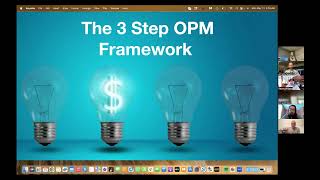
Man, I'm so excited. I'm so freaking excited. So, yeah, last week, last week we talked about syndication. Just a couple key reminders with syndication. Jeremy mentioned last week, you know, there's a time you just pull from the stock market. There's time, you just wait. It's maybe it's too volatile or whatever. There's time, you just wait. This is what I love about syndication, because you can respond to the market wherever there's green lights, right? Because you, there's sometimes where it's like, you know what? Right now, multifamily is too inflated, Tom. It's too inflated. I need to let the dust settle. So let some of these bridge loans hit. Let some people really need to get out of it. I'm going to let it settle. So the cool thing about syndication is I can just pivot to wherever the market is solid right now and wherever I can trust it. Right? And that's the beauty, because you can syndicate anything. I mean, really, what is a hedge fund, right? It's a syndicated form of investing in the market, right? So it's the idea that you can just, just pivot wherever the money goes. So, so if you get down, what I'm going to teach you today, if you get this piece down, you can always invest. You just shift where you're investing, right? And so that's the power of the private money game, which I'll talk about today, is it allows you to be very fluid. I call it fluidity, market fluidity. It just gives you the ability to go over here, oh, you know what? Oil and gas kicking ass right now. Let's go over there. Oh, you know what? Oil and gas a little tight right now. Let's go over to, let's go over to multifamily. Multifamily, you know, rents are inflated. I don't know if it's going to keep going up at time the same, same rate. Why don't we go to single family? Maybe we, you know, I mean, what a lot of people don't know is throughout Covid, that 30% of the single family inventory was sold to private equity. 30% over the last three to five years of single family homes was sold to private Equity. That's not homeowners. That's people that have raised money and have bought single family homes because of their appreciative value, right? So, Cindy, once you get the syndication mindset and this money game, it allows you to invest in any market at any time because you just pivot where you're investing. It allows you to be so powerful. And so the punch from last week and this week, it really is an entire, like, package to, to. To present for or I mean to, to create for you. Any. You can invest at any moment, right. And, and I always like to remind people of this that our goal is no longer to be a millionaire. And I'll tell you why. If I gave you $1 million, you probably couldn't live the rest of your life today. That is a very low amount of money to now. I mean, a buddy of mine bought a house in Scottsdale 18 months ago and sold it for 2 million bucks. A lot of people's like, oh my gosh. I mean, a 2 million hire and he bought it. I'm like, that's a ton of money. And I'm like, no, that actually shows us how little $2 million is now, right? And so, so we have to reshift. This is why this money game is so valuable. When people ask me, Mike, what do you really do? I really am just a money mover. So that's all I do. I raise capital and I place it where it fits people's invest. I'm just a money guy or girl. You. If you can get this money game down, I'm telling you, it's powerful, right? So I'm going to go ahead and lift. I'm just going to bounce right in. If you guys are good with it, we'll do the same kind of, same kind of setup as we did last week where I'll, I'll hit you guys with some, some content and just let you guys kind of settle in. And then I'll pause for some questions because especially when you're raising money, there's a lot of moving pieces. A lot of moving pieces. And as I told you guys last week, for showing up, I have a free copy of my book. I'm gonna send you guys, I'm gonna get your addresses from Jeremy, if that's cool, and, and then, or however I'm gonna get them. And then I'll send you guys a copy of the private capital blueprint and, and just send you a copy and let you, let you dive in. Because one of the things I did in there is what most people don't understand. And I'll talk about Today, there's like 10 different places to help people get money. And one of the big key pieces with raising capital is teaching people how to give you money. Like they just don't know that they actually have money to invest. They look at their bank account so there's no money in there. And they don't understand the retirement account game, life insurance game, equity game, all that good, all that good stuff. And that lays that out. So that'll go more in depth than I have time to go today. And that's why I want to give that to you so you're just not left hanging. Okay, so I'm gonna go ahead and share screen. Jeremy already has me set up. It's like he's a, like he's done this. Alrighty. Alrighty. So this is actually I pulled two specific PowerPoints. So I'm going to switch PowerPoints probably about in the middle from a course I created four or three years ago called Private Money CEO. And it really helps people dive into the game because if no matter what you're doing in business, I believe the greatest opportunity is in the money itself, it isn't in necessarily what you're investing in. Because I know people that are investing in things you've never heard of and making a ton of money or. And so, so the game, the game really is learning, is learning the, the money game. And I want to start off and understand this. Raising capital. Every dollar of capital you're going to raise is on the other side of a connection. So relational, relationally driven game. And so I want you to get, want to get you first to understand, so walk you through my three step framework of opm. Anytime you. That's just other people's money. Other people's money. This is the game that helps you, helps you invest. One of the things that I have learned over time is everybody invests to the ceiling of their capital, right? They invest out of their capital and then they start understanding. Almost every billionaire I I have ever heard really speak leveraged other people's money to some level. Even ultra millionaires, they leveraged, whether it was institutional capital like banks or private lenders or private money like we're talking about today, they leveraged other people's money because you can only invest to the, to the ceiling of your capital. For example, let's say I'm going to buy a multifamily building. It's 5 million bucks, I can raise $5 million and then I'm going to pay anywhere from 14 to 16% when we sell that deal to our investors, everybody gets 14 to 16%. But what if I only raised 2 million bucks, 40% of that, take 3 million from the bank. Now I'm only going to pay the bank, let's say, 7 or 8% when we sell. And the rest of that goes to the investors. So even there's a one, two punch in private money of using maybe institutional debt, which is like banks and using private money. So a lot of times a 1, 2 punch in the, in the money game can really give your investors more money, because who does that extra money go to? It lifts the return of your investors, right? And it lifts the return of you. And so. So this is a powerful game to understand. So there's three steps I want you to understand in the OPM game, right? The first one is attraction. You have to attract people to what you are doing and who you are. I'm going to pause here. I lightly mentioned this last week. As you slide into the OPM game, you have to shift the narrative of how people know. You have to shift that narrative. So this is so for me, I wanted to be known as, as a real estate guy. Now from 2010 to 2020, I was a traveling leadership speaker. I spoke at college camp, do a high school, some corporations. I do 100 talks a year talking about leadership and how to inspire people. And I traveled the country. That's what I did for a decade. Covid hit that obviously went away overnight. And so I kind of had to shift. I had to start raising. I had to start investing in real estate. That's really what I wanted to do anyway, but I didn't have the money to do it. I had a little bit of cash, but not much. So I'm like, okay, I can invest in one property and then I'm out. And so I had to start learning this opium game and I had to start attracting people. So my first thought was, well, how in the world do I attract people in where I don't have any, like, any credibility? So here's what I did. The way I attracted them, I started a podcast called the Power Up Real Estate Podcast. And I'll tell you why I started a podcast, because all I thought was, I'll just interview people that do know what they're doing and I'll. They'll lend credibility to me because I'm the interviewer. And so I just started a podcast. I had no idea what I was doing. And then I interviewed all these real estate guys and Then I became this guy known for real estate because every week I was posting, hey, we got a new episode on the Power up real estate podcast, Instagram. This day I'm interviewing so and so on how to get into mobile home parks. And all of a sudden I started building my credibility and shifting the narrative of how people knew me by just starting a podcast that cost me 18 bucks a month for Buzzsprout to throw my content on there. And so the idea is that I needed to shift that narrative. So when you're going into the money game, a lot of you guys hopefully are throwing money around in the market, listening to what Jeremy said or listen to what Jeremy's teaching and you're putting money in there. Last week we talked about how to mitigate your tax, which is great. Now how do we actually completely expand your portfolio, which is leveraging other people's money. So you got to, but you got to change that attraction game. You got to let people see you as an investor. So I started posting stuff online. I started, I started a podcast, which again, it's not like I had the information to start a podcast. The reason I did the podcast instead of a YouTube channel first is because on a YouTube channel, most of it I had to do the talking. So I started a podcast. So I just interview people and learn and so I asked questions, I got to ask questions of all these people and got free coaching sessions every week and. But I also got lent credibility. So you got to attract and then you have to make connection with people. Right? This is how I grew. I, we just this year crossed, me and my business partner $100 million of raised capital in the last four years because of the, this three step process. We attract, we connect and then we assimilate. We attract, we connect, we assimilate. What we mean is we get, we get people's attention, then we make a connection with them. And I'll talk about connection, but connection with people is, is really important. On what's important to investors, what are they actually looking for? What fears do they have? In every. It's essentially you're making connection with people. It's like a sales presentation. What are their objections? What are they afraid of? How can you help them see why what you're investing in is safer, why what you're investing in has more upside, etc. You're just making a connection with people. And most of the time, most of the connection I made with people wasn't over their money was over their, their family, their kids, whatever was important to them. Right. And then of course, some people will say this. If somebody will give you 100 grand, they will probably let you babysit their kids. That's the level of trust. You have to think about people that will hand you a hundred thousand dollars to go invest in it. They'll probably let you watch your kids because they trust you. That's the level of trust we're talking about. But you got to make that connection and then assimilate. Assimilate is just the process of getting them into one of your deals. And I'll pause here to say this. When you're raising money, it really helps at first if you pick a lane, pick something that you're single, family fix and flips. I think somebody last week, I don't know if it was Eric or somebody said they were a fix and flip person. Whoever that was, fix and flips, maybe that's your thing. Or mobile home parks. Maybe you're just going to become a beast at mobile home parks. Or multifamily was where I started on. The reason I picked multifamily is I felt like I could defend the downside. Meaning people are always going, I would leverage Covid to defend the downside. So the reason I picked multifamily because I said everybody's always going to need a place to live. So it's a necessity based investment. Plus, if the government proved One thing during 2020, in economic turbulence, they'll throw money at rent. They won't throw mortgages, but they'll throw money at rent. So I thought, I have another insurance policy of the, of the government backing people's rent in times of economic turbulence. So I went after that because I could defend the downside. That was really.
What, what did you see there in Covid, Mike? Like what, how do they actually throw money at rent? What did that look like?
So they just, they, it was a lot of programs where tenants that, you know, they would weren't letting people work. So you could just go and they could fill out the paperwork and they could get rental assistance. So some of that was in what's called the HAP program, Housing assistance program. Some of it was. You've maybe heard the term Section 8. That's just simply a, an assisted program as well. It's people that just, hey, listen, I, I lost my job due to Covid. I need three months rent. They'll fill out the paperwork. And so we actually even had our property managers meet people at the offices, help them fill out the paperwork because it gets pretty tedious. And so. But the idea is that the government just offered more money during that time and it was a little easier to get because they knew they were, they did a lot of the shutdowns and made it so people couldn't go to work. So they, they threw more money there. But it wasn't just the COVID piece. But that was a huge piece. But what Covid taught me was in economic turbulence, government throws money at rent, they don't throw money at mortgages. Right. If they do throw money at mortgages, it isn't going to be at you, it's going to be at the banks. We Learned that in 0809. Right. And so, and so, but so I could defend the downside. So when you look at commercial real estate, remember I laid out the seven pieces of commercial real estate last week is you've got end consumer real estate, which is mobile home parks. Multifamily. Right. Those are the p. Those are where people are living. Hotels. But I wouldn't, I wouldn't invest in hotels. Right now. Airbnbs are, are on the rise. Even though people don't think they are. They are, they've heard a lot of bad press because Airbnbs are getting, you know, they're kicking them out of a lot of cities because they want ownership. But Airbnb is, is still on the rise and that's its number one competitors, hotels. So I would be careful of hotels. But multifamily and mobile home parks are all necessity based real estate, which is great. That's. Then you go over the commercial side. Industrial retail and office. Retail and office stay away from. Right now, maybe it comes back, office is making a little bit of a comeback. People are realizing they like that physical touch. Retail not so much. They're moving more. Amazon proved that you don't need a storefront to make a lot of money. And so. And then you've got industrial and industrial is still pretty strong. Pick a lane, any kind of lane that. I'm just talking about the real estate lanes, but you can pick any lane, but pick a lane. Right. The reason I pick multifamily is I can defend the downside. So when you're trying to attract, connect and assimilate, the easiest and fastest way to do that is become known in one vertical. Now I invest in manufacturing companies, all kinds of stuff, because now I've built the trust right now I. People trust me to give me their money. They're seeing returns and they're happy with that. But I started with one asset and one asset only so that I could Become the person in that asset. Right. Known for something. Right. So for attraction, number one, you have to be seen. You have to be out there. Social media is obviously the number one way to do that. Jeremy's on social media all the time. You have to start the social media game now. Here's the deal. You do not have to be a Gary ver. He's posting 18 pieces of content on every platform. I don't start there, but you do have to be seen somewhere. People have to know who you are some way. And that is the fastest way to, to get something out to the people that know like, and trust you already. Maybe they don't know you very well. Because social media, there's one thing that Facebook taught us, it's that friend does have a shallow definition and a deep definition. And so the word friend is not always how we have learned to use that word. And so you understand that can be a shallow definition, but we can, we can bring them along into more of a, of a deep connection. But you have to be seen. You have to be out there. And you know what I've realized with raising money, that's often the hardest part for a lot of people. And maybe I don't know if it's true with, with, with traders. If some traders kind of like to stay behind the screen and kind of don't want to be out and be seen. I don't know that, but I know that was true of a lot of real estate people. They like to just be talking to brokers and banks. They don't like to be. Be out there and teaching and sharing their info with the world. Is that true in your world, bro?
I would say so for sure. And the being seen, this is a big one because you're absolutely right. It doesn't necessarily have to have to have to be on all the platforms like Gary Vander Chuk, but you can be on Facebook, have your 500 friends on Facebook and be sharing, hey, guys, I just closed on this deal. Hey, guys, I just sold this property. And we netted whatever 35% return for myself and for my investors. You got to share something because people want to know what you're doing. They want to know who to trust. And that's really the big piece is like, you got to share. You got to share something to get to expansion.
You do. And you know what I learned because a lot of times when people start, they don't have a deal. So here's what I started to do, and nobody taught me to do this. I just was Like, I don't have a deal. What the heck am I going to share? So here's what I did. I started underwriting. I learned how to underwrite deals. And all underwriting means is you're looking at the income, the expenses, and what's it actually making. I'm just underwriting the deal, looking. It's just like an underwriter for a bank. They're looking at the quality of the deal, how much money is it bringing in? So I learned to underwrite deals. And every time I found a deal that was a bad deal, it wasn't worth what they were asking. That's what I shared. Just underwrote a deal in Northern Kentucky, asking way too much. This is the reason our strict underwriting process exists. It's to weed out deals. So we never put a bad deal in front of investors. That's all I said. And so I used the underwriting of even bad deals to share our process. So they saw us as the protection mechanism, right on protecting their money. So all I did was share the crap deals, too. And so you can even share like. But. But again, it's. It's document that. One thing I did learn from Gary Vanderchuk is document. Don't create. Just document your process throughout this. This, you know, you're looking for deals or gas and oil. Why are you picking that? Or why are you picking this investment? What do you love about this? What do you see with this piece of investment? Again, you have to be out there, you have to be seen, and you have to shift that narrative. You've got to start shift. And that's what really shifts the narrative, is you just being out there. One thing I would encourage everybody to do, it really worked for me. Maybe this isn't you, but I think everybody on here could definitely do it. It's very simple. And you can get a VA for a couple hundred bucks a month to do all the tech for you is to start a podcast and just start interviewing people that invest in the kind of asset you want to invest in. It's very simple. Just become an interviewer, ask questions. It just gives you something to share where you don't have to actually create the content. You just have to email people and ask if you can interview them for 25, 30 minutes. That's all right. So it's just something everybody can do to start shifting that narrative. Right. And then consistent contact. Just be in contact with people consistently. Be out there. Go to networking events. I had a guy that raised $40 million in four years, raised 10 million bucks a year by doing one thing. He got a banner about investing and he bought booths at dental shows.
Dental shows. What a smart guy.
He just went to, he went to dental conferences and bought a booth and he had a little thumb drive that he got like, he had a little presentation and he had like 500 of these little thumb drives created. And he, when they come by, he'd start talking to him, say, hey, here's a presentation of what we do. Listen. And then you email me if you want some more information, we'll talk. And he of course followed up with people too, but all he did was just go to dental shows. There's so many crazy ways to raise tons of capital and you don't have to do that. I'm just saying that's what he, that's what he decided worked for him and he lived in.
Yeah, and so back to what you said earlier, Mike, you said that you can do this for any lane. So like if you're starting, oh, I don't know, like a clean energy business or something, you'd have the ability to go to shows like this. Let's say it shows, engineer shows, dental shows, have your booth, talk to.
Especially high cash industries. That's what you like. Which, what, which would be doctor, lawyer, dentist. Well, they're obviously Dr. Kairos, people that have a, that have a high earning capacity and isn't just because they have a lot of money, it's because the questions that they're asking, yes, they make a lot of money, but the one, the questions they're asking is a lot of the same questions you guys are asking.
You're telling me you can just pay money to be in the room?
That's all you got to do, baby. You got to do. I don't think about it. I met Jeremy because I went to an event. Yes, we're both speaking, but I went to an event, start chatting it up in the back of the room and now here we are. So the idea is just showing up in these events, picking a couple events, maybe one event per quarter, and just going and meeting people. Amazing way to just start growing this attraction mechanism and don't pick events that are like, you know, pick, pick events that really have good earners, entrepreneurs or some sort of. We did, we did a whole campaign around doctors, lawyers and IT professionals online. And that was a really high return market on our. When we started doing marketing because a lot of these people are asking, where do I put my cash? I never thought about going after traders until I met Jeremy. I'm like, oh yeah, these guys, man, so many people out here, good traders, especially when they're learning from, somebody knows what they're doing. Some of them are, a lot of are people are making good money now. Some people that aren't learning are losing money. So that's why I'm, it's good thing you're here. But, but that being said, I never thought about that. I never thought about going after people with life insurance policies. I'm like, until I went to a life insurance event. And so again, it's, it's, it's really important to get out there and start attracting people and get out to events. Events are powerful. Dan Kennedy, I believe one of the greatest marketers in the world, at least in my lifetime, he said, there's nothing more powerful than four walls. And that's the, that, that's the idea of an event, getting inside of the room with people. Even virtual has its limitations. And I love going to, meeting people. Physical, virtual is great and it's phenomenal. It's allowed us to, to create a lot of value throughout the world, the entire Internet. But, but again, I like four walls. I like that one, two punch of both. Love that, that's cool connection. So now you've attracted them. Now how are you, how are we connecting with people? Number one, I want you to write this down. You know, money is currency, but in opm, other people's money, money itself has a currency. And the currency of money is trust. The currency of money is trust. What makes money move in the OPM world is trust. And then there's one level deeper. The currency of trust is credibility. So it goes, you know, they're going to give you money, but they have to trust you. But the only reason they're going to trust you to give you their money because, you know, there's a lot of people I trust, but I would not trust them with my money because they don't know anything. They don't know what they're doing. Right. And so, so I mean, I, I trust them to tell me the truth and I trust them to, you know, whatever, but I wouldn't give them my money because they don't know the world. Right? So here's the key with credit, this is why the, the currency of giving them, giving you money is the credibility. And this is where when you're like, yo, Mike, but I'm starting out, maybe I know the single family world. I know it enough to start raising money. Great. But maybe I want to get into multifamily, but I don't know that world as much. That's why you partner with somebody that does for your first deal or two until you can build that credibility. Right? First dealer to just partner with somebody say, hey, I'm going to bring in four or five hundred grand to this deal. I'm going to go and I'm going to leverage you and say, hey, I'm partnered up with this guy. He's done 50 deals and they all are amazing or whatever. And I'm going to, I'm going to go raise and bring into this deal. It's a way for you to build trust. So understand, private money is not about. Is not about getting people's money. It's about building credibility and trust. And then the money just comes. So understand, raising capital is about the narrative credibility to trust. And then they'll invest with you, with. With what you're doing. I. We don't work that hard. We didn't work that hard to raise money. We're working a lot harder now because here's what happens. You start raising capital and then you raise out of your network. And then you're like, okay, that's my network. Now I have to go build a new network or find out how to really market for capital. And so you get to the edge of your network and you're like, okay, now it's time. If I want to really raise hundreds of millions of dollars, now I got to actually build a strategy other than just my friends and family and people I met at an event. And then you go to the next level. But the first thing is there's a lot of money living in your, in your network. Tons of money that you don't even probably know about. There was a lot in mind. I'll just say that. That I didn't know about, right? So we got to build that trust. And then you have to have some sort of brand. And I'm not talking a brand like Apple. You don't have billions of dollars to build brand. That's not what I'm talking about. I'm just having. I started, I just created Titanium Capital Investments and I put up a website for a couple hundred bucks. I found a V on Fiverr. They put me together a decent website just so I look legit. I mean, guys, I'm talking about a couple hundred dollars in maybe a week of time. I'm not talking about like, let's go reinvent the wheel. Just a little website and a name. So people are like, oh yeah, this is what he invests in, right? So that's all. When I say a brand, I'm just talking for some way for people to see you. Hey, guys, Mike from Titanium Capital Investments. Just that alone, you know, if I'm shooting a little video on social media, hey, guys, Mike from Titanium Capital. I'm out here walking this property that's a brand in and of itself. That three sentences says more than you even understand right at the front of a video. I mean, you know, when I'm Jeremy Alexander Newsom from Real Life Trading, he's. He's branded the fact that he is the trader. He's the best trader out there. So that. But that front sentence just reminds people of that. So that's what I'm talking about with a brand. I'm not talking about going to build something and throwing it on billboards. Giving something for people. We call it handles in our industry, you have to give people handles to hang on as you carry them along towards the finish line. And then you have to have a track record is one of the ways you build connection. If you don't have that, you partner. So let's say you decide multifamily is the thing. You go out and find somebody like me that's done a ton, 25 multifamily syndications, and you're like, hey, I would love to bring capital into your deal and partner with you to kind of learn the process. Okay, here's. Here's the. Here's what that looks like. And let's go. And then you can go raise some money, get that credibility, and you go. Then all of a sudden, it's like, hey, we just. I just closed a deal in, you know, whatever, Northern Kentucky. We're on to our next deal. Let us know if you have any questions or would like to like to hop on a call. DM me, whatever, right? So that's one of the ways you make connections. And then assimilation. This is probably my favorite part of the process. I love seeing light bulbs come on for investors and get excited. I got messages the other day. I'm so excited for the next deal. You know, I just love this piece of it. Assimilation starts with a good deal. It starts with a good deal. And I will say this. If you find a good deal, the money follows, because even if you can't raise it yourself, you'll call up people like me. One of the things we learned with raising capital is we invest in other people. We raise capital for other people. You bring me a really good deal and you're like, mike, I got this killer deal. I'm going to look at that and go, you're right, that is a killer deal. What do you need? I need 500 grand. I've never raised that much. Say no more. Now, do I have some stipulations of how I do that and what I get for doing that? Oh, of course. And you should do. But. But you can actually learn this game by finding the deal even rather than the money up front at least first. Yeah. You know what I mean? And so if you find that good deal, I might email out to Jeremy, hey, brother, I got a great deal. We're raising 8 million for it. Something you might want to look at if you have some capital you might want to bring in. Just give it a look. I thought I'll throw it out three or four guys like that. Because I love when three or four syndicators come together when we're doing a big deal, 30, 40, $50 million deal. It's like each person raises 8, 10 million and we knock this deal down. It gives the first of all the industry, like as a whole, they notice that kind of stuff. Wow. These three power syndicators are coming together. Just partner with people on a smaller scale. Raise 200. You, three, five of you, whatever's on this call, once y' all Partner up, raise 2, 300 grand. Do a deal together. Yeah. You know what I mean? Exactly. Exactly. So, but it starts with a good deal. Gotta find a good deal. Yeah. And if you are going to go into commercial real estate, if that's where you're at, I, I will say mobile home parks and multi family are probably the safest right now. Student housing, just be careful. Like I'm, I'm in South Bend right now. I've got some properties right by the Notre Dame campus. I wouldn't invest in student housing here because it's so saturated and college tuition is going, or college enrollments going down and on site, college enrollments going down even further because people are just doing it virtual. Now Notre Dame is different because you can't do it virtual. You have to be here on site. But that's exploded the, the student housing market. So it's a lot of saturation and multifamily saturated too. But the thing is, we are three to four, depending on the data you listen to. Million units short in America of our housing need. And by the way, a mutual friend of Jeremy and I, Preston Brown and I were talking about this and he brought up a really good point that, that because they're undocumented, that does not count immigration. And I'm this is not a political statement. Immigration. A lot of people coming into the country, they're not buying homes, they're renting. And it changes that. That metric is, is even further actually because we just don't have the data to say this is how many people actually need units right now. So you understand that I would, I would probably go there. The only thing with mobile home parks versus multifamily mobile home parks, there's a few more moving pieces. You can make more money in mobile home parks, but there's a few more of. The management's a little different because you're selling. You own the pad, they own the home. You can rent the home, you can sell the home for interest rate and be the bank. There's a million different moving pieces in mobile home parks. That's why there's more money to be made there. But so just. And the learning curve is steeper on the mobile home park side than multif family. And that's not bad. It's just. You just have to know what you're getting into. Yeah.
And the next one for. The next one for me. I told you this Mike.
I'm.
It's going to be RV parks.
Yeah. RV is a good one too.
And be my head down focused for a little bit when it comes to rv.
RV parks are good. Yeah. I have a buddy here in Phoenix or there in Phoenix, I'm not there right now. And he just sold three campgrounds that were, that they were basically mobile. They were. They had some camp, a campground element, but pretty much it was an RV park. And yeah, those sell it like a 10 cap now it's harder to. The thing with, with, with RV parks and stuff like that is of course it's, it's. It's seasonal almost everywhere. But is. Is raising the rent is you just have to go the market, capture rent more. It's hard unless you're an amenity adder. You can add amenities and get more money out of your RV parks. Right.
And so so.
But that's another good one because it's tied to, it's tied to. It's tied to what people do now. Always look at luxury when you're doing projects because when you go in luxury. Luxury because anytime economy hits luxury products tend to take the hit. Right. So if I was doing RV parks, I'd be studying. I'm actually, I lived in Elkhart, Indiana. I'm an hour from about 30 minutes from there now. Study Elkhart, Indiana because that's where 90% of the RVs are created. See what the industry is doing and then buy, buy the RV parks when the business is starting to pick up because, you know, more people are buying RVs. Just a side note, professional communication. I can tell you this, the biggest mistake I made early on is when investors gave me their money and I started investing. I just got head down in the deal. I didn't talk to my investors enough. They're like, hey, what's going on? I'm like, oh, I'm just out here working. They're like, well, we don't know that. So that's one mistake I made that I don't want you to make. Any time you take money from somebody at least once a month. Now what we do, me and my business partner, we get together on it one day a month and we shoot a video for every single syndication. It's only four or five minutes, but they love seeing those video updates. Hey, guys, we're here. We're. This is what's going on. And I'm just communicating and letting them know where we're at in the value add process. They love that.
And a reminder, guys, it's so easy now. You can create a Slack group for free or 100. A lot of my investors were in a WhatsApp group.
WhatsApp. Yep.
I have like 19 WhatsApp investment groups where it's like, hey, like, I just posted one. Like, just got posted one 10 minutes ago at one of our wedding venues that we're making. And the framing is going up. The girl just post a picture of the framing. Hey, framing's going up.
That's it. Yeah.
But now everyone kind of knows, so it's pretty easy.
Yeah, 100. 100. And we, we just get on, literally zoom. Me and my business partner, we get on Zoom, and, and we just chat for four minutes, five minutes per property. These investors are busy. They don't have time to sit on watch. 25 minute video. Just a four or five minute update. And they love getting those links every month. And, and just, just. I have never had an investor text me and say, mike, please, you're communicating too much with me. Never. And so they will always love that professional. That's part of the assimilation, is communicating every step of the way. And then you just got to look the part. Jack Canfield said this to me years ago when I was starting my speaking career. He said, mike, you cannot charge $5,000 for a speech looking like 500. And it's the same way with investors. I have learned you cannot ask an investor for a million bucks when you look like a hundred thousand dollar operator. You got to change the look. That's why I said a website, some social media, a podcast. Those things make you look like somebody can trust you with money. And so, so I say that to say I say this graciously and lovingly. You just have to up that game on perception. Right? You got to help people see the value. You really bring in the value you are. It's. So perception is not reality. But perception will continually change people's reaction to reality. So if your perception is online, you're, you're a, you're, you're a good operator. It will change people's reaction to that. If you're not, they will react differently because you may look up million bucks, but you're, you're, you may still be a hundred thousand dollar investor to start. That's why perception isn't necessarily reality, but it will change the reaction. It'll change how much money they give you. So you got to just up that game. So I want you to treat this, it's not a, it can be a side hustle. Keep your, your day trading, whatever you're doing, keep that going because you want to keep that cash rolling. But it doesn't take much work to get a, get a website up. And all of you, I'll put my website down in. Where's the chat here? I'll put my website in the chat and you all can see we're about to do a big, we're about to do a big, a big website re refresh. Because I don't, we don't have all our assets on there and all kinds of things we need to do. But you can, you can see, actually I will do this. I'll shoot, I'll, I'll walk you through.
The first thing I'm noticing. There's no photos of me. Is that, is that intentional, Mike?
There's no photos of me personally.
Of me on your, on your website.
Like. Oh yeah, that is intentional. That is intentional. That, that was, yeah, that was actually when we built that, we said let's make sure they don't go someplace else. Oh, that's funny. That's funny. Okay, here we go. So when I first started, it's really pretty. So when I first started. Notice the tagline? The tagline calls up my lane right away the home for multifamily real estate investing. Right. This is who we are, what we do. Yeah, Invest with us. Notice that's in red. Think about people's perception of red. Historically, when you see red and you're driving. What do you do? Stop, right? It's a stop sign in people's head. Yield. It's in red. It's to slow down. We put our buttons as stop signs, our action buttons as stop signs. So, so in that and it pops. It's the, it's. The most vibrant thing on the page is to invest with us, but essentially we just have a couple of them. We have about. And then we have our team and we don't even have our team updated, but we have our core values, who we are, that kind of thing. And then we have investment strategy. And this just talks about the right investor, right property, right area, right time. I mean, it's just a four thing. This is what we're looking for. But again, this thing here, this little wheel, this is our, our investment strategy we created. Now think about this a minute. We do a call, we place your investment, we do a monthly meeting or monthly communication. We sell the property and we reevaluate. Does that sound groundbreaking? Because it's not, I assure you. You'll do this strategy no matter what. And so it's not groundbreaking at all. But the fact that we have this here and we have said this is our investment process, it's like, oh, these people are legit. These people are legit. And it, it's. We're not, it's. We are. But I'm saying like at the time I created this, I just said, what will happen? Oh, this is what we'll do a call and then we'll buy property. I mean a five step process, come on. It's, it's very, very, very simple, but it lets people know, hey, these are, these are legit people. Right? And then portfolio and invest. And you guys, can I put that in the, in the chat? You guys can bounce around that. I just wanted to, wanted to give you a little, give you a little look at that. So you understand just some of the psychology around that. Yeah, right. And so, so the framework is you have to start building a list of people contacting your list. I would create a little bit of content. You have to keep showing up. These are the four things that I have just done over and over again. I created a YouTube channel. I, I loaded it. People just don't even know this. I loaded it with 2, 300 videos over the years and then I just let it sit there. I don't even do much content anymore, but it gives me enough videos where people look me up and they're going to see a lot of content. Right? And guys I'm talking. I just, I, I just, I did research and I taught meaning how do you get into multifamily real estate? And I, I, I googled it, searched a couple outlines of people teaching, kind of compiled my own list and then taught it. I did not reinvent the wheel. Please don't reinvent the wheel. But with what you're doing, with what you all are in the money game already, you really have a leg up. I was not. You already are in the investment game. You're just in a different side of it. I was not. You have such a leg up on me. And so you already understand picking the right investment and understanding trends. And I mean, you guys understand trend philosophy way better than 99 of people in this game because you've been studying it. You understand when things are going up and down and pullbacks and all the stuff that Jeremy teaches. You get all that? I, I did not get all that. And so I didn't have that. So understand when you're, When I say building a list, by the way, I'm not talking necessarily about, like an email list, although that's part of it. Eventually. Part of it is just your friend list on social media. That's your list for now, is just start, start. And I would join two or three investment groups, join a couple passive investment groups or whatever. There's meetup groups in your cities. There are meetup groups for investment. Now, what I did was I did not join real estate groups. I joined wealth management groups because I wanted to be the multifamily guy in a. Probably the only multifamily guy in some of these groups. That's what I wanted to do. I didn't want to join a group of 58 other multifamily people. The multifamily meetup. I didn't care anything about that because there was a lot of people like me I wanted to go after, like, dentals, investing, dental investors. You know, there's meetups like that. And so I want to go part of that. So I joined a couple wealth groups just to meet new people, meet more people, etc. So again, it's just continually getting out there and showing up, right? This is a guy, Bijan, text me a couple months ago, and he's like, hey, I put that action into practice, made 150 grand. All it was was a text message. You guys cool if I, I read you my, what I call my magic text message, you guys. All right, so this is the text message that is literally raised me milli. Tens of millions of dollars. This text message. And when I first started, this is all I did. So I pulled it up so I'd have it ready for you. All right. This guy's name is. This guy's name is Dwayne. So I, I text Wayne, and he was a buddy of mine that I knew for a while. I knew he was in insurance. Not life insurance or anything, but he owned a couple insurance places. Very, very good dude. Wealthy guy. Knew he had some cash. So I said, hey, Dwayne, hope you're doing well. I just put a six unit. My first building was a six unit. I just put a six unit under contract, and we're going to open it up for investors next week. Thought it might be something you're interested in. If not, no worries. That's all I put. It's like three sentences. Hope you're doing well. I cannot tell you how important the if not, no worries at the end is because it tells people you're not desperate. The number one repellent of private capital is desperation. It is a nobody want. It's like a bank. Banks don't want to give you money until you don't need it. And it's the same with private money. They don't want to invest in your deal if you, if you need it. They want to invest in your deal when it's like, it's. It's like there's. I'm only taking three investors for this deal, so let me know if you want one of those slots. That's what they want. Invest in. That little text right there changed my life. And that's all you do. Hey, just put a XYZ or Hey, I'm looking at a. Maybe it's not under contract. You just tweak the text a little. Hey, I'm looking at a 6, 6 unit, about to put it under contract. I'm opening it up for investors in a few weeks. Let me know if it's something you might be interested in. If not, no worries. Yeah, I might like. And he did. I. I might like a little more info. Let's hop on a call. I hopped on a call, walked him through the deck. He ended up not investing with me. But the important part about that is, is that text got written. It had nothing to do with him investing with me. I mean, that was a. But that text got written and I used it over and over and over, and it was copy paste for a long time.
Yeah, and. And when you're investors or your friends or people that you know and Garrett, this be Very important for you. But just giving them the ability to say no very easily makes them feel safe.
Exactly.
And so, yeah, let. Let them. Let. Let your investors feel safe. It's okay. Like, you don't. You don't need their money. There's no desperation here. And when you approach it from like, this is a really good opportunity, say no. If it's. If it's easy and it's not fitting your investment style, here's what we're looking at.
Yeah, absolutely.
Great, Great point.
And I'll tell you, I've even. Jeremy and I are in a group called ybl, and there's some people in there that, in our manufacturing space, they love it. They're like, oh, my gosh, something new. It's. This is awesome. Manufacturing skyrocketing in America. Let's do it. Other people are like, I like real estate. I feel like businesses don't back my money strong enough. Okay, that's fine. No worries, man. If that's. If it doesn't fit you, the la. The last thing I want is. Is you to be invested in this with apprehension. That's the last thing I want. Because then you'll be nervous the whole time, and I don't want that. I don't want that for you. You need to be able to sleep well at night and be present with your family. The last thing you need to be doing is worrying about this. Just don't do it right. And the other thing I learned over time, and this is the probably the most powerful thing that skyrocketed my success, is I learned that even if people wanted to give me their money, some people, I don't want their money. I'm like, no, I don't think you're a great fit for what we're doing. Because let me tell you something why I started to really get to know my investors. There's only one thing worse than a crazy person. A crazy person in which you have their money. And so you do not. You don't want to take everybody's. You don't want to take everybody's cash because there's some people out there that are crazy and they give you 100 grand, and all of a sudden you're. There's a knock at your door. You don't need that. You don't need that.
No.
And so, so I, I learned, like, hey, I, you know, I'm not gonna, I'm not gonna get crazy motivational on you today, but I'll get a little bit. Part of this whole game is built on Self perception. What perception do you have yourself? Because the perception I needed to strengthen when I started was listen, I'm good enough to go raise the money if you, I, I don't need everybody. So when people come I need to make sure I have a conversation, make sure this fits them. Because I'm protective of my, my deal and I'm protective of the investors that I am going to let in. So that's, but that's self perception because a lot of times we get that desperation because we don't trust ourselves to deliver. Right. And so that, that, that piece, I had to strengthen that, that muscle inside of my, my, my core. And you may have to as well, maybe you don't. And great. But I had to. So again, just remember that framework, attraction, connection, assimilation. By the way, I have learned this is the number. This three step process is the marketing process of every successful business ever. They have to attract people, make a connection and assimilate them into other whatever their company is. So this is the, it doesn't matter what you're doing in any business if you're trying to get a customer. This is the process. It looks different, maybe the mechanism is different, the tool is different, but it's the same thing.
Yeah, it's good.
Here's, here's a quick 5:1 strategy that I, I used to, when I, when I, when I was growing my portfolio of investors. This is the five I called five one strategy. It is very, it is stupid simple. Like I just had to keep it simple because I, I didn't know what I was doing when I started and come to find out it was actually really, really powerful later on. The 5:1 strategy is simply this, five investors a week. So I just, if any of you pick up the contacts, this right here, your cell phone is your number one capital raising tool when you start. And all I did was I went to my contacts. I went to my, you know like your contact list in your phone. Right. I went to my contacts. If you scroll all the way to the bottom, like all the way to the bottom of your contacts, you'll see at the bottom this number 1185 was, is mine. Some of you might have thousands. I don't know. That's how many contacts I have in my phone is over 1100. So all I did was I scrolled down through every name. I took a piece of paper and I wrote down everybody that I thought would at least be willing to have a conversation about real estate. That's all. I just wrote every name down. I'm not Again, I'm not reinventing the wheel. And then I just made all this list and I just said I'm just going to reach out to a few people a week. And then the one part of that strategy is one social media post a week. One social media. Now the more you do of both, the faster success you will have. But this is pretty. It's one text a day and one post a week. It is not. I mean, you're talking two minutes a day and the post maybe takes you five, ten minutes. If you want to create, you know, do a little, find a visual online and do a little whatever, okay, fine, might take a few more. But we're talking about 10 minutes a week, 15 total. So we're not talking a lot. Boy, I'll tell you, you, if you've ever, if you've never read the book the Compound Effect by Darren Hardy, I would read it. It's a really good read. It's a really short book, but it's very good, it's very powerful. It's basically the power of doing small habits over a long period of time. Imagine if you did five a week, that's 20amonth, that's 240 a year. Actually, that's what, 52 times five, which is 2,50ish. A little more than 250 a year. Call that 250 people a year. That's a lot, right? That, that's a lot. And here's the power of that. That's why going to events and all this stuff is really important to meet new people. You keep building that, but you're just going to outrun so many people, just with consistency. Five investors a week. Let's take that down to three. Let's say you do it a 3:1 strategy. Monday, Wednesday, Friday I text somebody. Let's say it's a 2:1. Tuesday, Thursday I text somebody. Whatever you want to do, but make sure you're investing, contacting investors and then just doing a post. You're shifting the narrative and you're reaching out to people. Shifting the narrative, you're reaching out to people. That's the, that's what I use to just explode my, my whole life. Now, did I get involved in some masterminds and meet people like Jeremy and others? Of course. Of course, yeah. That's just a, that's just a layer upon layer. The reason you're getting this content right now is you're in a community, right? So I think there's huge value in that. No doubt about it. You know, we just Went to, with yvo, went to Dubai a couple months ago and high end plays. People that are going there spending anywhere from 20 to 30 thousand dollars for that vacation or that trip. Those people got some money. So I'm a go. I'm going just rub shoulders and talk to people, right? I rub shoulders, talk to people and a couple of people are like, yeah, I like what you're doing. Talk to me, right? One of the, one of the guys at YBL was speaking and he called me out as an M and a guy like, oh, Mike's buying companies. And all of a sudden I had three conversations after just that one thing that happens. And I have three conversations with people that are talking about investing. But I, if I don't go, that doesn't happen. So you gotta, you gotta show up, you gotta be there. A couple investors, one social media post, couple investors, one. I mean, come on, you all can do that. I know that. So when I did, I started sharing. By the way, you do not have to create the content set to find it. So I'll go to data, I'll just go to data what's happening in the multifamily market and I'll look at bigger pockets or some of these places that are posting data and I'll go and I'll put the link in Facebook and I'll be like, hey, this is an amazing article on what's happening in the multifamily world right now. Units, we need more units. We need more units. We need more units. Again, I'm not asking for money, I'm not creating any content. I'm just providing awareness and shifting the narrative, you understand? That's all I'm doing. So I'm not, I'm not, I'm not doing that. Post deals, you pass on deals. I already mentioned that. Post deals, pass course deals, put offers on or closed, you know, obviously, or you already own, you know, whatever, you know, of course, post those, that's a given. But, and that, those, those are the ones people remember. But you know what I've done, especially even now, I'll close on a deal and I'll forget to even post it. I'm like, Mike, what are you doing? I still make that mistake. And so, so, so it's, it's in second. I mean, when you're first starting off, I posted every deal. More deals you do, it's like posting. When you first started off, you probably posted, man, I won in the stock market today. And then after you win 300 times, it's easy to be like, whatever. Well, keep doing it, keep doing that, keep doing that. And then your lifestyle. You know, one of the things I love that Jeremy does is he posts a lot about his lifestyle with his kids and his beautiful wife. And, And I love that. That's a key piece. People want to see that you have the lifestyle they want. I mean, Garrett said he's you. Jeremy said Garrett was traveling, man. He posted, just taking pictures that people going to St. Croix around the world. My people are doing that. I can guarantee you less than a percent of people that are seeing your post are doing that kind of stuff. And so all of a sudden it's like, okay, you know what? Garrett's obviously knows something that I don't know because he's on a boat around the country. He's on a boat around the world. I'm stuck in this 1300 square foot house and wanting to get out. I need to. I need to call Garrett. Yep. Me. It's that kind of stuff, right? It's. It's lifestyle. It's lifestyle. You know, when I'm in Dubai, I post up. I make a post with me and my bride in Dubai, and people are like, oh, okay, Mike's not, Mike's not stuck in no name, New Jersey. He's. He's, he's. He's a player. Right? And so, so I, I post that stuff. And that isn't to brag. It's to show. Because here's what my mission is to help people create freedom through real estate. And I want people to see that there's freedom to be created. I mean, I was gone for 10 days in Dubai on an opposite time zone. My business didn't go backwards. That's. That, that's what I want people to see and experience. Right, Right. And that's, that's just what you're posting. That's just. And it can, it can be a dinner out at a nice restaurant, have some beautiful wine, and you're out, and you're with your spouse or friends, and people want to see that stuff. They're like, wow, that's. That's pretty cool. You'd be amazed how many people have never spent 200 on a dinner. Now, those people are probably not your investors, but investors that spend that kind of money, they want to know you're doing it too, before they give you your money. I assure you. Right. I had a dentist ask me, when's the last time you took a vacation? And, and when. This was early on in my, in my raising career. I'm like, I don't take a vacation. I work. And he's like, I ain't giving you money then. Because, and, and at first I thought, no, he'd want, he'd want to know that I'm back working. Oh, dude, I want to know you got a lifestyle. Does this even work? Because if it does, if you're making money, you ain't working all the time. And, and I, I didn't think about that. Of course, that's naive. Mike, when he first starts out not knowing what the heck he's doing. And so, so understand they want to see you got a lifestyle. They want to see that lifestyle, right? This was my favorite quote of all time that I read. If people are raising my, my mentor said if people are raising $10 million for a deal, it's because that's where their mental set point already is. Think about that. The reason people struggle to raise 500,000 is their set point isn't there. You simply raise to the quality of your mindset. That's it, right? You re, you expand your mind, you can raise more money.
Now would you say this is total or per deal? Because some deals don't need that much money.
Oh, 100. I. This is a, this is an example. This is just somebody's raising 10 million bucks. It's because that's where their mind is. So all you need to do. I always grabbed a deal that was just past my current mindset. So let's say I've raised 500, 000 for a deal. I'm like, okay, I know I can raise 500 grand. Let's get a deal where I need to raise 750 because I got to stretch that mind or else I'm never going to raise 750. And then, oh, wow, I raised 750. That's, that's pretty cool. Let's push that to a million bucks. Push that to 2 million. You started a hundred thousand. My first deal, I needed to raise $200,000. I found four $50,000 investors and I was one of them. And so I only found three. I, I put 50 into my own deal. By the way, you don't have to put your money into your deals. You can, especially if you want to, you know, get some more of the tax benefits. But last week we talked about. So this is what I want to help you see. And this is where it's like the coolest thing ever. Last week I talked about something called cost segregation or accelerated depreciation, which is how you protect the cash. You're making in the market. So you protect it from taxes. Right? Here's the coolest thing ever. So I split these deals 70, 30. So I get any time I raise capital, I, my team gets 30%. Sometimes I have one or two or three partners. I try to not have more than three. So we each get 10% of a deal. And sometimes you might be like, my 10% is not that much. When you're talking about a $40 million deal, 10% is a lot. So, so we each get 10%. But here's the coolest thing ever. I didn't put any of my money into the deal. And I get 10% of the depreciation. So I'm depreciating out my income without spending any of it. You understand that I can actually raise enough capital to where I don't pay any tax ever. And I've never used my own money. Most people to get the depreciation, they have to invest in something. So let's say you made a hundred grand in the market. You're like, I'm gonna put 50 grand over here just to try to knock out some of that hundred thousand of earnings. And all of a sudden it's like, you don't have to, you don't have to spend any of your money and you can still knock out your earnings. That's what I love about private money. Understand this is where the wealth, wealthy get wealthier. When people say the rich get richer, there is a reason. It's because there's a knowledge present that isn't in the, in other people. It isn't about, you know, us against them. Stop thinking that way. It's because they just have information that others do not. And this information is readily available. This is why Jeremy and I do what we do. We want to make this information available to people so they understand, oh, I can actually depreciate my entire income without using any of my money. It's very, very, very feasible. I closed on five deals last year, about 40 million total in real estate. I got paid a six figure check every closing, and I think I paid $29,000 in taxes. Do that math, that's like less than 10%. It's, it's crazy. And the only reason I did that is because my wife, my wife has a business too, that does pretty well. And so. But my point in saying that is you can, and I didn't use any of my own cash. That's the power, right? Yeah. Yeah. So understand that. Now I'm going to pause for just a second. I'm Gonna stop sharing for just a second. And what questions y' all have because we've got about 30 minutes and I have some more stuff to. To run by you. But I also want to make sure you have a chance to just pummel me with questions. And if the next 30 minutes we just answer questions, you'll probably get a lot, a lot even more out of it than if I taught you. Yeah, so I can specify the content.
Exactly, which is fine. Gary, I know you have a question for Mike.
I do.
Oh yeah.
I'm not sure what you're thinking about. Can you help me?
So if you were raising money for a new build out of a project, how do you determine if there is depreciation if it's not real estate? So like if, like, let's say you're doing it for one of your company is like an M and A company that you do.
Yeah.
So is there any depreciation in that that you can sell to your investors? And if so, that's a great, that's a great question.
So it depends on the company. If it's, if it's completely service based, you're going to depreciate the equipment in which you use. You can appreciate your equipment. So let's say you're, you know, you're a H Vac company. You can depreciate all your trucks and all that. You can depreciate your equipment or your tools. And if you own the real estate, which we in, in our M and A world, we always buy the real estate for that very reason. So we can depreciate the, depreciate out the real estate as well. But in M and A, the reason that depreciation is offset in M and A is businesses will make more money than estate. And here's why. If I have 100 unit apartment building, let's say I can raise those rents 200amonth. Okay, so that's 100 times 200. What's that, 20 grand? So $20,000 a month of increased income is all I got. That's if I raise everybody's rent, which that usually takes two to three years to do. So that 20,000amonth. If I have a manufacturing company, I can go find two customers and do that like today. And so M and A can offset the difference of non depreciation just by its income alone. Because it's just gonna, it's. There's just more potential.
Now what does all the equipment depreciate at?
It's completely different. It's all different on the value of the equipment, what kind, how old? So it all. That. That is a. That is a very. That's a CPA question. You'll usually. So when we buy a company, we always ask for the equipment list. And then I take that to my CPA and I say, hey, what do I got? Year one on this? And so my CPA will give me kind of a projection. It's close. It's never right on. But you just. That way you'll at least know going into it, because ironically, your depreciatable assets are also what backs your investors. Money. Yeah. So anything you can depreciate is the backing for your investors. Right. So because it's stuff you can sell. So if our manufacturing company imploded, I can sell the real estate and sell the machines. That's what backs their cash. And I really try to equal those, but it never happens. I have to raise more money money than I can.
Is the depreciation of a deal part of the selling of the investment itself?
Yeah, yeah. Yep. Yep.
I never thought about that as part of this deal that I'm working on.
Yeah, yeah.
That's what I was going to say, Mike, is could we spend five minutes looking at a brochure that me and Garrett are going to produce? So we're. We're actually working on doing a raise. We're going to do a raise starting in June.
Yeah. Let me hear. Let me see it.
So this is going to be plugging in my computer.
I. I hear you. My computer.
Yep, you're good. So this is just. This is just gonna be the shareable PDF that we're going to send to people.
Okay.
And any additional information that you want, let us know. I think this was just perfect timing, so I figured I might as well use the Pro while you're here.
Yeah. Let's see it. Let's see it. Okay.
This is gonna be the actual PDF. Okay. Capitalizing the demand for eco conscious solutions with a unique opportunity to get a piece of the substantial upside potential and sustainable marketplace. So this is the opportunity. The US is experiencing an increase in municipal waste and is without the infrastructure to dispose the project. So it's just a one page PDF. Just zoomed in. So this is like what it looks like. So the webinar is June 1, 9am Central, myself and Garrett, you can click here to actually register. And minimum 250 investment, 5 million total equity raise required, 3 year investment term and at least 15% return. We're going to be building one of these bad boys. You put waste into it. It turns the waste out and turns it into reusable, sellable green energy.
I love it. I love it. So, so are these already created or are you creating those with the money?
We're going to create that with the money. Yes. Not created yet.
Okay. So yeah, I got to believe from a depreciation perspective, that alone will be depreciative.
I would assume so.
Right? Yeah. Yeah. That piece of equipment. The other thing I would look at is if you're doing this, there may be some. You'd have to, you'd have to bring in a consultant on this. There may be grant money for something like this. Some deals that you invest in have grant money available. This, this would fall in a grant model for, for me, I'd be going after like some people that may have. For energy stuff. There's a lot of grant stuff around energy right now.
Some contacts of people that you would use for that.
So I, I have never done a grant deal, so I would be a bad contact for a grant deal. Okay, but, but I know that there are definitely available. What's that?
They're definitely available. I can have just 100.
I've just never done one. So I don't want to speak from a lack of experience and so, but, but I would. That that's one thing. There may be just some grants out there that, that you can. For building this. But this specific thing is all about this investment. For me. If I'm pitching this investment, I am finding I'm probably partnering with or looking at people that are. This could be an age play. Like a lot of millennials with cash would love this because that, the energy conversation of eco energy really exploded. Millennials chatting about this all over. In fact, a lot of millennial companies that are high, that are high earners, they have a, they have nonprofits they support that are around energy friendly and energy friendly stuff like this or I'm sorry, eco friendly stuff like this. So that would be, so it could be an age play. But I think your depreciative asset is going to be your, your equipment raising the capital for. This is all going to be, this is going to be what I call heart based raise. This is, you know, we're teaming together to, to, to solve a U.S. problem and you're gonna, you're gonna find people that are excited to get on this. The minimum investment is great. I love a quarter million minimum investment. I like that because you don't have to manage as many people, which is great. So what do you need? 20 investors at that I think it's something like that. And so. Right. I think 20 investors 25 times two. I think 20 investors at 250 and so, so 20 investors at 250 and. And you've got that raise. I think the. Talk to me about the return, these pieces of equipment. What's the, how's the money actually made?
Yeah, it's a. So there's, there's a price per, per ton that's generated when the waste is accepted at the facility.
Okay.
And that creates revenue. And then the, the energy production is a power purchase agreement with a, the municipality or the, the power company in each area. They give you a power purchase agreement and they buy your kilowatts at X price.
Okay.
And then you also have some recycling revenue that comes in from metal recovery and, and things like that.
So do you already have these, these, the, the agreements in place or is that something that would need to happen in order to add the value to the company?
No, we, we have those agreements.
Okay. So if I'm. So the number one I'll say barrier to entry with a deal like this is, is consumer education. You got to educate your investors on. Because investors that have money will have the same questions I have. How does it work? How am I making money? So I would list out the ways you make money and then have a big reveal. But it all hinges on having these contracts. Oh, by the way, we already have that set up. Contracts are already in place. So it makes them feel like, oh my, my money. The path to me earning is already set. I'm just hopping on the train.
Yep, that's right. Yeah, that's where it's at.
I. What's that? Sorry? Car.
I just said that's where it's at.
Yeah, we got everything set up.
We're just ready to go.
Yeah. And if you already have it all set up, I would show that path. We've done the work to ensure your investment. Show them that. Because I'm, I'm coming on board with that. If I know where the path is to where, where the path to the promised land is. If I know that and I know you already have that set up and it's really keyed on those contracts. I've already got those con. It's like, okay, well now, now I'm interested. Right. And so, and so I, I would definitely, I would definitely show that, show that on a, on a, on some sort maybe graphic or something that shows like whether it's a PowerPoint presentation or in your webinar, I would show something Created there. What do you have June 1, you have a little bit of time to have something created of how revenue is earned and then show the groundwork you've done. Right. So when we do our multifamily deals, I show them, we get there, we get to your 16% return or 15 in this case, at least. You said at least 15, by the way. The way that we say that, what do you think the up the ceiling of the return is? You think it's 15 to 20? He thinks 15 to 25. What's the, what's the range?
Well, that was going to be one of my questions to you is do you feel like that that offer is enticing enough because we haven't tied it really to the profitability of, of the contract or the, the deal. Right. It's just been a fixed return that.
We were going to offer.
But. Okay, so the other idea would be that it would be equity or we profit based or it would be, I mean, there's alternatives to that. So obviously we don't want to give way more than we have to because we have done a lot of work.
But so are you, is this like a 15 preferred return? Are you like giving away 15 on a pref or. I don't know.
Yeah.
Okay.
Yeah, this is going to be a preferred return.
Okay. So if it. Okay, that's freaking amazing. Okay, so this is how it's enticing enough give 15 on pref and I would give a percentage of that upside. That's how you make it enticing enough. Because one of the things you're gonna have to get over If I'm giving 250, 250 to you, where all they're gonna see when you say at least. This is what I've learned in marketing. When you say at least 15, they think at most 15. That's, that's what they think they see 15 and it's like, well, there's my return. They don't see anything above that. There's my return. Especially when this is a prep because I don't give a 15 breath. So this is freaking awesome. If, if you, if you have a 15 press, you only have to give some of the upside. And here's, and I mean a smaller percentage. So you can be like, hey, by the way, we're gonna raise 15 prep. Oh, and we're gonna give you 25 of the upside. Then you guys keep 75 of the upside, which I'm guessing is where the most of the money is. I think that that, that's enticing enough because the other thing is you don't have as much depreciation here. So if I'm gonna, if I see I'm gonna make 15% here, Anna, you know, invest in a multifamily deal where I make 15, but I get depreciation over here. I'm probably going to take the multifamily deal and it backs my money. So you got to make it sexy enough for them to want to jump ship to a, to a less backable investment. And the way that I would do that is, number one, I would say projected 15 to whatever, 15 to 23% return based on your UPS, based on how much we exit this, this pro project for. So that's what I would do. I would do a projected range. I would never say, at least say projected 15% to 23%. ROI or IRR is the, is the industry term of internal rate of return. Basically, there's their overall return. So I would say the way we do it is projected 16 to 18% IRR with a 6 prep. That's a multi. That's a typical multifamily deal for you, 15% pref. Now, I've got investors attention because nobody gives a 15% pref. The sucker itself at a 15 prep. But you want to call it a preferred return. That means they get paid 15% before you do. Yeah, right. And you're gonna get everybody. Dude, you're getting. This thing's gonna rate. This is what I mean about a deal. The sucker's gonna raise itself.
Yeah, it's a very, it's a very unique deal. It's very, very, very.
Yeah, very cool. I mean, 15 prep, dude, that's, that's sexy. A buddy of mine had a late. He was at a land acquisition company, bought big, big, big plots of land, sold them to developers, did all the, the like political legal work to turn it into a development and sold it off to developers. He did a 20 pref with 10 upside on his deal. So if you do a high pref, you don't have to give that much away. Now he, the reason he'll give 20 is he knows he's going to make 2 or 300% return. He's going to buy it for a million and sell it for 2, 5. So when you're making 250 return, or I guess that'd be 150 return, but 150 return, you're like, yeah, I'll give away 10 of the upside. Right. And so that's why. And what's the what's the turnaround time? Was that. That maybe. That was on the. How long until they get their money back? Three years. Yeah. Okay. Yeah, that's. That's great. So they're gonna make. So. So somebody puts in 250 grand, they're gonna make. That's the other thing that I did on my, on my marketing. I'll tell you about that in just a second.
Yeah, show the actual. Like, you get this.
You get rid of this back every year. Year one, you make this year two, I did a little graph. Year one, boom. Year two, boom. Year three, boom, boom. Total, you know, upside, projected, upside, boom. And then their total for $250,000 investment. They're like, oh, wow, that's pretty. That's pretty powerful. And so that way they can. Because. Interesting. People don't think of percentages. They think about what's what we call a capital return. 1.8. So it's like, if I give 100,000, I'm going to make 180. That's 1.8. So. So all that to say I, I like to show just a little graph of year one, year two, year three, and then total projected return or equity return, and then total projected. Just something to be like, wow, I put in 250, I get my 250 back, plus I make another 130 grand in three years. Yeah, I'm in. Or whatever. Whatever it ends up being. Yeah. You know, so because you're going to make. What's that? 15. You make 22. 5 a year, I think. Is that right? I think 22. 5 a year is what you're going to make. So 22. 5 a year on my 250. No, 250. 10% would be 25,000. So it'd be more than that. Yeah, whatever. 30,000 or whatever it ends up being. I'm going to make whatever it ends up being 30,000 a year. And then I'm going to make my. My, My return on equity. Yeah. Or me. My 25% on the upside. And then you split that 25% throughout the entire investorship. So 5 million equals a 25% return. And then you split that up, they get X percentage of the return based on how much they invest. Right. Yeah. And so that's, That's a couple key pieces that I, I have learned over the years that once they see that 15, they will never think bigger. So that's why I give them a range. I made that mistake on my first or second deal. I can't remember. Second deal. Good.
To know.
Yeah. Then shot. Shot myself in the.
Yeah, but you can still say preferred expected, Preferred return and provide a range.
Yep, yep, yep. Well, preferred return, we always do a set range, but. But in the equity, we do a. A total. The total return. We give a range because the prep is the prep. Yeah. And so it's a 15 prep. That's how you get them. Sure. You know, if you wanted to lower the pref, just to ensure some safety on your side, you could do a 12 pref with a little bit, you know, 20. Yeah, 25 or something. So you could tweak the Prof. A little bit. If you're pretty dang sure it's going to be a crazy return. Throw in a 15 prep, you're fine. Are you charging an acquisition fee or anything to raise all the capital and do the deal?
No, we haven't yet now put that together.
Has you presented it to anybody? No, we haven't. Yeah. I would charge some sort of asset management fee. And I would especially because you've done all the contracts. I would charge an acquisition fee and an asset management fee. Do like two and a half percent on the front end and do two and a half percent a year to manage the money. And then you give 15 prep on top of that. That way because, because, you know, something happens, you got to make sure that you're not doing the whole thing for free until it sells. Right. I mean, that's a lot of work for three years to make money in three years. Right. That means you don't make anything for three years. You charge something. So the way we do it is we charge an acquisition fee when we start, anywhere from 2 to 4. If we're getting debt, it's 4 or 5% because we charge a personal guarantor fee to get to take the debt and an acquisition fee. There's no debt involved. I assume there's no debt involved. Right. You're not taking on any debt. It's all cash.
That's right.
Yeah. So if it's all cash, charge a two and a half, 3% fee, 3% be fine. And then you're charging 150 grand to do the deal, and then you get 150,000 up front to raise all the capital, put everything together, and then you get, you know, call it two and a half percent or call it. Call it even a, you know, 2%, which is, you know, to 5, like 10, 100 grand a year to manage the fund. Yeah. And let's say you can't collect on your asset management fee because it's not generating enough cash. Pull that out. That's fine. Then you just take it at the end before you pay off your prep.
Yeah, that's probably what we'll do because. I mean, because Grant Garrett's the owner of the, of the deal. Yeah, yeah. He's going to be the, the full GP for the whole project.
Yeah. 100. And Garrett, if you, if you need any, some, some strategy or more one on one or whatever, I'm willing to. Just, just let me know. Just reach out, bro. I'll hop on a call. Yeah, that's fine. Good. That's good question. I love looking at deals. That's, that's where the real value is at, baby. Yeah, we could really dive theory. Yeah, yeah, exactly.
Yeah, it was fun time, man. Thank you.
Yeah, yeah. Any other questions?
Eric, do you have any. My boy, I do have a question.
Now you're kind of showing us what you've done and what's possible. Two questions.
How.
How many more times are we meeting with you? And, and at the end of that, what's the, what's the goal? So that, that we can go out and find people, bring them to you and get tax depreciation and get in on deals.
Right? Yeah. Well, so here. Yes and no. So this is my last time with you all. But what I will say is the goal was not for you to raise money. Bring it to me. The goal is for you to raise money and bring it to you. And so go do your deals. Now if you want to raise money and bring it into a deal, Jeremy certainly has some deals. This is a deal right here just was presented. Might be a great deal to bring investors to. If you want to raise money and you like multifamily. Sure thing. Or you want to get into the business side of M A and you're like, I want to raise some money. Come on into that certainly can reach out to me and I can get you, get you here and get you placed and so if you got a couple hundred grand, that's a, that's a call. Just reach out to me. My, my email. By the way, I'll throw my email in. Any of you guys can email me. This is the one email. I don't have any of my, that's one email. I don't have any assistance respond to. Like this is actually my email that I, that I manage and so don't share it with me because I like to keep. You bought eight people to have that email. So just, just don't, don't, don't share that with anybody. But that being said, yeah, just reach out to me, and I'd be. I'd be happy to kind of direct you on where you should go, because the first thing is you just think about your strategy. Do you say, like, because you might not want to be, like, here, you're like, you know what? I'd rather be like, I'd rather go raise some money and have somebody else manage the entire process. But I just want to be a money guy. Guy or girl? Great. You can do that. Go raise some capital, bring it in. You're part of the GP team, but the ops don't fall on you. Right? You could do that. Now, you might not get. You might not get share in the asset management fee, and that's fine. You might just say, I don't care about that. I want the fee up. I want part of the fee up front, and I just want to bring money to the deal and get depreciation. We're off to the races. But. But that's a big piece. That's a way to do it. There's a million and a half ways to do this, and I would love to. I wish I had more time to lay them all out. But this is part of what the book will help you with. But also, just. Just email me and just say, hey, I'd love to. Love to chat a little more. Because you do single family fix and flips, right?
Yeah, Yep. We raise capital for that. And this has always intrigued me. We raised a couple million bucks with friends and family. And I understand all that you're talking about. About, you know, you got to identify yourself as this. And so, yeah, it's intriguing to me. So, yeah, I think we should further conversation.
So. Sure, sure. Absolutely. And. And we. We also offer, again, if you guys find a killer deal, we also offer the capital side. So we. We essentially see ourselves as a capital agency where we raise for our own deals first. But if somebody brings us, like, let's say you brought us a fund and said, hey, or brought us an idea, say, hey, I want to fix, fix and flip 10 homes in the next 60 days, 90 days, 100 days, whatever. I want to flip 10 homes. I need 2 million bucks, 3 million bucks to do that. Here's the kind of returns. And. And we might be like, that's worth raising 3 million bucks for. And. And so. So it can be that or it can be where you say, hey, I want to raise money. I don't want to deal with the ops. I want to throw. I want to raise money for my people. Throw a million bucks at you. Okay, fine. Then we can do that too. And so. So there's all kinds of ways to work together and. But the key is get in the game somehow. So you can throw 30% of your revenue away every year in April 15th. Get in the game somehow. Right. You don't want to be throwing all that cash you're winning. Yeah, I always think about this. Every time I, you know, I. I win a deal, this is the way I think about it. When 100 grand hits my bank account, that's only 70 unless I make a move. Yeah, that's how I think about it. Like, that's 70 unless I make a move. I either played. I played offense to get it there. Now it's time to switch to defense to keep it there. That's how I have to think about it, or else I'm like, I'm gonna be right in the government. A big old check. I don't want to do that. I don't do that. So thank you. Yeah, Absolutely, brother. Anytime, my man. Anytime. Got about eight minutes. Yeah.
Thank you, Mike. That's awesome. Ms. Joe, anything for you up there. All those. All those rich people in your work.
Come on.
I'm just absorbing for right now. It's a lot of information for me, so I just trying to soak it all in. But just from Canada's point of view, the one thing that pointed out when you talked about immigrants and all that sort of thing, in Canada, they can't get mortgages for three years. So that's a huge rental market right there, for sure.
So. Yeah, it's true down here, too, whether they. They really can't get mortgages here either because they have to have identification stuff. And so. And they don't often have that. And so. So it's. It practically, it's the same you all. It's just politically, it's a little different across the board, but practically, it's pretty much the same. And they don't have the money. Mortgage, really, unless they're in a. Unless they're in some sort of line of work that's off books. That makes a lot of money. But, yeah, most.
But Mike said, well, family, just. Just start. Start to some degree. Obviously, it can be very, very small. That's perfectly okay. But start with something that, you know, you can touch, you can breathe, you can recite it in your sleep. It's easy again, it's a deal. That's the thing is you got to. You got to. You always make the money when you buy it. So you buy. Right. The opportunity becomes better. So even if it's just a single family flip, there's always money to be made in real estate. Real estate's huge for tax advantages. So that's the other reason, Garrett, I want to make sure that you watch Last Monday' to is just.
Yeah.
From a pure tax standpoint, family, you can have access to either other multifamily deals, your own multifamily deals, people like Mike's multifamily deals, where you throw a couple hundred K at it and you reduce your taxes.
Right.
Hopefully, maybe you can reduce them to zero. Probably not, but maybe you can get close and it's like, hey, the lower you can get, the better. And then, of course, you still have a capital event in the future. You give some cash flow. So there's always positives. Real estate's a huge wealth game. And, Mike, I just want to say thank you so much for your time. Dude, this is going to be great for both of us. So proud of you.
No, thank you, man. And. And I will say, as Jeremy just said, get in the game. Don't. Don't overload yourself if in the reason that I said, raise some capital and bring it to somebody else. When you're starting off like that, most especially in real estate, usually you don't get access to the best deals. The best deals go to the people that are doing this every day, and they're on the front lines with the deal finders. And so a lot of times you. You may find that like diamond in the rough. But one good thing, don't underestimate the power of Ravenson's money and bringing it to a trusted partner, don't underestimate that. That's a. That's a pot. You still get the equity percentage. You still get your. You can negotiate, especially if you're bringing a good deal or. Or money, you can negotiate some percent, your percentage and then get that same depreciated value. So don't underestimate the. This is a partnership game. I'm just telling you, Jeremy and Garrett are doing something together. Like, every deal I've really done has been partnered at some level to get there. So just understand the level of trip in this game is strong, and I would encourage you to do it.
Amen. Amen. Thank you, dog. Appreciate you, brother.
Appreciate you, man.
Yeah, thank you so much, family. Hope this Monday. Monday was beneficial with our boy Mike. I'll do my best to make sure you guys get a copy of this book, which It's a great book. I read it on the. On the flight back home after him and I met and. Anyway, thank you.
See you all.
Make a bunch of money.
Thank you. Great info. Thanks.
See everyone Thursday.
Bye.