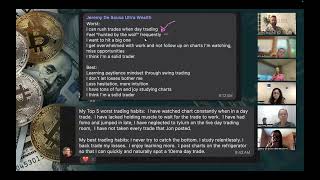
What is the difference between Trading and Investing? Beginner Series Video #1
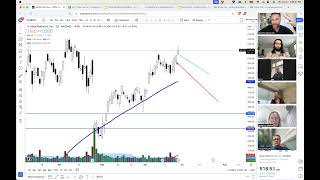
Jeremy Newsome explains the core difference: investing is buying stocks you understand for long-term gains, often dividend payers like McDonald's or Visa, while trading targets shorter timeframes and cash flow. He covers candlestick charts, support and resistance levels, and the hammer pattern as an entry signal.
Chapters
Live from Music City, Nashville, Tennessee. This is your motivational, sensational, inspirational, educational, aspirational, international, keenly awaited, highly anticipated edition of Real Life Trading Beginner trading series. Entirely 100% for free. Folks from around the entire world, welcome to potentially your first ever presentation on the stock market that you're going to feel good about, that you're going to feel excited about, that you're actually going to like participating in and that you're going to learn so much from. Make sure that you can hear me type in A1 just to verify that everyone here has access to the chat pane and you know how to type it in. Beautiful. I love it. We already have 120 people here live and that number is only going to grow. I will go ahead and say up front right now, if you do ask a question live and I am unable to answer that question, I will do my absolute best to get that question answered at some other point in time. This is only class one of module one, ladies and gentlemen. Why are we doing this? Exactly what's the point? Our mission at Real Life Trading is to enrich lives. That is what I am here to do, does what I would like to do. And my honest goal throughout this entire process is to educate the entire world on how to profitably, safely and consistently trade the markets. I will be specifically focusing on the US Markets for the preceding modules because I am here in the United States of America. I have not had any experience trading any other markets specifically, but all the analysis that I'll be going through will apply to other markets. So it's really useful to know. And overall it is going to be my goal and objective to make sure that I help you through all of this. So my goal throughout this whole series, Renee and Liz and Justin and Mark and Valencia and Chris and Matteo and Philip and Isaac and Kevin and Mike. My, my goal is to ensure that you leave with a deep level of understanding regarding the US stock market because let's face it, type in a 3 if you feel frustrated, annoyed that this is just simply not taught in school. It's the weirdest thing, but it's just not. This is just simply not covered in school at all. And I fully believe that it should be. That's why every single March at my company, Real Life Trading, we have Kids Month where I do my absolute best to go teach children or young adults throughout the entire globe a little bit about the stock market, how it works and how to participate in it. But the fact that you're here right now, either watching this in a recorded form or for those amazing people who are here live. I would love to be able to provide to you something that I am extremely passionate about and I absolutely feel can change not only your life, but the lives of your family members, the life of your kids or your grandkids or the kids to be, if you don't have any right now, your mom, your dad, your brothers, your sisters, your aunts, your uncles. This is the ability to achieve financial freedom for your family. The stock market is not the only path that gives you financial freedom, but it is one of the paths. And I would like to both humbly and confidently say, if you are watching this, you are going to be experiencing one of the world's greatest teachers, myself giving you this life changing information for free. Dylan says, I had a lot of students ask me how the stock market works a few times. Beautiful, beautiful, beautiful. I'm glad you're here, Dylan. And hopefully you're able to convey a lot of this information to them as well. Jason Smith says, this is by far the best education on the Internet. Absolutely. Ladies and gentlemen, let's dive in right now and get this party started. Just a really, really quick about me and we're going to go right into the content. I retired at the age of 24. I put retired in quotes because I actually work right now about 100 hours a week. I'm a little obsessed with this stuff, but when I work 100 hours a week, I work from anywhere in the entire world. If it has Internet, I can go there. So a few weeks ago, my travel schedule was Australia to Dubai to Hawaii to Denver, Colorado to Salt Lake City, Utah to Nashville, Tennessee to Las Vegas to Washington D.C. back to Nashville, Tennessee. I am able to do this from anywhere in the world. So I work a lot, but I work doing something that I love doing. Therefore I'm excited and I'm really upset that it's already a certain time right now here in Nashville. I don't even think I ate lunch. I can't remember if I did or not because I'm so fired up about this. I like it. So I'm doing this for you. I'm doing this for me. I'm doing this for everyone who is here. I've been trading the stock market full time since 2012. My favorite movie is Forrest Gump. That's how all this got started. And I have a copious amount of interest. One could call me a Jeremy of all trades. And if you get that pun, then you're in the right place because that took Me years to think of that. That's just genius right there. Alright, so if you get it, you're in the right place. Josh says Forrest Gump is how all of this got started. It is. I've told my story many, many times. I won't belabor the point at this particular program, but if you guys stick around, I'll give all of you a little bit of insight on how all this got started. I want to dive right into this and make some of this happen. So here's what we're going to do. Module one is where you are right now. Module two is going to start next and then module three, the module four. And then we're going to have a recap, quizzes, some question and answers, all that kind of good stuff. So module one, that's where we are at this precise moment in time. And here we go. What is a stock? You hear the term stock market, Everyone knows what the term market means. But what is a stock? Some similar terms that you're going to hear from time to time are shares, equity, stock, all these terms are synonymous. If you buy a stock, you are literally actually owning a percentage of the company, right? Generally, my friend, it's a very small percentage, but it is a percentage. The reason that this is an impactful and beneficial thing is, is the following question. Type in a 1. If you've ever heard the term, if you want to get rich, you have to make money while you sleep. Has anyone ever heard that term before? If you've never heard that term before, it's true you can only work so much. There are only so many hours in a day. Trust me, I've tried it. At some point, if you are human, you have to sleep. Therefore, the only way to get truly rich, to get really, really wealthy, is to own something that makes you money while you do not have to work. It can be real estate, it can be businesses, it can be companies. But if you buy a stock, that's literally what you're doing is you are exchanging your hard earned money to buy a share of ownership of a company. So if you want to own a company like Uber or Apple or Walmart or McDonald's or Coke or Pepsi or Activision or Johnson and Johnson or Procter and Gambler, Netflix or Google or Amazon, you can, you can take advantage of all of the things that they do by simply buying a piece of that company and owning that company over the long term. Therefore, owning pieces of companies will allow you to grow your net worth over time, potentially make money while you sleep. And Provide you financial freedom and create generational wealth for your family. When I say generational wealth, I mean money that can't be just easily blown away. You guys have all heard the Chris Rock joke, right? Where Chris Rock says rich, right? You can get rid of rich over a summer, right? Wealthy, you can't spend it. That's the example of a stock gives you the opportunity for each and every single one of us to benefit by actually owning these companies. Now, earlier I mentioned the word publicly traded. So what does that mean? In essence, you have public and private companies. If a company is public, what they are doing is they are saying, I want to raise capital, I want to raise money. So something to keep in mind if you want to raise money, if you want to raise capital as a company, you can go out and offer shares of your company. So if you offer shares of your company, what that allows you to do is to raise money by people buying your shares and in essence, giving the company more money. So that's what a public company does, is they offer other people from around the world to buy their stock. Therefore, the more people that buy a stock price, the more money that company receives. Is that true or is that false? I'll say it again. The more people that buy a particular company, the more money that company has to then go do things. So. And it's true. Now, again, that's a little bit of a simplistic explanation, but it is true. The more people who buy a company, the more people who buy into this particular company, the more people who want shares of that company as they buy it, that company receives more of those people's money. And with that money, they can go do things with it. And if they do things with it that are beneficial to that company, like creating a good product or launching something that's very useful for the world, or helping people or impacting people, then the more that people demand that company, what happens to the stock price? Stock price goes up, and the more people that buy it, and the more people that demand it, and the more that they make, and the more money that is created by selling the shares, the better products they make. They make more money, and they make more money, and they make more money. And it's just this really, really cool machine that slowly starts churning over time. So to be public means you have to disclose all of your financial information. And it's our opportunity, this is our chance to own a piece of their pie. Essentially, making money while you sleep. That's what publicly traded means. There are two, two of my favorite Companies in the world are actually private. Those two companies are Publix and Chick fil A. Type in A7 if you know what those companies are. Type in A4 if you've never heard of those companies in your entire life. So there's going to be some people who've never heard of Publix or Chick Fil A. But if you haven't, it's okay. But if you have. I've told many people this joke that if Chick Fil A was publicly traded, there'd be no reason for me to do anything in my job because I would just tell everyone to buy all their money worth of Chick Fil A. Take every dollar you have and buy that delicious golden brown nuggets of goodness. There's no reason for the stock market if Chick Fil A is publicly traded. That's obviously a joke. But that's our piece. That's our opportunity. So you all have heard of companies like Apple, Visa, and we're going to talk about these companies in the next few modules and classes. But that is what it means to be publicly traded. All right, next slide. What is a dividend? We're just getting right into this now. A dividend is something that actually, you'd be surprised how many people don't know this piece of information. And it's absolutely okay for you not to know. So don't worry about it, don't stress about it. You're going to learn right. Now, the first thing you have to understand is not all companies pay dividends. Not all companies, the older super profitable companies, the huge companies, generally pay dividend. Not all of them, though. So a dividend is specifically money that is shared revenue. So think about that from a realistic expectation. If you're a company, how much revenue do you have to make that you have so much you have to share it with people? The answer is a lot. Right? Oodles of revenue. You have to have a lot of. You have to have so much money. You have to go, wow, I have so much money. What should we do? I don't know. Let's give it to people. Why would a company give money to people? That doesn't make any sense. Why would they do that? Well, it incentivizes more people to buy their company. And if more people buy their company, what happens to the company's value? It goes up. Yeah. So you guys kind of see how that plays out. The more people who buy it, the more it goes up, the more money they make, the more they can give to their shareholders. It's Actually really, really fun. Now I'm not gonna go down too deep into this rabbit hole right now, but I do wanna stop and just kind of mention this little piece right here. Fear and greed. I mentioned this in my book, which I'll talk about in the next class. But fear and greed, I do not personally believe the market is controlled by those two things. You might hear the term a lot that the market, the stock market is controlled by fear and greed. This is just one of my personal worldviews. I do think the market is controlled by fear, but I don't think it's controlled by greed. Greed is a state of the soul. It's something that can never be quenched. It means you can never, ever have enough money. If you receive $100,000 from the stock market in the next year, you're probably going to do something nice for your friends, for your family, maybe your community, maybe your church, maybe some other religious organization, maybe some other donation. Type in a 3 if you're feeling me so far. If you're making a lot of money, you're probably going to do good things with it for people. Therefore you can't be greedy. That's literally the antithesis of greed. If you help anyone with your money, you are not greedy. I think the market is controlled by fear and financial optimism or financial zealousness, whatever you want to call it. I just financial zeal. I don't think it's fear and greed. Now are there people who trade the stock market that are greedy? Well, yeah. I mean there's people who install your carpets in your house who are greedy. I mean there are people that are greedy. I just don't think the entire market is controlled by people who are greedy. I do think there's a lot of people that are fearful because they don't know how it works. But that's why you're here. You're here because you want to learn how all of this stuff works. You want to learn it in a demystified way. And this is your opportunity. So that was my little rampage. I promised everyone. I'm a hold my rampages to a minimum in this particular class because I have a lot. So a dividend is a way that you get paid money by owning a piece of a company that generates a lot of revenue. Now how much money? Check this out. Generally dividends are about 2 to 4% a year. Now I know that sounds kind of small, but think about this way. What if you have a million dollars in a dividend paying stock that pays you 4% a year. So you have a million dollars on something that pays you 4% a year. How much money is that? So you have a million dollars in an account, in a stock that pays you a 4% dividend. That's a $40,000 paycheck that you get at the end of every single year for doing nothing. That makes sense, right? I mean, again, it's not life changing money, but you're not, you don't have to do anything for that money. It just comes into your account. It's just there. Now, that percentage can fluctuate, right? It can go up, it can go down. But as a stock goes up in value, not only will your money go up in value, but imagine if you have a million dollars worth of a stock and the stock increases 50%, you still get paid 4% on your investment. So let's say a stock doubles. Let's say you put a million dollars into a company and over three, four years it doubles and doubles to $2 million. Do you still get paid 4% on your $2 million investment? Yes or no? And the answer is yes, you do. And now that's $80,000 for doing absolutely jack squat. Now, do you have to pay dividend, you know, taxes on dividends? Yes, you have to pay taxes on anything that you make money on. All right, so make a lot of money. That's kind of the objective. That's the goal. Make tons. Now a lot of you might think, well, Jeremy, I don't have a million dollars, so this is irrelevant. I know some of you who are here do have a million, though. I want you all to know that if you're listening on the other side of the computer, I want you to know that behind your computer there are people who are in this webinar right now, both the presenter, the panelists, the attendees, and some people in the audience who have millions of dollars in the stock market. So if you have a smaller amount, that's okay. But someone once told me that in order to start, you have to start right? Warren Buffett receives a million dollars a week in Koch dividends. How crazy is that? How insane? Warren Buffett has 400 million shares of Coke. And you might go, well, Newsom, that's really easy. He's old. No, I know a lot of old people who don't have 400 million shares worth of Coke. It takes time, takes progression, it takes knowledge, but it can happen. All right? That's what a dividend is. There are a lot of companies that pay dividends. So let's do A really quick true or false. Does Netflix pay a dividend? At this precise moment in time, we are in 2020, so does Netflix pay a dividend? Yes or no? True or false? The answer is no, they do not. AKA false. Alright, let's do one more for giggles. Does Apple pay a dividend? Yes or no? True or false? And the answer is, yes, they do. Now, if you're wondering how I know this stuff, you can Google it. You can Google everything in life. If you have a question about something, throw it into Google Magic and find out what happens. So if you're like, hey, does this company pay a dividend? The answer would be Google it and find out. Cool. All right, let's go on to the next slide. So check this bad boy out. This is Visa. Now, I know this sounds obviously really abhorrently easy, but type in a 7 if you've ever heard of Visa. I expect to get. Oh, we're now over 200 people. There should be 207s in the chat pane. Every one of you here probably has a Visa in your wallet or near your wallet, or on your table or kitchen counter or somewhere. Therefore, you all know what Visa does. Now, over the last 11 years, visa has increased 1,100%, approximately. Okay, 1,123%, to be exact. All right, ladies and gentlemen, does Visa pay a dividend? Yes or no? Now, if you have no idea, just type in a 2. If you're like, I have no clue. That's why I'm here, Jeremy. Okay, if you have no idea, the answer is, yes, they do. Visa does pay a dividend. They've been around for a very long time. They make gobs and gobs and gobs of money. So they pay their shareholders for owning them. So they do indeed pay a dividend. But what's better than that is imagine if you had invested $2,000 into Visa 11 years ago. If you invested $2,000 into Visa eleven years ago, you'd have $22,000. That's the math behind that gain. And you'd be now receiving dividends on your $22,000 of investment. How cool is that? So you start with two. Now it's 22,000. And that was over 11 years and some change. Some of you might say, well, Newsom, 11 years is a very, very, very long time. And I would 100% agree with you. 11 years is a long time. But it's also a long time if you're broke. You ever heard that expression? Probably not, because I just made it up. 11 years is a long time if you're broke, it's not that long if you're really, really wealthy. So if you have a lot of money, 11 years is really kind of great. Miles says that's some facts right there. Yeah. So again, it has to start at some point, my friends. If you want to start making money, you're like, oh, I don't have any money to make. So when I make money, then I'll put it into the market. That is incorrect. That doesn't really work. You have to start doing it now. Oh, Jeremy. But I live paycheck to paycheck. I know. That's why you don't have any money. Start putting it in now. If you live paycheck to paycheck now, it's not going to get better. So you might as well just live off of less and start investing. Because what's going to happen as you start investing and you start learning this, ladies and gentlemen, what happens is your mind starts to alter. Because when you sleep, you start thinking about different things. Instead of thinking what's going to come on TV tomorrow, you're going to think about, I wonder what Visa is going to do. And as you start thinking about different things while you sleep, you start asking different questions. Who can tell me what happens when you ask different questions in life? Because this is the way it works. This is the way money starts building. If you ask different questions, you get different answers. All right, type in a 9. If you have ever said the term. If you've ever asked a question, how do I make more money? I'm gonna go ahead and type in a nine, because I've asked that question many times in the past. All right, how do I make more money? That's a good question. But that question looks like this. That's what this question looks like. A flat linear line. How do I make more money? Here's a dollar. You're welcome. You have more money or how do I make more money? Work more. There you go. There's the answer to that question. Work harder. All right, so what about this? What about the question, how do I become more Valuable? Type in A4. If you have never asked that question before, it's an entirely different question. And you know what that looks like on a scale? It looks like this green arrow right here on your chart. How do you become more valuable? Is an exponentially growing question. Because again, as you put money towards things, you start thinking different thoughts. You start asking different questions, and you will get different answers. You will start educating yourself. You will start growing. And that is, in essence, how all of this starts transpiring. But, yes, 11 years is a long time. 10 years. 10 years is less time than 11 if we're talking about factually, just straight up numbers. Every one of you here has heard of McDonald's. Does McDonald's pay a dividend? Yes or no? Yep, McDonald's pays a dividend. They're a huge company. You all know how McDonald's makes money. So if you had invested $2,000 into McDonald's, you'd have a 200% return on McDonald's over the last 10 years. What about this company? Now? You start talking about something that's life changing. This is life changing money a little bit quicker. Shopify. Now, some of you might have never heard of Shopify before, and it's okay if you haven't, but it is a publicly traded company. It's a very large company. I knew all about Shopify back in 2016 when they came out. When I say I knew all about them. I knew how they made money. I knew what they were. I knew what their product was. How did I know? Anyone? Answer me. How did I know back in 2016 what Shopify was? I googled it. That's what I did. I googled it. And then I asked people who are smarter and richer than I am, what do you all think? Are there people who are smarter and richer than I am? The answer is most absolutely yes. I am low on that totem pole, okay, of rich and smart. Now, when it comes to ravishingly good looks and incredible hair, I'm a little bit higher on the totem pole. But when you're talking about people, that's what I did, is I first googled it, and then I started asking people, what is Shopify? And I started getting different questions. I started getting different answers. I started learning a little bit. And. And Shopify, ladies and gentlemen, this is a pretty recent screenshot, by the way, has increased 700% in value in three years, in three months. That's not that bad. Now, Shopify does not pay a dividend because it's brand new. It's only been around on the market for about five years. So again, you could say to yourself, well, Jeremy, what's the next big company? What's the next big stock that's going to grow 700 years? 700%. I can give you tons. They're going to grow over time. Tons. But you still have to know the research. You still have to know how to get in. You still have to know where to get in, you have to know all that information up front. Therefore, that's why you're here. That can be some life changing money. 700% in three years. I mean, a $2,000 investment would have been 14 grand. $14,000 investment would look really, really pretty. $140,000 investment would look amazing. You're almost a millionaire. Right? Have a gentleman says, on average, how long should a company be in the market to pay dividends? Generally 20 years. It depends on some of the growth prospects. It depends on a few other things, but on average, yeah, about 20 years before they start paying dividends. Yeah, good question. All right, so let's go next. So if you had invested all three into just randomly, McDonald's, Shopify, and Visa, right? You took $2,000 times three, which is $6,000, and invested that money evenly to 2,000 into Visa. So this is your original investment, 2,000 in Shopify and 2,000 into McDonald's. You're sitting on 4 plus 14 plus 22. Who wants to knock out that math for me really quick? I have the answer already queued up. But if anybody is really good with math, feel free to crush it. $40,000. Mm. That is correct. Who here doesn't have $40,000 that they wish they did have? The answer should be everybody. All of us. I'd like an extra $40,000 at any point in time ever. So just investing in Visa and McDonald's alone, those are two companies that everyone knows all about. Everyone knows Visa, and everyone knows McDonald's. And you can have one a little bit more aggressive trade, one a little bit more aggressive investment. That's normally what I do, is I like to have some really stable companies and then some that are a little bit more tough, a little bit more fast, a bit more fierce. Now we're gonna dive into investing versus trading. Let's chat, my friends, because there is a difference. This is one thing that I really wanted to hammer home in this program is I want to let you know that there is a massive difference between investing and trading. A little bit about what I've been talking about so far is kind of the investing principle. Diving into investing generally. This is more of the Warren Buffett style of making your money work. Every one of you has heard of Warren Buffett, and every one of you knows what investing is. Now, most of you might not do it, some of you might not know how to do it. We're going to talk about that later. But investing in general is a smart thing to do. You should always invest your money Putting your money into a savings account is not investing. Simple as that. If you have a savings account with money in it, I mean, that's great. That's phenomenal. You're already doing better than like 30% of the world. But you're not investing, you're saving. There is a difference between saving and investing. Investing is generally viewed as a 5 year time frame. Type in a 2. If 5 years is a long time for you, let me type in two. All right, five years is a long time. But again, it's not as long if you're rich. Always think in that mindset, my friends. That's why you're here. You're here because you want to make money. Money is a very good thing because being rich is a very good thing. If you see people or a person, man or female, male or woman, friend or foe, if you see someone in a Porsche, Ferrari or Lamborghini and you're hating on that person a little bit because they drive a nice vehicle, guess what? You need to reanalyze your thought process as it relates to people who have money. Because instead of saying, oh, man, what did that person do to get that money? Who do they screw over? Who do they sell their product to? You need to be thinking, oh, man, that's so incredible. I'm very happy for them that they got the vehicle that makes them feel better. I wonder how I can do that. Or it could be a house. It doesn't have to be a car. It could be a house or it could be a donation to again, your charity, the charity of your work, your dream cause, whatever philanthropic thing excites you to the max. But investing needs to happen regardless of how much money you have or how long you think it takes. It's going to take time in order to do anything. That is a Jeremy Newsom quote. So investing essentially in full essence, buying shares of a company and having those shares grow over the long term, that's it. Rich says I need to copyright that phrase. Oh, man. So that's pretty much it. That's what investing is. It's buying shares of a company and having those shares grow over long, long time. That's. That is what investing is. Now, here are some rules for investing. These are some of my personal rules for investing. By the way, this is Arabia, this is Donna, and this is Charles. I know all the people in these slides. These are all real people. These are not stock photos. Every now and then you'll have a stock photo. But the vast majority of these presentations are real people. And that's because the company is called Real Life Trading. When have you gone to a presentation that used actual photos rather than stock footage? That never happens, right? Yeah, we care over here, number one. And number two, we work with real people all the time. I love this guy. He's one of my favorite human beings in the entire world. His wife is here right now, by the way. Linnea, thanks for being here. So here are some of my rules for investing. These are not the only rules that I have, and these are not the perfect set of rules. You can always make your own. But these are some that I personally fully believe work very well. Number one, I must know exactly how the company makes money and I must use the company's product on a daily or weekly or monthly basis. What the heck does that mean? Let me use an example. Tilray. Type in a 4 if you've heard of the company Tilray. All right, I'm getting a lot of fours now. If you've never heard of Tilray, that's okay. So for everyone typing in a 4, type in a 3 if you know exactly how Tilray makes money and you use their products on a daily, weekly or monthly basis. That's what I thought. There's like two threes in the chat pane. Now let me give another example. Ready? Johnson Johnson. Who here knows how Johnson Johnson makes money and who uses their product often? Type in A3. There you go. Much more threes. You see the point? Okay, if you're investing in some random weird biotech company or pharmaceutical company that does knee cancer drugs or some weed company that you've never and you've never used their product in your entire life, or you're investing in some new sports drink. That's how I lost my first, like $3,000. Long, long, long time ago. As I bought a new sports drink, this memory just popped in my head, so I might as well go with it. Type in a 4 if you've heard of the movie Rudy. Right? Rudy. So this is a true story. I think I was, gosh, 14 at the time. This is a story I never tell anybody. But here it goes. There was this random email that my dad got about Rudy was launching his new energy drink. This sounds so ridiculous, but it's so true that Rudy was launching this new energy drink and the shares were only like.00001 and you could buy like 100,000 for $10 or whatever it was. And. And you know, Rudy was going to launch with Pepsi and Gatorade and get bought out and you could turn you know, a hundred dollar investment into 15,000. Type in a 4 if you've seen that email before. Okay, maybe not the exact Rudy gets a new sports drink, but you get the point. I remember vividly investing in that company when I was very young with my dad and it literally just disappeared overnight. Nothing ever happened. It just didn't work out. Number one, because it wasn't a real company. But number two, I had never drank the drink. I didn't know if it was good or not. So when you're talking about drinking the Kool Aid, at least drink the Kool Aid to find out if you like the flavor. You know, I mean, at least go to the thing or take advantage. I mean, actually put some of that Kool Aid in your mouth. Find out if that new sports drink is terrible or if it's actually legitimate. So those are some of my rules for investing. Here's another rule is the weekly and monthly chart must be in an uptrend. What the heck is an uptrend? We will be talking about that very soon. Now, as I mentioned earlier, it's a bonus if it pays a dividend. What do you all think? Does Johnson and Johnson ticker symbol J and J? Does Johnson Johnson pay a dividend? I have a trader saying that. Jeremy, your rule must exclude crypto. Then yes, crypto is not investing at all. Crypto is pure speculative trading. But I do have crypto positions, so we'll talk about that. Rob says, is crypto gambling? No, technically not. No, it is not. So you all are correct. For those who mentioned Johnson Johnson, Johnson Johnson does pay a dividend. Yes, it does. And again, it's a bonus, but it's not a must. Generally, my main investment vehicle. Ready for this? Here it comes. My main investment vehicle is buying shares of spy. What the heck is spy? We're going to talk about that in the next slide. All mutual funds, friends and family, listen to this very closely. Every mutual fund, everything that you put your 401k into, every financial advisor, anyone you ever give your money to, ever, is going to try to beat this, the spy. You know how many people are going to actually do it year over year? 4%. Very, very few of them. So here's the thing. Instead of getting super creative, why not just buy the thing that all of the millionaires and billionaires are trying to beat anyway? Doesn't that just sound generally like a good idea? So if you have no idea where to start, like, if you're like, I have no clue where to start with investing, I am lost I am clueless. Do this. Buy the Spy. That's it. You're done. What the heck is a spy? Oh, good thing I have a video. By the way, shout outs to Anthony Jones. Thanks for being here, Anthony. I appreciate it. His wife Felicia is right here as well. This is my boy, Anthony. Love this dude so much. Incredible guy. Love some, Anthony. So the aim of The S&P 500 exchange is the spy. The S&P 500 stands for the Standard and Poor's 500. It is the biggest 500 companies more or less, in the United States of America, blended together and kind of averaged out. Right? That's realistically what it is. So when you're trading the SPY, you're investing in an average of the 500 biggest companies in the United States of America. So, ladies and gentlemen, what do you think? Is Apple on the spy? Yes or no? Yes, it is. What about Visa? Is Visa on the spy? Yes or no? Yes, it is. What about American Express? Is American Express on the spy? Yes, it is. What about amd? Is AMD on the spy? Yes, it is. Right? What about Facebook? Is Facebook on the spy? Yes, it is. What about JP Morgan? Is JP Morgan on the spy? Yes, you get the point. It's the 500 biggest companies in the United States, arguably. And here's the cool part is it fluctuates. Let's say one of these companies goes to absolute dog poop. So Facebook, apparently 1 billion people in the world just decide to stop using Facebook altogether and Facebook goes to zero. All right? Which will not happen for a very long time. But let's just say it occurs. What would happen? Well, it would be kicked off of the SPY and a new company would be added like Shopify or Square or something else, Travelers Insurance or whatever. It would just be replaced by something else. So that means that you don't have to do any of the guesswork it's already done for you. And the SPY net asset value between inception, which was 1993, and February 29, 2020, was 9.3% annually, Cabria says. But investing in SPY is investing in the good and the bad. Correct. You're investing in 500, the company world of the US largest companies. So you're gonna have some bad companies that aren't doing amazing, you're gonna have some good companies doing okay. But if you just generally are showing up to this class because you're just trying to figure out what the heck investing is, this is what you can do. You can just buy the Spy and you're gonna beat 99.3% of whatever the heck it is that you're doing. Right. You're going to be beating all other mutual funds. Whatever else you're doing, you're most likely going to be beating it just by buying the spy. Okay, so that's a pretty basic approach. If you want to be more complex than that, great. We're going to talk about more complex because again, 9.3% is not bad per year. It's really not terrible. It's not awful. It's not outrageously great either. But it's not bad. Ahmed says, how do you buy the spy? Stick around and I'll show you. But the answer is, you have to have a broker. We're gonna get to that. So, again, this is just kind of my note down here. If you're investing in the SPY long term, it's hard to go wrong just buying that. It's really, really tough. Stacy says, does the SPY pay dividends? It pays something called a yield, Stacy. So the answer is, yes, it does. How cool is that, Stacy? Isn't that awesome? Stacy says, sweet. Yeah, it's pretty nifty. Pretty nifty. Okay, now, what is trading? What is trading, by the way? This is Kyle Williams, lives out in California, originally from Detroit. Awesome, dude. So trading, my friends, is specifically for cash flow generation. So here's a quick question. If I want to go to Aruba for three weeks, am I going to invest in my. Am I going to trade? I'm going to trade. I'm going to take some capital. I'm going to try to buy some companies. I'm going to try to buy it at a price and sell it at a higher price and hopefully pay for Aruba for three weeks. Okay, so that's trading. That is cash flow generation. Cash flow is massively important. As Grant Cardone says, cash is trash. A lot of people say cash is king. Cash just kind of sits there. Cash flow is king. So cash flow, my friends, helps you pay off debts, purchase real estate, which technically can help you decrease your taxes, fund your investments, or obtain financial freedom or do a little bit of all of that. I mean, if we're being honest, would an extra $3,000 a day change your life dramatically? The answer is yes. Yeah, it would. It'd be really, really crazy. Now, I'm not going to brag. This is not a braggatory statement. This is just simple math. I did that every single day for the last seven days. Today I didn't. Today I did not. I made $682 today. All right, now just simply cool. Just a statement, right? You can think that's a lot. You can think that's a little up to you. But trading gives you the ability to do that. Okay? It doesn't matter. It doesn't mean that you're going to do that. But there is the opportunity to achieve that. It is actually possible, okay? It is obtainable. It can be done. And last week I was in Las Vegas doing it. And again the week before that I was in Salt Lake City and the week before that I was somewhere else. It can be done from anywhere in the world. If you have a good Internet, it can be accomplished. So trading, ladies and gentlemen, is generally a very short time frame. It can be minutes, it can be days, it can be weeks, it could be months, but oftentimes it's less than a year. Trading generally falls under short term capital gains. Here in the U.S. if you get in and get out within one year, you pay short term capital gains, which oftentimes is just taxed at your normal taxable income rate. Now trading is this. This is an example of trading. If you buy something for seven and sell it for 26, five months later, is that trading? Yes or no? Yeah, that's trading. If you buy something for 49 and sell it for 150 nine months later, is that trading? And the answer is yes again, that is trading. But what if you do this? What if today you buy something for a hundred dollars and you sell it for $101 on the same day? Is that trading in one day? Buy 400 and sell for 101. The answer is yes. How much did you make? You made $1 for however many shares you bought. That's just the simple math. That's what's really, really cool about trading. Trading, ladies and gentlemen, is 100% math based. And I'm here to tell you right now, you do not have to be good at math to trade. I am okay at math. I'm fairly average at it. I can do, you know, algebra. I can't do the quadratic formula. I can do multiplication and decimals. It's realistically pretty easy. It's not that bad. So I'll give you an example. This is always the case. For every share you buy, you receive $1. For every $1 it goes up. It goes up. That's gonna be always and forever. That's just math that you can write down for an eternity. So for every share you buy, you receive a dollar. For every dollar it goes up. David says never a truer word has been spoken. Oh, that's funny, man. I say a lot of things that sound a little too simplistic. But that is as simple as it gets, my friends. Type in a 6 if that makes you feel kind of cool, because that is based. That is trading for every share that you have. If it goes up a dollar, you now have a dollar more of money per share. It's all that is math that will never, ever, ever, ever change. So if you have a thousand shares, a thousand shares and something went up a dollar, how much money did you make in whatever time frame that is? Doesn't matter. You made $1,000. Always. Now, my accountants out there will say, don't forget taxes. We always pay taxes, all right? You always pay taxes on everything. You can appreciate taxes with commercial real estate and things like that. I love commercial real estate. I love real estate in general. But beside the point. Michael says. And fees, that's the cool thing right now, my friends, Fees right now for buying stock are the lowest they have ever been ever, Ever. Some of it is free. Some of. Some of it is zero, ladies and gentlemen. I'm serious, okay? Like, you can go in and buy. Did you know that? Type into one if you didn't know that. You can buy stock right now in brokers and sell it for free. It doesn't even cost you money. Like, are you kidding me? Now, granted, that's here in the United States of America, but let's be honest. Go, America. Okay. Rich says, do you get slippage? Not really. So free. I mean, come on. So, yeah, it's awesome. Now, so here's. Let's talk about some types of trading. Everyone here has heard the term day trading pretty much every single person ever, right? You're in and out in the exact same day. There are pros and there are cons to that. By the way, this is a stock image. I do not know this lady. I don't know why I'm bringing that up. I'm just letting you know. She has a cool tattoo, though. I like her tattoo. So day trading is in and out during the exact same day. Now, if you're wondering, Jeremy, I wonder if I can learn anything. We have tons of free courses and loads of material on day trading as well. Now, a swing trade, a lot of you have never heard this term, ever. Swing trading is when you take trades over multiple days, numerous days. So if it's done in one day, it's a day trade. If it's done two or more, it is a swing trade. And if it's over one year. It is a. I would say it's an investment at that point. So over one year equals investment. So two days to a year. Ish is a swing trade. David says, do you suggest keeping a cash account until you get to 25,000 so that you can day trade? Initially, yes, I would. Mitzi says, someone told me a couple of weeks ago to go on Webull and join and you get two free stocks. I've never heard of Webull before. Yep, you're correct. There are about five of those companies out there that exist, Mitzi. Webull is one of them. Robinhood's one of them. Trade Zero is one of them. There's tons, there's, there's loads. Chris says, do you still trust Robinhood? I do not personally have any of my money with Robinhood. So you take, take that for what it's worth. I don't pick my broker because of cool marketing. You know what I'm saying? Like, oh, I can get a free piece of shares. They're not good shares. They're shares that nobody wants anyway, just as, just as an FYI. All right. Naveen says, what do you think about Schwab street smart trading tool? It's phenomenal. It's great, Naveen. It works amazing. I'll talk about, I'll talk about brokers more in module three. So brokers are gonna be more in module three. This is module one. Let's keep going. Here we go. Now here's what most people do right now. Most people will log into their 401k or their IRA or their TSP or their RRSP or whatever they want and they're given a certain fund. They go, when do you retire? Oh, I would retire in 2040. I used to have one of these. I used to have a retirement on 2040. In 2040 I will be 50 something years old. 52, right. So you're going to retire in 2040. So buy this thing, type in a three. If you've seen one of these before somewhere in your work or somewhere in your 401k or somewhere, most of you have probably seen this exact screen. It's some point where you have the hypothetical growth of $10,000 and you get a curve like this. And usually the curve is like, I don't know, 10 years. Okay, 10 years over time and you double your money every 10 years. Again, is that good or bad? The answer is neither. It is something, I promise you that it's more than what most people do. Let me run that one by you. One More. Again, it's more than most people do. So most people just don't buy this at all. Now here's the crazy part. Does this beat the spy? Nope. No, it doesn't. So, you know, you don't even have to do this because Vanguard is going to take some more of your money, you know, so there you go. So again, this is not every financial advisor in the world. I know a lot of financial advisors who are amazing, some of them are incredible. But this little thing right here said, are you a financial advisor? I was talking to a gentleman today about this exact same thing. Here's what most financial advisors do. Not all of them, just most of them. You have you and you have a financial advisor, then you have your money. Here's what most financial advisors do. They get you to give them your money, alright? So you take your money and you give it to a financial advisor. Your financial advisor goes, oh, that was really cool, thanks man. And they put it into one of these and they get paid money regardless if your money goes up or goes down. That's it. That's what most financial advisors do. You can do the exact same thing. I'm just letting you know, the vast majority of financial advisors, that's what they do. A lot of financial advisors don't like me. Are you guys shocked to figure that out? A lot of financial advisors do not like me very much because I tell them, hey, sorry man, people could do the exact same thing you're doing. Like, they don't do anything great. They take, they are salespeople. They take your money and they put it into a product that they get paid to do. So they get paid to put your money there and they collect a check. Regardless of your money goes up or down, they don't really care. They do not actively trade these accounts. Nothing illegal about it, okay? Nothing illegal. But when the market is absolutely crashing its face off and going straight rock bottom to zero, everyone's panicking and everyone's terrified. They're not doing anything. On the downside, they're going to call you and say, hey bro, you should put more money into this. Now I'm not saying that's a thing that you should not do, but what I am simply saying is they are not actively managing your money. The vast majority of financial advisors, not all of them, but most, that's what most people do right now. Okay? So why trade? Let me tell you a story really fast. This, this is Zach. I can recognize that beautiful head from anywhere. And this is Sochi. Sochi lives in California. Los Angeles area. And she is a full time trader. Let me tell you a really quick brief story about Sochi. So she's gone through so much in life. She's had ups and downs. She's been a phenomenal, very, very successful business owner. She's worked extremely hard to build really, really profitable businesses. And then kind of through some hassles and some short ends of some sticks, she got screwed over on some stuff and the money just kind of vanished and disappeared. And she didn't have nearly as much as she thought she would. So what she wanted to do is she, instead of giving her money that was left over to a financial advisor, she started to learn how to trade. Now, Sochi comes from a Latin American background. She's from Mexico. A lot of her family is from Mexico. What she has done single handedly, and she might be here right now, she probably is. But what she has single handedly done is helped her fiance, her brother, her nieces and nephews, her cousins, her aunts and uncles, grandmother I believe, and two or three other people in her family slowly understand a little bit more about the stock market. And they too now are working towards financial freedom. They are closer than they've ever thought possible. All because of this one fiercely independent, smart, amazing woman who took it in her own control and said, I'm not going to give money to the financial advisor. I'm going to learn how to do this myself and I am going to absolutely crush it. And Sochi made the most money she's ever made day trading in her life last month. She's actively trading every single day and she is doing extremely, extremely well. Now a lot of you might say, Jeremy, 95% of people lose in the stock market. Right? Type in a 2 if you've heard that statistic somewhere. 95% of people lose their money in the stock market. 95% of people lose their money. Ladies and gentlemen, boys and girls, 95% of people lose at everything. Everything, everything. 95% of people lose at everything. So it doesn't really matter what it is. Okay. How many new restaurants fail, like 99.9% or something? It's high. How many new businesses fail a lot? How many kids? In fact, let me ask you this question. How many people who are here right now wanted to be a professional athlete when they were younger to only find out they kind of suck and they're not good enough at it? All right, I'm going to type in me, for example, I had like a brief, very brief glimpse that I could be a College football player. I never even thought that I'd make it into the NFL. But I had a brief moment where I was like, maybe I could play college football. And then I got tackled really hard by a guy named Brandon and I said, you know what? I'm not going to play football pretty much ever. So how many people try to make a professional sports team and lose? It's more than 95%. I promise you that the number is high for anyone who wants to be successful. You guys want to hear another Jeremy Newsom quote? Type in a 1 if you want to hear another one. Here's another one. Here's coming. Here it goes. The term if it's so easy, everyone would do it is an incorrect statement. If it was easier, everyone would do is really easy. Not doing it is easier. That's the thing. That's my quote. That's is very easy to do this. It's just easier not to. So the question is, do you want an easy life or do you want a harder life? The harder life will most likely become a little bit more successful because it is very easy to do the right things. At some point it will become hard and you have to push through some hurdles and some challenges and some boundaries, but it is very easy. But if. If it was easier, everyone would do it. So that's why you should trade. You should trade because it gives you the opportunity, the possibility. It at least at one point in time will give you a glimpse of what true, pure financial freedom looks like. That is your worst case scenario, is it gives you the opportunity to look financial freedom in the eyes and go, you know what? Maybe because very few of you here are going to be professional athletes. Some of you might be, but again, I'm not. Very few of you here are going to obtain financial freedom through working. Let me run that one by you again one more time, in case you didn't hear that. Very few of you. Now, I'm not saying no. 1, but mathematically, 0.1% of you, 0.01% of you here will make financial freedom through working. I hope that sounded a little scary. Some of you might, but.01% of you will make financial freedom through working. And I hope that is a little terrifying, because it should be. And here's the thing, folks. I make a very, very good hourly rate working for companies, all right? Believe it or not, I actually get companies pay me to go to them and consult with them and help them come up with ideas because I'm an idea guy. I'm really good at Coming up with really great ideas. I get paid a very handsomely rate, but I still lose money if I don't trade. It's wild to me. Like, working, it takes time, you know, Like, I gotta fly. I gotta take a plane and I gotta fly there and I got the wait. Then I have to fly back and I have to stay in a hotel and I have to uber from place to place. Like, that takes time, man. Like, for me to get paid to go to a business and consult with them on the premises, I mean, could take three or four days, you know what I'm saying? I mean, three or four days. Today I woke up without an alarm and then traded and made hundreds of dollars from doing nothing. I was sitting on a couch, you know, like, that's bananas to me. Like, I didn't have to do any. I didn't have to go anywhere. So it's just my life is easier. Again, not bragging, just simply letting you know the real, actual truth of this. It's possible. That's why I want you to trade. That's why it's obtainable. It'll give you the glimpse of what financial freedom looks like. Even if you don't fully obtain it, you can get closer than you are now. And it'll help enlighten you and answer questions, ask and bring up questions that you've never had before. And it will help you become a better person. Because in order to become fully financially free, you will have to become a better person. Let me let that sink in for a moment. Ah, my boy C.B. is in the building. What's going on, C.B. how you doing, man? Lucien says, why were you not on your treadmill, man? It's a very long story, but let me just wrap it up very quick. My power went out last night randomly, and I didn't get it turned on until later today. So I was broadcasting from a friend's house, and it's a very nice view. Right now. I'm on top of a hill here in Belmead, Tennessee, and a very wealthy neighborhood, just looking at gorgeous trees. And, you know, it's a great view, man. So anyway, that's the. That's the answer to your question, Lucian. My power is out, and I didn't have time to. I didn't take the time to fix it or appropriately get everything straight down the right amount of time. So there you go. All right, cool. That's what we got. Now, my friends, what we're going to do is we're going to talk a little bit about this. How to determine when it's a good time to enter a trade. I get this question a lot. Or enter an investment. How do you know? Time is money after all. So how do you know when it's a good time to do anything? Doesn't matter if it's an investment. Doesn't matter if it's a trade. Doesn't matter if it's a day trade. How do you know? Well, here's the thing. You're going to have to use some type of charting software. We're going to talk more about these in the very near future, I promise. But what you're going to have to do, my friends, is you have to ready for this visually determine what a company is doing and it will allow you to make decisions. Here's an example. All right, here's an example, David. Have you ever bought a car without ever looking at it? Or have you ever bought a house without looking at it? I'm not talking about sight unseen. I'm talking about literally never even looking at a picture, okay? Has anyone here ever bought anything about looking at. Looking at it first? I'm not talking about online, not holding it in your hand. I'm saying physically with your eyeballs looking at something. It's not often, it's rare for me if I'm going to buy some chocolate or a pizza or it sounds like I'm a giant fatty. If I'm buying something, I probably know what it looks like. So that's what we're gonna have to do is you have to learn how to use charting software. We're talking about that in the next few modules. Okay, so These are the three that I use. Mr. David, if you want to write these websites down, they're not better or worse, they're just a little different. So for example, this is like a BMW. Maybe some of you guys like BMWs, maybe you don't. Maybe you want a bins. This is more like a bins, okay? They're both very nice softwares. They both work extremely, extremely well. They're both very nice. I'm not saying that one's better than the other. Maybe like BMWs, maybe like Mercedes Benz's. This is more like a Lexus, okay? They're all higher end, nice programs. They're not expensive at all. All right? They are and can be used for free. So you can use trendspider, has tons and tons of free applications. Trading view you can use for free, wealth charge for free. I'm not saying that they're as expensive as a BMW, Mercedes or Lexus I'm simply saying that that's kind of like a comparison. Okay, maybe you're a Honda person versus Toyota. I have no idea at all the difference between a Honda or Toyota. No clue. Couldn't figure it out. I really have no idea. They're the exact same car to me. But Honda or Toyota is like, which one do you like? Maybe like one or the other. I don't know. Try them all out. What type of restaurant do you want to go to tonight? Do you want seafood? Do you want Italian? Or do you want barbecue? I don't know. Just go to all three at one point and stuff your face because I'm actually getting pretty hungry and try them out. So you probably want to jot down these websites, my friends, because again, using these two websites today, I was able to visually identify stuff and again make over $600. Naveen says, don't brokers provide charting softwares? Sometimes they do, Naveen, but usually they're kind of terrible. Not all of them, but most of them. They're just not built for that. Cabria says thinkorswim is good. It is indeed. It's a good sharing software. But again, you don't have to use charting software. We're talking about brokers. We're going to talk about all that. But if you're here, this has an app and it's really nice and useful and it's good. Jason says thinkorswim is not for the faint of heart starting out. Exactly. I like to get people into some of the easy stuff first. Okay. Because again, if you use what's called thinkorswim or tos, you've been trading for more than a year. I already know you have. Okay. Type in a 7 if you want easy. Okay. If you want easy. These are easy. If you want really, really hard, complex, insanely difficult to figure out, then you're gonna go with this. So it's easy. You gotta start off. I don't want to just throw people into macd divergences on Tinker Swim. Okay. We gotta start out with some basics. Okay, beautiful. So that's some piece of information you want to know. So here's what we're going to do. Let's go browse some real life examples. I have a trader says, what are your thoughts on E Signal? It's fine. But again, it's quite expensive, premiumly priced. It works as good as all the other charting softwares I mentioned and it's fine. All right. Rock on. So let's go again. As I mentioned, pull up one of those charring softwares, and just look at some really, really basic stuff. Really basic. So I'm gonna pull up trendspider, because trendspider has a really incredible, ordinary, nice, easy to use, free trial. I'm gonna go ahead and log in and we're just gonna pull up some really quick basic examples of some companies on a charting software. Okay, so let me take off some lines just to not scare you too much for right now. All right, I'm gonna collapse this guy, and I'm gonna come over here. We're just gonna do some really basic thing for just a few moments. This is a company called Walt Disney. Type in a 1 if you've heard of Walt Disney. All right, so we've heard of Walt Disney. Okay, that's the chart of Walt Disney. Here's Google. So if I'm zooming out on Google, this is a chart of Google. Everyone here has heard of Google. So what you're doing is when you're looking at this, you're visually identifying and you have the capability of identifying when a good time to buy a particular product might be. You can generally and visually start creating some ideas and some price points of where you think could be a really good spot to potentially buy a particular stock. Again, rather than just going in blindly buying it like a car without ever looking at it, you can create some perspectives, create some ideas, create some locations, and go, yeah, that looks like a really good place to buy this particular company. And at least it gives you a plan of attack. How many people will get into a stock without a plan of attack? The answer is about 95%. Where did that number come from? Weird, man. Why do 95% of people get into a trade without having a plan of any kind? It's because they don't know what they're doing. Can't we please teach people what to know they're doing? A lot of people just have no idea. So you gotta have a little bit of a plan. You gotta have a little bit of a start. That's okay. It's gonna take time. Even taking time takes time. That's another Jeremy Newsom quote. So in this particular stock, Google, I can look at the chart and really come up with a pretty good idea of when I could buy one or two or however many I wanna buy, however many shares I have a general plan of where I wanna do. And that is what separates a professional from an amateur. Diving back in. Here are some evaluation steps that we can take over when we're using a charting software. Number one, Our goal when reviewing the company is to look at its chart. That should be step number one. Number two, we want to identify its general trend by putting it on a monthly chart. What we were just looking at on Google a few moments ago was a weekly chart. So you can use a weekly or monthly chart just to get a general, giant, broader perspective of what a company is doing. What was the trend on Google? I know we're not looking at it now, but who can tell me was it up or down? What was the general trend? Was it up or was it down? The answer is up. Yeah, the general trend was up. So that gives you automatically a stepping stone into the right direction. So then here's what you're going to want to do. It's going to take a little bit of practice. We're going to do this more tomorrow or in the next module in the class if you're watching this recorded. But what you want to do is you want to start off by looking at the all time high, the all time low. And then you're going to create four other really strong prices where the stock price stopped moving. That's what you're going to do is you're going to start practicing drawing lines. So let's back out and let's just go draw some lines on Google really quick. So the very first thing you do is you start off with an all time high. So Again, this is trendspider.com I do have an affiliate code for TrendSpider. If you join TrendSpider, I will make a little bit of money off of that. That's okay. It's very little. Not that that would deter you guys in general anyway. But full disclosure, I like trendspider. They're a very good company. They do pay me to promote them, but I like it. So here's Google. What we're going to want to do is we're going to draw some lines on Google. We're going to draw a horizontal line at the all time high. Ladies and gentlemen, would you agree that this is the all time high on Google? Looking at this chart, does it appear that it's the all time high? Yep, it's the all time high. So you're going to draw a line there. Why the all time high, Jeremy? Because it's going to give you a really easy place to start. Next you're going to draw the all time low. Why am I drawing the all time high and the all time low? Because it gives you practice of drawing lines. It gives you practice. Okay. It gives you practice. You got to start practicing before you can start implementing. Now, the other. The other slide says, draw four really strong prices where the stock stopped moving. We have four other lines. So what does it mean by the stock stopped moving? So if you're looking at a line chart, would you agree, my friends, that the stock stopped moving? Right there. Lily says, how do you decide on what timeframes for drawing your lines? Lily, that's a great question. I'm telling you the answer right now. Draw them on a weekly chart. So that's it. That's the answer to your question. Start with a weekly chart, which is right up here. Start with a line chart, which is right up there, and start drawing your lines. So we have four lines that we can draw. So on Google, the stock definitely stopped moving right here. Bloop. So we can see for sure that the stock stopped moving. Lily says, how long back in time do you go as far as you can? That's the answer to your question. Lily, put as much time as you can on the chart and start drawing some lines. Great question. So next, is there any other price where the stock stopped moving? We have three other lines that we can draw. What do you all think about this price right here? Does it look like that Google stopped moving at this particular price at some point in the past? Yes or no? Okay, the answer is yes, I would agree. Now, we've drawn the all time high, the all time low, and two other lines. How many lines do we have left? This is kindergarten math. We have two lines left. Exactly. Now, at this point, you kind of get to decide where you draw those lines. It's up to you. For me, I think right here is a really good spot to draw a line. So I'm gonna draw a line right here. Why would I draw a line right there? Because the stock stopped moving right here and right here and right here. Now, what do these lines mean? We're going to talk about that a little bit more in the next class. Now, at this point, we have one more line that we can draw. Choose whatever line you want. It can be here. So this would be a really nice spot to draw another line right there. And again, that's based off of the fact that the stock stopped moving right here. So here's a trivia question for each and every one of you who are here in the audience. Did the stock go up, come down, and bounce off that price? Yes or no? All right. Everyone's saying yes. The answer is yes. That is correct. Could you have thought that was possibly going to occur before it happened? And the answer to that is also yes. You could have created a plan that said, well, you know, Jeremy, if Google breaks above the price and comes back into the price and bounces off the price, I will get in bullish. Because there's a chance, looking at previous history, that it's done it a few times before. I'm actually drawing every single one of those times that it's done that in the past. Rob says, old resistance becomes new support. That is correct. We're gonna be talking about that more in the next class, so I need you all to be here for me. Diego, we're gonna talk about that in the next class. So Diego says, my daughter is asking, what does bullish mean? I want her to stick around for class two, if that's okay. Diego, again, I have to leave little teasers to make sure that you all come back. Mitzi says, jeremy, I have a quick question. If the pointy arrows have three or more touching the lines, that's how you can tell it's a good purple price. That is correct. Yep. So if you get a lot of touches on a particular line, then it becomes much, much better. You're absolutely right. So let's go in and practice some now on this particular stock as well. So this is a company called Carvana. And ladies and gentlemen, this is a line chart. So a line chart shows the closing price only of a company. Now, who can tell me what time does the U.S. stock market close Monday through Friday? The answer is 4pm Eastern, aka 1600, aka 3%, 3pm Central, aka 2pm Mountain Time, aka 1pm Pacific. So closes at 4pm Eastern. So every single day it closes, you're going to get a line, a point, a price of which that stock closes. And if you have a line chart, the line chart shows the closing price. There are four important prices on a time frame. The open, high, low, and close. Since a line chart only shows the close, you're only getting 25% of the story. I do use line charts just point 01% of the time to get a general idea of what's happening. Make sense? So when I'm doing this, I'm going in and realistically looking at a line chart to see if I can get a general idea of what's happening. That's what I use line charts for. Is it going up? Is it going down? Let me get some ideas of what's happening. So this is a monthly chart. Now, again, I mentioned earlier, a weekly chart. How many months do you think occur in a monthly chart on a yearly basis, probably 12. So every year you can see down here, you're going to get 12 closing prices every single month. Pretty easy math, right, ladies and gentlemen, that should be simplistic. Okay, every year there are 12 months. Therefore you're gonna get 12 closing prices between a year's timeframe. If you're looking at a monthly chart, does that make sense? So down here, from January 2019 to January 2020, you have 12 closing prices that this plotted the drawing of. So this drawing on Carvana is the all time high to the all time low. Nick says, Jeremy, since the chart is not a live chart, how can we lie rely on it to trade? I'm confused, Nick. That's a very good question. That's like saying how can you rely on a power light if it's not turned on? At some point you got to turn on. So the thing is, the chart becomes live when the market is open. So when the market is open, the chart starts moving, it starts fluctuating, it starts actually giving you updates. But when the market is closed, it will reopen. And you're able to diagnose and determine certain pieces of information and intel based on that chart. So it's a great question. Now, here's another example again. I went from a monthly chart. Who can type into the chat pane and tell me what chart this is now on? I'll give you a hint. It says it in the top left hand side, right. We went from monthly chart to what type of chart? Yes, we went to a weekly chart. You can see how it says in the top left hand side of the screen, David Sundays, are there 52 of those in a year generally? If you live here on planet Earth, that is correct. Yep. I know David very well, so he's just kind of picking on me, but yes, right. 52 weeks in a year, that's how many lines you're gonna get drawn every single year. So these blue arrows, my friends who are here right now, either watching this recording or live, do you agree that those blue arrows are indicative and showing you a price of where the stock stopped moving? I want. There's almost 300 people here now. I want you to all type in a Yes, I know it sounds basic, it sounds really easy, it sounds really simple. But if you can figure out where a stock stops moving, once there's a chance it will stop moving there again. And if it stops moving there again, that gives you an opportunity to make some money. And that's what we want to do. We want to make some money. That's why we're here. I think think that's why we're here. So there's those lines. So what I did is I drew those lines. Okay? So I have now how many lines on the screen? Four lines on the screen. The big question that a lot of you are having right now is what stops a stock from moving? Because we've been talking about a stock going to a specific price or location and then stop moving for a particular point in time. What causes a stock to do that? And it's called support and resistance, also known as supply and demand. Let me give you a really, really basic, all the way back to high school example of this. If more people demand something, what happens to price? My friends, if more people demand something, what happens to price? The price will eventually go up. All right, so are you telling me that if there is a big supply at a particular price, how does a company with a large supply of something sell that large supply of those things? How does it happen? What do they have to do? If I have a large quantity of candy bars and I need to sell those candy bars, what do I do? I lower the price. And as I lower the price, I will begin to attract more buyers. And eventually, if I attract enough buyers, I can start increasing the price and the demand will slowly increase. How crazy is this that the stock bounce perfectly off of this price three separate times, came up to this line, interact with it beautifully, and then came right back up to that price, stopped moving? This was a chart of Nvidia. Type in A1 if you've heard of Nvidia before. Now if you have no idea what Nvidia is, Google it, right? Do what I do. If I don't know of a company, I just go Google it and start reading about it. Or I just ask someone who's really smart and rich and I ask them, aka I call up Matt DeLonge and I go, hey, Matt, you're really rich and smart. What does this company do? Now we can see that was a really, really interesting move. That Nvidia actually went from about $140 a share all the way to $300 a share. Is that one cool return or what? And that took less than a year to happen. Now, could you have known that was going to happen? And I have to say, actually, yes, yes, because I actually did play Nvidia right here. I went long right there. I went bullish, meaning I bought, I got in, and it traded up. And now Nvidia is pulling back to what a price where it's been before could be a good opportunity to start snagging it. This particular chart, by the way that you're looking at is called a candlestick chart. A candlestick chart, ladies and gentlemen, shows the four important prices on any time frame that you're watching. It shows the open, the high, the low and the close. What time does the United States Stock market open? Generally Monday through Friday. The answer is 9:30am Eastern Standard Time, 8:30 Central, 7:30 Mountain Time or 6:30 Pacific, or 430 Hawaii Time. Now at some point during the open, which is 9:30 and the close, which is for the stock will have a high and a low price. It'll have a price of where it trade up to to the day and have a price where it trade down to to the day. When you look at this particular chart, it will help you identify all those prices. Let's talk very basic, very beginning candlesticks information, Real basic stuff. A candlestick. This, this chart looks very scary. I know for a lot of you when you're looking at this, you're like, I have no idea what the heck is going on when I look at this. It's very basic, very simple. When a stock opens, it will begin to print a particular price at 4 o' clock Eastern. If the stock closes above where it opened, you will have a white candle body and at some point it might have gone up to a little bit of a higher price. And then at some point during the day it might went down to a lower price. But if it closes white, that means that it closed higher than it opened. On the reverse flip side of that, if you have a black candle, if a stock opens at a particular price and then closes below that particular price, you have a down day. All right? So something to keep in mind, that is what a bearish candle down day candlestick looks like. So I call candlesticks the languages of the chart. This is another Jeremy Newsom saying, if it has a chart, it has a heart. If it has a chart, I can chart it and I can trade it and you can make money with it because it's a very useful tool. Now, quick little update. I know that I have white and black on the screen, but these can be any color you want. Any color at all, entirely 100% up to you. They can be black or white, they can be red or green, they can be blue and yellow, they can be pink and turquoise, they can be fuchsia and lemon. Whatever time frame, whatever color you want is entirely up to you. You get to decide. We're Going to talk a lot more about candlesticks in this particular product and program, I promise. But candlesticks is a type of charting ability that gives you a lot more information than just the closing price of the day. With proper interpretation of candlesticks, you have a massively better chance at timing your entries than just using a line chart by itself. So what we're going to do for the next few minutes is we're going to walk through a pretty basic strategy. I know we've been going for a while now for those who are here live. So I appreciate you all hanging with me. We're almost done. But what I want to do is I want to give you a pretty basic strategy that you can start using tomorrow and have an idea of what to look for. Type in a 1 if that would be helpful. Believe it or not, only four people have left this entire time. That is an outrageously good attendance rate. There's over 200 people here and only four people have left this whole time. So you guys are in this to win this. I love it. So here's a pretty basic strategy. There is a particular type of candle that's called a hammer. So there's a very specific individual candlestick called a hammer. What we're going to do is we're going to talk about how handle hammers form what they are. And then in the next class we're going to talk about how to trade them. And then in the class after that we're going to talk about how to put it into a broker. And the class after that we're going to talk about building a trading plan. And then we're going to talk about any questions that you have in general. Now, some hammers are better than others. That sounds like a pretty basic concept. But would you all agree that in life some hammers are better than others? For example, if you have a sledgehammer, that's cool. If you have a ball peen hammer, that's cool. And if you have a. Those are the only hammers I know. Actually I should have looked up more hammers. Sledgehammer. There you go. You have a sledgehammer, A framing hammer. I've never heard of that. Rubber hammer. A mallet. Oh, jackhammer. So some hammers are better than others. It depends on what it is that you're trying to build. You guys all get the example. Candle sentiment depends on location and excitement. The more excited the buyers, the more short sellers that are trapped along with traders who have their tights too tight, the better the setup. Right now, almost none of you have any idea what that means. And that's okay. If you have no idea what this means, make sure you stay with me because I need to explain it, alright? Is that fair? If you have no idea what I mean by this, please continue to stick around. I can't teach you everything in the entire world about the stock market in 90 minutes, unfortunately. So you're gonna have to just kind of stick around. Keep waiting for me and I'll show you exactly what I mean by this. So let's go talk about what a hammer looks like. You are going to want to print this out. Take a screenshot of this and print it out. Put it on your desk. If you can find these hammers candles, if you can find these particular type of candlesticks, you have a very good probability and possibility and potential to make money in the stock market. So a hammer often has a small upper wick. An upper wick is this little thing right here. See this little tiny upper shadow? That means at one point the stock went all the way up there and then just barely closed. So here's how literally a hammer candle forms. Let me kind of walk you through it. Initially, the market opens at 9:30am Eastern Standard Time. So when the market opens at 9:30amac. The stock immediately drops. Everyone goes, what's going on? And they start wigging out. People have no idea what's happening. They get scared, terrified, mystified and upset. And then what happens? Excited buyers come in. Why would excited buyers ever come in, ever? Because they think to themselves, wow, this is a really good buying opportunity. It's a discount, it's cheaper, the price is right, let me buy it. Boom, boom, boom, boom, boom, boom, boom, boom. So they start buying and buying and buying and buying and buying. And then towards the very, very end of the day, you get a little bit of selling that comes in and the stock market closes. Do you have excited buyers? And the answer is yes, you have excited buyers. How do you know the buyers are excited? Because you can see that lower shadows, wicks indicate buying pressure. Always. You can write that down. Buying pressure, it's excited buyers. When you see a candlestick like this, when you start studying for it, when you start looking for a candlestick like this, it gives you the ability to be able to spot excited buyers. Wouldn't you like to know when a company has excited buyers? I think so. I think that would be nifty. I think that'd be very handy. Now imagine that you're back in kindergarten and the teacher is drawing this letter all right. Or if you're learning a new language like Russian that is also the same letter in Russia. In Russian, and the teacher starts giving you words, and you start looking for those letters. That's what I'm doing. Imagine this letter is an H or whatever letter you want. A b, a C, a T. Whatever. It doesn't really matter. I'm giving you one individual letter, my friends. I'm giving you one letter of the Alphabet. Candlesticks have about 19 different letters, So I'm giving you one letter. Misty says, are the long sticks on hammers called tails? That is correct. So the term wick, the term tail, and the term shadow are all synonymous. So shadow, wick, tail. That's what this is. This is the small body of the candle. Now, what does it mean by trapped? We'll walk you through a really, really interesting, very interesting segment of people's sentiment. This is how people feel. So ready for this? This is gonna be a crazy question. You guys ready? True or false? People trade the stock market. Is that true or false? Yeah, it's true. Newsome we know. All right, so people have feelings. True or false? Okay, we all know that's true. Therefore, is feeling trapped? Is that a feeling? Is that something that people. The answer is duh. Like, if you're in a really tight box, David says, ask my. Exactly right. People. You can feel trapped. So trapped is like scared, confused, annoyed, frustrated, like there's an emotion. Now, what trapped means is that people. Remember, people trade the stock market. People relatively get shaken out of a position. That's what it means. People get shaken out of a position. Why would people get shaken out of a position? Because they're scared. Let's say a stock starts dropping too much past a certain point, and they just want to get out of that point. They go, oh, man, I'm terrified. I don't want to lose all my money. So they just get out. But at the end of the day, the stock comes surging and rallying back and ends up forming a hammer candle. How do you think those people are going to feel? Those people who sold right here, they're going to feel, duh, right? They're going to feel sad, bad, dumb, foolish, annoyed, frustrated, left out. They're going to feel trapped. Now, is that a bad thing that it occurred? The answer is no. It's going to happen. And in fact, it happens every day. But you have the opportunity to recognize those opportunities in the market. When you're looking at candlesticks, you can see, oh, man, there's a lot of people who got shaken out of this position. There's a lot of people who got trapped. There's a lot of people who got scared. There's a lot of people who got out too early. Type in a 4 if you've ever played poker. Have you ever played poker and folded the winning hand because someone bet too much money? Of course you have. At least I have. I'm a pretty terrible poker player. But it's happened. That is called trapped. Same exact thing. You could have won if you had stayed in. But you let your emotions rather than the math get you out of the trade. Now again, I'm not saying that's a bad thing. I'm not saying it's not going to happen to you. In fact, I promise it will happen to you. All right, Promise it's going to happen. It happens to everybody. The good news is if it didn't happen to you, but you can look at the chart and see that it happened to someone else, you can take advantage of that opportunity. So here are some examples of hammer candles on some particular charts. This is Tesla. The really cool thing about the Trendspider software. Type in A6 if you think it'd be very, very handy for the software to find the hammers for you so you didn't have to look for it at all. Yeah, wouldn't that be awesome? Yes, it would. That's why I'm recommending that a lot of beginners use TrendSpider, because if you use TrendSpider, then it can find hammers for you. Wow. How cool is that? Pretty nifty. So all the things that you see, the little blue squares, those are the hammers that were found by trendspider. So if we're zooming in just a little bit, check out this really, really nice. Some of these hammer patterns that are shaping up on Tesla. And this is before Tesla went on its insane run from $200 to $900. And Trend Spider found a bunch of hammer candles that shaped up before Tesla went higher. Now also check this out. We're going to talk a little bit about volume at some point, but this should pretty be relatively self explanatory. The green volume bars represent buying volume. Okay, so there's a lot of people buying down there. And the red volume bars represent people who are selling. So you have excited sellers and you have excited buyers. Red represents selling, green represents buying. Look how much volume came in on this hammer candle. Type in A1. Sorry, type in. Is it, Is that a little or a lot? Write that in for me. Is That a little volume or is it a lot of volume? Alright, most of you are saying it's a lot, I would agree. How do you know it's a lot? Well, just look to the left. Compared to all the other volume bars, it's a lot of volume. In fact, since that happened, Tesla has never been lower, Right? Tesla has never been lower than that price. Once that volume came in. How crazy is that? It went from here to almost a thousand. Oh, isn't that magical? Oh man, that was crazy town. Rob says, how trustworthy is that sentiment of excited buyers when looking forward to what you want to do? Extremely trustworthy. Yeah, very trustworthy. So here's some other ones, right? So here's some, here's some hammers that occurred after what we just looked at. The candlestick that we looked at, the chart was actually over here to the left somewhere. This is the next few weeks after those candles came in. Look at this, look at this hammer. Can you see this one right here in blue? Let me put with a blue arrow. Check out this hammer candle, right? Hammer candle, hammer candle. Those are hammer candles. That trend spider, the software found for free on Tesla way before it had its majestic, massive, massive run up. Jason says it's amazing what technology can do these days, right? So really interesting, but overall very, very useful. So as we're going through these examples, here's another example of one that did not work. So I have a sad face. So this particular candle right here, that's a very nice hammer candle solution that answers your question. This particular trade did not work. Womp, womp, womp. Now we're going to talk about what to do in the very next module about when a trade does not work. Why am I a sad panda in this example? Because I got trapped. It was me who was trapped. I was a sad panda. Which leads me to my quote, everything works, just not all the time. That quote works all in life, all aspects of life, it works. Relationships, religion, spirituality, money, food, right? Everything works just on all the time. So the first trade did not work, right? The one that got spotted by the trend spider, that hammer candle did not work. But the few, the ones in the future did. That did eventually play out. But again, I just want to let you know that this strategy, okay, there are times where it does not work. I don't want you to think that you're never going to lose money on a position. I'm going to teach you how to do this where it's not gambling. I'm going to teach you how to do this. Where it's a calculated mathematical decision. Type in a six. If that's kind of exciting to hear, that you can have a mathematical calculated decision before you get into a trade. So what was so good about this particular hammer that we're looking at right here? What was so good about this hammer? So what we're gonna look at is we're looking at a chart. This particular company is called JD.com. hi, my name is JD with JD.com. so this particular company had a really nice move higher, right? So it started moving higher and then started pulling back some. It pulled back. It pulled back. It pulled back. And then what you'll notice is it had a really good hammer. So what's interesting about this hammer is you see the lower shadow, right? You see that? You see the lower shadow, how it went below this level right here? It went below this little pivot. You can. You can clearly see with your mind, with your eyeballs that the wick went below that level. That the price at one point in time during the day we opened here went all the way down to there, went all the way up to there and closed it went below this little pivot. Also notice the volume. You had a little bit of an increase in volume in that particular day. So there's the increase in volume. You can see the previous day had a small red bar. Can you guys see that? Small red bar? Small red bar. And then the next day, big green bar. So there's a lot of aspects about. About that hammer. This is a perfect hammer. It's amazing. Really good lower shadow. Nice little upper shadow. The lower shadow took out and trapped some people who. Who were too weak in the position. They got out too early. I'm not saying it's a bad thing. I'm just saying they were too weak. They didn't believe in their hand strong enough. They didn't have pocket aces with two aces on the board. They had Jack, 10, and there was a nine and a queen on the board. They didn't know what to do. They got shaken out of their hands. That make sense? I'm not saying it's a bad thing they got out. I'm just saying it happened. It probably was a good thing. Maybe they lost money. Maybe they got back into the trade, but they got shaken out. That's what hammers do. Hammers shake out people with weak hands. People that don't believe in the company or don't believe in the position or don't believe in the stock. Or maybe they have their stop loss too tight or maybe they're day trading or maybe it's something else. It could be all kinds of numerous things. Mitzi says if other people get out too early, does that hurt your trade? Well, that's the cool part, Mitzi, is you get to come in after all of this has already happened and then look for these candles. Because what are people gonna do if they got out down here only to realize that the stock started going up again? What generally happens when that occurs? People get upset and they get back in. Right. They go, shoot, I was right. And they buy again. They get back into their position. So realistically, to answer your question, just because they got shaken out of a position initially doesn't mean that they don't get back into the trade. Sometimes they do indeed, absolutely get back into that position. So let's go look at some real life examples really quickly and just kind of talk through some companies that you guys might be interested in just to see if there's any hammers that are forming right now. And what I'm going to do is I'm going to pull up a company that was requested earlier, Amazon. And what you'll notice is this is the weekly chart. So I'm going to go to, I'm going to turn the candlestick chart on and, and then I'm going to show you how you can look for hammers on a weekly chart. So you go to where it says patterns, you click the little dropdown box, you type in hammers, H A M M E R. So there's the hammer and you click apply and there it goes. The charting software just found me three different hammers on Amazon. One right here, one right here. Actually found one all the way back over here and it found one right there. So this is a weekly chart on Amazon. Now how quick was that? That was pretty fun, right? That was pretty nice, Stacy. We will answer that question soon. Great question though. Keep coming. Moy says, does think or swim do that also? It can if you tweak it a little. All right, so that's Amazon. So right now, ladies and gentlemen, true or false. This present week of Amazon has a hammer candle. True or false or yes or no? Whatever you want. Either one. Okay. The answer is false or no. It does not. There is. That is not a hammer. Not only is it not a hammer, but TrendSpider is not finding it as a hammer. I can visually look at it and tell you that it's not a hammer. Okay. That's not a hammer candle. Is this a hammer candle? The answer is yes. Yes, it is. Did we go higher after that candle came in? Yes, it did. Now, why did Trend Spider not find that hammer? It doesn't find every single one of them. That's the answer to the question. It doesn't find every single one. Okay. It's an art, not a science. That's very correct. Absolutely. So someone was mentioning Apple. So let's go over to Apple. Really quick. Let's go over to Apple. This is the weekly chart on Apple right now, ladies and gentlemen. Is this a hammer? Yes or no? No. No, it is not. Okay, you'll be correct. Is this a hammer candle? And I would say, yeah, it's at least closer. It's closer than what we're currently looking at. It's not awful. So here's what we're talking about. We're talking about the art. Did the lower shadow go a little bit lower than some previous candles? So the answer is yes. Well, when a little bit. We can visually see that with our eyes. It went a little bit lower. So these are the pink line right here. It went a little bit lower than the previous lows. But look at that run that Apple took since that day. And that is insane. All right, how about this one? Let's do a one more example. You guys ready? Hope you're ready. This is a tough one. Is this a hammer candle? Yes or no? And the answer is most undoubtedly yes. That is definitely a hammer candle. Did Apple go up after that hammer candle? Now, I know we can see that it did, but my question to you is, did you make money on Apple in January? And the answer is no. Then let's work together, right? It was a very, very nice move. So again, this is a weekly chart. If I go to a daily chart, I get more information. We're gonna talk about this. We're gonna talk more about this later. But in a daily chart, you get even more examples. Check out this hammer. Look at that boom. Trading view. Look at that beautiful hammer. Look at that nice little blue box. Look how nicely Apple ran up. This is gonna sound crazy, my friends, but you could have made all the money that you wanted to make, right? That little move right there. There is so much money you could have made on Apple. Just right there. Pretty crazy. Pretty cool. Really, really great stuff. So for everyone who is here live, are you okay to come back tomorrow? I mean, it is free. Was this useful? Was this beneficial? Would you like to see exactly how these patterns play out? How exciting would it be to see precisely how I put these orders into a broker? If you think this was Useful. If you think this was beneficial, I want you to tell your friends, I want you to tell your family, I want you to tell your brothers and sisters. If you think that college teaches you this stuff, you are incorrect. Anthony says good stuff. Norby says a lot of questions answered by this class. Beautiful. Beautiful. So here are some expectations going forward, ladies and gentlemen. And I want to thank Robin Steckel for helping me with these slides, making everything proofread and grammatically correct. The next class, we're going to Talk in Module 2 about risk. Because it's extremely important to understand risk. If you're studying to become a doctor, how long is that going to take? If you're studying to become a lawyer, how long is that going to take? It's going to take time. Everything takes time or money. So you're going to have to spend some time if you want to make a lot of money. That's just the way the world works. This will take time to become an expert. You can spend as much time as you want learning and studying, but I would say two hours a month should be your minimum time commitment. Now that's just not for the next month. That's forever. I think you should spend two hours a month on your finances for the rest of your life. Is that an outrageous thing to say? I mean, if you want to become a liquid millionaire, doesn't it make sense to spend at least two hours a month on your finances? I mean, come on, you know, like, I spent two hours today teaching this class. If you were here live, if you were here recorded, you're getting the tail end of a two hour program for free. I've been in front of the computer for approximately 14 hours today already, you know, working really hard to deliver this for you all. So the reason I'm bringing that up is it takes time, my friends. It took me so much time to get this, but once I got it, I got it forever. And now I have it forever. Now I can use it forever. Share the link that you found this video on with your friends and family. Tell them I want them to come in. I want them to be here. Join. There's not a sales pitch in this program. I know you thought there was. Type in A2 if you thought there was a sales pitch tonight. I mean, be honest, all right? I want to see some twos. There's not, there's not going to be a sales pitch in this product program. I do have things you can buy, but I'm not going to pitch it to you right now. That'll be much later. Don't worry about it. I'm here to help you. All right? I want you to learn and understand things. So let's start with some questions. No sales pitch, just buy some stocks. That's exactly right. That's pretty much exactly it. We have someone with the name Fizzy Pine says, thanks, Jeremy. You're one of the best for sure. Thank you, Fizzy Pine. Dub says, glad to hear you're okay with the tornado that came through Nashville. Thank you, Dub. I am and I appreciate that. Greg says, can trading view find hammers also? Yes, it can. Kevin says, are we going to cover indicators in this course? No, we are not. Julio says black hammers are the same as white ones. That's a great question, Julio. And the answer is no. I actually prefer black hammers over white hammers. But we'll get to that in the next program. Naveen says, when should you sell? We're going to talk about in the next program. Have a trader says, do you help with real life trading? I do indeed. Yep. Christopher says, are there certain time frames where hammers are stronger than most? That is absolutely accurate, Christopher. The bigger the time frame, the stronger the hammer candle. So a monthly hammer candle is going to be much stronger than a five minute hammer candle. Diego says, great content and energy. Thank you for this. You're absolutely welcome. Marlene says, what are your thoughts on forex trading? It's a great question, Marlene. I don't personally trade forex. I will at some point in my life. Forex can certainly be traded, but the vast majority of people who trade forex do it because they want to turn $300 into $400,000. It's generally extremely hard to do to take those kind of returns adequately and actually make money with it. There's a lot of scams in forex. There's a lot of things that will lead you astray in Forex. Initially, I would say stick with stocks because Forex in my opinion is very politically driven. It's a very political climate. It's very news friendly. It's very, very fast. There's very, very few currencies that I know off, off the top of my head that have increased 700% in value in the last three years. But I can think of like 40 different companies, 40 different stocks that have increased 700% in the last four or five years. So it's just very challenging. It's a lot harder to trade Forex and make money while you sleep. Opposed to stocks, Kevin says, do you cover indicators and other courses I do. Miles says, thanks, Jeremy. You're so awesome. Love you, man. I appreciate it. Back at you, Miles. Tanya says, thank you. My daughter's attending this as part of her homeschooling. Whoo. Tanya is a great mom. I love that. Naveen says, where do you trade cryptocurrencies? So, Naveen, if you want to learn all about cryptos, how I trade crypto.