Which Earnings Strategies to Play and How to Play Them? Real Life Trading Advanced Trading Class #3

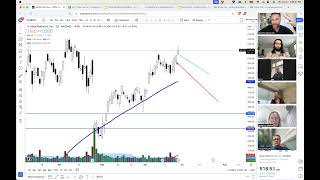
Jerremy Newsome’s Advanced Trading Program (Module 3) — a live class focused on trading around corporate earnings. The instructor reviews when and how he uses earnings strategies (iron condors, straddles, strangles, bull put and bear call spreads, covered calls, selling puts, buying shares), emphasizes gap analysis as the decisive factor, and illustrates approaches with real examples (Fastly, Netflix, Apple, Tesla). He stresses risk control, position sizing, preferring front-month options, and that he personally trades earnings sparingly and favors post-earnings and chart-based decisions.
Chapters
Live from Music City, Nashville, Tennessee, this is your motivational, sensational, inspirational, educational, aspirational, international, keenly awaited daily created, highly anticipated edition of the Advanced Trading Program brought to you by Real Life Trading Module number three. Folks and friends, team and family from around the world. How's everyone doing on this exceptional day, night, week, year quarter, wherever you are, it's always sun shining somewhere in the world. Isaac said he's putting on our thinking caps. Put those on. Get your napkins and forks ready. Some brain food is coming your way from your number one favorite Internet cerebral pyromaniac, the Mental Musketeer, the Frontal Vortex flamethrower. I'm ready to hear for you. Here we go. Robin Stackel says it's beautiful here in Wisconsin. I'm so fired up. Why are we doing this, ladies and gentlemen? Why are we here? We are here because our mission is to enrich lives. We do that by guiding you, many people towards fully achieving and understanding financial freedom. What are we doing in this particular goal, this particular module? What are we learning? Why are we here? What are we going through? Well, this is the advanced section and we're going to be talking about earnings strategies. This is a topic that I get so much on email and so now it'll be so cool to get that email and go well hey, how about you check out this video, you'll like it. So earning strategies, what to do, where to do it, why to do it, all that kind of good stuff. Iron Condors straddles, strangles gaps. We're talking about all of those things right now. So some quick about me just in case Real Life Trading is currently implementing our free education material into the US prison system to enrich the lives of inmates. Type in a 4 if you think that is amazing. I think it's amazing. I'm a type in A4 because again I personally believe that everyone deserves the opportunity, the chance to learn, to grow, to progress, come a better version of themselves to help their community. So we're working on doing that with a wonderful content creating, providing company. Another thing about me, I love day trading Square and amd. I could just day trade those two stocks every day or one of them, I could pick one of them. I personally know someone who buys a thousand shares of AMD and or sells short a thousand shares of AMD a few times a day and that's all that person does. And they do pretty well actually Matt says more about that here so he's posting a link. The business of enriching lives plus financial freedom so this is the article. If you guys want to check out the article, I'll show you where it's at. On our website, you can click, blog and type in the business of enriching lives and financial freedom. Just in case you ever want to get a little bit more about that particular project regarding the prison systems and enriching lives. Because Real Life Trading has goals and aspirations of becoming a global brand and a household name to guide both the young and the old towards financial freedom. That's one of our missions. That's one of my big goals, ladies and gentlemen. I want to. I want. I want to change the entire education system, at least here in America, even if it's for one city or one state. I feel that our children should learn this stuff. I feel like our teenagers, our adults. I feel like more people need to learn about the stock market. How it's not mysterious, how it's not gambling, how it's not only for the exceptionally exceedingly rich or mathematically talented. It can be for Anyone. Type in a 1 if you agree with that statement. This can be for anyone, my friends. Anybody. Yeah, if you have more money, it becomes easier. But you don't have to. It's about learning and growing and becoming a magnificent, majestic unicorn of profits. Pushing yourself and your mind towards your ultimate freedom. And for all those who like to ask, Chick Fil A is likely my favorite fast food restaurant. Love Chick Fil A. I always tell a stupid joke that if Chick Fil A was a publicly traded company on the stock market, real Life trading would not exist. Because it wouldn't have to. Because my investing advice would always be just buy shares of Chick Fil A. But it's not so all good. In case you want the slides, you know the drill. Text NEWSOM255444. Or if you're in Canada, that other number. 312-487-3550. Hit me up. If you want a copy of these slides, here's where we're at. Module three, believe it or not. Yes, this class is free. The next one's free, and they're all free. Module four, we're talking about long term investing. And module five, we're going to talk about Elliot Wave Rodrigo. It's a great question. I will let Matt answer that. But he says, do you have to text it every day? No, you do not. Once can be sufficient. And then module 5, Elliott wave Fibonacci. Some recaps, some quizzes, some good. It's gonna be so good. Here's a question. I get a lot. Why do companies sell off on good earnings? Type in A3 into the chat pane. If you've always wondered that or if you've noticed that, that a company would just come out and have phenomenal earnings. Boom. Blow it out the water, man. I'm making tons of money and it sells off. What the heck? Stock market. Why? Let's go through a story. There's a story that a very famous investor by the name of Warren Buffett went into one of the board meetings of one of the companies that he was a shareholder of many, many years ago. He asked the CEO and the board members and everyone who's there, give me an overall rundown of the company. And the CEO and all the people doing their presentations were just talking about how great the company was. And at one point the CEO says, warren, we are straight up murdering it. Everything is going great. I'm paraphrasing, by the way. I'm the only. I'm one of the few CEOs that says we're murdering it anyway. We're killing it. Getting arrested for first degree murder. Things are going phenomenal. Couldn't be better. We are just crushing earnings. We're making money hand over fist. Things are at a phenomenal spot. And Warren says, oh, so excited, you guys rock. Leaves the board meeting and sells all the shares. Why? All investors were upset. Everyone was trying to figure out, why was Warren selling? What's going on with that? Why is that the case? And Warren says the CEO said things couldn't be better, Things couldn't get better. That's what he said out loud. So he locked in games. And as the story goes, the stock did eventually, and the company did eventually start declining. They were doing so good, they were on top of the moon. They lost sight of their drive, whatever, whatever, so on and so forth. Companies have always done that and they will always continue to do that. This is not a brand new world. Yes, there's algorithms, yes, there's guidance. It doesn't matter. It'll always happen. Companies can have great earnings and just get absolutely smashed. They gap down because everyone knows it. It's all about public perception. If everyone knows and sees and believes something and then they go there and they start experiencing it, it's just subpar. They kind of get let down. Another example, type in A4 into the chat pane. If you have seen the movie Napoleon Dynamite, well, I dislike that movie with all the bones in my body, believe it or not, even though I do like comedy. That movie got so pumped up when I was in school, everyone was quoting it, everyone was talking about it. Everyone thought it was the funniest movie of all time. Everywhere I went, napoleon Dynamite, Napoleon Dynamite, Napoleon Dynamite. Awesome, awesome, awesome. And then I watch it and I was let down. Did where my expectations too high maybe. And therefore I got let down. Now, if no one had talked about it and I watched the movie for the very first time, would I have enjoyed it? I don't know. Maybe, maybe not. But here's what I can say is stocks are the exact same way. It's all about public perception. If you have everyone who likes the company everyone's in, everyone's excited about it, can't do much better. Tons of money, what happens? You got to sell them to strength. You got to start locking in your gains. You got to start taking those profits off the table and expecting some type of retracement. At some point, profit taking will happen. Stocks generally gap over earnings. Sometimes they do, sometimes they don't. What this class is going to cover is how I personally approach earnings. At least as of now. At least as of now. Will I change and become a better earnings trader? Maybe I talk somewhere in this class about how I'm really not the best or even remotely the best earnings trader over earnings. I'm not. Mostly because I don't read the news and I don't really pour into research all that often, because why? Price discounts everything. I can look at the price and I get a general idea of what's gonna happen. I don't have to stress intently about what earnings are doing. I can read earnings. I can get it, I understand it. But that's pretty much my thought on that. Robert says, have you watched Napoleon a second time? It's much better the second time. I. That's the thing, man. I have. I got told that, too. It was better the second time than the first time, but still, I'm just not a huge Napoleon Dynamite fan. Gosh. Now, if you do want a movie that is phenomenal, I just watched this recently. If you want. This is one of the best movies I've ever seen. 1917. Oh, my goodness. If you have not seen that film, lock it down and get into it asap. Who tears, man? I mean, that is so good. I love watching movies, by the way. I carve out time out of my day and week to watch movies ever so often. Just a wonderful film. Edward is asking, is it on Netflix? Not yet. It's on Amazon Prime Video, though. Anyway, great movie. All right, now, why do companies go higher on bad Earnings. What's up with that? Well, I mean, people can be optimistic. If a company has batterings, people can go, well, I mean, yeah, it's bad now, but what about a year from now? It could get better. Tesla is a great example of that cult following company that just has absolutely, I mean, teachers. Tesla has had some of the worst earnings I've ever seen for companies. Uber doesn't really have great earnings either. But you can have a cult following, you can have people who love it, you can have a CEO, or you can have something that just people are ecstatic about. Right? There's always potential for growth. They didn't lose as much as they could have. Right. Uber had earnings not too long ago and they lost like $5 billion in a quarter, which is like $30 million a day, and bang, it's up. Mark says, how many years did Amazon lose money and the stock price climbed anyway? Oh man, long time. Sometimes it's just about the future capabilities and possibilities of what could happen. Why am I bringing all this up? Simply because in my opinion of the market, it doesn't matter what earnings are the actual earnings themselves to a degree. Long term, if a company's doing very well on earnings and they are making money hand over fist and they're doing well, the stock will go higher. That's just kind of more or less basic economics. If a company keeps selling and keeps growing sales and they keep growing revenue and they're lowering debt and they're just making great products for great people all across the world and people enjoy them and they use them and demand increases, the stock will go up. Right? That's what my dad told me about Apple computers back in 1994. I mean, Jeremy, everyone is going to be using computers in the future is what he said. These are going to be things that you can get on and use to build companies and play video games. That's what he told me. I was like, dad, well then we need to do this if everyone's going to do it. If everyone's going to have an Apple computer in their home one day and Forrest Gump did it, we need to do it. Is that potential for growth? So the reason I'm bringing it up is, yes, at some point when you are playing earnings, you have to realize a company can just absolutely wreck earnings and not go anywhere. Go everywhere, go nowhere. They can have terrible earnings and go higher. It's all about that gap. Now. There are literally tens of thousands of option strategies and yes, I know a lot of them, as I've mentioned In previous courses. My goal is not to overwhelm you with knowledge or strategies. I could, I could if I really wanted to. But I want you all to make money or at least have a great shot and a solid opportunity at crushing life. What I'm going to do in this particular class and module and future classes is share what I've done in the past and what works and why I know it works. And as a bullet note, trading over earnings is my least used strategy that I personally implement. I know of the last 100 earning strategies that I've done in my career because that's probably how many I've done. It's really not something I do frequently. So when earnings come up, I do not play hard over earnings frequently. So I'm just letting you all know that as an expectation, if you're watching this video, like, oh man, Newsom's gonna give me the the secret unicorn so that I can just plug and play and make all of the money over earnings. Probably not. Again, I'm gonna do my best to give you what I know that works. And yeah, I've made some money over earnings, but it's not my most frequent type of trading. Shane says, I wish I knew this two weeks ago when I held Walmart options over earnings. I could have sold for three hours the day before but ended up taking a loss when the stock dropped after good earnings. Shane, my good friend, now you know and I wish you would have emailed me because that's exactly what I would have told you to do. But hey, at least you know now you know there's a lot of life ahead. Go crush it. But yeah, thank you for letting me know. All right, so here are some strategies that I implement when I trade over earnings. This is not all of them. This is not all of them that I know. Sometimes I'll flex my trading capacities a little bit and do some really weird option stuff, but this is what I like to do. The Iron Condor. Iron Condors are cool. We talked about this a little bit in the last class. But realistically, an Iron Condor is a bull put spread and a bear call spread together. That's what it is in its essence. I mean, that's truly what it is. It's a bull put spread and a bear call spread. I only do Iron Condors on the larger name, quote unquote, blue chip stocks that most likely will not be gapping huge over earnings. I cannot recall the last time I did an Iron Condor over a newer volatile company. Jeremy, what's a newer company? You Know the definition of newer? Alright, before you ask, you know what a newer company is? Is square a newer company? Of course. Been on the market for like, I don't know, four years. It's newer. Apple? No, it's not new. Microsoft, it's not new. So therefore I do not do iron condors over newer companies. Because what can happen? What can, what can happen to a newer company, my friends? Not always. But what can one of these companies do have a crazy insane earnings where no one expected that one and they gap huge in one direction or another. Or as Emmanuel says, they have a buyout and you could lose some money on it that way. So generally I don't do iron condors on newer companies. Now do I have put sales over earnings on stocks? And the answer is if I don't mind owning shares, yes. I do it all the time. I do it on Apple almost every earnings. I've done it on Netflix numerous times. I've done it on Facebook many times. I've done it on Google and Amazon every so often. But just one, just one contract. I don't do very many, obviously. I usually am pretty far away out of the money, and it's a little bit of a speculative position. But regardless, I do put sales over earnings. If I do not mind being assigned 100 shares, at least 100 shares per contract. So if I don't mind it, I'll do it. So are you guys all cool with that? Cause I'll talk about some put sales over earnings, but if I'm like, yeah, I don't mind owning the shares, then sure, I'll sell a put. Otherwise, nope. If I do not want to own the shares, if I know nothing about the company, if I don't like it, if I don't like the form, if I don't like the fundamentals, if I don't like the story, if I don't like what they do, if I don't know what they do, if I have no idea what they're doing, I will not sell a put over earnings. Ariel says, do you do after earnings? Of course. Cause after earnings is like three months. Earnings is one day after earnings. I'm one of the greatest traders in the world. Right after the earnings have happened, I'm really good then you're in my ballpark. Just the before, like day or two before earnings, until over earnings. I'm not the best, but after it's happened, yeah, man, I can get it. I know. What's up then. All right, awesome. Next part of the slide bull put spreads If I really don't want to own shares. So if I'm doing a put sale, it's probably because I don't mind owning shares. I'll do a bullput spread over earnings if I don't want to own shares. But I have a general feeling that it's gonna go up or go down a little bit or not gap at all. Now, why would I say a bear call spread is more rare for me? For those of you who know me and you've been in my classes now and again, keep in mind this is just my opinion. This is not the only way to trade. This is just how I roll. The reason I do not do many bear call spreads over earnings is because I'm a permeable. As you all mentioned in the chat, Fein, I generally am expecting the stock or the company or the market or whatever to eventually go higher. I don't look at the chart and just see death. Okay? I'm not Zero hedge. That's what zero hedge does. Pulls up the chart. Everything's going to zero all the time. Always and forever. Humanity is one day away from extinction. Hashtag, zero hedge. Me, on the other hand, I'm the exact opposite of that. So again, remember, my friends, this is over earnings. Joseph says you would rather do a covered call. Yes. Than a bear call spread. Absolutely. Now, if I own shares, I will absolutely do a bear call spread. Absolutely. If I own shares, bring it on the. Because then I have a covered call that can get called away, plus an upside capper that can just run if the stock really gaps up. So, yeah, I'm all about that. A bear call spread. If I have shares. Bring it on. So little super secret strategy out there in here right now. All right. And then straddles and strangles. Let's chat about those. Let's talk about the straddle and strangle. Because if I do a earnings strategy, it's usually one of those two. Now, as like mentioned before, I've already created a video on this topic. It's five years old, so you can type in how to trade the straddle and strangle into YouTube. Shocker. And I already have a video on it, so, yeah. And look at, look at this. The very first image that pops up on this video is hilarious. The very first thing I start looking at is a Netflix gap. When Netflix was back five years ago. Can you guess how I was looking at playing Netflix five years ago? Oh, man. This was the most ridiculous bullish gap I've ever seen. Cracked me up. I made so Much money on Netflix on that Gap. Sorry, it still cracks me up. Oh man, that was so good. Anyway, good video if you want to watch it, but this one's going to be better. A straddle and a strangle. This is an options only strategy. You can do a long straddle or a long strangle or you can do a short straddle or short strangle. I'm only going to cover the long portion of these two strategies. I will not be covering short strangles or short straddles. That is in my book though, the Naked Trader. If you want to learn about short strangles and short straddles, because you can always flex and get into a straddle that's long and then turn it into a calendar spread or turn it into a ratio spread or turn it into a debit spread or turn it into a short. There's all kinds of things you can do with options. Again, literally there's tens of thousands of strategies. True story. 10, 0,000. There's a lot of them. But I'll talk about what the straddling strangle is and, and what I, and how I implement it and then I'm gonna show off a little bit and yeah, so here's what a straddle is. Think of the term straddle as you're sitting on something. You're sitting on a horse's. What's it called? Saddle. So you're straddling a saddle, you're sitting on it. So you straddle means that you are sitting on top of 2 moving average 2 strike prices. So you buy an at the money option for both the call and the put. Now this is gonna cost you money. What? Yep, this is a debit. So an example would be on this particular stock that we're looking at right now, this is ticker symbol fsly fastly. And if you are noticing that the stock is trading around $23 a share. See, Stephen says it's like straddling the fence. Yeah, exactly. So in this example, you could buy a $23 June call and a $23 June put. What I really dig about this strategy is if the stock gaps nicely, one of these is going to pay you pretty well. I mean, you're more or less going, I have no idea what's going to happen, but something's about to happen. So let me potentially make money if one of those things happens. True or false. This is a little bit like going to the casino, going to roulette and putting $1,000 on red. Yeah, it's true. I mean, literally, like, it's gonna gap up or down or it's gonna hit green, AKA not gap at all, and you're gonna lose some money. So what if it gaps down? Then you're gonna make a little bit of money on the put and you'll lose a little bit of money on the calls. What if it gaps up? Then you're gonna make a little bit of money on the calls and lose a little bit of money on the puts. And. And what if it doesn't gap at all? Then that's green at roulette. Good try. You're going to lose. Now, what if, my friend, what if the stock doesn't gap much on earnings, however, after earning, so it doesn't gap at all, and then. Then it runs. Can that happen? Of course. So if that does happen, you would still be in your call and. Or your put. So it still happens. It just didn't happen specifically over earnings. So you can come up with a plan for what you do. If you're in a straddle and the stock does not gap, because that'll happen all the time. No gap, no earning gap at all. And then Rampage Jackson, after it has an earnings gap, there's all kinds of things you can do. The straddle. I mean, so, so, so many things. Now, this exact straddle would have cost you $2.95 for the put. So if you were buying one contract, how much would that be? How much cash would come out of your account if you're spending 295? Yep, you guys got it right. $295 plus commission. So 295. And then you buy the put. And the put would have cost 290. So how much would that have cost? If you would have bought a contract? The answer is $290. So you'd be spending a total debit of $585 per contract. So if you buy one contract, you're going to be out $585 total. You're putting your money on red, the casino roulette wheel. When you're looking at this particular trade, how much does the stock have to move for you to start making money? Well, it has to move a minimum of 585 because that's how much you're spending. Right? So I mean, it's got to go up to at least here. So from 23 to 27 and some change right around there. 27 and a half, 28. Because you're spending $5.85 up front. So it needs to move at least that far for you to start making money. I'm not saying break even or lose a little bit or make a little bit. I mean, to really start making money, it's got to move at least $5.85. Because remember, you're buying two positions. You're buying a put, and you're buying a call. So when the call goes up to $5.85, if it gaps in your direction, this is going to go down by $2.90. So it's got to move higher for you to really make up the ground. I'll pause there. Any questions on that? There are tons of math formulas that you can use. There's so many blogs, articles, videos, websites, courses that can teach you all about the math behind it. There's definitely math involved in options and earnings. And if you're a math nerd, you can wig out for sure. I am not a math earnings options specialist. I'm a chart specialist. Just being clear, I know what my lane is. So my lane is not specifically everything else. Robert says, can we talk about some tickers at the end of class? Sure. All right. Lucian says, will you lose the respective amount on the other side? Well, that's the thing, Lucian. How much can you lose on these options? If you buy all these options, how much can you lose? You can lose all of it. Exactly. You can lose 100%. But the good news is that's the max that you can lose. If you buy an option for $2.90 cents, the most you can lose is it goes to zero. That's it. So absolutely, the answer is if this stock gaps gapped up to here, which is a big move for $23 stock, and we're talking about $6. So 20%. Ish. It's a pretty big move. This option, if the stock gapped up, would pretty much go to zero, and this option would go up to around six bucks right now. What if it gapped down? Well, then the exact opposite would happen. Right. If you had a really, really big gap down. So let's say you gap down to here and now this option goes to more or less zero, and this option becomes valuable. Lucas says, how much can you make per contract? I mean, technically, it's infinite, Lucas, because the stock can. On a call option, stock can go as high as the moon. Right. Now on a put option, technically a stock can only go to zero. So put options are technically a limited return strategy, but you can make large ROIs on options much Much higher return on investment than stocks always. But you'll normally make more money on stocks, like, as far as net cash is concerned, but your ROI will be better on options. Okay, let's go talk about the strangle. So the way I think about the strangle is two hands choking the stock market. I'm a little morbid. I know. So, yeah, your right hand, your left hand, you're just like, ah, you're choking the stock market. I don't know what else to think, but that's. That's how I think of strangle. So a strangle is you have a put in a call out of the money. Tracy says, I finally get it. Whoo. Nature boy. Ric Flair. I like it. So a strangle is when you buy an out of the money option. So remember Lucien and everyone else who's here, an out of the money option is an option that. Where the stock is not at yet. So if you're buying a right to buy at a higher price, where the stock is currently trading at, that's out of the money. And if you buy a right to sell lower than the stock is currently trading at, you're doing it out of the money. And again, this example is a real life example on this strangle. If you would have bought an out of the money option for both the call and the put, this will cost you money. Hold on. I just got. I'm getting an alert from somewhere, and I have no idea where I'm getting alert from. I'll just minimize everything. Something was beeping. I'm like, what is beeping at me? Is it this? That's what it was. All right. Okay. Minimize this. Give me three seconds. One second. Where that page now go. Hmm. I was all excited and then just randomly changed. Okay, all right, Back to strangle. So when you buy a strangle, this trade will cost you money because you're buying something. So you buy an out of the money option for both the call and the put. When the stock is trading at $23 and some change, you buy a $27 call option, which is out of the money, and you buy a $20 June put option. Now, why would you do this? Well, again, since it's over earnings, the stock might gap. It could. It might potentially will. Maybe it gaps in that direction, maybe it doesn't. But this trade would have cost you $1.50 for the put and $1.35 for the call. Total debit, $2.85 per contract. Obvious question. Is this cheaper than the straddle? Yes, it Is therefore, if you're trying to attack a less expensive option strategy, here's a stock market fact for you and your family. A strangle will always be less expensive than a straddle. Always, always, always, always. And it doesn't matter if it is over earnings or not. A strangle will always be cheaper than a straddle. Because straddle you're buying at or in the money, and a strangle you're buying out of the money. Out of the money options are always cheaper. Now, why would you buy out of the money? Because it's cheaper. That's it. Out of the money options are simply cheaper. That's really why you're buying them. If you don't want to spend that much money, you want to speculate a little bit. So this is like putting a little bit of money on red and a little bit of money on the number 27 on roulette. Jack says, where's the disadvantage? The disadvantage, we're gonna talk about that in just a moment. But the disadvantages, if this stock doesn't gap at all, the options will extremely dissipate in value. Whereas the straddle has a little bit of value baked in. So at open the next day, this option, these. The value of your $2.85 could decrease like 95% overnight. If the stock does not gap on earnings. I mean, you can lose almost all of your money. Both will dissipate extremely fast. In a straddle, you'll lose money if it doesn't gap but like 50%, you won't lose all of it because they're at the money. So you'll lose some, but it won't just totally irrevocably go to, you know, just gone. Right. John Axe says, so you're talking about June this month. That is correct, my dear friend. Now, John, could you do this exact strategy with a year to expiration? And the answer is, of course, are you going to pay more money if you do that? John, if you buy an option with a year of expiration, and the answer is yes, you will, it'll just cost more. Maloney says. But could you roll it over? Well, again, Maloney, all rolling is, is buying another position. We talked about that yesterday. So, yeah, you can do anything you want. I mean, literally, it's your money. So rolling is just getting into another one, buying another option. That's really all roll is. So, yeah, sure, if you want. It didn't work. You want to get into another trade, Try it again. Go for it. That's. That's the. That's the term like rolling. Rolling the ball in the roulette wheel. Well, I didn't hit black this time. I'm doubling down. I put a $400 on black. It didn't hit. Now I'm doing 800. Rick says you like this for all stocks that are optionable. Well, yes, because if they're not optionable, you can't do the strategy. Yep, that is correct. So it has to be optionable. Maloney says I am the worst gambler. Matt says, can you talk about why you don't like to roll options? Yep. I did that last class. Again, rolling options is literally just taking another bad trade and making it worse, theoretically. I mean, again, all rolling is specifically is just getting back into the trade with more time. So if you were wrong the first time, you could eventually be right again. Like roulette, you're putting more money on black. You're rolling the ball again. You're telling the roulette dealer, let's roll it again. I'm putting more money down. That's literally all rolling is. The reason I generally don't roll is because if the first trade was incorrect, generally the second one's not spot on either. Rick says the price of the stock does not matter. Can you re ask that question, Rick? That's not the question you want. Ask the full one. Tracy says either one. If there's no gap, given the straddle costs more but loses less overnight, you end up being roughly the same for your financial loss. Is this correct? Yes. If the stock does not gap, that is generally correct. The financial loss overnight is roughly the same. It's a great point and a super good question. Mm. All right. That is a strangle. Tracy says, does either one make more money? If it does gap return on investment. The strangle will always win because it's cheaper, Right? So the return on your investment, your strangle, will always make you more money. The straddle could make you more net, like actual cash money, because you're spending more and the options can increase more. But, yeah, out of the money strangles, those are the best return on your investment. This, ladies and gentlemen, is the holy grail of option trading over earnings. Nailing a strangle. That works out perfectly. This is the holy grail. In my opinion. If you nail a strangle over earnings, the return on your investment can be sensational. We're talking hundreds, sometimes thousands of percent ROI on your investment. The strangle is the one. If you're gonna master any one of these strategies, it's this one. Because if you get this bad boy right. Oh, man. Murderous Rick says some stops, some stocks below 7 seem to have larger spreads. If you trade stocks above 12, they seem to have more interest with tighter spreads to get in and out the trade. That is correct. In fact, some stocks below $7 don't even have options, Rick. So generally, generally the reason I buy options is because the stock is relatively too expensive for me to own anyway. So if a stock is $7 or lower, I cannot personally remember time I ever bought an option over earnings on a cheap stock. I do have call options on a $3 stock right now called Go Go. That worked out. That's working out pretty well right now. But I very, very ill frequently. I mean, 99.999% of time. If it's a really, really cheap stock, I will just simply not do it. Victor says, can you explain what over earnings mean? Do you. Do you mean get in one day before earnings? Yeah, one day, two days, three days. But yeah, I mean, anytime before earnings, let's say two weeks before earnings get here. Up until earnings is kind of like the window that I'm talking about. Yeah, so that's a good question, Rick. But honestly, man, if you can afford the stock, no problem. It's so cheap, it's like, well, why do the option? Right? But I get why some people will. It's all about volume. If the stock has tons of volume and the options have very nice bid ask spreads, sure, I'll do options. But most stocks that are under $5 are paying stocks anyway. So I'll just buy shares. Yeah, that's a very valid question. Tracy says, are there any stocks you would not try this on other than the ones I just mentioned, like, you know, the really cheap stocks and penny stocks that don't have options? I don't generally do any of these option strategies on super expensive stocks. So Amazon, Google Booking Holdings, Chipotle, because, man, they're pricey. You know, they are expensive. Lucas, I want you to answer that question for me. Lucas, what do you think? The answer is definitely yes. Tesla. I can do earnings over Tesla. I haven't recently, but yeah, it's a little bit more. It's starting to get a little bit more pricey. So bottom line, the answer is I won't really do the strategy on super, super expensive stocks because the options are just so dang, they're up there. You're paying a lot of money. And let's be honest. If a Stock is like $3,000, how much really is it going to move on earnings. You know what movie is going to move 10%, 300 points? It's like, sure, it could, but I'd rather find a stocks. The stocks I love doing this on. That's what you guys are really looking forward to. The stocks I love to this on is like the 20 to $75 range. 20 to $75 with good volume. Newer IPO companies. That's my focus. Tracy says Lulu has earnings coming out, but that'd be too expensive. No, I mean, again, it's expensive is your perception. So if I say it's not expensive, you might think it's expensive or vice versa. I don't personally think Lulu is too expensive to do a options play on. And we can look at Lulu later tonight if you want to bring that up again. We can definitely check it out. Emmanuel says beyond me. It was very volatile in the past. Yep. And it still is. All right, that's the strangle, folks. Good stuff. So straddle versus strangle. Straddles will always be more expensive. Straddles give you a higher probability probability of eventually being correct on one of the options because you're at the money. However, if the stock does not gap, the value of the contracts you bought will lessen dramatically due to implied volatility decreasing and the theta decline with the straddle, you do have more flexibility because you have options with intrinsic value since they are in the money. And you can usually easily turn those into calendar spreads and all kinds of things. Right? Because again, if you have a straddle that's in the money or at the money, right, you have calls and you have puts and let's say the stock doesn't really gap on earnings. Could you, ladies and gentlemen, sell a option against that option to bring in money against the option? And the answer is yes. That's exactly what we talked about in the last class. Of course you can. I usually would make it the exact same expiration unless I had a long, long time. And I don't. I always. I guess here's another rule that I don't. I know I don't have in the slides, so I'll go ahead and write this in really quick. When I do earnings strategies personally, I buy front month or less. So front month means the next month. I don't get into long term options over earnings. If I'm gonna get into a long term options play, it's just because I like the stock and yes, I will hold over earnings. What I mean is I don't go into a stock that I Don't have any position in and say to myself, yeah, let me get into a leap over earnings. I'll just buy the front month or less. So like weeks two, three weeks, four weeks at the most. Or sorry, six weeks at the most. I don't buy that much time on my earning strategies. So in this situation, we were in mid May and I was discussing buying June, which is four and a half weeks away. Type in a three, if that makes sense. Edward says, you mean like what we're doing on work right now? Yes, correct. So work. We have turned it into a debit spread. It's not a calendar spread right now, Edward is just a debit spread that can become very profitable, very profitable if slack goes to 50. So that could be really cool. All right, sweet. So there's the straddle versus strangle. Next, ladies and gentlemen, if we're looking at this particular stock, could you simply implement a bull put spread? And the answer is, of course you could. Why not? It's a limited risk, limited return strategy. Over earnings. You can win on these nicely as long as the stock does not gap down huge. So let's say you have an inkling or a feeling or something. I got. I got me an ankle and a failing or something. If you have one of those three things that the stock is not going to gap down huge, you could get into a bullput spread. You guys all know what bullpen spreads are because I was in the last class. As long as the stock does not open it like 1750 on this gap down, you're gonna be okay. The spread will work out. Generally, I usually close these after earnings unless it gaps up big. The gaps up big. I'll just hold it. If it opens flat, maybe I'll put like an alert or something. If it gaps down, maybe I'll hold on to it, see if it bounces. But I generally will wait a few days after earnings to see if I can close it. I still follow my credit spread rules, right? If I lose 50% overnight, I'll buy it back. And if it's more profitable than that over time, I'll buy it back. This particular credit spread. 19 put sale. 18 put purchase. June would have brought in 25 cents for a 25% return on risk strategy. So if you sold 10 contracts on a $1 bullput spread, what would your risk be? 10 contracts on a $1 spread. What is your risk? $1,000. And if you had brought in 25 cents, what will be your potential reward? $250. And again, all you have to do is get four of those right. And if the next trade loses, totally your break even. So if you do a fifth trade and that one works, then you're in the money. You, if you do a sixth trade and that one works, you're doing fine. 7th, 8th, 9th, 10th. Eventually you're gonna lose $1,000 on one of these. Cause it just stocks and just do something crazy. But again, as long as you win more than you lose, it can work out. All right. If we do a bull put spread, could we do a bear call spread? And the answer is, of course you could. Why not? It's a limited risk, limited return strategy over earnings. You can win nice in these as long as the stock does not gap up hugely. So in this situation, if you would have sold a 27 call and bought a 28 call, implementing a June bear call spread, if you got into the 27, 28 June bear call spread, you would have brought in 25 cents a premium, which is a 25% return on risk. Same exact math as before. If you did 10 contracts, would have brought in $1,000 of risk and $250 of reward. The question I have now, ladies and gentlemen, that I propose before you, could you do both of these? Terry says, would not the risk be 750 in your broker? No, because again, your broker will put the money on hold for what you're actually risking. So I always view it as pure risk. Because, yes, the money comes into your account, but it's not finalized. It doesn't hit your account like you can't, don't, or shouldn't count it as income until the trade is closed out. This, my friends, is called an iron condor. The iron condor. What is so cool about this particular strategy? What is super, super nifty? One of my favorite things about these is the stock cannot be in two places at once. You are guaranteed to have a winner, ladies and gentlemen, when you do an iron condor, guaranteed mathematical fact, one of these will be a winner. And the broker knows this. They know the math. Since the broker knows the math, your risk is still a dollar per contract. Your margin does not increase at all when you get into an iron condor. Because the stock cannot be down and up at the same time. Here's a question I want to propose. Even though this is a guarantee, can you as a trader still screw it up royally? And the answer, if we know stock traders, is yes, I've screwed some of these up royally before. So, for example, let's say the stock gaps down Here is gapping into your spread and you're freaking out because you're a giant baby. You have no appetite for risk and you have no idea what you're doing and you're just, you're just a giant crybaby. You are a toddler and you should not be doing these trades. You freak out and you exit the position for a loss and then it bounces and it bounces and bounces and trades all the way up into your top spread and. And you freak out of that one. You get all upset. No trading plan, no risk. You have no clue what you're doing. You are a child. Gets into your top spread, you close that one out and then it goes back down to expire worthless. Both of them would have worked out and you lost your wig and lost on both of them. Type in A1. If that's ever happened to me before, please. Where's my ones? Man, I've done that before and I felt so dumb. I only did it twice. It only took me two times to go. Yep, I'm never doing that again. One of these is going to work, guaranteed. So now what I will do because now I'm no longer a child. I'm a grown man. I'm a grown 32 year old man. If the stock gap down to here, I would close out my bear cost spread for a profit. Chang Cheng Chang. And I would hold on to the spread letting it do something like this. And if it bounce out of the spread, then I would start trailing my stop loss or my alert or whatever and hopefully it expires worthless. And I'm totally fine on both sides. You have to figure out what to do and when based on the gap. All right. The gap on earnings is still, in my opinion the most important and crucial piece of all of this. Because it's the exact same thing with the straddle and strangle, right? If you get the gap wrong, it doesn't matter if you analyze a chart wrong. If you don't have a plan, if you don't know what you're going to do, you can still flub this up, eat a giant banana with the peel still on it and lose money because you are a baby. So stop being a scaredy cat, come up with a plan and follow it. Right? Don't get into a position if you're afraid of the risk. It's limited risk. Like you know what your risk is when you get into the trade. Don't risk too much. So let's go through some math, a little bit of math. You have to calculate risk and determine the math. If the stock does gap, you should know before getting into the trade that what you will do in any given scenario, you always want to have your risk controlled and be confident of the sentiment of the gap. If the straddle cost me $5.85, I know the stock needs to move at least5.85 before I start winning. Because if the stock gaps on a straddle, I'm going to lose on one of the sides. Same thing with the strangle. You really need to know and expect and get a general idea of what's going to happen. Again, I will say I am not a specialist on this portion. I think. It's in here somewhere. It's in here somewhere. Towards the end of class where I start talking about where you can go if you're a math nerd and you really want all the math of this stuff. Tom Sosnoff, my boy, he'll get you all hooked up with the math. He's a math genius when it comes to this stuff. This is what he does. He doesn't even look at the charts. He looks at the math. I feel like that'd be the most boring profession in the world. But I'm also not an accountant, so what do I know? I don't like looking at numbers. I like looking at charts and patterns. It's just more fun for me. So anyway, bottom line is there is math associated with this. Don't just get blindly into a straddle because you're like Jeremy said, you can make money on this. You can make money on anything. But you have to know what you're doing and how it's going down. Mark says this sounds like a strategy that we would want to back trade heavily. Yep, I agree. I agree. Type in a 3. If you do want one of my math formulas to make a lot of money on earnings, I will tell you one of the formulas I do. Here's the formula. Stick to one side long enough. That's the formula. Same with roulette. I actually make money when I play roulette all the time. Because I know the formula. The math is bound to work out my favorite at some point. So stick to one side long enough. What does that mean? That means that every single quarter, every single earning season, when I do play earnings, I do the same things all the time. So I don't buy puts this time, buy calls this time buy puts this time, buy calls this time, buy puts, buy calls, buy puts. I don't flip flop back and forth. I Look at the chart and I go, this is what I'm gonna do every single time. I'm gonna buy calls. I buy a lot of calls over earnings, generally. Shocker, huh? I usually buy calls over earnings. That's just what I do. Because If I do 10, one of them is gonna work, right? If I, If I do 10 different stocks with calls, one of them will gap up. One of them. And if one of them gaps up, usually I can actually end up making money on all the other ones because I'll turn all the other ones into a calendar spread or I'll sell it, or I'll just hold it, let it expire, go to zero. But if I can get two or three good winners, I'm profitable. If for some reason four or five of them gap in my direction, it's a home run. I've never had all 10 gap in my direction. That's just wizardry. But I generally just stick to the same. So every quarter I'll just keep doing the same thing. So when Tesla has earnings, I generally will play the same direction all the time because at some point I'm going to be right. And here's another little formula for you. You ready? It's better than roulette because at some point it will gap up on earnings. That's what's cool. You can sit in front of roulette and hit the wrong number or color like, I mean, so long in a row, plus you're drinking, let's be honest, so you're not even playing sober. But secondly, a stock, at some point, a stock will gap up. So here's a secret, if you're listening, what I like to do is find a stock that hasn't gapped up on earnings in a long time and play that one dun, dun, dun. So if I have like gap up, gap up, gap up, gap up, gap up. Like 19 different gap ups, I'm not going to play another call. I'm just going to wait. If we have gapped down or haven't really gapped that much at all on earnings, then yeah, I can take that gamble. Rick says in the last class, can you add how much to manage and track your plan? If you use this strategy in the last class, can you add how to manage and track your plan? If you use this strategy, management always gets me into trouble and I give up and I take the loss versus holding through it. That's just coming up with a plan, my dear friend. That's all that is. Coming up with some numbers. I can help you build a Plan. I can't really just give you a plan for that because there's so many variables as this relates to if earning gaps excite you, I can help you build a plan. It won't be free, but you can email me and we can schedule a session and we can do something if you want to. But it's just, that's a custom thing. I can't specifically be like, yeah, this is gonna work for everyone. What I'm telling you right now, this will work, right? If you stick to one side long enough, at some point a company will gap up on earnings. And if you are really tracking down the right companies, you're playing one side most frequently enough. I used to play only puts on Twitter and Snapchat over earnings. So Twitter and Snapchat. I only played puts up until like 2018. And if you're like, why didn't you keep buying puts? Because the market was so insanely bullish. I mean, it was just cruising. I was like, well, it's just gonna carry everything higher, so whatever. Plus I lost on like two or three in a row. And I was like, well, I'm just gonna stop throwing an R away. So, Rick, one thing you can do is if you know your risk, what is your risk per trade? Rick, I can give you a rule. 300 bucks. So if your risk per trade is 300 bucks, then you're gonna be doing strangles, right? Because you're gonna be buying out of the money options that are not that expensive on lower priced stocks. $75 to $25. I can already tell you that. So there you go. That's one rule. And you're gonna be focusing mostly on strangles because you're not gonna be able to afford any straddles. But that's okay. So in this exact trade that we're looking at, you could have done a strangle on fastly over earnings. Because it was $285, you could have bought one contract on each side, lose less than $300. Now, worst case scenario, you lose an R. And then you can come up with a rule of how much it should gap, what type of gap it should be, where it should open, and if it does that, how long you're going to hold. Create all of that before the gap happens and then stick to it. Hope that helps a little bit, my friend. So, wwjd, what would Jeremy do? I hope that's not sacrilegious. I generally determine which amount of traders, bulls or bears, will be most trapped by a gap. And I play that direction. This is oftentimes what I do, my friends. Truly, in all sincerity, the thing that I do the most when I play earnings most frequently is I will pull up a bunch of random charts during earnings. I will look at the chart and I go, if the stock gapped here, how many people would get absolutely train wrecked? And then I go that direction. So I get into strangles and I wait for the gap. I sell puts on stocks that I want to own or what we're also going to talk about in just a few moments is I buy super small size shares in a company that I don't mind owning over the long haul. Just in case, go ahead and type into the chat pane what super small share size for me or for anyone else. I want to make sure. I'm actually not being facetious when I say this. I want to make sure you guys realize, yeah, 1 to 10, generally 1 to 10, maybe 20 if it's a cheap stock. I'm not buying huge size, just a little, just a nibble so that at least I'm in, you know, so they're like, oh, it's up 10%. Oh cool, now I can buy a new hamburger tomorrow. So it's not like a large, large size because it's over earnings. It's a coin flip. We'll talk more about that in just a moment. So these, these three things in bold are what I personally do the most. I sell puts on stocks that I want to own all the time. I get into strangles waiting for the gap some times 50% of the time. I don't have a strangle at all. I just pick the side of the gap. Matt says I prefer new hamburger versus pre owned. Pre owned hamburgers are not the great, they're not the greatest. I could agree. Is that why I said a new hamburger? I'm so dumb sometimes. Thanks for sticking with me, guys. I appreciate that. All right, so generally I don't get into many, many strangles. I'll just look at the chart and go, all right, if the stock got gaps in this direction, these people are going to be absolutely hosed. So let's play that. That's oftentimes what I do. Now type in a 9 into the chat pane. If you want to see my exact analysis of this stock in the past. All right, give me three seconds and I will get that pulled up. Alrighty then. So let me make sure I get the screen share turned on so you guys can also hear and see it. And that's Just the way that works. All right, Fsly pulling it up. I'll pull it over here. Oh, you guys can't see that? Okay, three seconds. Three more seconds. I'll edit that out of post. Okay, we'll bring this over here. Albert says, why need to buy shares and not just play the strangle? I'll get to that in a second. All right, pull that over here and make sure I can share the screen. So this is a recording of the exact analysis on the exact stock that we just talked about for the last hour. Realistically. All right, and here we go. Fastly Fsly. Now, I can say this about fastly. Based on this chart and the chart alone, it looks like one that could be a good gap. And they've never really had a big earnings gap before. Realistically. I'm not saying they will. I'm just saying it theoretically could. So fastly may. Let's go look at $18 put. You could probably buy it for 40 cents. And a $26 call, you could buy for 50 cents. Mr. Brojangles says it appears to be fastly going nowhere. That is absolutely correct. So you could buy a call just in case it opens above 26. Because if it does, that'll be a very nice gap. If it gapped down. All right, so what I'm gonna do is I'm gonna play that back. So again, for those who are listening, who are not a part of the afternoon swing trading room, this is an exact analysis that I did in the afternoon swing trading room. Sometimes you have to listen in, because I'm sure all of you know that I can't say, hey, guys, if this happens, buy all of it. So you have to listen to my tonality. You have to listen to some of the words I say very, very carefully. I craft all my messages very. Let me just rewind that again one more time. Mr. Brojangles says it appears to be fastly going nowhere. That is absolutely correct. So you could buy a call just in case it opens above 26. Because if it does, that'll be a very nice gap. Do you guys get that type of one if that's kind of clear? I mean, I feel like that's just like a layup. One more time. All right, let's do it. Let's do it one more time. Buy for 50 cents. Mr. Brojangles says it appears to be fastly going nowhere. That is absolutely correct. So you could buy a call just in case it opens above 26. Because if it does, that would be a very nice Gap, if it gapped down, that also be a nice gap is trading pretty sideways. They haven't really had any big earnings before. There's. They've only been around for a little while. This could be a very interesting company. Just kind of keep your eyes on. Fundamentally not a bad one either. So again, you guys are a lot of traders. A lot of people always ask me, like, what's the next Microsoft, Apple, Adobe, whatever the answer is, it's these new companies. So let's find out what happens on earnings. I'm gonna put on the list for Tuesday so you can get Matt's perspective of fastly. All right. Bam, there we go. So now you all want to see what Fastly did, don't you? Well, let's get back into the slide. So again, hope you guys got the. Got the hint. But here it's. Here is that gap on earnings. So let's analyze. Let's talk through all of the things that happened. Now, all these colors are the same that we talked about before. So the bullpen spread with the bullpen spread have worked. Right? Which is the light blue. The answer is, yep, the bullpen spread would have worked. Did I do the bullpen spread? What do you guys think? No, I did not. Right. I didn't do the bullpen spread at all. So the purple lines was the strangle. Did I do a strangle on fsly over earnings? No, not quite now. Why not? Because looking at the chart, as I mentioned, I generally buy calls over earnings because I'm a permeable. And yeah, it could have lost on the trade, but that was a 900% return win on those call options. Yeah, nine hundo. Like that's not bad. Now, what's really important to understand is the bear call spread, you'd have gotten absolutely host. You'd have gotten totally train wrecked, just absolutely smashed. You could have, however, had to. And you, like I said, you could have exited this trade. So let's just talk about that for a moment because this is the only one that would have been bad. The only way you would have lost money on this trade is doing the bear call spread. If you did not do this. If you rolled right, remember, we're rolling the dice. We're rolling the ball on the roulette wheel. If you had rolled the spread and just got it, exited it for a loss and got into another one with a longer expiration. How are you feeling right now? You're hosed. You feel like an absolute loser. And you should because you did not read the anal. The the analyst, the analysis of this gap at all. Ladies and gentlemen, I hope you know that I still have no clue what Fastly did on earnings. No idea. Couldn't tell you. Matt DeLonge knows because he's in shares. Matt has a share or two of Fastly, or so I've been told. But I don't know what they did on earnings. I have no clue. But they gapped up, so that's nice. What type of gap is that, ladies and gentlemen, as a gap and go. Can you see how many people are horrifically trapped on that gap? I mean, it's apparent. I can play the video back again if you want me to, but it was very clear. All of this resistance, if it gaps above there. That's what I said in the video, is if it gaps above 26, it's gonna be a very strong gap or a very good gap, whatever the exact word I said to me, a very good gap. Because all of those people are trapped. Every single one of them. All the people that shorted is gapping above months and months and months and months of pivots. So if you do not get this gap analysis right, you will lose on this trade. If you get the gap analysis correct, you can absolutely have a party of money in your bathtub. You are no longer late to the party. You are the party. People are coming to your house to party and they are bringing you pizza, warm pizza and donuts. Donuts that don't make you gain weight. You can eat all the donuts you want and gain zero weight. That is what kind of party you are having. If you analyze this gap correctly. Because with this bear call spread, which I did not do, but with the bear call spread, if you had said, oh, wow, this is the strongest gap I've ever seen in my entire life. Oh, my goodness. So you buy to close your short call. Do you realize a loss when you do that, My friends? The answer is yes. Right? You buy to close your short call. You lose money as a real lies loss. Wrap it up, put a bow on it. You lost money. But now, Rick, you have to analyze the gap. You have to understand what type of gap it is. You have to realize it's a gap and go with the people are trapped, that this is a very new company with strong, strong fundamentals. If you had held on to the call option, the long call, would it have worked out in your favor? And the answer is, oh, yeah, absolutely. That's called unraveling. We talked about that yesterday. So rolling. I'm not a fan of but unraveling, you buy the close, your short call, and you hang on to the long call. The only way that works is if you analyze the gap correctly. Lottie says, why not just wait and just buy more calls? You could do that. So that's a great, great, great point. Thank you for bringing that up. My friends who are here listening in live, could you have just taken your loss on the bear call spread and said, screw it, I lose. What an idiot. And then you buy calls or you buy shares on the stock, and the answer is yes, absolutely. You could have done that, too. So you don't have to theoretically do anything. Because when you get into a credit spread, it is a limited risk strategy. And I actually really, really, really like that approach. Because there's no way of flubbing up the unravel. Because if you flub up the unravel and you do it incorrectly, you can, you know, you just time it awfully. You can somehow lose money. Well, not somehow, but you can lose money. So if the option has the exact same expiration and you just get murdered and you're just wrong, cool. Don't unravel. Leave it alone. Let it do its thing, and then just get into the position that is obviously correct. Lottie says I would flub it up. No, not really. Because all you have to do, you can't end up owing anything if you exit the short call. Right. I mean, could you press the wrong buttons and get into more positions? I mean, yeah, if you're just an absolute beginner and you just totally wreck this thing. Yeah. I mean, like, if you meant to get out of the position and you get into more positions, you know, sure, there's all kinds of things you can do, but that's why this is in the advanced class. Would you guys agree? Steven says, when would you unravel? Immediately at open, I would have unraveled three to four minutes into market open. I'd be unraveling this thing. Because that is a. That is a gap and go. That is a home run. Lottie says that's pretty cool. Yeah, that happens all the time, friends. Very, very frequently. Gaps like this will happen. You just have to be there at the right time, the right place, on the right stock. Now, before you guys think that I made $400 million on that trade, I did not. I did not make millions on this trade. Right. This was just a normal risk. Just a normal risk. It did pay for a really, really cool birthday, though. That it did. It made my birthday pretty special. But this was a normal risk trade. Did I load the boat on this position? No. Why did not. Why did I not load the boat? I mean, obviously, in hindsight, sure, if you guys have a time machine, let me know. I risked 1R and that was it. Because I don't know anything about fastly. It could do whatever it wants. I don't load the boat on the roulette wheel either. I play a few hundred thousand or so dollars, have a little bit of fun, hang out with some friends, talk with the ball rolling person and whoever's at the table. And that's kind of it. Like, I don't do anything insane because it's gambling. This is as close as gambling the stock market as you can get trading options over earnings. Like that's more or less gambling. Pretty much. It's pretty much gambling. Now if I can look at a trade and go, wow, this is a sure thing. I still don't load the boat over earnings. I do not take massive positions over earnings. The trades I'm gonna show you later where I did win astronomical sums of money. It was not because I got in huge over earnings. It was just because I was already in and earnings worked out really well. So I'll talk about that. I'll show you some examples where you can win a lot of money on earnings, but it's not because I took a trade just because it was earnings. All right, awesome. So that's the analysis for that. Now remember a few slides ago when I mentioned that sometimes I will get into a stock that I don't mind owning in small size and just play it that way with shares. The reason I don't get into options on some of these stocks is because sometimes it doesn't gap, sometimes it does gap. Most of the moves happen overnight. So here's one of the most recent earnings plays I've done as well was on Netflix. This was just a few weeks ago. And do I like Netflix, ladies and gentlemen? Yes, I do. I love movies. I'm a movie fan. Do I use Netflix? Yes, I do. Would I love to own some Netflix? Yes, I do. So this is a stock that coming into earnings, I want to be a little bit of a shareholder in, right? I don't mind taking some small size. So the stock pulls back a little bit. Stock pulls back. And where am I buying at this price, ladies and gentlemen, who can tell me where and why I'm buying? Diego says, what's your favorite movie on Netflix? Oh, man, it changes so much what Netflix has. I honestly can't answer that question. I know Forrest Gumps not on there. I think Liar Liar is on there. I know. Ace Ventura I think is on there. Maybe, maybe not. I can't remember, but I love Jim Carrey. Okay, now you guys are giving me way too much credit. You're saying that I bought over here? Thank you. Thank you. But no. That was in the past. So again, you guys give me that time machine, and I would go by there. I'm walking you through, like, the real what I saw, when I saw it. So right here is the double bottom, and I bought some. How many did I buy? Any guesses? Two. I bought two shares. Like, man, Jeremy, you're an idiot. Why'd you buy two shares? Well, again, it's just a small amount. I want to own some Stock. It's an $800 investment, and I want to pay for my Netflix subscription by trading Netflix. Diego says contracts, no shares. I bought two shares. I spent $900. You guys follow me? Small size. I wanted Netflix to pay for my Netflix subscription. This is not crazy math. This is. This is. If you're not doing this, I don't think you fully understand the stock market. I've been doing this for years, Right? I don't take huge, huge size. Just two shares, $900. Okay, cool. So stock's doing its thing, and then boom, reports earnings. Now, right before earnings, right before earnings, I bought another eight shares. So I bought low, and I sold. I bought low, and I bought more a little bit higher. So I bought 10. 10 total shares. And right before the close of market when I bought those 10 shares. So we're talking $4,000 investment. I did a limit sell here at 453. Why 453? Because it's above resistance. And I did a limit sell using GTC ext good till cancel extended hours. So you can't do this with options. You can only do this with shares. At least you can't do this with options. Yet you can only do this with shares. So I bought two at four. I think it was 434. And then I bought eight at four. 44. So I had like, a. Let's just say $4,500 investment. And then I sold it at 453, I think. So how much did I make on the trade total? Approximately, give or take? Yeah. About $120. It wasn't crazy. Like 120, 130 bucks. Man, Jeremy, I thought you were rolling with deep pockets. Oh, I do. I just. It's over earnings. I don't want to go too heavy. You don't want to blow up your account on one trade because you think something's going to happen. Tap it on one if you've ever done that before. Where's my one? One? All right. Yeah, this trade is going to work. Nope. No, it's not. So you don't. You don't want to blow up your account on one trade just because you think that one trade is going to work, especially over earnings. Come on, just go to the casino. So it was small size. John says, according to the chart, it says earnings were before that. John, that E down there says that earnings are going to be that day. So it was that day earnings were reported. That giant upper shadow. That was earnings report. So earnings come out. I sold, I made 120 bucks. I took that money out and I put in my bank account, and that was it. Because I was like, all right, well, you know, Netflix subscription, I paid every month. I don't really care about it. And that was that. So few hundred bucks. And question, ladies and gentlemen, if Netflix had gapped down large, would I have held a position? Yes, I would. Would I buy another two or three more shares? Yep. Sure would have. And I would have hold it because it wouldn't have been a huge, huge, huge position. It wouldn't put me underwater. And I would have held it because I like Netflix. And eventually it would have gone a little bit higher. Now, here's the cool part. At this point, I had a channel. So after earnings, the next morning, Netflix trades back down to 415. Any guesses on what I did? Because again, this stuff is not rocket science. It just pulled down to the support. So I did 10 shares. Yep. 10 shares down there again at that exact same support. And then any idea where I sold those shares? Same exact spot up there. That was it. Did I put a stop on that trade? No, I'm in 10 shares. What are you doing? What are you doing with your day? You're going to put a stop on 10 shares on Netflix? Netflix is going to zero. I mean, yeah, it could. And I'll just lose four grand if that happens, I guess. But I'm not going to put a stop on 4 shares or 10 shares. It's just like that's going to be my ownership. Like I'm in it. So all I did is I put a Limit sell at 4. 47, 44, and just walked away. And that was that. Nothing big, nothing crazy, and we trade up to that price again. So this is what it did. This is the exact chart where we bought that morning, right over here, over here. And you'll notice in the black circle, it broke below that support, hitting all the people that did have their stops in place. Right. So then it traded back up to resistance. And here's a question. Do you think Netflix ever comes back down to the support again? And the answer is, yes, it does. Slash. Yes, it did. So buy low, sell high. And again, it's not an insanely crazy, crazy thing. You don't have to risk tons of money to make a little bit of money in trading. That was like a $300 win. And you know, sure, I'll take a little 300 buck win every, every now and then. So if I go over here to Handy Dandy Trend Spider and we pull up some charts and I'll pull up trading view so we can get some extended hours action. Let's go look at Netflix on a 30 minute chart turning extended hours on. And some of you said that was going to pull back down. And look at that, ladies and gentlemen. Let's do a one hour. So you can just kind of clearly see it where we just left off. We just left off. And that chart was up here. Oh, maybe with a different color. I'll do it with red. The slide that we just left off was over here. And what did it do? It came right back down to this support ish area and it's working on bouncing. Look at Mr. Squiggles. The pink line. Right? Pink line says if it comes back down to 400, I'm gonna repeat this whole process again. I'm not gonna put a stop. It's Netflix. I'm just gonna buy a little bit nibble and if it goes down to 200, then I'll. I'll really buy some more. Just trying to pay for my Netflix subscription trade. Netflix. Here's the daily chart on Netflix. So based on this hammer candle right here, this is what I think is gonna happen. So we'll see if it pulls back down to this area. And if it does around 400, I'll look to my purple line. That's where I'm gonna look to buy it approximately and just let it do its thing. So again, just kind of like a little bit of an idea. Lucas says it's a good point of view. I like it. Well, thanks, man. I appreciate that. Jack says, is it in a distribution phase? Yes, it is. Yep. JT on YouTube wants to look at gnus Genius Brands International. Wow. Well, I missed that one. Seemingly chimney Christmas. I have no idea what the heck this thing is doing or why it's up so much. But I've missed that boat. That boat has left the station without me. Robert says it's a pump and dump probably. But Robert says, can we look at shares of Boeing? Don't even get me started on Boeing, man. So much money on Boeing today winning Ross. Ah, Ross is here because Ross in an email asked me the other day, hey man, if you had this amount of money and you were gonna buy two stocks, which two stocks are you gonna buy? What'd I say, Ross? If you're the same Ross in that email, which I think you are, Ross says, Boeing and Marriott. I did, didn't I Ross? I told you and you said are you sure? I was like, yeah, dude, it's Boeing and Marriott. You're good. Plus I was feeling it, man. This, that was, that was an absolute maniacal move from the market. Like that is so mean of the market to do that. Look what the market did. I mean how many people do you think, Bob, Boeing somewhere in here trying to catch the exact bottom and they got flushed out when it broke this support right there. They just had two weak of hands. They want to make money immediately. They had their stop low that hammer and bloop. They got wicked out. And then bang. Rampage Jackson to the rescue. They got wicked out. Look at this volume. Look at this, look at these volume bars. This is like when I get on the microphone and start rapping. Look at the bars right here. Boom, boom, boom. Huge volume. Boeing is a stock that unquestionably will go higher over time. It has to. It will be bullish by dips. Own it if you want. You can make a lot of money in Boeing. I don't know exactly what it's gonna do, but if you want a screenshot of what I think it probably will do, it's gonna be something like something like this. Worst case scenario. Best case, it could do something a little bit better than that. But that's worst case scenario on Boeing, Cindy says, what is pump and dump? Exactly what it sounds like. A bunch of people pump up a stock, they get a bunch of people to buy it and then they sell it to them and make a bunch of money. And then the people who buy it stock goes down, they lose tons of money. Yep, exactly what it sounds like. So Boeing, yeah, be long. I'm not necessarily saying to buy it tomorrow at market open, but yeah, great, great trade. I definitely have bullish positions of Boeing. And yep, murderous looking gorgeous Tracy Ball says GPS has earnings. I'm thinking I would like to try an $11 straddle. July, what are your thoughts? $11 straddle. Yeah, it looks good. I mean just from the looks of it. So gap gap does actually have generally some pretty large gaps. Ironically enough, it normally fades those gaps just because I've trade gap so many times. I know. So you know, gap up here it faded, Gap down here it faded. Gap down here it faded. Gap down here, faded. Gap up here it faded. So yeah, this is a good one to do straddles on or strangles. I like the $11 straddle. And yeah, gap will gap in some direction. I don't know which one, but whatever gap it does, it most likely will fade, right? So if you do an $11 straddle and it gaps down on earnings, sell the put, hang on to the call just in case. If it gaps up big on earnings, sell the call, lock in a profit, hold on to the put just in case. That's what I would do personally if I was playing GPS beautimous, ladies and gentlemen. So this earning stuff, some big money can be made on earnings place for sure. There's a lot to sort through. So so many things to short through. By the way, shout out to my boy, Anthony Jones. Anthony, love you man, hope you're doing great. Secondly, when you're looking through options and earnings and gaps, I mean you talk about data, wow, option greeks, implied volatility, expected move, put call ratio, standard deviation. There are so many things. Lottie says, what was the 14280 entry that was on Boeing? That's when I was loading the plane. Now if you're getting into a long term trade or an investment, ladies and gentlemen, you must hold over earnings if you are in stocks long term and you will experience large gap downs at some point. So if you're holding a stock long term, you're going to experience some swings. Even if you're an Apple, you're an Apple holder, you've already held through two or three, maybe even four huge 50% drawdowns over the last decade. You've already done it. So yeah, you're gonna have to hold over earnings if you're investing in a company. Oops, don't know how that happened. Now as I mentioned before, I'm not the greatest nor the most frequent over earnings trader. Like I mentioned, if I love the company, I know a lot about the product and the stock hasn't had a nice little gap, had has not had a nice gap in a while and the chart speaks to me, I'll play it. So again, as I mentioned, I Only play something large if time, a little bit of math, some fundamentals and a little bit of low risk and are on my side because I am a chart trader. If you are a math based fan and you want to learn more about options and implied volatility, I am not getting paid to endorse these groups of people, but I love everything they do. Tasty trades, right? Tom Sosnoff. Everything they create. I've watched tons and tons and tons of their content. You are all allowed to watch other stock market people other than me. I get it. I'm the greatest, best looking person who does this. I understand. Okay, I get it. But there's so many other people you can watch if you want to. You don't have to. But there's so many other people. A lot of other good stuff. Robin says we are. Yeah, tons of great stuff out there. All right, cool. So for entertainment purposes, this is what I'll do. I'll go look at some charts on two of the biggest option plays, earning plays I have done. Because people love talking about big wins. You already know what my losses. I haven't had astronomical losses over earnings, honestly. I mean, I've held stocks over earnings and you know, had to hold through it. Like that's definitely happened. But believe it or not, of all the stupid things I've done to my 11 years of trading, I mean, all the absolute bonehead plays I've done, I haven't gotten absolutely train housed over earnings. Speaking of train house, I might as well show you one stock that came to mind as soon as I said that, because I'm pretty sure this was earnings, but I can't remember. No, it was not. Okay, that makes sense. This was the last put sale that I lost on Acacia, April 2018. So last place. Remember a lot of the classes that had a 99 point something percent win loss ratio. This is the last one I've lost on in two years. Look at that gap down. I was like, man, that is a gap. And go. And I didn't really know that much about this company. I figured I knew a little bit about it. I figured it would bounce. But after seeing that gap, my put sale, if I'm not mistaken, was that it was low too. It was 30, yep, $30 put sale. So it gapped down at open and just kept train wrecking me. And I closed it for a pretty decent loss. I think I lost like eight hours on that. So I lost some. I lost some money, but it wasn't actually over earnings. That's why I was surprised. I did not expect that to happen. So I got absolutely punched in the nose. This is. And it will always be. And I'm glad I'm looking at this chart now before the chart goes away, because they got bought out. But I'm really glad. This is the worst trap, one of the worst traps I've ever seen on any stock ever. One of the worst trappings I've ever seen in my life. Look at this gap candle. I mean, everything. Wow. And that was the low. That was the all time low. Like going back and back then. You could not have convinced me that I was gonna go higher. I was terrified. I wasn't shorting it. But I have no idea what happened, man. It was just boom. And then once we closed above here, if you guys want to know what I said, I said, really, really, really. I mean, come on. I think that's what I said out loud. Maybe a few other words I might have said French fry. That's so French fryingly frustrating. But bottom line, I did definitely lose on that gap, but it was not over earnings. So I really haven't been hosed over earnings because I've always understood that it is a coin flip for the most. For the most point. Maloney says, surely it was french fry. That is the word that I said out loud. That was it. No other F words other than that one. So, yeah, I mean, look at this. And look what happens. Look at this. Oh, man, the absolute low. It cracks me up like, wow, Stock market. Really? Geez. I mean, that's a worse trap than Covid. You know, John says, good to laugh about. I guess so, man. I mean, there's a lot of things I can laugh about. That's. I guess that's one of them. Oh, well. All right, let's get to the good stuff, Apple. Let's go back in time. All right. So I will always know this gap forever and ever and ever. So this is July 2016. Okay, let's just go walk through why I played options on this stock. Now, first of all, it's Apple. Case in point. Second, check this out. Who bought calls right there? I did, and I lost. Who bought calls right here? I did, and I won a little bit. Who bought calls right here? I did, and I lost. Who bought calls over here? I did and I lost. So I bought calls four different times on Apple and more or less lost on the last four earnings in a row. And I said again, and let's all say it together. Really flipping French fries. Snapdragons. I said all the Four letter words, Sugar. Really? Come on Apple. So you guys all know how I mentioned I usually go the same thing? So I mean here's an R down the tubes and R down the tubes and R down the tubes and R down. You know, I'm just losing left and right. I was looking at the chart and I know you guys don't know this specifically off the top of your head, but there was a big announcement that Warren Buffett was loading in some shares back here on the purple circle. Because I bought puts on this day right here because I was like, well if Apple's not going to go up, obviously it's going to go down. Nope, wrong again. Closes below all levels of support. Volume is just up to yin yang. I'm losing on Apple. I can't trade Apple to save my life up until that point. So you know what I did on my birthday? I back traded Apple for 16 hours straight on my birthday. 16 hours straight. Didn't talk to people, didn't have anyone over, didn't have a party. I said, you guys got to go home, I got things to do. I put in some work. And you guys all know what happens when Jeremy puts in work. I show up. Okay? I'm putting in things. I'm making it happen. Now besides all that, let's look at the chart. Type in A3 into the chat pane. If you can clearly see a beautiful resistance zone forming on Apple, I'll draw it for you. But there should be a lot of threes because it is the most, I mean, decadent, deliriously delightful. I mean, look at that thing. Wow. And what I began to say to myself and to my traders and everyone who was a part of real life training at the time and so on and so forth, I was like, alright guys, here's the thing I've lost on Apple. Apple. You guys know I'm a big Apple fan. Look at it. I mean this thing is just getting absolutely train wrecked. And here's my proclamation. If Apple gaps above this resistance, it's going to trap every single person who's bearish on this company right now. Look at this volume. Volume is coming in huge volume. I've lost five trades in a row, four of them on earnings. And then I took this trade and just, I got smoked. And I said, if Apple gaps up over earnings, I'm going to be extremely bullish. And if it doesn't, I'm gonna stop trading Apple for a year. That's why I said out loud, if it gaps up, I'm gonna be Very bullish. If it gaps down, I'm just gonna stop trading it for a year because I have no idea what's happening. I just spent 16 hours backtracking this thing. I think it's gonna gap up on earnings. And if it does not, I mean, it's gapped down four times in a row. And by the way, in case you're doing the math, Apple had insanely good earnings every single time. Look at this. The estimate was $1.81. They did $1.85. Estimate was $1.88. They did $1.96 in Gap Down. Next earnings estimate was 323. 323. That's double what the last two earnings were. And they beat it again. 328. And they gapped down again. Absolutely ridiculous. And then another earnings where they barely missed. And it gapped down astronomically. So just blown away, K. Rob says, I'm pretty sure Warren Buffett bought around 88. Yep. That was that purple circle right here. That was the purple circle, Brandon. So that's what I was talking about at the beginning of this class. Yep. That's why I talked about the very, very beginning. So when earnings were coming out on Apple, I came up with my plan. I bought some call options. I did again, and I said, okay, let's see what happens next day. Look at the volume. Huge volume. Type in a 7 if you can see already, the people, they're gonna be trapped if this thing gaps up. Now, I did not think it was going to gap up. I did not expect a gap up. And lo and behold, we gapped up. Holy smokes. Newsom's up big. But remember this. I said, if we gap up, I'm gonna be extremely bullish on Apple. What does extremely bullish mean? It means exactly like what it sounds. I create some risk and I go, all right, bring me the boat, please. Can you. Can you pull in the boat a little bit closer? I have this backpack full of money, and I need to load the boat, if that's okay. Look at this volume. Look at this candle. The very next day at open, I bought 100 August calls and 105 September calls with size, aka a lot of them. And I put my stop loss right here. So I said, okay, if we trade all the way down to this gap, I'll get stopped out and I'm a buy some more day. Next day, we take out the bearish volume. We close above the high of that candle. So what do I do now? Can. Can I get the keys? To the boat, please. I bought some more. The trades working. And now I put my stop here, here, now I put my stop there. And this is the most profitable trade I've ever had in my entire life as far as stocks and options. Go inside candle, high wave. If we break out, I'm buying more. Done. Give it to me. Let's go. Let's do this. Yeah. So now a lot of traders would have freaked out when this candle came in. I was like, well, it's a retest gap on the hourly. So. Diego says you made a million. I made enough to go to Aruba with my. The current person I was with at the time of my life. And I stayed in there for a very long time and had an absolute blast. Yeah. Yeah, man. So I went to Aruba and had vacation in my dreams. It was an absolute. It was a magician, magical time. Yeah, man. So that was. And I sold on that day. And then, you know, as we all know, I never get out the top. No one ever does. But that was, you know, close to it. Like, it had a decent point pullback trade down to that support again. This gap has never filled an apple and it never will. This gap will never fill an apple. It just goes berserk and, you know, strong. Terry says, I knew Aruba came in somewhere. That was Aruba. All right, so now let me take you to another recent one, Tesla. So I ended up donating all the money that I made on this particular trade. Because I love helping out other people. Just fun for me. Tesla gapped down on earnings, gapped down on earnings, gapped down on earnings, gapped up on earnings. So we had one gap up, three gap downs. @ the point in time, Tesla was down. I mean, huge. So from the previous highs, Tesla was down 33%. I had already gone. This is, you already know, the video that came out. I had already gone to New York City down here and made that proclamation, made that statement that Tesla was going to balance. And I was selling puts and everyone called me an idiot. You guys have all seen that video, right? If you haven't, you should watch it. If you type in the Tesla bull, Jeremy Newsom into your search bars, you will get this video. And if you read the comments, oh, man, they're phenomenal. Welcome to trade ideas. Like, if you watch this video and you don't read the comments, you're missing out on all the fun. I'm Jake, Jake Merle with real vision. I mean, the best comments on the Internet. The absolute best. Sounds like a dude, bro who has Just discovered a winning strategy for beer pong, by the way. Robert says. And you replied to all of them? I did. I replied to every single comment. Anyway, blah, blah, blah. Just going through them. Let's see. The presentation Elon Musk gave was fantastic. This is the opposite impression of a Tesla skeptic. I'm initial bias is so powerful. Some whatever. This type of video is why I dropped my subscription. That was cool. Gregory. Elon Musk, anyway. Oh, Elon Musk is the dumbest CEO I've ever seen and is a complete fraud. Point blank, period. Ah, what a poor person. Literally. So anyway, I mean it goes on for a while, like it keeps going. It was awesome is what I'm getting at. It was really fun. Cause I knew I was gonna be right and so it didn't really matter anyway. Sold puts on Tesla, blah, blah, blah, bunch of gap downs on earnings and look at the chart and you're going to start to see a pattern. That's why I'm bringing this all to the point to the forefront. I'm not bragging, I'm trying to create a pattern for everyone. Look at this really delicious, delectable, easily definable resistance level type in A6. If you're starting to see a pattern here, right. When I create some of these earnings strategies, if I can see some really, really clear, clear, clear, obvious levels, I'm like, yeah, the stock gaps above here, everyone's hosed. I'll play it. And on this particular position, I did everything bullish that you could do on Tesla, Everything. If there is a strategy that can be done in the stock market, I did it. I even told friends to do it. By told, I mean, I suggested verbally, but that was all. If the IRS is listening, that's all I did. I just told some people, hey, you know, if you want, you can consider potentially buying this. So this is not that long ago, by the way, not that long ago. This is last year. So right here, right before earnings, all of it, calls put sales shares out of the money, in the money. Everything I ended up risking about if it had a gap down big. So if Tesla gapped down here, I would have lost about 6 hours, give or take 6 big boy Rs I would have lost, but I still had put sales that would have worked out. So I wasn't massively stressed about it. And the calls that I did buy, since I had some time on them, I had some November and I had some January, I was like, well, if it does gap down big, I'll sell Calls against them. I'll keep holding onto it. So I had done the risk, I'd done the math, I would have lost about six Rs, six decently sized Rs on this trade. It would have not been phenomenal, but I would have been recoverable. It would have been similar to April 6, 2020, where market opens. I'm down 17 hours because you have the strongest gap of all time. So the next day. The next day, bloop. That happens. Tesla's up 20%. And look at the high wave candle. How many people are trapped on this? I mean, if you go read the comments from the Tesla bull video, you'll know how many people are trapped on this. So many people are hating. We're hating on Tesla. Everyone. And I took all their money and that's why. That's why I donated it. Just because I felt like. I felt like I was like, yeah, I think I just took all these people's money. But whatever, it's all good. So everyone knows what happens on Tesla after this gap. And if you don't, I'll press play for you. Now, this is the cybertruck video. Gap down. And if you want to know my thoughts on the cybertruck video, Feel free to YouTube Jeremy Newsom Cybertruck, and you'll get that video as well. And you'll watch my analysis on that. And I was right on that one, too. Also got tons of hate. That's okay. Haters be my motivators. They hate us because they ain't us. Right? Perfect. Gap down into a support. Strong, strong, strong trend. Look at this trend gapping down right into the moving averages. Blip right into the averages. Nothing here, nothing to see here. Strong trend. And did you see that truck? Gorgeous. So, played it again and again. We all know what happened on Tesla after that. I mean, just zippy doo doo, zippy day. Anyway, craziness. Questions, ladies and gentlemen. What do I got? What do you got for me? What questions do you have? Does anyone have any questions? Great session. I'm so fired up. I'm so happy that I don't have to run an exorbitant amount of miles after this class. It just makes me feel so good. I don't have to do anything physical, but I will tomorrow. Tracy says, thanks, Jeremy. So awesome. Lottie says, are we making more Rs tomorrow? Always. Diego says, what is your current next big trade example? Hmm. My next big trade? I mean, earning season's over, so I'll say, you're a trade. You're a Subscriber to the trading room Lottie. So stay there and I'll tell you. Rick says, jeremy, you're awesome. Thanks, man. I appreciate that. David says, have you ever tried puked running, pucked running? It's either puked running or pucked running. I don't know what pucked running is. I definitely know what puked running is. Yeah, I know what that one is. I'll be doing that on June 20th. David said, have you ever vomited while running? Yeah. Oh, yeah, for sure. Definitely. Yep. All right, team. Awesome. I love it. So good. Well, folks, thanks for being here. I absolutely appreciate it. Lucian says, what do you think about gold from here? Do you think a lot of people are scared of the economic crash? No, I do not. Matt says, what are we talking about tomorrow? Tomorrow, Ladies and gentlemen, module four long term investing. It's gonna be pretty epic. I'm fired up about it. Let's talk about the next big bet. If you want to know about the next big bet, how do you know how to find them? Let's go make a lot of money together. Tomorrow is gonna be another class where you can do just that. Tune in. Nelson says, I was gonna ask you about your lth. What's lth? Long term holdings is my guess. Steven says, jan, really great session. Nelson says, long term hold. So right now I am in Boeing, I am in amd, I am in slack, I am in Marriott, I am in Budweiser, I am in square, I am in a little bit of Apple and I am in app spy Spy. Long term I have some swing trades on some stuff as well. Right. Short term I have ayx calls, I have CRM calls, I have godaddy calls. If you want to know all about the positions that I take, how I take them, why I take them, what I'm getting into. Hop over to the live trading portion of RealLifeTrain.com click on Live Trading and you can trade with me whenever you want. Brandon says, did you sell your spr? That's just a medium term. It's not like a long long. Like I'm gonna sell that before the end of the year. Yeah. It's not a long term holding. No. Good question. Man, I hadn't got through all my my swings. But yeah, spr I'll get out of by the end of the year. Southwest Airlines, again, not specifically a long term holding for me. I have a covered call on it and most likely I'm gonna get called away on June. So 2548 purchase and covered call at 35. So I get called away there, I'll make 10 hours if that happens. And Zoom, I mean, very bullish. Very bullish product. I'm not buying it up here. If you're not in Zoom, you missed it. Wait for the pullback. You missed that one pretty badly. But, yeah, Zoom, I mean, it's a great product. You know exactly how they make money. Look at this hammer. Look at that hammer. It's almost like if you went to the beginner's class and learned about hammers and an uptrending stock that you know how they make money. It's almost like you could have played that. Tons of opportunities out there, folks. I would love to trade with whoever wants to trade with me at any point in time. I'm in the afternoon rooms almost every single day. Afternoon swing trading room, morning day trading room. And if you want to get all of them, that's the pricing. Otherwise, folks, I'm out. I'll see you later and until next time, which is tomorrow for those who are here live, and if you're watching recording, thank you so much. Love life, live life, and trade it.