
This content was created by Jim Katsoulis. This content was uploaded by Jim Katsoulis. This is a YouTube video titled "Stop Waiting For Motivation To Lose Weight" (created/posted 2026-10-24). Based on the title and metadata, it appears to be a motivational/fitness video offering advice on weight loss and encouraging action rather than waiting for motivation. No transcript or speaker information is included in the excerpt, so participants, exact topics covered, and language are not specified.
Chapters
Hear what I'm saying? Stop waiting for motivation to lose weight. Sometimes you're going to want to lose weight more, and sometimes you're going to want to lose weight less. That's just a fact of life. Okay. So we can't just rely on that. We can't just rely on our motivation to lose weight to do the things that are going to help us lose weight. That may sound like a strange thing to say, but hear me out, because there's other motivations that you can tap into. That will urge you or nudge you towards doing the things that help you to lose weight. What are those motivations? Well, the motivation to be the person you want to be. Maybe that's too big. The motivation to be the parent you want to be, the employee you want to be, the business owner you want to be. Whatever areas of your life are important, how would those areas improve if you had more energy? More mental focus, more emotional kind of balance in your life, more positive feelings about yourself. How would you operate in your life? How would your quality of life go if you started getting better sleep, if you started nourishing your body, if you felt better about yourself physically, mentally, and emotionally? You see, you would feel better. Your quality of life goes up. You perform better. You'd be able to work better at the things that matter to you. So there are motivations in your life that you can focus on to get you to make better food choices, better lifestyle choices that also help you lose weight. And this is what we rely on when the motivation to lose weight is low, because again, the motivation to lose weight ebbs and flows. It goes up and down and it's going to go up and down for the rest of your life. This has been part of the problem for you is that you've been stuck in this because you've only focused on your motivation to lose weight in order to lose weight. You haven't tied in your motivation to be the person you want to be, the parent you want to be, the partner you want to be, the employer boss you want to be. You have not used those motivations to nudge yourself to make better food and lifestyle choices that also help you to manage your weight more effectively. And this is really important because again, we go back, your motivation to lose weight is going to go up and down. Okay, so we can't just rely on that because what are you going to do when your motivation to lose weight goes down? Or are you going to be a person who never has motivation to lose weight, go down? Is that your plan? And if it is, how's that been working out for you? When does that plan pay off? Because if you're like most people, you've been stuck in this up and down of weight loss motivation, and you get motivated and you do lots of stuff and you lose some weight, then you get unmotivated and you put the weight back on, get motivated, take some of the weight off, get unmotivated, put the weight back on. And because you've been living this weight loss motivation roller coaster, this up and down, you've been chained to the results that that produces, which most likely are you lose weight for a little bit, then put it back on and stay there. Because most of the time you do not have the motivation to lose weight. The majority of the time, just because you think about it all the time, but your actual motivation to do something, the times in your life when you've actually done something to lose weight are the times you've been really motivated. And those are only a couple times. Most of the time, you're not really motivated to do it. So we cannot pin our weight loss on just that motivation. It's not enough. It's not enough. We need the other motivations in there as well. The good news is the other motivations in your life are typically way more powerful than your weight loss motivation. And let's put them side by side just to compare what I'm talking about. Let's take your weight loss motivation again. Please understand the distinction between thinking about your weight all the time. That is not motivation. That's just you thinking about your weight. I'm talking about the number of times over the last 10, 20, 30, 40 years you have actually taken real consistent action to get a result. The times that you've actually lost the weight, that's motivation. How many of those are there? What percentage of the time, what percentage of the last 10, 20, 30 years have you actually been taking action to lose weight. That's when you've been motivated. Most the time you have not been motivated. Most of the time you have not been doing things to lose weight. That's the case for most people. Now let's look at the other side. If you're a parent, that motivation goes up and down too, but it's way more up closer to here for most people, right? There's times you wake up, you don't want to make your kids dinner, but you do it anyways because your motivation's high. So I want you to think about the motivation to be the parent you want to be, and I think you're going to notice that between this here, it's usually up here. Your motivation to go to work, again, there's a, an area, but you're usually up here with work. Your motivation to be in the relationship you're in, there might be a little bit more variability there perhaps, right? But again, it's up here typically, right? And a lot of things that are really truly important to you in your life, you're going to notice the motivation is a lot different than the weight loss motivation, which operates like this. The other motivations in your life that you're really— things you do consistently operate up here. So the secret is to not just rely on the motivation that operates down here. Let's hook our weight loss to the motivation that operates up here. And we'll use this too, but we need more. We need more juice. We need more power. And the power comes from the other things in your life that you're actually motivated about consistently. And the way you do this is you look at the things you're important— okay, being a parent. How if I get control of my weight, and not just my weight, but if I get— if I start eating, make better food choices consistently in my life, if I start making more lifestyle better lifestyle choices in my life, how does that impact my ability to be the parent I want to be? That's a pretty easy line to connect, right? The better you eat, the better you feel. The better you feel, the more you can show up to be the parent you want to be, the partner you want to be, the employee or business owner you want to be, the student you want to be. Whatever roles in your life are most important, when you start making better food choices, better lifestyle choices, does it not very quickly show up in those areas? Before the weight loss even happens, right? Because most of your motivation to lose weight—the reason why your motivation weight loss hovers in the lower part—is because you just think about looking better, and you compare the motivation to look better versus the motivation to be the parent you want to be, to be the partner you want to be, to be the employer employer that you want to be, to be the student you want to be. These are way higher motivators because they mean more to you, and so we want to hook our weight loss to those things so that even when we just don't feel—I can't even think about my weight right now—we're still making good food choices because we. Do care about being the parent we want to be. We do care about being the partner, the person we want to be, right? And the more we start to frame it this way, the more stable our motivation gets and the more motivation we have. And the more motivation you have, the more the entire process of managing your weight transforms. And it transforms in a positive way because it becomes easier. Because when you're truly motivated about something, have-tos become I need to. They become deeper, and you internalize them differently, and you bring more power, more energy into the situation. So if you want to experiment with this and kind of see what it feels like to be truly motivated, click the link in my bio and go get the free hypnosis session I made for you. It's called The New Thin Me, completely free. If you're on TikTok, just click the little picture of me on the top left. It'll bring my bio. Click the link and you can go get it. And if you are in Facebook, all you have to do is type mind, M-I-N-D. And it will automatically send you a link to go get it. So go check that out. And yeah, go listen to that because it's probably one of the quickest, easiest ways to feel better about yourself, your weight, and to feel more motivated and clear about what it is that you actually want to accomplish. So go check that out. And if you have any questions, feel free to ask them. Any weight loss questions are welcome. Karen Sick. Karen Sick, if I'm saying that proper. Excuse me if I'm not. Hello from Estonia. Very inspiring to listen to you. Thank you. Thank you. Estonia. I gotta say that that feels like a first. I can't remember Estonia. Maybe there was one other person. I think actually there was one other person a year or two ago from Estonia. That's pretty cool, right? It's always fun. Um, really is a global community here, and it's really fun getting people from all different countries, uh, popping in and listening. It's, it's never ceases to amaze me. It's just the coolest, um, coolest part of technology. I would say one of them is just the global community being able to talk to each other. So thank you, uh, Karen Stink. I'm glad you Shared that, and I hope Estonia is nice. What's going on, Estonia? I, I work with someone in Australia, so I've gotten familiar with the seasons, um, the seasonal changes between Australia and, uh, America. Um, Estonia, we're on the same thing, right? But I'm not too good with geography. Hemispheres are different, so you're probably moving into winter like the rest of us. Uh, what's up, Debbie? Hey Jim, did you see the comment I made yesterday about my Disney Day Haunted Kingdom Haunted Mansion? No, I did not see that. I didn't see that. I know I missed it, but I miss things. I miss things. Um, although I have worked it down. I used to, I used to stream to Instagram too because I livestream this. So I'm going to TikTok directly and then we go to Facebook and YouTube, uh, as well. Um, I used to go to Instagram, but then I stopped. It was a pain in the ass and it, it half the time it froze and all the rest of it. But, um, I used to miss a lot more comments then too. But, uh, yeah, always apologize if I miss your comments. Sometimes they get kind of— especially TikTok, I'm more likely to miss TikTok comments than These other ones. So I'm surprised I missed it, but I did. What's up, Pamela? How's it going? How you doing, Lisa? How you doing? Lisa says, I read your entire book this morning and I give it 5 stars. Excellent job. Thank you. I'll be reading it probably a couple times a week until I really get it somewhat memorized so I can think like you talk in that book. Thank you so much for writing it. Well, thank you, Lisa. I appreciate you saying that. Again, the book Lisa's talking about is this book. Let me flip this screen on. TikTok here. Uh, The Tao of Living at Your Goal Weight is a book I wrote last year. I guess technically this year. I think I wrote it last year and it was published right around the beginning of the year. Um, and I haven't been talking about it a lot. I, I, this is what I do. My brain's always thinking about the next thing, but I gotta spend some time talking about this because this book's something else. Go check it out. And Lisa, feel free to leave that actual 5-star review over on Amazon if you want. Um, I haven't checked in a while, but I know we're closing in on 100 reviews. And, um, yeah, so, so feel free to do that because I'll tell you one thing that I learned. I already knew that the negativity bias, but, um, I had so many, so many good reviews. They're like 99%, all 5 stars and great. But it's crazy what a couple bad reviews does to the statistics. So yes, anyone who's read the book and wants to leave a review, please do it. But yeah, this book's awesome. Um, it really is. I sit here, I, I love this book so much. Um, I wrote this book specifically to make the Program Yourself Thin system accessible. Um, Program Yourself Thin, the full system, there's a lot there. You know, I, I regularly say if you engage with the whole program, it's like a college course. There's a, there's a lot of material there. Um, if you choose, you don't need to either. What I've come to learn as well is that, uh, people really get a lot of really great results just from the hypnosis piece. It's crazy. Um, so that, that was kind of surprising from some of the stuff I've been doing lately to realize that. But, uh, this book here I wrote specifically to be just infinitely readable and easy. And it's even like each— there's 40 chapters and each chapter is a page or 2, and it's written kind of in a sort of poetic style, I suppose. Um, I wouldn't say it's poetry, but it is kind of poetry style, so it's just easy to read. And, uh, it was very intentional to do that, but it literally takes you through the entire Program Yourself Thin system. And so, you know, if you're in the program and you have the book, you'll notice that literally we go through and program yourself. Then we talk about the goal weight pyramid right here, right? So we talk about lifestyle, your mindset, lifestyle, and eating, how to think, live, and eat like a thin, healthy, happy person. And then the 4th kind of category is programming your mind. So this is kind of what to do, right? How to think, how to live, how to eat to be thin, healthy, and happy for you. And then the programming piece is how to get yourself to do these things on your autopilot so you can kind of program in so you do them consistently. And that's a big piece that's missing from a lot of people's weight loss strategies. So yeah, this book here though was my attempt at really simplifying the entire approach because what I've come to learn too, you know, this, this is the blueprint. This is a goal weight blueprint. Comes in the program, the PDF version, and it's 144 pages though, right? So this is not something that has to be done, you know, in a weekend. This isn't this isn't meant to be a chore or homework. This is meant to be a process you go through at your own rate and speed in order to create your own customized kind of strategy, your own customized blueprint for how to get to your goal weight and then how to stay there. And so again, you go through this in your own time. There's no You know, you go through it how you want to go through it, but this here kind of gives you the complete overview of the whole program, and it does it in a really interesting way because these are hypnotic stories, right? So what I've done here is each chapter is a hypnotic story, and really what that means is that the lessons are taught through story because that's how our brains are wired to remember things, right? You think about it, through, through all of history we've told stories, and our brains are literally wired for information to go in most effectively when it comes in story form. All right. And so instead of just learning straight facts, you're much more likely to learn those facts within a story context. Right. And so that's what that book is specifically written for. And the purpose of that is that as you read it, you're changing while you read it. You're creating new neural associations, new beliefs, new understandings. As you read it. And that was a very intentional part of the program, is for it to transform you while you go through it. And yes, repeated readings are absolutely encouraged. And that's what it was written for. Because the other thing, Lisa, is once you get through, you know, from front to back, which I think is the best way to go through it originally, then it just becomes whatever is kind of striking you at the moment, you know. And so I designed this book, and even the size, everything about it. It's designed to be on your coffee table, um, in your bathroom, next to your bed, somewhere accessible so that anytime you find yourself with a few moments, you can just open any page up and you can, um, read that, read that chapter. You know, I know I gotta— I gotta look at— I haven't looked at this in a little while, but I think it's so good. Personally, I love this book, and it was really fun, really fun Putting it together, I will tell you, because it's all the things we talk about in the program. Yeah, so good. I, I, I, I, I, I, I think I need a little break from it, you know what I mean? Like, go, oh my God, it was like took me about three four months to write it, and um, oh my God, you know, you start reading every single word. It's my first book too, and so I think I needed a break from it. But now I got to come back to it and reread it. Because it is good. But thank you for reminding me of that. I'm glad you liked it, Lisa. Uh, Gabriella says, hi, found you on TikTok and finally decided to become a member. All right, I'm 25 plus, lost weight with calorie deficit, but growing up overweight, my default is overeating. Did the hypnosis last night, now on day 1. Nice job, Gabriella! Super, super glad you're in the program and welcome. Um, and remember, this is a resource as well. I'm here every day, Monday through Friday, uh, at noon Tuesday, I'm usually here at 1, but this is also another chance. I mean, obviously you got access to the Tuesday live Q&A, which is more formal for like actual members, but you can always pop on here as well if you ever have any questions or anything you want to know. That's why one of the things I love about doing these lives is I also get to kind of connect with the members in the program as well. So if you have any questions, you can ask them here in addition. But super proud of you, super glad you took action, and welcome to the program. Um, yeah, and again, you know, if you grow up overweight— I'm just— you're not gonna want to hear this necessarily, but if you grow up overweight, it is a harder path for you. Or if you've been at your goal weight and then you put the weight on, you do have an advantage because you have a mindset of what it's like to live at your goal weight. So that is an advantage. And if you haven't had that experience, you know, it is a little bit harder. You know, it's kind of like if someone grew up in France, you know, for the first 6 years of their life even, Um, they're going to have much more capacity typically to be able to speak French, you know, even if they didn't, you know, weren't fluent in it, if they go to study it when they're 20, right? And so, um, I think it's important to understand that. And so I'm saying that to let you know that you're in the right place because so much what we do here, and I think it's pretty unique to Program Yourself then, is that you're going to learn how to think like the person who lives at their goal weight. Not— you're not going to— what you've done probably up until now is you fought against that person and you felt that you have felt yourself fighting against that overweight version of you. And so what we're going to do here is you're going to learn how to think in a new way. And at first, you know, just like anything you learn, at first it takes more cognitive energy, right? So if I've never played the piano, at first I don't even know where the notes are. I don't know sharps, flats, whole notes. I don't know anything. You know, but as I start exposing myself to the piano, as I start studying, as I start practicing, what happens is things I had to think about and concentrate on start to become automatic. I start to put together subconscious programming, subconscious neural networks of information of the piano. And what happens is things that used to take a lot of thought and energy to figure out start to become pretty automatic. And you've gone through this with a bunch of things— reading, writing, brushing your teeth, using your phone, using a computer mouse, driving a car, riding a bike. All of these things were hard at one point and took a lot of focus and energy, and they all turned into automatic behaviors that you just do on autopilot now, right? And so this is the exact same thing. But going back to the concept of a language, I think of programming yourself thin as becoming fluent in being thin, healthy, and happy. And I think a lot of places that's not what it's about. It's about fighting against yourself to not do what you want to do. So it's really setting you up to fight forever. I mean, and honestly, even the shots, they don't make— they don't make any promises that they're going to change your programming or your mindset forever. They're just saying, here's something that will fight against your mindset for you, basically, you know. And so Program Yourself Thin is one of the few places where you're really going to Break down, you know exactly how to think, live, and eat like a thin, healthy, happy person. And again, that's what we do here. That's why we follow this goal weight pyramid because yeah, we break it down into mindset, lifestyle, and eating. But then we break it down some more, and this is a huge part too. You know, so again, mindset in this world is really understanding motivation, self-image, habits, emotions, thinking, and maintenance. And of course, we dive into those and figure out those things. And then same with the lifestyle. We break it down into categories. And eating into categories. But all of it is just like if you were going to learn a language. You're going to learn the vocabulary, you're going to learn grammar, you're going to learn syntax, you know, you're going to learn these things, but you're going to break them down first and get good at them, and then you put them all together. And it's the exact same thing we're doing here. So I think you made a very smart, um, very smart choice, and I'm glad you made this choice, uh, at a younger age. That makes you an outlier, Gabriella, because, um, a lot of people in the program, usually over 45, 50, because I'll be honest, a lot of times it takes most people hitting their head against a wall for decades before they finally realize diets don't work and that they need a more holistic, real strategy to manage their weight. So congratulations. And I'm one of them. I was very fortunate that I really discovered all this stuff when I was 19. I was 50 pounds heavier, and I give thanks every single day that I learned this when I was 19. I am just so thankful for it, and so I'm super happy that you have made that decision. And again, you you strike me as wise beyond your years because you did make that decision. So I'm happy to have you in the program. Off the beaten sack, hacky sack, and yes, happy Friday, Jim. As a yoga practitioner, have you had personal experiences with extended fasting for spiritual purposes? Yes, I have done extended fasts. Nothing more than a few days. I think three days might have been the most, so I haven't done anything more than that. But the reason why is because I didn't like the three days. I did not like fasting very much. I did it a number of times. There was a period of time where I was a raw foodist for about six months, and in that ballpark time, I did fast. I did experiment with that a number of times, and it never resonated with me. I found. What I would say my experience with fasting ultimately is long-term fasting, and I'll put anything over a day as long-term fasting in my book. But I found that ultimately for me, fasting—I found it very unpleasant when I was doing it. I found that I was apprehensive as it was approaching. I was kind of anxious and nervous and tense. It was very unpleasant when I did it, and then after I did it, I was obsessed with food for a while afterwards. So for me, I really retired that whole thing. Um, you know, I'm not saying there might not be maybe in the future if there's some real full total experience, because I, you know, I was fasting, you know, I don't know if I was more financially sound, if I was just more calm in life, you know, maybe, maybe it'd be something I'd explore. But, um, my experience with fasting I found to be overall fairly unpleasant, so I've kind of avoided. So I, I certainly did not have any spiritual breakthroughs when I fasted. Um, and I was very much into all that. Yes, I was absolutely doing tons and tons of yoga and meditation, um, and, you know, mindset work and all sorts of stuff. But when I fasted in order to deepen my spiritual work, for me, not a good fit, you know. But I imagine, you know, everyone can go experiment for themselves. What's up, Vicki? How's it going? All right, Debbie said Magic Kingdom. I went to Disney to walk. I went to the Haunted Mansion ride attraction. It's dark inside. I was there alone, and while on the ride, I closed my eyes and did some deep breathing and relaxed. Yes, yes, yes, Debbie, nice job. I was just— I was thinking about you, Debbie. I was thinking about you today because I was thinking like, um, I know I'd said, you know, I know we don't know each other well. I know you through, through this here, and I know you're in the program, um, but I, I get the feeling— and again, because this is very common anyways— but the more relaxed you become just in general, I think again that the better the quality of your life is going to be. And to hear you say that about the Haunted Mansion ride makes me so happy because I literally did the same thing. I went to Disney a year or two ago and, um, I literally did the same thing because, I mean, you go to Disney and it's like, I don't— I think sometimes people overlook the fact that it's, it's physically taxing. It's, it's, it's a lot of energy to go there. It's super fun, obviously, but it's a wicked lot of energy. It's a lot of walking, a lot of standing, a lot of waiting. A lot of emotional excitement, and there's just a lot with it. And so, yes, I found myself on multiple rides, especially the dark rides, closing my eyes and really just centering and grounding myself. That makes me super happy to hear that for you, Debbie, because I think that's what we're talking about. And see, that's bigger than the weight. That's what I want you to remember, that for you, you want to make this bigger than the weight. I mean, I think all of us do, okay? But for you, I think especially relaxing, because I think when you relax and ground yourself, I think you've got wonderful ideas and strategies and abilities In your mind, I think you're this is most clients of mine. Most most the members in the program are very very talented and powerful people. The problem is that they're so stressed out all the time that they can't activate all their resources. You know, when we're consistently chronically in a fight flight or freeze mode, that mode in and of itself is one where we're not utilizing all of our mental capacities. Fight flight or freeze mode literally. The blood goes from our brain down to our body because it's supposed to be this temporary moment where we're fighting, fleeing, or using our muscles. We're not fight, flight, or freeing and philosophizing. You know what I mean? Like, they don't call it that because you're not using a lot of your brain. You're just reacting and responding. So when we're in a chronic state of activated sympathetic nervous system fight, flight, or freeze mode, we're not thinking clearly. We're not seeing things clearly. So the more we start to calm down and relax, that's the biggest lever I've found for members of the program to really activate a lot more of their ability of, of, of, you know, their perceptions, their logic, their strategies, their all the good stuff you got, you know, but a lot of times people are not accessing that because they're in a state of chronic tension and stress and that's preventing them from, from accessing those states. So yeah, that's awesome, Debbie. I'm super proud of you. And that's exactly— that is the heart of programming yourself then, right there, is to start weaving these strategies and techniques into our normal life in a way that makes our lives better immediately. So to take a moment on the Haunted Mansion and close your eyes and relax and breathe is something that helps your reading, helps your mindset, helps your energy levels, helps your emotional state, and it feels better right away. That's what we're looking for, because that's a solution. Solutions are all— solutions are mostly just really good and very little bad. Taking a moment and closing your eyes on a ride— and by the way, just, I'll let you know, you can do this all the time. I do this constantly, where I close my eyes and ground myself and breathe. And when I can't close my eyes, a lot of times I'm just grounding myself and breathing by relaxing when I'm driving, when I'm standing in line. When I'm getting my teeth cleaned, when I'm you know in a meeting that's stressing me out, I will regularly do this, and that is a big part of feeling better in those situations. And it's something that nudges me towards making better food decisions. You know overall, so super super duper. Lisa says, if you didn't see my question yesterday, it was about women that have one of their fears is attention from men and want male attention. Yep. Um, I've been married my whole life, it seems, but I'm not a fan of men who don't care and are still hitting on me even though I'm just average and I'm old and I'm overweight. It's disgusting how many men are just pigs and don't leave a woman alone. And how do you know with people you don't know? It's easy to just tell him it's inappropriate, bug off, it's not welcome. But how do you politely deal with the unwelcome, inappropriate words and behavior from men in your circle? when you don't want to rock the boat, um, so to speak. Um, yeah, Lisa, I actually— I talked to us about this yesterday. I did see that question, and I think that, um, I think a big part of that is that— that's what I said yesterday— is that you look at that question from now, because that is a very common thing women deal with, is that you have some experience from the past that was unpleasant, too scary, too awful. Okay, and what happens is a lot of times in those moments we made decisions, and it could have been 20, 30 years ago we made that decision. And a lot of times the wisdom we have now, the strategies, the power, the environment we're in now makes that old situation isn't really relevant anymore. So the first question I would ask is, in this moment in time, this moment in my life, at this situation, my normal environments, my normal situations, all these things. How can I deal with that? That's what the first thing I want to ask because I want to a lot of times we regress in our minds back to the old times. We need to update ourselves. I'm right here now. Now you may still have these issues. You may have regular family friends coming over and saying inappropriate things. Okay, but the next question becomes: How can I be at my goal weight and handle those things? How is being overweight protecting me from those things? And I I would say it's not. Actually helping you very much, whether you're overweight or at your goal weight at this point. If someone's going to say something, what difference is the weight going to make for you? Now that you give me a little more context, I would suggest as well— I'm going to tell you this, you may not like this— that typically your energy is going to be better served by aiming at your responses to it than Addressing it. I know we don't want to hear that, but it is an option because already, are you not, not addressing it, right? You're kind of saying things are being said and, you know, you don't want to rock the boat. Okay, fine. Well, if you don't want to rock the boat, don't rock the boat, but don't be on the fence in your mind. Do you understand what I'm saying? If you're not going to rock the boat— because we have, we have 2 choices, right? Decision tree. So someone says something inappropriate in a situation, you can address it. Or you cannot. Those are both your options, right? You've got a choice, and I'm not telling you which one to make, by the way, okay? But if you're not going to address it, if you choose, no, I'm not going to address this, I'm not going to rock the boat, well, now let's say, okay, how do I want to feel about this decision? Because I think you're getting a lot of discomfort because you're saying, I should say something, I don't want to say something, I should say something, I don't want to say something. Make a decision and then back it up. And it may be kind of an ugly— you kind of want to say something, but I look at the whole picture, I don't want to say anything. It's just, it's not worth my time. Great, make that decision. And now ask the magical question, how do I want to feel about not rocking the boat, about not saying anything? I want to feel fine with it. I— the person's kind of an asshole. They shouldn't say that thing. It's rude and I don't like it. And I'm going to focus on just letting it go. That's the decision I made. And/or I'm going to think about how can I address it? How can I address it in a way that doesn't make it uncomfortable or makes it least uncomfortable? How can I address it in a way that feels okay for me? How can I address it in a way that gets me the results I want? You know what I mean? So again, what it all comes back down to though, ultimately, is solution-oriented questions. What do you want to feel, right? You can't change their behavior, most likely. I only say this as someone who's done over 6,000 private weight loss sessions. To work with me privately is $25,000. So people pay me $25,000 to work with me. And these people are very smart, very motivated, very intelligent, very, um, you know, action-oriented, and it's still a lot of work to help them change. So in my mind, I say, what are my chances of being able to change someone who doesn't want to change? Uh, virtually zero. So I don't put a lot of time and energy into trying to change other people. There's people that say stupid shit, and I either address it or I ignore it and let it go because I'm just gonna Focus on what I'm doing, and I'm going to assume you got a similar similar question here. But if you're gaining weight, if you're overweight in order to what? Because it sounds like people are saying things anyways. So what exactly is the weight doing for you in this situation you described? Do you think they're going to say more things? You know what I mean? So again, what I want to do is I want to dive into it more. You know because I don't want to just stay on. I don't want to be saying the same thing for forty years. That guys are pigs and they always say things, so I'm going to stay overweight so no one says anything extra to me. That's giving them all the power if that's a decision you make. That too. And that's true. Okay. Again, bad things have happened to women in the past from men. No question about it. And now it's 20 years in the future or it's a year in the future. At some point, it's always up to you too. You always get to decide what you're going to do. But if you want to be the weight you want to be at and feel secure, there are ways to do that. I'll let you know. So I hope that helps. Um, hey, all right, Debbie did 3 hypnosis sessions this morning. That's nice. Yeah, you can't do too many of them as long as they're kind of different. I will tell you that, that I think is one definite limitation of most hypnosis programs I see, certainly for weight. I don't think there's a very good hypnosis program out there for weight, in my opinion. Um, I think like Paul McKenna is probably one of the best, and I don't think it's that great. Okay, why? Because I think, you know, it gives you a couple sessions and I think they're great, but what I've learned from hypnosis is that if you listen to the same session 3 sessions, 5 sessions even, After a number of times of listening to them, they lose a lot of their effect. You just know what's going to happen. They're less hypnotic by nature because you know what's happening. Okay, and um, so he's on the case. Um, I don't remember what I was saying either though. What was I saying? Oh yeah, doing the hypnosis session. Yeah, so in my opinion, you need to have consistent access to new hypnosis sessions. That's what I think makes Program Yourself so unique. Um, I don't know any program that gives you 8 weeks, every morning is a 5-minute session, each one is different. Each week you get a weekly session that's 10 minutes, each one's different. And then there's a library of 25 sessions. And then if you choose to continue in the Thrive program, every week you get brand new morning sessions and brand new weekly sessions. So I have found that if you're constantly listening to different hypnosis sessions, you could listen to 2, 3, 5 of them a day, and they're all very effective. If you listen to the same session 5 times, it'll very quickly be not effective. So again, I'm not saying that someone might not have that experience, you know, but most people I've worked with Um, do have that. So yeah, that's awesome though, Debbie. Nice job. Great job. Um, yeah, Off the Beaten Track says, do you feel like your taste buds were able to get a reset? Um, no, I don't think— I don't think fasting— like, if you do a 1-day, 5-day, 10-day fast, um, will it reset your taste buds? I don't think it will in any meaningful way. Does it change them up? Yes, absolutely, absolutely. But let's just say if you eat like shit and you go and fast for five days, let's say, will your taste buds be reset? Yes, I believe they will be. Is it going to matter? No, I don't believe it will because what's going to ultimately happen is you're going to fast and you're not going to eat. Your taste buds will reset. Then what are you going to do? This is a really important point. I want you to all hear this because this speaks to what I talk about all the time in a slightly different way. Okay, your taste buds reset. So what do you do now? You magically just totally eat different? That's what you all need to understand, that the reason you eat the way you eat is not even because you want to at this point. It's because you're programmed to do it. It's the easiest thing moving forward. The easiest thing moving forward is to eat and live the way you've been eating and living, whether you're overweight or at your goal weight. It's all the same for us. Our brain is designed to conserve energy. And our brain wants to do the easiest thing next. And the easiest thing next is what you typically do. And if you typically overeat, overeating is the easiest thing. If you typically eat moderately, eating moderately is the easiest thing. If you typically eat whole natural foods, that's the easiest thing. If you usually get junk food, that's the easiest thing. So whether your taste buds are reset or not matters almost not at all. Almost not at all, because what will happen is you'll reset your taste buds and you'll try and make some good food choices, and you will do a couple of them, and then you will revert back to your programming because it's the easiest thing. And the first time you eat the junk food, you say, oh, this tastes like shit. The second time you're like, okay, now everything tastes normal again, and you'll continue. So again, the resetting is just like a diet. Yes, you'll change things for a little bit, but it will not matter because ultimately it is your mental subconscious programming that is dictating your thoughts, feelings, and behaviors, and that's what dictates your weight. So again, resetting your taste buds. This, for example, I'll give you one more example of this that you can look at, is people that go away to kind of adult weight loss camps to some degree. Now, they usually frame them as health, you know, a health retreat, and those are the worst, you know, other than just having a nice experience vacation, and then go do it. But if you think you're going to lose weight in any long-term way when you go to one of these retreats, you're not, because you will go to that new environment, you will eat totally different, and you will lose weight. Then you will come back to your regular environment and you will go back to how you ate there and put all the weight back on that you left with. If you don't believe me, I will give you one more example of what I'm talking about, and this is about as extreme as I can make it to make the point. So in the Vietnam War, a lot of service members uh, started smoking heroin over there, and they were worried about what's going to happen when they come back to America, right? What are we going to do? We have this huge percentage of service members that are now addicted to heroin. But what was really interesting is that they did not bring that habit back over to America because now they were back in their environment where they didn't smoke heroin, didn't have access to it, didn't have to deal with all the rest of it. And it was shocking. You can go look this up. The majority of them just stopped. That's how powerful the environment is, because the environment is constantly triggering our subconscious programming. You ever wonder why as soon as you get up you got a toothbrush in your mouth a few minutes afterwards? Do you ever notice before you go to bed you got a toothbrush in your mouth right before you go to bed? You, you run in routines. Most of your behavior, most of your thoughts, feelings, and behaviors are running on autopilot in the background, being triggered by environmental cues you're not even aware of. So yes, It will reset your tongue to some degree, and no, it won't make any difference long term. Your your programming and your behaviors will have the bigger bigger impact. So yeah, because off to be in sex is I know there are guided fasting retreats where they do extended talk therapy, and then eventually restart the metabolism with prescribed fruit and veggies. Yeah, it's not going to matter. It'll matter in that environment. You'll feel over the over the moon. You'll feel great. While you're there in that environment, in that situation, and then you're going to leave that and go back to your regular environment, and you're going to go right back to your old behaviors. I don't know if this sounds negative to people. I don't mean it to sound that way, but this is the fundamental cornerstone of the entire program yourself then approach is I would never suggest you go and learn how to eat really healthy over here and then come back to the environment, have any expectation that that was going to transfer over. It's not. What's going to happen is you need to program new thoughts, feelings, and behaviors in your typical environment. This is why we do the redo rehearsal technique. The redo technique is you look at a decision you wish you made differently today and you put yourself back into that situation in your mind. You imagine going back in time into that situation with those people in that space, with that you that was there, and you imagine yourself in the context you actually live in being the person you want to be in. I hope that makes sense because that is literally everything we're talking about here. And I think it shows in a slightly different way than I normally talk about it. But again, your behavior is not this conscious, well-thought-out thing. you are just running on autopilot primarily. And what's dictating that autopilot is your environment. And again, your environment is the people, the places, the food you're around, the stresses you experience, the way you manage them, all those things. Debbie says, stress. Yes, you describe me. Um, even when I don't, um, know why I'm feeling stressed, I feel stressed. Wednesday, uh, Florida weather was beautiful. I have to go to Disney to walk. I'm 20 minutes away, and that day was so nice. I walk easily 9,000 steps in the morning, but I felt amazing after Haunted Mansion. I'm so happy for you, Debbie. This is— that is 100% what we're looking to do, Debbie. And I want you to really internalize this. I know, like, I think might have been last week, um, we were kind of talking about dieting, you know, and how to make it more pleasurable, right? Remember we were talking about that, right? How to make it a more pleasurable experience. Well, that's how, you see. And that goes right in line with what I started with, that we can't just rely— we can't just base our weight loss on weight loss motivation. We need to have other motivations guiding our weight loss as well. And that's a perfect example of it, that if you go to walk around Disney and what a dream life that is, that's awesome. I would love to be 20 minutes from Disney and be able to just go there casually. That is awesome. But yeah, you get to go there, but now you've upgraded. See, that's— that is a solution, folks. That's what I want you to understand as an example of what I'm talking about, that it— so she goes to Disney anyways and walks around anyways. But now she's upgraded the whole thing. Where is the pain point? Right? Because we're so locked into no pain, no gain from dieting that we can't even imagine that the solutions to our problems feel good immediately. But that's the perfect example. And you say, well, I'm stressed all the time, stressed all the time. Okay, how do I deal with it? Well, you find ways in your typical life where you can relax. And so Debbie has taken something she typically does and she's added this thing to it that instantly feels better. Yeah. That instantly makes her feel amazing. That, that is what we're— that's what we're chasing, right? So for me, I've been able to do this for over 30 years now. I keep looking for things like that, little things like closing my eyes and doing some breathing on a ride that allowed me to ground myself and feel better, feel amazing for a minute or two, easy. So it's just pleasure, no pain. And then I walk out of the ride feeling renewed, refreshed. I'm excited, motivated, focused, all these great things. I've got a ton of those things every day. So the fact that I meditate, drink my water, do some stretching, go for walks, eat healthy foods, get to talk about this, read, play guitar, play basketball, all these things I get to do, I get to do them. I love doing them. You may not love doing them. They're not for you. I have found them for me. You see what I mean? We've got to look at our own lives, our own personalities, our own likes and dislikes, and we need to create our solutions that work for us in our lifestyle, our reality. Um, and once we have that, we may forget. You— so you may go the next time you go to Haunted Mansion, you forget to do the relaxation thing. That doesn't make you a bad person. It just means you forgot it, and then you work on reinforcing it. But at some point, if that turns into a routine, when you go on every ride you go on, you take a moment and you ground yourself and breathe, you can feel even more amazing. And that's why I'm so excited. I want to point that out. I've been at my goal weight for 30 years, over 30 years, and I'm able to do it because I've automated it, but also because I love it. I love the way that I live. I love the way that I think. I love the way that I eat. And it's always improving. I keep making more and more optimizations, which allows me to be more motivated now at my goal weight than I was when I was losing weight. And that is the whole secret to things, because if your main motivation to lose weight is to watch the scale go down, what are you going to do when the scale stops going down? Another word for that is being at your goal weight. When you no longer have weight loss to look forward to, what is motivating you to eat and live that way? And I hear you saying, though, when I get to my goal weight, it's gonna be so fucking magical. I'll never make a bad decision again. To which again I respond that you've already been at your goal weight, and what happened there then? That's not true. It's not true. We need to have a form of motivation that goes beyond the weight loss. This is why I always say take the weight loss rapid and personal development. You need to make this about more than weight because the weight loss is just a phase. And most of your life, you want to be living at your goal weight. So you need to be thinking, how can I stay motivated when I'm not looking forward to weight loss on the scale? And that is an answer that very few people have any, any sort of idea or answer for. And it's the most important question, I think, in the world. And this is how you do it, though. You know, uh, what's up, Don? Don says cruise this week, plan is to slow down and actually enjoy what I eat. Yes, yes, Don. And again, that's the perfect combination, you know what I mean? And that's a, that's a good strategy to— this is how, like, again, we want to get more benefit. So yeah, we want to lose weight. We all know we want to lose weight, but why not lose weight and be more relaxed, be more calm, be more grounded, feel more peaceful, be happier, feel better about ourselves, have a better internal dialogue, feel more energy, have more mobility, have more flexibility, gain some more strength. We could go on and on, but why just losing weight? It's not enough. You need more out of that. So for Dawn, she can go and, um, eat slower. Most likely that'll cause her to eat less calories and enjoy it more because she's eating more mindfully. She's not just eating, she's really grounding herself in this experience, really trying to get— be as mindful as you can during the cruise so you get as much value out of the cruise as you can. Really disconnect from your normal life and step into the cruise, the day-to-day things, what you want to do. Sleep when you want to sleep, slow down, eat the food and enjoy the hell out of it, but eat it mindfully. And now all of a sudden, not only are you doing things that are most likely going to help you with your weight, but way bigger than that is you're going to be able to experience— you're going to enjoy this experience so much more. And that's what's so key to program yourself then, is that In reality, we're looking to enjoy our lives more, not just lose weight, because weight loss doesn't mean your quality of life's going to go up, folks. 85 to 95% of dieters that lose weight put it back on. So in my mind, if your quality of life goes so much higher when you lose weight, then how can 85 to 95% of people end up putting the weight back on? Losing weight doesn't make you less stressed. It doesn't make you less paranoid, less anxious, less depressed, less what? It just doesn't. It may help. Those things a bit, but it doesn't fix them. And I think it's important that we realize that and go to work on the real solution we're looking for is not just weight loss. It is to feel better. It is to be the person we want to be. One part of that is weighing what you want to weigh for sure, but there's so much more to it. And I think subconsciously most people recognize that the weight loss isn't enough. And I think that's a big part of why most people aren't really motivated to lose weight. If you're overweight, I hate to tell you, but there's most likely you weigh what you want to weigh subconsciously. Don't take that. It's not a per. I'm not trying to say something personal to you. I'm not trying to offend you or attack you. But I do believe again, take take it for what it's worth. I've done over six thousand private weight loss sessions, so I didn't just make this up. There aren't that many people on the planet, I don't believe, that have done six thousand private weight loss sessions. I've been doing this professionally over twenty years, so. I'm speaking from some experience here, and I believe that most people that are overweight are not motivated to lose weight. And let me reframe it: it's not that you're not motivated, you're motivated to lose weight, but you're more motivated to keep eating and living the way you're living. Again, not an attack, but just a statement of fact as I've seen it. And, um, I, I always say I think that's the first hurdle most overweight people have to Resolve is that you're not really motivated. And again, if you think you're motivated at a level ten, then that becomes its own trap because you'll never even consider the fact that you're not even really motivated. You get to get defensive. People get very defensive when I say that. I don't know why. I don't know why. I don't know. You all think you're motivated? Y'all think you're motivated to lose weight? Anyone here motivated to lose weight who's not losing weight? What's up, Shell? Shell says brilliant advice. Thank you. But yeah, is there anyone here who's overweight who's really motivated to lose weight? Let's have that conversation. So, Felicia. Felicia says, I spent 18 months in Weight Watchers and the end result was weight loss over 100 pounds, but never learned to love this thin person and always felt fat and need to accept myself where I'm at. Yeah, Felicia. Well, welcome, welcome, welcome. I'm glad you're here. All right, that was 40 years ago. All right, so I'm going to assume, you know, I don't know, did— I'm getting the assumption that you put the weight back on. I don't know, but, um, did you put the weight back on? If you did, again, not unusual. And you're the person I'm here for more than anything. I think the person I look to serve more than anyone is the person who lost weight and put it back on, because I know you're willing to do the work, but I also know you don't have the strategy, you don't have the knowledge To live at your goal weight. Exactly what you said, Felicia. I never learned to love this thin person. I think that's one of the truest statements on the planet because again, the assumption is that if I lose the weight, I'm gonna love myself. I hate to tell you again, I'm not here to be this negative person just saying negative shit, but you also need to dispel myths that are keeping holding you back. And the idea that you're gonna lose the weight and then just love yourself is bullshit. It's just not true. Most of you have a very, very weak love yourself muscle. Again, not your fault, but it's just a statement of fact. So I'm glad you're here, Felicia. Make sure you get the hypnosis session. Watch the training I made, Reprogrammed. I'm glad you're here. Yeah, and on top of that, Weight Watchers doesn't teach you how to live at your goal weight, just so y'all know. I mean, they can tell you shit to do, I get it, but, but telling you what to do and showing you how to do it are 2 totally different things. And the whole diet world is based around telling you what to do and then expecting you that you're going to be able to get yourself to do it. But Offbeat Sax says, but maybe soups and salads are more appealing and satisfying after 5 days of no sensations. Yeah, no, they absolutely would be. You absolutely— if you clean up your diet or stop eating and then go and eat soups and salads and healthy stuff, it'll taste amazing to you. It'll be incredible. But that still won't overcome your programming. You can love salads and soups. I mean, you could genuinely think they taste amazing, but if you don't normally make them, as soon as you go back in your normal routine, you're going to do what's easiest for yourself. That's why dieting doesn't work, because you're trying to change everything all at once, which is overwhelming, and you never get good at anything. That's why I always tell people, and program yourself, then start focusing on your worst eating habit. And if you're really ambitious, you can focus on your first eating of the day. Now, we structure eating, so again, it's within a certain concept, but your worst eating habit, what is it? Snacking at night, eating too much at dinner, grazing in the afternoon, whatever it may be. That's what you focus on. That's more than enough for you to focus on for a while. But again, dieting's got you so gassed up to lose weight as fast as you can that you try and change everything. Okay, but you can't change everything all at once. You just— you have a certain capacity of change that you have. And so, again, I suggest that you break it down and do it strategically. So again, the idea that you starve yourself for 5 days and then go back to whole natural foods— yes, you will love them, they're amazing. But as soon as you go back to your normal routine, you're gonna fall back in your normal programming. And you can't just change it all at once. You gotta change it strategically over time. And I would suggest systematically is the way to do it. And said, well, my redo technique involved a damn carrot muffin while at volunteer event last night. Great job, Lynn. Yeah, Lynn, please understand too, um, I'm, I'm doing the re— I don't really do the redo techniques. I will admit you do get to a point where I, I really don't do the redo rehearsal technique a lot with my eating anymore. Okay, um, and it's not to say I don't do it. I actually tend to do it in real time now, and that's what ends up happening as you practice the redo rehearsal. You end up starting to internalize it and doing it in real time. Which I think is very powerful as well. But please understand that eating is never perfect, and I think that's another thing people really need to get because dieting kind of implies that you can be perfect with your eating, and you you measure yourself against impossible standard. And so for me, I'm always screwing up. I'm always making mistakes. I'm always overeating or choosing the thing that that I didn't want to or whatever. That that's constantly happening. And so I'm always redoing it. So again, now, Lynn, though, you're probably more prepared for volunteer event nights. You're probably more prepared for what you will do and how you handle it. And that's also simultaneously helping you in other social situations. So great job. Good job. Yeah, Debbie, look at me being a role model. Yes, yes, Debbie, exactly. That's exactly right. Congratulations. And Debbie, by the way, knowing that you have a daughter and everything, I think, um, you know, part of your motivation could be, let me be the best role model possible to people in my life. You know, maybe, maybe your daughter. And again, whether you want to do that or not is up to you. But, um, I definitely internalize the desire to want to be a great role model for my kids in terms of eating and lifestyle and how to manage things. That's a huge motivator for me that I find way more motivating than, um, wanting to be a certain weight or size clothes. That that is a motivation too, but it's it's way weaker than my motivation to want to be a good role model for my kids. So that that's a great thing to roll into this whole thing. Um, Gabriella says, "Love what you said when I got to that lower weight. I had nothing left to hang on to and just regained back. No more dopamine from a lower scale every day, and I burnt out." Yes, yes, Gabriella. Um, and I keep saying Gabriel. I know it's Gabriella. I know it is. Um. Yes, you— and you just hit the nail on the head, the dopamine, right? And that's literally what's driving the whole thing. We're all slaves to dopamine at this point, um, you know, because we live in a dopamine-tweaked environment, you know. And you're absolutely right, Gabriella. So again, in Program Yourself, then we're starting day 1 with maintenance. Day 1 is how do I live at my goal weight? And we turn it into a 1-phase process where dieting turns it into a 2-phase process. Where first I'm gonna lose the weight and then I'll figure it out. Well, no one ever figures it out as far as I can tell. There's not one single diet. I mean, shit, Weight Watchers just went bankrupt a year and a half ago, you know, and that was the one of the most successful diets of all time. That's it. And it's not that successful. So it's just the best out of a lot of bad options. Um, but yeah, you're right. And so, so again, in Program Yourself, then we start day one. How do I live at my goal weight in the easiest, most enjoyable, comfortable way? So everything you start working on now, when you get to your goal weight, it doesn't feel like, oh my God, now, now what do I do? And then there's such an anxiety with that. Again, if you haven't been close to your goal weight, you may have forgotten that. But if you're getting close to your goal weight, if you're at your goal weight, if you remember when you were at your goal weight, I want you to remember, yeah, you might, you might have loved it in one hand, but there was at least as much, if not more anxiety And fear that you're going to put the weight back on. Dieters' mantra always goes from, I just want to lose weight, I just want to lose weight, I just want to lose the weight, to, I hope I don't put the weight back on, I hope the weight doesn't come back on, I hope the weight— Dieters just flip back and forth between those 2. And there's no state of mind that sets you up to live at your goal weight. You've never even heard of one as a dieter. It's really quite shocking when you think about it. Yeah, Debbie, for sure. Some rides are too stimulating for relaxation, for sure. Um, yeah, yeah, some rides really are— oh my God, it is. Is there anything better? If you've never been to Disney, or I guess most parks— Disney's got kind of the ultimate of this, but it's like, yeah, you're just, you're active, active, active. And some of those rides, man, it's like it's kind of hot out there and you've been waiting, then you get these rides and it's like it's so cool. And they probably pump some shit in there that makes you all relaxed or whatever as well. Um, but yeah, some of those rides are some of the most relaxing times of my life. So I, I get what you're saying, Debbie. But I want you to understand that you can relax on all the rides, you know what I mean? Of course there's a spectrum, right? So, you know, Pirates of the Caribbean or, uh, you know, the Haunted Mansion, you know, maybe those you can really relax more. Then you go on like the Cosmic Rewind, you're not going to be relaxing there, right? So, so fair enough. Um, but even if you're on like the more intense rides, you could make it a habit. You could anchor this in, Debbie, that every ride I do, as soon as I sit in the seat and I check When I'm locked in, I relax my shoulders, my chest, my stomach, take a deep breath in and slowly let it out. And you could turn that into a habit. And so now, you know, 5 to 10, however many rides a day you go on, every one you're doing that first, and that'll make you feel even more amazing, right? But again, notice how the process to get to that is like, what's the easiest, simplest way to kind of get more of that awesome thing I got, right? Yeah, Lisa says, I agree with you, I want to lose weight, but I haven't been motivated because all of, all of my past failures from trying to lose weight the wrong way. So I have a new hope that I can change the way you teach it and keep the weight off and be happier for the rest of my life. I'm still not strongly motivated yet, but I'm working on it. In your book this morning that I helped, um, read helped a lot. Yeah, that's great, Lisa. And again, I think that that's so such an adult thing you're saying. And what I mean by that in the context of Transactional analysis, which is actually kind of a piece of the puzzle that we work with in the program, although a lot of times not explicitly, basically is built around the concept that we have a child in us, a parent in us, and an adult in us. Well, we've all been children and we've all been raised by someone, so we have a parent model, but we have not all been around adults. So a lot of what Program Yourself Then is about is creating this adult voice, and the adult voice is one that can say, yeah, you know what, I'm not really motivated. It's okay, right? The child can't say that because the child's like, no, I'm really motivated, I'm super motivated, I want to lose weight, anything. The parent says, you're not motivated, you're not even doing the right thing, and they get in this weird back and forth. The adult can calmly look at the whole picture and say, yeah, I'm motivated, but I'm not motivated enough as I want to be or to do the things I want. That's a very— and that's awareness, right? Because we need to be able to kind of sit calmly with that uncomfortable thing In order to fix it, and I think you're well on your way. And Lisa, make sure that you watch the training. So I'm assuming you pro you you opted in and listened to the hypnosis session, but make sure that you watch the training reprogrammed. It's about twenty minutes, but it'll give you a lot more detail, and it'll explain exactly what you're talking about because that's what happens to most people. Most most members that have joined the program. Join it from a place of apathy. I mean, most of you are in a state of chronic apathy because you've got a history of attempting to lose weight, and you've lost weight some of those times. You've always put it back on. So now your mind associates weight loss, successful or not, with failure, and that that's apathy. Then what's the point? No matter what I do, it's not going to work, and that's a very dangerous place to be. Okay, and that's why I say program yourself then at least is a new approach because we're not dieting. And that is a big part of why it works so well is because we cut off and let go of all the dieting bullshit. We cut off directly your entire diet history and we say, okay, this is a new path forward. How do I live at my goal weight in the easiest, most enjoyable, comfortable way possible? And of course we go through the program and systematically do that. But, um, yeah, you're right. And the motivation— I just was speaking that piece too. Um, that's why mindset-wise motivation is the number one thing we start with. We literally start this entire book after you think about your goal weight. The first thing we start with is your motivation, you know, because that's where most people need to start, right? Motivation is the engine that drives the car, right? It drives the whole process forward. Uh, I have to be eating sex says over-consuming calories is often a result of poor nutrition habits. Lots of fast food treats, comfort food, but their bodies are in serious need of more vitamins. Yeah, agreed a thousand percent. Um, we live in the culture America. Is the land of the overfed and undernourished. It's unbelievable, and that undernourishing plays a very big role in your overeating. Because think about it this way: if you don't get enough calories in your body, what's your body do? It sends you a signal to eat, right? Well, if you don't get enough nutrients in your body, what do you think your body does? It sends you a signal to eat because your body is is ancient. So it thinks, well, if I eat, I'm going to get nutrients. It doesn't realize, hasn't updated to realize that there's a bunch of food stuff that you can eat that doesn't have the nutrients your body needs, you know. So that's real. Um, uh, okay. Yep. Lisa says, yeah, earlier this year I lost 30 pounds and I've gained about close to 20 pounds of it back, and I've got to put a stop to that. Um, you don't have to put a stop to it. I just want to make that clear. When we use language like I have to stop it, I need to stop it, I should stop it, I got to stop it, No, you don't. You could gain the next 10 pounds and get right back to the 30 pounds. Okay, you either want to, and again, even the framing, right? I've got to stop it. I've got to stop the weight gain presupposes that all the energy is going towards your weight gain, and this is because you're programmed to be overweight. And it's not just programmed biologically. I know some people, you know, get into the you know you lose weight and your body signals you and urges you to put it back on. And there is some truth to that for sure, but I'm talking about the mental piece. You're programmed to live your life at that higher weight because that's how you identify. Here's a weird thing. There's a saying, people prefer an unknown hell to an unknown heaven. People prefer a known hell to an unknown heaven. So the idea of losing weight, one component of that is that as you lose weight, you start to be seen and you start to become a different version of yourself, and that can feel uncomfortable even if it's what you wanted. It's also new. And that can cause some stress in us, you know. So again, Lisa, please watch that training. Please watch that training. You're— that training is made for you. Um, Debbie says, I was a great role model for my kids when they were growing up. Now they're independent, living with significant others, and it became a lonely life for me. I raised them both to eat well and to not be overweight. I was overweight as a kid. My older sister wasn't. I know being overweight was a tough way to grow up. Um, yeah, Debbie, but here the role modeling continues. Um, but you're gonna role model how to be an adult for them. And I think there's no better situation in life where then you've struggled with something and your kids have seen that in you. Um, and then you change, you know. So for example, for you, Debbie, just one example is, um, okay, you taught them about the weight and that's great. But what if you could now— I get the feeling you may be identified and known as kind of a stressful person. What if you start to become more relaxed and grounded? Wouldn't that be unbelievable for them to see really happen? Like, I'm talking you transforming. I'm not talking you just talking shit. I'm talking if you genuinely become a more relaxed, calm, grounded version of yourself. First off, is that not a better version of you? Are you not a better mom when you are relaxed and calm and grounded? Than when you're stressed, right? That's number one. And B, they see you changing. And I think that's the greatest gift you can give a kid of any age, is for them to see you transforming into a better version of yourself when you're older. Because now you put that reality in their mind that, that I can always change. There's always room to change, you know. Uh, Lynn says, I'm into my third week and I thought I was prepared for my volunteer night, but the food I brought with me turned out to be past dated and was funky tasting. So I opted for what I thought was the least harmful. Oh well, I was still within my range, but I felt like crap after eating that. So it was smack in the head with a reminder how shitty it makes me feel when I eat that crap. Yeah, oh Lynn, perfect. And no, I'm into my third. I'm into my third decade. You know what I mean? And situations come up where I um I don't make the the food choice I want to make. So that that can always happen. So don't judge yourself on that. Again, we just focus on first of all. Things like that are some of the most powerful programming because negative stuff sticks with us more. So when we eat the muffin or we overeat or do whatever, we feel like shit. That is very powerful programming that we want to utilize. I would tell you the biggest reason I'm able to control my weight today is because of the mistakes I made along the way. That making a mistake and feeling like shit is the most powerful programming I've used to get my eating to be good consistently. And again, another thing is that you had a great plan and then things just went sideways. That's an outlier experience. So you did all the right things and then you got thrown a curveball, you know. And so I think you handled it beautifully. Lisa says, how do I find that the training reprogrammed? I'm gonna assume you opted in. Did you? Did you opt in to get the the hypnosis session, Lisa? Lisa, you better have gotten that hypnosis. I talk about every day. This goes for all of you. Go get the hypnosis session. What are you doing? I'm one of the highest paid hypnotists on the planet. What what are you doing? You care about your weight at all? All you gotta do is listen to a ten minute session. Close your eyes and relax. It feels nice. It's like a nap that changes you. All you gotta do if you're on TikTok is click the little picture of me on the top left and go click the link in my bio. And if you're in Facebook, all you have to do, Lisa, is type mind, M-I-N-D. And if you did that, I, you know, you're getting emails every day with links to Reprogrammed. There's no way in the world you could miss Reprogrammed if you opt in. I want everyone to watch it. It's the baseline understanding of everything we're doing here. So go look at your emails if you have opted in already, but there's no way you opted in then. There's no way. So go do that. Type mind in the comments section, Lisa, and then Take it from there and go get that. You'll have access to it forever. It's just it's free. I give it to you, but you really ought to watch it. I mean, I love that training. That's the best training I've ever done. It's twenty minutes. It's everything kind of condensed. It's just it's it's a very thought out thing. I don't know if you give a shit about your weight at all. I you gotta watch this thing. It'll explain a lot to you. I would say it's it's the best path forward for you to manage your weight. You know, uh, yeah, Lisa says that apathy— ah, there we go, Lisa, good job, good job. At least just wrote mine in the comments. Uh, Lisa says, yeah, that apathy is where I've been lately until I found you and your program. Yeah, I mean, it's a lot of people. That's why I'm here every day. This is why it's a mission for me. I say this all the time. My father died of a heart attack at 54. I was 9 years old. That's really— you could draw a very direct line to why I'm here right now talking to you all. Um, so for me though, this is a mission. It's way beyond Your weight is very important to me because it's life and death in my mind, and I want you to live as long as you can. I want you to have the best quality of life while you're here. And, um, I believe that, um, this is so important. That's why I'm here every single day, Monday through Friday, to talk to you all. This is my mission. This is my, my dharma, you know, in yoga. This is, this is my service, um, and I do it happily. I've been doing it for, for 4 years, but exactly for that reason, because I know a lot of you feel apathetic. I think a lot of you are walking around feeling like I want to lose weight, but I have no idea how, and I don't even believe I can do it anymore, and just give up. You know, I don't want you to give up because there's a way better, easier way— better, easier, and more enjoyable. Again, just even talking about like Debbie here, um, that's what I'm talking about. Because again, Debbie will get control of her weight, I know that. But in the— right now, she is going and improving her life immediately. You know, to take— and I know it may sound like a lot. I don't know, maybe it doesn't sound a lot to you, but to take a minute or two and relax and breathe on a ride, that's exactly what we're talking about. Because she's weaved that right into her normal life and it's made her feel amazing. It makes her feel better. That's what we're looking for, is small, easy wins that we consistently can stack on top of each other. That's the path we follow. Yeah. Uh, Lisa says, do you sell the book that you show on screen? Yeah, this is, this is for sale. I don't— if you're talking about the blueprint, comes with the program, so No, um, this isn't for sale separately because, um, with this, you know, this— it is— this is a— this is okay. The way I look at it is Program Yourself Then is really 3 parts in a way. There's the hypnosis program. That's, that's the core of the whole thing. For 8 weeks, you go into this hypnotic cocoon. Every morning you get a different 5-minute session with a hypnotic suggestion in it that it's built around. Um, and every week you get a 10-minute session that you listen to repeatedly. Then there's a library of 25, 30 other sessions. Um, that, that starts to reprogram you, um, naturally and automatically. The other thing is you learn the Program Yourself Thin technique. It's a 60-second self-hypnotic technique you use to reprogram your own mind, and that helps you all lose weight. And this here helps you, in my opinion, live at your goal weight for the rest of your life. This is a process to go through and create a customized roadmap for you. Because everyone needs their own plan. The goal is to create a one-size-fits-one plan, and we do that very strategically so that you are able to think, live, and eat like a thin, healthy, happy person. Okay, so this book, um, it's not just this book. This book here and all the different— well, if I show you the table of contents, I want to give you a sense of what this means and why I don't just sell the book alone. Um, so you get a sense here what the contents are right now. It's just the first page, so okay, good enough. So you get— you get— you can see what the whole thing is, but each one of these sections comes with a video that you can watch at the same time that I take you through it. So again, there's no rush to get through this. I don't want you to feel like, oh God, I want to get through it. You do a little bit of time, you know, but you end up with a custom-made plan. So your motivation flags, you go to the motivation section. You're, um, you know, you're struggling with a habit, you go to the habit section. So, so again, it starts to give— it's like a diagnostic tool and the way forward. So, so that I sell in the program because contextually it's important. This book though is available to all of you. You can go to Amazon right now and go get this book. And I think it is— I forget, I forget the price. It's less than $10. I think it's $9, maybe $9 or $10. For the physical version shipped to you, right? You get it today or tomorrow depending what your Prime or not. And then, um, the, the PDF or the digital, whatever you call it, the Kindle version is, uh, like $4 or $3, I forget. And there's an audio version too. I made an audio version as well, um, and that's available. I, I don't even remember the price of that one is. I don't know if it's $8. I forget what it costs. But, um, yeah, they're all available right now. This book is awesome. So if you're really just looking for something, you know, to get and to read, this book is the stuff. It's so awesome. Like, it's easy to read too. It's, it's the most unique, uh, book you're reading. Don't take my word for it, it's got over almost 100 reviews. Do I have 100 reviews? I'm kind of curious. I'm gonna look real quick because I keep forgetting. So let me just look real quick. Let me see here real quick. All right. Okay, you used to be able to— what do we got? 96. 96 reviews, 4.7. And I will let you know, 2 negative reviews brings it down from a 5. Yeah, anyways, yeah, go check that out. Debbie says, yeah, me relaxed and grounded, that'd be amazing. Exactly, Debbie. So that's your, that's your parallel goal, right? You're gonna have multiple. You wanna have lots of parallel goals all going in the same direction. Weight's just one of them. But regardless of what your weight is, wouldn't you like to be more calm and grounded in your life? Wouldn't you like to be more centered and able to kind of think more clearly in your life regardless of your weight? You see? So again, the more motivations we can attach that aren't related to weight, the better. That's a perfect one for you. Uh, okay. Lisa says, yeah, I did the one where you kept repeating I am thin. Um, yeah, that might have been— I think that was a video, um, I Am Thin: The Subconscious Imprint Session. But that's not The New Thin Me. The New Thin Me is a better session because any videos you've ever seen of me, those are all less than 5 minutes. Um, The New Thin Me is 14 minutes, and it's one that I put a lot of time and effort into. I think it's a great session, and you can listen to that one multiple times. It's very, very effective. So yeah. Again, all you gotta do is type mind in there and Google get it. Um, yeah, Debbie says, is it better than the new Thin Me? That is the new Thin Me, that one that, that comes in the beginning. Yeah. Lisa says, so your program's $25,000? No, no, no, the program is not $25,000. Um, that's to work with me privately. Okay. Um, that's— and that's a 3-month, 3-month private, um, when I work with people's $25,000. So no, the program is nowhere near that. And I made the program specifically for that reason. Because as much as I love getting paid 25 grand to work with people, it's not something I can do a lot of. And my goal is to help as many people as possible live at their goal weight. And that is why I put so much energy into the program now. And the way it's made is I need to make it scalable so I can help more people. And so what you get though, I mean, really is you obviously get all the hypnosis sessions. Again, it's the number one. You'll never find a hypnosis program like this for weight. There's nothing like it. But I always think like this book here, this Goal Weight book, is— this Goal Weight book to me is 20 years of coaching. I've done over 6,000 private weight loss sessions. I'm obsessed with this stuff. I've taken all the most important things I've learned and put them into this, you know. And like I said, there's this, this pyramid of— this is what we kind of go through. This is knowing what to do. When you have these skills, when you know how to think, live, and eat like a thin, healthy, happy person, right? Think about it. Lisa says, how much is your program and how can I get it? Um, the program is, is $497 on the website, but I will let you all know that if you watch the training, there's a special offer made, and, um, that, that's the price you can go get it. So go check it out, right? Um, Lynn says, okay, I want that goal weight book. All right, well, Lynn, you got the PDF version. If you want the physical version, you can go into Circle And scroll down in PYT discussions and you'll see it. I know I've got a couple more of them. I haven't really been promoting or trying to push them, but, um, I do, I do sell these physical books too. The, the PDF, which is a fillable PDF and it comes with a Google Doc version of it if you want, um, it comes with the program automatically. But if you want the physical version, it is extra. And right now it's still at the lower price. I got to change that. But if you go get it, you can go get it. So go check it out. All right, everyone, I gotta get out of here. Uh, thank you so much for listening. You guys are awesome. I love these conversations. They always make me so happy. I, I feel like the luckiest person because I love getting to speak about this stuff every day with you all. Um, and I hope, I hope it's helpful. And, um, again, if you're not in my world, please click the link in my bio or go to my profile and click the link there. Go get the free hypnosis session. Take 14 minutes this weekend and just see what it's like. That's all I can say. Go check it out. It's completely free. And watch that training. It's completely free. And then I start emailing you. Um, I, I give you a literal email program that I used to charge for. I give you that as well. So again, I'm really here to help you. Um, certainly if you want to join the program, that's, you know, that's the best investment you'll ever make in your weight ever. But even if you don't, um, I promise you, uh, I, I will help you. I will help you. Um, so he says, do you recommend eating breakfast or waiting to eat later? Um, I recommend whatever works best for you. For some people Like me, I used to wait till noon and it was stressful. I didn't really like it. I prefer to eat pretty much when I wake up, within an hour. That's what works best for me. So I don't think there's ever any one answer for all. I think it's figuring out what works best for you. And even if you eat 3 meals a day, it doesn't matter because ultimately what matters is the total accumulated calories of the day. How you spread those out during the day is irrelevant. You know, just— it matters how much calories you eat during the day. And so it's up to you to figure out what works best for you in terms of spreading them out. And, um, that just takes a little bit of trial and error. All right, what's up, Paula? Common ground is a game changer. Yes, especially for Paul. I was thinking about you today, Paul. I hope, um, I hope yesterday you got some news that— or 2 days ago, right? Yes. Um, I hope you got some news that was good or whatever, but I was thinking about you. Um, thank you, Lisa. Yes, give me that 5-star review. We got to get that, that 4.7 up. I was so pissed. And it drops fast. I'm telling you, I think there was like, again, I think there was 2 like 1-star reviews and, uh, boy, that tanked everything real quick. Statistics are a funny thing. Uh, anyways, yeah, and I'm here every Monday through Friday, so pop in here, ask your questions, just show up. I'm happy to talk to you, happy to, you know, help you move forward any way that I can. And, um, yeah, so hopefully I'll see you here. And if you can't make the live, it's also a podcast. You can go to any podcast platform, search Program Yourself Then. It'll show up, and it's also replays on the Facebook page. So if you go search Facebook Program Yourself Then page, go follow that, and every day the replay is up there immediately, and I stream to there as well. Okay, so you can ask questions, and that's a good place to watch this. All right, all right, everyone have a super duper day, and we will talk soon. Bye, everyone.
More from Jim

Why You Should Change Your Goal Weight Number #programyourselfthin #weightlosshypnosis




If You Woke Up at Your Goal Weight Tomorrow #programyourselfthin #manifestweightloss
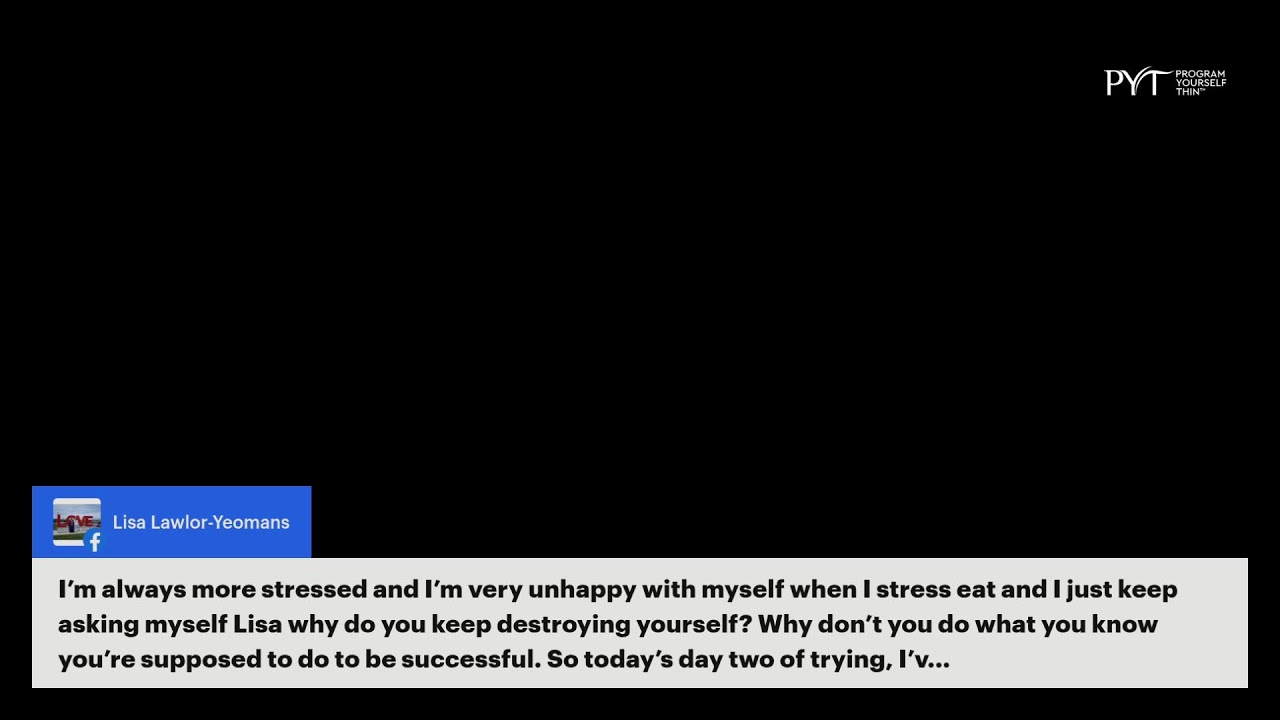

The #1 Weight Loss Skill Isn’t Willpower #programyourselfthin #weightlosshypnosis
Focus on the Weight You Want to Live At, Not the Weight to Lose #programyourselfthin
