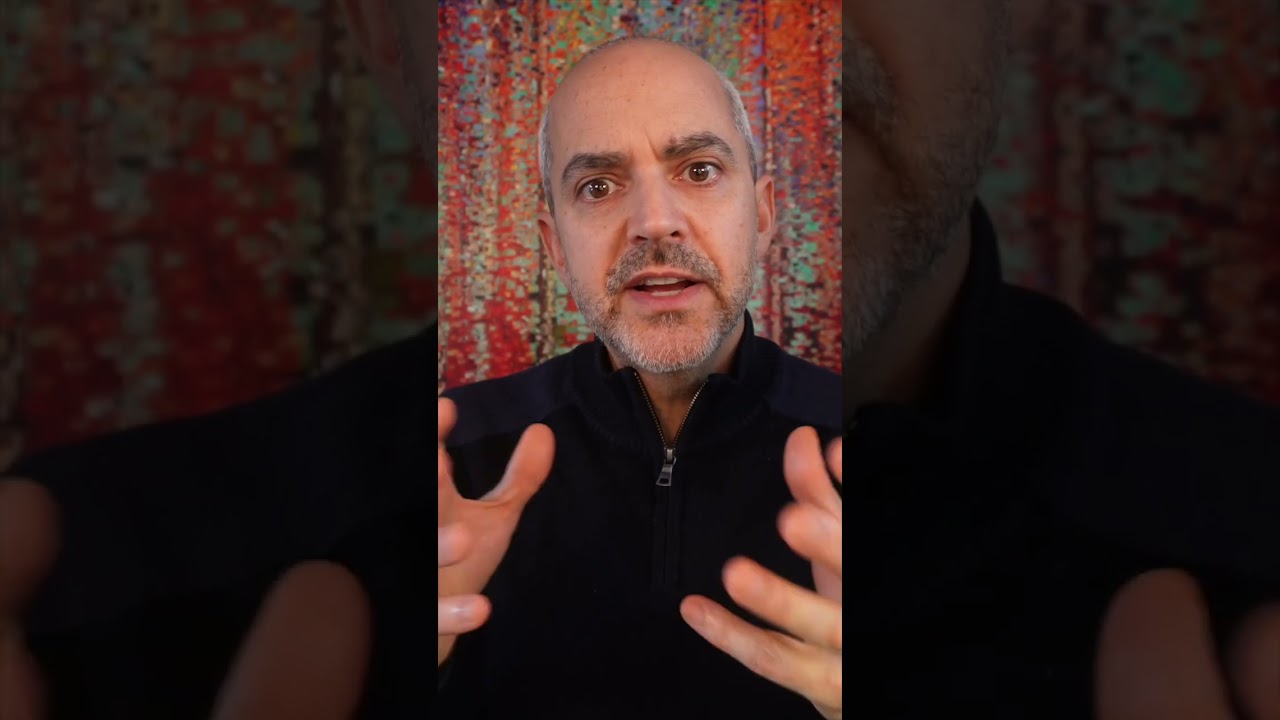
Why Your Motivation Keeps Running Out

In this 2026 YouTube video, weight‑loss coach Jim Katsoulis explains why people’s motivation to lose weight often fizzles out while motivation for other life domains (parenting, work, relationships) remains steady. He argues that most people rely on extrinsic, appearance‑based motives (looking better) which are weak and short‑lived. Instead, he advises reframing weight‑loss goals to align with deeper, intrinsic values such as being a better parent, having more energy for work, or improving mental health. By “wrapping” weight‑loss around these core motivations, the drive becomes more durable. Katsoulis emphasizes habit formation over fleeting motivation, describing how small, specific habits (e.g., eating an apple at a set time) become procedural memory and run on autopilot. He critiques traditional dieting as a short‑term, unsustainable approach, highlights the psychological pitfalls of all‑or‑nothing thinking, and introduces his “Program Yourself Thin” framework, which includes mindset work, lifestyle design, eating strategies, and programming (including hypnosis). Throughout the video he answers live audience questions, offering concrete examples (apple habit, clean vs. pleasure days, handling family food sabotage, managing “food noise,” and using paradoxical intention). He also promotes a free hypnosis session (“The New Thin Me”) to help listeners internalize the new mindset.
Chapters
Why your weight loss motivation keeps running out. Because it does, doesn't it? You start off real strong, you start off real fired up and excited, and then it fades away. And it happens every time. And it's happened every time for decades at this point, most likely. So why is that? Why does your motivation to lose weight disappear when your motivation to take care of your kids, go to work, do the really, really important things in your life doesn't? Right, because there's a big lesson to learn there. And I would suggest that a lot of this starts with how most people think about weight loss, because if you're like the average person, your main motivation to lose weight is that you want to look better, right? You want to look better. You want to wear different clothes. You want to look better. You want people to respond to you differently. That's what you want. You want to look better. It all comes down to that. And as long as your main motivation is to want to look better, you're probably going to struggle with this motivation issue that it doesn't last. And it's almost like hard to see this because you think about looking better 24 hours a day. You want to look better 24 hours a day. You really do. But it doesn't last. How come? And the reason why is because the motivation to look better is not your strongest motivation. And I kind of gave you a clue as to what is a moment ago. Things in your life that are more important to you— raising your kids, Being in a relationship, going to work, personal development, whatever you do consistently in your life that you never run out of motivation with is really what you ought to study in order to become more motivated with your weight. Because when it comes to the things you're truly most motivated about in your life, the things that make you get up in the morning when you don't want to get up, the things that make you do the things you have to do when you don't feel like doing them, what's the difference between those things and your weight? Well, those things are so fundamental to who you are that they almost feel like non-negotiables, whereas how you look comes and goes. Sometimes you care, most of the times you don't, because it's not really that important to you. If we compare your desire to want to look better to your desire to want to raise your children or to maintain your relationships or to keep your job, they are 2 different levels. 2 totally different levels. And so to pretend that wanting to look better should be as motivating to you as the job you have or raising your kids, that's not true. And this is a big part of why your motivation fades, because your weight loss motivation is what we call in science of motivation, it's called extrinsic. It's based on other people. If you were the last person on the planet Earth, would you care about what you look like? Maybe, maybe not, right? But again, we care about those other things no matter if someone's there or not, right? We care about, you know, having money to live the way we We want to live our kids, you know, health and life and well-being, our partners and relationships we're in. These are things that we care about on a deeper level. So how do we get the motivation to lose weight be that strong? Well, we take the weight and we wrap it around those things that are already important to us. So instead of one Monday saying, you know what, now I really care about how I look and I'm going to commit to this plan so that I can look better, right? Yesterday you didn't care about what you look like. Today you really care about what you look like so much that you're not going to eat for 16 hours or you're not going to eat any carbs. Or you're gonna restrict calories? No way. You weren't motivated yesterday and now you are at 100%? That's fishy. That's suspicious. Okay, we want to wrap our weight loss around things that we've been motivated about consistently every day for years. So how do we do that? Well, we start to look at our weight loss motivation in terms of the things that are already important to us. So if raising your children is really important to you, how can we wrap the weight loss around that? Motivation. Well, look at your ability to be the parent you want to be, and think about yourself not just what you look like. That's the secret, okay? Because your weight affects you in other ways. Your weight and how you eat and how you live affects your energy, your mindset, your cognitive abilities, your emotional stability. And so when you consider being the parent you want to be, and you imagine yourself eating and living the way that makes you overweight, how is that impacting your ability to be the parent you want to be? How does overeating ice cream or junk food or processed food consistently impact your ability to be the parent you want to be? Now, when you start asking questions like this, you feel like you're getting punched in the gut. That's the point, though, because that lets you know that we're starting to hit some real emotional grounding here. Right. And you can do this with anything. Maybe your work's really important to you. How does not just your weight— again, you've been conditioned to think about your weight in terms of what you look like. I'm talking about your weight and what you do to create that weight in terms of how it makes you feel physically, mentally, emotionally. And so when you consider how you live and how you eat and the effects it has on your energy, your mind, your emotions, how does that impact your work? How does that impact your ability to earn the income you want to earn to live the life you want to live? To be the parent you want to be, to have the relationship you want to have. Because again, it's not that you put weight on so much as it is you're sluggish, you're tired, you're emotionally, you know, all over the place. If you're living that way and that's your reality day in, day out, it's going to have a huge negative impact on the things that matter most to you. So the more you start to look at it that way and think about it that way, you free yourself up to actually think about your weight in a more accurate way that is also a lot more compelling to you instead of trying to make it that all of a sudden now my weight's really important to me because I want to look better. It just doesn't last. And you've experienced this. So take some time and really start to consider how your weight, but not just your weight, what you're doing to create the weight, the eating and the lifestyle that's creating the weight. How are those things impacting the areas of your life that are most important to you? And start to consider that because that is the path to finding better motivation that lasts. And once you have motivation that lasts, the whole process becomes so much easier. The motivation you have is kind of like the engine of your car; it dictates everything else. And so your motivation really is one of the first and most important things that you want to focus and work on. And one thing I can offer you to help you through that process is to click the link in my bio if you're on TikTok. If you're on Facebook, you can just type mind M I N D. Into the comments section. It'll automatically send you the link, but go get that hypnosis session I made for you. It's called the New Thin Me, and it is designed to help you connect to the person you want to be and the weight you want to live at. And it does a lot of the heavy lifting of really putting you into that place where you really appreciate all of the benefits you get from getting control of your weight and your health. Okay, and they go far beyond just what you look like. Although that's nice too, and again, you could keep that, but we can go beyond it as well. And I think you'll find that that's very, very helpful. So go check that out. And if you have any questions, feel free to ask them. I am here every Monday through Friday at noon to talk about weight. I've been doing this for over 20 years professionally, and I'm here to hopefully give you some different insights than you normally get when it comes to your weight. So any weight-related questions are welcome. Doesn't matter what plan you follow. I have helped people that have done virtually every approach possible to weight loss and have talked with them. Because at the end of the day, the biggest issue I believe with, with weight for most people is the mindset piece of it. And this is where all diets kind of unite, that it doesn't really matter what diet you're going to follow. The way you're going to follow it is pretty consistently the same amongst all dieters. That you're going to jump into it 100% on day 1, whenever that may be for you, and you will follow it through for as long as you can, which usually is not that long. You know, most people, again, are able to follow their diet for a couple of days to a couple of weeks on average. That's the average. And if that's been your experience, you know, it's not an unusual one, but it's also one that you can change. You know, and that's kind of the key thing. So, Jane. Jane says, I'm still having a lot of difficulty eating veggies and fruit. I want to, but I don't choose them. I still choose to eat bread, pizza, etc. And now I'm not losing any weight and I'm not keen on salads. Yeah. Okay, Jane. But I mean, I think your problem reveals itself right in your first statement there. I'm having— I'm still having a lot of difficulty eating veggies and fruit. And when I hear that, I hear a vague goal that you want to eat more veggies and fruit. So how are you measuring your success? Do you have a sense of how much veggies and fruit you were eating and how much you want to eat? Or do you just have some blanket idea that you just want to eat more fruits and veggies and then any time you don't, it feels like you're failing? So what kind of numbers are we working with here? Okay. Because trying to eat more fruits and veggies is really hard. Trying to eat an apple in the afternoon Monday through Friday is a lot easier. Does that make sense? Does that make sense? Trying to eat more fruits and veggies is impossible, right? Because what does that even mean? And eating, you know, an apple in the afternoon or banana in the morning or, you know, some berries in the morning with some yogurt, you know, that's a lot easier. So again, I would suggest that your, your frustration and your difficulty eating more fruits and veggies probably comes down to an unclear goal primarily. That you have an unclear goal of wanting to eat more, and when you don't do that. Yeah, Jane says I eat almost no fruit and veggies. I've added an apple a day, but most days I forget, and then the day is over. Okay, great. So let's let's get real specific though. You know, you don't want to eat more fruits and veggies. You want to eat an apple every day. Great. So let's focus on that. Let's make that the habit that you're focusing ninety percent of your energy on, not just spontaneously hoping you eat more fruits and veggies. The apple is your is your blueprint for how you eat more fruits and veggies. So you focus on the apple first. That's 90% of your focus. How can I remember? What, just because you forgot? No shit. Anytime we start something new, we're going to forget because we don't have the neural networks and connections for that behavior, right? There's literally a part of your brain called procedural memory. This is why you brush your teeth when you do. You, you've wired in your procedural memory: brush my teeth when I wake up. Brush my teeth before I go to bed, and now you just do it. Well, when it comes to eating an apple every day, you don't have the connections are like this. So you have to the first step is making those connections. This is why you can't just eat more fruits and veggies, right? Because how are you gonna how are you gonna work on five habits at a time? You can't. So I like the apple habit is perfect, and an apple a day—that's my goal. And now we got to drill down more though. An apple a day—good luck with that. That's too vague. You know, when I eat an apple, I eat an apple every Monday through Friday. You know, when I eat it, I eat it between 7 and 7:30 in the morning. It's part of my breakfast. Okay, so I programmed it in. I eat a banana every Monday through Friday. When do I eat that? I eat it pretty much 1:30, right after I've eaten my salad. I eat it at lunch. So I'm not trying to eat more fruits. I mean, I am in a vague sense. But I'm way more specific. I eat a salad every day for lunch, Monday through Thursday. I don't have to try and remember to eat more fruits and veggies. I've scheduled and programmed it in. Does that make sense? But I only did one at a time. I didn't wake up one day and said, you know what, I'm gonna start eating an apple in the morning, I'm gonna eat a salad for lunch, I'm gonna eat a banana for this, I'm gonna have broccoli for dinner. I didn't do that. I focused on one thing at a time until it became second nature, automatic. Because you hit the nail on the head, Jane. That most days I forget. Yes. No shit, folks. That's your biggest challenge. Once you've kind of become aware of something, say, oh my God, I don't eat veggies and fruit. I need to eat some more. Okay, great. What's your plan? Make it specific. And now your biggest challenge is remembering. Jane, that's why we do the redo and rehearsal technique and program yourself then. But you got to make that your focus, Jane. See, you started this by saying, I'm still having a lot of difficulty eating veggies and fruit. Big and vague. You drilled down after we talked a little bit and you said, I've added an apple a day, but most days I forget. That's way more specific. Okay. When are you looking to eat that apple? How can you ritualize it? How can you remember? How can you make it automatic? You know? And here goes Jane back to the problem. I still eat out too much. I had pizza yesterday, then I was full. And now, you know what I mean? Like, this happens a lot too, that as we zoom into the solution, your brain wants to just go to some other problem. You know, you can still eat out too much. Okay, Jane, you can only work on so many things at a time. You can't eat more fruits and veggies, stop eating out so much, stop overeating, stop eating sugar. You can't do all of those things at once, folks. It's too much, too much cognitive load. And maybe it sounds just like, oh, all I'm gonna do is work on eating an apple. Yeah, yeah, that's exactly what you're gonna do. Because what if you spent the next 2 months focusing on the apple and you, you Program it in so that now every day at noon, you get up and you go and eat an apple, and now you do it five days out of the week every single week. Now you've got a baseline. Now you can focus on something else. You know, so again, we want to we want to take it's the same classic problem. I say this all the time that most of the time people come into a conversation and they'll give me a real big vague problem. You know, I'm struggling. I'm really struggling to eat more fruits and veggies. Well, that shit is so big and vague that I don't know what the solution is. What? Because again, you know, always can check it because what's the solution to that vague problem? A vague answer. Okay, we'll just start eating more fruits and veggies. That means nothing to your brain. Your brain's very literal. So again, when I talk about eating an apple, my brain directly goes into when am I going to eat that apple? When am I going to eat it? When's the best time for me to eat an apple? What's the best time I want to eat an apple? And I'm getting clear on that, and then I'm Again, I'm working to program it in so I do it automatically. You know, but you'll have a much easier time focusing on the apple habit than you will eating more fruits and veggies and not eating out anymore and all those things at the same time. That makes sense. What's up, Pat? Pat says, have made healthier habits because when motivation fades for me, I rely on my habits. Agreed, agreed. I think the same thing. My motivation comes and goes. Um, but really what lasts are my habits. You know, whether I'm at the point now where I'm motivated or not, I'm gonna eat a salad for lunch because that's what I got prepared and ready to go, basically. You know, it's the easiest path for me at this point. I have made in my life the easiest path day to day. When I wake up in the morning, the easiest path for me to take each and every day is the path that brings me to my goal weight. If that makes sense, and that's the that's the wisdom of building your weight management program around habits because the beauty of focusing on your habits is that at some point the habits kind of have their own their own momentum. They they carry themselves forward, right? And that's really important, as you can imagine. So I think that there's a lot of wisdom in that, Pat. That's a smart move. I think everyone should do that. I certainly am obsessed with my habits. Everything I do is built around habits. I don't spend time forcing myself to do things that aren't going to be habits at some point. And a lot of that is because I've done so many challenges where I've forced myself to do something for a period of time with focus, motivation, willpower, and then it just fades. So I'm really— it's been decades now where I'm just obsessed with habits. And if I'm going to take something on, it's because I'm going to make it a habit that eventually just runs itself. And now I have a whole collection of habits that run themselves. That really support me living at my goal weight. And again, just to give you an idea what those things are, you know, I show you the goal weight blueprint. This is the goal weight blueprint. We use this in the program, and this is the pyramid we kind of follow. Right? So mindset, lifestyle, eating. Right? These are the three categories that we focus on. You know, and there's also programming. That's the fourth one, I would say. And we get good at those skills. We get good at those habits so that we start to do them naturally and automatically. And I think that's how you succeed, because you know at the end of the day, everything just comes down to what you repeatedly do. Your weight is a reflection of your average calorie consumption. Your average calorie consumption is a reflection of your eating habits, and your eating habits are a reflection of your lifestyle, how you typically live. And then all of that stuff's a reflection of your mindset. So we kind of reverse engineer your weight backwards so that. You can get the results you want in the easiest, most comfortable way possible. And I don't know, I, I think it makes a lot more sense, um, than dieting. I don't think dieting makes a lot of sense though. Do you all think dieting makes sense? I think when you take a step back and consider dieting and what it is and how it works, I think you'll quickly agree with me that dieting is not a great approach for changing your behavior long term. Has it been for you? And it's not because you're broken. It's not because you're lazy. It's not because you haven't been motivated enough. Those are factors, but they're small factors. The biggest factor is that dieting is a short-term approach. It's the idea that you're going to change your eating for a little while so you can lose weight. But what are you going to do then, right? What are you going to do when your motivation flags a little bit or life, you know, starts coming at you full force and the bullshit? Starts coming your way? How are you going to keep up, um, you know, the strict diet? And I would suggest that most people aren't, you know. Yeah, Pat says dieting has never worked for me. Dieting never works for anyone. I mean, statistically, it's a— it's an absolute certified failure. Yeah, Gil says diets are stressful. No, of course, right? And I think everyone knows that to some degree. I think the problem is people say, well, what else am I supposed to do? Right, there's obviously injections or surgery and dieting. What if I'm not gonna die? What am I gonna do? I don't want to get surgery. I don't want injections. So what am I going to do, Jim? There's nothing else to do. And that's how you know that the dieting industry is not even your friend. It's a psychological operation that's been put— betrayed on all of us by the food processing companies. People say, what do you mean? Well, Weight Watchers was owned by Heinz. Jenny Craig was owned by Nestlé. The company on SlimFast, owned by the same company as Ben& Jerry's ice cream. Um, these companies don't want you to eat less of their shitty foods, you know. So a lot of people walking around with an unsuccessful strategy they're trying to follow. Yeah, Gil says they've— the diets have never fixed my mindset around food. Diets never fix your mindset around food. They're not worried about that because diets aren't there to help you live at your goal weight, you know what I mean? Am I crazy to believe that I'm— that I'm loneliness? Am I being judged by other women brought me some acceptance? Um, I, I'm not sure about that question exactly what's being asked there, but But yeah, we're always being judged. I hate to say we're always being judged. Always being judged. Jane says, you totally make sense. I am just annoyed that although I have been reading my blueprint, I struggle so much with my food decisions. Yeah, but Jane, I'm telling you why. You got, you got a global general thing you do where you make these big sweeping things you want to do. Again, most my clients do. When you're an overthinker, you think big. You're able to You know, you have a lot of brain capacity, and so you can think about lots of things you should do to change. But you have to understand, there's a huge difference between being thinking about all the things we should change and the ability to actually change those things. Do you know what I'm saying? I'm so obsessed with this, I'm gonna put a lesson together on capacity. I think it's, it's like the, the topic of our times, you know, because we're always We're always confusing knowledge with behavior. Just because we know about something doesn't mean we can do it. Again, you could read a book on piano. You've never played piano, played golf, or drawn, and you could read a book on how to play piano, how to play golf, and how to draw in a week. It doesn't mean you can do those things. So again, having an idea what you should do and being able to do it are two totally different things. And that's where you get caught up a lot, Jane, is you think about all the big things you should do to change and you should do them now. And then you expect yourself to be able to do those. And then when you can't do them, you beat yourself up for it. And everything I say to you always goes back to the same direction. Break it down. If instead of trying to eat more veggies and fruit, you make it a focus to eat an apple every day at a certain time and start to ritualize it and habitualize it, that's going to serve you a lot better. But you never let yourself do that because you dismiss that as being inconsequential. Your brain says, ah, what's an apple a day? That's not going to help us with our weight. And you say that and it stops you from doing it. But you've been saying that to yourself for decades now. Whereas if over all those decades you had consistently focused on putting an apple in, putting a banana in, drinking my water, doing a little meditation, doing some mental programming, thinking about my breakfast, optimizing my lunch. And if you'd kept doing those things over the years and actually done them, you'd be in a completely different spot today. And so now you're trying to do everything at once, but trying to do everything at once is pretty much the fastest path to not doing anything at all, just spinning our wheels. Um, what's up, Connie? Connie says, hi Jim, I've learned so much from listening to you. I eat strategically, adding in something I love like a cinnamon roll occasionally. My significant other bought a small blueberry pie and gave me half, so I admonished him, not my treat, and told him to put it in the freezer for himself. I eat frozen blueberries, phage yogurt, and protein granola. What is it with the family interfere and sabotage? True, true, Connie. But hey, I'm super proud of you, um, because we all got challenges for sure. And it's a pretty common challenge to have to deal with our family or who we live with, our partners and the people in our lives. You know, it's one of the biggest, I think, overlooked pieces of managing your weight because, um, you know, food is relationships. You know, it's usually a central part for a lot of us and, you Changing our food eating usually has an impact on the relationships that are most important to us in our lives. So that's a real thing. I would suggest that it's typically not intentional sabotage. Sometimes it is, but more often than not, it's just people looking to connect with you, you know, through food. And so I have found I dealt with this a lot. I mean, again, my family, I'm Greek. Growing up culturally, food was everything. And so as I began to change my eating, it created a lot of stress and strife between me and a lot of the people I love in my life. So it was it was hard in that way. But you know again, you get through it if you stick with it. And you know, I think your boy your strategy was perfect, Connie. You know, so I think that's beautiful. You know, you got that pie. You didn't want to eat that. That wasn't your thing. And you let them know and you communicated. And I would say ultimately, in a real vague sense, communication is the key to getting through those types of things, right? Being able to communicate with the people you love in your life that just because you're changing how you eat doesn't mean you love them any less and find new ways to kind of bond and create rapport, you know? But yeah, that's real. So, Carolyn. Yeah, Carolyn. Yep. Started listening to Roy Baumeister willpower book. Nice. Yeah, that's a great book to know about. Again, folks, I say this all the time. If you're gonna try and rely on dieting to lose weight, you better understand willpower because willpower is one of those things that most people are relying on but simultaneously don't have much understanding of either. A lot of people think willpower is this nonphysical force that you should just be able to always implement, and it's not. Your willpower is just like a muscle in your body. Literally, I mean, it's a prefrontal cortex. It's not exactly a muscle. It's a prefrontal cortex process, but it can get depleted just like a muscle. And so, you know, I use the example all the time that if you try and sprint a marathon, at some point you're going to hit a capacity wall. At some point, if you try and sprint a marathon, you're going to collapse. And I think the exact same thing happens when people try and lose weight through willpower is they're able to do it for a period of time and then they can't. They run out of it, and that's because that's how willpower works. And I think a lot of people don't recognize that and just blame themselves for when the willpower runs out. You know, but if you tried to sprint a marathon when you collapsed, I hope you wouldn't blame yourself. I mean, that's just a natural cause-effect situation, and it's no different with the willpower. You know, yeah, Connie says it wasn't easy to to do that. Yeah, I get it, Connie, but I'm proud of you, and and that wasn't easy. And by the way. Not easy things. See, here's another thing, because again, my clients are overthinkers and perfectionists, okay? And so they have struggled with diets for decades. Typically, they haven't worked for them. And the big problem is, though, that they blame themselves. They say, I am bad because I haven't kept up my diet, or I haven't— I didn't keep saying no to these foods. But I want you to understand that, A, You have no problem doing hard things, you know. So it's not that the diet's too hard for you. That's not why you're not doing it. It's because, you know, at this point, if you're most likely— if you're listening to me, you're in your 40s, at the least 50 plus. That's most of my clients. And at this point, you have lost weight on diets and then gained it back. You know, at this point, you have all the evidence you need that the diets don't work. So it's not that you have any problem doing something hard. You've done lots of hard things in your life. You've done lots of hard things with your weight. The problem now is that you're asking yourself to do something hard that you don't believe works. And so your brain says, I don't want to do that. I don't want to diet because it doesn't work. It's not that you can't even stick with it. It's that diets are not designed to work. Diets are designed as a temporary response to lose weight quickly. They are not designed to live at your goal weight. And so again, I want you all to understand that most of you have no problem doing difficult things. The reason you struggle to get yourself to do a diet though is not because it's difficult, it's because it doesn't work. And you know this, you know this. And so it's always hard to get ourselves to put a lot of energy into something we don't think is going to work, and dieting is no different, right? So that's why I say program yourself thin. I'm not saying it's some magical cure. You know, there's work to do here for sure, but it's work that pays off. It's work that makes sense. It kind of— again, it reminds me of playing the piano. If you practice the piano for 15 minutes every day, you're going to get better. It's not a question. It's an absolute. You're definitely going to get better. You know, Connie says, what do you eat on Friday through Sunday? I don't really like getting into all the specifics of what I eat because it's just so hard for dieters not to just want to copy that. And I always try and stress that the way I structure my eating, what we teach in Program Yourself Thin, is there's clean and pleasure days. And again, that you can break those up any way you want. But for me, typically Monday through Friday afternoon is clean days, and Friday afternoon through Sunday night is more pleasure days. So what does that mean? Well, it means that the clean days I'm more focused on fueling my body. I'm looking to really optimize the fuel going into my body. On the weekends, I'm more focusing on. I'm more focusing on fun foods, which doesn't mean that I'm just going crazy. They're not binge days; they're just days where I'm more making food choices based on they're more fun than fuel. They still fuel me, but there's more fun. So for me, you know, I eat those foods, but they're strategically they're engineered. So it's like I have days where I'm really fueling myself and days where it's more about fun of the. Food. So that's kind of how I break it up. And the specifics of what I eat really are irrelevant, you know, because everyone's different. So my pleasure meals are different than someone else's. So if I sit here and tell you my pleasure meals, unfortunately dieters just have the tendency to want to— well, that's what I'm going to do. Well, that may or may not be a good fit for you. I'm me, you're you. We have different preferences, we have different likes, different situations and routines and whatever. So I have figured out what foods I enjoy most You know, and that's what I eat on my weekends, my pleasure days. So, um, Ideas. I still have half a pizza from yesterday in my fridge and it is calling me. Um, yeah, I don't know, eat an apple first and then eat some of the pizza. Again, what are we focusing on, Jane? You see what I'm saying? Like, again, you, you— and this is so— this is for all of you because again All of you big brains out there, right? You think you can do lots of things all at once. You can't. And I bring it back— that's why I like using the example of like a piano or golfing or whatever, just things that are big learnings, right? Learning to play the piano is multitude of things you're learning, you know, and you can't do all of it, you know what I mean? You can't do all of it at once. You have to break it down and work on different pieces at a time. So again, that's what I would do if you cared about the apple, you know, if the apple's important. But you may not care about the apple. You say, oh, the apple doesn't matter. I need to— I need to eat more fruits. I need a lot more fruits and veggies. The apple doesn't matter, you know what I mean? Like, like, that's what we tend to do. But in terms of the pizza, yeah, I don't know. What do you want to do with the pizza? You want to eat the other half? You want to eat a slice of it and save more for tomorrow? You want to throw it in the trash? You have lots of options in front of you. I will say that the options are never just to eat the whole pizza or not eat any of it. You have lots of options. And, you know, I'd love to dive into that. What do you want to do? What do you consider your options? What would that option give you? What would that option give you? You know what I mean? I'd like to evaluate what my options are and pick the best one moving forward. Uh, Carolyn says, not easy. I love dessert, home baked, and my sister-in-law opened a sugar shack baking at the end of our driveway. Hubby is not allowed to bring in the house, leave at work, or truck for now while I have so much to lose. No, that's fair, that's fair. But Carolyn, again, in a way, in a weird way, you're— you can be gratitude for that because you get to work on that now, you know? It's like my brother. I remember when he quit smoking, he took a pack of cigarettes and left them right in his drawer. He's like, I'm not getting rid of all of them because they're always there. So it's like, I don't want— the reason I don't Smoke to be because I can't get them, because I can always get them. He's like, "I want the reason that I'm not smoking because I don't want to smoke. Whether the cigarette's here or there, I don't want to smoke, and I'm not going to smoke it." You know, and so I think in that sense, you know, this is a good opportunity to work on how you interact with baked goods, you know, and find the sweet spot. What's the sweet spot for you? Right? How much do you want to eat? Where's your weight? You want that to be at? You know, but kind of looking at the whole thing. But yeah, that'll be that'll be kind of a challenge. You know what I mean? But in in a weird way, it's also a challenge that allows you to practice interfacing and how you want to eat these foods the way you want to. Mel, yes, Mel. Mel says, "I slice I slice pizza with huge salad or lots of veggies." Yeah, agreed. That's a great strategy. You know, is to make the pizza. I do that a lot. You know, that, that is one of the pleasure meals I have. I have pasta on Saturday nights a lot of times, and, um, I've optimized that meal. So yes, I do eat pasta, and I probably even overeat it a bit, um, but I also start my whole dinner off with a giant plate of broccoli, and, you know, that helps kind of COVID it a bit, you know. Um, so I think that's a great strategy. I'd only thought of eating the rest of the pizza, not eating an apple, and then having a piece. Hmm. On the other thought I have is to just chuck it in the garbage. I'm so all or nothing. Yeah, Jane, exactly. Um, but again, that's a global thing, Jane, right? You're all or nothing with everything to some degree. So this is an opportunity for to realize that and then work on being all or something again. Now you give yourself some more options and you choose the path forward that works best for you, you know. But that's such a better approach than— again, this dieting trained you to be You're just constantly like at the mercy of every little decision you make, you know. So you're either— again, because dieting is all or nothing— so you're either doing all and everything's perfect, or you're not doing anything, you're not doing it at all, right? And that's why I say hypnosis is so helpful for so many reasons. Which, by the way, if you're, if you're not in my world, please get the free hypnosis session I made for you. If you're on Facebook, all you have to do is type M-I-N-D, mind, into the comments section. It'll automatically send you a link to go get the hypnosis session. It's completely free. The New Thin Me, help you think like a thin, healthy, happy person. It's completely free. Go check that out. Uh, Carolyn says, yes, working on it. I make him muffins every week and don't eat, um, those. Also chocolate bars and ice cream in the house. Yeah, but you can have that stuff in the house too, and you can still eat it moderately. I'm not saying it's always easy. It rarely is. But you can practice eating differently. You can practice thinking differently, and that's how you get to the weight you want to be at. Yeah, Mel says, "I find if I try to completely drop something, my mind keeps reminding about it until I satisfy it. So I modify with lots of veggies to fill up." Well, Mel, yes. Everyone listen to Mel. I think Mel is absolutely correct, and that's absolutely what I've seen in my life and in my work. I've done over six thousand private weight loss sessions. And I would say that's absolutely very much the pattern that when people try and completely cut something out, it actually does the opposite effect. And there's a reason why that is. It's because the way your mind works. And there's a thing called paradoxical intention. So the more you— okay, that's it. No more sugar. No more sugar. And it's like the more intense you become on that, the more you start thinking about sugar. And by the way, you're not thinking about sugar. You're thinking about cakes or ice cream or however whatever form of sugar you like. You're not thinking sugar, you're thinking cake, ice cream, cookies. And the more you say, oh, no more cookies, no more ice cream, that's it, that's it, it's Monday, no more ice cream— watch how much you focus on ice cream. And again, I could go on explaining why that happens subconsciously, but I don't feel like it right now. But you're absolutely right, Mel. So yes, that's why I'm programming myself then. We're all or something. All or something. Because all or something is a mindset that allows you to be much more at peace with food. Versus all or nothing, and that's well known. And that's why the diets teach you all or nothing because they're there to sabotage you anyways. So that's why they train you all or nothing so hard because they want you to fail, and that is a good way to do it. Jane said food noise is so powerful. The pizza wasn't even that good, but I still want it. Yeah, for sure. But food noise is again food noise is one of those big vague things. I think food. I was thinking about this this week. Food noise is such a funny thing for me. You have to understand because I've been dealing with food noise. For over 30 years, right? I'm a hypnotist. I'm a yoga instructor. So I have thought about food noise obsessively. It's so funny now that this phrase gets out there in the public and people start using it. Well, what does food noise mean? You know, what is it? Sometimes people think food noise is just what happens when you don't get the shot, but there are a lot of things that affect food noise. Yeah. Yeah, and then, and then there's a lot of ways to resolve food noise that don't involve GLP-1 shots, just so you know. There are natural ways to influence food noise, I promise you. What's up, Karen? Karen says, I really like listening to you and you have adopted some of your strategies. I've accepted that I need to do this slowly and have lost about 13 pounds since the middle of August. Thank you, Karen. Screenshot that. I don't know why. I honestly have so many testimonials now, I don't even know what to do with them all. Anyone have any ideas? What do you do when you have hundreds of testimonials? I don't even know what to do with them. Should I put them in a book and let people read them? That's awesome, Karen. I'm proud of you. And that's what we're talking about. Again, 13 pounds, right? And that's nice. Now, now you're in a place where it starts to feel like something. Good for you. I agree. The hardest part is probably you of Program Yourself then is that we take it slow, you know. And so unfortunately, when you take it slow in the first— in the beginning, you don't get dramatic weight loss results necessarily, you know. So, um, it's not necessarily a bad thing. If you want to learn how to, um, if you want to learn how to, uh, you know, do anything, you gotta kind of practice it. Um, ah, there's— yes, Connie. Yes, yes, yes, I like it. I'll have it later, just not today. Yes, that's a great phrase too as well. Yeah, for sure. What's up, Vanessa? Vanessa says, member here, food noise is almost non-existent since diving into the PYT program. Way less now. I will screenshot that. Yes, and I will say, um, I heard— I read that so many times in a lot of the testimonials I was reading last week. Um, food noise. Yeah, because again, there's a lot of ways to deal with food noise, folks. Again, If you sell shots, you're going to make it sound like the only way to deal with food noise is to get this shot, but that's not true. There are other ways to deal with it that are way more effective and way more long-lasting. By the way, Jane's on a GLP-1. She's still dealing with food noise. You know, any of you on GLP-1s, there's still food noise and you're relying on that shot forever. It's, it's, you know, I don't know, that whatever. I gotta get out of here though. I gotta get a lot of stuff to do. Um, but yes, thank you so much. You guys are awesome. Thanks for sharing this stuff and asking the question you asked. I appreciate it. And great strategies today too, by the way. Um, if you're not in my world, click the link in my bio and go get the free hypnosis session I made for you. If you're on Facebook, just type Mind, M-I-N-D. It'll automatically send you a link. You can go get it. Um, go check that out. Um, all right, Melissa's down almost 20. Nice. Nice job, nice job. Yeah, stuff works. Time moves forward, and if you take it slow, you— the results start building up, and they build up in a way that's sustainable and feels good. That's the key. That's what I'm talking about. Um, but go get that free hypnosis session I gave you. Again, click the link in my bio or go to, um, in programyourselfthin.com, or if you're Facebook, just type mind, M-I-N-D, into the comments and it'll show up. Um, and then if you like this, I'm here every Monday through Friday at noon Eastern. Uh, pop on here, ask your questions. Uh, let me, let me see if I can help you. I'm happy to do it. And if you can't make the live, it's also a podcast. You can search Program Yourself
More from Jim
Focus on the Weight You Want to Live At, Not the Weight to Lose #programyourselfthin


Think Like a Thin Person, Not a Dieter #programyourselfthin #weightlosshypnosis

I Am Thin: Weight Loss Hypnosis Session #programyourselfthin #weightlosshypnosis
The Nutrient That Reduces Hunger and Helps You Lose Weight #programyourselfthin