E77 Jim Louderback | Joe Wagner
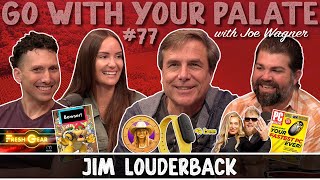
Jim Louderback, who launched TechTV and now writes about the creator economy on LinkedIn, talks through his career in tech media and where things are headed. He sees AI recording devices and brain-computer interfaces coming, thinks Bitcoin works as a store of value, and warns against meme coins. The internet killed print media, and now we're figuring out what surveillance and deep fakes do to us.
Chapters
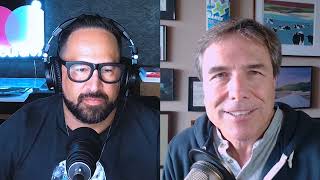
All right, welcome to another segment of Wet Your Palette. You're going to not want to miss this episode. We got special guest Jim Louderback and our social media director Sabrina. Sabrina, I'm kidding. It's a running joke. Sabrina Balic-Strautzi and Chris Rubio, of course. We just had a great conversation about really the history of tech and the arc of where it's come about being, you know, an influencer and insights about current and future thoughts. Jim, thank you for being here. Uh, what you're doing on LinkedIn and your newsletter, getting people acquainted and informed with your opinions.
Yeah. We talked about the power of the internet. Uh, we talked about gatekeepers. We talked about, uh, bad technology and we talked about how AI is just gonna crush us all. Ooh.
Yeah. Leave it on a high note.
And go, go with your palate fashion. We also had some fun tangents. Pokémon did come out.
Yeah. So if you wanna know the future of humanity as we know it, you're going to want to listen to this podcast.
Oh, just so you guys all know, we're rolling right now, but yeah, just like, okay, thanks, Chris. We always do.
What, dude?
I like to know. Always. Now we all just shut up. Yeah, you just do the cold open and don't tell anybody you're doing the cold open.
I like to let them know that, you know, because sometimes you say some shit that You know, I mean, we could edit it out.
That's why we— yeah, we can edit it. Yeah.
Yeah.
Well, we do. We do it like every episode. We edit you.
Well, especially now that we got Sabina on the podcast today, there's gonna be a lot of editing. Oh, I know.
Oh my gosh. Yeah. Chad.
No, but I, I do love the idea of doing, uh, like, you know, merging our, our, what we're doing in social media and tech over to the tech industry. I, I would be totally open to that. Yeah. Yeah.
I really like though too, how he's been opening the door to the community here and trying to invite people into what he's doing and just showing people like, you can do it too. I mean, we've already had, you know, other wineries of the community come in. They want to know what are you doing with your social? Like what you're working through. We have an open door policy, which I think is really great that we're kind of like, you know, there's no hidden secrets here. It's really just kind of, it goes back to just probably go with your palate, right? We just, it's for everybody. And we love this idea of that.
You know, the funny thing about this and what we've been able to do is that people generally think like, oh, this is an ego play, right? Like this is feeding like our egos. In reality, the reason people are not getting into it is because they have too much of an ego that they don't want to be hurt.
That's a great point.
And that—
Ooh.
What? No, it's true.
Oh my God.
That was deep. Yeah.
It's hard to put yourself out there.
Oh yeah.
I mean, it really is.
But you know what my trick is that I tell people whenever they're worried? Say, who are your favorite YouTubers? Okay, YouTube allows you to sort the videos by time, and you can find the first video they posted. Now, some people take away their— they just delete their first videos. But I'm like, go look at your favorite creator, look at their first video, and then look at what they're doing now. And you know what? Their first videos are always— not always— they're like terrible.
Yeah, in comparison, we can agree. Yeah, so we've done the same. Oh, you go back to our early stuff and it's just like, wow, you guys are garbage. It's okay.
Yeah, same thing with podcasting too.
Yeah, listen to your first podcast. Yeah, it's like, mics suck, you don't get the audio right.
They were in their closet.
Yeah, it was like, you know, yeah, we were talking—
or the cringiest part of what works.
Exactly. Yeah, yeah, yeah.
Well, we were just talking about Two Bears One Cave, right? And like, I mean, now they've got a whole like, you know, luxury setup. But their like first couple years, it was like a fold-up table.
Yeah.
And they're sitting there and they're, I mean, what, like Bert's drinking a gallon of Kool-Aid. They're just talking shit to each other the whole time. They got like some handwritten sign about two bears, one cave. You're like, like, okay. And they were, they were funny as hell.
Yeah.
I actually think the early stuff, they were even funnier, but I agree. You know, you can only go so far, like, and then you're telling the same stories over and over again. Our journey in podcasting was really like, we went through a lot of the wine stuff from grape growing, winemaking, production, sales, marketing, and then we were like, man, we've already told all these stories. We gotta start bringing guests in. And so for the last year, we've been guest-oriented and love hearing the stories, the entrepreneurial stories, the kind of, you know, the life and times of people and how they became to what they are. Um, because there are parallels everywhere with our industry. Um, but I think no matter what, people want that inspirational story. On that note, so welcome to Go With Your Palette.
So thank you.
You like that transition?
Yeah.
So today, uh, welcome to Go With Your Palette. Today we got a special guest, Jim Louderback, uh, and he's gonna tell us his story, uh, his journey through tech. And you've probably got to see it all, like from really the inception of how tech is maximized to what we're doing today with AI. And I mean, like, it's insane. The evolution has been nothing but just at light speed, it seems. So can't wait to hear the story. We've also got Sabina Balistraci today. Sabrina, sorry.
Perfect.
Balistraci, right?
Balistraci, yeah.
Okay. It's one of those Italian names. I'm part Italian, but still I botch it every time. Uh, so social media manager here at Copper Cane, and then co-host over here, Chris Fat Mario Rubio, and then me, Joe Wagner.
Fat Mario.
Fat Mario.
Mario.
Thank you.
Again, Italian, botching the Italian.
Mario.
Mario. Hey, it's Mario.
He's a wop.
Hey, I never asked you because you're, you're, you're half, you're half Italian, half Mexican. So do you err on the Mexican with Mario or Italian with Mario?
Oh, that's a great question.
You know, that is a great question, and I do get that a lot. It really depends on what mood I'm in, you know what I'm saying?
Yeah, yeah.
So, well, you look Puerto Rican right now, so I told you, stop calling me. I mean, not that I am, but I'm Mexican, you know what I mean? An Italian. All right, I'm proud of where I come from.
So which Mario are you today?
Which Mario are you today?
I'm feeling a little saucy right now. I'm feeling like Mexican.
Okay.
Yeah, I'm feeling like that.
Okay.
Yeah.
I want to know about language. Do you speak Spanish and Italian?
Oh my gosh, please don't put me on the spot with that, because what's sad is that this guy— so my dad didn't bring me up speaking Spanish. He's fluent. And so like, we'd always kind of get this— I get this weird situation when I was little because he'd come up to, you know, other of our fellow like Mexicans and talking and just in Spanish, everything like that. And I'm just like this young little white kid, just kind of like my eyes wide open, just kind of like, yeah, sí, sí, yeah, sí, sí. They're like, where'd you get this white boy, dude? Is this your son?
You sure you're the father?
Yeah.
Who is this guy?
Did you do a paternity test on that thing?
No, but actually, you know, Joe's actually pretty— you're fluent, aren't you?
In Spanish, yeah.
Yeah.
I lived down there, though.
Yeah. I spoke a little Spanish. I learned it in school, and then I spent a bunch of time traveling in Italy. The languages are so similar that I was always like, my brain could not choose between them. So with that heritage, if you know both languages, or if you know both languages, I'm very impressed.
I mean, the one thing about Chris is just he is not dedicated to learning new things. So I don't think he's— sorry, we talk a lot of shit about you.
Welcome to Go With Your Palate, Jim Louderback. No bueno, no bueno, open.
But thank you for being here, Jim. And I mean, I think we should just start with like, I mean, how did you even start to get into this space? Was it through college? What, you know, what, what, what drove you to want to get into the vast world of technology?
So, um, technology was easy. So my dad brought home one of the first pocket computers, and then he brought home one of the first Apple computers. And just like today, kids growing up with phones and tablets and things like that, we grew up with this weird technology in our house. Like the the modem, the way you had an acoustic coupler where you just stick the handset of your phone into this thing so that you could communicate over your phone lines. Before that was even a thing, we had that at home. So I went to school, but I, you know, and I've, my career has really straddled media and technology. So I went to school and got a math degree, but I took a minor in mass communications and so learned how to use computers. And so I got into, working with computers and technology. But the thing that was cool is like I did consulting and built computer systems and databases like the first 6 years of my career, and then I started writing about it. And so I started writing about it on, on like CompuServe and AOL and some of these early platforms. And one of my favorite computer magazines had a forum on CompuServe, and I can still remember my CompuServe user number. Do you want to know what it was?
What was it?
72247,421. And I was up there and My favorite computer magazine at the time, PC Week, I was on their forum and I was talking to them a lot and that's how I got to know them. They had a job to run their test lab. And I was like, I'm never gonna get the job. I was doing consulting, living in New York, they were in Boston, but I applied anyway. I went up there and they're like, they gave me the job. And I said, well, I could be this big consultant working with big companies or I could go write about computers and test them and not get paid a lot of money. I did that. And so that's kind of how it all worked out.
Wow, and so that's what introduced you to media. Now you're doing, I mean, would you call yourself a motivational speaker? No?
No?
You seem pretty motivational.
No, no, my goal now is to work to fund my travel habit. But what I think, as I'm later in my career, but really the sort of the thread of it is having a technology background, but building media companies and understanding where that intersection lives. And that's kind of what I've done. Now basically I'm a LinkedIn creator. I write a newsletter about the creator economy. And I work with some tech companies and creator companies, but really it's those 3 things together that I pulled together, kind of like the best things in my career, when I was running PC Week and running their labs, and then I was doing events with VidCon with Hank and John Green, and I've kind of wrapped them up together into just doing my own thing now.
So you get to pick the pieces that you've enjoyed throughout your career and then merge them into one kind of hobby, but—
It's not a hobby, it makes me money actually.
Yeah, but I mean, if you're doing your hobby like, Wine making is my hobby. Yeah, my job is social media.
Um, he finally admits it.
See that?
He's coming around.
I'm not going to ask you which one makes more money, which one grosses more, but that's good. I'm glad that, you know, that you see it that way. And I'm sure Sophia's—
yeah, the social media manager hasn't told him about the money.
Yeah, I, I think— yeah, she, she gave them all my credentials and she's making money and, uh, and China's harvesting, you know, whatever part of my Soul, they want to. Almost exactly.
That's awesome. Yeah.
Um, well, we grew up—
I mean, we grew up on PC Magazine too. I mean, when we were like doing computer news, I mean, that was like in the time of if you had like the Pentium 100 computer and you were just big time on your dial-up Napanet, you know, you could get that G4 graphics card, dude. Oh man, dude.
Was it the Tandy 2000 or something like that?
The, the TRS-80. Remember the Trash 80? Oh yes, earlier I wrote my first column for PC Week on a Trash 80. Oh my God. Yeah, but I thank you for the PCMag thing because I ended up being editor-in-chief of PCMag.
That's what it was. Yeah.
How long were you editor-in-chief?
Just a couple years. I ran their websites, um, and, uh, you know, I did magazines. I ended up moving out here to the Bay Area because we started a cable network about technology called ZDTV that became TechTV. But I went back to do that, but You know, it was obvious at that point that magazines, particularly computer magazines, didn't have much of a future because the internet was disrupting it.
I was gonna ask, at what point did you recognize that the magazine world was going to be consumed by computers? And at what point did they get out of print?
Well, at some point, there are still some computer magazines out there that are in print, but I can't remember which ones. But this was—
This says it all.
So, no, so in 2007, that, no, in 1997, sorry, in 1997 I was at PC Week. We started ZDTV, moved out here, and I remember I just left PC Week and it's '98 and PC Week had the biggest edition ever and for, for COMDEX, if you remember that event. But I saw the internet coming. I mean, the internet had been coming for about 5 years. Now we had the dot-com boom and the crash, but I could see on the dot-com boom more and more people looking at the internet and looking at blogs and looking at going direct to journalists. And I saw it happen back then. Now, stupid me, I went back to Ziff Davis and ran all their websites. And when they were like, do you want to be editor-in-chief of PC Magazine? I was like, sure, I see that it's gonna die, but it'd be a great thing to do. And so I lasted for a couple years and then it was clearly on its way out. Yeah. And they'd sold the magazine company to private equity, and private equity wanted to squeeze all the cash out of it like they do. And so, as my boss at the time said, and we were early early on at magazines when it was still a big thing. He was like, look, bad financial structure can kill a good business anytime. And we were a good business, but we had terrible financial structure and it just slaughtered the business.
That's too bad. I mean, I, you know, and we're all facing it right now, right? The, just the continuation of technology taking over jobs that people are doing. Now the hope is that people can elevate up to either a managerial role or managing that tech or finding another, you know, another position that, that brings value. Um, but I mean, AI is everywhere we look today and, and you have a little tool that I was really amazed with. Uh, not that we're putting a plug in for the Bee, but, um, I, I, I love—
we're all getting one.
So this is like, to me, to me, this is like a performance enhancing pill.
Yeah.
Okay. So like, this is, this is, this is steroids for your brain. Because, you know, you know, it's amazing. If you want to talk a little bit about this and how it has helped you, even though you're kind of in the beta stage, right? I mean, you're, you're, you're just kind of testing it out. I think that they're still evolving. Yeah.
So this is the Bee, B-E-E, like bzzz, bzzz, Bee. And it's not recording right now. It's red because I want to tell people when I do it. But what it does is got a mic here and a mic here and it records everything. You can wear it all day. This clips on and then there's like one for your wrist. And it just records everything. It puts it on your phone, it uses AI, and then it pulls out the things that it heard and makes a to-do list for you. So yesterday I was talking to a friend of mine that started a new company that's doing computer-generated video storytelling. And we talked about a whole bunch of things, but it gave me the 3 or 4 things I needed to do as follow-ups from that conversation, a couple of which I totally forgot. So it's really interesting. It's also really scary because you don't know, everyone's gonna be recording everything. And so people are gonna use these, you won't know you're being recorded. But there are, I think with every technology, there's the good side and the bad side. And there's a great side to this. There's also gonna be things we need to work out societally. Oh, and this company Bee, it's not a prototype, but it's very early. They just got bought by Amazon. So you know it's going somewhere.
[Speaker] That's going somewhere. So, I mean, this is my question for, you know, everybody that is not of like a, you know, 15 or under age, right? This is all new technology and it's kind of scary for us because we've all got mouths and we all say shit that we maybe regret or shouldn't say or just say jokingly. And then, you know, if somebody's listening and they read it wrong, you know, like it sounds really bad, right? And, you know, it's like you took it out of context, like whatever. So is there, do you feel like there's a risk there for our society or do you think that this is gonna kind of blow up just freedom of speech and understanding that, you know, we're not all perfect beings and we accept people for, you know, whatever sort of like little flaws come out?
[Speaker] I think we're still gonna need to work through that. I mean, think about even when we were young, we weren't being recorded all the time. Nobody could take a video of us doing something or a photo of us doing something. And now kids growing up, they have to be aware of that.
Yeah.
And you look at even TikTokers, right? They end up, you know, they may have said something when they were putting a video on TikTok when they were 14 or put a comment up somewhere that can come back and bite them. So there is that sort of understanding that you're going to be recorded and that you need to be careful. But, you know, we're human and we're not. Now the other side of it is that AI technology is so good right now that we can create a fake version of you and have you say anything we want. And you can always just say, that's not me, that was just a video fake.
But it's true. Like, your digital footprint is so real nowadays. I mean, people are facing it all the time on TikTok. They go back years in the past and say, oh, look at this one comment you left, and they'll deep dive and find it.
Just ruin your career. Ruin the person.
They'll cancel you.
Totally, totally canceled.
Yeah, I do feel like cancel culture is getting shut down to a degree, right? I think people are understanding the, the, the guardrails.
Yep.
Like what's too far? But then it's like, okay, there's a point at which, yeah. What's that girl's name? Sydney Sweeney.
Yeah. Sydney Sweeney.
Like a couple years ago, she probably would've gotten canceled.
Completely canceled.
Unbeknownst to her because it wasn't, she was just in the ad.
She just was in the ad. Exactly.
But she would've been canceled as an actress. And now, now you can kind of see the, the, the tide shift where you're like, oh, she actually just maximized the value beyond what she probably thought it could have been all because of somebody being overly sensitive to something that was not even, uh, not even intended.
Well, and, and my question is there, why isn't it American Eagle that gets canceled, right?
That's, that's American Eagle, right?
I mean, why aren't they the ones?
So I think they also are, but she was a part of it. But I think it's this wave, and people were so offended, so offended, and nowadays like that wave is coming down a little bit. Cancel culture, I think, is sort of Easing up a bit.
I don't think they meant for that to be a racist ad.
No, no, no.
They could have had like Naomi Campbell in like 1999.
I don't think so either.
And been like, she's got good genes, obviously. So it wouldn't have been like, oh, we hate white people.
Well, you stack that up against the Beyoncé Levi ads and it's like, okay, I kind of—
It's a good point.
There's not that much difference between them. I mean, and so I could, but it's, I don't understand where those cultural things come from either.
Yeah, somebody— you can find somebody to be offended at everything, I think, is what it is. And so that's where we were talking earlier. You just got to let those things slide off your back and just don't worry about them because otherwise you're going to get caught up in the turmoil and then it goes negative. You just say that, that doesn't matter. Like, whatever.
You know, people are starting to see through it a bit now.
Yeah.
Well, I think also if we go back to like a conversation about creators and this fear I mean, the fear of also just saying the wrong thing and it could be taken the wrong way or out of context. And, you know, and being so careful, which prevents, I think, an artist from really being free and kind of like will actually stunt your creativity, right? If you're just always so watchful. But I think branding is a big part of it when it comes to what you're creating, because I think that it is good. You didn't mention, I think it is kind of coming around this cancel culture, but in the— and it's high time. It was the branding, right? One person could say something and they get canceled, but then another person in a whole different world can say the same thing, but it's part of their branding that they're edgy or they say whatever they feel and they don't give a shit. Comedians, they have a big one. Like Shane Gillis, I think, was a big part of this turnaround in comedy when he came out and he started saying shit that like you were like, you can't say that word, that was canceled. He's just like, I just did. People tried so hard to cancel me. Like, you keep saying it. And you've kind of seen this. So comedian's a big part of it. I think hip-hop's a big part of it. If we're like looking at like rap, I mean, if it's like Eminem says it compared to, you know, Sweeney or someone else, you know, in the spotlight of what they're doing, what their brand is. One of them, you'll hear him say something edgy and you're gonna be like, well, yeah, it's Eminem.
Well, so I think that stuff like this, like social media, but now the evolution of now being able to have something where it's recording you and giving you advice. And it may give you advice at the end of the day too, I'm not sure of saying like, you shouldn't phrase it like that.
No, but that's a good idea, right? So, like, correct idea.
Yeah, you're getting a recap of your day, like, you forgot to do these 5 things, and you should definitely not say these things in the future. Um, so I think that word out of your diction. So I, I got a feeling that you're going to see this kind of convergence of, uh, AI coaching, if you want to call it that, to a degree, with, with the, the ability for it to kind track what you're doing and give you advice on whatever the norms of society are. I hate to say that because I think everybody should be an individual rather than try to make everybody a robot. But also the verging of that into cancel culture where I think they will balance each other out at some point.
I just came up with a product idea.
Let's hear it.
Okay, so you get one of these, right? Listens to everything. When it knows you're about to say that word, it generates white noise and all sorts of electromagnetic interference and bright white light so anybody recording can't hear you. It's like an automatic, you know, editing machine in here in real time.
It's the bleep button automatically. It's automatic.
All right, and I have an upgrade to that device. Okay, so then the AI comes in, it has your voice, so it'll actually throw out a different word that's more pleasing to the person that you're talking to to fill in that word that you shouldn't be using.
Perfect.
Could you imagine walking down like the street, the street of Manhattan, and like if everybody had that like the auto bleep? Yeah! It'd be just like beep-beep-beep-beep-beep-beep-beep.
This could happen!
This is great—
I love this laugh track. Or it zaps you to train you like a dog so you never say those words again.
Oh God yeah.
Shocks you exactly. And then when you say the right word you get some sort of weird euphoric treat.
Throws an M&M in your mouth. I don't know what they're saying.
I wouldn't be surprised though we're laughing now but who knows? I would patent that personally.
Someone's listening.
That makes sense.
Good if you think fast. 5 years ago, would we even think that we would have a product like this that's correlating your stuff to your device in your pocket and then giving you recommendations at the end of the day? That's an insane thought 5 years ago, and it's now a reality.
Yeah, I wanted to get Jim's insight on that too, because you were the host of Fresh Gear.
Yeah.
So, I mean, at that time, right, you were talking about the new cool fancy things that we could be looking at. And now, did you ever have an idea where it would go to now when you're talking about the Bee? Or—
yeah, you know, there was always that thought that computers would be able to record, and at some point they could record everything. And— but I don't think it— I think we were like, oh yeah, that's great, you can do that, and then, you know, you can replay it back or something. There's a, um— but it's really hard. Andrew Chen is a VC at Andreessen Horowitz, and I love this saying of his. Is that it's really easy to see first-generation changes when a new tech comes out. It's like, oh, this new tech is here. Well, it's going to change this. But it's those tertiary changes, secondary changes, n+1 changes that are really, really hard to forecast. And the fact that you can carry this around and, you know, and do this is like, that's like an n+2 and n+3. And that's hard for people. It's hard to make those predictions. Like, you know, when, when, The internet came out, we were like, oh, the internet's great, it means that like I can write a blog and reach everybody, that's like an n+1. But did you ever think you'd be able to hail a car and it would pull up and you wouldn't need a taxi? Like Uber and Uber Eats and self-driving cars, it's like, no, those were, that was like way out in the future, but it's here today. Yeah.
Yeah, and so yeah, that's a great point though, there was no forecasting. Maybe there was like, I don't know, Steve Jobs or something who was like, this could be a possibility, or Elon Musk, whatever. You gotta have those visionaries who are just like insane and willing to go that distance to try and bring it to market. And what you thought was undoable is now daily life.
Yeah, well, and I would encourage people to read science fiction. And so if you read some of the early William Gibson, the cyberpunk stuff that he wrote, and some of the other authors, what they talked about, a lot of it is coming true. Some of it yes, some of it no. It's also instructive to go take a look at some of the, like the big thinkers of 25 years ago. Like there's this book, "What Will Be" from, oh God, what is his name? He was an MIT researcher. And you know, he talked a lot about things that could have happened. Some of it did, some of it didn't. Bill Gates used to talk about information at your fingertips, right? And that the computer was gonna do that. I don't think he envisioned that we would have ChatGPT being able to come up with answers to whatever we put in. But that idea of information at your fingertips everywhere was an early thing that, he talked about a lot.
Yeah.
Do you ever think how it's starting to get a little bit scary how everyone has this powerful tool at their fingertips considering like OpenAI and ChatGPT, that sort of thing?
I think, you know, I'm an optimist. Okay. So I think all technologies are scary when they come out. When the automobile came out, if you were raising horses or doing like, that was scary. You were like, wait, get that thing off my streets. But What we've been able to— what technology is now allowing everybody to gain more superpowers. And we've, you know, we've been adding superpowers from a technology perspective ever since electricity and ever since the printing press. So there's a through line through all that. I mean, look, the early monks who were doing illustrated manuscripts were very, very freaked out by the printing press, right? You could do 50 Bibles in a year. Wow. Or a month or whatever it was. And so, yeah, I get scared by it, but then I get, I'm amazed by the possibilities. The fact that if something's wrong with you, you don't need to be like hemming and hawing, like, "I'm not going to the doctor because I hate doctors," and then like 3 months or 3 years later you're dead. You can put those symptoms in and it can tell you, like, okay, it can freak you out, but it can also say, "Oh yeah, maybe that's a problem. Maybe you should go see a doctor." So the idea that we are going to accelerate a lot of that and give people access to more ways that they can live better, healthier lives is the flip side. So you have to look at both of them. I didn't really answer your question. If I look too far at the dark side, I get freaked out, but I tend to like to look at the— there's a lot of benefits here too.
I'm with you.
I said the same thing when the internet came out. I didn't know we'd have Facebook and Instagram, you know, tracking everybody and doing all the horrible things that they do and this focus on like, you know, how are we gonna make people like out of control and like active emotions and focusing on outrage, but You know what? The internet still does good things for us too.
Yeah.
Yeah.
I agree.
What is, so you're up to speed on like all the tech that's out that's coming up. What are you most excited about for the future? I know there's experimentation going on with the Neuralink or something like that or if somebody comes out with some sort of ability to keep your life moving ahead in a different body. Like, I mean, I think that that's going to happen in our lifetime.
I hope so. As somebody who's like getting up in years, I'm like, I'm like ready for like, like, take me into the next body, take me to the next world, keep me alive. But I think—
and my knees hurt.
Yeah, uh, we can rebuild you, we can make you better than you are. That's Six Million Dollar Joe. Uh, so, but no, all of that excites me, but I'm, I'm also excited about Just self-driving cars. Like, okay, think whatever you want about Tesla. I got the self-driving package and it works really well now. It's not, it doesn't, when I first got my car 4 years ago, it tried to kill me at least once a day. Now it really only tries to kill me about once a month. And that is an advancement.
That's progress.
Like, I trust but verify my self-driving technology. But like, I'm driving up here. I drove up here from Pacifica, California, about 90 miles away from where we are right now. And it basically self-drove most of the way. I paid attention to it. But to me, that idea that, you know, cars can be electric and if they self-drive and I can just— and maybe we don't all have to have a car. Maybe we can cut down on the way we're destroying the planet with all this, you know, with oil and car technology. It's like there's a lot of good benefits coming from it. And like, I love science fiction and I love like the idea of like we can all go to the moon someday. I still love that idea. I want to go to space and hang out at like the Pan Am Hotel in space for a week.
Yeah, it would be a blast. The Jetsons, are you kidding? We all grew up on that.
Yeah, how many Bonvoy points would that be, do you think?
For a little while, I don't think you could even spend a million or a zillion Bonvoy points for that trip. But eventually.
Unless it's a one-way ticket.
You know, or like Airbnb and Mare Christi Mis or whatever those places on the moon are, right?
Yeah.
So I might have— there might be some questions coming from the control room, but what's thoughts on Bitcoin? Do we have any thoughts on that?
Um, I am an idiot. Uh, when Bitcoin was first coming out, I was like, what is it? Like I do with any technology, I'm like, okay, I'm just gonna get it and try it so I understand it. So I had some friends who were early on in this space and you know, and he introduced me to the guy who was like the founder of Coinbase or something, and he showed me how to buy some Bitcoin. I was like, I want to buy $25 worth of Bitcoin just because I want to understand it, which I did, and it's been sitting in my account for the last 15 years or so, and it's worth like $2,000. Um, I should have bought more because if I'd bought more then, I wouldn't, you know, we'd be on my yacht talking about this.
So I mean, wouldn't that be just great to just, you know, if you had $500 laying around, you're just like, you know, I'm gonna throw it into there.
Put $25 in.
I know I've made way worse investments.
Afforded it.
Yeah. I have like those feelings when I put a bet on a parlay at UFC, you know, and it hits. I'm like, oh, I should have put my life savings on that.
You keep losing. Hey, I win sometimes.
Okay.
So look, one of the interesting things, and it's not necessarily about Bitcoin, but it's the opportunity for wealth creation has been there. There's been more opportunity for people who could make the right decisions because of technology over the last 15 or 20 years than I think we've seen before. So you could have put money in Bitcoin. NVIDIA was in the crapper, you know, like after the G4 and some of those things. But, and now it's like the most profitable company in the world, or that's got the highest market cap. So we had the opportunity if we did the right things. And I worked, my first boss in media ended up starting a seed investing company and I helped him out for a couple years. And I was like, it's hard to pick good bets on technology. It's hard to do things. There were one or two that I ended up saying we should invest in this that, you know, they kind of turned out. So not that I had any real money in it, but— so I think the thing about Bitcoin is it is a store of value, and it's a store of value that's interesting that's not controlled by a government, because most stores of value have been usurped by governments. Gold's a store of value, right? And there are good things you can do with it. It's like any technology, good things you can do with it, and NFTs. And so let's just make sure we do and find the right things. And when the things that aren't right, we hopefully understand it more before we dump money into it so we don't lose on it.
Well, I mean, we've seen that a lot, even with the creators that have like their moments of fame, you know, like Hawk Tua.
Oh God.
Oh my God.
She like killed herself with that, with her coin. Oh, I mean, yeah.
Did she do— she That's right, she came out with a coin.
She came out with a meme coin. Yeah, and she didn't really sort of even know. I mean, she was probably got like, look, she grew up, she, she, she rose up, she started getting represented by, I don't know, I forget who, and I'm sure they're like, oh, you should do this, it's a good thing. It's like, okay. And then, you know, it's—
she got into some legal trouble with it too.
Oh my god. Yeah, but like, was it—
but it was the temptation was there, right? She's like, okay, I've got my moment in the spotlight.
I think she had her 15 minutes.
Yeah, yeah, she was trying to maximize it, but she got some bad advice and she got a bunch of lawsuits, I believe, right? That's it. Yeah.
Yeah.
Well, look at Jake Paul, right? I mean, Jake Paul had a coin out there. It's totally like people spent a lot of money, his fans. He got canceled on it. He was able to move beyond it. But crypto is still a, you know, it's still been canceled across the entire creator space.
As crazy as Jake Paul is, he knows what he's doing marketing-wise. Both the Paul brothers, I think they really know.
Scary, but yes.
Yeah, very scary.
Scary.
I met their mom and chatted with her at VidCon once, and she's a fascinating lady as well. So, um, yeah, this one, Jake was there when we were doing stuff with Tana Mongeau, and, uh, they announced that they were getting married on stage at VidCon. And I brought Tana back after TanaCon because I'm like, like, let it go. Long story which we don't have time to get into, but I was hanging out backstage with them, and then the mom was there, and I was chatting with her for a while, and I was like, they are The thing that impresses me most about Jake, but also Tana, is how much they love their audience. So I watched Tana Mongeau do a meet and greet, and I was basically policing it that year. And her fans loved her, she loved her fans, and you could tell from talking with her, 'cause I did talk to her a little bit, that growing up, her parents just abandoned her pretty much. And so in many ways, she was searching for the love and the acceptance that she didn't get when she was a child, And she found that through being a creator, and you could see the joy in her eyes. And that's why, say whatever you want about her, but she is a creator and she is passionate about her fans. And I love that.
And she's super authentic in doing it. She didn't really follow a rule book. She sort of created her own rules and says whatever she feels like she needs to say. I mean, I think people can understand the authenticity behind her. I think that's why they respect her.
I mean, one of the moms—
you saw in real life.
I saw it in real life in a meet and greet at VidCon, and then One of the 14-year-old girls there, her mom and I were talking because her mom, you know, escorted her there. She's like, are you worried about this? Like, should I be worried about my daughter? And I said, okay, remember when you were 14? Who were you fans of? And she's like, I was like, anybody that your parents would have been like concerned about. I'm like, same thing.
Yeah, Madonna. Yeah, exactly, exactly. So the burning question, uh, did Jake Paul, uh, ask if you wanted to fight him? No, that's— yeah, you're too— you're too young.
I'm not a fighter.
You're too young. No, no, no, you're too young.
No, no, A, I'm not a fighter. B, we never really got into that.
You're too healthy.
You're too young. And if he did, I would have said no, thank you very much. Um, that was before I was a LinkedIn creator. Now that I'm a LinkedIn influencer, I would be like, can we stream it on LinkedIn? And because the answer is still no, I would like— no.
So I, I think we should jump straight into this creator thing. That was a good segue. Yeah, it was good.
I started out, I mean, I started out writing, I mean, I started out consulting and then I was, when I was in magazines, I had a column in PC Week, PC Magazine, but, and then when we came out here and did ZDTV, TechTV, I hosted the show Fresh Gear for a little while and I've been in front of the camera. I was never a creator, right? I was a CEO, I was building stuff, and I was writing about it, but when I, and I took this company VidCon, which does events in the online video space, Sold it to Paramount for the owners and stayed there for 4 years. But when I left, I was like, I wanna lean back into, into writing again. I mean, I still have my blog. It's like 20 years old, 25 years old. But I kind of, uh, like, uh, a newsletter that I'd started writing during COVID at, uh, VidCon as part of Paramount, I kept, and I, I kept my, they, I put it on LinkedIn and I kept my LinkedIn audience when I left cuz it's my LinkedIn audience and started leaning into that. And so through that, So sort of accidentally I ended up becoming a LinkedIn creator, but it's only really in the last 3 or 4 years.
And so how do you find success in doing that? Is that really just consistency and listening to your fan base and then creating content that they want to hear? Or are you just kind of going like with what you think is interesting and letting people absorb it when they want to?
It's a good question. So the biggest thing that I do is this newsletter that is almost 5 years old. And I just write about the things that are interesting to me. I do the newsletter for a couple different reasons. One is it keeps me up to date on what's going on in this creator economy world, which is where I'm now one of the sort of leading voices on. But it, and I write about the things of interest to me, but I do it every week, every single Monday it comes out. I don't, I try to take a week off, usually I don't. I'll pre-produce some stuff. But I do it for me, but I also do it not to make money, but because I knew that when I came out, I really didn't wanna get another big corporate job. I mean, I last at corporations 4 or 5 years and I have to go. And I was like, I don't even wanna start anything again, but I wanna keep my brand out there. And I saw that this would be a way to keep people and keep this brand of me going as an expert in the creator economy. And it's actually gotten better and better and it's done it way better than I thought. But, and I've had sponsors and brought them in and made some money where it made sense. But it's really about keeping my brand front and center in the creator economy. And I do it because I like to write, but I need to keep on top of what's there. And yeah, there are those little dopamine hits when I put it out every week and then people are commenting and I'm commenting back and I'm like, people like me, they actually like me. Or at least they wanna like argue with me.
[Speaker] So yeah, do you get any negative comments on there?
Sometimes, yeah. I mean, more and more it's just I put stuff out and people disagree, but, you know, and I don't mind negative comments. I'll talk to anybody. I'll be like, typically it's like, oh, that's a good idea. Like I did this one, I do these cover images in AI that I put out, they're thumbnails for my newsletter. And I put this one out, I thought it was really clever and cute, and someone said it kind of looked like sperms in an egg and that they were offended. I'm like, I can see that, so I replaced it. I mean, that's fine. I mean, like, it's not worth like pissing people off to do that.
Yeah.
What's wrong with saying hey?
Do you ever use the negative comment as a ping for a new article or something like that?
No, no, I do like negative comments because I can— I mean, I think I learn from them. We were talking about this before. You learn from them.
Yeah.
I think I try not to be controversial. I mean, I'm talking about the industry. I mean, I have been very down on TikTok and I have I have written about like my biggest video ever, 300,000 on LinkedIn, was when I compared TikTok to Bowser. So yeah, there are some people that didn't like that.
It's an opportunity to further educate, I think.
And for me, it's an opportunity to try out my opinions. Like it was something I did recently on YouTube and I've gotten to know the people that run the algorithms and they like held me accountable on saying it's the algorithm. Like, you know, it's not the algorithm. I was like, yeah, you're right. Okay, fine. But, um, I rewrote this thing 4 times over the course of a weekend, and I was actually going to see— I was seeing this band Phish for 3 days with some— a friend. And like every morning I'd wake up and I'd rewrite it again, and it finally got to where I thought it was good. And then I saw my YouTube friends and like, yeah, you were right. I'm like, thank God I rewrote it so many times. So it helps me with— helps me get my thoughts down about what I really think is going on. Well, it's—
I mean, and I, I like your point about it is, uh you know, kind of getting your opinion out there and getting people's opinion on it, right? And, and so that is our new town square. We don't have our town squares anymore. Whatever platform it is, I'd say, you know, you're Bowser of TikTok, uh, that is probably the least town square of town squares, uh, in, in the social media world. And I would imagine that LinkedIn is probably the most relevant in the sense of being able to get other professionals and people with like minds to engage with your content and give you advice versus other people just kind of jumping in for entertainment and criticizing like TikTok.
Yeah, and look, I started at PC Week, which is a B2B magazine, a business magazine, and I still like B2B media, and LinkedIn is the B2B, business-to-business place for social networking. I mean, how much time do we all spend at work? 8 hours a day, 10 hours a day? We spend more time at work probably than anything else but sleeping, often more than sleeping. And there is only one social network really where you can live your business life in that social network. And that is what LinkedIn is. And it's your work graph and it's, you know, it's— and for me, because I, you know, I talk about the business of the creator economy, it's great. Now, if I were to do something on— like I've done stuff that's sort of more about my passions, whether it's hiking or travel or food or wine or whatever. Doesn't really work that well on LinkedIn.
Okay.
Don't forget to drop the title of your newsletter.
Oh yeah, my title, it's Inside the Creator Economy. You can get it on LinkedIn and Beehive. Uh, Jim Louderback, just go on LinkedIn and find it. But, um, don't forget to like, subscribe, and follow.
And comment.
And comment.
Look at it. And you can tell who works at— I hear this shit all the time, Jim.
Okay. She's really good, actually. Like, you're lucky. I want you to tell, like, sit a little. They go, oh, can I create an AI version of you? Put it on my bee. I have it in my ear. So when I'm out there doing stuff, I'm like, don't forget to say comment.
See, I was just thinking that I could maybe replace Sabina with a bee.
I don't think so.
I'm irreplaceable, okay? Irreplaceable. There's not a million bees in the world.
No, but what you need to do is take Sabina and create a digital twin of Sabina and then charge $100,000 a year for people to have the digital twin of Sabina helping them out when they're doing it because you're just one person? Whoa!
Sign me up! You talking about making like two— for 2 Sabinas?
I'm saying everybody should opportunity that— wait, wait, wait, let's think this through, people. Let's think this through.
This sounds like beginning of a Terminator movie. Look, I didn't think AI was going to end the world this fast but judgment day humanity is on the line.
Oh my God. Or something like that.
I actually just see this bee technology just going into phones too. I mean, really, that's the thing, right?
Totally. That's the surprise to me is that it's not into the phone yet.
It should be an app.
Okay, okay, the phone, now you talk about looking around corners, right? The phone's a transitionary device. We are going to, in 10 years, people are gonna look and be like, you mean you used to carry a candy bar in your pocket with a screen on it?
I totally agree.
It's totally gonna go away. Maybe it's 10 or 15 or 20 years, but We will not have phones all the time in our lives, and I don't know what it's going to be replaced with, whether it's, you know, Sabina in your pocket or something else. I don't know, but something.
A chip.
I think a chip will be right here, or your glasses.
I mean, the glasses are trying to transition too.
You think it's just gonna like— you think it's gonna project into your, into your eyes, like, so you'll be able to see screens? Your brain is just gonna automatically tell. I'm scared for hearing other people's thoughts, like their internal thoughts.
I already hear them in my brain.
So no. The bee picks them up.
Ask ChatGPT about that one.
Okay, look, I think we are going to have agents, characters, whatever with us. Like, I love Pokémon a lot, right? I want Snorlax with me all the time to help me sleep and to tell me and give me advice. But I like the idea of having something that is my companion that's talking to me. I'm talking to it. We're communicating. It's helping me out. That is absolutely going to happen. Um, so anyway, like, just in real—
you think in real time?
Yeah, yeah. Oh, real time, totally.
And without even having to verbally say it, just think it, and it will— you'll have an internal conversation.
Yep, you'll be able to have an internal conversation. And otherwise, everyone's gonna be— it's like New York City, everyone's walking around the street talking to themselves anyway. But, you know, we'll all be talking. It's like, oh, what's your— oh, go left here? Okay, fine. And so, yeah, maybe it's your dog that's gonna be it. I don't know.
Wait, I gotta, I gotta ask Because you mentioned Pokémon. Do you have Pokémon cards?
No, I never did the cards. Video game.
Because I've even been seeing some of this stuff. These cards are still going.
Oh, the retro, the Yu-Gi-Oh stuff. Thousands and thousands of dollars. Totally.
And I was just like, I never, I was.
Again, Chris, you missed an opportunity for an investment.
I was doing Magic: The Gathering. Hey, I got still some good cards, alright?
What are they worth, Chris?
Well, okay, now that you asked me. This happened actually, it was about 5, so we're going 5 years ago, so it's even more now. But I got tested about someone calling me a nerd for collecting Magic cards. So I was like, okay, I had a 3rd Edition set. I was just like, watch me turn this and make some money. And I went to like a comic store in actually Santa Rosa. Yeah, $2,400, boom.
Wow.
Like, turn that around.
I mean, all right, here's a tip, here's a tip.
And that's like low price.
Okay, so go out and get some Labooboos, don't open them, put them away for 40 years. You heard it here first.
Yeah, Labooboos.
Labooboos.
You haven't seen the LaBoobooz?
No.
Okay, think of it, it's, it's like, yo, Art, can you pull up a little, a little booboo? They're like, they're little like accessories you put on your purse and yeah, it's like a Beanie Baby meets Where the Wild Things Are.
All the luxury purses.
Yeah, yeah, yeah, yeah. But go to, go to, go to Pop Mart, buy some, don't open them, the popular ones, put them in and put them away, lock them in a plastic bin for 30, 40 years and they'll be worth money. Might My son had a bunch of ugly dolls. He's like 26 now. Had a bunch of ugly dolls which we did not throw away, and now apparently they're worth money.
Oh yeah, there you go.
Yeah, they are.
So, okay, so do you— just on this note, I know it's not necessarily relevant to our conversation, but is there anything that you've collected throughout your life?
Is this really the end? Unbelievable! Find out next week.
More from Jim
Day 2 of Creator Week is about to start.. what it's like for an event producer.. #creatoreconomy