Jim Louderback GM of VidCon - Creative Disruption Podcast
In this Creative Disruption podcast episode recorded at VidCon, host Daryl Leaves and co‑host Ricky Ray Butler interview Jim Louderback, GM of VidCon and former CEO of Revision3. Louderback recounts his early career in tech publishing, the founding and sale of Revision3, and the evolution of VidCon from a niche meetup to the world’s largest creator conference. The conversation dives deep into the rise and fall of multi‑channel networks (MCNs), the challenges of creator monetization, and the importance of diversifying revenue streams across platforms and vendors. They discuss the disruptive impact of digital technology on traditional media, the bubble around influencer marketing, and the current state of AR/VR, predicting that immersive experiences will become mainstream as bandwidth and hardware improve. Louderback also shares his views on emerging platforms like TikTok and LinkedIn, the social implications of gaming and virtual interaction, and offers advice for creators to focus on long‑term brand integration rather than short‑term ad placements. The episode blends personal anecdotes, industry history, and forward‑looking speculation, highlighting the ongoing transformation of media and the role of creators in shaping it.
Chapters
creative monetization strategies so you do not get locked in with one platform or one vendor. And because look, you're not aligned perfectly with these platforms or these vendors. You're not orthogonal, but you're not aligned. And when YouTube decides to move in a different direction, or Facebook, or whoever, you don't wanna be saying, well, that's 100% of my revenue and now I got no revenue, so it's time to go back to Starbucks.
In this episode, we talk with Jim Louderback. Jim is one of the most respected figures in digital media with 20-year history of leadership intersecting with publishing publishing and technology. Jim currently runs VidCon as a standalone division of Viacom. VidCon is the world's largest online video conference in Anaheim, Amsterdam, London, and Australia. In 2018, he played a leading role in the sale of VidCon to Viacom. Throughout his career, Jim has earned a reputation as a visionary who excels in leading startups, growth business, and turnarounds. He was also the CEO of Revision3, where he helped drive 20x increase in viewers, 12x increase in revenue from 2007 to 2012.
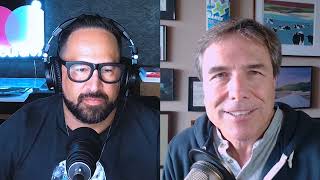
This is Creative Disruption, the intersection where entertainment, data, and creativity meet. Here's your host, Ricky Ray Butler and Daryl Leaves.
All right, welcome back to the Creative Disruption podcast where we always talk with the people that are actually disrupting the industry and I am joined here with a live audience. Hey guys!
Woo!
We got 5 people in the audience. No, we're here at VidCon. I'm super excited and I'm joined by my co-heart, Ricky Ray Butler. Of all—
That's a great intro, thank you.
You like that? Co-heart.
Well, you are.
It's like we became—
You said that a couple times.
I know.
I'm getting used to it.
You don't like that?
Um, uh, Cohart's fine.
Cohart, my friend. Is that better? Okay, now before we get into it, I absolutely love VidCon. I do. I've been to VidCon 1, to every VidCon except for—
Were you really at VidCon 1?
I was at VidCon 1.
I think you're one of the posers. I think you came later.
Oh, please.
I was at VidCon 1.
No, you were not at VidCon 1.
I was, I was, I really was. And I can prove it because my first client, one of my first clients when I started Plaid was Ourobrush, and they were one of the first sponsors.
They were the first sponsor, one of the first sponsors of VidCon for sure. But maybe like—
Oh, you were a lot skinnier back then. Oh, I didn't recognize you. And you probably didn't have a beard either. No, I didn't grow one.
But no, seriously, like, I think what, you know, VidCon started, I really love it. It was like celebrating the community. Of online video, and I truly do believe it disrupted the industry completely. And with VidCon itself, like when I get a new client that doesn't necessarily understand the demographics of the, the app, the, the landscape of today's digital consumers, I like to take them to VidCon and I like them to experience what happens at VidCon. And it's more happening in Amazon than it is here in London. But it's the effect of who's actually watching the videos and how engaged they are with the creators.
Absolutely. I have a very special place in my heart for VidCon. I mean, it's really where I started to build my business.
Yeah.
And where I got to meet a lot of new creators face to face when most of the time when I was communicating with influencers, it was through text or through email. And it was really, you know, it was a really, you know, It was the first time to really bring this community together. And then today, it's truly become the mainstream. It is the biggest video conference or creator conference in the world.
Yeah, and what I love too, it's like coming into a place where there's other people that understand what I'm talking about. Right. And they understand the challenges and issues, and so it's been super great. Now, we do have—
And you mentioned you used to take your clients to VidCon so they can see the impact. We had to do that a lot, especially in the early days when we used to get laughed out of rooms when we talked about creators and how you should sponsor their content, et cetera, or collab with them. And then we'd take, and we'd get laughed at, and they'd be like, "No, I don't think that's really true." And then their kids would find out about it, we'd bring them and host them to VidCon, and they'd be able to see how big of an audience and how big of an industry it really was.
[Speaker] Yeah, it is unbelievable. Well, today we are actually talking to someone really special that I feel like transformed VidCon in a completely different direction. It's a very positive direction from my standpoint. You want to introduce our guest today?
Yes, today we have the CEO of VidCon, Jim Louderback.
I don't think he's the CEO anymore. You got demoted, right?
You're still the CMO to me, CEO to me.
Well, here's the thing, I'm the GM of VidCon, but since we sold to Viacom a year ago, when we sold, they came to me and they're like, Viacom really can only have one CEO, and guess what?
It's not you.
It's not you.
And I'm like, all right, fine.
Did you say as long as it doesn't affect my pay, we're okay?
I don't really care. Titles don't matter.
Well, Jim, you don't only head VidCon and were the CEO of VidCon. You were a pioneer in our industry.
I was at the first VidCon too, just so you know. Were you?
Did you remember me there?
I totally remember you.
See, I told you, Ricky. I told you.
But what I remember the most, Darryl, is that you were inside the tongue. So that Ora-Brite We actually had a guy dressed up as a tongue.
Did you really get a set of tongues?
No, it's—
no. Well, I remember back then, Darryl, you were not only much skinnier, you'd wear your pants up to your belly button. And like, I mean, your fashion just wasn't there. But today, you know, you're a much better looking person.
All right, moving on.
So back to Jim. You were at the first VidCon. You also created one of the first MCNs.
Well, to set the record straight, I didn't actually create it. A couple of guys that I'd worked with at a cable network that we started called ZDTV turned around a couple years later and created an online video network called Revision3. And the idea was that it would recreate the kinds of things we tried to do at TechTV/ZDTV, but without all the overhead, you know, the satellite trucks and everything else. And I had been doing something similar when I was at PC Magazine as editor-in-chief. And they were raising money for that company and another company. And they ended up getting a bunch of money for a company called Dig. Remember Dig?
I love Dig.
Yeah. Yeah, so they were raising money for Dig and Revision3. And they had someone want to invest. But they said, you know, you need a CEO, because it's just you guys. And you guys should go over to Dig, because Dig's going through the roof. So they came to me really— it was very, very early, just a couple of things going on, a couple of people working there. Like, you want to come be CEO of our startup? And I was like, yeah, sounds like fun. So that's how that happened.
Yeah. Now, now tell us, like, the landscape. I mean, did you say this is where things are headed? Like, like, because I mean, in traditional, like, being at PCMag and all that other stuff, it's like, it's a totally different audience, totally different mindset where things are going. Did you— could you see the writing on the wall that this is where things were translating to?
Well, yeah. And you know, if you've been in the industry long enough, you spot patterns and you see when they repeat themselves. And so I had been in a magazine piece, um, it wasn't PC Magazine, PC Week, and then Windows Source as well, and PCMag as well. And seeing as the internet came out, it disrupted magazines because suddenly, you know, I got a column in a computer magazine when I was like 28. And then 2 years later, I went to my first WC3 conference and the internet was just like, it's this thing called the internet. This is a browser.
The internet.
The internet. And I looked at it and anybody in their basement could write a blog about technology. So I was like, oh well, I guess my 2-year reign of power is over. But it was great. It was fun. I thought it was great that anybody who was a techie and geek, wherever they were, could write about technology and get people to read it and build an audience. So in the, you know, this is 2003, 2004, 2005 when the technology got good enough for us to be able to create real video programs that were actually entertaining and fun and interesting and distribute them via the internet, 'cause the internet got faster. It was pretty clear to me that the same thing that happened to print, that happened to music, was about to happen to video.
And what was amazing is you're like pushing the envelope of digital formats. I know you were recording and publishing at higher resolutions than a lot of people were doing at the time. And I was blown away with Revision3, like the whole model itself. And I was really impressed with the creative that was there too.
Yeah, you know, we started out early on doing— the beginning, it was video podcasts. We were distributed via iTunes and Break and Rever and Blip and Juiced and all these names that nobody ever remembers. And then we started putting it on YouTube as well. But yeah, it's, we always, 'cause we came from a television background and we were geeks. I mean, we, ZDTV, TechTV was television about technology. We were just basically geeks that got put on the camera. None of us were classically trained television presenters. And the same thing, you know, when we got into it, we built a really cool state-of-the-art studio. And we were always keeping around technology 'cause we were reviewing it. I hosted a show called Fresh Gear for 4 years at TechTV where I'd review new gear. And that didn't go away. We would review it, and when the cool stuff would come out, we're like, we're going to put that to use in our studio, and— or, you know, outdoing whatever we were doing. So we always tried to be ahead of the curve on technology as well.
Right. And, um, you were one of the first companies in our space that really built value and, um, was really ahead of the curve. I believe the first, you know, significant acquisition was the acquisition of Revision3 and Discovery Networks.
Yeah, so we sold to Discovery in 2012. We were the first, we were among the first. Next New Network sold to Google about 2 months before me. Interesting, so Next New Network was an early online video startup too. They were all in on YouTube though. It took us a little bit longer to get all in on YouTube, but we all eventually did. And they, so yeah, they sold to Google a couple months before we did. And I remember having a conversation with Hunter Walk, the guy at Google who bought them. Probably 6 or 7 months before that, I was like, you should buy Revision3, and turned around and bought Next New Networks. I'm like, okay, fine. I'm sorry, we were already down the road with Discovery. So Discovery Networks, you know, Animal Planet, Discovery, Honey Boo Boo, all that, they, uh, they bought us.
So my, my question is, like, you've been able to see, uh, since the beginning, literally the transformation of content, and especially video content online. What are some of the things that you wish that we— that people would never have to experience? Like, for me, I look at— there's a couple things in the industry that I'm like, ooh, that's not a very good idea, or it's a good idea, but it's like translated differently. Is there anything that you wish that we would never have done?
Well, I'm going to take it a little bit differently because having worked in traditional media as it was being disrupted by digital technologies, whether it was print or audio or, or movies and TV, I don't, you know, disruptions are hard. And disruption of people's lives are really hard. And the thing that I wish we didn't have to do when we go through these is lay off a lot of people.
Yeah.
I mean, I laid off one day 200 people at TechTV. And same thing in the print side. I've, you know, I've had to go through that. And those are not easy because you're disrupting people's lives. And so that happens, but it's something that I wish we didn't have to do.
Yeah, yeah. And like, I love Tech TV. Like, that was— I love Screensavers, and there's a few other shows on there that I really, really enjoyed. Uh, but yeah, it's like literally the, the human element. And a lot of this stuff, you don't need, you know, a satellite truck and all these other things, because now, right now, we can do it from the palm of our own phones.
Well, and experimentation. Look, you try a lot of different stuff when you're in disruption phase, and a lot of it's not going to work. And so there have been a bunch of You know, you see it all the time. Great startup, great company, great startup, like a company like Defy, right?
Oh my gosh.
So, so, well, when we were selling—
let's go there.
Yeah, let's, let's do that.
Well, look, but when I was out selling Revision3 and I was talking to a bunch of different companies and I actually had an offer on the table from Alloy, which is the company that ended up merging with Break to become Defy. And, you know, it's very similar, I'm sure, to what the Smosh guys went through and what a number of other companies that they bought, including Clever and Generate and a bunch of others. And, you know, it turned out we went with Discovery because they had cash. All Ally wanted to give us was stock. But, you know, that's an example of a company that— great intentions, great employees, they did great things. They did some things that probably weren't so great, but, you know, they just didn't make it.
So what is your thought?
They should have. I mean, they were set up to win. I mean, they did some amazing— I think acquiring Smosh, or, you know, and some of their other like channels they, they had, um, they were, they were set up to be successful. I mean, where do you think, where do you think they, they went in the wrong path?
I think merging with— and I don't know that much about it, um, but I think merging with Break was probably the thing that was hardest for them to digest because it was in many ways a merger of equals. Break had been around for a long time, early days as well. They had built some good stuff. You know, they were more on the comedy side, on the short-form side. I just think taking two pretty big companies that had raised a ton of money and had a really, probably a very, very dirty balance sheet, or a crowded one at any rate, a lot of investors, a lot of people had their fingers in it. You had two really good media executives, Matt Diamond and, oh God, what's his name, was running Break. Super smart, really good. I think probably putting them together, there was, and I don't know, but there could have been some friction there. And I just think, They, they were an example of a company early on that thought they could get to scale and that scale would get them to profitability. And I don't think that that's the case. And I think you may see that playing out right now when you look at some of the other media companies that have started up in the last 5, 8 years that think they can get to scale and then get to profitability. But I think in many ways the media industry has changed and the digital side of the media industry has changed.
So one thing, Ricky and I was actually in Poland. Was it last year? Was it? Yeah, it was last year. And we can kind of see some patterns happening all around the world since this is global. One of the big things was there's a lot of MCNs that were starting up in Poland and trying to entice creators to come into their network and so on. And for me, I'm like, oh no, never, never join a network or anything like that. It's just like You know, that you're allowing control and defies, like, one of the things that, you know, people are struggling to actually get the money that they actually earned out of that, which is just a horrible, horrible issue. But what's your thoughts, like, on the whole multi-channel network?
Like, well, yeah, MCN, multi-channel network, collection of YouTube creators and other creators. So let's take a step back. Let's go back in history. Let's walk it back a minute, because Revision3, the company that I ran, was an MCN. We became one for a number of reasons. And the reason why— and this is 2009, 2010— is because YouTube grew so fast that they didn't have enough support people on staff to actually support all of the creators that needed it.
They didn't even have a creator support team.
Right, well, that's why they bought Next New Networks. So Next New Networks, they had the creator playbook and they turned into that, but they didn't have enough people to support it. So they abdicated that support responsibility to networks like us. So they created these— they allowed multi-channel networks like us to sign up some of these, a lot of these top creators in many cases, to ostensibly provide the first level of support that YouTube was not ready to provide. And they allowed them to become part of the network and you could do whatever deals with creators you wanted. You could take all of their revenue and give them a hug every now and then. You could, you know, share the revenue with them 50/50. You could give them all the revenue and figure out that you'd make it up on volume, I guess. But that was how it started. And then YouTube looked at that and said, wait a minute. And there were some not necessarily great actors in the space.
Right.
Who were, they may have been taking a little bit more advantage of creators than others. We, our model at, we had a great, so we had a great and very innovative sales model that goes back to early days of television where we did integrations inside of the shows. And in the middle of the show, we'd stop and say— we had Netflix as a huge client. We made tons of money for creators on Netflix.
That's when they— the sign-ups were actually really good. It's like, what did they pay, like $50 or something?
No, more.
Oh, was it really? More, more. Oh my goodness.
Oh yeah. So, so we made a lot of money for a lot of creators, but we would share our AdSense revenue with them 50/50, which in retrospect, probably I should— we should have given them more, but we had a business to run. You know, 'cause what happens is YouTube, took 45%, right, and gave 55% to the creators. But as an MCN, we got that money in and then we cut it in half and gave it to them. If we weren't doing brand deals and integrations and things like that, it was a terrible deal. And there were some MCNs that you would go up and do a, you know, hey, I can sign up online and hit a button and sign my name and it's a legal contract and they own my stuff forever. And that happened.
Yeah.
Like, for me, I don't think it's a— like, I don't think, like, conceptually it was a bad idea. It's just like, it's just like, what, what's the nature of humanity? It's like greed. And so, you know, some of the creators are coming in, you know, when you have so many creators to take care of, they're never going to be taken care of properly. And then number 2, it's just like the guarantees. There's like not a lot of guarantees that a multi-channel network would do. And there are some great deals like I like with clients. So yeah, go with them if they're willing to guarantee these things.
Well, and that's what happened as it got on and on. You found that there were— it was— there were a small group of creators that— and it's bigger now— but that you could make a lot of money off from brand deals. You could make a lot of— they would really rise up your profile. And an interesting thing happened. So by the way, so then we would look at those and MCNs would look at those and say, "Well, we have to have that person on board." And so they'd pay a lot of money to bring that person on board. We actually got together with Epic Meal Time really early and did a lot of work with them on creating their content and helping them with production and really partnered with them. And then a couple years later, another MCN, which I will not name, came in and took them away from us with dangling tons of money at them.
Right.
Because— and part of the reason why was in this period, ComScore started ranking. They got the data feed from YouTube of how many views there were. ComScore started ranking all the creators, and as multi-channel networks, all of those creators would be bundled under one. And the bigger you were on the rankings, the more likely you'd get brand deals from brands that didn't have any idea what was going on. So there was a race to become the biggest, because now we were being measured, rather than being the highest quality, which is what we were doing at Revision3. And I fundamentally believe that high quality was the way to do it.
Right.
Everybody strove for— excuse me— big, and that meant bringing on lots and lots of smaller-tier creators and then paying big bucks to the biggest ones so that you would come in as like, we're number 10 on the conscore rankings. And then what happened was YouTube looked at this and said, oh man, there's some bad actors there. First of all, we need to make it so that anybody can get out of their contract if they want to. But they also said, why are they taking money? It should be our money, we're YouTube. And so they started devaluing what the MCNs could do, and they started adding more and more things on top of it. And it turns out that, you know, in the end, making a penny on some of this stuff just wasn't enough to build— it wasn't sustainable. So the MCNs really did not provide the value that they said they were going to do. They brought on too many people and could not Talked to all of them, and there just wasn't enough money to go around. It wasn't a big pie. We didn't end up become— we didn't end up in 2012, 2013, 2014 taking all the money out of television and bringing it to YouTube. So it just didn't develop to the point where there was enough revenue to make it a sustainable business. And that's why you saw everybody sell with these promises and unicorns and rainbows, and that's kind of why we are where we are now.
Right. I would say one of the biggest problems was that it wasn't just that the creators weren't happy, the brands also weren't happy.
Right.
When they would work directly with an MCN, when the rubber hit the road and there were problems with the contract, they were always conflicted of who do I side with, the brand or the influencers that I represent? And so my company, which was a very boutique influencer agency helping brands get ROI working with influencers, We were growing 100% a year, and a lot of those leads came in because the brand wanted to be represented and be taken care of. But from the creator standpoint, the problem was they got so many creators where they couldn't bring them all business or fulfill their promises. And I remember it was like Machinima and also Maker. Like, we were working with all their talent directly, and it got to the point where a lot of— with a lot of these MCNs, The talent would go to them and say, OK, we want to work with these people, these people, these people, and this company directly because they're bringing us more revenue than you are.
Well, and then other people would go around you as well. So we— Callie Lewis used to be part of our network. I love Callie. She's amazing. And we did great stuff together. We did a lot of stuff with Ford. And we brought Ford there. And then, you know, somehow they ended up doing a little thing with Ford around us. And it was one of those things like, hmm. Maybe, and, and in the end it was fine, and you know, it wasn't a big deal, but you could see those end-arounds happening a lot. Um, but I mean, that was, that was part of it, but I think in the end it just— you didn't need another layer. And the other thing that happened is we saw talent agents and managers start to bring these people on, and it turns out that at least the, the models that I've seen that end up being sustainable— and this is something we never wanted to do. I never wanted to do talent agent, I never wanted to be a manager. I always just wanted to help these folks just build great content and get revenue. But— and I remember having a conversation with the guys at Collective Digital Studios, turned into Studio 71, and they were moving in that direction. I was like, no, that's— I don't want to do that. That's awful. I would never do that. And I looked at that as being a strategic mistake. It turns out it was actually the strategic right thing to do.
Right.
And so the ones that have been successful are the ones that have turned into full-service agents and/or managers. Which basically puts them back into the agency and managing game again.
Well, that's what's interesting is the old-school business models have been the ones that have prevailed. Yeah. So you have like, you know, a brand agency.
It's gotta have a newer spin on it, right?
Yeah, you have a tech brand agency like mine, and then you have, that got acquired, then you have, you know, a talent management group, and that ended up being like the yin and yang of the industry that ended up, you know, being able to scale and make money. But to be honest, I feel like you guys, specifically Revision3, did a lot of innovative stuff. And out of all the MCNs, I think had probably the most positive, I mean, people had more positive opinions about you guys than most of the other MCNs out there. Like for example, the Netflix thing, going back to that. That is the only thing in our industry, and we've been here for a long time, and we've been able to see a lot of the different bubbles pop, et cetera, and be able to pivot when we need to. The only time where we got frustrated was when we would talk to a creator and say, okay, we're going to work with you and we're going to pay you this much. Like, I'm just going to do Netflix because they'd get that commission and it was a really big one. And that was like the only time where like we felt like we had competition was because of your guys, your guys.
I'm just doing the math in my head right now because if it's more than $50 per sign up.
Oh, and it's a free trial.
Well, so here's, here's, here's, here's the— I'll tell you the economics of the deal.
Okay.
I'm not going to tell you the actual dollar amount because frankly, I don't remember. I don't remember, but it was more than— let's just imagine.
You could probably make it up and it would be accurate.
Let's imagine it's more than $50. So you'd say— and by the way, the guy who set all this up, the brilliant guy behind our sales team, Brad Murphy and Ryan Dahm, who really made this happen and conceptualized it and put it in place. And I was so lucky to have Brad. Brad and I had worked at TechTV as well. He did sales. I was so lucky to work with him. And he actually runs an agency now that is kind of under— He works directly with brands and creators, not as an MCN, more as an agency for brands. And is very under— he doesn't even have a website. He's doing so well and doesn't want anyone to— but anyway, so I think, like, imagine it was more than $50. And you as a creator, we would set these things like movie time. So you'd be, hey, your favorite creator said, here's my favorite movie. My favorite movie is Avengers. I don't even know if that was out then. My favorite movie is Avengers. And I'll tell you what, we're gonna do my movie club. Y'all get on Netflix, watch Avengers, and then we're gonna talk about it. And oh, and sign up for Netflix if you haven't already, and here's a coupon to get 20% off your first 6 months or something like that. We would get a, you know, bonus for that, call it over $50, and we split it with the creators. I mean, and that was good.
Yeah.
For both of us.
Yeah.
Some creators, probably shouldn't have told me this, but they'd give me their annual revenues just from that, you know, that deal. And so we're making a significant amount of money.
We did a lot of— we drove a lot.
I mean, the early days of Netflix, and it made the industry more, more expensive.
So lesson learned.
Very inflated.
Yeah, inflated everything.
I'm sorry.
Um, it's okay.
They were— we did a lot of stuff with Ford, a lot of stuff with them. They weren't, you know, dollar amounts, they were among our biggest clients. We had other clients, they weren't more than 25 or 30% of our revenue. But I still remember we'd already sold Discovery at this point, and I still remember when they changed from signups to branding, and all of a sudden the whole thing went away. Yeah. And that is a lesson that I will say also played out with the MCN thing with YouTube, because YouTube changed their policies and the— just the strength and why you did an MCN kind of went away. And so I think the lesson, and the lesson that creators can take, is don't put all your eggs in one basket. Whether it's YouTube or a single client, you need to diversify your revenue streams. That's a lot of what we've been talking about at VidCon.
Absolutely.
And that's really a theme for VidCon this year, everywhere we do it, is creative monetization strategies so you do not get locked in with one platform or one vendor. And because, look, you're not aligned perfectly with these platforms or these vendors. You're not orthogonal. But you're not aligned. And when YouTube decides to move in a different direction, or Facebook, or whoever, you don't wanna be saying, well, that's 100% of my revenue, and now I got no revenue, so it's time to go back to Starbucks. So diversifying revenue is so key, and it's key in all business, and we knew that. But, you know, the YouTube thing was going great, we were making a lot of money at it. We went from distributing on, I don't know, 30 or 40 different platforms to one, YouTube.
Yeah.
And, um, it was good while it lasted.
So, okay, so here's the question that I have for you, because like you, you've been in, in this for a very long time. Um, what's the next iteration of what's going to be happening? What's going to— what's going to be disruption at a new level in the next few years?
So now we've disrupted every single media that we've created through digital technology, right? I mean, what haven't we disrupted? HD movies are about it, and you can stream movies and get that. But the pace of technology change, to me it's a story of bandwidth. As bandwidth increases, we're able to transform different media. Well, bandwidth has continued to increase. The distribution of it is spreading out, and the latency is going down. So, and then you look at other things there, even though Moore's Law is sort of challenged, we're still seeing increases in processing power. We're still seeing screens get better, cameras get cheaper, etc., etc. So it's time to stop disrupting existing media and start creating new ones. Yeah, so that's what we see happening. I see it whether it's virtual reality, augmented reality, mixed reality, blah blah blah reality, but that those immersive reality technologies— I mean, look, it's very much in the early days of video games right now where, you know, you'd play a video game on your scratchy old TV screen, like Pong. Pong was great, but it wasn't really very complex.
Yeah.
And so right now with VR, the screens suck, the headsets are bulky and, you know, mostly tethered, and it's hard. Well, and the cameras that we're doing, rather than putting the cameras and the binocular cameras at the shape of your eyes here, they end up like way out and the distance, that's like, it's like suddenly you're inside the head of an elephant. It doesn't really work. And that's why we get headaches and fall over and throw up, among other things. And it just, we have not, with VR, taken people and put them in a virtual reality that is believable enough so that they transcend belief and think they're there. And then when it comes to augmented reality, the idea that you're going to integrate the digital world and the real world together, look, the Magic Leap sucks, they all suck, all those things that do that. And, and there's always the phone, right? I was like, well, you know, it's built in your phone and it works great. And we'll see a lot of these over the next year or two. Pokémon Go is an example of it.
Absolutely.
They're coming out— the guys who do Pokémon Go are coming out with a Harry Potter. But you've got to hold your candy bar glowing rectangle in front of your face and wave it around to get it. And that— yeah, there's a tiny little window where you— the digital world comes in, and that's fun. But I guarantee you, we're not gonna be holding that thing in front of our face for hours at a time. 'Cause, you know, I mean, my arm will get tired. But so there— so, but these are baby steps. And we've seen this in all things, in all technology. They're baby steps. We will get there, and we will get to a point where the digital world and the real world are integrated in really cool ways. And the storytellers—
Oh, yeah.
—who are gonna be the auteurs of VR and AR, they're not us. There are people out there in their teens or maybe younger who are experimenting with the technology who are gonna grow up native with it are gonna learn how to do amazing things. To me, that's the next big breakthrough.
Yeah, and I, I think that's the, the, the key is like the, the power of storytelling has been great since the beginning of time, right? And then it's just kind of as there's new mediums, they get more creative of how to connect with an audience. Um, and I, and I'm looking right now, it's like there's a lot of SVOD services and it seems like everybody's coming out with an SVOD service. You know, they're trying to get some paywall calls set up from there. And then they're like bringing in creative content to, to build their subscriber base. But I do believe with you what you're saying too, it's like the next iteration is these are going to mature, but the next step is definitely VR, AR, or something down that line of, of technology. And I know just right now the audience— I, I think there's something to be learned about the audience and the behavior of audiences. Is the culture of people that have grown up with video games and watching video games, interacting with video games. It's like when you take that to the next level, you're totally transforming media in a new way. Let me give you an example of this. So you've, you've met my family and I have kids that are literally obsessed with video games. And we went to a place called The Void. Mm-hmm. And it was like really, early prototype. It was in Lyndon, Utah, of all places. We went through, and it was a full immersive VR experience. And they put on the gear. They have the backpack and everything. And it was like an Indiana Jones type adventure. And it was like off the charts amazing. And my two youngest are like, oh, this is like— can we just like live here? Because this is like living in a video game, and we want to live in a video game. And then when, when that company decided to bring on new creatives and like working with other existing IPs, I don't know if you've done the Void experience with Star Wars. It is like off the charts. It is so amazing that you come in, you're Stormtrooper, you're actually Rebels, but you're like going through this process and it is so immersive and it's just, it's unbelievable. I think it's amazing.
Um, but I don't think that's what people are waiting for. I don't think going to a place—
I'm not saying going to a place, I'm just saying that's the first stage, and then they need to do it in the comforts of wherever they want to look.
But look at the patterns, right? I mean, there were early on in the days of, of video games that people were building places where you could go play video games, arcades. And in the early days of the internet, remember the internet cafe, right? That's gonna be a cafe and do some email. Surf the web. It's— that's the phase we're in right now.
Yeah, no, for sure. I mean, but I think what's gonna really happen, it's gonna be bringing video games, Dungeons Dragons, and basketball all together. So I tell you what, it's gonna improve humanity. Well, let me explain, let me explain. Right now, everyone listen to me.
You've read Ready Player One, right?
Yeah. Yeah, see what happened? No, it's gonna be— it's It's gonna be better than Ready Player One. And let me explain. So with entertainment, or with gaming, it's always been one of those types of practices or forms of entertainment where you really don't do a lot. I mean, it's all your mind, eyes, your senses, and that's it. But what's going to happen is you're gonna have your phone, and you're gonna come to a room like this, and you're gonna scan the entire room so you know exactly how big it is. You put the phone in the middle. And then you put on some goggles and earpiece, and you're gonna be playing that Star Wars Rebels game in this room by yourself, but with thousands of people across the world. And it's gonna be real, and you're gonna be getting fit at the same time. Because you're gonna be running around, doing push-ups, crawling, doing all this stuff that's gonna make it so you're gonna not only be enjoying the experience, you're gonna be becoming healthy at the same time. And that will be the workout that I do. I will wait. He's like waiting.
I will not go to the gym until it happens.
Right. I agree with you in general. And I think, you know, you know how when we got HDTVs and other stuff, we started to see houses had media rooms, right? Well, I think we're gonna have, you know, I don't know, immersive experience rooms, VR rooms or something like that. And that'll be the thing that, you know, people get. And then it'll be so easy that you'll just, like you said, you'll be able to just scan whatever room you're in and, you know, you have your whole house scan. You'll be able to turn your house into like Battlefront or something like that, right? Which will be really cool. I personally am a big Zelda fan. And I want to be, I want to be, I want to be Link, and I want to get the kite, or the glider, and I want to glide around Hyrule. And there was a VR game, actually I got an early Vive, and there was a VR game called Vanishing Realms that for a short period of time, I mean, you know, I had an arrow and there were orcs coming after me, and there was a, you know, there's a stone pillar in front of me, and I was going behind the pillar and shooting, and then going by the pillar, and there were wizards, and I was there, I was there for like 30 seconds. I want that for longer than 30 seconds.
You know, me too. I think it's gonna make it so I'm good at battle royale. Yeah, because right now I love, I love playing first-person shooters, I love playing battle royale, but my, you know, eye-to-hand coordination just sucks. And I'm always that guy that gets stuck in the corner, gets shot. And even though I'm having fun, I'm usually just a team player. I'm never Rambo. And I'm excited because I think once I feel like I have more control and I can you know, do things, you know, even though I'm an overweight guy, I'm more athletic. I think it's going to make me a better gamer.
I do agree with that. And it was pretty funny. I was actually with my boys. We had a boys' night out, and they always, like, literally troll me when I'm playing Fortnite. Like, they literally do. Like, my handle's Darth Darylus, by the way. I am a Star Wars geek, but it's like they literally make fun of me. I'm with you right away. And I'm not too bad. I mean, not, you know, I don't have 21 kills or anything like that. And we go to the laser tag and I'm like, okay, boys, I'm going to teach you that this is not Fortnite. And I'm going to— I'm going to school you. No, you're never going to school us. And we had some friends and some YouTubers that were all there. And guess who was number one? Darth Dyrus killed everybody. But no, but I think that's the whole thing is like when you can blend other senses into it, it's going to take it to another level. The thing that I worry about, and this is something I worry about as a father, is socially, you know, how awkward people are now and they can't communicate very well in person, but they can online. And I fear for that. And I don't know what your thoughts on that, Jim. I mean, you've seen it over the course of your career. Yeah, I don't know.
I haven't given it that much thought. I mean, I'm a geek. I think geeks are just— I don't know. I think— I don't know. I mean, I'm watching with my son who spent, you know, most of his— he's a big gamer— adolescent time, you know, online playing League. On Discord or whatever. And, you know, now he's in a university environment. He joined a frickin' frat. So, you know, he's definitely being social. So maybe there are ways that soci— sociality— is that a word?
It is now.
Thanks. Put it in the dictionary. Gets shoved at you when you get into certain situations as you, like, leave the nest. But I don't know, I'm not enough of a good enough social scientist to be able to comment. But it is—
there is a sense of therapy, too, that comes with gaming I love. But it's like, I do have friends that are all around the world and we can come together. And I think that's what that VR experience will do. But I don't know, I just, I fear just more of that disconnect of in-person.
But here's the thing also, we're also, we're talking about imperfect technology that makes it difficult to have all the social cues that we're used to. But draw a line out in the future, it goes somewhere. If you ever read Robots of Dawn by Isaac Asimov, we will have a, you know, that room that I was talking about, that immersive experience room, it'll become a telepresence room. And you will be able to sit here and I'll, you know, you can have dinner with your best friend, just that there is this wall that doesn't look like a wall separating you. You're able to communicate and you just won't be able to touch. And then we'll probably figure that one out too with Tell Us Something.
Just like slap you.
Well, you know, I disagree, Darryl. I mean, maybe there's gonna be some awkwardness, but If you look at junior highs or high schools now, the cool people are the ones that can play Fortnite. OK, well, no, no, no. And there's like, I have family members as well as friends that have kids where their children are natural introverts. But right now, they're like, they're ballers. I mean, they're the ones that are like the cool people because they can get the most— Here's what I'm saying, though.
It's like I was taking a group of teenagers in our van because I have teenagers, they have friends. Yeah. And they weren't interacting, but yet they were interacting via text, you know.
Is it more efficient? Maybe they're optimizing their communication.
All I have to say is like, you're sitting right next to the person, have a conversation.
Well, okay, Darryl, do you think that they might have been doing that because you were in the car?
I'm the coolest dad in the whole wide world.
I don't know what you're talking about. I'm sure you are.
My kids can validate.
Oh, that's awesome. No, they were probably making fun of me. There's gonna be things that we see that change in our culture for sure.
Yeah, absolutely.
And, and we'll see if it brings us more together or if it separates us. Yeah, hopefully not. Hopefully we've learned from— I mean, the negative things that we learned from social media, that we just improve as, as a human race.
Yeah, I just, I just hope it's like, because there is some things about social media about, you know, getting in a group and then it's like really polarizing. But I don't know, there's some things that, there's some hurdles that we need to get over.
Well, but also look at the other side of it is that, um, and we saw like, I mean, back to TechTV, we were the first company to, uh, to actually do, we put geeks in front of the screen and, and we, we were in the early days of ZDTV, we're only available in Satellite dishes, you know, there's a satellite dish in the backyard and cows in the front yard, and people would come to us and we actually started giving people video cameras in 1998, '99, and put them— we were the first ones to put real people on TV. People would call us up and be like, "Oh my God, I live in a town of 500 people. I had no idea there were other geeks. This is the first time I've actually met other people like me." And the internet allows you to find the people like you even if there's no one within 50 miles like you, and I think that's tremendous.
Yeah. And the world is getting smaller because of that. I mean, I'm not a naysayer, but I just worry about a couple social things that—
No, and you're right to worry, by the way. I don't mean— I would put those—
Are you worried about the cyborg theory? That we're all gonna become robots?
No, I'm worried about, you know, Skynet taking us all out, you know.
But we don't go there. Well, becoming robots is just a, um, it's just a point on a line, right? A continuum. I mean, think about it. You have glasses on, right? You're an augmented human. Oh, I have contact lenses on, although you can't see them. I am an augmented human.
I may not be as augmented as we'll be down the road, but there was a lot of people trying to be augmented humans with Google Glass, but just didn't work. Just like the Bluetooth. But yeah, what are, what are other bubbles in our industry, in the creator industry, that you've noticed? Um, you know, we talked about the MCNs, and that's, that was definitely a bubble. Um, have you noticed anything else? Like, one thing that comes to mind are like the platforms. 3 years ago everyone said you got to automate working with influencers, right? Work the platform. But it's really a bunch of companies that didn't have connectivity and just pulled in public data. Um, are there other bubbles that you're foreseeing here?
Well, I think you're seeing an influencer marketing bubble bursting right now, right? You're seeing— because again, you know, there's a, there's a lot of money there. There wasn't a lot of oversight. There's a lot of ways that you can fake things out. And we see this sort of rush by people. All they want to do is become rich, call themselves influencers, and So not that— and, and there's great value to be had with working with creators, as you guys know. We all have seen the value. But I think that bubble— I think that AR is in a bubble. We're— VR's bubble's popped. The augmented reality bubble is, is gonna pop. I mean, Magic Leap has raised how much money? Billions. Yeah. And, and, you know, and, and They're not gonna deliver that. I actually did— somebody I was talking to about this said, "Yeah, but who'd they raise that money from? Mostly Google, and Google is gonna take it in and use it, and it'll become a big part of what Google does." And so I buy that, but I still think, you know, there's a bubble there too.
I think more— I think the bubble that I see is more websites will be more irrelevant moving forward, and it'll be more platform-based and app-based. But I do agree with you on the influencer side. I think it's gonna be just the way that influencers actually talk about brands. I think it's going to be more brand integration type of things where it's naturally organic in it versus the way that they're pushing it and promoting it now. We should ask The Expert that actually does this day-in-and-day-out! No, no, no— tell us what you think, Rich!
Tell us what he thinks! Does! No, I agree with you. I think the future of advertising, a big piece of it, is gonna be inside the content rather than outside. Yeah. I mean look at the trends of Netflix, Amazon Prime, um, YouTube Premium is doing really well. Um, people are trying to avoid advertising as much as they possibly can, and in order to get in front of them, you're gonna have to do it in a way where you can be authentically a part of the storyline, um, and not disrupt it but empower it.
Yeah, yeah, I agree. And like, but it goes back to the stuff we were doing at Revision3. It was like, you got to come in and go in long term, not short term, and take your audience places they can't go. And go together and become a part of the community rather than just coming in and spraying your message around and running away. Yeah.
No, I think it's definitely gonna be interesting how things transform. I'm really excited about it. I'm excited where the direction that's going. I'm probably the most excited about the creativity and the level of creativity and the storytelling. I was really impressed with Netflix and how they were able to bring original content and how it was able to disrupt television and Hollywood in a different way. And two, it's just like, they're not— there's no one really saying, "Oh, you can't make this type of content because we don't necessarily agree it and we're paying for it." It's like, "No, you have a concept. Let's go ahead and do it. You have some creativity." There's no thresholds of what you need to hit. It's like, we can just tell if we're gonna just renew it or not.
I also love the fact that anybody around the world who is creative and wants to put the work in and has that sort of heart of an artist, can create and get it out there and find an audience. Whereas 15 years ago, you had to go to New York or LA or Hollywood or some— or Bollywood or London or wherever if you wanted to be a content creator, and you had to rise up and somebody had to anoint you as this or that. Now, you know, as long as you have the energy and the drive and the creative spark, you can do it.
Yeah. So before we go, I just— one last big important question: is there anything that you see is gonna be the next big thing to Besides AR, VR, is there anything that's on the rise? Is there any platform or anything that you're interested in right now?
Well, you know, I mean, it's the cat's out of the bag, but I think you see what TikTok is doing is really interesting. And we were talking about, you know, been a lot of buzz at this show about TikTok and where they're going and what they're doing. I think that'll be interesting to see it develop. It's really, really interesting stuff. There's a lot of fun stuff happening on there. I think we will see other platforms emerge doing interesting things. What I wonder, and I don't know, is we have some very broad platforms that social video is on. Will it start to narrow into more sort of— into smaller and smaller and more sort of narrow-oriented platforms? I don't know. The other one is LinkedIn, and we talked a fair bit about LinkedIn at the show too.
Absolutely. Yeah, LinkedIn video is very interesting for brands and also creators that are doing some amazing things.
Well, here's the thing. So first of all, most of the social nets we have are designed for your leisure time. They're designed for your life, for your personal life. But we spend so much time at work, and there's only one right now that goes after the work graph, not the social graph, to get all sort of social network techie on you, and that's LinkedIn. Yeah. And so the types of things I think that are gonna be successful there are not what's successful on YouTube, which is great because it opens up lots of opportunity for creators that just might not be right for YouTube but they can make things on LinkedIn. And so I think the next, I think the next Tony Robbins, the next Gary Vaynerchuk, those sorts of people will be growing up on LinkedIn and building their influence that way.
Absolutely. Absolutely. Well, thank you everyone for watching this podcast and our live audience. Thank you so much. We're all about disruption and disruption starts with you. So we'll see you on the next podcast. Thank you so much.
More from Jim

Day 2 of Creator Week is about to start.. what it's like for an event producer.. #creatoreconomy