The Playbook To Build $100M+ Creator Economy Startups - Jim Louderback
Jim Louderback traces creator economy business models from MCNs to today's creator-led startups, explaining why MCNs failed due to margin compression and platform risk. Modern creators now need dedicated operators to handle finance, legal, and team building, with compensation tied to equity or profit-share to align incentives.
Chapters
When you realize that you need to scale and you can't do it all yourself, you have to ask yourself the hard question. A, what are the things that you like doing and what are the things you don't like doing? B, what are the things that you're comfortable delegating and what are the things you're not comfortable delegating? And C, can you find people that fit that, that you trust?
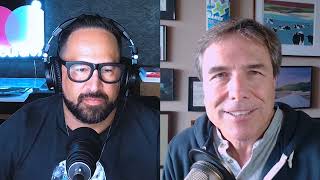
Welcome to The Creator COO, the show where we surface the operators behind your favorite content and creators. I'm your host, Matt Estes. Today's conversation is with Jim Louderback. Jim has built and sold numerous creator economy startups to giants like Discovery and Paramount, and his industry insights are unmatched. He's the former editor-in-chief of PC Magazine and a recognized top voice on LinkedIn with over 30,000 followers. Jim's weekly newsletter, Inside the Creator Economy, reaches over 22,000 readers, and he is truly at the center of the creator conversation. So with that, I bring you Jim Louderback. Thanks for being here. Welcome to the podcast.
Thank you very much. It's nice to be here.
So you're the— you are the video legend. You've been in the video world, video ecosystem, video industry for, for a long time. You saw the MCN days, kind of the early YouTube ecosystem. And then more recently, you, you know, I think you've, you led VidCon and now you're, now you're a creator. So you've, you've gone through a bunch of, a bunch of transformations. How many, how many creators, how many video creators or YouTubers do you think you've, you've talked to in your career in aggregate?
Well, I mean, if you just think YouTubers, a lot. If you think people who create video, a lot more, because remember, YouTube was not the beginning of the online video revolution, right? It was Break and Revver and Blip and Veo, and I could go on and on. But it was also video podcasts. When Apple launched video podcasts in, oh, 2004, 2005, it was revolutionary because people started doing video shows there. But even before that, this thing called the TriCaster came out, which put a television studio into a, basically a reformatted Windows PC. It was like 2002 or 2003, and that allowed you to be able to stream live video shows from anywhere as long as you had a good internet connection, which was not a guarantee back in those days. But then even before that, I worked in television, so I got to know a lot of the TV people who were also video creators.
So YouTube, yeah, YouTube definitely not the start of the journey. It's a good point. It's sort of a, sort of the midpoint, um, given— I think one of the, one of the places I'd love to take this conversation, particularly given the number of YouTubers and video creators you, you've interacted with through your various mandates over the years, is to explore a bit how the role of the creator and the role of the creator and the relationship to business operations and operators has changed over time. Does that sound good?
Yeah, absolutely. I mean, just tell me where to start and I'll start.
Well, first, just to give, to give myself and the audience a bit more context, maybe start with the YouTube days and maybe some of you— I'd love to hear a bit more about your thoughts on kind of the early MCN, the early MCN world, and then how maybe how your career has evolved and how that part of the industry has shifted over the last, say, decade or so?
Yeah, well, think about the early times in YouTube. People were creating on YouTube. There wasn't a lot of monetization. Nobody, you know, there was no AdSense, there was no rev share. And we were all trying to figure out monetization. I was running an early network called Revision3 that started in in video iPod, iPad, video podcasts, and but ended up moving into a lot of those online video platforms that I talked about, and then eventually onto YouTube. The way that we were monetizing for the creators that we worked with and people we brought into our network, which is a very, very small group, but basically was doing ads, 30-second ads that were like TV ads that we would burn into the beginning or the end, but also in the middle we would have the creators do shoutouts, do sponsorships, do, you know, whether it's Netflix or GoDaddy or somebody else, talk about a product, give a code, people would order, everyone would make money. That was kind of the beginning of creating revenue for creators on this place where they were putting videos. So, you know, 2008, 2009, that was a lot of what was happening. And then, you know, I think it's 2007 or 2008, YouTube came out with the beginnings of their creator program where, there's like 12 or 13 creators who they were actually testing sharing revenue with. So that turned out to be very successful. All of YouTube grew really quickly. Suddenly there, brands were coming in and wanting to be part of it, whether it was the baked-in sponsorships we were doing or the ads that YouTube was selling and putting on platform and then sharing revenue. And there were so many creators, there was so much money. And in many ways, YouTube was like, we can't deal with all of this. And there were companies like us, like, um, like Maker and a couple of others that were starting to bring creators under our umbrella because we could help them monetize. And from YouTube's perspective, they couldn't manage all of them. And so they sort of basically delegated the managing of creators and the monetization and the business operations and all that to us at MCNs, which worked for a year or two until they realized that they were leaving a lot of money on the table. And they started to make it less financially attractive for MCNs to run their business the way they were. And the MCNs were also signing up tens of thousands of creators, and they did not have the background to be able to work with all of them anyway. So it was clearly broken. Things changed.
If you were a creator at that time and you were thinking about joining up with an MCN, what was the main value prop? Why would you have done it as opposed to going your own way?
Because the— they would help you make money. Because the, the creator, the rev share program was not great. There were a lot of different brands out there. We were doing these in-show sponsorships like other people were doing, and we promised that we would make more money than if you just sat there and waited for a check to arrive from YouTube. We also promised support. We promised that we would help you with production. Which a lot of us did, but not at the level that I think the pro— the promises were a lot more than what creators actually got. But there was that production help, the revenue, the support, and all those things that the MCNs offered that in some ways we delivered on.
So there was, that makes sense. So there was a, there was a pain that the creators felt and there was a, there was a promise made by the MCNs to the creators to, to help them to alleviate that pain, solve the problem. And. And it sounds like in some cases the MCN, I'm talking about MCN sort of in general, right? The Meta MCN delivered on that promise in lots of ways, but then maybe in other ways fell short. And then it sounds like MCN sort of fell off because maybe some margin compression, profit margins compressed. It was hard to service them at scale. Was something to that effect?
Well, there's a lot there, but yes. So at first, Yes, there were creators that got a lot of benefit out of it, but the bigger you were, the more likely that the MCNs were going to pay attention to you. So if you were small and there were a lot of them, you didn't get a lot of benefit and you were sharing your revenue like you— that the MCN owned your AdSense account and they would take it and take their cut and then give the rest to you. So you kind of gave up your AdSense, which turned into a really big problem for creators, as you can imagine. Because only a small fraction of them actually had that white glove treatment. I remember we worked with, for example, Epic Mealtime, if you remember them. And we worked with Epic Mealtime from when they started rocketing up the charts, but it was still just a part-time, a substitute grade school teacher from Montreal and his friends doing it. And we worked with them on production, on ideas, on building it out, on more money and fronting money to do bigger things. And it worked out really well for them. But if you weren't one of those like crème de la crème, it wasn't going to work for you. So, and then why it fell down was because the MCNs in many ways were taking percentages of revenue from creators and not giving any value back. And the creators wanted to get out of the deals because they're like, you're taking 25% or 10% or 50% or whatever of my revenue and I'm not getting anything. I want out of this 3-year deal. Or in some cases, some MCNs signed people up to perpetual lifetime deals, which was illegal. So a lot of bad stuff happened too. And, and YouTube started to make it easier for creators to get out of their MCN contracts. And eventually they started sell— they started selling things at rates that MCNs couldn't compete with because you still, as an MCN, had to give the 45% or 30% or whatever it is back to YouTube. So could you sell for 45% or 50% more? Not likely as the market played out in the latter years of the MCN lifecycle.
One of my initial reaction to everything you just said is the— so if you ignore some of the weird structural and legal stuff, maybe some of the, you know, the changes you said to the economics driven by YouTube, the MCNs, it sounds like they're solving a lot of the pain points for— they were purporting to solve the pain points for the creators that creator operators would or creator managers or creator COOs. So interesting. So perhaps the whole, the creator COO as a construct is not solving any new problems. These are old problems, the same problems that have existed for a decade or more. What do you see as the biggest difference between the way the MCNs approach solving some of those problems and maybe the way some of like the new class of, of operators are trying to solve them today?
Well, the MCNs were operating on the principle that they were the new television networks. They were the CBSs, they were the NBCs. And so for them, it was about building a slate of content and developing things out and trying to have some ownership of that content. And so again, it was that network approach where we're going to bring everyone in on our platform and we're going to create this great platform. You're all going to share with each other. We did have the best interests of our creators at heart, in our hearts, but when it came to fundamentally the financial part, we were trying to build big companies that we could make a lot of money on and hopefully sell to somebody else because most of us were venture-backed as well.
Yep. So taking this, um, for, you know, forgive me because I'm from the tech industry. I'm not, I'm not a, uh, I wouldn't define myself as like a core media person. So you're sort of taking this model from like the Discoveries, the Paramounts, the studio model, applying it to, applying it to creators. So that's a big, taking this old model, applying it to maybe a new platform, a new platform ecosystem in a way that doesn't work.
Yeah. The other thing that happened there is that it was all YouTube at the time. So you didn't really have to worry about other platforms and there weren't a lot of external monetization options. And the couple of creators that got big enough and were able to build companies around themselves, you know, they, I would say the power dynamic shifted a little bit more towards them. So imagine like Phil DeFranco, he started SourceFed, he basically built a good company. He had a COO, he worked with us at Revision3. And when, after we sold to Discovery, we ended up buying his company because he was doing great stuff. Or you look at the Mythical folks who built up what they did, or Smosh or others that realized that they were true startup companies and could build out but needed operational help versus the blogger or vlogger sitting in there, you know, in their bedroom going, hi everyone, this is my makeup product, let's do a haul. And those were a little— those, there was less understanding that they were all DTC CEOs as well because there, it was, it just not many people had gotten there and there wasn't a path to follow.
I'd love to come back to that idea of, it's like the creator evolving into a business beyond just producing content in a minute. I've been reading your content on LinkedIn and your newsletter now for probably 6 months. Would you self-identify as a creator? These days?
Yeah, I would now, among other things. I mean, I am— I self-identify— I mean, my title on LinkedIn is editor and publisher of Inside the Creator Economy. So essentially I'm building a media business. But I think every creator is building a media business. Earlier in my career, I hosted TV shows along with running content, by the way, but I hosted TV shows and, and wrote like I had a column in computer magazines. So I had a weekly column in PC Week and PC Magazine. Ran the labs, ended up being editor-in-chief of them, hosted TV shows, uh, hosted online video stuff. So yeah, I think if you look at it that way, yes, I'm just leaning back into— we weren't called creators then, but we were definitely creating.
Is there a difference?
No. Is—
okay, so you would say— so really, you, you would see what you're doing— you would, you would sort of view what you're doing with your newsletter and your content today as just a continuation of what you've probably been doing for for most of your career.
Yeah, there's definitely a through line between that. I mean, it's just, it's basically being a content creator. The difference is how you are reaching audiences, because early in my career you would reach audiences through gatekeeper organizations like magazines or newspapers or television companies or television channels or whatever. And now you can go out and do it directly to your audience. Yes, you're doing it through working with some of the, working with some of the, you know, platforms are out there, but you can also do it directly yourself too.
So you've always been a creator, but the difference is now it's direct to consumer. That's the big change. Yeah.
And you can build your own company in there. And you know, the, the great thing about YouTube and the, these early platforms, it's popped up on the internet and it started with blogs, was that you could suddenly go direct to your audience without a gatekeeper giving you the permissions to do it. So the history from the internet in 1994, '95, when some of the first blogs came out, '93 or whatever, to today has been going from somebody giving you the right to communicate with an audience to you being able to communicate to that audience directly, and nobody had to give you the privilege of doing it.
That makes sense. I, I certainly think Well, I suspect that the shift towards some of these changes in power dynamics, power shifting towards creators, and the rise of the direct-to-consumer attitude is, I think, part of what's also driving the rise of the creator COO. So I wanna double-click into that creator COO concept. We got connected again, about a week and a half ago, I think, after I published that LinkedIn post about the creator CEO. And so I first wanted to ask you, what was your initial reaction when you read about this?
My initial reaction was, duh, what took so long? Not for you, by the way, but just for the fact that why hadn't somebody built this before? We need to have, creators need operators to help them build their businesses, just like CEOs of tech startups need operators to help them build their businesses. And it's always surprising to me that that didn't happen. And I mean, it's been happening a little bit, but it should, that framework should be there now. And it's amazing that it's not. And I'm glad you're building it.
My sense has been that I feel like I'm just putting a name on something that already exists. There's a lot of people out there that do this role. They might call themselves COOs, they might call themselves a business manager, maybe they call themselves a talent manager or a GM, but there's a lot of people that are doing it. And, you know, me coming from the tech space, I was pretty surprised that even though there's a group of really sharp folks in this role, no one's really talking about it. And I suspect that's— well, I don't know that I have any good hypotheses about why other than It's just so new.
Yeah, look, I think people are talking about it, but what I think is different in this space, and it's more closely resembling the tech startup space, is that creators are now building bigger businesses, right? So, you know, yeah, I could be a creator and I could be a mom-and-pop creator and I might have an editor and I might have an assistant and I might have a manager and that's my support group. And that's great. And I can make, you know, half a million dollars a year, a million dollars a year. But when you start layering in some of the changes happening in the creator economy, given that platforms have multiplied, there's no guarantee on the revenue side that there used to be because you can be demonetized at any moment. And there are a lot of opportunities to do things outside of the platforms to create revenue, whether it's books or merchandise or courses or all the other things that we talk about. The revenue options have multiplied. The ability to build a bigger than a half a million dollar business a year have multiplied. The number of people taking advantage of it have multiplied. And creators who don't have traditional— most of them don't have traditional business education background, grew up inside of an organization and saw how it worked, didn't even understand what the role of a COO was and why they needed one.
Let me, let me say that back to you real quick because I think that's interesting. So the— I think a few things I heard in there were the upside for creators, the potential upside has increased, the options, and consequently like the complexity has increased, particularly if you want to, you want to pursue that larger upside. Um, there's more creators doing it, so maybe the competition in some ways is increased. And then there's this fourth piece that you, you mentioned there, which is we think about those three dynamics at play. The creator's maybe not positioned super well based on their skillset and their background to deal with those three dynamics. Am, am I summarizing that?
A little bit of that. I mean, I think it fundamentally comes down to how do you scale your business as a creator, right? You can take it only so far as an individual with maybe a couple, uh, part-time people working with you. And as the opportunity for creators has increased because more and more creators and influencers sitting at the center of the marketing funnel, how do you take advantage of that and build a bigger business? And I think another thing, another dynamic that plays in there is the life cycle of a creator. So we used to talk about this at the MCN side. How long do these creators gonna last? There is an arc. There's, you know, 5 to 7 years maybe for a YouTuber, for a TikToker, it might be more like 1 to 3 years. But whatever it is, as a creator with some success, you're thinking, how long can I last? And what do I do afterwards? And can I build something that exists without me having to be at the center of it all the time? All of those things layered on top of the opportunity in the creator economy drive the need for building out robust teams of people that have different, different jobs, but that all are trusted by the creator CEO.
So there's a fear as a creator, there's a conscious, maybe conscious and subconscious, but probably conscious fear that the life cycle for what you're producing in content is shorter than you would like it to be. And so there's this push to build something more durable and lasting. Okay.
Yeah, well think about how people obsess over their Analytics, right? Oh my God, I put that video out and I've got less click-throughs and I've got less views and I've got, oh my God, people are unsubscribing faster than they're subscribing. Could this be the beginning of the end? I mean, you think about that all the time.
Where does the, okay, so you're a creator, you're dealing with these 3 or 4 dynamics, you've got this fear, you want to build something more durable, you're starting to think about bringing in a COO or a GM to help you do it. If you're a creator in that situation, like, what are the first— what's the first thing you're thinking about if you're looking for a COO partner?
Um, well, probably, you know, you don't even know you need a COO. But I think when I think about the first thing you should be thinking about is when you realize that you need to scale and you can't do it all yourself, you have to ask yourself the hard questions. A, what are the things that you like doing and what are the things you don't like doing? B, what are the things that you're comfortable delegating and what are the things you're not comfortable delegating? And C, can you find people that fit that, that you trust? And I think each of those is a very important milestone, hurdle, rock for a creator to get over. I mean, think about the things you like and you don't like. It's like, well, I don't really like editing that much, but I don't trust anybody to do it but me, you know? Or I don't really like doing the billing part of what I'm doing, but you know, I got my manager and I'm not sure I need anybody else. So a lot of, and like, are you willing to delegate? A lot of creators, they do it all themselves. They're, you know, they're lone wolves, outdoor lions in the middle of the savanna. And it's really hard for them to open up and bring people in that they trust.
I found, you know, when I joined Uscreen 2 and a half years ago, business was going really fast, very profitable. And one of the biggest reasons I joined the business was because I just absolutely admire and love working with PJ, the CEO. He had never worked with somebody like me, you know, a C-level executive. And so he found, you know, I think like a lot of early stage founders, you know, there are definitely some growing pains in terms of figuring out the trust thing and, you know, what are you good at, what are you not good at, what do you want to delegate, what are you not comfortable delegating. I've got to say, working with— I probably talked to 300+ YouTubers you know, sizable YouTubers here. I found the average YouTuber more reticent to delegate than the average startup founder.
Yeah, I think I agree with that. Although I remember being CEO of Revision3, you know, we were a venture-backed startup. I hired really smart people to run sales, to run programming, to run ops, to run finance. And then I didn't really delegate to them. And I like, at one point I was like, what are you doing? You've hired these super smart people, they're great. And you you just gotta let 'em do their job. And so it was, it took me time. I think it, it's hard for anyone to really get that.
Yeah. It's also a skill, right? Learning how to delegate.
It's like, oh yeah, totally.
I mean, you're always, and I see you're always gonna have teams.
Like I managed big editorial teams and other things there, but I never ran a whole company. Yeah.
Okay. So the first, so the first things you would think about are what do you want to delegate? What do you not want to delegate? What are you good at? What are you not good at? What do you like doing? What do you not like doing? And then where you can bring somebody in to help. And then you mentioned this trust piece. That's a lot of hurdles to get over. How do you deal with the trust thing in particular? How do you find— how do you find somebody that you trust?
It's tough. I mean, you've got to talk to a lot of people. You've got to think about other things that you could potentially do to, like, who do you trust? I mean, that's why you see a lot of managers of early creators are like childhood friends, right? Because they trust you even if they don't have that skill set. So this is where, who are the people that you trust in the industry? And then who do they trust? And maybe they can help you build that trusting relationship with someone else. But it comes down, you've got to spend time with them. You've got to sit and talk with them and really, you know, get to know them and figure out, can I, will I, do I want to go into battle with these people? Will this person have my back? Is this someone that when, when the going gets rough, we're gonna just work it out together? And can you be open with them? And those are, it's a lot to ask.
What are my, what are my hopes in exploring this creator COO topic and, and maybe building a bit of a community around it is working on establishing some, some guidelines around skillset, you know, things that you look for as a, as a, as a creator to potentially identify somebody because Well, I'm certainly, I'm definitely sensitive to the idea of, you know, working with a childhood friend or working with a spouse or maybe working with a parent. I do think those can be good routes, by the way, for a bunch of reasons. It's not really, I get the sense it's not really something that scales and we need to develop some kind of a marketplace of trusted people who can provide this service, whether they're full-time or Or not. On that point, full-time or not, when you think about the creator COO or an operator, service provider, do you initially think full-time helper? Do you think part-time helper? Do you think service provider? Where does your mind go?
I think it's what your business can support. I think if you can find someone on a fractional side, that's great. But I ultimately think If you bring in someone on a fractional side and you get to know the work, it does give you a good chance to sort of feel someone out. But eventually in success, which hopefully happens quickly, you're going to want someone on there full time because you'll end up leaning in and there'll be so much to do and you're really going to realize you need that. So I would say, sure, that might be a good way to try before you buy, but have the ultimate goal as a creator in your mind that you're probably going to want to hire somebody full time to do this. In success.
Have you worked with any fractional COO folks or talent managers or business managers who fill this role for earlier stage people?
Yeah, I mean, I've got— I haven't necessarily worked with some of them, but I know a couple of people that do it and have done it well. But, you know, they, they end up working in that role and they're sort of in that sort of— they're managers plus in many ways. Which is okay. But again, your manager can only handle so many people and so many things. And as you scale, you may need to do it on— you find someone to do it full-time.
That— when I talk to YouTubers, I've found that— or creators in general, a lot of them do have some part-time help early on, talent manager, business manager, uh, maybe, maybe an agent who can like step in and fill that role. But I do find that they struggle a bit when they, you know, thinking through when is the right time to go, you know, like bring a partner in, a real partner. And I don't see, you know, I suspect there are some signs to look for, like maybe increasing complexity of the business, I think one is like, you know, can you afford it?
Exactly.
Can, can you see if you're bringing in a real partner, there's— you probably want to have some vision for the upside that that partner can share in. So like, do you see that opportunity? Is there anything else you can think of that might help to indicate when you want to bring in like a real dedicated full-time partner?
I would look at all the aspects of a business and think about, and, and then put each one on a, on a board. So think about marketing, sales, um, finance, production, HR. Like, if you've got people in there, you have like, are you managing their HR? Think of all the elements, the sort of classic elements of a business, right? Um, IT, and, um, your, your, your, your building or your workspace infrastructure, your technology infrastructure. Put them all on a board and think about how much time and percent of your, of your work week, but also how many hours you think it takes to manage that each week. Put it all on a board and then think to yourself, if I had somebody else doing this, what more could I do and how much more revenue could I bring in? And if it starts to look like your opportunity is falling down because you don't have people focused on these things, that's probably when it's time to bring in an operating partner who can really analyze that. So you really have to look at all those things and think, what am I doing? Who's helping me? Is it integrated together? And then think about your vision for where you want to go as a business, as a creator business, and where you want to be in 3 years, in 5 years, in 10 years. And think, do you think you're going to get there with what you have? And if the answers to all of those point to, I need help, and you need help across all of them or most of them, that's when you probably need to bring in somebody in an operational role to manage those things for you.
There's a thought process in the tech startup world that, uh, you know, if, if let's say you're a CEO and you're trying to think about when do I bring on my first VP of sales, really common problem that CEOs face. Yep. There's a different— there's a few different frameworks to look at it from, but one of them is to think through like, how much incremental revenue do I think, or how much incremental profit do I think adding a VP of sales could drive? And like, what's the, what's the break-even point at which that person pays for themselves?
Right.
And I think there— I heard a bit of that in what you were saying. Like, I don't, I don't hate that framework, right? It's like, can you bring on a creator COO at what point do they start paying for themselves where it's a no-brainer?
Well, yeah, I think the difference here is that because when you're a creator-driven organization, a lot of it is around your ability as a creator to create content and get it out there and make money. It's like, you know, the more content you create, not necessarily, but go with me. The more content you create, the more ability you have to build your community, connect with fans, et cetera. Do the things you're really good at, the more likely you're gonna be able to grow your business, grow your views, grow your revenue. So In many ways, you have to think, if I could take myself away from these things and apply myself more to this thing that got me where I'm at, could I double revenue? Could I triple revenue? And then are there opportunities to bring higher brand deals and other, and other things in as well? But you think it from an operational perspective, how much time are you spending thinking about your building and Slack or the ways that you connect, or how much time are you spending on just employee relations, which can be really hard. So those are the sorts of things where you have to think, okay, there's all these things starting to pile up that I just are bogging me down and from doing the most important thing that I'm the best at, which is creating, which in theory correlates very highly to making more money. The weird thing is, as a high-tech, you know, in a tech startup CEO, you, you have 3 jobs. One is to hire the right people, one is to make sure you have enough funding to keep the company going and to set the direction of the business. That's your job as a CEO of a traditional tech startup. As the job of a CEO of a creator organization, creating is your job in many ways, and setting that. And those other things are important too, but you don't get away from the creating of the thing.
I do think— I think what you're saying is largely true. The one place I'd push back on that is I I think when you're a really early-stage CEO, because there's so few of you on the team, you might be a team of 3, 4, 5, 6. A lot of times you're doing founder-led sales. You might also, as the CEO, be the VP of product. So you're, you're leading the product org and building the roadmap and talking to the customers and making the product decisions. And the one, the similarity I see is basically to what you're saying, right, is can you, can you actually, can you, can you specialize the labor? Can you pull yourself out of the, out of the weeds a bit, find somebody who's really good at those things and then focus your attention back on the stuff that really drives revenue, the stuff that's the most important. So I, but I love the way that you're thinking about that there.
What, by the way, I want to react to that for a minute because I have to wonder.
Yeah.
Think about Neal Mohan, right, who now runs YouTube. He was Chief Product Officer, right? So he was deep into the product. Now he's running all of YouTube. I wonder how much he's pulled back from product, and I wonder how much that drives the success of YouTube. So think about that, 'cause you know, whether it's him or Adam Mosseri or, or any of the other folks that you know out there who started in product or started building it that way, they had to pull back and you have to, they're prob— you know, if to be successful, that's kind of a requirement.
Yeah, which is, by the way, something I as a non-CEO, uh, have to do as well, right? As the business grows, there's things that I'm— I sort of— a good, a good sort of litmus test that I set for myself if I'm doing my job right as a leader is, uh, like, am I setting up systems in the business that if I were to leave or were to be replaced, the system could run without me? And if I, if I do that well, then I'm doing my job. So, uh, in some ways I think if you're, if you're a great leader of a business, you are purposely making yourself dispensable. But then what happens is if you're, you know, if you're great, then you can move on to something else and, uh, within the same business and continue to, you know, continue to rocket it forward.
Yeah. Well, also, you know, you as, as the operational lead at a company, uh, need to make sure that you're providing not necessarily a buffer for the CEO, but you're You're providing, you're expanding the CEO's ability to get the job done because you're there. I mean, I don't know how much work you spent with PJ to try and, you know, just, and I have no idea about the internal dynamics, but no, you need to let me do this and I'll be fine with it and you can focus on this other thing that you're good at.
And I assume you would say that that's a good analogy for probably a well-functioning creator or typically CEO relationship as well, right?
Yeah.
Yeah. Providing, I like that, providing a buffer, letting people have space to do the things they need to do.
Yep.
Yeah. Are there any things that you think a, so you're a creator, you're thinking about bringing on a creator COO, are there any things that you think a creator should never give up to a creator COO who functions as the business?
No, because it depends on the CEO. O.O. they bring in, it depends on what the creator that is doing and what she's really good at and really likes doing. I mean, I don't know, would you ever put them in front of the camera? If your COO's good and they're doing something interesting and they like it and you want to be more behind the scenes, maybe you do that. So it's every relationship dynamic. Business is different and you have to go into it with that in mind on both sides.
It's funny, as I talk to, uh, I've been talking to, in the last 2 weeks, I've probably talked to 15 creator COOs, you know, COOs who are working with pretty well-known creators. And, uh, that whole, you know, in front of the camera, behind the camera dynamic cracks me up because, uh, I've probably had 2 or 3 reactions now as I've reached out to creator COOs and asked them to move in front of the camera and come on the podcast. They're like, I've gotten responses like, are you sure you want me? In front of the camera?
Yeah, I could see that.
Are you sure you don't mean, you don't mean her? So here we are. Um, if you're, so again, let's say you're a creator, you're looking to hire a creator CEO, you're from, you're from the startup world in some sense and sort of traditional, uh, corporate environment as well. How would you think about compensating a, uh, a COO partner?
Well, I think it's important, and you talked about this before, is giving them a piece of the business. I think there's a salary, and you've got to expect that it's going to be a good enough salary to get somebody that's senior enough that understands what's going on. But I do think you want to give them upside, whether it's you are incorporating the company with a series of shares of some sort, which, you know, you may not want to go down that path, but if you're looking at raising investment, you probably should. Or it's an element of profit, or it's an earnout of some sort. But there's a bunch of different ways to structure it. But understand that a good operator is not going to be cheap.
I found the topic of equity to be particularly sticky. And I think the initial reaction I get sometimes, but not always, is that, you know, I'm the, I'm the creator, I'm the business. How do I give somebody equity? How do I give somebody equity in me? It's kind of weird. What, what's your take on that?
I think it's a bridge to get over because in the end it's not an equity in you, it's an equity in the business. And yes, you're a fundamental part of it, but look at what, for example, Slow Ventures is doing. They're, you know, taking 10% of the earnings of the creator and giving them a bunch of money so that they can build more. And, or look at what something like Spotter or JellySmack are doing with creators where they're saying, you know, here's your back catalog, we're gonna take your back catalog and we're gonna give you money up front, but now we have monetization rights to that back catalog. So as a creator, you are probably giving up parts of yourself anyway. And the one thing I will say, and you know this, I will say this about equity is it aligns objectives really well. If you give someone equity, they're aligned in the growth of your business, and that's what you want. When we built the MCN Revision 3, I really wanted to give equity to my top creators, but I couldn't do it through my ESOP pool because, you know, that we weren't set up for that. The tax laws weren't there, and our venture investors really weren't that into it. But if I had given Epic Meal Time or Phil DeFranco or some of the other big ones we had 2% of the company, 1%, 5%, whatever it is, we would've been much more aligned to all grow together versus being mercenaries. What you don't want is for your COO to be a mercenary.
Yeah, I, I would agree with that. Definitely that equity is, equity's the best outcome aligner, particularly over long time periods. Profit, profit is also a very good alignment mechanism. Although it, it, in most cases it tends to be more short-term.
It's short-term. Exactly.
Yeah, I think you, in theory, you can do both. And also in theory, you know, if you're an equity owner, you're entitled to profits and dividends when they're dividended, which is also, which is a fairly interesting dynamic. Not something that comes into play for a lot of tech companies when, because a lot of them when they fundraise are unprofitable. But I think in many cases, most of these creator holdcos are in fact profitable businesses.
Yeah, probably. Look, you've got to incorporate, you've got a lot of things you have to do to do that. But that's something that if you set a path for that with the COO and something like, okay, we're not there yet, but come in and one of the things you're going to work on is building the right business structure. And I, you know, I'm committed to giving you a piece of it, but we've got to build it out and see where it goes. That's something that happens over the course of a year also, or a fixed amount of time as well.
One of the most common ways I'm seeing people deal right now with this idea of like I'm the creator. How do I give you equity in me? Is this idea of the creator holding company, have you heard about this at all?
Not directly, but I am imagining what it is in the holding company way, just like other holding companies.
Yeah, it's fairly sort of similar concept, but I think there's different structures, I think approaches you can take to it. But the most common I'm seeing is there's like a, an S corp at the top.
Yeah.
With the creator. And then you've got a, maybe a network of LLCs and/or C corps underneath that might coincide with different product lines. So you might have, you're a creator and you've got a newsletter business. You might have like a newsletter LLC and then, you know, you can provide equity specifically in that LLC. You can have a GM or a partner who's running your newsletter business or, You know, you could do the same thing for a courses business, or you could do the same thing for, um, a membership or a, or a community, or maybe you launch a SaaS product. Um, most that I've seen have been LLCs, but I think that's primarily because, uh, there's not a lot of VC backing in the space at the moment, sadly. In the instances where I've seen VC backing, VCs come in, it's largely C-corps. Yeah, the Slow Venture stuff, I don't totally understand how the Slow Venture structure works. I'd love to, love to explore that with them at some point to like actually understand how they underwrite and think about the returns. I don't know how they would think about that because they're— I don't think— correct me if I'm wrong, but I don't think they're taking actual equity positions, right?
I don't understand it as well. I mean, it'd be interesting to understand it a little bit better. But you actually bring up a really good point, which one of the other things that a good COO will help you do is find the right partners to help you figure these things out, whether it's finance or legal or, or benefits or whatever. And you know, the, the, the LLC at the top and the end and the little S-corp, all the other things you were talking about as they brought— that's why you need a really good finance person to help you figure that out. It's not a full-time person, but you probably need that. So look for a COO that has that or knows where to get legal, finding good legal. I mean, there's so many things that that CEO can help you find the trusted partners for to figure this stuff out that you probably don't have right now as a creator, even if you have a relatively big business.
Yeah. So this whole conversation we're having right now is, it's a great example of something that's probably outside the wheelhouse of the average creator. You know, like if you're a creator listening to this, you might just say, man, that was really boring or wow, that just went over my head. But maybe that's a sign you need a creator CEO.
Exactly. Early warning sign. And what, an LLC, an S-corp, a C-corp? Wait, I need help.
Do you, do you think we'll see more VC investment in the creator space and creator holdcos?
I do. I think it's a great oppor— it's a, it's a very untapped opportunity and there is a lot of wealth being created and we'll see more billion-dollar companies created are in the creator economy with creators as the leads or as the, the focus of those companies. So yeah, I think we're going to see more money, and it's not going to be dumb money, and it's not going to be like, we need a return in a couple years. But I think we will see financial structures and capital put to work to help build these billion-dollar companies.
Why do you think we haven't seen more of it? I mean, we obviously— we've seen a lot of investment in like I think the early wave in the creator space, picks and shovels, right? Software and software tools. But I don't know that we've seen a lot of, a huge amount of investment in creators themselves, which I find surprising.
Well, it doesn't fit the standard model of a venture-backed company, right? It's like the standard model is like, do this, you grow a little bit, you fit some things, we'll move you to your seed, move you to your Series A, your Series B, your Series C. Oh, and then, you know, you're gonna sell. Well, in many ways, a creator business sits in the middle of that style of growth company and a services company because, you know, in large part, you sell your creator business, the creator walks away, you don't have much of a business left. So it's a growth business. It's not a, it's not a services business, but it is something in the middle. And I think it's hard for VCs to put that into their standard model, shake it around a little bit and figure out. How they're gonna show profits to their LPs.
Yeah. So if you're like a, if you're a VC writing half a million dollar, $250,000 seed checks, or you're writing $1 to $5 million Series A checks, you need a certain return over a certain time period. It's like maybe not clear that you can get that in the creator space. Well, the other thing is, maybe not the same, you don't see the same growth rates, the same exits.
Yeah. But VC is also like the other, the other thing is VCs are in large part lemmings, right? So when something happens and there's a big success, they all go over there. It's like, let's go over there because there's a good bone over there. And then AI comes out and they're, let's go over there. I mean, I'm, I'm painting it with a broad brush, but as we—
I think that's a completely fair assessment of most of probably 90% of VCs.
Okay. But as we start to see successes, then the pack starts moving over to it. So Slo, investing in creators, are big believers in it. In success, and I know they'll have success, we'll see more people move in. And think about creators who are doing funds to invest in creators. We're seeing more of that happen too. So all you need is some success. And, you know, the shiny object is AI, which I'm not sure is going to be as big from a VC perspective as a lot of people think. It was the creator economy and others. If this shows some big successes and returns, we'll see more money piling in. Yeah.
Yeah, you need some, some early wins. Maybe slow, slow helps to deliver those early wins. Maybe it's TCG, some combination of other—
Exactly. Or Animal Capital or whatever. Yeah.
I remember talking to some of the guys at Sequoia a couple of years ago when I first joined UScreen. We were talking about the creator economy space and the one of their hypotheses was that I think their hypotheses, their hypothesis was like 50%, right? So The hypothesis was most of the enterprise value created in the creator economy space would accrue to the big social platforms, YouTube, Google, Facebook/Meta. And I think that's turned out to obviously be true. Whether you like that or not is a different question, whether you think that's right or not, put that to it, put that aside. But, and I also have to acknowledge the game isn't fully played out yet. So Um, but I think it's, I think it's reasonably likely that that stays, stays being true over time. But the next part of the hypothesis was that the, once you got down from that bucket of winners, the, the big social platforms, the next bucket would be like the software layer, like the software and services. And then below that would be the equity value that accrues to the creators. Um, and I think, uh, like, you know, if you talk to the slow guys or the TCG folks who have sort of played this through now for 2, 3 years, they would say that that hypothesis was inverted for the last two buckets. So social media platforms, yes, accrue most of the value. Second bucket is really the creators. And then a very distant third would be the picks and the shovels. And so if you believe that, I would think you would see a lot more dollars flowing in. Now, the place I would struggle, there's a few places I would probably struggle as an equity investor coming into the space. One of the biggest ones, I think you need to, one of the biggest issues I think you would need to wrestle with is like, how do you get your money back? You know, how do you exit a creator business? I think that to me, that question has really not been answered yet.
Yeah. And you know what, maybe it won't be. Maybe we're going to see more investment. Like for example, I have no idea where they are now, but there was a VC firm called Tugboat Ventures and they're, what they were doing was primarily investing in long-term sustainable businesses that wouldn't exit but that would live on forever. We're seeing a move in many ways towards building those sorts of businesses where it's generational businesses. The owners end up— the employees end up being owners, but the idea is to build long sustainable businesses that don't exit but that generate a great return from a cash flow or a, you know, an ARR or whatever perspective.
Yeah, there's, there's some folks out there, like Permanent Equity, the guys at Permanent Equity are like pretty big on Twitter. Their whole pitch is we'll invest in your business and we'll never sell, right? You know, for 2, 3, 4 decades. I think there's something to that. The other, the other way I could see, you know, potentially generating equity returns, not just for equity investors, but I actually think this becomes really important for the creators and the creator COOs if you're going to compensate them based on equity. Is through something like what's called a dividend recap, which is really you just— it's a fancy way of saying you leverage some debt and you use profits to help buy out your equity holders, right? Yeah.
Yeah.
It's a— it's definitely a new— a new frontier.
Yeah. I think we'll— we'll see this play out over the next 5 to 10 years. I think fundamentally you and I agree that creators have great opportunities and are building big businesses. And we'll continue to do that. How it's funded, who the support teams look like, what it looks like in the end from a return and from an exit, those are still being figured out. But clearly, and I, you know, clearly you agree and I agree, is that having a strong operational partner for a creator is going to give you much better likelihood of success as you build beyond $1 million to $2 million of annual revenue.
I want to, I want to paint a picture for you, this, this conflict that I think is going on right now that I'm not hearing anyone talk about publicly at the moment. I'd be curious to get your take on this because you're very much an industry insider. So I have this, you just mentioned that you see a ton upside for creators who want to build like big, long-lasting, durable businesses. So we both agree with that. On the other side, like perhaps opposing that, is established businesses who want to leverage creators to grow their own. And I think— I suspect that there's like an inherent realization underneath that, that everybody's fighting over this really valuable commodity, which is the audience and the community. Everyone's sort of fighting for the attention. In some ways, you could— I'm starting to think about those kind of in opposition to each other, because there's sort of like two different paths that, that creators can take, right? The creators can sort of build, they can be the ones to own and build the durable business and own most of the equity value. Or they can cede a lot of that equity value and territory to the established businesses, maybe they come they join, become an in-house creator. Frankly, I think you can argue brand deals to some degree are, are that, you know, exchanging audience for cash in the moment. First question, do you agree with that premise that they're in opposition? And then the second sort of related question is, who do you think is going to win that battle?
I actually fundamentally disagree that they're in opposition, and I don't see it as a battle. I see it as a natural spectrum of creator's business's life cycle and value, right? So you're a creator, you've been creating on platforms, you've been building your creator business at some level, and some of you will end up being CEOs of a DTC creator-led business and do the sorts of things on the left side of the spectrum, building big businesses and taking in money and eventually giving some sort of return. Others, either because you are less interested in it or your life cycle is shorter, or you, um, have skills in other ways and other things you want to do, are still accruing skills. You're still getting great understanding of how to reach audiences, how to create, how to build value through the community creator content triangle. But you may find that maybe you're in decline. but your skills are still good and companies need people with those skills to help them build what they are doing. So to me, I don't see a conflict. I just see it as a spectrum of potential for creators and some will go and build their own businesses. Others will go and work at big companies and build within those companies that leverage the skills that they have used and grown and created as a creator. It's like the difference between being a COO of a creator-led business and being the GM of a business inside of a large corporation. I don't see those as being at loggerheads.
Yeah, I love that answer. I've been talking through this. I talked through this a bit with Peter Hollens, who is a big fan of the in-house creator concept. And as I've explored it more, I think what I've arrived at is like, A, it's not a zero-sum game. And so the market's growing, there's going to be a lot of room for everybody to win. And then the second place, uh, I think I've arrived at is, and I think this is in line, in line with what you're saying, the not all creators want the same thing. Like there's just such a diverse psychographic difference, uh, between folks and a diversity of skill sets. And it's like not everybody can be a Ignore the creator economy for a second. Not everybody in the market can be a CEO. You have to have employees too. That's just sort of how the economy in the world works. And I think there's going to be— so there's roles for various people at different places in the hierarchy.
Well, look, CEO is a lonely job and the pressure of managing a company and having all these employees responsible and you're responsible for them and you have to make payroll. And all these other things. That is not for everybody. And there's a lot of value in like, I work at a big company, I get a paycheck, I'm, you know, I have the time that I work and I have the time that I'm off. CEO and creator is in many ways a 24/7 job around the clock, 7 days a week. And some people are set up for that, some people aren't. And it's also stages in your life. There are stages in your life where you may be ready to go and put that commitment in and do it. And I can, I can manage that. And other times, other stages of your life, you've been using that I'm a new dad cup. I know your baby's about to turn 1. You're in a different state of mind than you were 3 years ago, right? I mean, and that's so, so it depends on what your taste for risk is, what your taste for stress is, what your taste for work is. And there's nothing wrong with doing one for a while, doing one for the other, or deciding that you're an indoor cat versus an outdoor cat.
Do you think, what's your take on the in-house creator topic? Do you think that that's gonna be a successful way of, for established businesses to ultimately capture audience and community over time?
Absolutely, 100% agree with that. It is, there are, nobody knows how to build authentic communities around products, brands, whatever it is, than somebody who's done it as a creator for a few years. You know, look at what's going on at Duolingo. Look at what's going on. I mean, there are a lot of different companies and ways to do it. Now, there's a lot of pushback on that because a lot of, there are a lot of businesses that are like, wait, what? That person's gonna come in and do this? And I can like, it's like we were talking about the whole thing about delegating for creators. There's big businesses delegating and trusting people who don't look like them, don't sound like them, talk in different ways and are not the television that they grew up with, it's hard to let go there too for big companies, but it'll get there.
Yeah. Where do you stand on the equity compensation debate for the in-house creator persona or the in-house creator role? Because that would be my one hesitation, I think, and perhaps I'm a bit biased on this topic, but I, fundamentally want to see more of the equity value creation accrue to the— as much of the equity value creation accrue to the creators as possible. And it's hard for me to see that happening unless in-house creators can meaningfully participate in equity upside.
You know, now you're getting into company structure and what the— what's there and what that package looks like and total comp and, you know, those HR things. If you're going to work for a big company, You're going to get the equity package that they have. You can hold out for what it is, if it— whether it's RSUs, restricted stock units, or other things, other grants. You want to, as an in-house creator, come in at a high enough grade or level at a big company so that you can participate at some level in the equity. But if you're a 10,000-person company and you're listed on the NYSE, you're not going to get a big equity grant like you might get at a startup. But what you should make sure you do is that you're not going in as a lower-grade coordinator or manager level at a company. You should be going in as a director or even a titled VP or something else when you're coming to do those things so that you can participate in a meaningful way in the company and its success.
We try to wrap these conversations up with some pointed advice for the audience to the podcast, and our audience is primarily creators and creator COO types. Since you come from the— you have this MCN background, you've been in video for a long time. And by the way, I kind of like thinking about the MCN days as sort of the proto creator COO in a way. Like that feels kind of right to me.
A little bit.
Yeah. We're solving a lot of the same problems that creators face today. If you were a creator COO, let's say early in your career, you, you want to be a creator COO, you see promise in this role. It sounds appealing. It sounds fun. Do you have any advice for somebody in that position about maybe how to connect with or find a creator to partner with?
Yeah, there are a lot of organizations that are kind of meetup organizations. You know, you could go to— you go to LA and go to all the parties. Okay, that's one. But let's say you don't want to go to LA and go to all the parties. There are a lot of organizations popping up around the country that are creator economy based that are kind of meetups and connections for people in the creator economy there. So there's one in New York called Creator Economy NYC. I've been working with a couple of people to sort of build something loosely, build something here in San Francisco where I live. There's one in Vegas run by a creator whose name is Lucky. I can't remember his last name, but he's been building a group of creators and creator economy people in Las Vegas. So they're out there. Creators are everywhere. If they're, if, if you're, so find the group and be part of it. If there isn't one, maybe think about starting it, you know, reach out to people who are already doing it and say, I'd like to do this. So that's a good way to actually connect with creators and also connect with like-minded people. Just like if you're a, if you're a, a programmer or you want to do a, a tech startup, there are all sorts of ways that you can connect with other tech founders and try and get together. Those things are popping up for creators in the creator economy too.
And any, any advice you could give on, again, with your background working with so many creators, if you have up-and-coming, uh, hopeful creator COOs, any advice to give them on the types of experiences they could, uh, pursue or the skills they might want to learn to, to put them in the best possible position they could be, uh, to succeed as a creator CEO?
Yeah, you know, it's, it's not a bad idea to work, uh, at a management firm for a while and get a sense of what that's like, cuz you'll get an idea of the issues issues, it's also a good idea just to learn the different aspects that you're gonna be required to do, like become an expert at finance and corporate, become an expert at legal and finding good legal people. So all those areas that, you know, the creator needs, build your skills, expertise, and your network, a bench of experts there that you can draw on so that you can help creators do that. And you know what it does?
Management firm, you, are you referring to like a, like a Bain or a BCG, a McKinsey?
No, no. And more like, um, uh, creator managers, you know, so like, like BottleRocket or, um, or Select or other things like that. You know what I mean?
Makes perfect sense. Sounds like a— seems like a very transferable skill set and, and domain expertise.
Yeah.
The other thing is, uh, one of my pet projects I think is, uh, I'm going to— I'm trying to think about how to encourage more people from the tech world working in operations to, uh, to make the move too, because I think there's some Again, my bias, I come from tech, but I feel like there's some overlap there.
Well, here's what they should do. Go be a creator. Get on TikTok, get on YouTube, get on LinkedIn, commit to posting every day for a month, try and build that up so they understand what creators go through too. So it's not hard. Go up on LinkedIn and just start doing it. The analytics aren't as good as on the other platforms, but you'll get a sense of it, and then you're going to know both sides of the coin. So, and there are a lot of good tech creators out there.
I love that. Build some empathy, build the skills to create, and also build a portfolio. I mean, that's kind of a, kind of a portfolio of work in a way, right?
Yep. Cool.
Um, well, thanks for taking the time, Jim. This was fun.
No problem. Absolutely. And I love that you're doing this and I want to see more fractional and full-time COOs in the creator business.
So thanks for listening to this episode of The Creator COO. If you found this valuable, you can subscribe to the show on your favorite podcast app so you never miss an episode. Also, please consider giving us a rating and a review as this helps other creators and Creator COOs like you to find the podcast. This episode was produced by Rebecca Donovan at Uscreen with support from the team at Share Your Genius. It was edited by Chandler Chappell with artwork design by Spencer Marsh. I'm Matt Estes and you've been listening to The Creator COO. See you next time.
More from Jim

Day 2 of Creator Week is about to start.. what it's like for an event producer.. #creatoreconomy