$100,000/Month in 4 Steps & 1 Employee [Uncut Training]
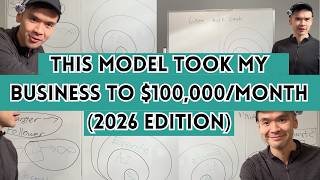
David Molina built $100k/month with one employee using a two-part system: attract high-value prospects by sharing philosophy, then convert followers into leads by offering diagnosis, not solutions. He replaced multiple products with one core offer in tiered access levels, added an AI clone called Cashy to deliver 12 times faster, and emphasizes live events to build community as AI becomes ubiquitous.
Chapters
Today I'll walk you through the model that got me to $100,000 a month, created 4,000 customers, 300 clients, and made $3 million. Most of this was made with just me and my VA, a couple Google Docs, some funnels, and margin stayed above 95%. Now there's a new year, 2026. Now I might need to update this next year too, but things have changed in the market. Uh, coaching and consulting is harder to sell. AI is now inside of the mix. People are not trusting as much as they used to, and things just kind of are decaying in a lot of places that I'm seeing, uh, for clients, for friends, and we need to adapt, right? So I'm recording this as a private training for my clients, but also I might post this on YouTube so they can see, well, what's changing, right? Because what got me to $100,000 a month is not what It's not what's keeping me there. And so the model needs some updating because when, no matter how good of an entrepreneur you are, when a good entrepreneur meets a bad business model, the bad business model wins. So have a good model, and a lot of it is already pretty much done for you. This is the part that's done for you. So it's the thinking through the model. So if you're a client, you're, you've seen some of this. If you haven't, well, this is what got me to $100,000 per month. Let's get into that. It's divided in two. So the model is called Likes Ain't Cash because they're not. And that name was born out of PTSD from me knowing somebody who had 900 followers and I had 70,000, and we were both making the same amount of money. And so this guy really made me see, wow, really, likes ain't cash. There's people with very small audiences or just people who build it intentionally. That's kind of why it's it's called like that because there's not much use for yourself, your character, your family, friends, your business if you just build an audience indiscriminately. But you gotta be careful about it. You gotta discriminate for the right people to get in. And that's kind of what I learned. So that's why it's called Likes Ain't Cash. Now it's divided in two. So how do you get likes? Because likes ain't cash, but likes don't hurt. And how do you get cash? And I'm gonna walk you through what we do I don't know how long it's gonna take us, probably like 20 minutes or so. If the video is longer, then you'll know it took me longer, but let's get into it. All right, so likes ain't cash. How do you start? Like, if you want to get somebody from like absolute cold to start giving you— well, start them in the funnel, then first thing you do is you got to turn them from stranger to follower. Now, how do you do this, right? It's a, it's a very simple question, but if you answer it wrong, for example, you answer it with create a listicle of 10 tips of books that you should read, right? Or it's easy to go viral if you talk about the current events, but if there's no correlation to you and what you do, then it's very hard to, well, pay you, because why? Like besides going viral, like what are you there to offer, right? Like people are selfish, so you wanna play to that. So how do you get people from stranger to follower? You do what I call personally, whale bait. Now, how do we define whale bait? Whale bait is attracting people with money, whales, people with money who are professional, who pay on time, who have the attitude to work with you. Because just because somebody has money doesn't mean that they're, you know, a pleasure to work with. And somebody who has a problem that you solve. It's different to fish. Fish are people who are none of those things. So how do you attract and what's the difference between getting whales and getting fish inside of the content? And here I like to introduce this like numerical model. All models are wrong, by the way, but some models are useful. This one is just useful. To get more people who can afford you, uh, inside of your funnel. So there's people who start at 0, and then they get to 1, and then they get to infinite. Hopefully you can see that. It's a little faint, but I think you can see it anyway. Most content treats this part of the equation, 0 to 1. So an example: how to get to $10,000 a month, how to get your first client, how to go from being extremely fat to not being fat and you don't have to do anything, right? Now that will go viral, that will attract a lot of people. I'm not saying it won't, and maybe you can build a business off it. That's just not my kind of business. Because I'm more of an introvert, I'm more of a pragmatist. Like, I'm an introvert. There's a bed over there. That's where I'm laying down after I record this video. I'm just passing out because I'm gonna be done right after sharing too many words. But I prefer to be more like pragmatic of not creating that much content, but just tailoring it to the people who, well, I can help, right? I know what I'm good at and I can help them with that kind of stuff. The whole being famous thing, like it's nice, right? Don't get me wrong, I like the recognition every once in a while, but I prefer to be rich. So I'd rather do that, and that's what took me here, that's what's keeping me here. Anyway, most content goes from zero to one, how to get to a destination, right? And you don't need a prerequisite to get there. So whale bait, in order to turn somebody from stranger to follower, might focus a little bit on that part of the equation, but it's mostly this. Let me use a better marker for that. It's mostly this. How to take people from one to then something. So what's an example? Let's say you want somebody who has an asset that you can then turn into something. So let's just say a car, right? You can help people turn some sort of a car into a payment. So you help them sell their car. If you made an ad that promoted how to get $15,000 tomorrow, right? Yeah, you would get a lot of people, but you would also get a lot of fish, right? Whereas if you change the part of the equation that you market from this to this, and you think, what is that one thing that they should have? What is that one prerequisite that is good for this? Is you probably need a car. So an ad that would get you less responses but way more sales, or piece of content would be something like, how to turn that old piece of junk you got parked into money, right? So you start getting more people in— well, the right people in, not necessarily more, but you started getting the right people in. And that's one of the things you can do. You show them not how to go from 0 to 1, but how to go from 1 to infinite. So that's one way you can attract whales. What's another one? And this is something I learned promoting for like 4 years things. It's— I realized that you attract fish with promises, but you attract whales with philosophy and the way you do things. This is an example, right? So I'm showing you what I believe in, what I stand for. So for example, if we ever were to work together, you know I'm not gonna ask you to dance on TikTok. That's not along my philosophy. So once you expose your philosophy to the market, this is already a step up from your competition. And I'll tell you why. Because they are focused on promises, on how to get to that destination. Well, the guy that bought your how to create $10,000 in 30 days, he's probably going to churn in day 31 because there was no philosophy behind it. There was no why. There was no why are we taking— why are you taking me the way— the place you're taking me. Once you create philosophy and you couple it with not taking people from 0 to 1, but from something, because whales need to have something in order to classify as a whale in our dictionary, then you're gonna realize that taking people from stranger to follower is getting you better leads, right? You're gonna see that they start being from first world countries, they start being more competent, you can pronounce their names, and I can say that because I'm from a third world country and I can make that joke. A lot of people, if you're white, you probably can't, but I can make that joke, so it's fine. Anyway, wellbait, don't market without it. So that's one, right? We already figured out how to get people from stranger to follower. Now we can move on to the next thing, which is how do you get people from follower to lead? Now, it's cool to have an audience, right? Likes are cool, but likes don't cash, right? So you need to turn them into a lead. So what do you do next? And I feel like when we want to turn people into a lead, we need to be kind and spare the information that we give them. If we give people too much, we lose them. So imagine you wanted to get into a gym. Right, maybe you already train. I hope you do, you better. Smash like if you do. But let's say you wanted to get into the gym, right? Imagine like something needed to happen when you first started and you were kind of interested in it that really got you to keep going, and that something probably was not a lot of information. It probably wasn't a bodybuilder giving you everything. It probably was that girl that broke your heart. In my case, it was my dad telling me I got chubby, and I hated that. I had zero knowledge on how to get better at the gym, how to train, what to do, progressive overload, all that stuff. Like, it was just like Mandarin to me. Like, I didn't understand what was going on, but I just needed enough so that I would commit to myself and make that decision. Now, uh, this is a long-winded way of saying is I heavily, heavily, heavily disagree with the idea of give people a lot of value, share your secrets away for free, and they'll pay you for the implementation. I don't believe in that. I reframed that as if you give the sauce away for free, people will pay you to cook it for them. Now I realized that's wrong. That's not how it works. If you give the sauce away for free, people will cook it for themselves and not pay you for the recipe. That's just how it goes, right? Because we're all selfish, right? We all have the selfish gene. That's how we operate. There's nothing wrong with that. Well, what's wrong is not operating with that understanding, right? If you leave away, unless you live in Japan or something, but let's say you leave away a stand with food outside of your house and you're like, just take one, just take one cookie. Well, you're not, that's not going to happen. Like people are just going to steal them, right? So if you give away everything, you give away the sauce, the cookies away for free, well, you're not going to get much because they're going to take it and they're going to give you the quote and the phrase that we all hate is the quote of, Hey, let me try that and implement it, and then I'll get back to you. Hey, let me try, let me try your free thing and get value from it because it's so, so valuable, bro. And then after I digest it, I'll for sure reach out. Like, we love those words, right? Some people do, most people don't. So what do you do instead? That kind of, well, it's valuable, that kind of valuable content. I say don't post it. Instead, I recommend posting— I'm going to do some, some little weird thing here— I recommend you post insights. Now, what's insight? Insight is not giving people the answer, it's showing why it matters. It's not giving a prescription, it's giving a diagnosis. So I'll give you an example. We'll go back to the other part of them. Of the whiteboard here. Okay. So every time you give advice, there's a reason why you give that advice. There's some sort of reasoning that goes through in your mind before you say it. If I ask you, why should I go to failure when I train? Why should I exhaust the muscle? You know why, right? And you would manifest that advice in certain very tactical pieces, like, "Make sure it gets really tired," or, "Do that exercise," or, "You're doing that wrong." So there's a differentiation between those two kinds of answers that you gave. One was the reason why, right? The reasoning why you recommend a certain exercise is because you've noticed something, right? And then that has several kinds of representations. So let's come up with an example here. You recommend that people stick to volume eating because when you eat a lot of stuff that has low calories, then it's easier to lose weight, right? So then volume eating is here, the reason of why you believe in the things that you believe in. Now the tactics then are different, right? You can recommend the Ninja Creami, egg whites, and a lot of vegetables, right? Now what should you create content on? It is my belief personally that you should create content about this, and you should avoid making content— look, we got a third marker now, it's red— you should avoid making content about this. Why? Because people's energy, once they give it to you through attention, gets channeled very easily. And so, if you tell them, "You should totally eat this plate of spinach that I'm gonna give you. I'm gonna give you the exact recipe down to the macros, down to the grams, and you take it and you use it." Where are you channeling their energy? You're channeling the energy towards the advice, the thing that you gave them. Where do you want their energy to be channeled? Not towards the advice and trying things, but buying things. You want people to go not towards, hey, let me try that, but what else do you know? What else have you tried? And so you get way better results turning people into leads, not if you gave away the entire value, but if you explained this is why it matters, right? And so once people understand this, And then the next natural step of where the energy is headed is what are ways to do that tactic you just talked about? It makes a lot more sense, right? It's an example of what I'm doing here, frankly, right? I'm not telling you price this stuff at this much, and then you sell it with this funnel and this is the headline, right? Although I could, I do reserve that for clients and people I work with together. I'd rather explain why these things matter. One is we don't have that much time and two, Why would you pay me if I gave away all that stuff? It makes, it removes the incentive for us to do business together. And it might reduce the incentive for you to actually do something that will help your audience. An example, if I just like wanted to go and train at the gym, right? And the first thing I got was somebody explaining to me, this is failures, this is carb cycling, this is a caloric deficit. This is a double dynamic, double progression and blah, right? Instead of saying, hey, if you look, Jack, she'll talk to you, right? Sometimes you just need the insight. Sometimes you just need the insight to take action and not the value. And so why does that matter too? It's because if one, like let's say a certain part of success requires a certain amount of steps, and then you just give them this one. Well, it feels really good, right? But you kind of fucked them because they don't know what else is there, right? And now you also trained them in the wrong way because they're not gonna talk to you and say, hey, like, what are the other 4 missing pieces? They're gonna wait. And wait, and they're going to wait till you release the next thing. And then it's a virtue— it's a— not a virtue. What's the opposite of virtue? It's, um, it's a bad cycle in which, like, you start giving them things for free, they're thankful for it, but it never changes them. It never helps them, and it never helps you. Why? Because you keep giving these things away. And if you could explain why these things matter, you gave the insight instead of the value, then you would both do what's needed to change their lives, which is you would encounter a sales conversation and something would change, right? Instead of giving away pieces of the map that's probably gonna get you more lost, right? If I as a beginner started with calorie deficit, for example, instead of just understanding like you move this weight from A to B, then I probably wouldn't have kept up, right? And I wouldn't have below average biceps. I would have even lower average biceps. Can you imagine the tragedy of that? We don't want that. No go. So that's how I turn people inside of this model from followers to leads. Not through value, but through insight. Not through giving them, hey, you should take this medicine, but you're explaining why this matters. Because then the incentives are the same. Their incentives are like, What else do you know? I understand that. Now I see the world in a different way. Like, how else can we move forward, right? So those are two steps on how to get likes specifically. That's half the model. So that's taking people from stranger to follower through whale bait and taking people from follower to lead through insight. Now comes the fun part, and it's actually the money, right? Making money, cash. So how do you get that? Now we're going back here. I'm going to explain the difference between two things. And I have not one offer. If you ask me, how many offers do you have? I would struggle answering that question because I just have too many. Now it's not an offer suite. It's what I call an offer show. So what is the difference? An offer suite is this typical education industry, uh, offer suite. So You have a course, you have a mastermind, you have a program, and you have a community, right? Example. So you have 4 different offers. Now let's say one day you decide to make your course better. And so this improves, but just because you made your course better, that doesn't mean that your mastermind gets better or that your community gets better or that your program gets better. And so the offer suite was something that was designed to be 4 times as efficient but it ends up being 1/4 as efficient because you can only improve one thing at a time. Now, what I prefer to do is something I call an offer shell. So let me explain that to you. Last time I tried to draw this, side note, I took like 3 tries. I'm gonna try to do it in the first time. So anyway, this is an offer, this is an offer, this is an offer, This is supposed to be perfectly circular. So stay with me here. Okay. I'm already, what, 19 minutes deep into the video. No, don't make me redo it. So just believe these are circles. Now I don't believe in having different things. I believe in having one thing, one offer with multiple levels of access. So this is what you're seeing here, because let's say I host a course. Right? Let's say I have a course and let's say I don't create something entirely new to create a new offer like this. Instead, I just add one layer of access to that. Let's say some sort of calls, right? And so if I make my course better, now I've benefited two tiers. Let's say I added some sort of like DMs. If I make the course better, now I benefit at 3, right? And maybe I add something else here. So what I've found is that when I have things structured around an offer shell that doesn't create entirely new things, but kind of staples things and delivery mechanisms to one core one, it allows for 2 beautiful benefits. The first one being is that I can put my heart into this and make it really good, and then everybody would benefit. The second one being that it's way easier to deliver, and I don't really have to explain things to people. Like, maybe you sell different things. You might be in the situation in which you're confusing the audience because they don't know which one to buy from you. Is the mastermind for me, or is the community for me? What's the difference again? But you have a program. Wait, aren't those programs too? Maybe I'll just start with your course. And they never fucking do, so it's like you lost it, right? Whereas with this, it's a little bit simpler because you can get people to start always in the same place. And depending on the speed, the drive, desire, and how fast they wanna go, you can start selling them into different things, adding things on and on. Now, another benefit, let's talk about a third one, is let's say somebody joined this, like the higher one, it didn't really work out, or they're done. With an offer suite, what they would do is they would just say, see you, goodbye, it's over, right? Whereas with an offer shell, they don't have to leave your world. You can still say, well, if this doesn't work, maybe you're going on vacation, right? Why don't you downgrade to this for the time being? This works even better for me personally, because I have this rule in everything I do that pauses are for Netflix. I don't allow pauses in my world because you're not going to pause your business. Like, that's not how it works, right? You're always in business. We're entrepreneurs. That's kind of what we chose when we started this thing here. So pauses are for Netflix. For me, it's a yes or no. There's no maybes in my world. And so this is very simple for me to operate because I don't, I don't just need to lose somebody. I can say this one might be benefited more beneficial for you now that you might be in the lower season of pushing, or you might be busy, right? And I'm okay saying no to the money if somebody's not willing to stick to my rules. That's just something I do. And I've got I went through a lot of, let me just allow this for this one time. It's never the last time. And by the way, every time you say no to the money, you gain a lot in spiritual strength and it makes the next dollar way easier to get. Take that one. You post that on Twitter. All right, back to the likes and cash model, the offers show. Now here's where most of the changes, I believe, occur in terms of, um, 2026, frankly, because I believe there's a new very important component that needs to be taken into consideration, and that is AI. It's changing a lot. Now, AI is a big, big term, so let's define AI. I see it as a way to make processes occur faster and improve consumption of your stuff. An example: I had previously a course, a workshop, call it what you want. I'm just gonna call it info. So info. I really hope you can read that. I think you can. So I used to have info, right, and on how to create an offer. Now, some people watched it. Most people watched like 4 minutes and then nothing happened. They didn't make any offers. No offers were printed, no offers were made. And I put a lot of work into that. So it was kind of like shitty to see it not be done. Now, what did I do then? I added a new tier. I said you can get the information, just the info if you want it, or, or We can add an AI component. You don't need to watch the course or whatever. Just go to Cashy. Cashy is my AI replica. It's my clone, virtual me, and she will give you your offer in 10 minutes. I'm not a she. Cashy is. Let's, let's just clarify that I'm a heterosexual man. I needed to say that. Okay. So you come, you come up with an offer, right? And then now I have more case studies and testimonials and wins, and I get those faster than I can market them because I didn't ask people to go through a 60-minute course. Instead, I'm like, just answer this questionnaire and she'll do this stuff for you. And then she'll give you the exact templates to send it, just copy and paste them. And then I created a new one called Whalebait Cashy, who does this stuff. right? And then people were saying, dude, like whales are DMing me and I don't even have to write this stuff. And I used to think, man, these lazy bastards, like, come on, write it, write it. But now I think differently. I think, well, how much content have I not consumed that I could be richer if I did? How many things would I be better off in my life if I just kind of put that into practice? The answer is a lot. And so once we make our things easier to do with an AI tier, let's say the AI takes like 5 minutes and the info takes like 60 to consume, you don't make it like 2 times better or 3 times better, you make it 12 times better. 60 divided by 5 is 12, 'cause 60 minutes, 5 minutes, 12 times better, right? And so it's so much kinder, it's so much better to help people like that. So now I fully believe in this. This is a new tier that I think wasn't an opportunity back then, or it was, but I was an AI amish, and I just didn't really get into this stuff. But it is big, and it is important. Now, what else? And I think on top of that, then there's events. Now, we will define events as an opportunity that also AI creates. Now, one thing that AI does I'm tired of slouching, man. One thing that AI does is it makes people feel lonely at times, and it also makes you, by comparison, the person, it makes you slightly more desirable because sometimes, and I fully expect this to happen in the future, there's gonna be some pushback of, oh, you just have an AI tool, right? AI is gonna have like kind of the same connotation that now, oh, you're just a course seller, you're just a GPT seller. Now it's like kind of cool, right? There will be a time at which it won't. So it's important that you have some sort of events in your world. Now, what are events? Events is simply something that is going on. So why do people go to concerts to listen to music, stand in the rain, and get probably tripped up by a random dude instead of watching on their phones, putting their headphones on, and listening to a quality, quality, high, crisp noise cancellation song on Spotify, because an event is something to do. It's fun. It's something that gets you up and doing this right now. I fully believe in the importance of events because that's just something that will introduce less loneliness, or I guess remove loneliness from people's lives. AI is going to be a fantastic way to create results. It's going to be a fantastic way to speed things up for people, but that will also create another pocket of people who are like, ah, I kind of want to talk to the guy. Right? Like the other day, I did something, you know, man, it's wild how good this can be for your mental health. I met up with a friend. Can you believe that? And I met up with a friend and I talked about all this stuff. I'm like, man, I feel so much better. Right? Or I wasn't a believer in this. I went to this mastermind in Italy. I'm like, ah, this is just where people go and like suck on the main guy's dick, right? Again, I'm a heterosexual guy, so that was not exactly in my plans. Now, at the end of the mastermind, dude, you could see that when people talked, some things happened, but the real magic was like not in the moments, but in the moments within the moments, right? Where you just kind of go and go buy something at the store and you talk about it, right? Or at the end where people are having a drink and they're like, man, fuck this thing, or I really want to do this thing. Right? The value of events are going up, not just in person, but also a challenge, right? Like as of today, this is not going to be happening when you watch this, but as of today, I was running a challenge of I'm going to send you a template every day and just follow it for 18 days, right? That templates that have created the results you saw back then, which is like 4,000 customers, 300+ clients, right? Or you could do a workshop, a live thing. Right? Imagine this was live and I was talking to you and then it's like, okay, well now let's open up the floor. Let's work on your thing. Right? It would be fun. It's something to do. Right? So events, things that are just an excuse to do something are going to be a big deal. Because for example, you go on a date, right? And the girl says yes and you take her to Italian. She's not going there for Italian, bro. She's going there for you. Right? So include events in your thing. It's not just about the Italian. It's not just about the stuff. It's also about the things surrounding the stuff. And I think that's important inside of a show. So let's say you make your info better, you made the event better. Let's say you made your AI better, you also made the event better because you can feed it into the AI and it's gonna be better for everybody. And I think the top, top thing is gonna be, like to monetize the most inside of the likes and cash model, this is actually going to be access. Now notice how most coaching consulting stuff, it starts right away with let's sell access, right? Let's sell calls, DMs, and whatnot. But me personally, as an introvert, I like doing no-call consulting. I like just helping people via text or with AI even better, or with products even better. It's like, this is just me, but I prefer to be alone. I like being alone. So I'd rather create products that are kick-ass products and get people results through that, through volume, then, you know, go, go on calls with people. Frankly, like I told you about the bed that I got over there, that gets mostly populated after a Zoom call. Cause I'm like, I'm, I'm fucking done, right? Now, some people do really well with access, right? And they like it and they get energized after a Zoom call. I don't know how they do it, but that's what they do, right? But they like it, right? So maybe that, maybe that's better for them. For me, I'm an introvert. I like spending my time alone and I prefer to only leave access to me as the top resource, the one that I can charge Frankly, it's a little bit obscene amount of money. So that's what I like to keep it as, because not many people will get that. Not many people, uh, want that, but I can help them other ways because I'm more of a product guy. I like software. I like developing cool products. I'm not so much a business person, right? I'm a writer that just kind of bolted on a business on top of my writing. Like, I'm not a business person who writes. I don't want to be that. I'm a writer who does business. And so this form of creating more, like focusing on great products and good writing, to me, this feels a lot more aligned than the other way around, which is the likes of our cash business, which is entertainment full on. Just get as many people as you can, like get inside of your program and then let them focus on fulfillment or create a product with ChatGPT and then just get people in it. And like, I can't do that because it would kill me. Like, I want to create good products. I feel pride on them, from them. And I don't know, I don't like that area of just going as viral as possible and letting other people handle fulfillment, but they bought you. You are the most important asset in your company, right? When you buy something, people don't wanna talk to your minions. They don't want to talk to the guys you hired. They want to talk to probably you or the things that you were directly involved in, not somebody else. And so I feel like then that makes sense to position as the highest level tier inside of your thing, that yes, it's expensive, but you also have other ways to help people. And, uh, I think like this is the ideal model if you're somebody who wants to be rich, not famous. You prefer the cash over the likes. You prefer to have a business over a show business. So that's the, what I call, not the content creator's way, but the cash creator way. And we follow the likes and cash model. This is how I envision it. These are the changes that needed to be done after I got to $100,000 per month, uh, in order to stay there and keep maintaining and keep growing. So this is the model. If you'd like to see what this would be like to you, then I don't open everything inside of my offer shell at the same time. Uh, because of the same thing, like I like to focus on products. I like to make things good. I like, it brings me a lot of joy inside of my life, but you can go to the newsletter, likesaintcash.com. And inside of the newsletter, you'll see which one I'm promoting at the time, which one I'm putting my heart to into at the time. And then that would make more sense depending on the stage you're at. If you want to work with me and get access, then Well, join the list. Eventually it's going to be open at some point, I guess. That's it. See ya.










