Ditching Sales Calls For Google Docs - Ian's Podcast
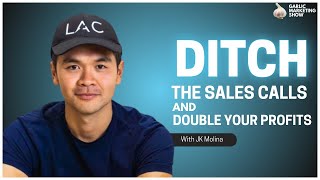
David Molina ditched sales calls and built a coaching business serving 80+ clients through asynchronous Google Docs workshops and tiered access to a single offer. He emphasizes audience efficiency over size, recurring weekly payments instead of big sales spikes, and solving a clear problem rather than targeting a specific industry niche.
Chapters
The video you're about to see is a podcast I did with Ian that I thought was pretty insightful on how well I got out of sales calls. So if you're doing sales calls and maybe you'd like to consider the possibility of getting out of them and close clients without it anyway, well, that might be helpful. If you want to see the entire journey, you can see in the description there's a Google Doc. It's free, you don't need to opt in or anything on how the entire journey went. So that's it, enjoy. I started in, in COVID because there was like really nothing to do, right? I was a VA back then and I saw people making like $250K months and whatnot, but it was on Twitter. Like, I don't know why I landed on Twitter, but I just liked it and I started building it and an audience and it got like, it went well, launched a few PDFs, launched a few products and, uh, but like the real kind of like like canon moments that took me to what I believe in today was when I had maybe like 70,000 followers on Twitter. Back then it was like really easy to grow. It was like a good wave. So 70K and I was making like 30K a month. And then I met this dude, this accountant, his name was Tony. It's Tony. And he had 900 followers and he was making 30K a month. And we got on a call, he's like, oh, Jacob, like, how do you, how do you monetize your audience? I'm like, dude, how do you monetize your audience? Like, you gotta teach me. So that's kind of where, where I got started. And through the, through the motions, I started realizing that, dude, I could get so much more from the audience I already have. I don't need audience size, I need audience efficiency. And that's kind of where the motto was born, which is kind of like call it the cornerstone of the brand, if you will. Likes ain't cash, because it's like a constant reminder of people with small audiences making a ton of money and people who have big audiences making no money. So that's kind of where I began.
You know, I think this is an important, important thing. Why, why do people with large audiences not make money?
Often it's because, it's because of certain overlap. And when they start, it's kind of, they build an audience and the common like theme is I'm going to build an audience and then I'm going to monetize it. The problem is they build the audience with what I consider fishbait. So fishbait attracts fish. It's the viral content, is what everybody likes, right? They don't build the audience with whalebait. So when they try to share a post on, let's say they're going to make an offer on coaches, so how to scale from X to Y, but they build their audience on funny videos and talking about MrBeast and analysis and stuff that's not theirs, then there isn't any overlap between the audience you built and the audience you can monetize. There is no overlap between fish and whales. So that is what happens. And the painkiller kind of the just one more of the industry is maybe, maybe the next follower wave, maybe I just need a little bit more followers. But the overlap just keeps getting bigger. If you see it as a Venn diagram, the part that overlaps keeps getting at the same size, but the audience gets bigger. So because the overlap doesn't change, the income doesn't change as well. And that's what I did. So I on Twitter, I have 215,000 followers on Instagram. I have 15,000. Instagram and Twitter for me make the same amount of money. The difference was one was built on fishbait, the other one was built on whale bait.
And, uh, that's funny. I don't know if JK knew this, but name of my book is the, uh, Video Testimonials That Land the Big Fish. And I'm not, I've not used the whale bait versus fishbait, and I'm stealing that. Uh, but it's true. It's so true. And you see people, you know, like talk to the, the general audience and people that don't talk about things that people that are gonna spend money with you and work with you are gonna talk about. Uh, when, what was the first thing that you did to really start attracting that whale bait?
To me, it was, um, it's called audience— I call it audience respect. So I have, I have this term, I call it audience respect. So I feel like I purposely put myself on the audience friend zone. So the audience friend zone happens when you teach your audience not to buy, and that happens when, in my opinion, you give out too much value. And I am kind of against the whole give out everything away for free, give all your value away for free. The reason why is because when you tell people, when you give a lot of people value, what they do is they hit you with the, thanks, bro, let me implement and then get back to you. Most never come back, right? Or let me test that out. And then when I make money from your free stuff, I'll buy your paid stuff. Or let me get back to you. I'll definitely join someday. I kind of taught them how to do the thing without me. My main thing was when I switched from value-based content to insight-based content. So the difference, in my opinion, is value-based content is when you give people the answer. If you want a video testimonial that lands the big fish, these are the 4 components. Insight is when you prove that you have it. So when you show, before I used to do video testimonials and this was my income. When I started doing video testimonials that land the big fish the Ian way— Ian, you mentioned your name is— it's not Ian, right? All right, well, well, well, the big fish way, right? When you— when I focus on the big fish way, this is my income after. So there is a specific method that I can show you how to land testimonials, how to have testimonials that land the big fish, which you can get here. So it proves that you have the answer, but you don't give it. And that, in my opinion, attracts the higher level of clients because higher level clients that really want to know all the details, they just want to know that you have the answer so they can pay you to get it. They get it that they need to pay for it. So the main shift to me was from value to insight.
And it's a subtle shift, isn't it? It's a very subtle shift. Uh, and when do you know that you're moving from the insight into the value, you crossing back over into that value-based Do you have a trigger?
Yeah, to me, it's if people can read the email and take immediate action, that's value. So if I give them the answer, they can apply it value. But if it, if they go with, it's kind of more of a, if they receive it on their hands, it's value. If they receive it on their heart, it's insight. What do I mean by that? If you give them the thing and they start typing and doing things, it's value. And then you tell them how to do the thing without value. Whereas if they're like, I didn't think about that. Huh. Cool. An example of value for you, for example, and I'm assuming because I, like, we put an example of value for you would be something like the ideal testimonial has these 4 components and this is the question you ask so that you'll get the perfect testimonial. And then it's like, fuck yeah, bro. Thank you. You gave me everything. Goodbye. Right? Whereas if you say, folks, by the way, those testimonial walls that you have on your website, people don't really read them. What really converts people is a story because story provides context. Context allows them to compare themselves to the person in the testimonial. And once you provide context, those are the testimonials that land the big fish. I can show you how to do so inside. It makes people go, ah, Makes sense.
It's funny because JK has not obviously not read my book and that's like the first page of my book. But it, you know, and we, you know, great marketers, it go this way and it's providing that insight to people. I think that's a subtle shift and an important shift, but it's, and it's also not just purely hitting them over the head with buy now, buy now, buy now, is it?
No, it's not because insights reveal a great deal of anxiety. So to me, when you explain that insight, it's like, huh, okay, I get what I've been doing wrong. What's next? So they reveal, they relieve that. Somebody said, JK's is the only newsletter that I get an offer daily and it doesn't piss me off. Because I'm focused on how do you give people a little insight on why things are happening to them? So that they can then pay you to solve it for them.
And this is an important thing too, because there's audiences that want to do the thing. And I talk about this, like if you're a digital agency, you can talk to people about how to set up a WordPress site, right? And the people that want to hire you to set up the WordPress site don't want to know how to set up the WordPress site. And you get 10,000 viewers of the WordPress site video. Or you can be like, you know, is WordPress going to cause you to lower your rank, right? Or how not to get burned by a WordPress developer or something like that. And I think that's an important, important shift for people to understand.
To bank on what you said, on point, what if you did the how to set up a WordPress site? You know who you're going to attract? Developers, not people who need a WordPress site. So did you really want to give all the value away for free? Probably not. But when you explain the importance of ranking or, and what happens if you don't rank, let's talk a little bit about your journey.
So you moved over to this insight piece. You've got Whale Bait. Tell me, like, explain to me, because now what was your business like before and what was it like? Because I, JK and I are in a group together and I saw an interview with him talking about the evolution of his business. I was like, this is amazing. People need to hear about it. What was your web— your business like before you, you got into Like St. Cash, and what is it like now?
The first business that kind of made a significant amount of money for me was a software called Tweet Hunter. So the software called Tweet Hunter was basically a tweet scheduler. That's all it did. But here's what I, what I found is that when you, when you sell software, you make a lot of money by making things look hard. When you sell coaching, you make more money by making things look easy. So an example of this is with software, it's, dude, all these things, they're super hard. Like let's say you use Zapier, you're going to hire a developer, connect it, do all that shit. Why don't you just use Zapier, right? Because you make it look hard and it looks easy, right? With coaching, it's different. It's like you make things look easy. So people are like, oh, That makes sense with the insight, then they pay you. So I started making things look hard by giving them a lot of value, like do step 1, step 2, step 3. And with software, it worked miraculously. So did well, had the audience. So I sold Tweet Hunter and then we sold that. Next business became Tweets and Clients. So Tweets and Clients was big teams coaching. So 15-person team, setter, closer, calls, CSM, partner, operations, sales manager, coaches team, big. And that, I mean, it did well, right? But the margins weren't the best thing in the world. At some point I was, let's say I have, let's say I did an $80K month, I would keep maybe like $10K or $15K. So it wasn't the biggest thing in the world in terms of profit margin. And then I learned that I didn't have to do that. I could close people with calls, if I, without calls, if I just use Google Docs and I use insight-based content and a workshop funnel and other stuff. So I shifted from the big teams. I scaled back to just me and a VA slowly. First we got rid of the coaches team, then we got rid of the sales team, then on and on. And to me, the transition came when I stopped thinking about my offers as offer suite and I started thinking of it as an offer shell. So what is the difference? The offer suite monetizes many things. So typical coaching business, what does it have? Many things. It has, let's say, a course that you sell as an ebook, write a book. It has a, let's say, a community. It has a program and has a mastermind. So it's 4, 4 things. My problem with that before was that effort and improvement in one didn't bleed into the others. I made my course better, that doesn't make my program better. I made my mastermind better, that doesn't make my community better. So my effort wasn't multiplied by 4 as the offer suite wants it to be, it was divided by 4. So I shifted from an offer suite in which I offer many things to an offer shell in which I offer one thing with many levels of access. And that is my current business model and why I can service 80 clients with just me instead of the big teams. So the beginning part, let's call it the course, like the material, it's here. And then I don't add this or that, I add this on top of that. So on top of that, you can get community access and calls. On top of that, you can get DMs. On top of that, you can get more work where I actually do some stuff for you. So I monetize the same thing on my calls. It's not uncommon to see people who pay me this amount and then people who pay me 3 times the amount and people who bought just a one-time workshop ticket. But I offer different levels of access, not to things, but to me. So instead of offering many things, I offered one thing with many levels of access. And that's what allowed me to serve the clients with just me and get rid of the coaches team. And the sales team and the rest.
How did that feel?
Scary and slow. Scary and slow. So beginning scary because it's like, shit, probably you got 50 people, that's just you and Christian. Christian's my VA. I used to joke with him, it's like, Christian, it's me and my VA against the world. So, and slow because I do weekly, right? And It's like the dopamine of a huge paid-in-full, it's amazing. You get a big paid-in-full, it's like, "Hell yeah, boys, we're taking this one to the bank." But then you change it by small increments of weekly. So in the first months, it's so slow and it's really painful, but you just have to kind of hold on. Because I actually posted this a few days ago. At one point, let's say, post this on Twitter. It's on Twitter. Yeah. Well, now it's X for the, for the new folks, right?
And you have to say now, right? X formerly known as Twitter. You can't just say X cuz no one will know what you're talking about.
Yeah, dude, it feels so awkward. Like, how politically correct is this podcast?
It's not.
It feels like, okay, it feels like, I feel like I have to use your made-up pronoun sometimes.
You're right.
So, okay. So for example, I made like $40K or $50K one month, but you check the MRR and it's $4K MRR. So next month, guess what? Every 30th of the month, you feel happy because you crushed it. You also feel extremely anxious because you have to do it again. You're not going into the next month with something, with a base. So that's why I decided it was worth it to transition to more recurring-based model instead of the big payments. Nice.
And yeah, I mean, and what's interesting, you said weekly, you do weekly payments, no contracts, right?
No contracts. People can leave.
That's, I mean, that's amazing. So you've got to work harder for them. But now coming back to the types of businesses that you work with, we said coaches and consultants, but what does, what types of coaches, what types of consultants have you seen the this model work for?
What I found is that it's weird because like, I don't think of like niches specifically. Like, yeah, most people are coaches and consultants, right? But recently, like last month, I got two clients that make more money than me. And I'm like, guys, what the hell are you doing here? Like, this is a money-based offer. Like, why are you here? And they're like, listen, bro, like I make money, I'm good, but I need help making it more profitable because I have big revenues but not big profits. What do I do? So to me, I find it, and sometimes coaches get stuck in this, it's what niche should I serve? Like what's my niche? To me, I don't feel like it's a thing like you choose the niche, more like the niche chooses you. And the niche chooses you when you expose what problems can you solve?
Right?
So what problems can I solve? Does this work for? You have big teams, you want to be just a one-man guy, keep 90% profit margins or above. You do sales calls, you hate them, you want to do Google Docs instead of sales calls. That. You are working yourself to the bone, you want to work less than 4 hours a day and still sustain or grow the revenue. This is problems we solve. Some people are CPAs, some people are done-for-you, most people are coaches. but it works for people who want to solve those problems just like you, because who can use video testimonials? Coaches can use it, like of course, right? But construction companies can use it too. Video editors can use it too. So what problems do you solve? These problems. What niche? Whoever needs these problems solved.
I think, and that's something that I'm talking to people a lot about is I think that's unique, unique to the, the problem, to the situation. More so than just the industry. Do you mean an industry and still solve that problem, right? Of, hey, are you, you know, are you an attorney that is, you know, talking to too many of the wrong people? You've got a lot of people coming to the door. Do you want to talk to people ready to spend more money with you? Or you're a coach that's constantly on sales calls with people that don't have money. It's the constantly on sales calls that don't have money, right? That's the problem.
Yeah, right. And who might need that? Many more people than coaches. Yeah, right. But I feel like when you say it's only for this kind of people, you limit yourself to the others. I call it the pizza for doctors problem. So the pizza for doctors problem is, let's say you have a pizzeria and it's not selling well. So what you do is you go and come to niching advice and they say niche down in a vertical that has money and that can pay you. So you go and change the sign to pizza for doctors. But then you miss out on the wealthy lawyer, the wealthy banker, the wealthy marketer, whereas you would make more money if you just said, this is my pizza, try it. This is the problem I solve, hunger, and I solve it really well. So niching down, to me, it's kind of, in my opinion, something that is not as important as just, this is the problem I solve.
It's a subtle— and once again, it's That's great insight. And it's a tough— it's for some people, it's just a tough thing to understand because they feel like they solve all the problems, don't they?
Yeah, yeah. And we just have to be, in my opinion, more mundane with that. So sometimes people will come— I help people with mindset and issues and, and their self-confidence. Yeah, but people don't wake up thinking about their mindset and issues and self-confidence. They think about how do I make more money? So we need to be more mundane in our offers and say, I can help you make more money by solving this. But the outcome is still money. We give people what they want so we can give them what they need.
And, you know, I mean, obviously you have a success story of transforming your business. What, you know, video case stories are our thing. What's your favorite? Client story, your favorite client success story that you've had?
My favorite client success story was this guy Jacob. So Jacob, but it was because it was so much visual persuasion. Like the guy made me fall in love with his story because he used so much visual persuasion. And obviously he's a great guy. He would've succeeded without me anyway. I was just there to make sure it happened faster. But dude comes up, and he's like, dude, first $14K month, sends me a screenshot. I'm like, oh, this is beautiful. And then he's like, dude, I bought the, I paid the mortgage for my mom's house, sent me a picture of the house. I'm like, you bought a house? And then he sends a picture of the pool. I'm like, it has a pool? No way, right? And then he sends me a handwritten letter by his mom, like thanking me for making the family a better place. And I'm like, dude, no way. This is incredible, right? So it's just these little thingies. That, well, I don't want to call them little, but it was this great attention to detail and visual that he gave me that to me was the best thing. He had like 30,000 followers, needed help monetizing it. And yeah, we did the same things, make offer better, make leads better, whatever, right? But it was what it became with the pictures he sent me that really made me fall in love with the story.
That's the— those are the best stories. Those are the stories that motivate you. It's not so much What you did, not so much the value, right? It's the insight of like, this is the transformation of being able to buy your mom a house or, you know, and, you know, making, getting the monthly income going and no longer talking to 1,000 sales calls a day. I think that's it.
And this is your world too, right? Like what convinces people better, the mama's crib story or thousands of testimonials that like you have no context? But the manuscript's always one, it sells better.
And no one, and no one that just heard that will ever forget about Jacob, right? And if you just said, well, if you had stopped at the $14K a month, they probably would have forgot. But you tell them about that video and it keeps you motivated, keeps you motivated too. And like, and I think that that's an important piece too, is like remembering the vision of what you're, why you're doing this. And so, you know, tell me a little bit about how people work with you. Obviously, you talked a little bit about the systems. So, you've got a website, likesaintcash.com. We'll put a link to that in the show notes. And how does it— getting started, what does that look like? What's the process?
Well, you join the newsletter, you get an offer every day. So, buy the offer that speaks to you. That's it. That's the entire insight.
Nice.
I love that.
So easy, so simple. And even though, I mean, folks, you just got to go to the landing page to see, because I, you know, someone the other day talked to me about a landing page. Like, I need to do this, this, this. I'm like, do you have the copy down? They're like, no. I'm like, I'm going to show them this. I'm like, this is, this is what you need to start with. And then you can add pictures, right? I, you know, for, yeah, just because it's, uh, it is awesome. Uh, yeah, let's put this up here. Yeah, but send me the likes, it catch amazing headline. You got 3 or 4 quick little stories and boom, that is awesome.
So put something there that's, that's helpful maybe for the audience too is see how the testimonials have their follower counts. Testimonials in my opinion, and we can jam on this because You know more than— you know more of this than me, but testimonials need context because people subconsciously are going to compare themselves to the person inside, but they cannot do it if you don't give them context. This is why when I share maybe wins of a client, I try to always include how many followers do they have. So when I upload a client's wins, this guy made $10K, whatever, it's like, You have no context, so you can't compare yourself to him. But if I say this guy made $10K with 500 followers, then you might look at this and think, I have 1,000 and I'm not making $10K. So context to me is a very powerful weapon to include inside testimonials because it gives them something to compare themselves to and it makes the testimonials, in my opinion, hit much harder. Like testimonials without context, I don't like them.
I always say, people, you know, your great stories, they have to have connection. If you don't connect to the person, you don't have a story because they don't care about the person. They don't, and especially when you're trying to convince them to do something, they need to know that that person's like that. And you can do that. It's also, like you said, in this situation, and I think that's situational. 200, that one showed 200 followers and someone who has 10,000 followers. That was awesome. Very cool. So we'll put a link to that in the show notes. Uh, and what's the— so is X the best place, or Instagram the better place to follow you? Which one is your preferred platform? X. All right, so I'll put a link to that in my show notes as well. And that—
actually, no, no, it's Instagram because on Instagram I put the video stuff. Let's do Instagram.
Yeah, yeah, it's interesting. Yeah, Instagram. Mine's YouTube, but the problem with YouTube is you get no messaging. But I like to message people. But, and if you had even one piece of advice to like besides signing up for your list, what's the one number one thing that you can do right now to start moving and start closing more of those whales versus the big fish? It'd be for besides the fish, the little fish.
One thing. So I feel like a lot of coaches just kind of, they just exist. They're just there. They have an offer, but like, there's no excitement. There's no involvement. There's no like a story or a villain. And there's no story we can fall in love into. And there's no villain we can fight against with you. So to me, when I set up my story saying, guys, my margins were terrible, and I sucked at this, this is where I'm going, this is my path, and I gave myself a timeframe. It gave people a story to tune into. It gave some of them a game that they could like tune into and see how you were doing. And it, in my opinion, kind of shifted my, the perception of me a little bit and the coach who does it a little bit from a guy selling a course to a man on a mission. So to me, it's you crafting a plan, giving them a game to tune into, having and being willing to take the risk if you lose and you miss on that plan. To me, that was one of the best things I did for my business. It requires accountability and bravery, but bravery is in even less supply than skills and offers. So if you can demonstrate bravery and courage by giving people a game to tune into and a plan, I think that's nothing— something you won't regret.
Give me an example of how you did that. So I think this is important.
Yeah.
Yeah.
So my pinned post on, on X, let's cover that. So it goes, the plan to make $100,000 a month profit with 3 hours a day. So that started a game, you need to create a game. And when you create a game is you set up a goal, and you give yourself a timeframe. Me, $100K profit by the end of the year, right? So I show people why, how, and what. What is, what is the goal? Why am I doing the goal? It's because I got tired of low margins. I got tired of, you know, dealing with tire kickers, and I got tired of chasing and doing sales calls. So this is why I'm doing this, and I got tired of not taking any money home. Now, how? And I give people like 3, 5 inside steps on how I'm going to do it. I talk about it while I talk with you. Offer shell, whale bait, insight, Google Docs sales. And then that gives people something like, this guy has a plan. So what you do is you set up a plan with how and why and what, and then you keep updating people on that plan. Guys, 10% of the way there, 15% of the way there. 25% of the way there, I'm raising prices. 50% of the way there, I'm celebrating, right? So it's kind of like what Twitter was when I first started, which was like, you know, like I started a Twitter account, I was like 10, right? And back then it was like, minute 50, Lionel Messi receives pass. Minute 51, Lionel Messi shoots. Minute 52, Lionel Messi scores. It's kind of like that. So you got to treat it like that. You set up a plan, you created the game, and then you update people on this happened today, this happened that, this happened that day. And that is a way so you can talk about your offer. But it gets people to fall in love with you. Because you're painting it as a show. And you're moving. The human eye cannot help but see things that are in motion. And when you're constantly in motion, and constantly updating people on the game you created, that's when you start to— people go like, this is really cool, I want in on this. It shifts you from a guy selling a course to a man on a mission.
Everyone follows your mission. Uh, that is fantastic. Some great content out there, great insights. Uh, but JK, thank you so much for being on the Garlic Marketing Show. Lots of insight. I mean, important stuff here, folks. And I know everyone wants the done-for-you tactic that's going to help you, but you've got to get this mindset stuff done. This is gonna transform your business. Thinking about the cash, thinking about the journey, thinking about the insights, how you speak to your audience, offers. I mean, just modeling what JK does. JK, thank you so much again, and thank you all for taking us on your journey. This has been Ian Garlic and the Garlic Marketing Show.










