From $250/Month VA to $100,000/Month: Keaton Walker & JK
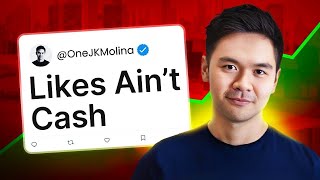
In this interview, JK (David) Molina recounts his entrepreneurial journey from earning $250 a month as a virtual assistant in Guatemala to building a $100,000‑per‑month business with a single VA. He describes how he leveraged Twitter to grow an audience, began ghost‑writing tweets for clients, co‑founded the tweet‑scheduling SaaS Tweet Hunter (paired with its LinkedIn twin Taplio), and sold the company for $1.4 million, netting about $350 k. After the exit he shifted to a high‑ticket coaching model called “Tweets & Clients,” eventually discovering that the bottleneck was booking calls, not closing them. He introduced the “money line” – getting prospects to pay a $1 token to earn their respect – and re‑oriented his funnel around turning leads into paying customers (low‑ticket workshops, templates, swipe files) before upselling to recurring clients. Throughout he shares tactical advice for creators in Latin America: the importance of English fluency, importing proven U.S. tactics five years later, focusing on customers rather than leads, using joint‑ventures, paid communities, and ads to build an audience, and framing marketing as a “game” with public progress updates. He also discusses mindset around accents, refunds, and the value of clear, step‑by‑step offers versus vague “irresistible” promises.
Chapters
The video you're about to see is a podcast I did with Keaton. So we went a little bit into my story on how I went from making $250 a month as a VA to then finding a model that allowed me to make $100,000 per month with just me and the VA. So that's a podcast. If anything resonates from what I talk about in that podcast with Keaton, you can go to my socials anywhere there. There's a Google Doc, it's called the Idea Doc. You don't need to opt in or anything. On how the entire journey went in written form. So maybe that might be helpful if, uh, any of the stuff in there resonates. So that's it. Enjoy. I sell the workshop that converted the most from customer to client. Like, it actually is not that hard. There is a line at which people start respecting you in your sales process a lot, and it becomes way easier and way more likely that you get the client. I figured out Okay, this is exciting because I've never talked about this, but what I've found—
How's it going, everybody? Welcome back to another interview. Honored to be joined today by JK Molina all the way from Poland. And JK has recently become one of my favorite people to follow online, and I've learned a ton about restructuring content and audiences and offers to Actually, instead of doing it like an idiot, do it like someone that, that makes sense and have like a 90, 95% profit margin business. So super excited to talk today to JK. Thanks for coming on, man.
All right, dude, what's up? Been a while. Yeah, so I, um, my, my school did something weird that you start college in January but you graduated on like July or so. So I had like 5 months, and, um, you know, my whole thing is I started watching like Gary Vee videos, and I thought, nah, I want to be an entrepreneur. I wanna, I wanna make it, right? So the goal was, uh, see what can I sell. And going around, I remember my teacher, my math teacher, he had this Breaking Bad thing going on where he would be really good at making perfume, right? So I thought, okay, maybe I could get into perfume. So you can He did like bootleg perfume. So I started doing it as well, like selling it door to door, right? Uh, no illegal stuff involved, like in Breaking Bad, but that was kind of the gist of it. And I started just selling a bunch of stuff. Eventually couldn't land on anything. I started working as a VA and did a VA work for like $250 a month for like a year or so. And then COVID hit. I mean, COVID hit, I remember I was scrolling Twitter, dude, and this was really clear to me because I was like horizontal on the bed and I was scrolling over the same 3 apps like Facebook, Instagram, Twitter, and I saw this dude that was making like $250,000 a month selling stuff on Twitter. And I'm making like $250,000, right? So I think, no way, like it's, that's just not a thing. Apparently it was a thing. And 2020 kind of like locked me in both literally and figuratively. I had to do something. So I started just selling like little courses and, and stuff. I would flip Fiverr designs. So some dude would be like, he'd pay me like $15 for a logo. I'd go on Fiverr, pay $7 for it because the minimum is $5 plus the 2 that they charge as a fee. And like profit 8. And that's kind of how I started. Eventually built kind of an audience, like, uh, like it was like 10,000 people or 14,000 because it was so easy to do it back then on Twitter. Like, growth was like really easy. So I started like— I was—
I've looked not all the way back to 2020, but I assume your content at that time was sort of like relatable, like masculine, sort of like, like, I don't know, one of the things you posted was like a grandpa sitting down at a table and like his grandson's across there with like headphones and like looking at his iPad and you're like, this shit makes me so sad. Was it that kind of stuff or was it more business stuff?
It was that kind of stuff. I was the 17-year-old life coach.
Okay.
So like very qualified, you know? Yeah. So I was like, yeah, this is what a man should do. And I'm like 18, right?
Yeah.
But anyway, built an audience because behind an anonymous face, like, you can do whatever you want, right? Nobody knows who you are. And what I realized is that I could, I could write a tweet. Like, that was like one thing I could do. I could write a tweet. And I saw this post by this guy called Lawrence, Lawrence King. And Lawrence posted a picture of Gillette's social media. Gillette has like 130,000 followers on Twitter. And they get like 3 likes per post. So he pulled up how much the social media manager at Gillette makes, and it's like $80K a year, and I'm making $250K a month, right? So I'm $3K a year. So he says, dude, if the Gillette social media manager gets paid this to get 3 likes per post, how much do you think they'd pay you if you were actually good at your job? I thought, oh well, that makes sense, right? So I started reaching out to people I could write tweets for you. Like, I know how to write a tweet. And I got my first client at $700 because I was gonna pitch him $750 because his course was $749. But I choked right when I was gonna drop the price, so I charged $700. And I remember telling him like, the price is $749, uh, $750, $700. And I remember telling him right even before I let him speak, I said, but we could do a payment plan of $350. Like, don't worry about it. We get this $350 now or $350 later. He's like, no, I think, I think I'm good. Like, it's okay. Right. And that's how I started ghostwriting. And yeah, so after that, took it many different ways, started a software company, did a little bit of consulting, and we could take it many ways from there, but that was the beginning.
Yeah. Hey guys, just jumping in here to give you a quick word on our sponsor, HighLevel, before we get back to the interview. If you don't know already, HighLevel is the top sales and marketing solution for any business, but particularly agency owners or anybody that needs a software product to resell to their existing customer base. It has everything you need to capture, nurture, and close leads for marketing clients. And the best part is HighLevel believes in not taxing the agencies on its platform, so you can get unlimited clients for one low flat monthly fee. The best features include a CRM, funnel, website, and email builders, course hosting platform, robust marketing automation builder, a consolidated chat stream with WhatsApp, email, SMS, Instagram DMs, and Facebook DMs, reputation management, social media posting, tracking and analytics, and so much more. And as if that wasn't enough, HighLevel is fully white-labeled, meaning that you can take the platform and put your own brand on the desktop and mobile app and resell it to your industry for whatever price you want. Essentially what HighLevel has done is brought the bar for starting a software company way lower so normal people like you and I can help our clients with an amazingly robust software without paying hundreds of thousands of dollars in development costs. I am not kidding when I say hands down, HighLevel is my favorite software of all time and has been integral to my success with my agency. It, it helped me increase my clients' results and retention, and I use it every single day for my own business. And if you sign up for HighLevel today, not only will you get a 30-day free trial, which is not available on their website, but you'll get all of the bonuses listed at itskeaton.com/mastermind, which gets you support, templates, and courses to kickstart your HighLevel journey and get those first few clients or scale to your next few clients. If you're already a HighLevel customer, you can also get all of those bonuses by upgrading to the next highest plan underneath my link. Instructions for that are also at itskeaton.com/mastermind. So Tweet Hunter was the software company. What did that do? And, and you guys exited that, right?
Yeah, Twitter was the software company and it kind of So if we wanna like bring it full circle now, like if we talk about what I believe today is I believe that if you make it look easy, you get more clients. But back then I thought if you make it look hard, you get more clients because that's how I sold software. So I would tell people, look at what all this can do. And Tweet Hubs are basically like a tweet scheduler. So I would show them this is how hard it is without it. This is how easy it is with it. And because it's a do-it-yourself kind of thing and the software did the work, making it look hard was like what I did, right? So look at how hard it is versus how easy it could be. And we started building that. I had the big audience at that time, had like 50,000 followers. And, you know, I partnered up with a few friends because they pitched me. And they said you should try this tool because it's really good for writing tweets. And when I tried it, I liked it because it combined a few software things that I use into one. So when we combined it, well, it just did really well and I just promoted it to everybody inside my audience. So it was like a classical builder, had me, Sky, with an audience. They get married. Yeah, make it happen, you know. Very cool. So that's what we did.
And that, that exit was— can you talk numbers on that?
Yeah, we can. So the goal was being a millionaire by 22, right? And I, back then, I don't know where I got this number from, probably Twitter, just reading it. But the notion was you can sell the business for 10 times what you're making a year.
What was that?
Yeah, at least SaaS, right? Yeah, not the case, right? But anyway, maybe in the right circumstances. Yeah, maybe, maybe we get everything right, or which had been right. So I doing some numbers, I remember if I make more, if we hit $40K a month in MRR, stretch over the year, combined for with my percentage, which is 25%, I own 25% of the company. I walk out with a million cash myself.
Yeah. So that's not how it works.
Yeah. Yeah. Well, you know, I wish, I wish, I wish you were there because you would have told me that. But then I thought, yeah, let's roll. So we got a, we got a buyer. Oh, we, we acquired on a lot of people, like brokers couldn't help us find a buyer. So the guy who bought us actually went to middle school with the founder, with the other founder, T-Ball. And he had to like talk to him. He's like, yo, like, we have it. Oh, maybe you know the software, you know, Lempire, like Lemlist, that kind of stuff.
Okay, nice.
Have you heard of it?
So I've heard of Lemlist, not the other one.
Yeah. So Lempire owns Lemlist.
Okay.
Right. So the, the guy owned Lempire. And he, he bought us out. He bought Tweet Hunter. But it was, it was kind of weird because Tweet Hunter, which was the software, had a twin brother called Taplio, which was for LinkedIn. The guy was interested in LinkedIn, but they included Tweet Hunter for some reason, right? So they had two in that deal, and we ended up selling for $1.4 million cash. So that was what we made in a year because we were making around $125,000 a month. So out of that, I personally netted like $350,000 cash. Not because, and I thought I was going to retire after that, but you know, it didn't work out that way. I was working the next day.
So I'm trying to get a picture of you in Guatemala as a teenager, like I, I don't get the vibe you're like speaking one of the native, uh, like mountain languages and haven't heard of the internet. Like, you grew up obviously kind of in this space, but what, like, were you surrounded by people who were kind of on a similar trajectory? Um, or what was your, your upbringing like in, in terms of like where you've ended up now, obviously Guatemala is, it's not the States, it's not Canada where many people are born into like tons and tons of wealth and have a lot of opportunities. Can you speak to that a little bit?
Yeah, the whole Guatemala thing and being in a third world country kid, that's more of a marketing angle. I was like middle high class.
Okay.
Yeah. I get that vibe.
I just like people here in Guatemala.
Look at me, dude. Like, like I'm Asian looking. Like I'm not Latino looking, right? It's like, there's something going on. Yeah. But, uh, I was like middle-high class, right? Like, okay. Mine, I was like the richest kid, but I like, I didn't struggle. My parents did, like, they did put in a lot of work to do the one thing that changed trajectory for me forever was they got me into a school where they would teach good English. They did that. After that, I was off on my races because I could understand everything. I'm like, yeah, I can speak English and I got YouTube. I'm good.
Yeah.
Right. So that was kind of the upbringing.
And what would you say, um, like I, I actually learned Spanish, so I'm, I get that. I, I have spent a lot of time with Latinos. I've spent a lot of time with like in language learning and I understand how difficult that can be. But I, I see a lot of people that wanna break into the online space, but they don't prioritize their English enough, in my opinion. What would you say to someone that's like, hey, I wanna, I wanna be JK Molina someday, but I don't wanna learn English. Is it possible in the, the Latin American market, uh, or just never learning English? Or what would you say to that?
I'd say, I'd say it is like I, It's weird because I have some clients that make more money than me, even though I help people primarily with money. One of them sells like to Argentinians, like that's his main thing. He just speaks it like— obviously we talk in, we talk in Spanish, but I like all the content he gets from me is in English. But I think that yes, of course it can be done. However, I feel like the biggest opportunity there is like, to give you some context, we got in Guate, we got 5G like 2 years ago. America got it like, what, like 7 years ago or something? So what I found, this, this is like a personal, personal like rule of thumb, what I found is we're like 5 years behind on American tactics. That's kind of what I found. It's like 5. So To me, the biggest opportunity is in taking stuff that's like really common or like really well-tested within 5-year timeframe in American markets and bringing it to the other markets. That's what I found is to be like really, really nice. Like, like right now, you know what's taking— like what's taking like steam? I've seen at least sometimes I get like Latino videos. It's like becoming an appointment setter. Becoming like a short-form YouTube editor, that was like 2023, 2022 thing, right? So it's starting to be something. So if you know the— if you can learn stuff, at least consume content in English, and it looks like saturated in English, it's like completely new in Spanish or another market. So that's where the opportunity lies.
I see. And to those that are like, I want to sell like marketing services or reselling software or selling, you know, content editing or whatever. And they're— most of the people I've talked to are like, it's just not worth doing it in my country. Like, they either say it's an untapped market in my country and I want to do it, or they say it's, it's, you know, I want to go after the American market, but I feel embarrassed when I get on calls and my English isn't good enough, or I, I lie and I say I'm from New York or something like that, what would you—
they actually tell you that? Yeah. Yeah. Like, these are real conversations you've had?
Yeah, these are real conversations where they're like, I've been on the phone and somebody's like getting a weird vibe because my accent, and they're like, where are you from? And they just say, I'm from New York, because they don't want to have the conversation about them being halfway across the world. And like, I, I get it. There's some folks that are in, in the US that would be like, well, I'm going to pay you 1/10 of what I would pay you and what it's actually worth because of where you're from. What's your, your take on, like, for those short-form content editors, are they going after people in Latin America or are they going after American clients?
Well, they're going for Latin Americans, but, um, if, if we're not getting too deep into the, uh, Snowflake area. Where are these people from that tell you that?
Um, can you discuss it?
I could talk about it.
That one in particular is from Eastern Europe.
There, you'll find, like, it's okay, don't worry about it, it's completely in your head. Like, that one is completely in your head. People like that. Like, uh, I, I put a lot of effort into removing my accent But it turns out, like, people really don't— they don't care, dude. Like, it's okay. Uh, it took me like 3 months to say the word startup right. And sometimes when it, when it comes up, I'm like, okay, here we go, boys, startup. Because it's like, if not, I go into default mode, startup. All right, but no, it's in your head. Like, you'll, you'll be fine.
Okay, I think my, my opinion on this, because I have a lot more experience potentially in the local business space, is local businesses that aren't used to hiring online potentially, like, actually will— like, that's not in your head. But anyone online is going to be pretty fine. Like, they're not going to care where you're from.
And it's not fair. I haven't sold offline, so yeah, let's do it. So yeah.
Um, cool. That's, that's great. Any, I know this is like sort of a tangent, but I, I've always wanted to cover this with someone who's been deep, like has, has started out in a country that's not the US and or UK or whatever, like primarily English-speaking countries and, and, um, done really well. Is there any other like last piece of advice to, to somebody? In that situation that, that wants to maybe move out of their country or stay in their country but be very successful, what would you say?
I guess start where it's easiest. Like, it actually is not that hard. So we see the big numbers, like, uh, let me tell, like, Latino, right? Let me talk about Guatemala. So it's like my, my case. It's like, yeah, in Guate To give you some example, if you make like $4K a month, $2K a month, it's like you're an engineer, like you have— you're a software chemical engineer, right? $3K a month, you're in a really high position at an international company. $4K a month, you're a month— it's like you're a bank executive. Transform that to online business. What's $4K $1,000 a month. That's like per client. It's like 4 or 5 yeses. So it's not the biggest thing in the world. I cannot speak to making it in many other areas because the only one that I did it were two, which was software, in which I got lucky. I got excellent timing and an excellent team. And coaching. But that one I can tell you I didn't get lucky. So to, to me, it's just client work is where it's easiest. What I found, and this is, okay, this is exciting because I've never talked about this, but what I found in at least in like Latino markets is that people trying to build rocket ships where bikes are enough. So they want to get to a certain destination and they think about business plan before marketing piece, where are they gonna get funding, are they gonna present themselves, and the color of the logo before sending a message on, hey, I can do short form, do you want anything related to it. So I find that the biggest bottleneck is just in removal. It's not in addition, but in removal. It's just, you know, it's not that complex. You're 4 yeses away. Backtrack from how can you get 4 yeses? It's not that hard. And you make $4K a month, you're already making good money to like leave and do a lot of things. $4K a month is way less than people think.
Yeah, that's great. I love that. Okay, so you sell Tweet Hunter, and I believe after that you kind of go into the, the set close high ticket coaching model. Is that right?
That's right. That's right. It was called Tweets and Clients.
Okay. And how did that go? How long did you run that for and when did you decide that that model was broken and move to what you're doing now?
Yeah, so, uh, it started— Twisted Clients, it started in 2020. I want to say beginning of middle of 2023. Yes. So typical setter closer call, right? So we would get on, show people how to get out and book calls, get high-ticket clients in our typical coaching right? But what I found was that getting people on the call was harder than getting them to pay you on the call. And booking calls was such a pain, dude. It was such a pain.
And that's a, that's a mic drop statement right there. Getting people on the call is harder than getting them to pay.
But yeah, it's so true, because once you're in the call, it's— you control the frame, it's a conversation. Before, it's like, in my opinion, something that I like— there's something I need to, I need to work towards. I have this thing where it's like, uh, get rich first, learn Buddhism second. I'm in the learn Buddhism phase, so it's like I gotta work through that. But it's like I take rejection really harsh. Like, I really don't like it. So, uh, for me, it's like it was really tough to try and book calls with leads and they're like You know, we think that it's businesses that disrespect the customer, but it's actually like customers that disrespect the business.
Yeah.
They're like, what are you trying to sell me? What are you pitching me? What are you? And I would take it so hard. So it was so draining to me, just the whole lead gen aspect of it. I hate it. I'm just surprised. Um, anyway, but that was part of an emotional problem.
The, the more I feel like calls have become a commodity and it's like, it's literally like. 'Yeah, I'm gonna book 5 of these this week and then I'll just decide in the moment if I want to show up to those.' And I'm like, not that bought, like I don't care if I buy or not. I'm just like, a lot of people are in the discovery phase and they want to waste 30 to 45 minutes of your time and, and they're, they were never going to buy anyway. It doesn't matter how much you control the frame, doesn't matter how much you try to hard sell them or soft sell them. Like it's just inefficient. And especially in the last 3 years, I think people have just— they're, they're so— there's no guilt or remorse or anything for no-showing or showing up to a call with no intention to buy.
Yeah, I feel that was a big one. Like, I used to pour myself out for the money and I hated it, bro, because I, I like— there were no consequences to not acting now. And I'm big on this, so it's they were like, people didn't do now, there was nothing to be lost. And I would just get super disrespected, ghosted. And I took that very heavily. I actually thought about how can I create a business like in which I love telling people no, but I hate being told no. So how can I remove the being told no thing? And this is when the new model came into me. So now it's— I figured out there is a line at which people start respecting you in your sales process a lot, and it becomes way easier and way more likely that you get the client. And that is what I call the money line. It's just getting them to give you $1. So it's not about selling the package. If you can get them to give you $1 after that, because the prospect already took out their credit card They respect you. It's much easier. So now I am in a process in which I do not spend or dedicate brain cells to people unless they had given me a dollar. And what it has done to my anxiety is I'm getting closer to the Buddhism, but it's way easier now. It's way better. Yeah. So now my, my funnel used to be how do I turn a lead into a client? And now my funnel is based around two questions. How can I turn a lead into a customer? And the second one is, how can I only talk to customers? And that small change, I'm excited about sales calls, and it's just way easier now.
Yeah. And for those that aren't familiar, a customer would just be buying something that's like usually around $100 from you, right? So some kind of workshop or lower ticket thing.
Yeah, it's a repackaging of stuff. So maybe a workshop, it could be a course, it could be a swipe up. I've been on my swipe file vibe. Like, I found that what really sells well personally has been things on templates, swipe files, SOPs, a calendar that they could swipe, a collection of anything. Those work really well and it creates intent because like people pay stuff pay for stuff because like it's hard to get a tire kicker that already paid you something, right? So there has to be some way or some reason why they did it, and that's just easier.
Yeah, I feel like I can't tell if I'm— it's just me maturing as a business owner or if this is like a 2024 thing, but I feel like it's the year of the quality lead, the like real— the person that actually cares. Like everybody's so jaded, like I have data that every 10 leads generated on Facebook through, through Facebook ads, 1 to 2 will actually close. And so people are just sick of wasting time with the other 8 to 9. And the sooner you can just say, hey, buy something, that like the wheat separates from the chaff and you're, you know what you're dealing with.
Yeah, would you agree? Yeah, like 200%, like my— you like, you have the data, I have my intuition tells me that a customer is better, it is 30 times better than a lead. Do I have the data to prove it? Probably somewhere, but I don't really have it now. But I'll give you an example, right? So I did a free webinar one year, like a few months apart, one of them It was on Instagram and stuff. 30 people showed up. This was free. 30 people showed up and none became clients. Then they did another one, but this time it was a workshop. 30 people also bought at $100 apiece, so $3K, and 5 people became clients in the back end. So it's like, dude, like, what— why are we doing this free stuff? And yeah, part of like, this is something I told my clients, guys, it's summer, it's gonna be tough, but let's start where it's easiest. So let's start with people who have already given us money. So what I did last week was I took everybody who has ever given me more than $1, $1 or more, and I got together in an Ask Me Anything. It was just a Zoom, nothing, no agenda except I show up, I send my Google Doc offer because I sold Google Docs, and I answer questions. Within the hour, 2 people inside the Ask Me Anything already became clients. So it's just much more gratifying and— Rewardful. You get more rewards if you spend time with people who have a credit card giving you money than not.
The reject, the disrespect does not exist. Because you know that they voted with dollars at some point.
Yeah, yeah. I was listening to a song the other day which is like, uh, you talk shit about me, I saw you on the light of my show the other day. There was a rapper, right? So I was like, talking shit about me, you bought a workshop, dude, what are you talking about? It doesn't happen.
Um, so you don't really have anything evergreen though, right? Like you're always coming up with a new workshop every couple of weeks.
Or do you sell—
yeah, what do you—
so I—
what do you sell that is available all the time?
I sell the workshops that have converted the most, not one-time customers, but that converted the most from customer to clients. There is, uh, here's an interesting segue. So I sold two things. One was a 90 Days of Offer Swipe File with all of my 90 best offers so people can swipe right into the name. The other one was Whale Bait, which is a workshop on how do you post whale bait to filter the fish from the whales in your audience. The 90 Days of Offer Swipe File was bought by 118 people. Whale Bait was bought by 70. The people who converted from customer to client in the 90 Days of Offers were 2. People who converted from customers to client in the Whalebait one was 7, even though less people bought it. So to me, I think, how can I use the workshop that turned the most customers into clients, not the most leads into customers? So again, like the distinction, customer is just one-time purchase, client is recurring purchase. So the ones they sell evergreen are the ones that converted the most from customer to client, and there's only two of them, which is the Offer Shell, how I structure my offers, and Whalebate.
Yeah. And just so people know, the backend, when he says someone becomes a client, that's about $1,000 a month. It's sold with weekly pricing and Um, it's just weekly calls with you and access to the library of content, right?
And a community.
And a community. Yeah. Um, okay. So talk me through, like, I think I, I recently switched to this exact same model and I've been coaching someone who is an agency. That has like, has a small, small audience, like likely actual people in his niche, probably 200 to 300 in his audience, right? And throwing in things like urgency, scarcity, we only have this many spots, it's closing on this day, weekly pricing, etc. It's, it's working, but it's just not like catching exactly as I thought it would. And it kind of, I think, just has to do with overall size. Like it doesn't matter how good your offer is. If you only are able to make it to like this small group of people, um, it's not going to convert as well as if you're able to make it to 10 times the amount of people. So what I want to ask you is, what's your advice to someone with a small audience? How do they build it in the right way that's not just vanity metrics of, of likes and followers, but it's actually like going to convert people? And what are some tactics people can employ as they're small to convert, like to make that audience efficiency amazing? Like of those 300, turn 10 to 20% into clients, even though it's a small audience?
Yeah. So a few pieces to that, to that question. So the first one is where should the focus be? So to me, people with small audiences, they look at the opposite way where they should be looking. So you have to get scrappy when you have the smaller audience. So If you look at— imagine a line, right? So a line has— and imagine a lot of dots along the line. The more they are to the right, that dot— every, every single one of those dots signifies a person. They mean somebody. So the more they are to the right, the more they trust you. People with small audiences, I find, want to start from the beginning, which is people who don't know who they are, and their thinking is How can I get more followers, more subs so that then I can launch? Which is obviously true. If you get more subs, it's going to be easier, but you got to get scrappy. So I like to start from the right, the people who trust me the most before I even start thinking about growing the audience, getting more leads. I think about how can I upsell the current clients that I have into a package 2 to 3 times as much. Second thing I think about is how can I turn every customer I had into a client. The first thing I think about is how can I turn everybody who said maybe no or later to a call with me and I can scrape all the Calendly and then turn them and reoffer them something else.
Okay.
And only until then. Now, actually, one more step. And then I think, how can I create customers? So one-time offers by giving away templates, swipes, little things that reveal intent. And only until then do I think about growing the audience. So it is the last thing I look about. I look at— I think about how do I start where it's easiest, which is people who have already given me money or trust me at some point or show some intent. And then I go into building the audience, which is the last step.
Yeah. Okay. Amazing advice. So let's say in this exact situation. I'm thinking of this. We were coming up with a customer offer. Let's do $100 for how to run Facebook ads in your industry, in the niche that this particular client is in. That's the workshop he came up with. And he's like, should I really run it live? Because I feel like if I do, I'm probably going to have 0 to one people show up, and if it's one person, it's like pretty embarrassing because they like— I'm trying to create this illusion I'm a little bit bigger than I am, you know. So do I just record it first and then sell the course? Well, what would you say in that case when it comes to selling live workshops where the herd mentality is powerful? Like people show up to your workshop, there's 100 people, and they're like, dang, this is cool.
Yeah, uh, don't do workshops. They do something else. So can you, can you disclose like what the niche was and give me a little bit more context?
Yeah, it's like a home services niche. So like think HVAC, plumbing, like landscaping, that kind of stuff, remodeling your house.
So what you can do is you don't do workshops, but you sell instead assets that you use. So I work with something similar today, and I think so that you don't like go through the embarrassment of doing it live. You can collect all the offers that you've done, for example, for, I don't know, plumbing, this and that, air, whatever, and then say, I'm going to give you the swipe file of all the offers I've made with their exact pricing. How do you structure them?
We call it—
I worked with this in the morning with a client and I'm like, okay, we're going to call it the template temple. So you're going to give away all your templates for every single offer and give those away. Or you could call it the Proposal Vault. So I'm going to give you all the proposals with plug and play. They have the PandaDoc templates that you can just put your stuff into and sell. But you can do— you can also be like your whatever thousand HVAC offer or your 2x offer. I'm going to show you what little tweaks I have done to my offers that have allowed me to charge double what I used to charge. So what do you do is you don't sell the live thing, you sell templates that you've already done, and you got to make it look like candy. So like templates, uh, swipes, make it easy to understand. And that way you sell the— you frame it as a course, the template as a naughty little candy thing that serves as a replacement for the workshop. Because the workshop, we have run the workshop funnel and we do it live because you and I, we have the muscle and the audience to pull it off. Some people don't. But the, the main reasoning why that works is we just need to turn somebody into a one-time customer. The mechanism, whether it's a course, an ebook, or a workshop, doesn't really matter as long as they give you more than a dollar. So the answer to do you do it as a workshop? You don't. Give away those templates. It's easier.
Got it. And then when it comes to growing the audience, which is the long-term play, like you and I both grew giving value, which we're now kind of transitioning out of into what you call insight. And I know you've spoken to this in terms of like growing your, your Instagram differently than you've grown your X, but how do you How do you reach the critical mass where you can wake up, make an offer, and make as much money as you want without giving value and without already having an existing audience somewhere else? And when I, I say, for those listening, value would be like, here's my 10-step system for marketing your landscaping business, and you just list everything out to the point where they don't even need you. Because you're giving everything away for free, which obviously tends to go more viral but doesn't actually turn into clients because they don't need you.
Yeah. So the way I look at it is value is giving the answer, insight is showing you how. So for example, if you were the HVAC guy, right, to go back to him, value would be telling people, this is my offer template, steal it, it's free as a lead magnet. You tell people what to do, you give people the answer. But instead, if you wanted to give insight and show people that you have the answer, then what you can do is show people— I actually made a double tweak by asking correctly, but I didn't ask if they wanted the upsell at the end. I asked if they wanted them in the beginning. Because I asked if they wanted it in the beginning, I doubled my sales. And in the Ask at the Beginning workshop, I'm going to show you how to ask in the beginning. Excellent, right? That's showing that you have it. Anyway, how do you build the audience? So, and I like to— people, so this, I feel like this is a cop-out answer and I'm going to answer it, but the building the audience is the last thing you should do because the audience is making the money. The goal is making the money. So if you wanted to make the money, the audience is kind of the hardest part to start. So that's why a lot of people go broke with it. I would actually do like 3 things before you start— you focus on the audience. So the first one is JVing. What I did was I found a guy that had a really big audience, and it was Justin. And I said, listen, Justin, how about we do a workshop on topic that will make you look good? So whatever topic He had a huge audience and I said, I'll do anything. Like I'll do everything. I'll do the email subs, I'll do the landing page, I'll collect it. And in the end you just show up and you yap and I'll make you look good. And then we split the email subs each, each. So that way you tap into that audience. The first thing you could do is JVing by making that irresistible offer to somebody who's already way ahead of you.
And then second thing, the person that's ahead of you is actually doing the workshop, or you're doing the workshop and they're just commentating?
Uh, you are— it's kind of like this, right? But you let them— you let them— you let them take the star, the, the star of the show. Yeah. If you want to see how I did it, you can look up David Molina, Justin Welsh. Like, that's how I did it. Cool. Second thing is, uh, this guy that was making $7K a month with 200 followers, this is the second step, is go inside a paid community. And that is where you drop not insight but value. And you show people I can do stuff. And then they reach out and you are literally zeroing in on people who actually pay for stuff.
Yeah.
So it's not the worst use of your time and it's also hyper-targeted. Third thing, ads, because if you're not starting with an audience, then something's got to give. Like, audience is going to take you a while. And fourth, then you go with audience, but you build it with insight, not value. And by that, I mean you give people— you don't give people the answer, you show that you have it. It requires a few iterations, but— and also kind of like to learn it. But in my opinion, is the way to go, because if you give a lot of value, then you attract an audience of non-buyers or other sellers. That's how you end up with a coach who just has a bunch of other coaches, right? Whereas if you attract people with insight, then you attract buyers. Don't give people the answer, show that you have it. But it's the last step I would do.
I would start with JDB, communities, ads, and then my least favorite thing is to go to Instagram. And I'm thinking of a particular example. It's like this wife or this, this girl selling like some course on, I don't know, being an Amazon influencer or making money online at home as a housewife or something. And it's like this video of her like hugging her husband in the morning and she's like, POV, it's January 2nd and you already made enough money to pay for everything you needed all year. So now everything you earn after this is just profit. It's just like, it's like, I don't want to inflammatory, I think, is the wrong word, but like, it's so— it's like, how on earth would you do that? That personally, I think that the most sophisticated people are like, yeah, right, scroll. And you're only appealing to the people who are like dead broke and don't have what that person wants, and instead, you know, are trying to to get that, but they don't have the money to spend. But some of the most viral things I've ever seen are those like income claim, point to the numbers, look how cool I am. And like it goes viral. It shows that you know the answer. But in my opinion, it still isn't attracting the right audience because it's, it's broke people. Would you agree with that? And how do you differentiate between like insight that shows you have the answer that's not, you know, that's ethical and attracts the right person?
Yeah, well, I mean, let's do like, all I know is that person's gonna end up in a bizarre business. And you don't want to end up in a bizarre business, man. Like, you don't want to end up with that. It's a pain. Some income claims, like, they are helpful, but to me, It's, uh, it's again by inverting the way people think about, uh, how to obtain things. So I feel like the kind of marketing you were talking about is showing people how to turn something they don't have into something they do. So how to turn your phone and your Wi-Fi connection into a whatever K online business. I like I think that flipping it makes you more money and attracts a way better quality of lead, which is how do you turn something you have into something you don't? So an example of that, and that's actually, I have cars here, so it's gonna be, we're gonna do some prop work right now, right? So a bad ad would be something like, how do you make $30,000? How to make $30,000 in a day, right? Because it didn't attract Everyone and their mother wants to make $30,000. A good ad would be something like, you know, that old piece of junk you have parked in your garage. Well, I'm going to show you how to flip that and turn it into $30,000. You have to do nothing because it's already there. So the first ad was how do you turn something you don't have into something you do? How do you turn something you know, $30K into $30K? This one is about how to turn something you do have which is the car, is something you don't. So you flip it. Instead of turning nothing into an asset, you turn a liability into an asset, because that ad wouldn't attract anybody who didn't have a car.
Yeah.
So to me, the nuance is how do you turn the things that your target market already has into something they don't. This is why in my marketing now, like this week I'm providing the $100K I Want This or Peace, which I'm going to give my SOPs, and I am not telling people these are the things I do in my business. I say these are the things I give my VA so that he will do it in his business. People who don't have a VA or don't have the money to hire a VA, they're not interested in it, which is I'm not interested in them either. So it's a good one.
Yeah, um, love that. So I want to read this quote back to you. This is one of the first tweets I ever read from you. Looks like it was September 6th of last year. I made much more money and I'm way less stressed after I switched from an irresistible offer to a clear offer. Can you speak to that?
Yeah, man, I like it. So, so the way I illustrate this is you're in a dark hallway and there's two dudes right next to you, but there's a diamond in the end of the hallway. One dude tells you, There's a diamond there. Let me take you there. Trust me. Which is most offers, right? I will give you whatever, this much, and if it doesn't work, then I'll buy you a round trip to Bali. Right? It's like, yes, I get it. Like, I want the diamond, but I'd like— the hallway is dark and it's mushy and I don't know if I should go. What does the other guy do? He turns on his flashlight and he's like, there's a diamond. Would you like to walk with me? You believe in him more because he shows you a path than the other person does. To me, the offer is not just about the diamond. It is also about the checkpoints along the way. So I'll give you an example with my own. I show people how to add $20K. I don't just say $20K by adding 3 irresistible things like effortless leads, easy closing, and incredible upselling, right? Like, that's irresistible, but it's not clear. Like, you don't see how you're going to get to the diamond. Whereas when you make it clear, For me, as I show people, first we craft your offer one-on-one on the call, then we show how to get 3 clients without it, without assistance. Second, you cash flow $20K collected first, and then $20K recurring by upselling your current clients into higher-level packages. It's a path that people can see. It's easy. So I make a lot of effort, and I'm almost to the autistic degree of getting people to be like, this is the 1, 2, 3. When I sold the workshop funnel, I didn't tell people, I'm going to show you how to get a customer, and that's worth 50 leads. I showed first, we're going to package the ultra-easy, already created, into a customer offer. Then I'm going to give you my own templates inside my list so we can create 10 customers. And then I'm going to give you my templates and my Google Docs so you can upsell 10— 3 of those 10 to become paying clients without a call. So it's easy to understand, it's a straight line. And to me, I put— I like to put a lot of— as much effort into the promise as I put it to the checkpoints of the offer. So people, because they relieve a lot of anxiety, if people know how the thing is going to be done, it makes them more likely to say yes than if you just give them an irresistible offer.
Yeah, it's so true. And I, I hate the advice of like Don't, don't go into detail on the call. Like, it's actually kind of good advice, but you, like, it's so unhelpful to be like, just tell them the promise. They don't care how you get there. They just want the extra $10K, $20K, $30K a month. So just, just keep telling them. And then if they ask questions, just tell them they don't need the answer to that question and you'll take care of it. Like, who in their right mind is going to say yes to that? But that, that is the common narrative I hear on sales calls. Like, barely answer anything. Don't help them understand how it works. Um, and I think the, the key is not just, hey, here's, here's everything. You don't have to spell it out in such detail that they get confused. But giving them those clear, real— the, the stuff that's going to relieve the anxiety. And once you've relieved 80, 90% of that anxiety, the other 10 to 20% doesn't matter.
Yeah, to me, to me it's about giving them the insight on, okay, I get it now, right? So for example, if somebody— let's say I was on a call and they hit me with the, but I don't know if I should turn them into customers, into clients, because I don't know if that's going forward. So for me, it's going to be like, okay, let me show you that actually— and there's an actual statistic— 80% of my clients bought a workshop before from me. So it— like, there's something there, right? And by the way, this person that has less followers than you, he did this thing and he ended up like this. So maybe it's the way, right? So that way you give them insight into the thing without revealing, do this, this, and this, so they like just hang up on you and do the thing on their own. But because you gave them insight on it, they trust you enough, they give you the money, you can play.
Yeah, very cool. Okay, so, um, you claim to work 3 hours a day. How, how many days do you work like you're actually just in and out in 3 hours? And what do you do with the rest of your time?
So Maybe like 5 days a week. The other 2 are calls, so like I do have to stay longer, right?
Yeah.
But what I do with the rest of my time, it's— I'm, I'm thinking a lot about— I write a lot, I train a lot, like I really, I really like that. But I actually do think a lot about— I like, I cook about workshops think. So it's like 3 hours a day, maybe like actually on the computer, but I walk a lot and think about, and I have my notes, maybe like 2 hours, right? While doing training, eating, doing that kind of stuff. So it's not like it's completely off, right? But the work that I have to do is 3 hours, that's completed. The work that I choose to do is over that.
I see. Um, do you just— I, I'm I'm pretty consistent at 4 hours, like sitting down at the computer and I'll do maybe go to like 4 and a half, cuz I'll do a 30-minute stint in the morning answering questions. But I, I'm not great at like cooking on the workshops outside of that time. So do you just set an intention? You're like, okay, I'm, I, I have a deadline for this workshop and I'm going to go to the gym, but while I'm at the gym, I'm going to be thinking about a better way to articulate this concept. Is that how it works for you?
For me, yeah. I put in— I'm very messy in the morning. I just put everything on the page and kind of subconsciously it, it cooks. And the gym, I make, I make the effort to not bring in like, not bring in headphones, train without them. So that, you know, I can— I feel like the stress goes down while I do this thing, and I get really bored during the workout, so I just default to that. Nice.
Yeah, that's a great point. Um, when you were doing this, the set close tweets and clients, was it an irresistible offer, like, we'll give you your money back if it doesn't work, and it's $10K, or Yeah, yeah, $18K, uh, to—
but you could— $18K paid in full, $2K a month, 60 days love it or leave it. If you don't like it, you don't have to stay.
How many refunds or things did you have like that?
Not many refunds. It was more love it or leave it, but I did have a few refunds. That's when I lost some faith in humanity, man. Like, some people would be like, I did nothing, but I still want the refund.
Like, yeah, but like, love it or leave it was You still get a refund or it was like, we'll give you back what you have.
No, it was, you just don't have to continue. But if you are, if you continue past the 60 days, you pay monthly for the year.
I see. And if they paid upfront, no refunds. Right. Agencies, people reselling SaaS, people doing coaching in 2024, what's the biggest mistake they're making? With the content they're publishing?
I find like they don't give people a game to tune into. Like most coaches, consultants, whatever, they just exist. Like, they're no— there's no game to tune into, no story we can fall in love with, no updates to the thing. So I feel like they just exist and they're just pitching. Whereas something that really changed my business personally was when I set out my plan and I said, I'm going to aim for $100K a month profit by the end of the year. When I first started Twitter in like 2009, when I created my account, all Twitter was, dude, is it was like you would follow FC Barcelona and they'll tell you minute 50, Messi gets the ball, minute 51, he shoots, minute 52, he scores. And that was all Twitter. That was all there was. And there was some magic to that because it got people to tune into. During computer science class.
I remember that.
They're like, oh shit, guys, Messi's gonna score, right? So I treat my business and social media like that. I created a game. This is where I'm going. This is where I'm aiming for. And I, every week or so, I update people on that game. 20% of the way there, 25% of the way there, 23, maybe I went back. This is what happened. This is what I'm doing next week. Because then you Shifts how people see you. It goes from a guru selling something to a man on a mission. You give them a game to tune into, another that could cheer for. So to me, that is huge. Turning it more into a game where you give constant updates, more than a place where you just go and monetize. It shifts the frame, it makes people like you more, and it also makes you more money.
Got it. Even if you're like selling to someone that's not your niche, like you're selling to coaches I'm selling to agencies, which is similar, but like, uh, an agency selling to home services contractors, will they care about, hey, this is where I'm taking my business this year?
In that case, it depends more about the way. So there has to be some way in which you do things differently than other service contractors. So let's say you're an interior designer thing. And you really believe in the sweetness of having plants. Like, my goal is to have 150 American households with the sweetness of plants around so that they can be like, oh, I'm into that.
Yeah. And then you update them on how many clients you have, how much you're— how your clients are helping and, and going towards that goal.
You take a picture of the green thing and you're like, another household with the sweetness of green. Making the world look more botanic by the day, whatever, right?
Got it. I love it. It's like a TV show that you tune into every week.
Yeah, it gets people to love you. Cool.
Well, JK Molina, ladies and gentlemen, if you want to reach out to him, check him out on Twitter, Instagram, YouTube, and buy one of his workshops, and you just might, you know, be enticed into becoming a client. You never know.
Who knows? Thank you for having me.
Yeah, man. Take care.










