How I Built A $100k MRP (Monthly Recurring Profit) Client Business (Man it feels good to write that)
David Molina shares how he built a $100k monthly recurring profit coaching business with just one virtual assistant and 95% margins. He converts existing customers into recurring clients, which is 56 times more efficient than cold outreach, and structures his offer around selling access to himself rather than packaged services.
Chapters
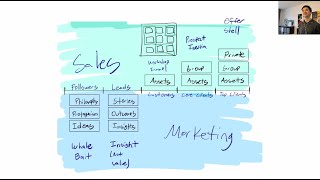
I win! We made it happen. $100,000 in MRP, monthly recurring profit, client business within a year. So, uh, I'm recording this video to show you what was the plan that got me here, so maybe you can implement some things for yourself. And another one, because I just, along the year, I've really liked what I said no to and what I said yes to. I am proud to say that I got here the way I wanted to get here, without whoring myself out for content, without sending DMs, without doing all the hustling things, without recording those talking head videos that I love. I like that I got here my way, and I'm going to show you what my way is. Perhaps you're going to be able to get some stuff for yourself, but here we go. Let us begin. So this video is gonna be sponsored by what got me to this point, which is a Google Doc. So let's begin. Okay, how I built a $100,000 MRP, monthly recurring profit, client business with 1 VA and 95% profit margins. I've been waiting to say that sentence for a long, long time. Um, well, let us begin. Here's my belief: perfection is not when there is nothing else to add, but when there is nothing else to remove. I believe that with my heart. So what I wanted to get to was $100,000 a month in profit— not revenue, profit— with the least moving pieces. And this is the proof. I am happy to say that for 6 months in a row, I'm my business with my VA Christian has passed over $100,000 in profit because my costs are around, around $3K. So yeah, this is all profit, which is kind of nice. The number that you can use this for could be something else. Of course, like it can't be $100K. It could be more or less depending on what you want. Like I personally felt like I made it when I made $5,000 per month, but I found that $100,000 a month got me excited. and it got me thinking big. And if you're gonna do this thing, you might as well do something that excites you. This model excites me, the ideas excite me, and I'm excited to show you these today. And I don't say that like in the vague sense of the word, like I am actually in love with the model, and I'm going to show you the model today. I'm about the steps that got me here, $100K a month in monthly recurring profit in 16 months. And it was facilitated because I sold the offer that is easiest to sell. Part of crafting the simple— the simplest path to $100K a month is finding the easiest offer you can sell, which just so happens that most people already have, and that's you. We gotta understand why people buy and what people buy, especially in coaching and consulting. People don't buy the guru's offers, they buy the guru. When I first started this, I was aware of this. Even though I didn't have a portal, I could still retain and serve clients. I'll give you an example of this. Let's say you work with someone you really like and like you're into their content and you get together, right? Which one would you hate more? If he didn't have his access to you, like you couldn't talk to him at all, or if he didn't have the trainings but he supplemented with, hey, by the way, this is not ready, but you can talk to me while I do them? I'd hate the fact that I can't talk to the person more. Because people don't buy your stuff, people buy you. Coaching and consulting nowadays is like centered around what offers do you make, what, what's in your portal, what's in your course. I believe that's like what my abuelita used to call a mañana problem. Things you worry about mañana, tomorrow, is not the main thing. The main thing is you. As long as there is some levels of access to you, then that is the offer because people buy coaches, not coaching. Right? So instead of having many offers, which is an offer suite that can be very clunky because people don't know if they should buy this or that, like your mastermind, your course, your community, your workshop, your program, we will just sell access to the simplest thing and the thing that they want the most, which just so happens to be the same, which is you. And we do not do this with an offer suite, which is with many offers. We do this with an offer shell. Which is one offer, you, with different levels of access. Because if we just sell you as an offer, then yes, it would sell well. You would also hate your business because then everybody would like a piece of it. The magic and the nuance and the money is in finding what is the most you're willing to give and then subtracting things from it until there is nothing left. People in your audience, some people will gladly pay you the most you're willing to offer at ridiculously high prices. And then you can remove something, people will pay you that. And then this, and then this, and then this. There is always something to take out. So I don't look at offers as in what do I add to my stuff. I look at my offers as in what am I willing to give, which is the top level of the shell, and then what am I willing to subtract to give to others. This has allowed me to control everything regarding boundaries. Like, I don't have many clients that cross boundaries, or I don't find myself being obligated to do a lot of stuff just because it was never in their table. It was never on the table. I just remove things from it to make sure it doesn't happen. I can do this because I do an offer shell, not an offer suite, right? So it's easy to understand and easy to sell people into. My shell nowadays is 20%, and this is— you could call it $20K recurring for simplification. People paying me $600 a week plus, that's $600. Some people pay $1,000 a week for access on different modalities we'll get into. 60% of people pay me recurring payments below that, and then there's 20% of one-time purchases because I just have, you know, some sort of an audience and I can sell one-time things, and that can— that contributes to, uh, you know, to the big number. When I understood that people don't buy my stuff but they buy me, and the game wasn't in developing better stuff but developing better ways to package me, that was the core difference between going from $20K a month in profit with 14 team members— 14 team members, like, this was a big operation. It was a great business, but it wasn't my business. It was the difference from going from that business, from $20K a month in profit with 14 team members to my current one, which is $100K a month plus in profit with just one, the MVP, Christian, my VA, because I understood the holy grails of offers. It's the best thing you can have for an offer. Actually, irresistible offers, I believe they're kind of overrated. Simple offers are underrated because when an offer is simple to understand, it's simple to sell. And if an offer is simple to sell, it's simple to buy. When I had many, like for example, you have a program and then you have a mastermind. You kind of have to like do some selling with it. It's like, hey, do you want to upgrade? And then you have to have another offer and another conversation because it's two separate things. You need people to buy into both. I just need to get people to buy into one thing, which is my ideas. If they buy into those ideas and therefore as an extension me, then the conversation to upgrade people is not even that complicated. It's just a message. Hey, you have this. Would you like to have this level of access more? So we can go faster, further, work on this thing that you mentioned. The conversations are easier, it's simpler, and because you're selling the one thing they want, which is you, it's easier to sell. So to craft your offer show and to show you my $100K a month offer show, it's important for us to understand, to start at the top level, because then we just remove things to make sure it never gets out of hand. You're never overcommitted, you're never doing too many things, and you can just remove things off the most valuable thing you have. Two questions to answer today: what is the most help you're willing to give? That is, you're going to be your top shelf tier. What can you remove from it? And that's going to be the rest of the tiers. We begin with the highest. So the highest tier, I call it where your top clients belong. This is where 20% of my revenue comes from, top level of the offer shelf, where I give the most that I'm willing to give and then I subtract from that. It is also when I blur lines. So what do I mean by this? Before, it used to be very easy to understand, okay, this is done-for-you work and this is done-with-you work. Done. Nowadays, I believe with top clients, because they're the closest guys to you, lines must be blurred. There are some occasions in which maybe like a client doesn't get it and I'm like, you know what, share the doc, I'll help you with it. Right? Or sometimes where I don't, I don't just have to coach them, I have to consult, as in like, hey, like, can I consult? Like, I have the answer for this because I've done it before. Can I give it to you? And sometimes I have to mentor, as in, here's how I would answer to the question as if I were you. I constantly blur lines and I don't box myself in because the goal is just getting them something. It's just getting them a result, right? So I don't differentiate between done for you and done with you as much. I rarely do things for them, but I don't try to box myself as in, look, I don't— I will never write this sentence for you, I will never rewrite this message for you, because they're like top guys, right? And if I can help them in certain ways, because they limit the access and who gets in there, it never gets abused because they're at the top. I use plenty of things that I don't advertise to get them a result. Like for example, one time I had a call with a client when I was first beginning and it went atrocious. We talked for 30 minutes and absolutely nothing was done. No, we talked for an hour and absolutely nothing was done. And at some point I said, listen, man, this sucked, but how about we get on another call and we'll sort it out? This wasn't in the offer. This wasn't advertised. But, you know, I got to get off my high horse and be like, hey, here's how I'm willing to help, because I find that I'm okay with helping clients. Like, big realization, right? I'm okay with sometimes giving them a little bit more if it makes sure that the job gets done, because it never stays that way. Like, it never stays that they're like keep abusing the thing for like months and months and months. It's just like a week and then the problem gets solved, right? So defining what you're willing to go through at the most to help somebody who pays you the most you're willing to charge for is important. So once you define what that is, that gives you the top level of your shell. This will be the closest access someone gets to you, so it's important to limit it. Mine is 12 people, and it looks like this. So in a very— we're gonna be filling this diagram today, but at a very gross simplification, the top clients get the following: they get the assets, stuff like my stuff, right, my tools. They get group access where other folks are, and they also get private access on top. How you define this depends on everybody. I have my own definition. Cash Creators and other people have their own definition. But it's the most you're willing to give someone. So that's it. You find the most you're willing to help people with, and then you cap it at that. And you're like, this is it, right? You cap it at spots. And now you have the offer. The game now is subtracting things from it to monetize the most out of everybody else who can't afford it. Because frankly, most of the people cannot afford your top offer in your audience. And that's fine. We can go against reality and always push the most expensive. Big, or we can go with reality and facilitate people to get at their level that they need most. Next level, this is where most of my recurring revenue comes from. It's core clients. What do you give them? So the next level of the show is where 60% of the cash comes from. It's the top clients minus— and this is where it gets kind of simple— the private access. To most people and to me, this level of access is ideal because limited pricing benefits them. Well, of course, right? They pay less. But it also benefits me because of what I optimized for. I thought that I was optimizing my business for freedom, and all the freedom and lifestyle and time is amazing, and I think it is a wonderful thing that I have the option to right now. To me, it's not the main thing. The main thing is creativity. I love Putting up these Google, these doodles. I love writing stuff down. I love coming up with cringe ideas that I develop into non-cringe assets. Eventually, the creativity, that's what gets me. And I don't use this word often. It's not that I want to create, it's that I need to create. It's because if not, I grow dull. If not, I rot. I cannot be without writing and creating new things because it just doesn't— it's not in my nature. So because I limit how much access people get to me, yes, lifestyle and freedom is a big important aspect of it, but the main thing is I want the blank space to create and allow me to do my shit, to allow me to do my art. And this is what I like about this business. So I limit it so that I'll be able to create new ideas. This is an example of one that I can then be proud of and be like, yeah, I look at my own work and I'm like That's not bad. That's acceptable to me. So what do you give your core clients? Your core clients is very simple. You just take what you're giving your top clients and you remove the one that you like, the, uh, that takes the most time, which is, uh, private access. So you just remove private assets and you're left with just a group access with different modalities. Everybody has their own. And your assets, which is— it could be your portal or, or this stuff, you know, the stuff you give them. Now, customers. And this is where definitions are useful. Until now, we've only talked about clients. Most people would focus on getting leads and turning them into clients, right? Logical. So you get leads and then you turn them into clients. I have found to be quite inefficient. So what is the difference? A customer— actually, pretend you didn't see this. You didn't see this. Okay. A customer is— we define a customer as somebody who bought something from you once, right? They paid for you once, right? $1, $100, same thing, right? A client is somebody who pays you on a recurring basis. I have found that customers are much more likely to become clients than leads, and I ran the numbers on this. Try to guess. Try to guess how much more likely is it from somebody who gave me $100 to then become a client compared to somebody who gave me $0 to then become a client. The difference is just $100, but it's the intent of paying and admitting, you know, intuitively, implicitly, that I have a problem and I'm willing to pay for it. What do you think the difference in likeliness to become clients is from those two groups, from somebody who gave me zero to somebody who gave me 100. The difference, and I ran the numbers today, is 56.2 times. This is not 56% more efficient. This is 56.2 times more efficient to become clients. This is a wild statistic. If you could get a 56 times increase in anything, then it's probably worth doing that. And that's what I realized for myself. The reason why it's because of prospect inertia. The more money someone gives you, the more money they are likely to give you. It's like a test drive. If you wanted to buy a car, then they know that in order to get you to buy the car and make it more likely that you buy the car, a test drive is in effect. If you do the test drive, you're more likely to buy the car, right? Which then kind of makes asking people from— to go from cold lead to paying you $1K, $3K, $5K, in my opinion, kind of a waste and kind of a reach. Because they don't know you, they haven't paid anything from you. It's like you're asking people to go from 0 to 100, from nothing to marry you, from no commitment to, hey, we're in this thing for a year. It's a big sale. And this is why a lot of people who have big audiences, they just can't monetize it. I talk with people who have 200, 300,000 followers. They're like, man, it's like I've been stuck at this level for like 3 years. My following has quintupled, but my cash is kind of the same. Sometimes it's going down. It's because you're asking people to give you too much. Visualize it looks a little bit like this. The common theory is to get people from leads to clients is to ask people to jump. We as cash creators don't ask people to jump. We ask people to flow from leads to customers to clients. And I have found that just adding this one step will make my funnel 56 times more efficient. Like, what can I tell you? Like, the thing worked right now. The key is, what do you sell to create customers? Do you need to create a course? Do you need to create new stuff? I say no. I say that you need to use the things that you already have because they're simpler. Why? And they're easier to sell. But like, why, why, why are these— why is it optimal not to create new things? Where is this? Okay, why is it optimal not to create new things? I'm going to make a little segue here. It's because let's say you have your marketing And you have product. We define product as anything you create that you sell for an amount. Okay? So most people market to a product as in, hey, you should buy this. But that has a lot of like skepticism because then there's a lot of questions that come with it. How do I know if it's good? Is it for me? Has it worked in the past? Do you have case studies? And all the things that prospects like saying, I call it prospectese. Whereas we cash creators, we don't market to a product, we market from a product. Hey, this already worked. I have already used this. I have already taken part of this, got a result with it. Would you like some of it? I rarely market things in the definition that, hey, I'm building this for you, or I built this for you. More as in like, hey, this is already built for myself. Would you like to take a part of it now that I've proven that it gets something. I don't market to a product, I market from a product. And we all have those things that we have already used. You have assets that you've used for yourself that have proven effective— recordings, trainings, anything that have something worked for you and for your clients. These are things that you can— I call it shred— shred from the stuff you already have and you sell that. If you were to create nothing new but just take the things you've already delivered for your clients and find what can I sell individually, then that— there is a world in which that gets you more clients than if you created more new stuff. Things that the content creators don't want you to hear, but the cash creators do. So because I have this funnel, and I have a funnel that was 56 times more efficient than before, is why I'm smiling today here and telling you these things and not out there DMing people, which honestly was the part I hated the most about the previous business. I don't spend time with leads. I just do not do that anymore. I make more by focusing on creating customer offers and only talking to people with credit cards because they've demonstrated intent. People just buying something doesn't just mean like, hey, I liked it, right? Whereas if they like something on your— or opt into your newsletter, yeah, they probably like it, but it doesn't mean that they have some intent. Creating a customer demonstrates intent. In my world, words are nothing. Like, they are worth nothing. The only truth in my world in this business is transactions. I don't believe people who say they're interested. I don't believe people who say, hey, like, I'm definitely gonna sign up someday. What I do believe in is somebody taking their credit card out and saying, I want this small piece, because that hints at their interest of the bigger piece. And you create this interest and make your funnel 56 times more efficient with what I call the workshop funnel. What allowed me to create 800 customers and 94 recurring clients from an audience I thought was kind of dead, right? It works as follows: you deliver access to your clients in a workshop form or a format they understand. Well, you don't have to go on camera if you don't like it. You can do it some other way, right? For that just one specific thing, like if you see your— maybe you have a program, right? It has many components that you use to create a result, right? Some of them are calls with you. Some of them are, um, you know, you text them. Some of them are DMs and some of them are trainings. Then you just take this specific part and you sell that specific part. And that's all this is. It's just unbundling the things you're already doing. It's shredding. So you sell one ticket, uh, one-time tickets to outsiders. And just that— it sounds really stupid and really dumb, and that's why a lot of people don't do it— just doing that reveals intent in the audience because it's cheaper and easier to understand. People buy more, and that ups your chances to turn clients into 56 times. It can be as simple. And it's because of prospect inertia. The simplest concepts are the most powerful because the more money someone gives you the more money they are likely to give you. For example, and people are like oddly consistent with their individual attitudes, like imagine you have a partner now. Was it harder to convince them on the first date to go with you on the first date or on the 100th date? Like people, you know, they keep the momentum going. Inertia exists everywhere. So if you were to ask your partner that you're currently with, hey, do you want to marry me on the first date? They would have probably said no, but that doesn't mean that they were always going to say no. You just needed to give them something smaller before in order to give them something bigger after. A note on this, and this is my favorite part of this funnel personally, is that using this means you're not creating to get paid, you're getting paid to create. So what does this mean? There's been times in which I do a workshop for clients Okay, so I create in that same place. Customers are there, and then top clients are there, and then some of the people I partner up with are there. See how I'm creating one thing? I'm just creating the workshop, but because I'm doing that and giving access to everybody with the shell, I'm getting paid to create for everybody here. Like, it's not like I'm developing a course. Like, I'm never developing a course. All I'm doing is creating stuff for my clients. And then some people buy one-time tickets for that workshop and they're literally funding my creation. They're literally funding me serving my clients. It's a wonderful thing. And this is why I'm like, hopefully you're starting to understand, like, I'm in love with this model. Like, I am in love with what it created in terms of simplicity and efficiency in my life. I digress. Where we're at is that essentially, to your top clients, you give them the most you're willing to give them. You remove things, uh, namely your private access, and you just are stuck or are left with your group and assets, right? That's your core offer. And then you remove access to you and you just sell that as assets so that you'll be able to find leads and people willing to pay to then upsell them. It's a method of subtraction. We're taking things off. We don't start from, okay, what do we post and how do we turn them into leads? Because there's just too many variables. Whereas if you start from the end and work your way backwards, it can actually be this simple. And this is like the main like shift that I had to uncover to get to the point where I'm at, which is the best business models fit in one page. The best business models are simple, and you don't have to have many variables because you start from the end and work your way back. Now, leads. Up until now, we've only covered what you give in exchange for money, right? That is a sale. But you also have to give somebody else a sale, which is your leads. You need to convince and sell the idea to your leads that it is worth it to give their information to you. And this is where this marketing quote becomes relevant. It's my favorite marketing quote by a, well, non-marketer: marketing beyond conveying information is insecurity. So how do you get leads? And I believe that if you wanted to get leads, we need to think about the way we develop lead generation as a more honest approach. The best marketing is honest. It's just about telling a story that already happened. That's why as cash creators, we get leads by marketing not from our product, but not to our product, but from our product. And I'll give you an example. Like, notice how different this feels. If I tell you, in my newsletter, you're gonna learn really great tips to grow your client business, join, versus 'in my newsletter, Mark used these tools to close 3 clients on retainer. I'm sending you the same email I gave him tomorrow if you join the list today.' Boom, join. There's a very big difference in how it feels and how it's treated and the frame through which you approach getting leads when you don't market to your product but you market from it. Like, the best marketing is talking about the step that's ahead of it. If you want people to move to the next step, talk about what's happening in that step so they'll want to be a part of it or take it. This is why we don't struggle creating content, mostly because we simply tell the truth. We focus on our delivery and we put our autistic effort and heart into making great content and products for our clients. And then we take stuff from that and we use that as in, hey, we're doing this, would you like to be a part of it? And we tell the truth about what we're already doing. Most content creators spend 95% of their time getting leads and 5% serving their clients. We do the opposite. We spend 95% of our time serving clients and 5% getting leads, because we know that's just the easiest way to get leads anyway. In other words, we tell the truth, but we make it fascinating. Just like Ogilvy said, tell the truth but make it fascinating. So in order to get leads All you have to do is from your offer, show delivery, you extract truth. What is happening on those levels so that people will want to ascend to those levels? Examples are stories like this is a story, right, of how I got to $100K a month. And I tell several stories inside my newsletter on how my clients are getting their own outcomes. Another one is outcomes. What happened? Did you get a win? Did they get a win? Like what is happening? What activity is being created? That other people might want to be a part of. And the other one is insights. I rarely get insights when I market, but I get plenty of insights when I serve. I serve clients, and it's weird because like maybe I'll create a, uh, something like a training, right? And I'll have these ideas. So idea 1, idea 2, or idea 3, or idea 4. But when I force myself— and this is why I like creating so much— I force myself to— okay, how do I make this simple? Because it deeply bothers me when I cannot explain things simply. Like, it really pains me. But when I create this kind of stuff, sometimes I'll realize that, okay, I know how idea A and B connect, I know how idea B and C connect, but I don't really understand that well how idea B and C connect. It's like what happens to you when a kid talks to you, right? Like, should I do this? And you're like, yeah. But like, why? Oh, because it's a good idea. But why? Because then it might benefit your health. But why? You're like, actually, little kid, yeah, why, right? Sometimes they make you see faults in your own arguments, and I find faults in my own arguments. So I get my best insights from really like kind of like wrestling with my own ideas, which I really love. I love the process of writing. And then I'll find a connection that wasn't there. But that one connection is an idea. It's an insight. It's a story that I can then tell to the world because it's something that I got during the delivery. People ask me, where do the ideas come from? Because I have some ideas that have been helpful for other people. And I tell them that it's because I am so focused on serving, my guys, that eventually something will pop up. Ideas come because I'm always finding ways to like say something in less words or say something better, say something more efficient, and eventually something will pop up. You cannot do this if all of your effort is in how to get leads, how to get DMs, how to respond to people, how to develop this objection, what do you need to say in this new script for the talking head videos, top 10 hooks that are gonna 10x your engagement, right? Like you cannot do that. When you're not in the offense. And I believe that always getting leads, always getting the end— like, that's kind of like a defense, right? Because you're not working on the things that get those leads, which is you, your ideas, your own brain. I like to focus on that, and that's why I get the results that I get. So this is where insights come from, from me serving clients and helping others, right? And I just simply extract the truth. I send an email a day, sometimes 2, sometimes 3, yet a lot of clients tell me like, I don't find this abrasive at all, I open all of them, because I'm just telling truth and stories the whole way. I don't try to manipulate the truth. If I'm ever stuck, I ask myself, how can I be more honest? And that reveals what should be done to get leads. Sounds simple, but it's been extremely helpful to me. And followers. So how do you get followers now? How to grow the audience, right? Because likes are cool, but likes ain't cash, but likes don't hurt. We got to remember that people buy coaches, not coaching. To attract a following, we can't just base our stuff in numbers and truth, as in if you use this, then 20% of people are going to convert into this, and so on and so on. If you build an audience logically, you you will miss out on the emotional aspect that makes people buy. Like, uh, I ask everyone why people join, right? Like, what are you, what are you doing here? Right? And some folks literally just say, because I want to become a cash creator. Like, that doesn't make sense. Like, the cash creator isn't real, but I make it real, right? Because it's not all about numbers and truth. Sometimes it's about other things like emotional aspects and psychology. A following built with the magic you create by being you beats an audience built on facts and value. This is why I believe that testimonial walls don't work as well as people think they work. I used to have this testimonial wall of like 500 testimonials, and I remember because it took the page like 15 seconds to load no matter how good your internet was, or at least for me, right? And I thought, I made it, this is just gonna catapult me to success because people are gonna like it and they're gonna be like, oh, so much proof, I'm going to buy. My conversion rate remained unchanged. Nothing changed. And I had 500 ways of proof for my people, like for, for the leads, right? So what happened? And sometimes I— now in hindsight, I understand why it happened. It's because you cannot just do this everything logically, because people don't buy logically. There's been more than a few occasions in which I tell my clients, you're looking at this in a very masculine way. It might benefit you to look at it more in a feminine way. So what do I mean by that? Like, if we ask— if you ask a dude, why do people work with you? Like, and the dude responds, because I get them a result. Then, you know, it makes complete sense. Done. Part of the story. But then that doesn't really explain why do people stick with programs even though they're kind of stuck at the same place? That doesn't really explain why some people, like, make more money than you, but they still become your clients? Like, that doesn't explain it. And it's because it's not always about masculine facts, logic. Sometimes it's about feminine emotion. And there's other sides to marketing that people are not so aware of it. People don't buy for the reasons they buy. And you've done this if you have clients. Sometimes they buy because they just believe in you, and believing in you and transacting with you is kind of a way to believe in themselves. Sometimes people buy because they need you as a father figure. Real. Sometimes they join because they need a psychologist. Sometimes they know because they just kind of need the pain of transacting with someone so that they'll finally move. So thinking that people buy because of just logics and fact is probably not— it doesn't serve you as much. So you need to find other ways to market, something that's more emotional, something that has more feeling. The people who have this, this power, this aura around their brands, they have this nailed. So what is it? What is it that they're doing that other people are not to build their following? And I believe that all you have to do is, from what you're already doing, extract yourself. You extract you. Everything you create smells like you. It has your scent and your touch. By extracting what are those things specifically, then you attract people who like you. So what are these— and like willing to buy from you. What are 3? One is philosophy. Just in this video, and there's a reason why I do it unedited because I believe that it's more raw, you can see just more of how I think. What are my ideas? You see me putting a lot of effort into branding my things and calling it different names. And like, I try to put effort into making things sound lyrical and effective. And like, this is how I think. Like, I've exposed you to my philosophy in this way. And I believe that you attract low-income leads with promises, but you attract high-income leads with philosophy. Because the wealthier people, they care about the goal being achieved, of course, but they care a lot more about the way it's being done. So by putting your philosophy out there, you get better leads. A second one is protagonism. I believe that, uh, there's coaches and there's protagonists. So a coach kind of exists, he's there, he just kind of floats, whereas a protagonist treats this thing like he's the main character. So I believe that you shouldn't treat like Instagram and Twitter like social media, you should treat it like Netflix, as in you have a journey. I declared in the beginning of 2024 that I was gonna get to this point. This video is the closing chapter of that. As far as I'm aware, this is the JK Show and I am the main character, and whatever I say in this show goes. And that's okay, right? Because it's my own brand. It's much more interesting than somebody who doesn't have a story arc. Most people just exist. They take content from other people, they regurgitate it, and they're like, got engagement, great, but likes and cash, it doesn't pay. Whereas if you have your own journey You literally cannot be copied. You can find my courses anywhere. Like if you look at it, like now you can be like, Jakey Molina courses, you'll find something, right? But they can't copy the sauce. People can copy you, but they can't copy the sauce. And that's why I'm okay with it because they cannot do what I did and they cannot have the same arc that I had. A lot of my copy, uh, well, yeah, my copy is uncopy-pasteable because I did build this business. I have my journey and I update people along my journey as if I were a protagonist. There's coaches and there's protagonists, and you make a lot more money being a protagonist. And the last one is ideas. This is a reason why I have people, clients that pay me, or that clients that make more money than me. Why? Because there's been a few occasions in which I'll expose them to my ideas and then they'll join and they're like, JK, listen, man, like, I really like your marketing and stuff and I respect it, but like, that's not what I'm here for. What I really want is this idea. I need to install this. Great, we work on that. You make a lot more money, but of course, let me help you. It happens really often because ideas are like the true, true magnet for people, because ideas like spread. They're bigger than you. Like, I came up with the idea and branded it as Likes In Cash. Like, I own likesincash.com. There's a lot of people who have no idea that I exist use that idea in their content. And I'm okay with it because my ideas outlive me. And if you can get someone to buy into your ideas, you can get them to buy into a product much more easily because ideas are much easier to buy into. Like, you get an idea and you either buy or you don't. With an offer, you're like, okay, it's like you have to make a conscious decision— do I buy it or do I not? Whereas ideas, if you agree with it, they just stick to you. Like, you see an idea and you're like, automatically agree with it, it just It's like Inception. It goes to deeper levels. So if you can get somebody to buy into your ideas, then the product that like includes that idea is the next easiest purchase you can make. And that's why I treat social media not as a salesman of offers, but as a salesman of ideas, because I know that if I can get them to buy into that, then the rest comes easy. And that is it. That is the, that is the model I use at a very gross oversimplification, but we don't want this video to go too long. Now, last thing I'll leave you with is the tools. Like, what were the tools that allowed me to get to this point? And these are dear to me, that I use every day, and the cash creators also use it every day. So we'll start from the beginning. How do you get people to convert from stranger? They don't know you. To become followers. You do this with what I call whale bait. Whale bait is the act of attracting people who have the problem you solve, have the money to pay for it, and have the attitude to actually make it happen. It's the antithesis of fish bait that only attracts people who, like, they like your content and they say, yeah, I'm definitely going to buy from you someday, or let me implement and I'll get back to you. Some do, most people don't. When you focus on whale bait, which is the discipline of only attracting people that have the money to pay you, then you end up getting better stuff. However, it does need— it does mean you need to tolerate getting less leads for a while. Why? Because there's less people with money than people— there's less people with money than people without it. So I have less average likes per post than average— than number of clients. Like, I have more clients than average likes per post. Why? Because I'm very careful and very deliberate and disciplined on— I only post Whalebate because I am not interested in building a show business. I'm not interested in going viral. I just want to target the people who have the money to pay me because this is what I like. Sue me. That's the first one. Whalebate allows me to get followers. What allows me to get leads? What allows me to get leads is insight, not value. So what is the difference? Insight— oh, value is giving people the answer. So if somebody watches a video and they're like, oh, this was so valuable, they say that because they get an answer that they were seeking. What's the problem with it, especially in coaching and consulting? It's that people do not buy out of gratitude, they buy out of self-interest. So if you give them free value and you give them the answer, yeah, they're going to be thankful for you, but you kind of made it against their interest to sign up with you because you already gave them the answer. This is why a lot of people who give many really good tips on YouTube or wherever, they actually don't get that many clients. They changed many lives, but they're not getting paid for that. Because they gave the value away and now they're like going on their own. Value is giving the answer. Insight is proving that you have it. It's aligning incentives. Instead of telling people, do this, do this, do this, you say, hey, here's the answer, here's how I developed the answer, this is what you should be considering, here's where we're solving it. So instead of getting people to like go somewhere else, you align the incentives. You align incentives as in they lean in more into you and you want them to buy. So insight is why I have 15,000 followers on Instagram and they make as much money as my 220,000 followers on Twitter. This audience— the other one's like almost 100,000, 200,000 followers more and they make the same money. Why? Because I slowed my Twitter audience down by giving them value. I'm fixing that now, but I never did that with Instagram. On Instagram, I always gave insight, insight, insight-based content and not value. And this is why I attracted buyers and not triers. Customers— how do we attract customers? We attract them with the workshop funnel. And this exercise is about extracting things you already have. You, as a person who helps someone— don't think of yourself as like as a coach or a mentor or whatever, just a person who does something for somebody— this is you. And these are the modalities that you deliver the service in. Sometimes you DM people, sometimes you have training, sometimes you have calls, sometimes you have, I don't know, Loom videos, sometimes you do voice notes, right? These are all different modalities. The workshop funnel is simply a fancy way of saying, how do we couple a few of these and sell them as individual products? And once you see that there is an infinite variation of products you can do within the one you're already offering, then you have infinite ways to speed leads up. So if the main offer isn't hitting, like the, you know, the, the big black square here isn't hitting, then the red— the green ones will, because you're varying the offer. When people know what you're going to say, they stop listening. So the key there is not to like keep saying the same thing, but to find other ways within the ways you're already doing to sell that individually. So that is a workshop funnel. Getting core clients. So this is prospect inertia. You will make more sales of your big thing once you start selling the small thing. Once you unbundle things and then you— it's not that your audience is dead, it's not that they're broke, it's not that they're inactive or burnt out, it's not that you like tapped the list out. Like, it takes a long time for you to do that. I've sent 2 emails a day for like a year and it's still popping, right? It's not that. It's just you've been saying the same thing too much and you've been selling too high of a thing. Like, the girl is probably willing to become your wife, but not now. Take her to a date first. When you introduce prospect inertia in your system, you're gonna be able to monetize people who you didn't think you'd be able to monetize. 80% of my clients came from me creating small products and then selling them into the big. Because I didn't ask people to jump, I asked people to flow. And the last is offer sell. You will get a lot more clients when you make your offer easier and simpler to sell. And what is easier and simpler to understand than you? Because people don't buy coaching, they buy coaches. They buy you. They don't want your stuff. They don't want you to refilm the portal. They don't want you to get a better camera. What they want is access to your brain, because there's a reason they follow you. Like, you don't follow them, they follow you. And there's a reason for that. It's because they're the ones who want you. And if you found— if you found other ways to package yourself and deliver yourself to them, then hell, what is— what easier thing there is to sell? It's just you, and people already like you. You just haven't given them a way to reach you. You do this with an offer show. And these are the ideas that got me here, $100K. Another way to look at it is this is marketing and this is sales. Again, the simplest things fit in one page. And this is the model, and these are the ideas that I am proud to say We made it $100K a month in monthly recurring profit. And honestly, I'm ecstatic and I'm extremely grateful that this was a thing. I'm extremely grateful for the journey, all the ups and downs, and looking forward to the next phase. So what's next? What's going to happen next is what I call timeless mode. So what's timeless mode? It's this modality I'm shifting into. So Now my life is changing. I am getting married. I am gonna travel a lot. I'm gonna have— I'm planning to have kids. I want to have a house. I want to go to a different country. But like, all these things are not easy, right? They do require a lot of my time. And I realized that most of my time nowadays comes from not serving— not like getting clients, but like serving my current clients, all the new, but mostly and I realized that without those new commitments, then the day is like 2 hours a day max, and then I just can just do whatever I want after. So I'm entering this new phase called timeless mode, in which all the offers that add stuff to my calendar will be off the table. Like, I make a lot of money now, right? I have no need now for like more and more and more. So my business gives me the option to not add anything to my calendar and still sustain $100K months, then it's an option that serves me now and it's an option I'm taking. So during this time of timeless mode, I will not post on social media. I will not add and take on any new commitments other than serving my current existing clients. And I'll only deploy ways to get access to this model and other ways of help, uh, but they cannot interfere with my calendar. Like, that's the main thing, because I want to protect it and, you know, go on to the next thing in my life. Because I believe that I got to this point, and I'm grateful I did, but I can feel something calling me in a different direction, and it's a direction that I've decided to listen to and go on and follow my intuition. I don't know when timeless mode will be over, but when it's over, I guess you'll know. Meanwhile, you can go to likesaintcash.com That is my newsletter, and you can get it, uh, like, that's where I'm going to be communicating because I'm a writer and I love writing anyway. But there's no other place you're going to be able to reach me unless that. So if you'd like to get some of this help, maybe get a head start for when I open up Cash Creators again so we can install these ideas in your business, that's an option for you to do so. It's likesaintcash.com because likes are cool, but like Saint Cash. See you Sunday.










