How I Made 3 Million Dollars With 1 Big Idea
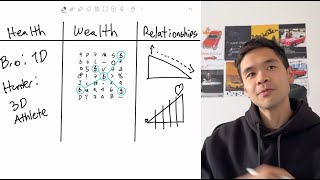
David Molina shows how a single clear idea can build a million-dollar business. He used "likes and cash" to make $3 million online, then walks through three client examples: a fitness coach rebranded as a "3D athlete," an AI consultant with an "Ugly Data" prompt, and a dating coach with a "date ramp" model. The pattern: find an overlooked attribute, make it visual and simple, and own it.
Chapters
We're going to start with one of my favorite marketing stories of all time, and it's how M&M's came to be something big. So M&M's wasn't a thing before one of the two world wars, but it was kind of a war candy. Like, people would take the chocolate shells and eat it in the trenches. And one guy really liked it, soldier, and after the war ended, he came back home and he wanted to make M&M's a thing. And he goes to this marketing campaign guy, and he's like, well, what's special about these chocolates? And the guy's like, well, they taste really good, they're nice, they're like— you can use them in the war and when whatever, like talked about his stories. But he couldn't really find anything that was tangible and beautiful and like the thing about it, right? The big idea about it. And he's like, well, it sounds kind of the same as everything else. What makes it truly special? And the guy goes, well, I don't know, man, but the thing about M&Ms is like they melted in your mouth, but they didn't melt in your hands. And the guy's like, wait, what'd you say? Hold on. And that, that's the thing, right? And that one saying, like that one fact, that one big idea that M&M melts in your mouth, not in your hands, it went on to be like billions of dollars, right? The best thing that marketer could have done at that time was point that out for him and be like, You don't realize what he just said. You don't realize how powerful this thing can be. And so that's my addiction. I look at people's stuff and I think, what is the one big idea that we can extract out of this? For me personally, I've made millions of dollars online. Most of it was through selling coaching and consulting offers, but I didn't make $3 million being a coach. I made $3 million off an idea. It's the idea of likes and cash, uh, and it's just a concise thing that really symbolizes what I believe in, what I stand for, and it makes selling products on the back of that idea so much easier. Because in order to get people to buy, you first need them to buy into. So if you can get them to buy into your big idea, your equivalent of Likes in cash, melts in your mouth, not in your hands, or Rolls-Royces at 60 miles per hour. The loudest noise in this Rolls-Royce comes from the electric clock from Ogilvy. If you can find that one big idea, then you are kind of in a category of one people can't really compete with you because the only way to get that big idea is you. Because you created it, there's nowhere else that people can get it except for you. So I tell people often, you don't really need a plan. You don't need an offer. You need a patent. You need a patent for that one big idea that you can take to the million. Me personally, I believe one big idea takes you to $1 million. And today I wanted to share 3 ideas that I've helped develop for clients. So you can kind of understand and see the process so that I can demonstrate to you how just coming up with one different way to frame or see what you already are good at and what's obvious to you into one big idea can really turn, well, business much easier. It's like an easy mode. So we're gonna switch to the iPad. I'm gonna show you how I've developed 3 big ideas in health, wealth, and relationships, and maybe you'll take something for yourself. So we start with health. Now the thing you want to take into account when developing big ideas is understanding that a lot of it is really obvious to you. You do things that are obvious to you but fascinating to others, and the game is in actually finding what is the one thing that you kind of like just skim over, but other people are like, wait, you do that, right? So an example of this is Hunter. So the thing with Hunter is she trains people and she's a fitness expert. Now I inquired on what do you do differently? Because there's a difference between being elite because she went to the Olympics, right? And being just like every other six-pack bro that tells you to track calories. Right? Like, what's the difference here? And then she elaborated on how her process actually has her clients doing plyometrics and other movements. And I'm like, okay, let's zero in on this. And this is like obvious to her, but not obvious to everybody else. So when you go to the gym, what does the normal health bro make you do? It makes you move things in one dimension. It makes you move things from up and down, or sometimes from down to up, but it's really only one, one direction, right? One dimension. And she's got them doing plyometrics, not only moving things up and down, but also side to side and also rotational. So then I understood something here. She just doesn't make people become one-dimensional gym bros. For a hunter, The thing is creating a complete 3D athlete. We will go from the one gym bro, the one-dimensional gym bro, to the 3D athlete. It's, it's something that she doesn't just do up and down, but up and down, side to side, and rotational. And coming up with these ideas, Hunter's job then isn't to teach people how she can get them better six-packs or eat more food and still lose more weight. To her, she's playing in a different league now. She doesn't need to convince people that, well, she can just get them better six-packs. She has to sell the identity of the 3D athlete, a more complete athlete. And because people need to buy into it before they buy, if she can get them to believe this big idea of the 3D athlete, then can you see how easier it is to convince people to buy into the next area, which is her, right? Buy into her coaching. And that's what I tell people. You don't need a, you need a better offer. You don't need a, like, a cooler thing. You need a patent. You need one big idea that you can bank on. Like, that's what I did. I banked on likes and cash, and because of it, a lot of wonderful things came. So next, we're gonna go with wealth. This is when we can get into making ideas visual. Some ideas lend themselves to visual things and some, some don't. For example, likes and cash is not exactly a visual thing, but some ideas can, and this one is an example of it. So I work with Tobias. So Tobias is an AI expert. Now AI now is getting a lot of, a lot of noise, and it's, it's hard to like really pinpoint, okay, what does your prompt actually do, right? A lot of people are looking for that. So when you put things visually, I haven't met anybody who wouldn't classify themselves as a visual learner. Like, it's most people, right? So when your idea lends itself to something that can be expressed visually, you immediately get it. It's like if you see a car coming to you at the street, you don't think, oh man, a car's coming to me at the street. You just move, right? So an example of this was Tobias. So his thing was he had this prompt that allows you to kind of organize your, your data in a really nice way. It— you give it like messy stuff and it returns everything like in a nice table so that you can do stuff with it, mainly leads. It's leads that maybe you didn't know if that lead list was good and that turns into, well, these leads are good. So how can we frame it? What's the big idea behind it? How can we say Excel in a way that's not like boring, right? And this was a joint effort. He called it something that really resonated with his audience, which was ugly data. And then we took it one step further. So let me show you what that looks like. So this mumbo jumbo of numbers represents ugly data, right? So what are Tobias's competitors selling their data prompts as? Organize your data, supercharge your lead flow, 10x the efficiency of your— it's a bunch of— what does that mean? Right? And a lot about big ideas is subtraction. We want to subtract all the words to really say something. And really, I love this quote for writing: say what you're saying. What is your one big idea saying? The best ideas encompass something and it makes it look like I never thought of it that way, but it's so simple. That's what you want with your big ideas. You want simplicity because if a big idea has excess, then excess doesn't translate well and it doesn't spread well. And if it doesn't spread well, well, it's not a big idea, right? So his competitors are selling organize your data, supercharge your lead flow, whatever, right? What we did was we put it on a visual. So it goes like this. So you see this ugly data that you've got. This right here, what I got here is a prompt. It's the ugly data prompt. And what that prompt does is you copy and you paste your ugly data into that prompt. And then what that prompt does is it finds the money opportunities inside of your data for you. So when he shows people this visual, and it shows the before and after, then people go, I get it. This finds money among my ugly data, right? So the big idea here is the ugly data, the ugly data prompt, and so on and so on. Once you get people to buy into things, getting them to buy is much easier because then they already saw the effectiveness of it. Again, in order to buy, you need— in order to get people to buy, you need them to buy into. So that's another one. And the last one of working with clients is Peter, which is relationships. Now there's a bunch of big ideas in the relationship. There's like the red pill, the alpha male, the sigma male, the green lines. So there's a bunch here. And well, he had trouble differentiating himself from all the dating coaches, right? Like what makes you different? What makes you better? And I again inquired, what do you do in your relationships that's different? And we came to the topic of dates. The way he organizes dates is he says, I start my dates actually pretty normal. The mistake guys make is they make their dates super exciting in the beginning. They make it super flashy. But then if you serve the best thing in the beginning, then the date can only go down, right? And it's going to be like, Nothing after that's going to be the best thing. So I actually start my dates a little bit worse and then I work myself up to making the date an experience and make it progressively more exciting. And I'm like, this is great. We should do something with this. So what we arrived to and the big idea we arrived to is that there are— every date you're going to go into kind of have— has this ramp. Relationships. You don't want to be the guy that has a date structure like this. Like, it starts really high, but then all the date kind of does is go downhill after that. What you want to do— and this is the big idea— you want to have the correct date ramp. You want to start with kind of like an okay situation so that you can end up in a really exciting situation and build your way up. So the date ramp idea was the thing that he helped people with. He's like, it's not just about dates, it's you gotta have a date ramp, you gotta know what to have. And he had this model that was really beautiful on what to do on every stage of the day so that you'll have an appropriate date ramp. And when people understand this concept It sets him up from everybody else who tells them, oh, just be red pill, just be alpha, right? This has a model, this has a thought behind it. This makes people go, what else do you know? So these are just 3 examples of big ideas, but the, the big idea here is that you gotta find yours because when you find yours, you can differentiate yourself from a fitness coach to I train 3D athletes. I get people to be complete 3D athletes that move in 3 dimensions. From an AI bro to the ugly data prompt that cleans up your data and shows you where the money opportunities are, and you can demonstrate this visually. From a red pill dating coach to let's set up your date ramp so your dates will go well, and this is why they're not working is because you're structuring your date from the wrong way. We should put it the right way so that you start low and then you build up to a really exciting evening. And so on and so on. But that's the big one. Find your big ideas. That's what's important. I didn't make $3 million off being a coach. I'm actually a terrible coach. Like, I don't follow up with people. I don't hold people accountable. I don't do any of that stuff. But I had one big idea. And from that one big idea, I understood the power of it. Because once you find one, one big idea takes you to $1 million. I've done it, I've helped people do it, and this is what we do. So find yours. Uh, in my channel there's a bunch of videos on— there's others on big ideas, so you can see how I do it. And if you follow me on socials and DM me, then we can have a conversation about working together so I can extract these big ideas from you and what that would look like. Because I don't really run a done-for-you business, like I don't do stuff for people. I don't do things with people because frankly, like, you know, if you don't do the work, then what's the point? I run a drawn-from-you business. I will draw your ideas from you so you can turn that into a million dollars. So if you'd like my help, then you can DM me and we can get to that, and we can find what is that one piece of brilliance that you think are obvious but other people would pay a lot of money for. So yeah, see ya.










