I Got To $100k MRR. Now What?
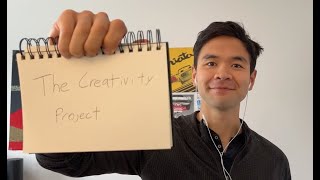
David Molina hit $100K MRR but found bigger revenue targets hollow. He's ditching goals for the "Creativity Project": building an audience of wealthy customers, proving expertise without full solutions, using a $56× conversion lift from low-ticket products, and selling tiered access to himself instead of bloated packages.
Chapters
I made a mistake and I'm here to correct it. So earlier this year, I hit the goal that I really, really wanted. Like, I really wanted to prove to myself that I could hit $100K in MRR, uh, with my own business solo, the likes of Cashway, right? And I got there and it was fun because for around 12 months I had that goal and The main thing I thought about when I was waking up was, okay, what do I do in order to get there? It was really useful to have kind of that, that North Star, if you will. And I got there, right? And it was fun because it got me focused. But at the end, when I got there, I felt like, what's next? What do you do next? And I took a break. I had some personal matters to attend to. And thinking, okay, what's going to be my next thing? Like, That goal really kept me focused. What's next, right? And I couldn't come up with anything. I just thought, man, like another goal, like, I don't know, I don't know if I got it in me. I don't know if I wanna do it. So I set up an arbitrary goal of $200K a month. And I thought, this is the new goal, this is what I'm doing. And when I set it and I started creating, then I thought, man, I don't wanna do this. Like I had the $100K a month goal and I had that vision. I got there and then for $200K, like, yes, of course I want to make $200K, right? Like, who wouldn't, right? But then I'm thinking, man, like, I don't have that same fire. This doesn't light me up like the other one used to light me up. So I realized I made a mistake when I made that goal. And I kind of had to go back to the fundamentals and think, what, what works for me? Like, what's really for me? What do I like to do? And for me personally, I'm not a goal-oriented person. Maybe you are the same way, but I don't— like, for me, I failed when my goal was to get lean and lose 40 pounds, 20 kilos. I failed when my goal was to get lean, but I succeeded when my goal was simply just be less fat than you were yesterday. That was the entire goal, and, you know, I got leaner. And then I failed when my goal was to run like 10K, 21K, but I succeeded in completing a marathon when my goal was just put one foot in front of the other and then repeat, right? It did take me 4 hours and 50 minutes, almost 5 hours, but I got there, right? It still, it still worked. And goals don't really work for me personally. What really works for me are inputs. Like, I like knowing that if I do these activities every day, then something is gonna work out, right? I don't, I don't do the whole like "when" thing. I like more "if," right? So if I do these things, then I'm gonna get there. I don't care when it does, I just care that I get to that point. So what was I treating my business any differently, you know what I mean? Like, I, I had the— I had that goal and it was fun, it got me excited, but when I got there, I thought, what's next, right? And I thought, well, let me do the thing that got me the nice things that I've got today and kind of go back to the fundamentals. And think, what are the only things that I can do in order to just grow the business, right? So today I'm starting what I call the Creativity Project. So the Creativity Project is a— it's not a goal. Like, creativity is the goal. I'm not aiming for a certain specific amount. I'm just aiming to kind of give into my creative impulses and create assets and create useful things that have created outcomes for me, for clients, and for customers, and just set them free. Just set them free. Because where there's smoke, there's fire. Where there's movement, there's energy. And when there's creative assets that are useful, there's money. So I don't really want to think about the math. I don't want to be thinking, am I ahead? Am I on track? Am I not? I just want to wake up and do and create cool stuff. Stuff. Like, that's all I want to do now, because realistically, I make 8 times more than I spend. I don't need— like, mathematically, I don't need more. But creativity is a need that will never be fulfilled, because there's always things to create, there's always things to do. And this is just more me. This is the— this is what I really want to do. I just want to keep building things and let the chips fall where they may. So the new goal is No goal. The new goal is just keeping my creativity high because I know that as long as the creativity project lives, the business will live. And as long as I keep creating useful assets, then something's gonna happen, you know what I mean? Like, things are gonna work out. And this is just more towards my personality and what I like to do. I don't like thinking about goals, they create a lot of pressure. But I do like just focusing on inputs because it takes me further, it takes me faster, and it's also more enjoyable. It also gets me things more than just having a goal because Goals, they were useful and they served its purpose, but now I think it's time for me to shift more to an inputs-based approach. Any creativity project is my answer to that. So my mistake was just saying, hey, I'm going for $200K, and just kind of convincing myself that I wanted it, but I didn't. What I really wanted was let me just create cool things and let the chips fall where they may. So while the creativity project doesn't have a goal, it does have rules. So there's more. I'm going to put it on the, on the link and buy on the specific, uh, post where I walk over a few. But these are 4 of them. So this is my current funnel, and I'm going to double down on what got me here, which is the likes and cash philosophy on focusing on cash, not likes, on building a business, not a show business. And only creating the stuff I really like creating. So this is it. I'm going to explain a few of them. So we're going to start with number 1: build an audience with whale bait. So what is that? I don't create for the masses. I don't personally want to be recognized in the street. I don't want to— I don't want to be famous, right? I want to be rich. Like, that's what I really want to do. And people who want to become famous, then they typically become famous and get a lot of likes and engagement through fish bait. Which is creating for the masses. I don't do that because I don't enjoy it. I much prefer creating for whales, which are people with the money, the attitude, and the problem that you solve. And I personally have enjoyed much more— like, as I started building this business, I realized the world started shrinking, and the truly competent people and the enjoyable people to work with They're very, very few. And, uh, whale bait is just the way I used to get them and start working with them and kind of meet interesting folks and build interesting businesses. So I'm not going to create for the masses, just for the whales, because frankly, that's just the way to build an audience. You don't want a huge fish tank, like, it's just not fun. Trust me, I've got 200-something thousand followers on Twitter, and a lot of it was built the wrong way. It was built with fish bait, and fish bait don't buy. Fish complain, and it's just not fun for anybody, personally for me. So build an audience with whalebeat. I'm not going to change that. 2, create leads with insight. So what's insight? Um, it's the antithesis to value-based content. Like, out of all the quirks of the coaching and consulting businesses nowadays, the one that makes the least sense to me is the whole give away the secrets and people will somehow pay you to implement those secrets. I don't think that's realistic because if you give away all your value away for free, then you know what you're gonna get? You're not gonna get dollars, you're gonna get a thanks, bro. You're gonna get a let me implement and then I'll get back to you. Let me try your free stuff and then I'll jump into your paid stuff. Some people do, some people do, but most people don't. And the reason why is because most people don't make decisions out of gratitude. They make decisions based on self-interest, and if you gave all the value away, then what's their self-interest? To use it. What's your self-interest? To get paid for it. So the interests are not really aligned. Whereas insight does things differently. It's not giving away the answer but proving that you have it. It's not telling people what to do, showing them where to look. And personally, when I started giving insight-based content instead of just Hey, steal my strategy for free. Here's all my value for free and giving stuff for free. Then it got people interested. I just proved that I had the answer through demonstration and through like raw proof. And then people started leaning in and they're like, okay, what does this do? How does this work? And then it got them to be interested in my products and what I've got to offer, which coincidentally I also wanted them to get interested in my products and what I have to offer. So it aligned the incentives and it allowed for a much better monetization, uh, well, a more, much more dense audience, people who actually pay it instead of bloating it with people who just wanted free things. Because turns out people who just want free things tend to be terrible customers or not become customers at all, which is not the point. I'm here for cash, not likes. So why would I do value-based content? So that's it. Third, find intent with the customer funnel. So what's the customer funnel? What I personally found is that I had a weird obsession with getting more leads. I want more leads, I need more leads. Everybody wants leads, right? What I found is that leads is not truly the game changer of a business. It's actually customers. Customers— and the difference between a lead and a customer is a customer is somebody who pays you once. A lead is somebody who hasn't paid you. And what I found was that when I focused on turning leads into clients straight away— a client is somebody who pays you recurring, different to a customer who pays you one time— when I found somebody— when I found my focus to be to go to turn people into leads directly into clients, it had a lot of friction because it's a lot. Like, it's a lot to ask somebody who has paid you nothing into paying you whatever your rate is. It's a big jump, right? And that's why typically people need a setter, a sales team, one call, two calls, closer, get ghosted, close, get ghosted, and so on and so on. So it's a pain, right? What I found was that when I introduced making small purchases before big purchases, the people who paid something small were 56 times more likely to become clients than people who hadn't paid anything. And whenever you find something that works 56 times better than other something, then you should probably do the 56 times thing. So I doubled down on it, and that's why I could close people with sales calls, get clients without, without sales calls, get clients without sales calls, because they already kind of knew what it was like working with me. And then the transition was seamless, and I didn't need, you know, a 15-person team like I used to have. And $58,000 a month in costs like I used to have in order to close people. I just needed to give them a taste of what it's like to work with me. And mind you, it's not a, it's not a webinar thing. It's an asset that I was creating for clients, and I've invited people just to buy that one asset. And just that small step made people 56 times more likely to buy. Like, it was wild to me. What it taught me was that a lot of buyers they behave a little bit like snowboarders at the top of a mountain. So if you ask them to, hey, just go down this slope, you'll be completely fine, don't worry about it, just trust me and pay me for 12 months, some people might be like, yeah, let's go. But most people won't. And this is why people end up with bloated and huge audiences and they can't monetize. It's because they're just asking too much. So these snowboarders, they kind of want to test what it's like. And when you give them a component of your process and of your model, instead of asking them to commit to the entire thing, they can test that the slope isn't dangerous. They'll be fine. And it's actually the one they want to go down on. It's fun, right? So when you have that step, then you just get so many more yeses. And for comparison, is if you compare something that's 1 and compared to something that's 56 times bigger, A human is 56 times smaller than a blue whale, and blue whale I think is the biggest animal in the world, something like that. So I don't know, if you Google it, you'll find a similar ratio, but it's just enormous. It's 56 times, so why wouldn't you, right? So I'll find intent with the customer funnel because every— like, people will join your list and follow you just to fuck around. A lot of people just do that just to fuck around and see, okay, 'Let's see what they've got.' But people don't buy things to fuck around. People buy things because they have a problem. People buy things because they want that solution. So when you have shredded components of what you're already delivering and you charge small for it, people who buy it don't just buy it by accident, right? There's something, there's some intent to be found there. And going forward, I'll bundle and unbundle all the ways that I have to help people, because there's some that are like extremely cheap and low touch, and there's others that are extremely expensive and high touch. And that will allow me to fit people where they prefer to be. The problem is when you only do expensive and high touch, because most people just can't afford it and they just don't want to afford it. And while there, there may not be thousands of people willing to pay you thousands, there's thousands of people willing to pay you hundreds. And those numbers add up. And it does create, one, a big revenue source, and two, it's a fantastic funnel into your more expensive things. So finding intent with the customer funnel worked much better for me than having a sales team or running sales calls, because I just gave people what it's like to work with me, and that made them more likely to work with me. Because the more money someone gives you, the more money they're likely to give you. And if they gave you zero, aka they, they're just a lead, not a customer, then turning them into a thousands of dollars a month purchase, that's a big ask. So that's why I do this. And fourth and last is create clients with the offer show. So what's the offer show? It's different to an offer suite. So an offer suite kind of looks like, like this. Look at these four circles. So it's, for example, people got a mastermind, a community, uh, course, and maybe a program, right? So they got 4 different things. Now, if we do offer suites by— to get efficiency, then that's not how they really work. Because let's say you improve your mastermind, that doesn't mean that your course gets better, or your program gets better, or your community gets better. So what was supposed to make you more efficient actually makes you 1/4 as efficient, because then you have to improve another one and another one and another one. And then it ends up in a mess and like in really this big bloated offer suite that people don't understand, like, which one do I buy again? Which one's better for me? It doesn't really make sense personally. What does make sense, however, is selling things in what I call an offer shell. So an offer shell looks like this. Poorly drawn, but it looks like this. So what is this? The big circle represents you. I only have one offer. It's me. It's just the ways I can help you. Some are in, like, just in recordings, some are in assets, some are in help, some are in calls, and so on and so on. So what I do is I have an offer show that doesn't sell different stuff, but it sells different levels of access to me. Because realistically, what do people want the most from you? If they follow you, you've proven your competence, they know what you do, they know how good you are. What do people want more? Do people want your stuff, or do people want you? I reckon people want you. So if you already know what they want, which is you, then why not sell that? I'm not in the market of trying to convince people that this, this community, this is, this is the one you want. It's you're in the market of selling yourself. And when you sell yourself and and then you have different levels of access to yourself, you allow people to fit in. And then you can let people be in— maybe you don't want to work with them, or they don't have the money to work with you, but they can still pay you. You can still sell them something in the lower level of the shell with the lowest access, or no access, right? Or maybe you have some winners and you're like, these people I really want to work with, then you can give them higher levels and charge way more for that. And it never really gets out of hand. Because you control how much access people get. If you don't want to work with somebody, then don't give them the access to, you know, be on your cell phone 24/7. Like, it just doesn't make sense. So when I have an offer shell, I can monetize the thing that's most desirable, which is yourself, right? Me. And I can just give access— levels of access to that. It never gets out of hand. It's much more fun, and it's easy to sell again, because the more money people give you, the more money they are likely to give you. And I've got a few other rules, but to keep it short on this one, these are the 4 main ones. And I'm doubling down. And actually, the one rule that's kind of like on top of the whole thing is if I'm doing it the likes and cash way, I ain't doing it because I'm not building a show business here. I'm building a business, and that's what I want to do. And I don't really want to do the math, think if I'm ahead or behind. I just want to create good stuff. I've used this model already to get to $100K a month in MRR. Which frankly, you know, I was very satisfied with it. Like, I'm happy that I did it, and I know that it's robust. So now that the model is there and it's set up, well, let's just run it. Like, if it ain't broken, don't fix it. So I'm just going to keep creating stuff without a specific monetary goal. The goal is just now, as per the Creativity Project says, just be creative. Just lean into my impulses and do stuff, because I know that if I keep doing that, the business will grow. If I'm less fat than I was yesterday, I'll be less fat one day. And if I just keep putting one foot in front of the other, I'll eventually complete a long distance. Same thing, I'm gonna keep doing inputs. I ain't gonna focus on like big goals because that's just not me. I'm just gonna do what I can, create good stuff, see what happens at the end. But yeah, just, just talking about this makes me feel better about it. Just talking about it makes me feel like, yeah, this is, this, this is what works for me. This is what's going to go forward. A lot of people, this is just not the way it works for them, but it works for me. So now let's roll. We start today, so welcome to the party.










