My $25k/Week Philosophy: Content Creators vs. Cash Creators
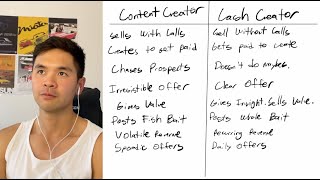
David Molina earned $25,000 in a week while relaxing with his parents in Poland, using what he calls the "cash creator" philosophy. Cash creators sell with clear offers in Google Docs and make daily pitches, avoiding sales calls. They cap client spots, share insights instead of full value, and focus on profit over viral reach.
Chapters
All right, we're back. So I had a moment that hit me hard, and I believe in recency. I believe that if you have a kind of— if you're feeling emotions, uh, that are like strong, you have to create something when that happens. If you don't, then you risk losing that inspiration. So like, this is just that something that happened like out of real life. So last week my old folks were here Mama Molina and Papa Molina were here in Poland. I flew them here so they could spend some time with me and the Ukrainian, and we had a wonderful trip. Now, this is the second time I fly— well, we, we travel to Europe together, right? On this, on last one, I just wasn't present. I was always like very kind of just like not there, you know what I mean? Like, you know, when you're traveling, you're in business, like it's, it's difficult because It's almost like you have to make a trade-off between like being there and growing your business. And there is no right choice because you're there, your business doesn't grow, and if you grow your business, you kind of wasted the trip. So it's like there's no right choice. Uh, last time they traveled here, I chose to be for my business and not them. So I actually, I just wasn't there, you know, like we— I was in the places, but I was not there mentally, and I was stressed all the time. This time they actually came here and I'm asking mom like, hey, how do you like it, right? Like, I live here now, like, what do you think? She's like, I really like it, and what I like the most is that you look calm. She said calm, like calm, like dude, like nobody in my life ever has called me calm. They've called me many things, some good things, mostly bad things, but nobody has called me calm. Right? So I think, wow, like I actually am calm. So what, what was the difference? Like what, what made me be calm this time and actually present with them and not last time? And then the week that I was with them, the business made $25,000 in a week. So it's $25K a week, right? And I was barely there. I woke up and maybe wrote a 20-minute email before they woke up, checked some messages, and that was kind of it. Right. I was like, that was it. Right. What was the model that allowed me to like create this? And what was the philosophy? That's what we're talking about today that allows you to take that break and be calm instead of like always there. So you won't have to make the trade-off between being there and making money. You can have both, right? What is this distinction? The biggest one for me was understanding what was what I am and what I'm not. So before, I used to be a content creator. The main difference was when I made the shift and I became a cash creator. So what is the difference between them? They both create content, they both have an offer, they both kind of, you know, post stuff, generate leads, have offers. But what is the core difference, and the core difference is in the nuance and how things are done. The easiest way to illustrate it with stories and examples as I go along the way. So we're going to start early. The content creator sells with calls. So traditional setter closer call model, right? Now what I realized was that people kind of buy the guru, not the guru stuff. And not the guru's employees or people or team, right? They want you. And if you have the right components in place, what you can do is you can just sell without them. So right now I sell without calls and I just sell with a Google Doc. I just put like, here's the, what are, what we're going to work on. Here is what you can expect. This is what stops happening. This is what will start happening. You just sell without the calls. Because I realized that it's harder to get people to book a call than to close them on the call. And if you can just sell with Google Docs, you kind of can put the main things that your offer does that you know already works. Like everybody has these kind of things that the audience is asking from us, but we're not giving them. And if you can put them in a doc and articulate it correctly without being too like vague, because the brain like kind of, it struggles with abstraction. And when you can articulate things concretely with specifics and you use numbers, no adjectives, people understand what they can get from you and you can close without calls. I use Google Docs to sell stuff from $100 to $36,000 and it's working just fine. Second one, and this is kind of my favorite part of the model and my favorite part of the distinction, the content creator creates to get paid. The cash creator gets paid to create. Gets paid to create. So what is the difference? And this is a— this is an important distinction to make. So if you're a content creator, you usually create two kinds of content, right? You create sales content As in like a post, here's all the value, here's a lead magnet. That's content designed to direct sales, right? And two is you create kind of like for community and or your program or your mastermind, however you want to call it. You do like weekly calls and whatnot, right? Now, where is the issue here? The issue is that, and I'm speaking to myself here, so I'm going to say you, I'm speaking to myself from 2 years ago. It's like, dude, you're putting 95% of your effort in this and you're putting 5% of your effort in helping the people who already gave you money. Like, what do you expect is going to happen? Right? People are going to feel that. And then you're not going to be able to get clients because they understand that once you join, you cannot leave them. Right? And then they don't stay. It's not just about making money. It's not just about getting clients. It's about getting every client worth more, making every client worth more. And if you put 95% of your effort in getting clients and 5% of the effort in sustaining them and serving them, then, you know, you don't have much of a sustainable machine there. What does the cash creator do? And this is the important thing. The cash creator mixes them and he creates assets that is going to serve both the people inside the community and outsiders. So how do we do this? The other day I had a workshop that I held for the cash creators. This is the people I serve right now. They get further access to me, as in they can ask questions and they can, you know, message me in the community and we have the calls and whatnot. But I realized that I'm going to create these things anyway. Why don't I sell one-time offers just to that thing so that instead of creating to get paid, I'm getting paid to create, right? And last time I did this, 117 people bought a $100 ticket. So it was not the worst use of my time. You know what I mean? Because I got paid to create and you can do this often, right? If you focus your effort in serving your clients and you invite people to just buy a piece of it, then you put the incentives in the right place. This is the highest ROI thing I can do. Because I put so much effort in my workshops and my assets and my stuff, then I can sell tickets to it. And I know that it'll generate customers, it'll generate clients in the backend. And the distinction between a customer and a client, by the way, a customer pays you one time, a client pays you many times. I can generate both of them if I just put my effort into this, if I put my 100% into this. And then I don't have to make clients feel like, dude, you put more effort into getting more clients than helping me out. I already gave you money. Like, throw me a bone here, you know what I mean? So that's the main difference when it comes to, um, uh, the nature of creation. So a content creator creates to get paid, and that tends out to misalign incentives, and in the end it'll exhaust you. Whereas a cash creator gets paid to create because we create things for our people. We invite others if they want to join, and often— this is a fun statistic— 80% of the people who buy a one-time thing from me end up— and 80% of my clients first bought a one-time thing from me. So it is an incredible use of my time. If I create good stuff for my clients, not only can I serve them, but I generate people to have a test drive of what it is like to work with me. And I'm only talking to people who paid. So, you know, lots of benefits on that. What else? What is the next distinction? The Content creator chases prospects. The cash creator doesn't do maybes. It's not the nos that kill you. When a client rejects, you get rejected every day. Like, people see your offer every day and they reject it, right? Like, it doesn't like really sting you as much as the maybes. It's not the nos that kills you, it's the maybes that kills you, that kill you. So an example, if somebody tells you a no, then at least you can close the book on them. You can close their file and then it's like, okay, you move on. Whereas it's the maybes. And by the way, in coaching, consulting, mentorship, this kind of industries, there's an infinite amount of people who'll tell you maybe and they'll sustain your hopes, but they are never going to buy. It's them who drain your energy. So flip the script. Instead of letting them tell you no and wait for them in the future, you can just be upfront about it. The Cash Creator only does yes or next, right? And that's what we have specific deadlines. We have urgency. We have a number. We call these our freedom number, and we know how many people we need to get there. And it's actually not that many people, right? You can get to a million a year with getting 60 people to tell you yes. Like if you have the right pricing economics and whatnot. Not to get too much into details, but we understand how much people we need. We have options, and that's why we're not afraid to close the file on people, to say no, to tell them you're out, right? Because we know that the energy required to chase a prospect is more than twice the energy required to replace them. So we don't do maybes. Next thing, The content creator has an irresistible offer. The cash creator has a clear offer. So an example of this, let's say there's— you're in a hallway, right? And there's two dudes right next to you. I'm gonna zoom out a little. So there's two dudes right next to you, right? You're in a dark hallway and there's a diamond in the end. Now, dude A to your left says, dude, there's a diamond over there, I'll take you there. And then I'll take you to another bigger one, and then a ruby and a sapphire and an emerald, and you're gonna love it, right? But you don't know what's in the hallway. You don't know if there's snakes. You don't know if you're just gonna— you're gonna get you— get killed, right? Whereas the other guy, he does something simpler. He brings his flashlight, he turns it on, shows it away. Hey, let me take you there. He doesn't offer all the other things that the guy offered. It's not an irresistible offer, but it's a clear offer. Listen, offers are designed to get people to reduce the anxiety they feel in working with you. And clarity does that. When you explain to people what will start happening, what will stop happening, when you use numbers, when you clearly articulate, this is what we're doing, this requires— I posted the other day, it's a joke, but not a joke. I posted, if I see supercharge, the word supercharge in an offer, I already know it's not gonna sell. That's true because like, what is that? What does that mean, right? That's why I'm like borderline autistic and telling people this is exactly what will happen with numbers, right? And sometimes they're not impressive numbers, they're actually quite short. But because I don't provide abstraction, I provide specificity, the cash creator offer works better, right? Because it reduces the anxiety of people working with you. So irresistible offers actually kind of get you worse leads if they're like, well, if there's a guarantee and it you're gonna do that. It's like, but you promised that this was gonna happen, therefore I need a refund, right? Not a fan. Whereas if you provide a clear offer, you attract people who understand and they value you respecting their time with clarity and specificity. I get amazing clients and my offer is not like exactly like the greatest thing ever, right? It's not like I'm promising huge numbers, but it's clear and I know that I can deliver. And that's why I'm working with 80+ clients recurring and You know, I made $100K per month, 2 months in a row. Last one was like $99K. Almost can't count it, but it's 2 months, right? Okay, next. Next is what do we do when in terms of, in terms of content, like how we think about content. The content creator gives value. The cash creator gives insights. Insights and sales value. So what is the difference? Value is telling people what to do. Insight is showing people where to look. So the people who tell you that you should give everything away for free, you know, the original ones, not the copies, I've seen that and I've noticed that they don't run the same businesses you run. Like, they run like real estate syndicates, or they partner up with people, right? Either they're, you know, they're, they're biz op, so they sell to everybody, right? Or they're like incredibly high-end and they only sell to a specific amount of people. To them, value is the way. Like, that makes a ton of sense, right? Why? Because it's like, if you give out the strategy away and you only tailor to beginners, well, they'll love you, right? And if you just— the other extreme is if you just need a small amount of people, then giving the value away makes sense because then you go as viral as possible. You don't play that game. You don't sell $10 million, $100 million stuff. You sell $10,000 to $100,000 stuff as a coach or consultant. And that's okay because you can make a lot of money with it. But you got to understand that for that, you need to play a different game. You don't give value which attracts triers. Like, you know, we've always had that as in people who are like, dude, this is so valuable. Let me apply this and then I'll get back to you. I'll implement and then I'll definitely buy your stuff. I'll buy your free stuff so that I can afford— I'll try your free stuff so that I can afford your paid stuff. Some people will do that, most people won't, right? So what do we do instead? We don't give out value, we sell it, but we give away insight. We show them where to look. We tell people, you might consider this, you might consider that. So when you tell them that, you give them kind of that hit. As in like, oh, I see why this works. And it makes them lean into it. And then you sell them the value. You show them, this is exactly how we're going to do this. You can buy it here. And if you give away insight, you prevent them from trying too much stuff. They're like, oh, let me try this. Let me try that. Because people are anxious, right? They're like browsing social media. They have problems. And they're like, oh, I see this strategy. Let me, let me do it. Right? Whereas if you show insight, then you demonstrate leadership because you tell them, this is what you should be considering. If you can get them to buy into that, then selling value, the exact steps, makes it much easier. Next, the content creator posts what I call fishbait. The cash creator posts what I call whalebait. So an example, fishbait goes viral, whalebait rarely does. So an example of fishbait is if I posted today, here's the exact templates and strategy for you to copy and paste that anyone can use to make $100K a month or $10K a month, right? Well, that's getting people who are like below $10K a month, you know, probably not going to be the best fit if you're selling an offer that's worth $2K, $1K, $10,000. Like, just doesn't make sense, right? Whereas if you show people here's how to scale from $10K a month, then you're targeting whales, people who make $10K Plus, it makes more sense. But most people can't stand the slowness of not going viral. They're like, they see their peers, like, they're crushing it, right? They're like, well, crushing it in terms of virality. But then, you know, I had a huge account. You know, I have— at the time, at the time I had 70,000 followers, and I met this guy Tony who had 900 followers. I was making $30K a month. With 70,000 people. He was making $30K a month with 900 people. The difference was that I posted fishbait. I tried to go viral. He posted whale bait. He only tailored to specific person who needed his help, and he got paid for it. Whale bait is one of the main components. And if, if the reason why you see people with huge audiences and they just can't monetize it, or like they try to make the shift and they're just struggling with it It's because they keep posting fishbait. If they posted whale bait, they would find the whales inside the audience, but they don't because they're too clingy to creating that virality, which frankly, you know, being real, I think that getting clients is easier than keeping your engagement high. I've tried to keep my engagement high and you can see it in my socials. It sucks, but I have more active clients than average likes in a post, and I like it that way. The content creator has volatile revenue. The cash creator has recurring revenue. So the problem with most— well, what I've seen in coaching and consulting is that people are like, I made $50K this month and I made $50 the next month, right? What happens is that they optimize too much for the pay in full. They just get that, right? The Cash Creator optimizes more for recurring offers. It values the small payments that amount because that, that is what ultimately— and this is kind of what Mama Molina was referring to— that's what makes you calm. Like, getting a big payment is good, of course, I'm not going to deny it, but it is kind of stressful when you have to start every month at zero. I cover my operating costs, which has like $30,000 I covered that in the first 15 hours of the month. Like, that's it. That's the recurring revenue. I know that if I can survive for 15 hours every month, I can make it through the month. Like, that, that is the level of peace that recurring revenue allows you to have. And by optimizing for— I call it the cash injections— having different cash injections along the road, not only to people who haven't given you money, but from people who gave you money to give you more. That's what gives you the recurring revenue. Most people only have one way to get kind of purchases. It's either a small recurring or like a recurring payment every month or a pay in full. That's two cash injections. Cash creators have 12 that we strategically put once somebody became a client in the cart at the end. How do we retain them? How do we make them continuity? How do we like upsell them? How do we downsell them? We have many ways. And it's just— call it a more efficient way to get people in because we don't really care so much about volatile revenue. We welcome it when it happens, but we would much rather have recurring revenue even though it's slower, but it hits harder when it hits. Next, the content creator does sporadic offers. The cash creator does daily offers. It is because of the way we think about them. The content creator banks on goodwill. It banks on people saying, I gave you— well, in him saying, I gave you so much, therefore now you should give me something back. But that is fundamentally flawed the way I see it, because people don't make decisions out of gratitude. They make decisions out of self-interest. If you made them an offer every day you would probably make more money than if you just waited, like, for years, you know? Wild, right? You make 1,000 times the offers, you're probably going to make more than if you wait. Just being real, right? So what is the difference in how we think about offers? Because of this principle, get paid to create, our best offer strategy is just talk about what is happening and what we're going to do anyway. So if you're going to serve your clients with a workshop or an asset or a PDF or semantics. If you're gonna serve them with something, you're gonna do that anyway. Invite them to join, and then it's not like a pushy thing. It's like, hey, this is happening, right? It's not like, would you please buy my thing? It's that this is happening, you want in or not? Very simple, very high status. And because we do it like that, we can make it daily, right? It's not annoying. One time somebody said said, uh, JK is the only guy that I can get daily offers from and I don't get pissed. He became a client, right? So it's about the frame. It's understanding that you are the one with the keys to the kingdom. They're the ones that need it. There's more people who need your help than people who offer it. So let's not get it twisted, like, you are doing them a favor as well. Right? Act like it. We understand as cash creators that we are serving them as well, and we act like it. Next. So the content creator takes unlimited clients, the cash creator caps spots. Shoot for the stars is amazing advice for some people. But for others, having a specific goal you're aiming towards is going to save you a lot of anxiety. If you're like, I want to take unlimited amount of clients and, you know, my infrastructure can take like $1 million a month now, well, great, right? Good for you. Whereas that can be a rocket ship in a situation in which you just need a bike. To get to $1 million, you need just like a community, a Google Doc, an email list, and some audience, and that is it, right? You don't need a rocket ship when a bike will do. And that's why we understand how many people we need and we cap spots. We're like, hey, I know how many people I need to get to my freedom number at the end of the year, right? It doesn't make sense to get more people. It actually— it makes more sense to cap the spots because then you can act more high status and you can tell people, we're done, we're closed. If you'd like to, you can join later. I understood, and you know, I didn't want to believe this, but I understood that the one thing that moves people more than value is consequences. People like getting stuff, but they hate getting stuff taken away more than they value getting stuff. Like, kind of a word soup over there, but the thing is, the feeling of losing something is stronger than the feeling of gaining something. So if you take things away and you close spots and you're like, dude, like, I do not need you. Things go away here. People move faster. And because we know our freedom number and because we as cash creators, we're clear on it. It's true, right? It's no gimmick. We know exactly how much we need to get there. We know how many people we need on our higher tiers and our mid tiers and our low tiers and one-time tiers. And because of that, we can act like the low— the high scarcity luxury good that you are, right? I want to say low quality, but that wouldn't fit. The high scarcity, high quality good that you are. Because like, people still coaching and consulting, dude, they sell it like as if it was a commodity, but actually they're luxury goods. Like, completely broke people, the ones that are like, they can't eat They don't think about coaching, right? They don't think about consulting. They think about food, right? So why are you selling it the same way like the food people sell, which is like every time doing a discount, taking as many people in? Like, you don't play that game. You're supposed to play the luxury game because you are a luxury good. There's like, if you take into account the 8 billion people on this planet, there's not that many coaches and consultants, right? Like, get it right. You're selling a luxury good, and luxury goods sell with status, capping spots. Creating some sort of like making it slightly hard for people to say yes. That's why we don't have irresistible offers, we have clear offers, and we don't sell with low status. We sell with high status and we camp spots for that. The content creator runs a show business. It's always about going viral. It's always about the next big thing. The Cash Creator runs a business. Some of my posts that get like 2 likes have got me clients. Some of the emails that will never see the light of day got me 3 clients. Real story, like real talk, right? I have more active clients than average likes on the post because I understand what my whales want. I have no intention of getting famous, but I have a very high intention of getting rich. So I know what game I'm playing And I understand that the people who tell me to go viral, have a huge audience, to sell a one-time ticket thing, I just do not play that game, right? I already gave up the idea that I'm going to build a $100 million business. That's just not me, right? I'm not willing to pay that price, but I am willing to pay the price of a $1 to $10 million business, which is not that high. So therefore, I will not run a show business. I will just run my business. We're almost done. We're like 3 away. I'm gonna move this because we don't need it now. A content creator attracts peers. Oh, this is a good one. Cash creator attracts prospects. How many times have you seen this? The guy that is like, you know, he's a coach or consultant or whatever, he's only followed by other coaches and consultants. Like, that's it, right? Or other— the creator that's only followed by other creators, and he's like, guys, I'm crushing it. And you see the comments, and it's like literally nobody from his target audience. It's all his peers. That happens when you play the status game and when you run a show business. Whereas when you play with whale bait and insight-based content, you start attracting prospects, right? You may be extremely unpopular amongst your peers. Who cares? They do not pay the bills. Therefore, maybe you should pay more attention to the people who do, right? And if you don't— actually, like, you don't see many of my peers in my comments, and I like it that way. But you see some prospects liking it. You see some prospects on the list because I'm very intentional with the content I create. The cash creator is revenue-focused. The content creator is revenue-focused, right? They sell the Stripe— they send the Stripe screenshots. Like, you know, they look good, they attract some kind of people. But when you're profit-focused, no, you can't buy things with revenue, but you can buy things with profit. And that's, that's the real magic. When you have you know, like last week, $25,000. Out of that was maybe like $24,000 was profit. When you have that every week, like the peace it gives you, the calm it gives you, it's hard to put into words because you know that like it's hard. It's just a business that's hard to kill. Revenue-focused businesses are easy to kill because one bad, you know, one high cost and one bad month, like it just kills you. Whereas if you're profit-focused, you're really hard to kill because you know that whatever happens, maybe you're not hitting the biggest numbers that other people are hitting, but that's only what you see on the surface, right? But the profit, that's— if they could trade places with you, they would, because you understand profit, because you're a cash creator and they're a content creator. And the last one, the content creator thinks likes are cash. Cash creators understand that likes ain't cash. We know that virality is nice, likes are welcome, it's cool to have a lot of views and a lot of subscribers, but ultimately, how much money are you making? You didn't start this business— probably you didn't start this business because you wanted to be famous. And if that's you, maybe you're watching the wrong video. You started this business because you just want to get rich, you just want to make money. And getting a lot of likes, being— going viral, recording those— personally, those talking head videos that I hate— it's not a requirement to get there. You can get there by focusing on business, on profit, on selling without calls, on getting paid to create, on not doing maybes, and having a clear offer on giving insight, not value. Posting will-bait, not fishbait. Focusing on recurring revenue. Making offers every day with stuff you're going to do anyway. Capping the spots because you understand you're the one that's a luxury good, not a commodity. Running a business, not a show business. Attracting prospects and not peers, because prospects pay the bills, peers don't. Being profit-focused and not revenue-focused. And understanding at the core That likes are cool, but likes ain't cash. So this is the philosophy. This is what I believe in. I like, you know, I have it in physical form. I try to make it shorter on this one because, you know, it would go on for too long. But this is the philosophy, and this is what allowed me to make $25,000 per week. But, you know, that's cool. But the coolest thing was being able to actually spend time with my family And, you know, my mom actually said for the first time ever, "Hey son, like, you look calm and that makes me happy." And to me, that's worthless. No, no, fuck, ah, that's not worthless, it's priceless. Shit, this is what, this is a problem you have when English is your second language. Like, my first one is Spanish. Like, in Spanish that makes complete sense, right? But in English, it has the opposite thing you want it to do. But it is priceless. That's what I wanted to say. Anyway, if you'd like my help to set up this thing so you can get $1 million in annual profit per year, then I'm glad to help. You can DM me on socials and we'll get there by implementing a plan for 16 weeks. It's going to be really short, really fast, and it's going to make you a lot of money. So we start with $16,000, then we go to $1 million. If you'd like my help, shoot me a DM. We'll take it from there. See you.










