The Likes Ain't Cash Model: How I Serve 100 Clients With 95% Profit Margins
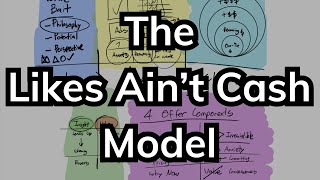
David Molina built a $77,000 monthly business with 96% profit margins by selling insight-based content and repackaged assets to high-value clients who've already paid him before. He closes deals with a simple Google Doc, uses one VA, skips sales calls and ads, and focuses on lifetime value over new customer acquisition.
Chapters
Welcome. Today I'm going to show you the model that allowed me to reach $77,000 per month in recurring revenue with 96% profit margins and just one VA. And I work less than 4 hours a day. One of those hours is dedicated to recording this video. So I'm going to show you the model, walk you through it, maybe some insights that you can implement for yourself. Especially useful if you have a scenario kind of like this. So, so you know it's legit, this is my Stripe dashboard right here. So we're going to be sharing the The goods. So this is 6th of June, 30, 2024. There you go. From 1st of June to June 30th. So how much did I make in June? MRR is $77K. Net volume from sales is $92K, $93K, call it. I like the net volume number, don't get me wrong, but I like the MRR more because I know that I can enter July, this is July 2nd right now, and know that even if I mess it up, I'm gonna make $77,000. This is a luxury I didn't have before. So let me tell you the story, or let me show you the story, of how this looked like last year. So I made more net volume from sales, $112K, but the MRR was 4. This can be— this is an emotional roller coaster because you feel really good because you got a good number of sales, but You also feel kind of anxious because you got to chase it again. There's a $4K MRR, that's all you're making in terms of recurring. So what are you going to do to get it back? Can you do it again? Like, that's the question looming around our heads. Now, I happen to have a model that allowed me to do it again, over and over again, get paid every day with 96% profit margins, 1 VA, and less than 4 hours of work a day. This is the model I'm showing you today. So let's get into it. I'm gonna get the old reliable iPad because, you know, of course everybody knows that when you pull out an iPad you look 10% smarter. Let me make myself smaller so you can see the things over here. Okay, so why did I not get the MRR? Let's talk about that. So the current industry optimizes for as follows. It says get leads, turn them into clients. Pretty standard. I used to run the model of sales calls, closers, setters. I don't do sales calls anymore. I don't have setters anymore. I don't run ads, and it's just me and a VA. So what changed? Before, I used to have leads and turn them into clients. This is kind of how it normally works. But a common recurring theme you're gonna find on this video is prospect inertia. The more money someone gives you, the more money they are likely to give you. So remember that the more money someone gives you, the more money they are likely to give you. So what I found was that getting leads and turning them into clients was just super tough because these guys gave you zero and you were asking a $2,000, $3,000, $5,000, $10,000 purchase. So it's hard. It doesn't obey prospect inertia. Now here's an interesting statistic. I have 600 customers for a one-time thing. These are not clients, these are customers. So that's how we define a customer— somebody who bought a one-time thing. And I have a 230,000 follower audience. Out of these two, this one is 95% of my income in terms of not how much money they made in the one-time purchase, but how many of them turned into clients. And this one is 5% of my income. So like, take a look at that. Like, 600 people made me more money than $230,000, and this is 95%. These are 5% of the income. So there is a huge discrepancy. Another statistic: 80% of my clients bought a one-time thing before me, before they became a client. That means that I Adding just one step in between allowed me to turn all the people who said maybe, later, not now, who didn't book a call, it allowed me to turn so many more into clients just because it was much more efficient. Now, why does this work? Again, prospect inertia. Because the current industry asks leads to jump. It asks them to become leads and turn into clients. The Cash Grader model doesn't do that because we obey prospect inertia. We don't ask leads to jump, we ask leads to flow from leads to customers to clients. This has two main benefits. The first one is that you don't have to spend time talking to too many leads. The problem is when you spend 95% of your time with leads and 5% of your time with clients. I don't do that. I spend 95% of my time with clients and 5% with leads. Why? And here's the second benefit: because when you introduce a step in between, it allows you to only talk to people who A) admitted they have a problem and B) paid for it. So the funnel and the model I'm going to show you is designed around two questions. Number one, how do you turn a lead into a customer? And number two, how do you only talk to customers? This has a lot of, a lot of freedom because the burnout doesn't really come from leading and talking to these folks. From the clients. The burnout actually talks from trying to chase leads and trying to convince them to book a call to buy X, Y, and Z. This is what really drains you. So I came up with this model that allowed me to not do that, right? So this model is, um, that's what this model allows you to do. I didn't come up with it. I'm standing on the shoulders of giants, but here's the new ones that I've developed for myself. Okay, so where do we start? You have leads, and then you turn them into customers, and then you turn those into clients. The nuance of each step matters a lot. So we're going to stand right here, and we're going to begin with leads. So how do you turn an audience into leads? How do you get leads? The big question, right? And what I found is that the most efficient way I've found to get leads is what I call whale bait. Now, whale bait matters a lot. So whale bait is, for example, the practice of only talking to the people who have the problem you solve and the money to pay for it. What does that look like? Let's say you were looking for people who make $10K a month, right? If you showed a post telling people, how do you get to $10K a month, then you're only attracting people below it. Right, it's not really the best use of a content piece because then that's how you only get broke people. Whale bait does things differently. Whale bait allows you to turn people who have the money, who have the problem, and it is the discipline of only focusing on them. So how do we do it? And a good example of how we attract people with whale bait is 3. The first one is Philosophy. And I'll leave the other two for later. So the first one is philosophy. I get some clients that make more money than me. Why? Because they have seen what problems I can solve, and one of them may not be money. Maybe one of them is margins, maybe one of them is time, maybe another one is simplicity. So when I put my philosophy out there, like, this is an example of it, this is what I believe in, This is what works for me. And this is my truth. Then it attracts people way above you because then it's people above you that are like, maybe I'm interested in that, right? Like you see it all the time at the gym. Like the guy, like the billionaire at the gym, he makes more money than the trainer, right? But the trainer has something that the other guy doesn't. And that's what's appealing. So by putting your philosophy, your code, what you believe in, what makes you different out there, then you attract better people. You attract low-income people with promises— get this kind of money. You attract higher-income people with philosophy— this is the way you accomplish the goal, this is the way you get to the outcome. The second one on how to use whale bait is potential, and I'm going to use the example we got right behind me. So take a look at those car ads. These are Japanese car ads. You know, I bought them at a bazaar. So let's say I wanted to run an ad on how to, uh, how to make $30K recycling a car. Like, you have a car, how do you sell it for $30K? A bad ad would be me showing you how do you make $30K. Why? Because that's going to attract people who maybe don't have a car, so they are unqualified leads. That's going to attract people who are maybe more desperate because it's just $30K without context. A better example of a better ad that's actually whale bait is by showing the person you're talking to how do you turn something they have into something they don't. Example: see that old piece of junk you got parked in your garage? Let's turn that into $30K. I can show you how. Then the only person that's interesting to is somebody who has an old piece of junk parked in their garage and maybe they don't use and they're willing to sell. Way higher discipline. And will you get less leads? Yes. Will you get way better leads? 100%. I have 230,000 followers, and let me tell you, like, it's not uncommon for me to get messages and see people and talk to people. And even I live that, in which you have so many followers and people just don't buy. Like, they're all from, like, unqualified sources. They just don't give you money because you build the audience the wrong way. You built it with fishbait. Not with well-bait. Well-bait matters more than you think, and that is how you attract better people and turn them into leads. And the third one is perspective. It's how you look at yourself. This is kind of my beef. Like, I tell people, don't call yourself a coach, don't call yourself a course, don't call yourself a consultant or a mentor or XYZ. Because that pigeonholes you into one thing. Then it's like, oh, you just sell a course. Oh, you're just a coach. Oh, you're just an X, Y, and Z. Oh, what, like, what's the offer again? What's the pitch? Shoot it, right? And then it's like, it's a weird dynamic. And it's more useful to have the perspective and see yourself not as a coach, a consultant, and mentor, or somebody who serves a certain niche, but as somebody who just solves many problems. You have many solutions. Again, we go back to philosophy. I have clients that make more money than me. Why? Because I have solved many problems. One of them may be money, the other one may be time, the other one may be margins, right? Maybe this guy is like, okay, I may not need more money, but I'm interested on how you solve margins and time. So by looking at yourself not as somebody who, I solve this problem for this niche, for people who make at least this much, It's way more helpful to look at yourself as these are the problems I solve, right? Like, for example, I have this nicotine spray I used to relax, right? Some others use it to get inspiration. Some others use it for quit— to quit smoking, right? Now imagine they tailored their ads to dudes who rant at an iPad. Like, they'll go broke tomorrow, right? But what do they do? They lead with the problem. They don't see themselves as this thing as this pigeonhole coach, right? They see themselves as, these are the problems I solve. So when you approach social media with, these are the problems I solve, you tend to attract better leads because then, you know, you're dynamic. You solve many problems. I solve many problems, and so do you. So when you look at yourself that way, it's easier to sell. Okay, so that's how we get leads. We start with whale bait. Now, how do you get them into the next phase. So there is a small transition here that needs to be talked about. How to get leads to move and turn into customers. What I found is that the best way to do so is with this thing we called insights. And it is the antithesis of value. Now there's a common theme of give everything away for free. Like, if you give the sauce, people will pay to cook it for free. Build huge goodwill so that one day you're gonna have this big monetization event. I heavily disagree with it because I believe that value slows leads down. Why? You've seen this. You give away your tactics, you give away your stuff, you give away your sauce. What do people do? They take that and they're like, thanks dude, let me implement it and then get back to you. Oh, let me get results with your free stuff so that then maybe I can afford your paid stuff. Oh, I'll definitely buy from you someday. Some do, most don't. Whereas insight speeds leads up. Why? Because a client that's worth getting is not in the mindset of, let me steal everything I can from this guy. A client worth getting is in the inside of, can this guy get the job done? So when you give insight, you speed leads up. When you give value, you slow leads down. So what is the difference? Like, how do you define what each is? When you create value-based content, it's like you're telling the answer. It's when you tell people, here's 10 exercises you can do at home to get a six-pack, right? Insight instead is not telling the answer but showing you have it. I have this client, right, we used X, Y, and Z method. Here's the before and after picture. It shows that you have it and it doesn't get people trying to do things, it makes people want to buy things. Another like really bad kind of side— what's the opposite of benefit? Consequence. A side consequence of value is it attracts audience of sellers. It attracts an audience of other people who sell what you sell, right? It's like the fitness coach. The fitness coach posts a bunch of pictures, right? And he posts a bunch of like how to do exercises. He's only followed by other fitness coaches. Like, it's really hard to monetize. Like, the fitness coach who did it with insight then attracts buyers. And this is a really important distinction. Don't show— don't tell people the answer. Show that you have it. Because if you just tell people the answer, you will only slow them down. Insight-based content does things differently. And this is kind of how I get people to be interested in what am I selling, what am I doing, because I don't want to teach them how to do the thing for free. And probably you don't. This works for people who are sell like you know, real estate syndicates, who sell big-ass partnerships, people who sell tens of millions of other things. You sell $10K coaching and consulting. It's probably not the best use of your time. Different place for different games. If you want to get clients for your consulting practice, insight is the way. If you want to build a huge brand and be rich and famous, value is the way. Personally, I'm more interested in just being rich. I don't really care about being famous. So for that, insight will do. This is how we move people into the next stage and we sell them something. Now, what do we sell them? We got to turn them into customers. So what do we do? Do we create new courses? Do we invent new things? What do we actually sell? We don't create new courses unless you want to. Let's walk you through this. Now, when you do the thing like every day you're working on a table. Let's say you are a carpenter and you're working on something, right? You're delivering for clients, you're creating content, you're doing X, Y, and Z. We think that this is what needs to be the content. That is not the case. What needs to be the content is actually the sawdust that is created from the table, what's like on the floor lying, like what's there. We think that the big thing should be the content, and that is actually quite inefficient. It's actually the small things that could be the content and the things we sell. Let me give you an example of this. So let's say you are creating a training on ads, right? What is the big thing? It's ads. What is the small thing? So let me put it like this. It could be the script that you're showing people how to build the ads with, the SOP on how to set it up. It could be a collection of your best-performing ads. It could also be a template so they can run their own ads. See what I mean by this? Like, this is already created. Great content isn't created, it's collected. And this can all be sold for individual pricing points. I'm willing to bet that the things you could sell— I'm willing to bet two things. One is you could get more clients if you sold a one-time thing before. And the second thing I'm willing to bet is you already have these things that you could sell for one-time purchases, right? It's already done. Like, the bottleneck here isn't how big of stuff you can create. It's how small can you see so that you can extract the tiny little things that could be sold individually. So what we sell here is actually 3 things. The first one is we sell assets. You already saw these are the assets here. The second thing we sell is repurposing. And this is what we call red velveting. So red velveting is, I don't know if you know this, but chocolate cake, red velvet is actually chocolate cake with red coloring. It's actually the same thing. What does that tell you? And it's actually sold for more. So you can sell the same thing as long as you make it look slightly different. So let's say you have 10 trainings, right, on your portal. What you can do is you can combine, and you see that 1 and 5 combine really well, like they go really well together. You can sell a bundle and then you red velveted it. You have the chocolate cake, you put red velvet on it, you sold it as a new thing. And the third one, which is personally my favorite, is you can get paid to create. Content creators create to get paid. Cash creators get paid to create. So how does this work? The other day I ran a workshop for my own clients inside Cash Creators, and I showed them how to accomplish a certain outcome right now. Usually before, I would have just run the training and like kept it there and that's it, right? But what you can do is you can sell one-time tickets to it so that people can come here and see what are you working on, and you can sell it. So the other day I was going to create a training for which you know, I was going to do it anyway, but I sold $100 tickets to it and 97 people bought. That's $9,700 for work I was going to do anyway. I didn't create to get paid, I got paid to create. And then 4 clients in the backend of that, because I had the right touch points, 4 people in the backend of that then became clients. Again, prospect inertia. The more money someone gives you, the more money they are likely to give you. So if you sell them a one-time thing, that means you're talking to somebody with money, with a problem, that's willing to pay. I don't know what's a better lead than that. One customer is worth 50 leads. So if you know how to turn your assets, if you know how to red velvet and repurpose, and you know how to get paid to create stuff you're going to do anyway, then you have more than enough ammo to monetize and turn people into customers. So, so far, hopefully you haven't got lost. We got leads with Wellbate. We turn them into customers with, uh, insight-based content, not value, because that only slows leads down. And then we sell them stuff we already have so that we can get paid to create. Now the big question: how do you turn them into clients? Okay, how do you turn them into clients? Now what I do is I just have a Google Doc offer. I don't have sales calls, I don't have setters, I don't have sales managers. I used to, I don't. I used to have a 15-member team, I don't anymore. It's just me and Christian against the world. Christian's my VA. How? We just have a Google Doc with 4 offer components. Why does this work? Remember, I'm not talking to leads here. I'm only talking to people who have already paid me something. And these conversations are much easier because they already saw you doing your magic. They know who you are. Like a lot of the bottlenecks of why we can't get clients, it's because people just don't know how good you are. And they don't know how good you are because you haven't given them a chance to give you a small amount of money so that there's be some skin in the game. And then you'll be able to like prove, okay, here's who you're talking to. This is what I can do. When you show them what you can do and you're in your zone and you convert them with a customer offer, then it's way easier to sell. And we do so with a Google Doc with 4 offer components. The first one is promise and timeframe, and I'm gonna write this here with a key takeaway on each because there's 4 components. That's how you know I'm not selling a how to use an iPad course anytime soon. Okay, promise and timeframe. Now the big one here is clear offers, be it irresistible offers. The nature of coaching and consulting is everybody's trying to like measure their dicks against each other. Everybody's like, this is what I can do, it's so much better, so much bigger. Like, you huge promise, and if not, I'll buy you a round trip to Bali, like stuff like that. That is not enticing, at least not to the right person. Clear offers beat irresistible offers. When you can clearly articulate— and it's helpful to, for it to pass the visibility test— if the person can close their eyes and see what the offer is going to accomplish for them, then you get a lot of value from it. An example, I sold, um, What was it? I sold my, my— I was gonna sell like an offer compilation of mine. So I could have said like, uh, offer maximization so you can 10x your business and supercharge your lead flow, right? Whatever that means. Or I could be very clear and say, these are my 90 best offers, it's in a swipe file, do you want it? Right? It's very clear. An offer, often we just fail at making offers because it's just not too clear. And if you have a definite time frame on how we're going to achieve it and it makes sense, then that'd be— it's an irresistible offer. Second thing is big too, it's path. A path is designed to reduce the anxiety in the prospect. So buying is exciting, it also induces a little bit of anxiety. Why? So let's say you're in a dark hall, but there's a diamond in the end, and you got two dudes right next to you. Dude A tells you, "There's a diamond," an irresistible offer. "There's a diamond over there. I'll take you to it." But you don't know if it's dark, you don't know if there's snakes, it's kind of scary, you don't know what's going to happen, right? Whereas the guy next to you, to the other side, he lights a flashlight, shows you the way. He's like, "Let me take you there." Who are you going to pay to take you there? Probably the guy with the flashlight, right? Because it just makes sense. The path is designed to reduce the anxiety in the prospect. If you can clearly articulate how you're going to get to the diamond, to the promise, that puts you way ahead than people who offer a bigger diamond. I had two offers. One offered less than the other one, but because this one was clear, it outperformed the other one. So if you can clearly articulate how they're going to get there, that's like Maybe it's not believable, but it puts you above like 90% of people because people just like take an offer template and they just run with it. And you know, that's kind of not how it works. Okay, next, pricing. So people are not afraid of paying, they're afraid of committing. The goal with pricing is to make it look so that it's compelling and in a way that it's like, you're not stuck. Like, this is not a liability, this is an asset. And there's many ways and many ways to use pricing engineering so that it won't be, it's a $2,000 purchase every month for the next 12 months and you're committed due to the contract. If you can articulate pricing in the right way, and there's many ways you can do so, then things just get easier. It's not just about slapping a label on it. And what I found is that because of prospect inertia, You make more money when you offer the small payment first. The industry optimizes for show the big paid-in-full amount first and then offer payment plans second. I invert it. I offer payment plans second, uh, first, and because prospect inertia, the more money someone gives you, the more money they're likely to give you, then that gets more paid-in-fulls in the backend. By switching how you present the money amounts, uh, you can drastically increase how many people take you on over. And the last one is my favorite. It's why now? And we gotta understand one thing here, and a lot of people disagree with it, but it's— I found it to be true to me— is that people are not moved by value as much as they're moved by consequences. So there's the cash creator, and then there's the nice creator. Who's the nice creator? The nice creator is the guy who's always open, always helpful, always available. Now that sounds good in theory, but the problem with that is that leads know that if they don't give you money today, you will still be there tomorrow. Leads know that if they ghost, you're still going to be making the same offer and you're going to take them tomorrow. I do not fuck with that. I like having consequences so that people understand things go away here. So all of my consequences are real. I mapped out how much money I want to make in a year, and that's how many spots I open in a month. Like, I made the math from it, and that's it, right? My workshops are live, and I do not sell the recording. So the only place you can buy them is before the workshop is held. So my consequences are real. When you include— excuse me— when you include reasons why, now you speed leads up because people understand Everybody has unlimited time frames except this one, and people are more likely to buy when things go away. People hate having things taken away, and when you're willing to do so, it sends a message to the market that tomorrow you might not be there. So these 4 offer components, we only use it on people who have already bought a thing, and this is what allows us to convert clients without a sales call. Now once we have clients, then we use something that I learned in, in the software world. And this one actually proved to be, I think, the most valuable lesson I learned when I did software. So I, I was part of this software called Tweet Hunter. We sold it. Here's a more valuable lesson we got: the money is not in just getting more clients. The money is making every client worth more. And this is a very important distinction. When was the last time you upsold a client? When was the last time you spun up something and be like, to the people who already pay you, would you like to pay more? Somehow we just don't offer them anything, and that's a huge wasted potential because these guys are already paying you, they already trust you, right? So they're closest. At the risk of being banned Who is the easiest woman to sleep with? The one you already married, right? Because she already trusts you. So same thing applies here. How do we do so? And this is where it's important to make a distinction. I'm gonna delete the sky blue thing because if not, I won't be able to draw what I want. I realized it. But I don't sell offer suites, I sell with offer shells. And the difference is really important. So what is an offer suite? An offer suite, according to the industry, is when you have many offers, right? So let's say you have a mastermind, you have a course, you have a community, low ticket, and you have a program, right? Whatever. Now I have beef with that. Why? Because if you improve, let's say, your course then that doesn't mean that your program gets better or that your mastermind gets better or that your community gets better. So what was meant to have 4x efficiency is actually 1/4 of efficient. I'm not a fan of doing any of this because then you're scattered and it's hard to sell because then it's like, how do you tell which one is the best for each one? And then people want to be like, okay, 1 sounds good, but 2 and 3, and it slows them down, right? Not a fan. What do we sell instead? We don't sell offer suites, we sell offer shells. An offer shell is not many offers, it is one offer with many different levels of access. This is easy to sell and easy to understand. So what does this look like in practice? For example, the other day I ran a workshop on— well, it's irrelevant what I ran it on right now. Why am I showing you this now? It's because during that workshop there were people who bought a one-time fee to that workshop. Inside that same call, there were people paying me recurring. Inside that same call, there were people paying me more because they had closer level of access to me. And inside that same call, there were people paying me even more. The offer shell doesn't monetize things. Everybody has access to the same thing. It monetizes access. One offer, different levels of access. So for example, this person has one-time access to to me. This person has more access, this person has more access, and this person has close to unlimited access. Well, not close to unlimited, but closer, right? What does this matter? Because this is quite easy to understand. This is how I get people and clients texting me, hey, Jackie, do you have closer access for this month? Do you have closer access because I'd like to get started next year, like, and set up, like, my business for 2025, whatever, right? So it's important for you to shape things as not different offers, which increases complexity, but different levels of access, which reduces complexity. It's easier to sell and it's easier to buy. And it also limits you to only work with the dudes you want because you can only give closer access to people who you actually love working with. Everybody else— and I've told my VA in all honesty, like, dude, this guy is never becoming a client. He can buy the workshop if he wants, but like, dude, I ain't working with him, right? And you probably have some people like that too. The offer show allows you to only work with people you want, to upsell them way easier, and it's easier to sell, right? You don't have to think about, okay, how do I improve my mastermind, my course, and whatnot? It's just one model. It's what allows me to have 96.5% profit margins because it's just so simple and so easy to understand for everybody involved. We do so, and this is how we upsell people. We don't offer them different things, we just have an offer shell with different levels of access, and people can fit themselves wherever they want to in the model. This is how I have, in some months, 10 clients make me more than 70 clients. Why? Because they were just like, they pay 2, 3, sometimes 7 times as much when they're at the higher tiers than when they're in their lowest tiers. And especially if you have an audience, like being real, like 1 to 3% of people are going to become clients. What are you going to do with the other 97%, right? Might as well sell them something. So this is kind of how, how the offer shelf works and why it matters to me so much and This is why I upsell people every few weeks. Sometimes people downsell, sometimes people upsell, but they're still in the system, right? I monetize efficiently and simply, not with many offers, but with one offer with different levels of access called the Offer Show. So let's bring it full circle. Why does the cash creator model— what is the cash creator model based in? Prospect inertia. The more money someone gives you, the more money they are likely to give you. And prospect inertia is based in simplicity. What is the minimum effective dose of a $100,000 a month business with just me and a VA with 96% profit margins? This is it for me, is you getting leads with Whalebate by putting your philosophy out there, showing them how to turn potential into profit and perspective. Not by looking at yourself as a coach, a consultant, an X, Y, and Z, but by looking at yourself as somebody who solves problems. 2, you turn them into customers. How do you do so? You don't give them value because value slows leads down. You give them insight because value— insight speeds leads up. And you do so not by giving them the answer so that they will do things. You give them by proving you have the answer so that they will buy things. A value-based— an audience built with value attracts sellers. An audience built with insight attracts buyers. And that's the magic of it. And I wished I did this before because I have 215,000 followers on Instagram— on, on X— and 15,000 followers on Instagram. The other audience is like, what, like more than 10 times bigger, yet they both make the same amount of money. Instagram makes me the same amount as X even though that one's 200,000 followers. Why? Because one was built with value, the other one was built with insight. Okay, so then how do you turn those into customers is you use what you already have. You don't sell the big thing, you sell the assets, the repurposing, and the things you can get paid to create, and the small things. You turn that into one-time customers. Then, because you knew how to sell this and you understand how to do these like little offers, you talk to those people who already have a credit card and you show them your Google Doc with the 4 offer components. Depending on what you sell. This can sell stuff from $100 a week to— I've used it to sell $750 a week thing. It works if you have the things in place. And because we're only selling it to people who already gave us money, prospect inertia is in play. And then the money is not just in getting clients but in making every client worth more. How do we do so? We don't offer different offers, we offer different levels of access to the same offer. We do so with the offer show. And this is how I managed to keep my money, not give it away to a team, a sales team, ads, whatever, software, right, or, or an agency. And I get to keep 96% of it. And this is how I'm going to take it to $100,000 per month in personal profit by the end of the year, by following the Cash Creator Way. This is it. If you struggle with anything we mentioned today, I'd love to help you implement this. So you can text me on any social, @onejkmolina on Twitter and Instagram. That's O-N-E-J-K Molina. And on LinkedIn, it's not that, it's, uh, it's David Molina. So you can text me on those. I'll help you implement this thing. And you know, we can do many things. We can work on margins, time, profits, whatever you want. But really The main goal is for you to have lots of blank space in the calendar, lots of profit in the bank, stop having it disappear, make a ton of cash, be happy working less than 4 hours a day. So if you like my help, you know where to find me. See ya.










