They Make €180,000/Year With Just 3,000 Followers
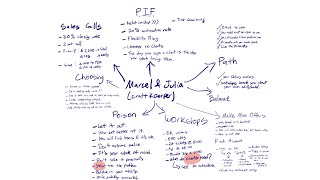
Marcel and Julia run a fitness coaching business generating €180,000 yearly from 3,000 followers. They shifted from one-on-one calls to a €100-per-week group program with high paid-in-full conversion rates, plus digital products like trackers and recomp bundles. Their infographic Instagram account has 19K followers while their personal accounts stay small, and they prioritize sustainable results over rapid fat loss.
Chapters
Thank you guys for doing this. Marcel and Julia, welcome. So, um, hey, yeah, hi. Uh, let's start with some context. So what was— what, what were the numbers before? What are the numbers today? How did everything start?
Um, I mean, I can pull—
and who are you guys?
I can pull up the numbers. Yeah, that's no, that's no problem. Regarding revenue, I would say our numbers are every month a little bit higher than the same month in 2023. So we are getting better. In absolute numbers, we are averaging about $15K in revenue per per month. And last year it was a little bit below, but last year we did sales calls and we did about, I think, 2 or 3 launches and no emails or anything. And now we changed completely to Google Docs and opening doors, closing doors, doing workshops and stuff.
And no sales calls.
No sales calls. Yes.
Uh, German and Austrian market. Yeah.
Yes. And Switzerland.
And Switzerland. Yeah. Sorry. Uh, okay. So, uh, we're gonna start like with, um, so how did you start this? You can go to— I'm going to pronounce it wrong probably, but Kraft Kaffee. And you can go there. Yeah. Yeah.
Yeah. Kind of.
We're going there. Yeah.
Well, it was pretty good actually.
Yeah. We're trying. We're trying. I got a German friend now. His name's Tim. But okay. So fitness coaching, you guys did the whole sales calls thing. Now you transition to Google Docs and you know, you're doing that now. I do remember when we first started working together, something like, will people pay $200 a week? If we did it with Google Docs. So what was— that was like one assumption that turned out like, this is, this is possible, like this is something you could do. What were other assumptions about the model, the whole transition to the workshops, closing, opening, that turned out to be true, and some others that maybe didn't turn out to be true?
I mean, before we did packages, we did like 12-week packages for around €2,200, and there were options for 24 weeks and even 36 weeks, which were a little bit cheaper than doubling the 12 weeks or tripling the 12 weeks. So we sold them via sales calls, which worked well if we had the right lead in front of us, which wasn't only the case. So Our closing rate was not too bad. We were good at filtering out people who might not be a good fit, but still we closed about a third, I would say, maybe a little bit over a third of the people we had a sales call with.
And, but it was a lot of time investment because sometimes it wasn't like just one sales call. Were 2 calls even, like a discovery call and then another call to, yeah, to get into the details and to close the client.
And if it didn't work out— Discovery call used to be a value call even. We called it value call internally. But then we were on a coaching before But then our coach said, okay, we should change it to discovery call because we don't want to give too much value.
Yeah. I sometimes really was in the situation that the person said, well, that was quite helpful. I'm going to try it on my own.
So thank you.
And goodbye.
That was actually quite depressing. Yeah. And yeah. So even though the closing rate was quite high, I would say that, um, like it was taking up a lot of energy, like having the calls and not being sure about whether it's the right lead and yeah, investing so much time.
What was the pricing when you did paid-in-full sales calls? What's the pricing now for the paid-in-full? Is it the same?
It's different because we, when we started in Likes Cash, we started, we only did one-to-one. Coaching. So our 12-week package was about €2,200, and we also started in Likes Cash only with, with selling the one-to-one package on a weekly pricing basis. So we— it took a while until we launched a group model. This was in July, and from January basically Until June, we only sold one-to-one, one-to-one coaching and did about 200, first 250, then we went back to 200 and then we settled for 225, which also worked. But of course, the closing rate with the group model is now a little bit higher with the 100 weekly.
What's the group model now?
Um, you mean, um, what, what is it? Like, it's €100 a week for 24 weeks. Um, but yeah, like it or leave it. And painful, um, minus €500, so €1,900.
You have, um, you have impressive— two things that are really impressive about the way you guys handle this. The first one is prospect inertia. The way you get people to buy one thing, then you get into the weekly thing, then you get into the paid in full. That's the first one. Second thing that's really impressive about the ways you're handling this is your paid in full rate. It's ridiculous. It's really high. And people call you out on it. It's like, dude, how do you do this? So let's start, let's start with the paid-in-full rate. Let's start with how many people you get to pay in the weekly, how many people you get to upsell, and what is like some of the insights you can bring us in. This is how you can do this.
I mean, the most success on the paid-in-falls is stemming from the fact that we, um, had many or have many one-to-one clients, uh, still. Uh, and as I told you, um, until June we only sold one-to-one, and the relationship between a one-to-one client and the coach is, uh, yeah, well established. So, uh, they trust us, um, we, uh, invest a lot in them, uh, they get the results, and typically If one— if a client commits to 12 weeks, um, one-to-one, typically about 70% want to do another 12 weeks or even more. So most of the painfalls, um, come from them. We also manage to get some painfalls from the, from the group coaching, coaching clients. But we still have to see how the rate will be because we started in July. We have some clients and some of them paid in full, but some are in the weekly model and are just fine with it. And they just came in because they saw the possibility that they don't have to do the full 24 weeks. So they are maybe thinking in their minds, I will do about 3 months, yeah, and we will see how it goes because we started in July. So yeah, some of them just stay in the weekly model and that's fine too. I would say most success regarding Painfuls is coming from the fact that we are really close to our clients in the one-on-one situation. Yeah, maybe you want to tell.
Yeah, we're finding the process for few years already before that. Like, I mean, we started out with the, the one-on-one model actually stems from like the typical, because we're in fitness coaching, it stems from the typical bodybuilding weekly check-in model. That's not a call, but it's a check-in that's— so they fill in a questionnaire and they get back a video where we go over all the process and everything. And we have a lot of, or yeah, we had a lot of contact in between and we invest a lot of time in the, like in the first 4 weeks, it's really critical to invest a lot of time in the client and this always pays back because you get, yeah, you get to know the person and I already know that I have to invest more time and then everything will like be flowing and the client will not be a lot of work afterwards, or that much work afterwards. But if that goes well, it's very likely that the buy-in is there, that they'll, yeah, they want to, yeah, they want to go on with the coaching. So yeah, I think that's, that's why it works so well with, yeah.
Don Draper has this quote, the one, it's his boss, but anyway, The day you sign a client is the day you start losing them. So from the beginning, you got to get it right. So you, you, you, you touched on an important point. It's time commitment goes down as more, as more clients came in. So the questions you get from client on day 1 are going to be less than on day 60.
Yeah.
So yeah, it starts with— this is what we control spots, we don't get too many people in. Because in the beginning it's just going to be too much, but eventually it tapers down, right? So like time per client goes down, which is an interesting thing.
Yeah, that's right. So typically if a client decides to stay longer, um, yeah, we already know that there won't be that much work that they have been in the last 12 weeks.
Yeah, yeah, it's less Like, it's worthless. Uh, shifting gears a little bit, this was, this was my own stubbornness, which you, uh, you— I'm glad you didn't listen to this. So it was about your own path. When you guys first started, remember, I was like really autistic about 'You gotta make it about losing 5 kilos. If not, it's just not going to work.' And you're like, 'No, because we do not believe in that. We believe in recomp, not just fat loss.' So you took the model, you took the lessons, and you're like, 'I like this, I don't like that, I disagree with this, I agree with this.' Walk through— like, most coaches in fitness, they're like, 'Lose 5 kilos now.' lose 10 kilos now. You were strong in the way you were like, we do not believe in this. This is our way. Can you talk a little bit on believing in yourself and believing in your, in your model? And even though it's actually not what everybody else is doing, this is what makes it effective. Yeah.
I mean, that's, that's Julia's fault. I would say mostly Julia's fault.
I was quite stubborn with that.
She was protecting herself from burnout because she didn't want to sell anything she don't want to do. Yeah, maybe you want to talk about it.
Yeah, you already summed it up quite well. I actually, I want to, or what I wanted to do is work in a way that is ethical to me because if that's not possible and I'm successful with that, maybe for quite some time, I know that I couldn't go on and also it doesn't really help with the client relationship because if I, if my offer and everything aims at the wrong people, I don't want to work with those people. And I don't want to, I don't know, harm anybody's relationship with food and their body. And I work with a lot of women. And I know, I know that a lot of harm was done and can be done. And I, yeah, that's, I mean, it's for my protection. It's for the protection of people that I'm working with.
Yeah. Else, your philosophy filters the people. The people who are fish out, your philosophy also filters whales in.
Yeah, yeah, yeah.
It also, um, yeah, the filter works quite well because we tend to attract people quite over the 30s, 40s already, uh, so people who maybe got some, some understanding that losing 5 kilos now isn't the solution. They need something different because they have done it so, so many times in their life already.
Yeah. And also they know already, cause I mean, I would say like, it's, you get an audience that's a little bit smarter. It's harder to get to those people, but they know already from like their work situation and everything that everything comes with a cost and like losing, they don't believe in this marketing either. Yeah. So it's. It's way more fun to work with these people and you really get results that are, I would say, actually life-changing. Yeah. But it's, uh, I have to say it's not the easiest way to go in the fitness industry. It's, um, it's always quite like when we think about marketing workshops, when we, uh, think about how to write copy, it's always like finding the path that's not too— that doesn't sound too boring, because you have to get to the point that people are interested. You have to give them a little bit of bait, but it still has to be— it has to fit, it has to work. I don't want to, like, market anything that I'm not doing with the people then afterwards. So that's always tricky. Sometimes I think about, well, there would be an easier way if I didn't work ethically. I could make a lot of money because I'm sure we would be able to write the copy for that and we could give out programs and everything, but that's not, I don't know, I wouldn't want to work like that. Yeah. That would eat me, eat me up alive.
Yeah. That's what I felt when I had the whole big team. Yeah. You know, I thought, I thought like, hey guys, like this is a freedom business, but then yeah, I also have 15 team members of VA army attending another VA army. It's not exactly aligned. I feel people smell the bullshit, but when you live your own philosophy, I don't know, it kind of filters smart people then.
Yeah. Yeah. I, I, there are so many parallels, I think, with, uh, like setting up the business and setting up your body for long-term success. It's actually the very same thing. If you, if you aim for the quick results, they may maybe not that long-lasting or you get into burnout. That's Yeah, it's the same thing.
I remember posting, hey guys, I did a, I did a 100-hour fast, and others were like, dude, well done, good stuff. And Marcel was like, what the fuck is wrong with you, man? Like, this is not how you do it.
Yeah, I remember this. Yeah, I mean, uh, very, very tough. Quite impressive that you did it.
It is, yeah. But it's for toughening you up mentally, for sure. I mean, if that was the intention, that's great, but for your body, that's another thing, right?
Well, there you go. We learned something today. Well, I learned something that day. What I learned is I shouldn't share my words with Marcel. That's what I learned.
Yeah, yeah, yeah. Don't be honest. Not good.
Yeah, yeah.
I mean, something interesting happened on, on the way because, uh, you gave us the input, uh, that we should lead with lose 5 kilos, lose 10 kilos, um, make it about this single message and target the market. And, uh, that led to some heated discussions between Julia and, and me, uh, and ultimately, um, it led to, uh, to calibrating our coaching style. So, uh, because we had to discuss our way, we had to discuss how we want to market it and how we do want to do the, the workshops, um, it resulted in a new style of coaching. Um, so we transitioned away from calorie tracking completely for example. Before we did that for some people, we already were on the way, but now we just decided, no, that's not the Kraft Körper way anymore. We teach them a more sustainable way to get a fit body, but also a healthy and relaxed relationship with food. And this wouldn't have happened so fast if we didn't have to discuss our marketing and our approach.
And also because of the work—
Let's talk about it. Go ahead. Go ahead.
Because we, uh, when we set up the workshops, we, um, or yeah, one of us always prepared the workshop and we learned from each other because we were coaching and we talked a lot about coaching, but we had a different style, which we still have probably, but, um, the methods were slightly different. And then we learned about each other's methods more and it actually, it became something very coherent and it became like, uh, yeah, a philosophy, uh, more of a philosophy. Um, that, yeah, that really helped in, in setting up, um, also the, the group coaching.
Yeah.
The group coaching model, because we tried that before and it didn't work. Um, it didn't work that well. Yeah. I mean, we're still figuring out how much, how well it works now. We're still in the process, but like with establishing the workshops and with getting everything together, like in a more condensed way and written down and everything that helped us. And that's not a base for guiding people through in the group coaching, which we didn't have before. And that was very helpful. Yeah. Threatened our marriage a little bit. That is a great point.
Oh God.
No, I'm just kidding. Oh, it's good.
Good. Good. Well, you both look happy. You both are smiling and I'm, you know, I'm glad that's the case. You made a great point and when you create the workshops, the work, like the, you learn more about your own skill or your own delivery and it becomes a different philosophy than when you started. For example, when the Offer Show actually was first called Weekly Recurring Revenue, around 75% of the way through developing the workshop is when I thought, oh, this is a, this is what, this is a good way to see it. This is a good way to look at it. So often like The best ideas come to us 75% of the way through the creation of something new. And it's a little scary in the beginning because you're like, I haven't done a workshop.
You—
because we think and we make a lot of jumps, we don't really connect our thoughts. So when you're forced to put everything into a coherent workshop, you see, oh, I don't know this as well as I thought I would. There's a fault in my thinking here. But if you can go through that, it sells really fucking well and people really like it.
Yeah, exactly. This is also something we learned. So we learned we can sell products in a way, or at least workshops with multiple attendees, and people are ready to buy them. I mean, I see a lot of people also struggling in Likes Cash with selling workshops and selling tickets. And I think We have more success, although our audience isn't that great. So our personal accounts only have about 3,000 unique visitors. Our email list is about 800 people, not exactly, 750 right now. And still we managed to sell 24 tickets for 2 workshops. And yeah, we average out around, I would say, 15 tickets per workshop. The Recomp Bundle, so the first product we already sell sold. It's sold for 36 times. So that's great. That's great. So I think we also have a strong brand. So this brand really helps to keep or to get this model going and to get people interested.
Talk about getting paid to create. Because you create for your clients, but you sell tickets to that. And one time you posted something, I remember, I keep using the screenshot, 34 people at $100 each, getting paid to create is a great feeling. And I agree, it's a damn good feeling. So yeah, can you talk about like, how do you think about, okay, what should I create? And how does that affect the business? You can talk about how do you create it and upsell and take rates.
Do you want to speak about how we decide what to create? How do we decide on workshop topics?
I mean, we could take our new workshop as an example, actually, because I was— so we had to decide on what our next workshop is going to be. And we talked about that we actually need some kind of new tracker, like daily tracker for the habits that people want to pursue on a daily basis. Because our tracker was based on a model that is a bit outdated now. And I thought, well, that's what our clients need. They need a tracker that is more motivating, that is more habit-based and everything. And yeah, then I said to myself, well, let's make a workshop out of that. So let's talk about which are the, yeah, the best recomp habits that people can have. Let's make that evidence-based. Let's put our practical experience in it and let's back that up with the science and everything. And let's build the tracker. And this is for our clients actually, but it's also interesting for people who want to do that like, do want to self-coach, um, and to use that by themselves. So yeah, that's the way we, we thought about it. And, um, that's actually quite nice because we need the tracker and we also have a workshop now. So, and yeah, we're still promoting it.
Yeah, uh, we're still promoting it. Had an early bird, um, promotion for the first time, um, and so we took €20 off the price. I gave it away for €77 until last Sunday. And of course, uh, the, the promotion was running, I think, 5 days already, but on Sunday we sold 8 tickets and, uh, 10 people, um, of course bought it. Yeah, of course, 10 people bought the workshop until now. And yeah, the promo is still running, so I think next Sunday, uh, there will come a little bit more. So yeah, that's interesting for us and And yeah, I mean, about $1,000 just for creating stuff we really need to improve our coaching. Yeah.
Yeah, I thought the same. Like, I was like, where is— where does my model fail? The most common question the other day was, how do I get email subs? And I'm like, but we've talked about this, guys. Like, what do you mean we talked about this? Okay, let me, let me create a workshop about it. But you know, it's— I realized like You know, I was, I was, I was fumbling the bag. I wasn't giving people what they needed. So I thought, okay, let me create one. And because you have this model where you do workshops, you can get paid to create that kind of stuff. Like, you mess up, but it's not a mess up, it's an opportunity, right? It's a— you can get what out of it. Yeah, it's a beautiful thing.
Yeah.
Uh, The, the other one— what else did I want to, want to talk about? Poison. This business— if there's anything that running a business teaches you more than business, it's people. It teaches you more about human nature than others. And I have, you know, I have a few theories of it. One of them is, uh, not everyone who turns is a loser, but every loser churns. So don't take losers in. Another one is the world is full of losers and quitters. Avoid them. That's your job. It's a very emotional thing running a coaching business, right? Because it's sometimes like you put so much effort into things and then people just don't— no, they don't appreciate it, and it kind of breaks your heart. And that's just a thing that happens. When those emotions arise, how do you cope with them? How do you deal with them? Because I think this is something that not a lot of people have that's may be helpful for them?
I mean, I don't know how much it will help other people, but of course we have each other, so we, we whine to each other if something doesn't go our way. Um, apart from that, I would say experience helps because we are in the business since 2019. We started really small with about a revenue of some $100, yeah, and worked our way up. And before we did Likes and Cash and before we did Google Docs, we did our share of sales calls and of cold messaging and of, yeah, getting rejected and dealing with people who never ever had the intention to buy from us. But still, we invested time and spoke to them. And yeah, we took our fair share of poison there. I think we made ourselves resistant to, to most of these guys, but still some situations are new. So the last situation which got to me was the, the refund problematic. So as I told you, we sold about 39 recomp bundles, so real products, without having to do any workshop time at all, just sending recordings. And we got asked from 3 people for refunds. One person had an eating disorder and shouldn't have bought the, the Recon Bundle at all. She isn't in a place where she has to or is allowed to lose body fat. It's not good for her. So not our problem really, but of course she gets the refund. Should be like it. The second person just didn't read through the material and said, oh, it doesn't have a training template, it doesn't have an eating meal plan. I told her, yes, it has, there it is. I'm still waiting for an answer.
So maybe, maybe that was quite annoying actually.
Yeah, that was quite annoying.
Didn't watch anything or look at anything. So that person at least.
Yeah.
But I don't know.
I'm waiting for an answer and maybe I won't have to refund her. And the third person just disputed the payment. And yeah, at first I was really pissed because this also comes with extra costs, which aren't that high, but still, it's just the thing. The thing is just, yeah, really annoying because the issuing bank wanted €15 for that. And at first I thought, okay, this guy, I already had a sales call with him in the past. He knows me, I know him, and he has the nerve to dispute the payment. Yeah, I swallowed my pride and just asked if everything is okay, if anything went wrong with the payment there or with the dispute. And he really answered me and he said, no, this was a mistake. And he paid it again. So Yeah, um, it gave me some, yeah, some, some thoughts, and I had some troubled hours after this because I really couldn't take it. Um, but I also, yeah, gathered some experience from this.
So, but the guy, like, it was the, the bank mistake, right?
Like, no, no, it was him.
He did the false payment.
He, he claims it was a false payment.
Yeah, so like, anyway, did you get the payment or not?
Yes, yes, he paid it again. So I contacted him, he said, oh no, it was a mistake, here I pay you again.
Yeah, yeah. Another one is, you pointed it out the other day, uh, don't assume malice. Yes, sometimes it's just that things happen, you know. One time somebody, I'm like, hey, like, your, your payment defaulted, like What's up? Right.
Yeah.
It's like, oh, I actually was in a motorcycle accident and twisted my ankle. I had to spend like $50K in surgery. Okay, I get it. We can take a step back. But I interrupted you, Julia. Sorry.
No, I just wanted to add, if I feel that there's a lot of poison, like if I'm— because it's never about the other people, it's always about the state of mind that you're actually in. Because people are people and we all— I don't know, it's 100%. Human. It's, um, people are undecided and I don't know, they'll ghost you. Everything, everybody's got a lot of things going on in their lives. And, and I always feel that if I feel that there's a lot of poison in myself, actually it's about my own work-life balance and about like my own mindset. And then I have to go back to the basics and think about, well, now there are ups and downs. There have been lows and highs, and it will always be like that. And it's like a business that is, I'm, yeah, you can't know. Yeah. You can't know how everything turns out. That's part of the deal. But, and that's something that we always tell each other. We've always found a way somehow. I mean, we still have the same capabilities. And if we put in the work, something will work out eventually. We have this experience about the worst thing is, yeah. The worst thing is that like, if you feel the poison coming up, then if you try to overwork and that's something I have I know about myself, then I start doing all kinds of weird stuff, like, and trying to keep myself busy and doing stuff that doesn't make sense. That's not on the plan. I don't know. That's then I know, okay, well, I have to do the exact same opposite and have to care about my own wellbeing and mental health and everything. And then it's like, I don't know. I don't, it's like the law, the law. No, I don't like that idea of attraction, but still it's like, if I'm, if everything is, if I'm happy, like people are coming and asking looking for, where do those people come from? I don't know what is happening now. And if I'm like really poisoned, nothing works. Like there are, that's like, fuck. Yeah. Yeah. I hate that, but now I already know that I have to relax in those moments and be okay with something not going right at the moment. Because if not, it happens 100%.
I resonate so hard with that because sometimes I'm like, It's not happening. Like, you know, you take it L after L after L. I'm like, why don't I just do trading, dude? You know, one, one player game. Like, yeah, why am I even doing this shit, right?
Yeah. Oh yeah.
But then it's like, oh, you, you probably haven't slept 8 hours. And then I sleep 8 hours. I'm like, ah, you know what, it's fine. Let's write an email.
Yeah, yeah, yeah. I mean, these thoughts, um, they come and they go and, um, we had so many discussions about going back to our old jobs. I mean, we had a whole job life before, Julia as a teacher and me in IT management and sales, and about 14 years and 10 years. So it would be easy to just go back and have an easier life, kind of easier life. I mean, yes, we are our own boss, but yeah, as Julia said, nothing is really certain and you have to put in the work and you have also, You have to know yourself because if you don't know yourself, nothing really will work. So yeah.
Yeah. Everything comes with a cost, like the freedom. You have a lot of freedom and then you have to tame yourself when it doesn't really go well. That's the hard part. But like going back into the old jobs would mean you don't have any freedom. You have a lot of certainty, but not a lot of freedom. So. Yeah, this wouldn't work out either. So I don't know, there's something good and something bad in everything. And yeah, you have to trust yourself.
Well, grass is always greener. Yeah, grass is always greener on the other side. And you recently had to have about this conversation with yourself. So you made a decision, which is more than most people do, which is, are we going to do B2B or are we going to do fitness coaching entirely? And you said, We're gonna do fitness coaching, we're sticking with that. Somebody else would have gone like, look at what you guys do. And I'm like, damn, like if I had a buddy like these people, I'd also do it. Like, right? But then other people are like, no, B2B is the way. No, but fitness coaching is the way. Uh, I'm interested in what would the— what was the thought process there? You made a choice. There were two equally really good options. And you didn't stick in the, but what if land, you made a choice, you made the call and you're like, we're sticking with this. What was the thought process behind making the choice?
I mean, it was mainly a choice I made, I would say, because I think Julia wasn't really thinking about going into B2B herself, or not so much as I was, at least. And I mean, switching gears and going to a completely different audience has many impacts. As I told you before, our brand is strong. We may not be really big. We have our little audience, but this little audience knows us. We are in the heads of the people, and they know we stand for sustainability, for doing good to the body, to get the fitness goals and everything. Switching gears now would mean I have to establish a completely new brand and yeah, to talk to another audience, which I have to build from the ground again. And I don't think we played our current business model. We played it through. So, but there are so many options we have, we can take and so many ways we didn't take that I think it will be more valuable if you take the system we have now with the group model and one-to-one and sales with selling with Google Docs and everything. And yeah, bring it more to automation, fill it up with more people because we have capacity there. We can take more group people. And our current problem, and this will also be the problem for B2P, is how do we get leads? So we need, we need more leads for the current model. So that we can get more clients on a regular basis. And this wouldn't change, this wouldn't change for B2B. So I would have the same problem just a year later because in the beginning it maybe would work great, but eventually you will come to the same problem. And yeah, if I solve it here, I can solve it everywhere. And yeah, this was the decision then.
Fuck yeah. Yeah, I respect the shit out of that, man. I like it. Um, you have—
there's still the, the thought of, yeah, maybe you can charge more. So B2B, of course, um, you can have higher rates, uh, than— okay, can I say something in between? Fitness clients? Yes, do it.
You lose the compounding effect, actually. That's what I was thinking about, because we've done so much in the last couple of years and months And some things need time to build up, like reputation needs time to build up and everything. And we would lose everything now when we haven't played, as you said, until level 100 and dropping out now. I don't know. We still have something to learn in this area. And even if we thought about going into the, into business coaching, um, at some later point, it would be at a point where we actually had a very successful business. Played through everything and now it doesn't feel like we have all the experience, like to do that. That, that's also another thing we talked about that. Um, yeah, it doesn't, doesn't feel like the right time. There's still more work to do here and there's still something waiting.
Yeah.
And also, uh, I think fitness is different from B2B or from business coaching. In regaining clients because now we are seeing people or clients who are coming back for the second time, especially when we did the daily email, when we did offers every day. Most, or most, at least half of the people who became our new clients are people who had contact with us in the past. Maybe they were clients in the past and thought, okay, this is cool. I want to have a refresher. I want to work with Giulio and Basel again. Or they had at least calls with us. So I think fitness works in that way that people like to have someone on their side, in their corner for some time, then they want to do it alone for some, for quite some time, but they also enjoy coming back. And I don't know if business coaching is also this way. I have a feeling that business coaching, maybe if you learn all the secrets from one business coach, you're done with him. That's some, some, some belief I have, um, if the business coach doesn't invent himself new all the time. Yeah.
That is so true. Every, every time you have to come up with new shit. Yeah, like now as well, but now it's the offer show, now it's the insight, now it's this, now it's that. And then like it just keeps on going. Like it's a, it's a game I hate and I love because it keeps me pretty creative. It keeps me sharp, right? But I really like what you said about if you're not like, if you're a business coach, you're not coming up with new stuff, new ideas. It's tough because then people are like, oh, I know what you do. I know who you are. I know everything about you. I don't need it anymore. And it's the constant creation of ideas and new concepts and new insights that gets you, that gets you more clients. And that can only be found if you spend, in my opinion, less time in marketing and more time in delivery and helping your clients and understanding where does my own stuff fail. And then you come up with beautiful stuff, but you have to create that space to be there for delivery, for product. Like you mentioned, like, how do I make this tracker better for my own clients? That matters because people don't get it. But like, if you want to get more people to buy into your stuff, like, don't focus into the marketing, focus on the product, and the product will bleed things that then you can give people. It will— you can extract things that becomes the best marketing. The best marketing doesn't go to a product. The best marketing comes from a product, from you doing things and extracting things from it. Went on a rant there, but I really wanted to touch on this. This is why I was excited to talk about you guys. I remember in the beginning, I told Marcel, hey, We're doing daily offers. And you're like, no, David, I do like twice a month or like once a week. I'm like, no, we're doing it. We're making everything. But people are going to unsubscribe.
So what?
Let them unsubscribe. Talk about what was it like? What was it after? Like, what were some things that you understood from, you know, just making more offers?
I mean, our newsletter list, our mailing list was really young when we joined Likes and Cash. So we only launched it about I think 3 or 4 months before, and we handled it like the perfect value, nice weekly newsletter who everyone wants to read. That's the only newsletter you want, you really want to read and who people are glad who subscribe it, if they subscribe it. So we were proud of it. It was kind of our baby and we invested quite a lot of time because It wasn't really long newsletter. It was a newsletter with about 3 or 4 topics even in one piece, in one mail. It was a newspaper. Yeah, and it went out.
Newspaper on Sunday. Yes.
And we got, yeah, the bad thing about this was we also got really great feedback. People love the stuff, of course.
Sure.
Yeah.
Kind of protective of our newsletter. And then you came and told us, if you want to do Google Doc sales, then you have to do daily offers and use your newsletter for doing daily offers. And in the beginning, we were quite hesitant and we worked ourselves up. I think it took until March. So we started in January, about January, December, January. And it took us, took us until March, and then we switched to doing daily emails. Of course, we lost a lot of subscribers. We didn't have many in the first place. We invented— we did lead magnets to fill the list and to get people in, but we also lost a lot of people. But yeah, people who became buyers, stayed in the list, and we learned from this that we can sell stuff with the email list, especially workshops or products work really well with this. And so it definitely was worth it. Still, it's quite a problem to get people, new people in the list. So we are, our list is shrinking right now. We are losing people and we are thinking about doing new ways Quite now our project or my great project is to automate this process of getting leads with, yeah, with doing ads. So I hope this will work out because it's very intriguing if you don't have to do the whole social media organic stuff to get leads, to get people to know you and if ads can Yeah, if you can put money in to get money out, that's very intriguing to me. And I hope that this will solve our lead problem in the future.
Especially how Travis paints it. He makes it look so romantic.
Like Mad World. Yeah, it's too good to be true.
Almost. Yeah, exactly.
Yeah, we will see. I think, and I know some people who only do it like this, who are coaches and don't have a social presence at all, and it seems to work. So yeah, so this is my next step for getting people into the list because we have a big Instagram fish account, as I call it, just an infographics account, mostly value-based. But still the people who come in there are of fish quality mainly, and they are taking the lead magnets and just unsubscribe again. So not many people from there, if any, really buy anything. And I think there has to be a smart—
This is really good. This is really important. How many people do you have in the fish account? How many people do you have in your personal account?
19K. 19K in the official account and about 3,000 combined unique, uh, followers between Julia's and mine account.
And this one's like, what percentage of the revenue?
I would say 90/10 if I had to guess. Yeah.
What is the difference between the $3K account that makes 90% of revenue and the $19K that makes 10%?
Yeah, I mean, we built the $19K account by doing infographics which had a high likelihood to get likes, to get saves, to get views on them, to get followers, comments. Yeah. Uh, so, um, the goal just was to, to grow the account there.
Uh, and we built our personal accounts, um, yeah, on our own stories, own development, like, yeah, uh, more story-based and of course more insight-based. Although, uh, when we started out with our accounts, we also put some infographics there, but that was a time like when those carousel posts like were really something new and something big. Um, and we got some followers there, but this was years ago. Um, but still it's, yeah, of course, personal, personal accounts, like sharing our own stories.
Yeah. Yes. Like people buy coaches, they don't buy coaching. Just the fact that you have your face on it is so much better. Like, yes, I'm actually amazed that it's in the 90s, you know, some, some big number. But like, people buy us, like, it's, uh, and you realize that some people actually join for different reasons. This is what's really interesting to me. Some people join your stuff because they're legit, they're like clueless about fitness, right? I don't, I don't know what they're— some people actually are quite developed, but maybe they need an accountability person And some people just need an authority figure for you to be and hold them accountable. So it's like people buy your stuff for different reasons and it's very rarely the reason that they stay. Like, yes, they wanna, they wanna lean out, right? But maybe they just need somebody to hold their hand through it. Maybe they just need a therapist. So by exposing who you are and all the things that you believe in, you actually realize that people buy stuff for many different reasons that you're not marketing and you wouldn't have got them if you didn't expose this is what I believe in, this is what we do, I'm traveling to Thailand like you guys were. Like some people just, they just need to see a dimension to you instead of just value, value, value. They need to see you because they buy coaches, not coaching. Yeah, my experience at least.
Yeah, that's usually like when people like ask for coaching in DMs, it's always, uh, in some random story that doesn't to do anything with fitness at all, like something that they can relate with out of my life or our lives. And then I get the question, well, how about coaching? And I'm always confused, or I'm not confused anymore because it makes sense now, but it's never like the pure fitness content. It's never the information content that drives people to, yeah, to request, to make a request or something like that.
Do you have an example of a story that was like not related to coaching?
I have to think about it. It happens all the time. It's like, I don't know, photo of my dog and, or a place that I, that I visit somewhere like, ah, I've been there. Well, uh, I like that you're, what you're doing. Um, how about coaching? I don't know. It's, it's I'm always amazed. I'm always, it's never if I'm asking for, if I'm giving out information about coaching, it's, it's rare that somebody really asks me about something. But if I'm traveling, something like that, if I'm traveling, going somewhere, posting some, I don't know, some random stuff, um, it's, it's always what people like, they can, they have a connection somehow and they actually, It's sometimes it's like getting a conversation up. They're like, oh, I like that too. Or I've been there too. And they have now, they have the feeling that they can get into a conversation with me, like, which is not, it's, it's not dangerous. It's, yes, exactly. Yeah. And then, then I don't know, a conversation starts. and then they suddenly ask about coaching. It doesn't happen that often, but when it happens, it's always with those kind of stories. And something that has changed a lot actually, but which still is, I mean, Marcel is actually great at this. Marcel is great at making offers now. I really have to say, I'm always amazed. I mean, it makes sense because he gets a lot of your input more than I do because he's the person who gathers all the information. But I'm also much more comfortable with making offers right now. And I'm also amazed at this progress. Like, now I'm thinking, like, with every post I'm posting on Instagram, I think, well, I could add something, like, offer something at least. I don't know, the newsletter or something like this. And it almost feels wrong if I don't. So So something has changed.
Yeah, me too.
Which is good, like with personal development, it's also like about confidence and now it makes sense to me and I'm thinking, well, of course, this is my business. I'm helping people. Why am I hesitant to make offers? I mean, that's what I do. But I think it's difficult if you like grew, if you like grow your account and, um, First, maybe you don't do coaching and then you start offering coaching. It takes some time to, to make that your personality, like making offers is part of your personality because you want to help people.
Yeah.
Beautiful. Beautiful. Well, there I've learned, like, this is one of the, one of the beauties of our business. Like, I learned a lot from you guys. As well. Like, okay, paid in full, like Marcel showed, like the thing he did with Loom. So I'm like, oh, that's smart, right? And like giving people, like starting out, more info. I'm like, okay, that's right. Like the dedication to sticking to recomp instead of just rapid fat loss like everybody else, which actually felt like you were shooting yourself in the foot but turned out to be like a great weapon. I think, okay, I can see, I can see why, I can see this working. So incredible respect for you guys. Really, really glad to see everything you guys are doing. And thank you for taking the time. This was awesome. Appreciate it. Thank you.
Thank you for your support.
Thank you too. Yes. And thank you for all the input because as you said, we took all the things which were new to us, which made sense to us, which we wanted to try, even if we were hesitant at the beginning, like doing daily mails and stuff. But yeah, it really helps to commit yourself to one process and then just do the stuff. But we also knew from coaching from the past that there is an important line where you shouldn't overstep. So it's about integrity. It's about believing in your own philosophy. And I think we did it quite well this time so that we we said, okay, we really want to do this, but we also want to commit to the process. And I think we found a great middle ground. And yeah, that worked out.
Yeah, excellent job, guys. You know, thank you for doing this. This was awesome. And yeah, well, thank you. Auf Wiedersehen.
Thank you.
Auf Wiedersehen.
Ciao.










