Why I Stopped Selling Group Coaching & Installed The Offer Barbell
David Molina ditched group coaching because client churn created emotional debt, then built an "Offer Barbell" instead: a cheap, high-volume product for stable revenue paired with expensive one-on-one work that generated $10K to $37K deals. Skip the middle tier entirely.
Chapters
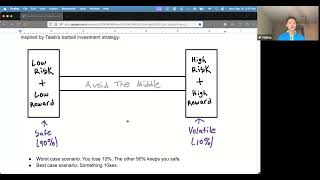
So you have a barbell. The ugliest part of my business— coaching, consulting, mentorship— are energy mismatches. That's what I've identified them as. When you give your client energy and then they quit on themselves, and by extension on you. When you spend time with prospects and they ghost you, or when you have a one-on-one call with someone and they churn 2 days later. And it's, it's this mismatch of energy that creates an energy debt. And somebody has to pay that eventually. And it's often you, which is the entrepreneur. And that is often a very painful experience. So what this created was a dilemma, right? Because as I grew the business, I realized that the place that created the most energy mismatches was also the place that created the most money, which was group coaching, Cash Creators/Likes and Cash, as you know it. And group coaching works, and it does make a lot of money. It is a very powerful weapon for both the coach and the client. But for most people I ask, and it's kind of the thing that not a lot of people want to say, but the experience of running a group coaching is just not that transformative. It's just not as effective. What was sold as something that's very scalable and very life-changing turns out to be that Unless the people are rock stars, and you know my beliefs on that, that very few people are. Very few people show up to the calls. Like, there's 140-something people in Lights and Cash. We're like, like 7 today. So very few people show up to the calls, and it's just not— I don't say this tongue-in-cheek, it's just how it is. When people do show up, a lot of the questions are kind of the same. They're kind of repetitive. What do you think about my offer? I need more leads, right? There's a performative aspect to it from both the coach and the clients that can make things feel a little bit rushed, like you're just waiting in line to get a generic response. And the biggest one though is, uh, the churn is, is high. Like it can be really, really high. And me personally, and this is just me kind of telling you what the real— clients leaving used to ruin my day. And many clients did leave. It never really got to the point where it didn't bother me. Like, it always did bother me. So rather than becoming more stoic and tolerating all those energy mismatches, I thought, how about if I don't expose myself to it in the slightest? And that's when I made the decision that group coaching, which was the main revenue driver, had to go, or at least change. And to be clear, I don't regret doing it. And I still recommend it if you're okay with more pain in exchange for more money. We've all been there and it is 100% worth it in the beginning because it does make a lot of money. And if you're an entrepreneur, you need to have some pain tolerance. But if you're doing well or better than well financially and pain avoidance is more important to you at this stage, then the offer Barbell provided that avoidance of pain and it's actually much more enjoyable now. So this is what we're going to be installing today, the Burble. So the Burble was inspired by Nassim Nicholas Taleb, which is, um, he's a mathematician and he has this investment strategy that actually was pretty inspiring to me, which is you put— let's say you, you gotta invest $100K, you put $90K into low-risk and low-reward stuff and that keeps you safe. So that's like the S&P 500 or that's like stocks that you know they're always gonna go up, right? Or mostly. So that keeps you safe. And then you take $10K and then you put that into high-risk, high-reward investments, which are like the shitcoins, right? Things that they're probably gonna go to zero, but there is a very, very small chance that they might 10x. And you avoid the middle because the middle is not either safe enough to keep you— it's not boring enough to keep you safe, but it's also not high risk enough for it to need your energy. So with this strategy in investment, the worst case scenario is that the things you put in the volatile kind of end of the barbell, you lose it and you just lose 10% of your income. The other 90% though, it keeps you safe. The best case scenario is something 10x's, right? You find a hidden something, you invested in Ozempic before it became Ozempic, and now you're everywhere, right? So this investment strategy, it just made a lot of sense to me, and I thought, how can I translate this into business? So extrapolated, I turned it into mine, and I agree with the avoid committing to the middle because it's the lukewarm things that— there's kind of like this meta spiritual aspect to it, like lukewarm things are not good for you. Like for example, you don't want like lukewarm coffee, right? You want either hot or cold. You don't want lukewarm commitment with people. They're either in or they're out. And I like this extrapolation into my business so that I have a really low tier with low prices and high volume, and that keeps the business kind of stable. So if a client leaves on a— this is— I'm getting ahead of myself, but this is going to be like a $10 to $100 a week thing. It doesn't really change your life. But if somebody joins, it doesn't change your life either. So it kind of keeps you stable. It's when you get higher payments and then when you lose those that really hurt. So that's what keeps you stable in the low price, high volume side. And then you got the other end, which is high price, low volume. These are one-on-one clients. And I understood as I grew that the world kind of starts shrinking. Like, you realize that the true people that you want to be around, they're not that many. But when you find them, they do stay for long. So that's why you charge high prices and you will have low volume. And this is very volatile, but it's kind of a healthy volatility because the worst case scenario is you lose a few one-on-ones in them, but then you have somebody who replaces them and that ends up being a $10,000, $20,000, $30,000, $40,000, $50,000 deal just extrapolated over so many years because they are the kind of people that are long-term people. And if you lose somebody there, then the one— the low tier keeps you safe. And the best case scenario is, again, something 10Xs. There's a client that'll stay with you forever, or they'll pay it in full and they make a huge thing. Two things happen in Cash Creators recently. I think it was last month. A new client— and this guy doesn't charge that much for, like, specific, uh, fitness client. That's what he does. But he charges a lot because he's got one corporate client that pays him like, like $10K a month. It's just one person, right? But because he had that chance, he got lucky, not lucky, but he was able to extract like that big 10X. Somebody else here, they got a $37,200 payment. If you have those high tiers, then you get those 10Xs, right? And the other day I had a call with somebody who's got a big audience and they thought, I am done with client work. I'm not doing any of this. I'm just going to have a low tier. And I recommended to her that she should have a high tier, but make it really, really, really, really, really high so that you will have the stability from the low tier stuff, but you'll also be able to get lucky. You'll have a landing pad for luck. You don't get paid $10,000, $20,000 per deal if you don't have an offer that allows it. Right? So if you have it, then you understand that you're going to have really low volume on those, but somebody might come around that might actually pay it. So it's the barbell strategy for investment extrapolated into business. And today I'll show you how to install these two: one that protects you and kind of keeps this recurring revenue quite stable, and the other one that allows you to get lucky and really acquire those big jumps in revenue. Volatility is not a bad thing. If you can control it, if you can control kind of the access you give to those people, you're going to realize that volatility actually tends to keep going up if you control who you get into your high tiers.










