Ray Jorgensen 9 Dots Series - V2
Ray Jorgensen explores how the conscious, subconscious, and creative subconscious mind shape what we believe to be true. He examines how personal beliefs limit our perception and offers a psychological framework for leaders to recognize and move past these constraints.
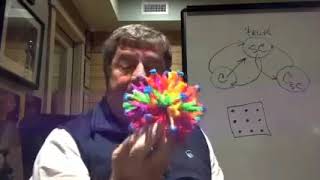
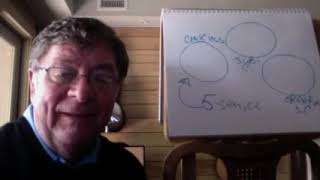
Hi everybody. Thank you for coming back and visiting with jlc. This is Ray Jorgensen and I am talking to you from Landrum, South Carolina. And this morning I'd like to invite you to think about the truth. So many people argue all the time about this is the truth. That's the truth. And it's almost as though it goes back to some of those wonderful sci fi shows. That said, the truth is out there. So we're kind of seeking to find the truth. What is the truth? Well, this morning I'd like to invite you to take a slightly different edge around this so that you think of the truth as something that is current and the current dominant image of the truth, not necessarily the truth. I'd also like to invite you not to drift into the world of spirituality or religion because I believe people that are very fervent and believe in certain religious structures hold on to absolute truths. I fully respect that. I have no interest in discussing those truths. Those quote. Absolutely. End quote. Truth. This morning it's more about the human equation, how we end up coming to a conclusion and then how we get stuck in that conclusion sometimes. So behind me I have a depiction, just per our conversation, of the human mind. Of course, you can't pull it apart and put it in a chart or put it someplace we can look at it very easily, certainly without damaging the human being we're trying to talk with or work with. However, I would invite you to think about the human mind as having three dimensions and they are behind me and kind of let me fill them in. The first dimension is the conscious mind, kind of how we can see and smell and feel and touch. All of our senses bring information into the conscious mind. And there are people that would say sometimes our six senses bring things into the conscious mind. However they get in there through our five senses or any other sense that you think is available to bring data to us. That is how information gets into the conscious mind. The next part of the mind I'd like to talk about for a few moments with you is the sub unconscious mind. So this is the subconscious mind. And that's where, for the sake of this conversation anyway, information is stored information in the form of the truth. So we want to make sure we understand how this truth is unfolding and how we could possibly use it in our work as leaders. So we have conscious mind, subconscious mind. This last part is called the creative subconscious mind and there's been tremendous work done on this. What is the creative subconscious mind? How does it work? What is it all about? And I think the most interesting thing for me is that it does have a fundamental requirement. It makes sure that whatever the subconscious mind thinks is true comes true. So let's kind of do a little bit of a depiction so that you can use this in your chat or in your writing. Information comes into the conscious mind. That information is then taken and brought into the subconscious mind where it stores a picture of the truth. It comes back here into the conscious mind and goes back through the five senses and verifies that that is so the truth. For example, I can't sing, I can't do math. I can't dance, I can't. Or I can sing, I can dance, I can do math. Whatever we say to ourselves is the little t truth. That little t truth has a tendency to come true, because who's watching over our little t truth right there? The creative subconscious. The creative subconscious makes sure it has one job. It's almost like a little sensor, and it makes sure we watch how we talk to ourselves. And if we don't talk to ourselves in a way that begins to make that little t truth come true, it fixes it. For example, if you have a niece, nephew, daughter, son, somebody in school, and they keep saying, you know, I'm not really good at math, all of a sudden they get a couple of good grades. That's a very temporary situation. Or if somebody says, I'm not really good at running, and all of a sudden they start to win a race or two or they get ahead of some of their friends, that creative subconscious says, oh, wait a minute. You said you weren't good at running. We'll fix that. Lots of these little tea fruits that live inside of our subconscious right here came to us over time from people who cared about us. They were worried that we might be disappointed or try overly hard, not get what we wanted. So they would say, that's okay. You're really not a musician, or you're really not an athlete, or you're really not. And a lot of times that was done to try and prepare us for this very, very challenging life that everyone lives. So challenging, but joyful at some level, as you know. So we've chatted about some of those things before. So making sure that we understand that this little t truth is in us. And the creative subconscious has only one responsibility. Make the little T truth that sits in our subconscious, make it come true. So right now, I'd like you to take a moment and write down a few examples of when you have been given by somebody else a little t Truth. And tell me how many of those you can capture, say, in 90 seconds. So what are some of your little T truths? More to come in a few moments. Thank you. So, ladies and gentlemen, I hope you enjoyed writing down some of those truths that you know about yourself. Those little T. Little T truths. Not big T truths. Little T truths. So when we say that we at jlc, at the Jorgensen Learning center, we. We are not seeking the truth. We're committed to the truth. Now, what that means is that each of us in JLC and many, many, many of our clients now practice this always. When we finally start to decide that something is so we say this is true, we automatically back away and recognize that that's something that we probably made up. The capacity of this person to be a successful salesperson or not, the capacity for this person to be a successful athlete or not, the possibility for me to be a successful leader or not are all little T truts. And since you already know about the nine dots, once we put ourselves inside of that box, that becomes our nine dots. That really becomes our little T truth. And it makes it very, very challenging to break out of that box because our lovely creative subconscious is trying to make the little T truth come true. There's a way out. There always is, because there was a way in. And since there was a way in to our little tea truths, there's a way out. What we will do in this next set of sections is help you find the necessary practices and disciplines that allow you to break the bonds of those nine dots of those little T truths, so that you can move on and accomplish all the things that you wish to accomplish. Thank you so much for listening. We'll chat soon. Please take a few minutes to write down some of your significant learnings from this section on being committed to the truth, not seeking the truth. Thanks so much for listening.