How To Do Reputation Management
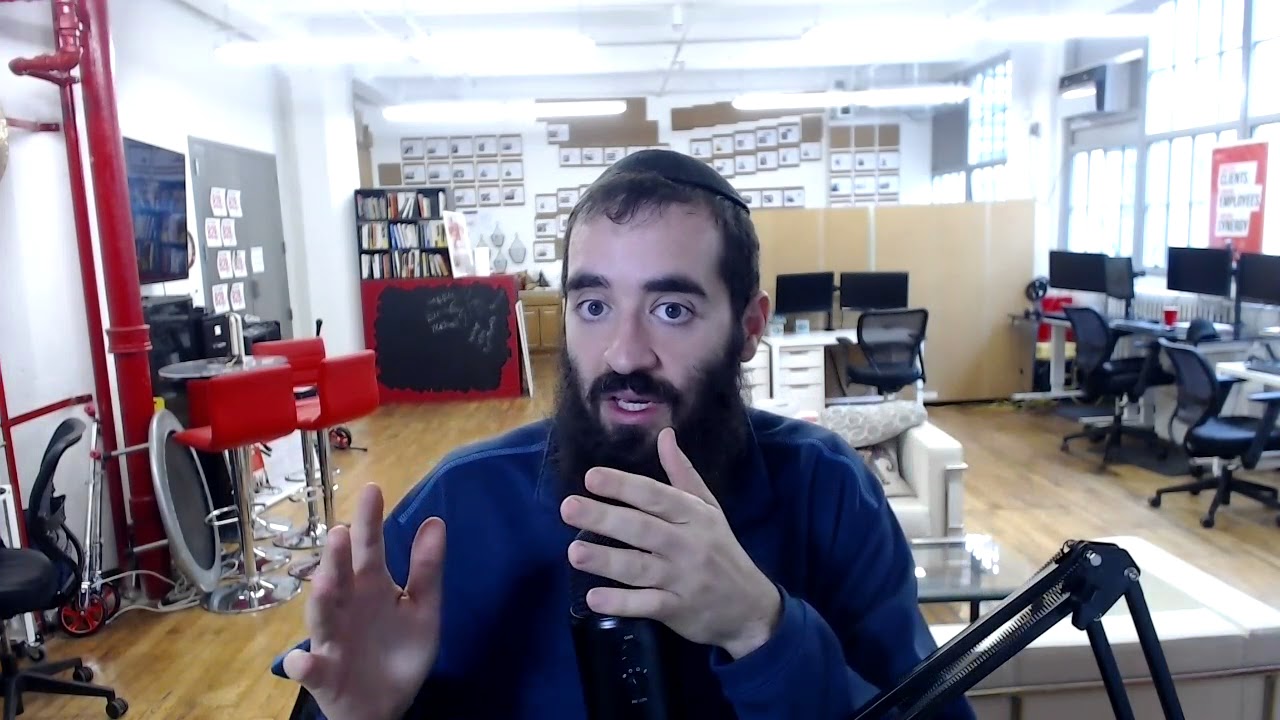
Joe Apfelbaum, CEO of Ajax Union, breaks down how to control what shows up when someone searches your name. The strategy: identify which top results you want to own, create 10-12 pieces of content per category across blogs, video, social media and news, then use SEO and link building to push them higher. He's generated over 10,000 mentions of his own name.
Chapters
Hi, my name is Joe Apfelbaum and I'm the CEO of Ajax Union. I'm here in the office today. It's Friday. It's a beautiful day. It's raining outside, but I love it when it rains. And on Fridays we send all of our employees home. So you can see I got the place for myself. Everybody can work from home and I get to be in the office. So much fun. So I wanted to talk to you today about reputation management. Now sometimes people write things about you online. And you totally don't approve of it. So what can you do in order for you to be able to own your own brand? So if you search for Joe Apfelbaum online and you quote it, you'll see that I have over 10,000 mentions of my own brand name. And most of those are for me, for Joe Apfelbaum that I created myself. Now, the question I would ask you is, do you, are you intentional with the top 10, top 20, top 30, top 100 results that come up for your own brand? And if the answer is no, you're not intentional, you're not in control, now's a great time to control that. So there are 3 steps to do that. Number 1 is you have to identify the right strategy. What are you going to do? What do you need to replace? What are the first things that you want? What do you want number 1 to be? Number 2, number 3, number 4, number 10, number 20, number 30, number 100? What would you like to see in the top 100 results of Google so that when your customers or your fans or your followers go there, You could be sure people are Googling you. You might not be Googling yourself often enough, and I highly recommend you Google yourself, but please do it in private. I don't want you to get arrested. Just kidding. So step number 1 is identify your strategy, figure out what you want to do. Step number 2 is create the right assets. A lot of people, they're just like, oh, I want to be number 1 on Google. I want to own my results. I want to just get rid of everything else. You can't get rid of things. What you can do is you can be proactive and have a strategy. So you create the right assets. I mean, Plan out a strategy of what type of content you're going to create. Are you going to create images? Are you going to create video? Are you going to create blog posts? Are you going to create articles? And have all those assets available and know what you're going to be talking about. Somebody once said, Joe, I don't want to be popular. What should I do? I said, what you can do is you can start organizations and other personas with the same name, and we can create strategies around those personas and those organizations if you yourself don't want to be popular. Or if you don't want to be popular about what you're doing, you can be popular about something else. But when somebody searches your name, We can create so much content, but we need to have the assets ready first. So identify what assets, what subjects you're going to be talking about. Why do you want to fill up the first 100, 200, 300 pages of Google? And what are you going to do? How are you going to do it? Then you go to execution, actually doing. A lot of people start with the doing and they're going to tell you, oh, just do some SEO and just add some things and whatnot. You don't want to do that. You want to first identify what the issue is and what do you want to put there. Then you want to create the right assets. And the third step is execution. And there's 3 components when it comes to reputation management. There are 3 components and most people just pick one of these components and they're missing the picture and they don't get the results. Now there's never a guarantee that you're going to be number 1, number 2, number 3, or whatever. But I can tell you right now from my experience and owning my own brand name and talking to many, many clients about this for a really long time, I can guarantee you that you will get some of this stuff onto Google and push off some of the other stuff. So this is what I recommend you do. Step number 1 is I want you to create a tremendous amount of content. Once you understand what assets are, I want you to create content in like 12, 13, 15, 20 different categories. You may go, what are you talking about? What are categories? When I talk about categories, I'm talking about blogging, articles, directories, social media, video, images, news, press releases. I want every category that Google has because Google has something called universal search results. So I want in every single category for you to create at least 10 to 12 pieces of content in each category. Okay? So this is content creation strategy number 1. After you create and you have that and you're pushing it, that's something you can control. Something you can't necessarily control is to replace content. You'd be like, what do you mean replace? So let's say for example, you're in the Washington Post and you want to replace the content there. You can speak to the editor and see if you can replace the content. Say, hey, my name is spelled wrong and tell them how to spell your name correctly. Which would be a different spelling than you would want people to search for, and they would replace— so there are creative ways that you can get them to change the article in a way that it wouldn't necessarily come up on search. And also you can have a strategy to replace content on their website by creating other articles and other information and commenting on other articles. So when somebody searches your name, Google will show that domain once or twice, but it won't necessarily show that article. It's very interesting. Google's not going to show for the first 10 results on Google one domain name, right? So if you go into that domain name, you try to get other articles, you have a proactive approach to replace the ranking article with a different article and then get tons of links pointing to that article and do tons of organic SEO to replace the links. So if you have 6 items on your top 100 that you want to replace or in the top 10 that you want to replace, you need to have 6 replacing strategies to replace the content on there, either actually replace the content or create additional pieces of content on those news sites or additional press releases that will help you, or additional reviews on review sites. So there are so many different categories you can pick. Figure out the categories in the top 100 right now, pick the right categories. You might want to create some podcasts, you might want to create some videos, you might want to create— there's so many different things you can do. But the key is you have to upkeep it, otherwise it goes away. You have to make sure that it's relevant, you have to make sure that it's linking and all that stuff. So number 1 is creation, number 2 is replace, and number 3 is my favorite because I love to find a better way. It's guerrilla tactics. Other people call it hacking, but guerrilla tactics. I'm going to give you one guerrilla tactic. If you understand the 500 items that go into Google's algorithm, you'll understand that one of them is CTR. CTR stands for click-through rate, and I can't talk a lot about this because I don't want them to change the way things work, but automatically Google's algorithm shows favor to things that people click on. So if you're going to click on your own link, you search for your name and you click on that link, you're giving it more power because the algorithm automatically is going to give it more power. So the last thing you want to do is ever click on it. But knowing that, I can reverse engineer and say, okay, so once I know what I created and what I replaced, I can proactively find the articles I want to rank and tell Google's algorithm, automatic algorithm, by clicking on those from various different IPs, from various different countries, from various different states, from various different points of devices, phones, and make other pieces of content more relevant. Reverse engineering Google. That's all I'm going to say. Just reverse engineer Google's algorithm and do guerrilla strategies, also known as hacking. I wouldn't hack Google ever, and I wouldn't recommend anyone do it, but there are ways to get what you want by being smart and using your noodle. Hopefully this helped you. If you want to contact me, you can email amazing@ajaxunion.com. I'm happy to help you. What we do is ajaxunion.com. We're having a bootcamp where we teach people how to come up with their own marketing strategies. You can go to ajaxunion.com/bootcamp and you can watch the webinar there. Thank you very much. I appreciate you. I appreciate you. I appreciate you. Thanks for watching this. I got to run to my next call. They're waiting for me on the conference line. Bye.
More from Joe


How to Beat the Algorithm: Remove Hidden Watermarks & Scale Content with evyAI









AEO & GEO: SEO's Future Explained! Master Answer & Generative Engines! #shorts