
Day 12: Self Storage Occupancy Rates Explained: What's Good, What's Great, What's a Red Flag
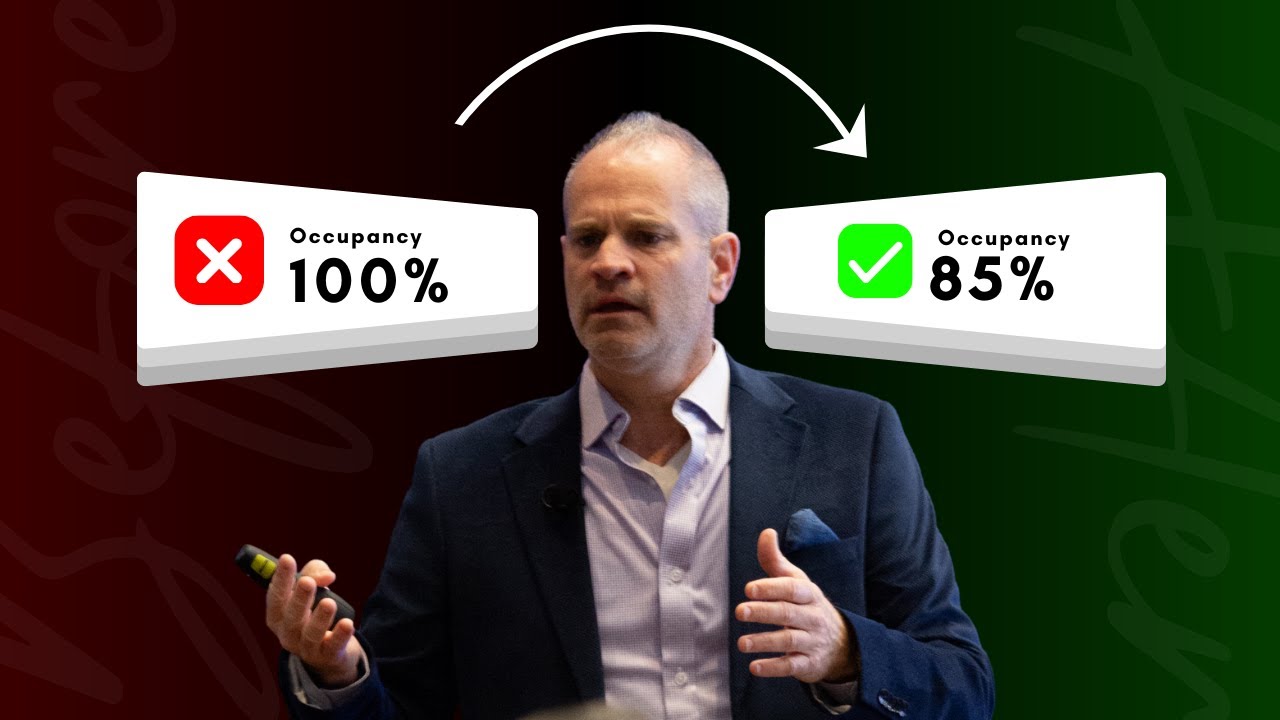
Joe Downs explains why occupancy rate matters more than filling every unit. The sweet spot is 85-90% occupancy, not 100%, because higher rates at lower occupancy generate more revenue. When you hit 90%+ occupancy, test 5-10% rent increases on new move-ins to optimize pricing.
Chapters
All right, congratulations! You made it. We made it to day twelve of the Storage One Hundred series. I'm Joe Downs with the Storage Mastermind. Twelve days. Hard to believe. A dozen. It's as many kids as my mother had, actually. All right. Before we get going, though, feel free to hit the like button now and remember to subscribe. Just do it now so you don't forget, so you don't miss the lives and when these drops. At the end, if you stick around, I'll tell you why you should share when we're all done here. All right. Today we're going to dive into the single most important metric in self-storage, occupancy rate. It's not just about filling units. It's about finding the sweet spot between the full units and the maximum revenue. We need to challenge the conventional wisdom here that 100% occupancy is the goal. It's not. The goal is actually revenue optimization, and that often happens in the 85 to 90% range. We're going to define what good and great occupancy truly looks like for your facility. But first, let's start with the basics of how this foundational metric is calculated. So we just framed the discussion, right? Occupancy is key to the revenue. So what is it? Well, it's simply the percentage of your units that are rented at any given time. It's the foundation metric because it directly signals your potential revenue. High occupancy means strong demand, which gives you pricing power in the market. Low occupancy tells you something is wrong with your pricing, your marketing, or your operations. We use it as a pricing signal, right? It's— if it's high, we raise rates. If it's low, we adjust our strategy. Generally, it's the first number you check every morning because it reflects the overall health of your business. So let's look at where your facility should fall on the industry scale. So establishing that occupancy is the vital sign for your business, right? What's a good number? Well, it depends on your market. So we— but we do have clear industry benchmarks. So if you are below 80%, you're struggling. You have a fundamental problem with pricing or visibility or maybe management. Good range is 80 to 85%. This is healthy, but you still have room to push rates and improve marketing. A great range is 85 to 90. This is the optimal zone where you have strong demand, maximum pricing power. This is where we call it stabilized. And then once you cross 90%, you enter the excellent. I always have trouble with not wanting to be 100, but you enter the excellent but risky zone. And it's only risky because you might be leaving money on the table. The goal is not to be full necessarily. The goal is to be optimally full, which means maximizing revenue per available unit. So to truly understand your performance, you got to look at beyond the simple unit count, which brings us to the 3 types of occupancy. All right. So now that we've defined that the optimal range is 85% to 90%, we need to understand it's not a single number. There are 3 types you must track to get the full picture. First is physical. Physical occupancy is just a simple unit count, just like we discussed. Easy to track, but it ignores unit size and square feet. The second is square foot occupancy. This is much more accurate because it accounts for the difference between a 5 by 5, for instance, which is 25 square feet, and a 10 by 30, which is 300 square feet. So if your physical occupancy is 90%, but your square If your feet occupancy is 80%, you have too many large expensive units sitting empty. The third and most important is economic occupancy. This measures actual revenue against potential revenue. So economic occupancy reveals the impact of discounts, delinquencies, or below-market rates. You could have a 90% physical occupancy but only 75% economic occupancy. That might mean you're giving too much away. Understanding these 3 types is crucial, especially when we discuss why 100% is a failure, not a success. All right. So that's the 3 types of occupancy. Now let's tackle the biggest myth in self-storage, that 100% occupancy is the goal. It is not. If you are 100% full, you're leaving money on the table. You likely are, plain and simple. It means your rates are too low. You could have charged 10% or 20% more and still maintained a healthy 90% occupancy. When you're full, you have no inventory to rent. You turn away every prospect who calls, sending that revenue to your competitors. You're also losing pricing power. You can't aggressively raise rates because you have no buffer if a tenant moves out. The sweet spot is having a small amount of vacancy, that inventory, so you can constantly test higher rates and capture more revenue. Only way to grow revenue is through rate increases, and 100% occupancy locks you into your current pricing. All right. Now that we've established that 100% occupancy is bad, let's look at the math that proves it. This is the core trade-off in self-storage: occupancy versus revenue. You can always fill your facility if you drop your rates low enough. But look at the numbers for this 100-unit facility. Scenario A, 85% occupancy, but, but a higher average rate of $150 per unit brings in $12,750. $12,750 a month. Scenario B, almost 95%, almost full, or is 95%, almost full. But the lower rate of $125 means they're only bringing in $11,875. That's nearly $1,000 a month less, or 10 grand a year just to have 10 more units rented. This case study is proof that pricing power beats occupancy percentage every single time. You might be leaving money on the table if you're chasing 100%. So the question becomes, how do we find the sweet spot that maximizes revenue, not just units? The key to this is active management and rate testing. You can't just set a price and forget it. We use a clear rate testing strategy. When your occupancy hits 90% or higher, you should think about testing a 5 to 10% rent rate increase on new move-ins, or like we call it, your street rate, your advertised marketing rate. If your move-in volume stays strong, keep raising rates. If it drops too low, you've hit the ceiling. Remember to make seasonal adjustments though. Push rates aggressively during the peak summer months when demand is usually highest. Then in the off-season, if occupancy dips, you might need to offer small promotions to keep occupancy above 85% and avoid further revenue dip. Finally, look at your unit mix management. If your small units are full but your large units are sitting empty, You might have a pricing misalignment. Raise the price on the full units and promote the empty ones. These strategies help you constantly adjust and find the revenue-maximizing sweet spot. But you also need to know when things are going wrong. Knowing how to optimize is one thing, but you also need to recognize the warning signs that your facility is underperforming. These are occupancy red flags. So if you see your occupancy declining by 5% or more over a few months, That's a serious problem. It's a sign that there's a major pricing area, new competition potentially, or a breakdown in your operations. The biggest red flag we've talked about though is a stagnant revenue at 100% occupancy. If you've been full for 3 months straight, you're underpriced. You are leaving thousands of dollars on the table. If you're listening to this and you own a facility and I'm calling you, stop listening now. I kid. But seriously, this is, this is important. You're, you're— we hear this from sellers all the time. You know, we're 100% full and we're the lowest rates around. They're leaving a lot of money on the table. Now, they gleefully do it. So who am I to judge? I'm just there to buy it. But watch for a wide variance between those unit types. If your climate-controlled units are full, but your standard units are half empty, Your pricing, your pricing might be out of whack for that market. And then lastly, extreme seasonal volatility. If your occupancy swings 20% between summer and winter, you might be relying too much on your temporary demand and may need a better year-round pricing strategy. So you got to recognize these red flags. That's the first step to this. All right. So let's talk about the specific actions you need to start taking today. Once you finish the series. Now that we've covered the theory and the warning signs, let's wrap up with 3 critical action steps you need to implement right away. First, you got to master your occupancy metrics. Don't just track physical occupancy. You need to calculate physical square foot and economic occupancy every single month to get a true picture of the performance. Second, test rate increases at 90% plus. That's what It's the golden rule. When you hit 90%, you're, you're stabilized. Raise your rates on new customers. New customers. Not— we haven't talked about existing. New customers by 5 to 10% and see what happens in the market reaction. And then lastly, you got to analyze your competitor occupancy. Call 3 to 5 nearby facilities monthly. Yeah, you pretend you're a customer, ask about their availability and pricing. This is critical intelligence for, for knowing your market. All right. If you found this data-driven approach helpful, please hit the like button. It tells YouTube this content is good. Again, subscribe so you don't miss the rest of the Storage 100 series. And every 2 weeks when I do a live where you get to ask questions, I might have guests on. And then please also share this with another investor who probably needs to stop chasing 100% occupancy. They will thank you later.
More from Joe



The tenant only paid for the first month! #selfstorage #horrorstory #realestateinvesting

What happens when a storage tenant stops paying? #selfstorage #realestateinvesting #storagemoguls





