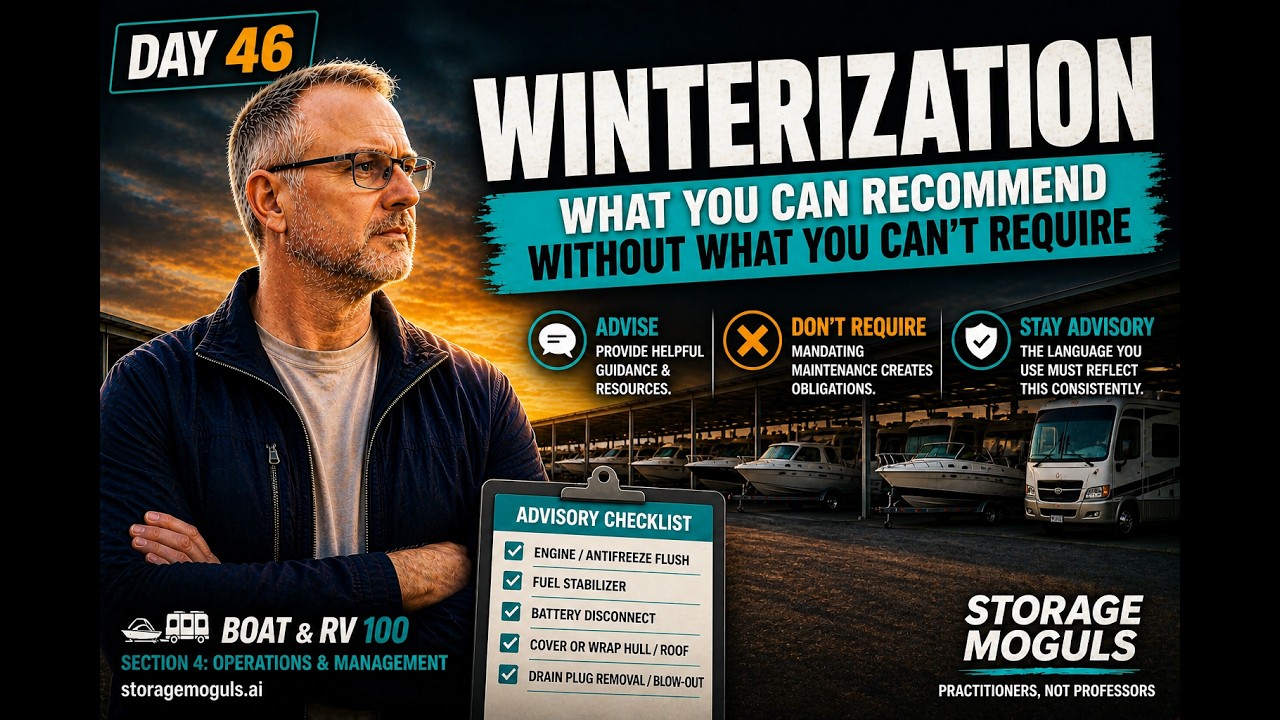
Joe Downs explains why boat and RV storage operators should recommend winterization to tenants but never require it, since requirements create legal liability. He provides sample language for leases and signage, a winterization checklist, and timing advice for September outreach.
Chapters
Welcome to day 46 of the Boat and RV 100 Series. I'm Joe Downs with Storage Muggles, and today I'm going to walk you through one of the most misunderstood operator responsibilities in this vertical: winterization guidance, and specifically the line between what you can recommend and what you cannot require. If you want more information like this on the regular and a place to learn and a community, That just keeps on giving, you should join us at storagemuggles.ai. We're creating storage moguls every day, one facility at a time, and we're a community of people just like you. Yesterday they were becoming interested in storage, tomorrow they're buying their first facility, and in between they're learning how to do it with great education, mentors, and guardrails. It's your choice. You can go it alone and risk it, or you can join us and remove a lot of the risks Lurking around every corner. Start for free. You can move along at your own pace, and it's really, uh, it's really a great community. I've been saying it every day. Hope you join us. Uh, but let's get into today's episode because the— this distinction between what you can and can't do, or can and shouldn't do, matters operationally and legally. And most operators don't think about it until something goes wrong. Here's the scenario. It's October, fall move-in season's underway. Tenant pulls in with a boat that hasn't been properly winterized. You know that if it freezes before they deal with it, there's a risk of damage— cracked engine block, frozen water lines, degraded hull. You want to protect the tenant's asset because that's the kind of operator you are. You also want to protect your facility from a situation where a tenant blames you for damage they caused by neglecting their own maintenance. So what do you say and how do you say it? The answer is you recommend, you advise, you provide resources, but you do not require, mandate, or enforce. The distinction is more than semantic. It carries real liability implications, and the language you use in your communications, your lease, and your verbal interactions with tenants Needs to reflect it consistently. Let me be precise about why the line between recommend and require actually matters. When you require a tenant to perform a specific maintenance on their vessel in writing, in your lease, or in a verbal directive, you're implicitly taking on responsibility for verifying that maintenance was performed and for the consequences If it wasn't, if your lease says tenant must winterize their boat by November 1st and a tenant's engine cracks in December freeze, your requirement language becomes part of the conversation about who bears responsibility. Did you verify they complied? If not, did your lease create an obligation you didn't enforce? These are the questions you don't want to ask. You don't want asked when you say something like. We recommend tenants winterize their boats before the first freeze. You're providing a helpful advisory service with no enforcement obligation attached. The tenant retains full responsibility for maintaining their asset. You've done your part by informing them. Your lease, your signage, and your verbal guidance should all stay on the recommend side of this line. The language that creates risk sounds like Tenants are required to winterize their boats by November 1st, or failure to winterize may result in termination of your lease, or the facility reserves the right to inspect boats for winterization compliance. All of these sound reasonable. All of them create obligations you are unlikely to enforce and liability exposure you don't need. The language that protects you while still serving the tenant sounds like— We recommend you get your boat wrapped and make sure it's completely winterized before the first freeze. Or as a courtesy reminder, winterization protects your investment. We encourage you to schedule service before temperatures drop. Or we've put together a winterization resource guide for our tenants. It's in your welcome packet and available at the office. Same intent, zero enforcement obligation, full tenant advisory value. Provide this checklist as a printed card, a PDF in the welcome package, or a page on your tenant portal. The framing everywhere is we recommend, not you must. This is a service you're providing to help tenants protect their investment. Most tenants appreciate it. Many haven't thought through every item on this list, particularly new boat owners. Checklist also reduces your inbound calls in spring when tenants discover winterization-related damage. And want to talk to someone about it. When you've already communicated this in writing in the fall, the conversation starts from a different place. Here's a few additional operational notes on winterization that don't fit neatly into the recommend versus require framework, but matter for running a facility well. Snow load on covered spaces is your responsibility, not the tenant's. If you have covered storage and snow accumulates on the structure to a point where it poses a risk to the stored vehicles, You need to address it. This is facility maintenance, not tenant maintenance. Check your covered structures. Make sure they're significant— they're durable for significant snowfall during winter months. Battery maintenance is a related issue. A tenant whose RV battery dies while in storage may blame the facility, particularly if they weren't informed that batteries discharge over winter and should be disconnected or maintained. Include battery maintenance in your winterization guidance, a minor addition that prevents a disproportionate number of complaints in the spring. And seasonally, the best time to communicate winterization guidance is September, before the fall rush hits, before tenants are distracted by move-in logistics, and while there's still enough lead time to schedule professional winterization service if they need it. Let's talk about how this lands in tenant communication specifically here. Your fall communication sequence, the outreach you do in September and October to manage the move-in season, and should include winterization advisory. Keep it brief and helpful. One paragraph in your September tenant letter, something like, as we head into the fall, we want to share a friendly reminder about winterization. Proper winterization protects your investment through the colder months. We've included a quick checklist in this letter with recommendations for, for both boats and RVs. As always, if you have questions about your space or need help connecting with a local service provider, give us a call. That's it. Helpful, advisory, liability clean, and it demonstrates the level of service that keep tenants renewing year after year. I'd recommend personalizing it by asset type if your tenant communication system allows. Boat owners should get the boat winterization tips. RV owners should get the RV version. It takes one extra step in your communication platform and it makes the message feel tailored Rather than generic. Here's the frame. Your job is to advise tenants, not to maintain their assets. Recommend everything, require nothing. Provide resources. Stay on the advisory side of that line. You've done right by your tenants and right by your facility. All right, next up, day 47, security for high-value assets. What boat and RV tenants actually expect. And we're going into the security standard here. So fencing, cameras, lighting, and the insurance angle that most operators overlook. Please like this video if the recommend versus require distinction clarified something you were fuzzy on. That's exactly the kind of thing that matters before you sign a lease or send a communication. And subscribe so you don't miss day 47. The security episode covers what tenants storing 6-figure assets actually expect of you and where most facilities fall short. And share this with a boat and RV operator heading into their first fall move-in season. The winterization conversation is happening right now at facilities across the country. StorageMuggles.ai has the full seasonal operations framework for boat and RV facilities, including tenant communication templates for fall move-in. It's free to join, so join Storage Muggles. Learn how to advise well, require carefully, serve tenants like they're storing something that matters because they are. See you tomorrow.