
What Brokers Are Really Thinking When Your LOI Comes In
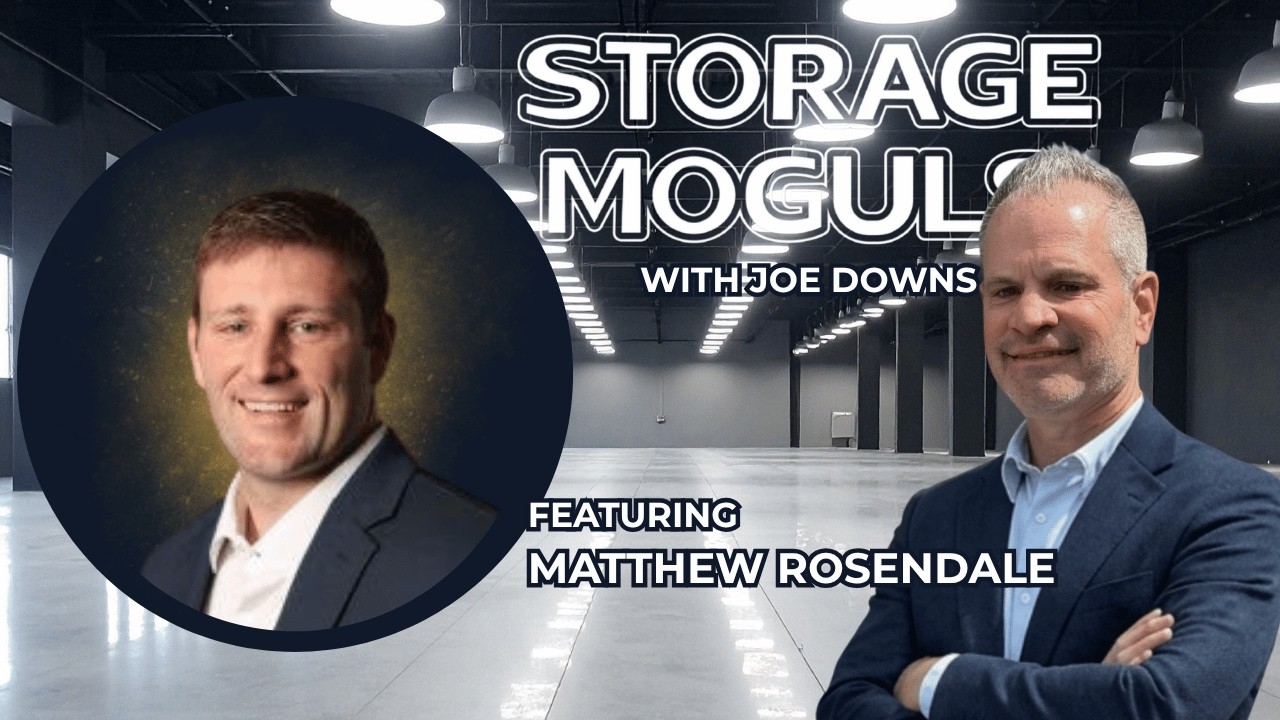
Joe Downs talks with Matt Rosendale, a broker at Lindsey Self Storage Group, about what happens when your letter of intent lands on a broker's desk. Matt breaks down how brokers qualify buyers, why a phone call beats email, and what mistakes kill deals before they start.
Chapters
My guest today has been on the other side of the broker call for nearly a decade, deciding which buyers are worth calling back and which ones get passed. And last year he went out and bought his own storage facility in Minnesota for the first time with real money on the line, his own money. Here's what I want to get into today. When a listed deal hits the market and it fits your criteria, what actually determines whether you get the call? Because it's not your capital. It's not your market knowledge. The broker already decided whether you're worth the time before you ever saw the deal. Today, Matt's going to tell us exactly what that decision looks like and what the buyers who get to the closing table do differently. I'm Joe Downs. Welcome to the Storage Muggles Podcast. After acquiring 20 facilities across multiple storage verticals, over $50 million in assets, I've seen this business from just about every angle. And the one thing I know for certain is this: the people who succeed learn it from someone who's already been through it. That's why this podcast exists. Every week we bring you the operators, the lenders, the buyers, and the industry pros who've done real deals so you can hear Clearly and exactly what it looks like, what went wrong, and how they made it to the closing table anyway. Because as Storage Moguls, we do one thing better than anyone. We take people from zero self-storage facilities to their first one. That first deal is the hardest one you'll ever do, and it's the only one that changes everything. But I'm fired up about today's conversation and my guest. Matt Rosendale is a broker with the Lindsey Self Storage Group A firm founded by John and Alan Lindsey with a specific mission to help people enter and succeed in self-storage. So our interests are very aligned there. Matt has spent over a decade in this business representing sellers, connecting buyers, and living inside the deal pipeline. And last year he went out and bought his first storage facility himself. As I mentioned, Matt, welcome to The Storage Moguls.
Awesome, thanks for having me, Joe. I appreciate it, excited to be here.
I'm super excited for this as well. I've known you for a long time, so love, I'm gonna come at you from angles you're not expecting today, Matt, so.
Cool, I like it. Hope you're ready. I'm ready.
First, as I told you before we started here, I'm gonna ask you a couple of true/false along the way. There are right or wrong answers though, Matt. This is not an essay question. All right, you ready?
I'm ready. Bring it on.
All right, you're on. I mean, there's a lot on the line for you here as a broker. You know that.
Uh, you really need to have a great— I really don't have a great rebuttal to that other than I'm just gonna do the best I can, sir, just like I do with every listing I have.
I think, I think this one's gonna start with a little bit of a layup for you. All right, we're gonna get warmed up. True or false? In most self-storage transactions, the seller pays the broker's commission, not the buyer.
True.
All right, you are one for one, Matt. The broker commission comes out of the seller's proceeds. Typically, I would say it's like 98% of transactions.
Yeah, I would say the majority of them. Yeah, for sure.
Going around a broker doesn't save buyers money, which is what some buyers think. It removes the person who knows how to close the deal. So, all right. Matt, walk me back. Well, let's say this. Every guest has a path, and the path always tells you something about how they see the business, right? Everyone I bring on here, I want to understand. Walk me back. What were you doing before brokerage? Before you got it, were you in self-storage before you were a broker in self-storage? How did you— were you a broker before you were a self-storage broker?
Yeah.
How did you end up in self-storage? What was the moment you realized this asset class plays by different rules?
Yeah, so I got— I was not— didn't have any experience in storage or real estate before I got into it. I actually went to school for teaching as a history teacher. So clearly I'm using my degree as it was intended. And I taught for about—
Did you ever teach? Did you ever teach history?
Yeah, I taught for 7 and about 7 and a half years.
What'd you teach?
So I actually never got a full-time gig.
Self-storage history?
Yeah, right. No, lots of other history, but almost everything in the history realm for high school and middle school.
Do you specialize? Like, was it world history? Is it European? Is it—
Normally, yes, but I graduated in 2008, so there weren't really any jobs out the gate. So I started substitute teaching Immediately. So I had a ton of long-term substitution jobs for teachers that were out for having a baby or other various reasons. So I never actually had like a full-time gig. It kind of got to the point where if I leave, I need to do it now because there just hasn't been that opportunity. And I worked in—
Okay.
I actually worked as a server serving tables at night too. So I was like, double duty for 7 and a half years. So after that, I actually met a gentleman at a table I was serving who worked for an industrial gas company, and I applied for a sales job there. He got me in, started doing sales there, ended up in Lancaster, PA, and by happenstance had a neighbor who was in self-storage. And said, hey, you do sales, you want to make cold calls and get into real estate and do self-storage? I was like, sure, I could do that, no problem. I didn't really know what I was getting into. Ended up interviewing, got the job with my first brokerage firm, and I think it just allowed me to go in with no experience in real estate, no experience in self-storage. So I was super fresh-minded and learning everything.
But experience teaching and experience serving.
And sales, yeah. And industrial sales.
Right, and sales. Don't underestimate how much that played into your success as a broker.
Yeah, no, that's fair. And I would tend to agree, but at least the storage aspect was totally fresh face. So I could come in with a totally blank slate and just that, well, obviously that's what I did and learned from there.
Yeah. That's when I said in the opening, a lot of our interests align, that the fact that you're with the Lindsey Group and the fact that we do what we do. Um, I told— we tell people all the time, you don't need experience in self-storage to come into this business. You need all the other stuff, the intangibles, the stuff you can't coach, right? The stuff you can't teach, or we can't teach. The desire, the will, the grit. In your case, um, as a broker, what suited you was the ability to teach.
Yeah. Right?
Because I'm sure you're doing a lot of educating with, especially with first-time buyers about the process. But then as a server and in sales as well. But I'm thinking about the server part more than even the sales. The sales, sure, you know, that your broker likes that. But the service part, you know, the customer service part, how to handle people, talk to people, whether it's getting a listing or facilitating the buyer, you know, that's think about the Situations you dealt with in restaurants, right?
Yeah.
And calming people down and making the— you laugh like they're—
I worked in a casino, so I saw a good amount of things, so.
But all those are all the intangibles. And this is what I try to tell people all the time. It's, we'll teach you the industry knowledge, the industry stuff. What I can't teach you is what you're bringing to the table already. And people completely discount it. And a lot of times that's more important. All right, so Lindsey Group, you were at another brokerage before. What drew you to the Lindsey Group? What's their mission? Who are they?
Yeah, that's a great question. So, about 3 and a half years ago, well, 4 years ago, my wife and I decided we wanted to move south, specifically South Carolina. We had some family down here and her parents were going to be moving down here when her dad retired. So, We said, if we're going to do it, we got to do it now. The kids are going to be getting into school soon. We wanted them to have some type of consistency with their school. So I reached out to John. I actually knew John Lindsey from going to a couple shows and talking to him there, knew about what he had done with Lindsey Self Storage Group, him and his brother. So I gave him a call and just said, hey, I'm moving south. To Charleston. My current firm doesn't operate in the South, only in the Northeast. So is there any potential opportunity to join the team? And he said, sure. And we had a conversation, spoke to his brother about it, joined the team not shortly after that. And really, honestly, what drew me to it is John and Alan are genuine, awesome, good guys, great to work with, great to work for. And they care about Us on our team, not just from the brokerage side of it, but as a person and as a human being and as a family. So there's a lot of emphasis on, hey, you've got a wife, 2 kids, 3 dogs, like that, you know, that comes first. So it wasn't just all brokerage. Of course, that's important, right? But that really kind of was a big part of it. It's just a great atmosphere, great team to be a part of. We all get along and have a good time.
That's great. And their mission, so they're very family-oriented, which is, that sounds awesome. What is their, where are they in the industry? In other words, you know, Storage Moguls that we built, we're clearly trying to take people from 0 to 1. I mean, we'll help them with their second, third deal, of course, but the most significant impact we can make is that first deal. Right, I know nothing about this business. I'm working a 9-to-5 job. I wanna do something different, or I'm a real estate investor and I wanna get into storage. We take them from that 0 to 1. That's like, if you said, what do you do best? That's it. Where does the Lindsey Group fit into the whole equation, do you think?
Yeah, so I would actually say we would fit into all of those aspects in regards to we've sold properties. The smallest property I ever sold was $60,000. And the largest property that we've sold is $90 million. So, uh, wow, we kind of— yeah, we kind of fit the— we kind of fit all along that realm. So whether it's dealing with, uh, first-time buyers, second-time buyers, private equity, uh, real estate investment trusts, uh, all everything across the board, uh, so it's, it's really kind of fitting into, to all of those aspects. I like working with first-time buyers. I like working with buyers that have bought 20 properties or 100 properties. So it's kind of all across, all across the board in that regard.
$60,000?
Yeah, it was a piece of land. So, you know, it wasn't actually a storage facility, but—
Was it a unit?
Yeah, one. Yeah, one unit.
A shed?
Yeah, one shed. Yeah, it was an expensive shed.
Let's talk about your Minnesota deal.
Yeah, sure.
Share with me, not just the deal itself. Here's my questions. Why did you decide to buy one? I'm glad you did. When you walked in the buyer's shoes, what was that like? And did it give you a better perspective about how to work with your buyers now that you've seen both sides of it? And then tell me about the deal.
Yeah, certainly. So I think, uh, why I decided to get into it obviously is, uh, I've helped people buy and sell a number of properties across, uh, across the country in the past 7+ years. And, uh, you know, I, I had the opportunity to get into buying one myself. I see what storage can do and, uh, in regards to cash flow, in just regards to building equity and down the road building some wealth. So that was really the reason for getting into it. And then, as far as being on the other side of— the other side as the buyer, my experience as a broker most certainly helped me navigate certain situations that came up, although every deal is different, right? So there's always different challenges and different things that pop up.
Yeah.
And I think being a broker helped, but at the same time, I was a buyer in that scenario, not, not a broker. So it was the human element of it, of, of understanding the situation the seller's in and understanding the situation that we're in and coming to an agreement and getting a deal done that's beneficial for both of us.
You think it makes you a better broker that you've walked in both shoes?
100%, Joe. I am the one that is answering the phones. So my storage phone is sitting here somewhere. So yes, I am taking the calls.
Wow, you're getting the full immersive experience.
Yep, I'm making the late calls. I'm doing all of that. Now, look, it's a bit of a smaller facility in regards to that, so it's not really that intensive. But yeah, I'm the one taking the tenant calls.
That's part of the business. Yeah.
Oh yeah, it's huge. It's a huge help for sure.
I have found You know, there's a period of our career, you know, in acquiring the 20 assets, which is what I talk about right in the opening, where you're the buyer, you're just buyer, the buyer, you're the buyer, you're the buyer, and you only see as the buyer. Well, we've sold 7 of them. So we've been the seller, buyer, seller, buyer, right? And I now have a greater appreciation. It also helps us negotiate better. Because, you know, what we've— the angles and tactics we've taken as buyer, we now see coming at us as a seller. Actually makes us a better transactor. It makes us a better buyer and a better seller. Because things that used to annoy us because we couldn't understand why they felt that way, said this, took that position, We now, being on the other side of it, understand. And that's helped us with our conversations, whether we're the buyer or the seller. I understand, you know, something simple like, I understand why you're saying this, or I understand why you're taking that position. We took that position on deal 2. Here's where we're coming from. Can we soften this, meet here, understand this, make you feel comfortable this way? Because we need to feel comfortable. It's helped us Because a lot of the sellers or buyers that we're working with sometimes haven't walked in both shoes either, or only typically walk in one set of shoes.
Yeah. I think a great way to sum that up is your— sorry to cut you off. I apologize.
No, go for it.
A great way to sum that up is you now are paying attention to what is the goal of the seller for selling? Why are they selling? What are they trying to achieve? And then you as a buyer—
What protects in the transaction?
Yeah, right. Or protect. Yeah. Sorry for interrupting, but I thought that was— No, no, no.
I love— interrupt anytime.
You sure about this? Yeah.
I was just— it was amazing to be on the other side for the first time, then the second time, then the third time. And then with more and more experiences, you realize, you know what? You could even sniff out the real, the real buyers from the guys that's trying to lock something up. And, you know what I mean?
Sure.
You know what's legit and what isn't at this point. And that, you know, look, that's just called experience, I guess. But I would say, and I think you're agreeing with me, that being on both sides of the coin and having walked in each his shoes, It makes for a better transaction. I feel like we're a better buyer and seller in every transaction we're in because of it. I would agree. Yep. That's awesome. How big is your deal?
Yeah, so it's a little different. We've got— Or small, whatever.
How perfect is your deal?
Well, nothing's perfect, but it is— It was the right deal for you. Yeah, it was the right deal for us. Yeah, so I do have a partner in it, but It's a former shopping center that was converted into self-storage, but we also have 2 retail tenants. We do have a dance studio and then a franchise gym, which we actually just bought the gym, so we own the gym business too. So we own storage and a gym.
Oh my goodness, you're making all the rookie mistakes.
I actually think it's gonna— it'll be— I think it'll be good for us, but it's totally not what I was expecting. But I think it's a good opportunity.
So I don't want to go down this path too far, but so who's your buyer when you go to exit this? Because you're, you're not a clean self-storage deal now. You've got some retail and—
Yeah.
Well, either way, to the buyer, you've got 2 retail scenarios alongside your self-storage. Yeah.
I mean, the gym business is obviously separate, right? So it's—
No, but it's still, it's a tenant. Who cares?
Yeah, it's a tenant.
It's a tenant. Is your— how big is the storage? How many square feet?
It's about 9,500. So it's a little small. It's all climate controlled though.
So this is all small little thing. Okay. So you're not looking for an institutional buyer anyway.
Your buyers— No, most likely not. Yeah. Our buyers are probably regional buyers, someone local.
Yeah, yeah, yeah, right. All right. That makes more sense. I thought you were telling me it's gonna be like 100,000 square feet of storage.
No, no, no.
2 little retails that are gonna be— No, no, but it's been like, what is this?
Yeah, no, no, but it's been a great— it's been a great opportunity for us so far. It's been, like you said, a great experience on the side for, for helping with brokerage just in general and the little things that pop up that you don't normally think of. But yeah, I think it's been— it'll be— it's a good— it'll be a good deal once we— if we exit at some point.
Very cool. Very cool. All right, Matt, true or false?
Okay, I'm ready.
You ready?
Yes, sir.
True or false? Self-storage has a lower loan default rate than any other commercial real estate asset class.
True.
That is true. You're 2 for 2, my friend. Uh, lowest default rate in commercial real estate even through 2008 and 2009, which was Maybe, maybe the worst years in commercial real estate ever. And because of its low overhead, month-to-month leases, and sticky tenants, as you well know, Matt. Alrighty. Listed deals are part of your business, part of this business, and they always will be. Most first-timers have no idea how to play them. We encounter this all the time. They don't know how to— brokers, they don't know how to talk to brokers. Excuse me. They're scared of you guys, actually. A deal hits the market, it fits your criteria, you reach out, then nothing. Not because the deal is sold, because the broker moved on. This is the scenario I painted in the opening. Matt, walk us through what you're actually evaluating And what the buyers who get the deal do differently, because I'll be more descriptive in my setup for you here. A lot of first-timers feel like they get hot and heavy on a deal. They took the chance, they got the, the OM and your— they, if they do what we tell them to do, they subscribe to, to your group, Marcus and Millichap, you know, all the, all the brokerage houses. So they get— I know the way I tell them is this is the one time you want spam. You want these people sending you the deals. So sign up and give 'em your email. So they get the OM in their inbox, they go through it, they do what we tell 'em to do. They're still nervous as all get out because they've never talked to a broker before.
Mm-hmm.
And they, maybe they send an LOI. They probably don't do what we say, which is pick up the phone and call the broker. They send an LOI, or maybe they call and they don't get you and they leave a message. And I'm not— this isn't about you, Matt Rosendale. That's not this. You're— I want you answering for brokers in general, and then you can tell me how you differentiate yourself. That'd be great. But brokers in general, first-time buyers are scared to work with. They don't know how to work with them. And then, and then their, their fear is validated, and their fear is validated because they do reach out. They do send an offer and they hear nothing back. And I remember this happened to us a lot during COVID when things were crazy and we were sending full price offers and we, it was like we didn't exist, right? It's almost like our offer went to spam. Walk us through, what's the difference between the, in the broker's eyes, in the general industry, the serious buyer versus the unserious buyer? What's the difference? How are you determining, how are brokers typically determining who I'm going to spend my time with on a deal where I have the listing?
Yeah, a lot there. So as far as determining a serious buyer versus someone who's not serious, obviously, if we've got a previous relationship with that person, then— Let's say we don't.
Okay. And I want the first time, no relationship.
Yeah. So first time would be to If there's a listing out there, call me. If you email me, I will eventually answer, but I'm not going to be as communicative through email as I am on the phone.
So— Is that you or is that brokers in general? I know I'm asking it to speak for all of them, but—
Sure. Generally speaking, I would say, in my opinion, that for most brokers, being on the phone and talking with them is going to be more of a long-lasting impression of that person on whether or not you want to, number one, talk to them again, number two, do a deal with them, and number three, put them in front of a buyer to get a deal done. Texting and email is fine, but getting on the phone and actually chatting with someone is totally different than getting a text.
So that's a game changer, having the conversation. Now, I think I might know why, because you just said something that I've never heard anybody say. Whether or not I want to put them on the phone or in front of a buyer— I mean, a seller. A seller. So what are you gleaning from that phone conversation that's giving you the warm and fuzzies about, yeah, this is someone I want to, I want to take their offer and put it in front of my seller? And why are we even having this part of the conversation? What is the risk to you as the broker who took on a seller as a client that would make you say, I'm not sure I want to put someone in front of them?
Yeah. So, so a couple of things. First off, if an offer comes in, I have to put an offer in front of my client. We'll always put that offer in front of my client regardless of whether or not I know that person. Inevitably, the seller is going to ask, what do you know about this buyer? Obviously they hired us for, for a reason. That's one of those reasons, to get a buyer that can get the deal done. And as far as, as what I glean from a conversation with a potential buyer is what are they, where are they in their self-storage journey? What are they communicating what they're looking for with me? And does it make sense? Right. Can they kind of have that level of conversation about self-storage that I would feel comfortable comfortable saying, okay, they seem to know what they're talking about. I've never done a deal with them before, but they're going to provide us with maybe some proof of funds. They sound like they know what they're talking about and they got the cash behind them or they got the finance behind them to get the deal done. Or maybe they're working with a bank that I know or they're working with a coaching group that I know. So like anything that I can share with my seller that says this person's legit is what I'm looking for if they're a first-time buyer.
So thank you for clarifying that. I wasn't trying to get in trouble. Of course, all offers go to the seller. You would check your—
I'm also legally bound to do that too, Joe.
Perform your fiduciary responsibility. I meant beyond that. So thank you for clarifying that for the listener. Beyond that, you've got 3, You got 5, whatever, 5 offers. You put them all in front. You made the point, and this is really where I was trying to get to the meat of it. The seller's going to say, well, what do you know?
Right?
Which one? They're all in a range, or you kick out the ones that are, you know, not even competitive, right? So you're down to 3 competitive ones. Naturally, the next question is, well, of these 3 competitive, which one do we want to go with? Why is that so important? And then we'll come back to everything else you just said.
Yeah. So, so every seller, as we said earlier, usually has a goal that they want to achieve when selling their property. Maybe it's the most amount of money possible. Maybe it's closing quickly. Maybe they want seller financing because they want some revenue after the fact or something along those lines. Whatever their goal is, they're retiring. So whatever— most of the time—
The most important though is actually closing.
Like, I was just about to say that. So you beat me to it. Yeah. So, so really what they're looking for, as you just said, literally, I was just about to say it, I promise that. Yeah, it's, it's the ability to get the deal done and that is probably the biggest aspect of it. And then everything else that as far as meeting their goals beyond that. So anything that I can share with my client and my seller about someone being able to complete a deal all the way through the end. There's a lot of factors that play into that. If there's financing in place, do they have the cash for the down payment or the cash to actually buy the site outright? And then can they prove that, that they have that? So if I— I'll just run you through real quick. If there's a buyer that I don't know, And I've never transacted with before. What can they tell me about themselves or who they're working with or the thought process that they've put into getting ready to buy this asset? Is it just throwing an LOI out there and they haven't thought about what management software they're going to use, if they're going to use a management company, or they've done any research on the market, etc., etc.? And that's kind of a red flag, right? Because then it's just a willy-nilly, willy-nilly LOI. So all of those things, anything that I can say, this is—
And more importantly, uncertainty of closing because they're not demonstrating— sorry if I'm—
No, you're good.
I'm just thinking about in my head where you're going with this. If they're not demonstrating they even understand the industry, how are they going to show up and close? What lender is actually going to lend them money?
Well, yeah.
Well, if you tie up the asset, by going under contract with someone who doesn't really look like they have the ability to close. And everybody loses, right? The seller loses, you lose, your seller— the seller loses faith in you.
Yeah, we wasted time.
Wasted time, right? And now you're back on the market with a stigma. Why didn't it sell before? You know, that can happen. Yeah, yeah, yeah. No, so—
Or if somebody intentionally wholesaled the deal, yes.
Don't even get me started on that.
Yeah, I don't wanna go down that rabbit hole.
Even though we teach it, they still bring me deals to wholesale that are listed.
Yeah.
But we just went over this. Anyway.
We can avoid that topic.
Yes. Here's what I heard from you. It's not just, are you the best offer? It's, are you the most qualified offer? What does qualified mean? Well, it might mean, what's your experience? What's your liquidity? Who's your management team? Are you in a mentorship coaching training program with guardrails that gives you, the broker, and the seller A fair degree of confidence, at least, right?
Or do you have experience outside of self-storage, right? So like, it could be other residential. Yeah.
Um, do you, uh, it doesn't even have to be in real estate, by the way, right?
Sure.
Do you own a business? Um, are you successful at that business? Have you demonstrated a track record of success at that business coupled with cash liquidity, the ability to get financing, and a coaching training program? So there's a lot of variables that make up you as the profile or make up your profile as the buyer is what you're saying. And it's not just first-time buyer is you're out. And it's not just on the— that's one end. On the flip side, it's not just the highest price, highest offer.
Right.
Right?
Yeah. Can you get it done? Honestly, if you call me and say, this is my story and this is why I'm getting into self-storage, this is where I came from. I mean, that's, that's should be part of almost any conversation. If you're calling a broker for the first time and I don't know who you are, you know, tell me your story and why you're looking for storage and where you came from and what the goal is. That's going to give me a, give me a lot more credibility than just saying, hey, I put an LOI in, first time buying a site, but let me know if I get it.
Yeah. Maybe participate in the process.
Yeah.
Matt, um, I'm sure the Lindsey Group does not have this problem, but let me ask it anyway. Are there sellers— and certainly you've probably dealt with them in the past— but there are sellers who still think it's 2021 from a value standpoint?
Sure, of course.
How do we— how do you handle them? How does the buyer handle them? In other words, you guys, I guess, ultimately will take the listing because you want the listing and you, and you want to see what the market will, will dictate. Yeah. Even if this— the seller thinks it's a $2 million asset that's really a $1.5 million asset, how do you handle that? What do you do with that listing? Does it come out at $2 million? And if so, what's the conversation with the seller? Around expectations. And then we're a buyer. We do— or it's a student of ours. They run the math, we check it. They run the due diligence, I should say. We check it. It's a $1.5 million deal. Do they submit the offer?
Yes.
Walk me through from the seller to the buyer and how it's all handled.
Yeah, sure. So when we— any valuation or broker opinion of value that we do, we're going to give our opinion on where we think this would shake out in the market, today's market, right? And sometimes that does not align with what the seller is trying to achieve. And in that case, there's, there's really kind of a couple choices there. First one, maybe now is not the best time to sell. Here are some areas that we can give you that we think that you can improve your value. Let's revisit it in 6 months. Let's revisit it in a year and see if we can get you closer to that number and then take it out to market. Or in some scenarios, depending upon the story or the market, maybe we are willing to stretch slightly and see what the market can bear. And then in other cases, I just don't get the listing and they either go somewhere else or they just wait until they think they can get that number. And then as far as the last bit of your question there on whether or not you should submit the offer, yeah, just put the offer in. As we talked about earlier, I'm going to submit every offer to my seller, and you can't be in the game if you're not actually in the game.
So I want to paint that scenario very clearly though. The seller wants $2 million. They wanted to list it. You're going to take the listing. Because you'd be foolish not to. I'm sure you're having the conversation around, hey, let's see what the market expectations are. I know what yours are, but let's see what the market is. You come out with a listing, it's $2 million. You've done the underwriting to the best of your ability, but you got to make it look like it's $2 million, right? It's really $1.5 the way we all see it. Your internal underwriting might even suggest that, right? But you have to do what you have to do for the client. You still want offers submitted at 1.5, not just because we want to lowball, but because that's really our, our true comfortable Underwriting, normal process we go through, it says it's in that 1.5-ish range. You still want that offer, right? And we should not be afraid— and our buyer, the first-time buyer, should not be afraid to submit that offer to you, meaning should not be afraid to offend you or the seller.
I, I mean, I'm not going to get offended. You know, we get Offers, there's always lowball offers, right? I'm not saying that that's necessarily a lowball offer, but yeah, I would just put the offer in and see what happens.
How would you suggest the buyer put that offer in? Is there a conversation that happens?
Yes. So that's a good question. So I think if we were to put said property out at $2 million and maybe the expectations were $1.5 million and the buyer's like, well, I think it's worth $1.5 million, my response would be, okay, well, Feel free to give me some reasons why you think so. And then if you want to put an offer in, I would suggest that you put an offer in. But I'm never going to reveal that. My job is to get them the best price possible and also guide them through the deal and get the best buyer possible. So I'm never going to say, oh yeah, they'll take that. That's never going to be a scenario. So it's you put your best foot forward and we see if we can make a deal happen.
You think it's valuable to have that conversation? I think it's valuable. What we've learned over the years is, and Jack, I think, who's my head of acquisitions, as you know very well, I think does a great job with this, just calling to say, you know, he might call you, Matt. I'm sure you've been on the other end of these and said, hey, my underwriting's taking me to 1.5. What am I missing? Right. Isn't that— do you, as the broker, appreciate a conversation that unfolds like that versus, I don't know where you came up with $2 million, there's no way this thing's worth more than $1.5 million, what are you, an idiot? Your seller's a moron, take my offer now. You know, like, isn't it a different kind of conversation?
Yeah, 100%.
Doesn't that give you ammo? For the seller?
Yeah.
To say, look, I got, I got 3 offers in the $1.4 to $1.6 area, and the conversations I've had with one of them was this, and I didn't have good answers as to how we arrived at this because these are aggressive assumptions. But, or maybe it's not that. Maybe it's, hey, have you— maybe that leads to a You know, we could get closer to your number if you consider seller financing, because they can make these concessions that the lender— or the lender is the reason that we can't get here because the DSCR, if we want to do it. I guess what I'm trying to say, I want the listener to hear you say and really elaborate on, let's have a conversation. Don't just send me blind offers. Give me Give me the logic, the reasoning, the conversation, because that's something I can have. I can then have a conversation with the seller. But if I don't know any of that, it's just a lowball offer with, with no reasoning and logic behind it. Is that fair?
Yeah, that's fair. I think, um, so yes, I've had those conversations with Jack, and I've had those conversations with plenty of other buyers, and there's no— I mean, Call, and if you look at the OM and the financial data, and you're like, "Hey, you know, I think this expense would be this," etc., etc. Call me. We have that conversation, and we see you know what what each other thinks about it. And then the the other side of that is it is great, and this is what I'm looking for from from buyers as much as they can possibly provide. I want feedback. Right. If I send you a deal or you see one of our listed, listed deals, any feedback that you give me is relayed to, to the seller, whether that's good feedback, bad feedback, whatever it might be. I want feedback because that gives me something that I can go back to my seller with. Right. So yeah, I think those conversations are most certainly important. Me providing as much feedback as possible is just going to be helpful for me to do my job.
All that feedback comes from preparation. And what— look, we spend a lot of time— earmuffs, Matt— but we spend a lot of time, Storage Moguls, talking about off-market deals, right?
Sure.
But I bet you 50% of our deals, close to it, come from listed deals, guys like you. So you have to, it's a major part of the business, folks. And there's advantages, there's advantages and disadvantages to both listed and non-listed. But one of the advantages to listed is a lot of the work is done for you, and now you're just trusting and verifying a lot of the due diligence. So it gives you the ability to be prepared to have these conversations we're talking about right now at a much faster pace because I'm taking the work.
Sorry. Yeah. To add to that quickly, you know, if you're calling me and we say we are your first-time buyer, we haven't dealt before, and you're picking apart the OM, it shows me that you actually spent the time to go through the data and actually work it, do the underwriting. And then I'm like, all right, well, You know, this guy knows, this gal knows what she's talking about and, or what he's talking about. And I can probably trust their assertions a little bit more now. Now I'm a little bit more intrigued about them being a potential buyer down the road. They're actually looking at the deal.
Exactly. It's an opportunity to demonstrate that your new knowledge as a new buyer to a broker. And that's part of building a relationship. Even if this first deal doesn't work out or there's a buyer that's further along or better offer and experience. You've now just demonstrated to Matt that the next time you call about one of his deals, hey, this is someone that, that knows what they're talking about. Yeah, they're not full, you know, they're not just slinging, they're not an LOI slinger. And we've seen them before too. I'm sure you've seen a lot of them. Yeah. Um, so folks, look, listed deals, you just heard from Matt, they, they reward preparation. And part of that preparation is reading the OM and understanding it and verifying or asking questions, poking holes respectfully, but in a way that is collaborative. And they reward speed and they reward buyers who are the easier— the easiest to say yes to. So—
And I'm not perfect, man. There's been times where someone pointed something out and I'm like, all right, yeah, you know, usually minuscule, but I missed that, right? So yeah, I'm not perfect.
I'm trying to think of examples where we've caught you lying brokers. In dastardly evil acts of making mistakes. Yeah, or just overlooking something like, hey, I think it snows more this time of year, or the seller was plowing his own snow. I think we need to increase this budget here, and that's gonna— something like that, which isn't— that's why I said all that a second ago. It's as a joke, obviously, but— You heard it from Matt, and they're not perfect, but they strive to be. Mastery is not a destination, it's a journey. And they're reasonable people to work with. And the more you wanna talk to them and demonstrate that you appreciate the Picasso that they sent out to 5,000 people, look, they're lonely people. Look, he's telling you he wants to talk, so. You heard it right here from Matt Rosenell. You wanna give out your cell phone while you're at it, Matt?
Yeah, I have no problem doing that.
Well, actually, you guys do do that. We'll give you an opportunity at the end. True or false, Matt? I'm 2 for 2, right? You are. This one might get you.
All right.
True or false? First-time buyers regularly outcompete institutional buyers and REITs for storage deals.
Are we talking collectively across the entire country?
Uh, yes.
Are we talking number of deals, square footage, or price?
There's a lot of qualifiers on here. It's a true or false.
True, I'm gonna go true.
Let's say, all right, true is the answer, final answer?
Yeah.
You are correct.
So number of deals, right? Gotta be number of deals.
REITs have minimums, geography constraints, and slow committee processes. So a prepared first-time buyer targeting the right profile can win. All right, Nat. The best deals go to the buyer the broker already knows and trusts. That should be a true or false, actually.
Pin me in a corner there, geez.
And I would— that's not across the board, but a lot of times, because I think that relationship is built before the deal exists. So Matt, if a first-timer called you tomorrow, With zero deals, but after, you know, your conversation, you felt they were, they were serious. What did that conversation need to sound like? And we've kind of— we've sort of touched on a little bit of this, but maybe they'll go a little deeper.
Yeah, I think it's, it's, say it's a— they, they see a listed deal that we just put out, um, we launched this morning, uh, As we said, call me. If I don't answer, I'll call you back. Get me on the phone and say, hey, I'm interested in such and such deal. This would be my first storage facility. And this is what I've done to prepare for buying my first facility. And this is my history and my background and why I'm looking to do it. And it's kind of— I can't remember the saying, but you put a face to someone even though obviously it's not actually seeing that person in front of me versus the digital text message or email where there's no context there. There's no feeling there. There's no conversation. Get me on the phone. We talk about it. And then if you've looked at the deal and there's questions about the deal, ask me questions. Ask me questions about the market. Ask me questions about specific things if you've actually looked at the offering memorandum. Show me that you've done a little bit of quick research into it. I mean, I'll talk to anybody that gives me a call, but I'm more inclined to have a longer conversation with someone that actually shows genuine interest in the opportunity and future opportunities. And I say, and I might be going a little off tangent for the question here, but a lot of people ask me, How can I get access to off-market deals? Or how can I, you know, be your first call? Right. I guess that kind of goes along with what you're saying. What I tell you can't hurt.
It doesn't hurt, right? They got to ask.
Yeah. So, so what I tell people is, if I don't know you, right, I need to know you, even if we haven't transacted before. So what I usually say to people, not that I'm the most popular person out there. But just be consistent with calling me, texting me, emailing me, so your name's in front of me, you know, pretty regularly. Uh, I don't— I have a good memory, but I don't remember every single person I've talked to that's called and said, hey, I want access to off-market deals. Hey, I want to be your first call. If you've only called me once and texted me once or emailed me once, I— I'm sorry, but I'm most likely not going to remember that conversation a year from now. But if you're calling, texting me, you know, not being annoying, but if you're calling, texting me, emailing me, keeping you— or keeping you in front of me for a period of time, yeah, I'm gonna— you know, human nature— I'm gonna remember who you are. And I'm probably gonna remember our conversations, and I'm probably gonna remember what you're looking for. So when a deal comes up, say, oh, this would be a good fit for so-and-so. So I know that's not like necessarily answering your question in the sense that like it's the deal we listed, first-time buyer calling me now, but that phone call may not— that deal may not work, but we've had that phone call and there may be a deal later down the road that does work. And now you've had that conversation and we can have more after that. Does that make sense?
Yeah, no, totally does. Um, dude, should they be prepared to— let's say that first deal, by the time they call you, is already under contract. Could be.
Mm-hmm.
Should they be prepared to talk about their capital and equity position, the target markets they're looking at, the asset type, um, the size, right? I mean, size and, and equity, I guess, kind of Work hand in hand. Yes, for the most part. Um, timeline, decision authority, do they have investors, is it their money, you know, like, is that all part of the first conversation or is that for later?
Uh, I think it, I think it's okay to have it in the first part of the conversation. I mean, I would suggest probably doing that because if you were going to put an offer in on a deal, those questions are going to come up anyway because, as we said before, I'm going to have a conversation with my seller They're going to say, how do you— do you think this person can get the deal done? And I'm going to say, well, this is what I know about them and how they're structuring what they're doing. And if I don't know that, I'm going to ask anyway, right? Because if we have a formal offer, we're going to go back and ask if it's an offer that they're considering, of course.
All right. I wish I should— I'd like to turn this one into a game. Let's, let's do 100 buyers, 100 brokers surveyed. You ready?
Wait, was this a real question? Real true false question?
I'm gonna see how many of these you can get. 100 brokers surveyed. I did not survey 100 brokers.
Okay.
Um, top 5 answers on the board. What gets a buyer blacklisted?
Hmm, it's like a Family Feud question, right?
That's why I said 100 brokers.
Yeah, right. Oh well, over my head, huh?
What do you got?
I would say circumventing the process and going— well, 2. I'm going to say 2. I'm going to cheat. I'm going to say 2. Circumventing the process.
There can only be one number one answer, but go ahead.
Circumventing the process and going directly to the seller.
So trying to go around the broker, around sellers. It's got to be top 2.
I think so. All right.
What's your second one?
I would say for me, my— and we've already alluded to it— my biggest one is, is putting something under contract with the intention of not closing but actually wholesaling it. So assigning the contract to somebody else. Yeah, pet peeve, everything under the sun.
All right, um, give me— I, I would say those are the top 2. Give me, give me what you think, or a couple others. Just think about the worst buyers you've dealt with.
Yeah. Lack of communication, right? So if we've sent you a deal and I don't hear anything for a week, 2 weeks, I'll usually follow up before that. But if I don't— and the follow-up, I don't hear anything. If there's that lack of communication that gives me absolutely no or very little incentive to reach back out again, For whether it's a listed or off-market deal or some opportunity.
The buyer that wants everything and then never responds, right?
Yeah. And the feedback, honestly, like we said earlier, the feedback, the communication isn't just, hey, how are you? No, we're not interested. It's, why are you not interested? Give me a little bit of the feedback right now. If it's real quick, like, this is just not a market we're looking Okay, fine, right? Uh, but give me that feedback, please.
True or false, the majority of storage deals that fall apart do so after the LOI is signed, not before.
True.
True is correct.
Yeah, I'm 4 for 4.
Deal Most, most deal mortality is in due diligence, environmental, title, financing, cold feet. The LOI is the starting gun, not the finish line. I like that. Um, Matt, how can we get in touch with the Lindsey Group?
Yeah, certainly. So, uh, for the entire group, you go to our website, uh, lindseyselfstoragegroup.com, or to Get with me directly. Happy to give my phone number. My email is is matt m a t t at lindsayselfstoragegroup.com. And if you want to spell Lindsay for yeah, sorry. Yeah, L N L I N D S E Y.
It's the old Lindsay. Is that? I think Lindsay Buckingham was E Y or something like that.
Anyway, I don't know who that is.
Ouch! So I did. I was just about to say, did I date myself? Yeah. Well, you you are younger than me. You probably never listened to Fleetwood Mac.
I just turned forty. Oh no, I know Fleetwood. I would, Mac, but I, I just turned 40, so I'm not, you know, I'm not a spring chicken anymore.
All right, um, cell phone? Yes? No?
Yep.
Or you just want email?
No, cell phone's fine. I don't mind. Uh, area code 484-695-0872.
Held on to that PA number.
I love it. Yeah, that's been my number since high school.
That's that. And that's a— wait, high school? Where'd you grow up in PA?
Uh, I grew up in Allentown.
Oh, okay. Yeah, I was gonna say, that's— it's the 610 is our— no, Philly's 215, 610 is the suburbs, and 484 was like you were from the boonies. So that makes sense.
484 was the new one, right? Like, it was the one when they had too many 610s out there, so then they did the 484.
Yeah, exactly.
Uh, when they had to switch to actually putting an area code in. I remember when you didn't have to put an area code in.
I grew up without an area code as well. In fact, my first 3 numbers of my phone number were letters, or first 2 were letters.
Like a rotary phone?
Yeah, but it was LA, which was 52. So then it became 525, but it was LA 5. Anyway, Matt, what's one thing people can do act on today, not next month, but today, like to get started in this business? What kind of advice do you have for them?
Yeah, I think it's getting out there, doing some research, joining some groups that are self-storage-centric, maybe joining a coaching group or a mentorship group that can help you through the process of educating yourself first about self-storage and maybe some of the nuances that come with that, even if you're coming from a different real estate asset class. Every class is a little bit different, so it's definitely important to learn the nuances of it. Can't tell you how many times people have called me and said, well, it's just easy, right? You just, you buy it and you get a check in the mail, right? Like, no, there's a lot more.
I play golf with the guys who are, you know, real estate guys, developers. But I was thinking about building self-storage. I might do that over there. I was like, well, who's, who's going to advise you on it? It's just a bunch of metal buildings with doors on them.
Good luck. Yeah, I've gotten that one too. Yeah, I've got that one too. Yeah, yeah, definitely a little more to it than that.
There's nothing you need to know other than that. Yeah, okay. Um, all right, Matt, are you ready for the last question?
Yeah, bring it on.
All right, um, so, and I, and I, I want you to think about this one before you answer. There's, um, a book called Be Your Future Self Now. Are you familiar with it?
I'm not, but I have a feeling I probably should be.
I highly recommend that you— I always say read, but I'm a hypocrite. I listen to almost every book at this point. So listen or read to Be Your Future Self Now by Dr. Benjamin Hardy. Uh, he was, by the way, a co-author to Who Not How with, uh, Dan Sullivan. I'm sure you've heard of that book.
Yep.
Uh, and he's, he's, uh, then their, their follow-up book, which I think is 10X Is Better Than 2X, but he's also got some other books. But, um, Be Your Future Self Now phenomenal mindset-changing book. Not life— not just— well, life-changing too, but mindset-changing first, which is more important. Um, you familiar with MrBeast?
Of course.
Okay, I wasn't. I have sons, but I am now, first because of the inane things that he does on YouTube. So folks, he's the, the most followed person in the world, uh, on YouTube. And that's basically what the book is about, right?
Yeah.
Especially the beginning of it is his life story, which isn't that long because he started at 17 and he's crazy, crazy famous at 27, or maybe he's 28 now. So it's only been 10 years. But the idea is that he taught us all Accidentally, on purpose, who knows? He was 17. But what he taught us all is that you don't wait to become the person you want to be. You start acting like that person today, right now, from where you are. So 5 years from now, Matt, what are you doing? Not what do you hope you're doing? What are you actually doing? Where are you? You bought one storage facility so far. So what does your portfolio look like? What does your life look like and what are you doing? So first, get that picture in your head 5 years from to now. If you know you got a genie, what does it look like, right? You get your wishes. You got that image?
I do.
All right, I want you to tell me what it is and what are you doing today, right now, to make sure you actually end up with that image you have in your head?
Yeah. So I'm gonna do a little personal, professional. So personal, I'd be the best husband and father that I could possibly be today, 5 years from now, 10 years from now, until I'm gone.
So what are you doing today so that that is just something that is 5 and 10 years from now?
Yeah. Well, it should be, right? What I'm doing for that today is spending more—
You don't have to answer this part, but I want you to think about it.
Okay, fair enough.
Because that's an awesome picture to paint, but you got to start acting that way today.
Yep.
So whatever that means, being the best father and husband, right? You're welcome to answer, but I don't want to put you on the spot like that.
But well, I think part of it is the professional question too. So as far as you said, I own one property now. So 5 years from now would Would like it to be, would like it to be—
I would like.
Yeah, I know. That's the best way to say it. Yes. Yep. No, I need to read the book.
What is it? What is the picture when I said 5 years from today? Was it 100 facilities? Was it 20? Was it 5?
Yeah. 5 years from now is 5 facilities with decent cash flow. And then brokerage-wise, It's— try not to use too specific, but—
Sales volume, maybe?
Yeah, I mean, it would be sales volume. Yeah, it would be the— I don't want to go into the nitty-gritty details of the sales volume, but it would be continued and improved sales volume.
Okay. So what are you doing today to make sure you have 5 facilities in 5 years?
Yeah, so working with my partner on what our plan is to do each year for that and set out that plan. And then on the brokerage side, honestly, it's networking, making calls, and making sure that I'm relevant in the space and that I'm the go-to person for someone that is looking to buy or sell.
All right. So you had a personal one I didn't want you to disclose because it's a little too personal. And then a business one with sales volumes that it's fine that you don't disclose it as long as you can know what that looks like in your head. And then the portfolio one you did disclose, which is great. There's nothing to hide there. I just wanna make sure, Matt, first of all, read the book.
I'm gonna read it.
Second of all, it's one thing to say, I'm going to plan, I'm going to do this. It's another to do it. And the whole point of this is MrBeast said— I don't know, do you know what he did?
I don't know his story.
He recorded 4 videos and he set them to be released in the future. One 6 months, one at a year, one at 5 years, one at 10 years. The 10-year was released last October. That's why I said he's only been at this for 10 years. He set goals. In 6 months, I hope I have this many followers, and 1 year, this. 5 years, 10 years. He absolutely crushed every single one of those goals because he set them and he made them public 'cause they were set to be released in the future. And then he went about making sure he achieved them, but he didn't just achieve them, he crushed them in a fraction of the time for each. And that's the power of this whole exercise in that book. Set these goals or, Paint your future. And then today you say, what do I need to do to achieve that? And when you start doing that today, you will crush those goals. That's acting today like you've already done it, or that you are that person, or you do have that portfolio. That makes total sense. So you need to start acting today like you own 5 self-storage facilities. And if you own 5 today, What does your day look like? What does it look like for you to own those 5 or to have acquired those 5?
No, that makes total sense.
Yeah, I'm gonna be checking back with you, Matt.
I'm gonna buy the book. I'm not really an audiobook guy, so.
All right, we'll read the book on the beach somewhere, but I'm gonna be checking back with you the next time we have you on. And I'm hoping, Now, and this is not gonna be a reason for you to not come back on because I'm gonna hold you accountable. But that's the beauty of this, is you're holding yourself accountable because you're the one that painted the picture. And now it's just a mindset shift of, okay, well, I'm gonna be that person. This is what that person does then. I'm gonna do that today. So, and that's the beauty of it. It's not hard. So when I have you back on, I'm looking forward to Seeing how you've already started to accomplish those goals and what you're doing and how your life is different. So, and I know that the listeners are gonna be looking forward as well. So you can't go more than a year without coming back on, or maybe about a year tops. We're gonna have you back. All right.
Sounds good. That means I at least did a good enough job to come back, huh?
Oh, Matt, of course.
Yeah.
'Cause you're not just a, You're not just a broker telling people to work with brokers. You bought a facility yourself. You sat on the other side with your money on the line, and that changes everything. And it changes everything you said today. So of course I'm gonna have you back. So folks, go to thelindsayselfstoragegroup.com, get on Matt's radar, email Matt at— was it matt@lindsayselfstoragegroup.com?
Yeah, matt@lindsayselfstoragegroup.com.
Yes, sir.
matt@lindsayselfstoragegroup.com.
Also go to storagemoguls.ai to learn how to buy your first facility the right way, and then we'll teach you how to do it using Matt. That's the—
Sounds great.
Um, every week on Storage Moguls, folks, we're talking about self-storage, boat and RV storage, pro storage, industrial outdoor storage, truck parking, small bay flex, all of it at some point. So like, subscribe, and share based on something specific that hit you today. Folks, there's the seller out there right now who's ready. Stop watching, start moving. Drive for Dollars and send the LOI. See you next week.
More from Joe



The tenant only paid for the first month! #selfstorage #horrorstory #realestateinvesting

What happens when a storage tenant stops paying? #selfstorage #realestateinvesting #storagemoguls





