Applying 'Design Thinking' to Your Strengths | Prof John K. Coyle | MILE Webinar

Prof John K. Coyle, an Olympic speed skater, applies design thinking to strengths instead of weaknesses. He used VO₂ max tests to discover his anaerobic super-power, redesigned his training around it, and won silver. He argues the 'never give up' advice backfires when chasing weaknesses, and offers a 2-year rule for knowing when to quit.
Questions this video answers
No, it's a rule of thumb for the longest you should stay in a pursuit without seeing results. Some activities reveal a mismatch in weeks or months, while skill‑intensive domains may need up to two years before you decide to quit or pivot.
It is an iterative, potentially lifelong process. You gather data, gain empathy, generate ideas, test, and repeat. The timeline varies; some people discover new strength applications quickly, others (like the speaker) may take decades.
Shift the review to list each person's top five strengths and how to leverage them, while still noting skill gaps as neutral learning needs. This change can dramatically improve team motivation and culture.
By aligning work with natural talents and passions, you reduce reliance on willpower. Structured environments (coaches, routines) also conserve willpower for high‑impact effort, allowing sustained motivation.
Chapters
Excellent. Thank you for the intro. Good morning, or evening I guess for many of you. I am going to attempt to cover a couple of things in this presentation. If I'm successful, I will share with you a mode of thinking, a process for creative problem solving called design thinking. That if you apply it to really any challenge in life, in business, in your career, you will find that in the infinite possibilities of the universe, there is always a way. So let me jump into what design thinking is. It's a very simple process. This is a 4-step version of it. Some people use 5. It comes out of Stanford University from Starting in the 1980s. I will share that I was fortunate enough in my youth, in my teenage years, to be at Stanford really at the early years of design thinking's birth. I was in the mechanical engineering program there. And after a year and a half or so of that degree program, I realized it wasn't for me. And I switched majors to something called product design. And where I was just fortunate enough to have a man named David Kelley become my academic advisor and teach a number of my classes in this program. And this is the father of design thinking. David Kelley, just by reference, also was Steve Jobs of Apple Computer's right-hand man for more than 15 years. He designed the mouse for the original Apple computers. He designed the Macintosh and the Lisa. Great designer, great design thinker, and I was very fortunate to have him as my academic advisor. So I'm going to cover this process in very short order here. And then for the rest of this talk, I'm going to show through the simple metaphor of sport how I applied it to that arena of my life. And through that metaphor, I'm hoping we can then turn the table and bring it back to career, academics, and other areas of your lives and show you how to apply it there. So here are the 4 steps of design thinking. First step is to understand, to gather data and to understand the problem, challenge, or situation you're trying to solve for. This is a very common problem-solving step. Most people usually do this. Not everybody. Some people will jump right to generating ideas. Second step, which is fairly unique to design thinking, is this step of empathy, of empathizing for the problem, situation, or challenge you're solving for. This is particularly important when you're solving for a customer challenge or a relationship problem. If you don't understand the problem or situation of the consumer, that you are trying to solve for, the customer, of the partner, you can't see the challenge through their eyes, then you are solving potentially the wrong problem. Then and only then do you generate ideas once you have the data and once you have empathy for the situation. And then you prototype, test pilot, and repeat. Sitting underneath all this is this question that keeps coming up, what is the right question? One of the cores to design thinking is, are we asking and answering the right question? And there's a famous quote, I forget the source, but you can have all the right answers to the wrong questions and it won't matter. So that's design thinking in a nutshell. I will return to that in short order, but first I'm going to tell you a few stories from sports. So probably not a hugely popular sport for many of the listeners, but I actually Grew up on a lake skating, ice skating on the frozen surface of the lake, and I was quite good at this, as it turns out. I was the fastest kid on my lake, and after a number of years of doing that every winter, when I was 10 years old, my father got this idea to bring me to a speed skating race. So this is a competition set up on an oval of ice in the city, in this case of Detroit. I lined up. Against 8 or 9 other boys and girls. They shot the gun, I scrambled across the line fully expecting to win the race or do extremely well, and instead I was mystified as these graceful figures disappeared around the corner in front of me. And by the time I made it around the backstretch of the track, I could no longer see them. They were that far ahead. It was a 3-lap race, and by the end of the second lap, all 8 of the other boys and girls had lapped me and finished the race. And so I proceeded to exit the ice because the race was over. But the parents and coaches weren't having that. Like, I think parents worldwide, they don't let you quit. And they repeated very adamantly, no, you can't quit, you can't finish the race yet, you have to finish your last lap. So I did so in tears. vowing never ever to speed skate again. Fortunately, the parents held sway and they didn't let me quit, and that was a good thing. I was back out there the next day and the next day, and by the end of that year at age 10, I managed to get 3rd place in the state championships for that sport of speed skating. The next year at age 11, I went— won the state championships. At age 12, I won the national championships for the first time. At age 13, I made the U.S. National team. And that then progressed to making an Olympic team where I brought home a silver medal from the Winter Olympics in 1994. So when you achieve some level of success in sports, there's a question that people often ask, which is, what are the secrets to your success? And the easy answer is all these things that I heard from those parents and coaches back then. Never give up, never give in. Good things come to those who wait. Quitters never prosper. These are common clichéd phrases here in the United States, and they're excellent advice, particularly to kids, and they're great advice in general until they're not. I actually believe that this same great advice that is ingrained to the children probably worldwide often becomes A collective adult neurosis. And you're like, well, that's crazy. Yeah, that's what neurosis means. I actually mean it in that sense. I think the same great advice sometimes gets turned on its head and becomes this overriding impulse to never give up, to never let go, and to continue to try to conquer weaknesses when sometimes that actually is bad advice. There's a author, humorist here in the States who has turned this phrase differently. His version of it is, persistence is awesome until it's stupid. But first let's talk about why this is actually good advice, particularly for children. If you've not heard of it, there's a fairly famous psychological experiment put on by Stanford actually back starting in the 1970s called the Stanford Marshmallow Experiment or other names therein. The basic tenet of this research was to give children the choice of 1 marshmallow now or 2 in 5 minutes. And they've been studying these children, now adults, for decades. And what they've found is that that ability to delay gratification has led to very significantly different results. The children that were able to wait for the 2 marshmallows versus 1 now have been more successful financially. More successful in terms of level of education, more successful in terms of relationships, health, you name it. It has been a great predictor of success. So why then is this same advice, in my perspective, gone bad? Well, what if instead of one marshmallow now for 2 and 5 minutes, the adage starts to become one marshmallow now for 10,000 in a year, one marshmallow now— For 10 years. For $10 million in 100 years. At what point have you delayed all gratification beyond all reasonable temporal measures? You're actually just doing this. Well, I don't know about you, but I know a number of adults that have spent many, many years doing the moral equivalent of this. They're unwilling to let go of something they're not particularly great at. They're unwilling to quit something that they're not particularly suited for. And they continue to pursue an area of their life that is a weakness. Rather than pursue a strength. And this, I think, is actually a very terrible, awful thing. But first, let's explore some clichés in English to prove whether or not this adage, this childhood guidance, is actually poor adult wisdom. Here's the first phrase that I want you to answer in your head if you know it. If at first you don't succeed, how does this phrase go? Well, it goes, try, try, try again. As Wikipedia puts it, a third try. Try, try again. We're probably somewhat familiar with this phrase. We've all probably heard it. This is great childhood guidance. But what is the adult wisdom that parallels this? Well, the definition of insanity is repeating the same thing over and over and over again. And expecting different results. Well, if you look at these 2 phrases, it actually— they're saying the exact opposite thing. So which of these is correct? What is the right advice for an adult in this modern world? Well, here's some advice I'd like to share with you with my 40-plus years. If at first you don't succeed, quit. Thank you very much, it's been a great presentation. I hope you have a great day. All right, that's just a joke. That's actually not the advice. I will share with you the advice I was given by my great late coach Mike Waldner in a moment. But first I would like to share with you how design thinking and how rebutting this advice led to some pretty unique results for me. in the form of that Olympic silver medal. So I'm going to give you some statistics that our coach shared with us before the gold medal round back when I was skating. As it turns out, in the modern Olympic era of the Winter Olympics between 1892 and 1994, there were roughly about 500 million Americans between the ages of 18 and 35, the age of which that they could participate in Olympic Games. Of those, about 250,000 or so actually tried out for the Winter Olympics during that period. Of those, as of 1994, only 2,500 had ever actually made the team. And of those, that was the 52nd medal ever won by a US Olympian, which is a very small percentile and 1 in 10 million. So how did a fairly poor athlete— that's me— achieve this kind of fairly unique result? Well, it wasn't by following the sage advice given to children. Instead, it was actually a different piece of advice that was given to me by my great coach, Mike Walden, and it was this: If at first you don't succeed, race your strengths. Design your life, your career, your athletics, your musical pursuits, your hobbies for your strengths. And design around your weaknesses instead of trying to fix them. Let me illuminate through a couple other stories. So when I was 21, I graduated from college in California where I managed to get 12th place in the world in the sport of short track speed skating despite living in a place with essentially no ice, no coaching, no training program, nobody to train with, and yet I still managed to have some pretty good success. So I was fairly certain when I joined the Olympic team full-time after graduation that I would go from 12th in the world to 6th in the world to 1st in the world. At least that was the plan. So I joined the Olympic team at the Olympic Training Center in Colorado Springs, and there I began the training program. And part of that program was to take some tests, some assessments of athletic ability. And one of the first ones, about the third day there, was called the VO2 max test. So I showed up to a room across campus where I proceeded to put on my cycling gear at 9 AM in the morning on a bright sunny day. And right at 9 AM, the door at the end of the hallway opened and one of my teammates staggered out of the room at the end of the hallway. His face was white, his legs were pink, he looked like he'd been beaten with a stick. He was so exhausted, he was breathing so hard, you could— he was filling the room, sounded like a horse, and whatever he just did, I was going to have to do. So now I'm terrified, but what can I do? I walk down the hallway and I go into the room for my test, and there was a bunch of people in hospital gowns in the room, laboratory equipment, white tile floors. They asked me to get on the bike, I did, and then they proceeded to put suction cups all over my Chest and back and attached wires from those suction cups to machines around the room. And then they put this strange contraption over my head and forced me to breathe through a tube. And this was the overall test: measure my biological response, physiological response to the stress of riding the bicycle and to measure how much oxygen I could breathe. So the test began. The doctor gave me the instructions saying, yes, every 2 minutes we will raise the resistance on this bicycle by 25 watts and every 2 minutes, we'll also have you pedal 5 RPMs faster. And so I began and it wasn't too hard at first, but at the end of the first 2 minutes, the first of several strange things happened. Out of the woodwork came a smaller intern who grabbed my smallest finger, pried it off the handlebars, stabbed it with an ordinary house pin, squeezed some blood into a vial, and walked away without so much as a please or thank you. This happened every 2 minutes during the remainder of the test. The little vampire appeared and took some blood out of one of my fingers, but I kept pedaling and I made it to 2 minutes, into 4 minutes, into 6 minutes. And about 7 minutes in, I was getting quite tired and my heart rate was very high and my pulse was up over 180. And I thought, yeah, I'll make 8 minutes. It was at this point the doctor reappeared without much interest in me, but he looked at me, he looked at his watch, and he said, yeah, you're about half done. And I was shocked because I was pretty sure I was just about complete as this test only gets harder. But they now got interested in me and started repeating that same mantra. You can't quit, keep going. And so I made 10 minutes and then they started playing this game, make one more minute. So I made another minute and then they said, make 30 more seconds. And I made 30 more and then make 15 and I made 15 more. And finally at the end of 13 minutes and 26 seconds, I slithered off the bike, staggered towards the door, could barely I was breathing so hard. And that's when that little vampire reappeared, very excited about my measurements. She looked at me with a strange smile and said to me, you have the best lactic acid we've measured. And I said, that's great, I don't know what that means. And she smiled and said, you're good at suffering. To which I quizzically responded, is that a metric? Nonetheless, I staggered down the hallway past another athlete To enter his test, who tried to ask me questions, but I could not respond. And then I went back to my room, and that evening I got my results under the door. Now, true story, the person I passed in the hallway going in for his test was an athlete you may have heard of called Lance Armstrong, who happened to have won 7 Tours de France, only to be dethroned for his—
Doping.
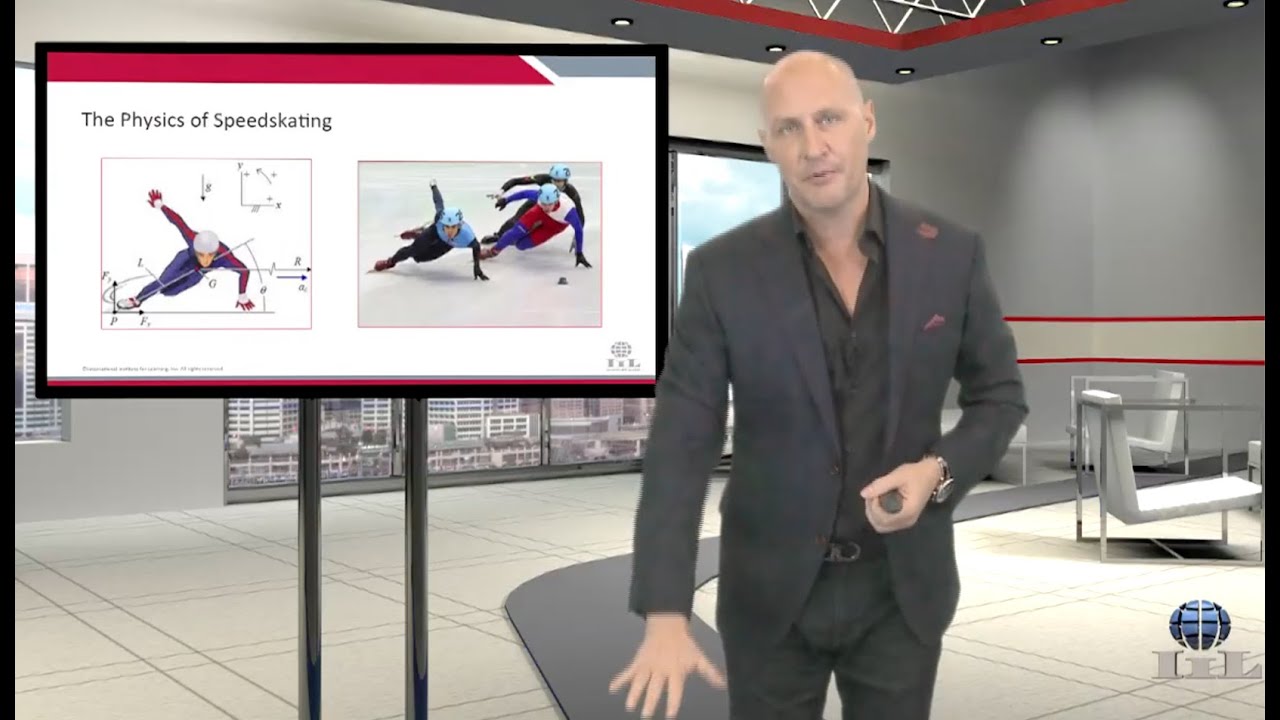
Unfortunate use of banned substances. But Lance went on in that test to last 26 minutes in a test that I was complete at 13 and a half. He went almost twice as long as I did in a test that only gets harder. And I learned from my test that I had the lowest average VO2, lowest ability to process oxygen of anybody on the team. And that when I was done, Lance was only half done. This was exactly what I didn't want to read. So I did what any good competitive kid would do. I disavowed the results. Said they couldn't possibly be me. This isn't me. This isn't my test. Something's wrong with the bike, with something, the doctor. But this brings me to my first point. If you're going to design a life for your strengths and design around your weaknesses, the first step in design thinking is to gain understanding, gather data, and the second step is to have empathy for it. Well, so you have to know and accept your weaknesses. I did not have empathy for myself, nor did the coaches. We all wanted me to fit into a certain mode, a certain way of being an athlete, being an aerobic athlete, and the reality was I just wasn't. Fortunately, a couple days later there was another test and I showed up to a different room, another stationary bike, another test, and got onto the bicycle. No lab equipment this time, just 2 guys who informed me this test is very simple. You're going to get on the bike, pedal as fast as you can for 2 minutes— not for 2 minutes, for 30 seconds, and at the end of 30 seconds we'll measure your peak and average power output. You'll be out of here in a couple of minutes. So I got on the bike. They put resistance on the bike. They said, oh, you might want to test that. So I pushed down on the pedal, and when I did so, the pedal did not move. I started jumping up and down with one foot on the pedal. It still did not move. And I started to say, hey, there's something wrong with the— and that's when they just started counting down. 3, 2, 1, get started. What could I do? Pushed down with every ounce of energy with my right leg, pulled up with every ounce of energy with my left leg, and after 1 second, barely got 1 rotation of the pedals. That's how hard it was to turn. But eventually I was able to get the pedals rotating and began spinning them up. And after 2 seconds, 30 RPMs. 3 seconds, 80. 4 seconds, 150. 5 seconds, 200. 6 seconds, 240. 7 seconds, I was at 250 RPMs. My legs were windmilling. There was heat rising from the wheel in front of me. I could smell it in the air. And for the first time, the doctors were interested in me for not being terrible. And they were cheering me on, saying, you're going well, keep going. And I spun those pedals at 7, 8, 9, 10, 11, 12 seconds. And I can remember looking around the room at some point, being proud of what I was doing. And how does that phrase go? Well, Pride goes before the fall. Somewhere around 13 seconds, all that effort sort of panned out and it was like the world exploded. It was like simultaneously being dipped in gasoline, set on fire, and drowning at the same time. Every orifice in my body was burning. I had no more oxygen left in the lungs and my RPMs immediately dropped from 250 to 200 to 150 to 100. Down to 60, and at 18 seconds, the doctors were in my face screaming, keep going, keep going, you gotta keep going! And I could see their mouths moving, but I could no longer hear the words. And that's when this strange sound entered this room. It sounded like a helicopter riding up and over my head, and then it turned to the sound of buzzing, and the lights got lighter and the darks got darker, and then everything turned yellow, and then black. I passed out and when I woke up I was in another room on a cot and the little vampire was back stabbing away at my fingers taking blood without my permission. She was all excited about my lactic acid and the guy was on the phone, he was annoying me too saying, yeah, yeah, but he's the first one to pass out on the bike. Everybody seemingly quite amused by my inability to finish a very simple 30-second test. So this was yet another test, and I got my results a day later. And sure enough, the lowest average power output of the team. Not surprising considering I was comatose for the last half of the test. But they also sliced the data by intervals. And as it turned out, for a 15-second interval, I actually had an advantage over the average team member. And when they cut the data by 1-second intervals, there was something Anomalous. And actually something quite interesting. As it turns out, for about a 2 to 3 second window, I have a small nuclear reactor in each quadricep. I'm able to generate a lot of power for a short interval. This didn't seem particularly useful to me at the time because the shortest event in my sport is around 40 seconds, but this is actually very, very useful data and it also documents A strength, a superpower as it were. And this brings me to the second point. If you're going to design a life, a career for your strengths and design around your weaknesses, you have to know and accept your strengths, the very specific nature of your strengths. As it turns out, as an athlete, I essentially have one and only one strength, but it's very, very specific and it can be applied in a couple of situations. I'm basically bad at all sports. I can't do baseball, tennis, Swimming, running, none of those sports am I any good at. But as it turns out, my superpower, my strength in sports is as follows. I am able to generate a lot of power against resistance for short intervals with a short rest while balancing and traveling at high speeds with a group of people trying to kill me. This essentially describes 2 sports, short track speed skating and velodrome cycling. The 2 sports I've gone to the world championships in. So there's a very, very specific strength. Whatever your strengths are are likely very specific as well. It's not good enough to know that you're a good communicator. You have to dive in and dig into, okay, to whom about what? If you're a good communicator, are you good with large groups? Are you good with medium-sized groups? Are you good with small groups? Are you better as a facilitator perhaps? Or are you better maybe one-on-one? Are you good at taking complex data and making it simple? Are you good at taking simple things and finding the inherent complexity? Are you better with analytics or objectivity? Are you better maybe as a coach or a challenger or a listener? If you don't know the specific nature of your strengths, you can't leverage them to design a life that features them prominently. Well, I had the data, going back to design thinking, I had gathered data, I had the potential to understand it and gain empathy, but this is where the coaches and I both fell down. We had a model of what we thought an athlete should be and we failed to have empathy for my strengths and weaknesses, and instead of trying to leverage those strengths and design around my weaknesses, they put me on a program to fix my weaknesses, and that unfortunately led to outcomes that nobody Wanted nor could have foreseen, I went from 12th in the world to 34th in the world the next year, to 2 years later not even coming close to making the team, skating slower than I had 10 years prior when I was 13 years old. And this quote from Thoreau described how I felt as well. I had began living a life of quiet desperation. And I believe that's what happened. That's what happens when you pursue a life of chasing weaknesses. This brings me to the final point. If you're going to design a life for your strengths and design around weaknesses, you have to accept the possibility that often they are facets of the same thing. Weaknesses and strengths are often the same thing. My aerobic weakness, the inability to process lots of oxygen for longer periods of time, has at its inverse an anaerobic superpower. I can generate lots of power for short intervals. And that is a power that can be leveraged. Lots of people, maybe your weakness is that you are blunt, you're rude, you just say what's on your mind. Well, a lot of people with that weakness also have the strength of being direct and honest and being truth-tellers. Well, here's the risk about fixing weaknesses. If you fix a weakness, you run the risk of destroying the corresponding strength In the process. In the process of trying to improve aerobic capacity, that weakness, we actually destroyed my anaerobic capacity. My peak power went from 1,740 watts down to 1,250 2 years later. I know people that have tried to fix the fact that they say what's on their mind, that they're blunt and rude, and in the process they no longer say what they're thinking, and that's how bad ideas are born. Nobody on the team is saying, hey, Does anybody besides me think this is a bad idea? You need truth tellers on the team. So fixing weaknesses is a dangerous game and one that can potentially be avoided. Well, after these tests, I was willing to quit. I felt like I was banging my head against the wall. And so I decided to quit. The team, not the sport. And I just kept thinking back to both my coach, Mike Walden's advice of racing my strengths, as well as to design thinking. Wait a minute. I have data. Do I really have empathy for myself, my strengths, strengths and my weaknesses, maybe I can design a new approach. And I generated ideas on how I might be able to skate differently in order to leverage my strengths. And here's the thing about being willing to quit. When you get to that place in your life where you're willing to quit something, when you're willing to walk away, you can get this amazing thing called perspective. And sometimes the challenge and problem you've been beating your head against the wall against Simply looks like this. All you have to do is back up, design a new approach, and walk around it. And that's what I decided to do. Quit the team, not the sport. No longer pursue fixing my weaknesses. And instead decided to analyze my sport to figure out if there was a way to leverage my strengths. Let me share a couple quick things about the sport to share with you what I did. So I decided to ask a different central question. Instead of how do I fix my aerobic weaknesses, or how do I improve my endurance, or how do I skate faster for longer times, I decided to answer a different, better central question, which was how do I get to the finish line in less time? And even more specifically, what if I can just skate less far? If I can skate less far, I can just go less fast and still win. Now how is that possible? Well, let me show you a couple things about my sport. The first is the margins of victory and how tiny they are. This isn't my Olympic Games, but I show it to you for a reason. Take a look at the difference between the gold medal and the silver medal in the 2002 Winter Olympics. After a lifetime of training, the difference between first and second was 2/100ths of a second. More interesting to me was the difference between first and 10th place. So the difference between a gold medal, hero's welcome, or being sent back to Siberia to train for 4 more years because you got 10th place, the Winter Olympics, 31/100 of a second. If I were to clap that out for you, it sounds roughly like this. The difference between those 2 claps was the difference between 1st and 10th place. So tiny margins of victory and incredible physics involved with the sport. I'll just break it down for you briefly. You're traveling 31 miles an hour on ice headed directly For a wall while on an 18-inch long, 1-millimeter wide blade leaning over at 68 degrees. And the physics of that corner at a 25-meter radius, when you do the math of V squared over R, you get that you're pulling, you're actually taking on 3 G-forces. So 3 Gs means that you're basically doing triple your weight. A Ferrari car. Corner at 1 G. The space shuttle takes off at 3 Gs. So you're essentially doing a space shuttle launch every 4.5 to 5 seconds during the duration of the race. So if I break that all the way down for you, here's what it all plays out to be. Every corner you're doing the following. You're doing a 500— if you're a 166-pound skater, I'm sorry, but I can't translate that to kilograms in my head that fast. Let me try. Let's see, it's maybe a 70-kilogram skater.
70 kilograms.
Then you're doing a 210-kilogram one-legged squat from deeper than 90 degrees while leaned over at 68 degrees while traveling 31 miles an hour leaned over on an 18-inch long, 1-millimeter wide blade on ice headed directly at a wall. It's really hard. So the sport is super hard, margins of victory are tiny. And so we adapted to these G-forces by skating a track that looked like this. Setting up very wide for the corners, coming up very wide, leaving corners very much like how NASCAR or Grand Prix cars set up for their tracks. It alleviates the stress at the apex of the corner, but it also means we're going farther than we needed to. And so I started thinking, well, what would it take to skate a track that looks like this, where I could dive right into each corner and just go less far? Well, as it turns out, to skate a track like this, it requires a huge pulse of power for about 2 to 3 seconds every 5 seconds. Short bursts of power with a short rest. The only thing in the world I'm good at. So I decided to try this. I decided I would just go less far. And so I trained on my own for an entire year skating this track, and then I showed up to the most important meet of the year. Later that year, the World Championship Team Trials, in a non-Olympic year, and I set out to try this track. Unfortunately, when I arrived to this meet, I came down with the flu. I was sick for days, didn't skate at all, and when I finally took to the ice the day of the meet, I was fairly certain I was going to be humiliated and sent home. The very first event was a long race, 1,000 meters, and the people that made the top 16 moved on to the rest of the event, and everybody else would be sent home. 100 people would be sent home, and I was sure I would be humiliated. But I lined up on the ice and began skating this track and just dove into every corner. I was paired up with one other skater. It's run pursuit style, so you're chasing somebody else on the backstretch, and all I thought was that if he didn't catch me, I might make the top 16 and move on. So I concentrated on skating the track and not getting caught, and after a few laps, the first of Several strange things happened. I started catching my pair skater. Now he was really good at this event, having come second in the Olympic trials the year before, so I was confused as to why I was catching him, but I kept skating, and after 4 laps of the 9-lap race, I passed him. They made him swing wide, and I kept going. And after 6 laps of this 9-lap race, the second strange thing happened. I noticed that it had gotten quiet in the ice rink. Which is fairly strange because there's about 400 people in a fairly small arena, and there's usually a lot of noise and coaches shouting and kids running around. And I noticed that there were faces pressed against the glass. And when I finished the race after 9 laps, the next strange thing happened, which is my coach, the man timing me for the event, had jumped out on the ice and was standing in front of me with his stopwatch. Now, I'm traveling 31 miles an hour, so I'm trying to dodge him and not run into him, but he's staying in my way, forcing me to skid to a stop, where he proceeded to hold up his stopwatch and say, Coyle, what have you been doing? And I was about to burst into tears. I was quite certain I had yet failed again, and this experiment had led to poor results, but instead I mustered some pride and I said, I have been sick. And he looked at me with this bemused face and he said, no, you don't understand. Remember the margins of the sport. He said, you just broke the U.S. record by nearly 5 full seconds. You just skated nearly a second faster than the world record. And I could not believe it. But it was true. Now keep in mind, it's still me, same skater, same body, same talent, same strength, same weakness, same everything, trained roughly the same amount, but instead of trying to fix my weaknesses, I designed a program to leverage my strengths, and in so doing, the outcomes were not Minor. They weren't hundredths of a second. They were record-breaking, earth-shattering changes in the outcomes. In fact, I went on to set every single U.S. record in that meet. I went on later that year to take the fastest time in the world in the 500 meters in the World Championships. Had a great season and a great run. And here's, I think, just a great way to sum it all up. Marcus Buckingham, if you haven't tried to read his book, I think it's a great one. I think he puts it very, very cleanly. Each person's greatest room for growth is in their area of greatest strength. This is very counterintuitive to adults. You're going to actually get better at things you're already good at more so than you're going to get good at things that you're not so great at. You'll excel only by maximizing your strengths, never by fixing your weaknesses, and you can actually enjoy it at the same time. Another phrase I heard recently which I really like is, what the world doesn't want from you is for you to get slightly better at things you're mediocre at. What the world wants from you is for you to become amazing at things you're already good at. So does it work? Let me just give you some stats from my coach, Mike Waldman. This is the man that had us all focus intensely on racing our strengths. Now this is what he said a lot. He was always yelling at us, always swearing at us, but here's what Mike produced: 120 national champions, 28% of all post-World War II cycling medalists, 12 world champions, 10 Olympians, and 4 Olympic medals, all in a club of about 70 families based in Detroit. They did not pull from the world, these were local people, but he focused every single person on the team on finding And leveraging their unique and special talents, and that's what he produced. It works. It totally works. Okay, so how do we pull this full circle and talk about design thinking again? Here are the 4 steps: understand, empathize, ideate, and prototype. How do you apply this process to finding your strengths and weaknesses? Well, the first is you have to gather data, right? You have to understand, know, and accept your strengths. Know and accept your weaknesses, and then design for your strengths and design around your weaknesses. How do you do that? Well, there are lots of good tests out there. I like some of these, Myers-Briggs, Kolbe, StrengthsFinder. Honestly, one of the simplest ways, if you are willing to take it on, it takes some courage, is to ask 10 friends, what are my top 3 strengths? What are my top 3 weaknesses? You will like the first list. You won't like the second one quite as much, but you will get some very good information in very short order. But having that data isn't enough. Because the second step I think is core is to actually have empathy, in this case for yourself. Be aware that you have strengths and weaknesses. Accept them. And then and only then can you design and ideate for a life where you leverage them. In my case, in that sporting world, neither me nor the coaches had empathy for my strengths and weaknesses. I failed to accept the reality that I had true aerobic weaknesses. I didn't want to accept it. But the day I finally gave in and said, you know what, I don't really have a great aerobic motor. What can I do with this anaerobic motor, this massive power that I have for short intervals? And once I accepted that and had empathy, then and only then did I design a program that led to breakthrough results. And you generate ideas. You know, the key to generating great ideas is generate a lot of them and throw out the bad ones, Linus Pauling quote. And here is the other thing about generating ideas, you can't read the label when you are sitting inside the jar. This is a phrase in the South of the United States. It means it is really hard to see your way out of your situation. So that is why you ask other people. So ask other people familiar with your situation for ideas on how you can leverage your strengths, race your strengths, design for the things you're best at, and start designing away and delegating things you are not. Who can you ask? I would argue, and we're doing it right now, you can ask anybody in the world. With LinkedIn, with Skype, with webinars, you can find the best experts in the world. And if you have a question around their area of expertise, ask them. They will answer. My hit rate on LinkedIn When I ask neuroscientists deep questions about deep things, it's about 60%. These are busy people, but man, they love to talk about what they're good at. Finally, you then prototype. You test things. You test this new approach. You test this new job, this new career, this new academic pursuit, this new hobby, this new sport. You don't quit after a week. So how do you know when to quit? I think there's roughly a 2-year rule. I love this photo. I had to Photoshop it because quitting, there is no such t-shirt. Quitting is so viewed as this terrible, awful thing, but sometimes it's the right thing to do. We're trained out of it as kids, but sometimes if you're working too hard for too long at something, maybe it's a true weakness. And I think that if 2 years is roughly that rule of thumb, if you've been pursuing something for 2 years and you're not seeing results, It might be time to quit, to reframe your approach, or to make it a hobby. That's what golf is for. And here's the thing about people that quit for the right reasons. When people quit things, be it pursuits of academics or career or even relationships for the right reasons, after they've given the right amount of effort, they always say the same thing. That was the best decision I ever made. Because they've moved on to something better and more important. So before I wrap up, I want to share this quote with you again from Thoreau. I think this is what most people experience when they pursue weaknesses full-time. A life of quiet desperation. What I didn't know was the end of this quote, which I heard recently. Most men live lives of quiet desperation and go to the grave with the song still in them. I just hope that that not be you. Let me conclude quickly with one last very short story about why I think designing a life for your strengths, for your superpowers, is so important. I started this talk by saying that in the infinite possibilities of the universe, there's always a way. If I think back to my career as an athlete, I was a terrible athlete. Terrible. In almost every way. Except one. In the infinite possibilities of the universe, I found a way to skate a shorter track, and by so doing, to actually compete at the top of the world by doing something differently. There is always a way. And here's the thing, when you pursue excellence at the highest levels, when you pursue your strengths, people watch. So after the '94 Games and after the Olympic silver medal, I trained through the '98 Winter Olympics. And unfortunately I made the poor decision to rejoin the Olympic team that final year where they put me on the same training program to address my weaknesses rather than focus on my strengths. And I sadly didn't make the team. I didn't even— not only did I not bring home a gold medal, I didn't even make the team. And I was so embarrassed I moved away to Arizona, far across the country, had nothing to do with the sport for more than 10 years. I gave my silver medal to my parents, didn't see it, and I had nothing to do With the sport for more than a decade. But 10 years later, a TV company, NBC Broadcasting, asked me to be an analyst for the Olympic Games, and so I showed up back at the Olympics, where I was back in the sport interviewing the parents, coaches, and skaters to get the stories to feed to the commentators. And during that period, I had a life-changing moment. The 16th day of 17 days at the Winter Olympics, one of the parents pulled me aside and he said, John, I have something very important to tell you. And I said, okay. And he said, okay, I just want you to know that we wouldn't be here right now and my son would not be skating in the gold medal round tomorrow if it wasn't for something you did. And I looked at him quizzically and I didn't know what he was talking about. I said, I don't understand. And he said, you won't remember, but 10 years ago you came to a small reception in Bay City, Michigan. You brought your silver medal, you put it around my son's neck. He was 11 years old at the time, he had never skated before. The next day he joined the Bay City Speed Skating Club, and tomorrow he's skating in the gold medal round. I can tell you that that 10-second conversation changed my entire life. It made me realize that that pursuit of excellence, that that pursuit of something truly special meant something to even one person, and in so doing, by influencing one person's life, that it made it somehow all okay. And I began getting back involved with the sport. I started coaching. I got my daughter skating. She skated for 5 years. I coached for 6. I continue to work for NBC and stay very highly involved with the sport. But here's the thing, I wrote this father a letter back and the way he responded to my letter I think applies to everybody on this call. So I'm going to just quickly read to you what he wrote to me and then I'll open it up for questions. John, I am deeply touched by your words and reaction. After I read your email, I went up to Alex's bedroom and looked at his bulletin board that Only the most meaningful awards and memories of his childhood and skating career. Pinned near the right border in a Ziploc bag was a napkin from Steamer's Pub with your signature on it dated 1994, along with a picture of you with Alex and your silver medal. I then went to our Italy photos and found the picture of you with Alex and his bronze medal, which he won the very next day. I printed it off, returned to the bulletin board, carefully opened the bag, gently slid the new photo in, resealed the bag, and pinned it back in the exact same.
hole.
I stepped back and contemplated the many things that had to have taken place in so many people's lives in order for those 2 photos to be in that bag together hanging on a bulletin board in a boy's bedroom where he only dreamed of such success. As I stood and stared, I was overwhelmed by emotion as I again attempted to comprehend the awesome unifying power of the Olympic Games and values. Thank you for sharing your success with us 12 years ago and thank you for including Alex and me in this circle of success 12 years later. And this is the way he closes his letter, and this is the way I want to end this webinar. I think that when you pursue excellence, people watch and it matters. I guess you never know what role you may play in someone's life, or just how important the things you choose to do or say, or choose not to do or say, May turn out to be. That was Alex 12 years prior, and then 12 years later with his bronze medal. In infinite possibilities of the universe, there is always a way. And when you pursue your strengths, people watch and it matters. Thank you for having me today, and I am going to I'll turn it back to the moderator and take questions for the remaining time we have.
Well, thank you very much, John. Very, very intriguing presentation, I must admit. Folks, we are open for questions and answers. If you have any questions, you could either put it in the question box or chat box, or you could equally raise your hand. There's a hand icon available on your Console, webinar consoles. If you click on it, you can always have an opportunity to have an audio conversation with Professor John. So let me go to the question box. There are a couple of questions already posted. The first one, 2 years is a long time. Is that always the right amount of time to know when to quit?
Great question. So I mean, no, I don't think that is always the right time. I just think that's probably a good rule of thumb for the longest you should pursue something before thinking hard about quitting. Sometimes you know within a few weeks, a month, a day that this thing, this new pursuit, this new hobby, this new career, this new degree, this major, this sport, this instrument, Is just not for you. I mean, you can't know for most things in a day or week, but at some point you might just get that sense that this is just not for me. So then that's the right time to pursue something different. But for a lot of activities, especially those that require skill development, you know, you can't get good at the French horn, violin, or playing soccer or baseball in 2 weeks. It takes Time and effort to develop some of the skill set. But at the end of 2 years, if you aren't seeing success, that probably is the right time to say, wait a minute, is this really for me? Is there some other better place for me to leverage my skills and talents?
Thank you very much. We have another one from Sharif Ismail. How long does it take for one to ideate and then prototype your strengths?
That's a really great question. I've actually never received that question, and I like it. I think it is an iterative process. Part of the design thinking process is, that I probably didn't say specifically, is you gather data, you gain empathy, you generate ideas, you test, you prototype, and then repeat. Part of the process of defining and refining your notion of your strengths is that test and repeat process. I mean, I had the data, of course, on my strengths as an athlete. But it took me quite some time to figure out how to leverage that. I mean, I'm more than 40 years old now. I didn't realize that I could be a speaker up until a year and a half ago, which is rather sad considering I've been focused on my strengths for more than a decade. But I stumbled into speaking through an invitation sideways from somebody. Had never really considered it before. So the iterative nature of ideating your strengths, testing those, and then repeating can take— I mean, it can take a lifetime. But what you see with folks that— with people that do pursue a life of designing for their strengths is they are ever moving closer To what they're best at. And as they move closer, they have greater and greater success and frankly a lot happier disposition and a lot more resiliency. One of the hallmarks of being in your area of strengths is it doesn't require willpower to do things that you love and you're naturally talented at. You just want to do them.
Right.
And so when people are operating in their areas of strengths doing a career and hobbies that are in their areas of strengths, it does not require that same odious, mind-numbing, relentless discipline to go do that thing because the reality is you are naturally gifted and naturally inclined to do so even without forcing yourself to.
Well, thank you very much. Another quick one from Mr. Arif Hussain. In performance reviews, you're always intimidated about the weaknesses. How to deal with that?
That is so true. I mean, if you think about how institutionalized weakness-focused pursuit is, it's— to me, it's a huge, huge miss in corporations the world over. Almost everybody's performance review is a list of a litany and a list of weaknesses to fix. And when I first sort of stumbled into this strengths-focused approach years ago, I started making my team's performance review a list of their top 5 strengths to leverage. And then, yes, skill gaps still exist, things to learn, to focus on. You know, Excel for most people, for example, Microsoft Excel, is a skill. It's It's neither a strength nor weakness. It's just a skill. You learn how to use it. You learn how to run the numbers. For some people, it is a weakness. They just fundamentally cannot get used to that program, for example. So having lists of skill gaps is essential. We're constantly needing to learn new things. But boy, when I changed my performance review process to list my team's strengths and help them leverage them more, one of the unforeseen consequences was a massive shift in culture. The culture of my team went from one of guardedness and, you know, slight suspicion and weariness, and it changed to one of the most motivated teams in a very, very large company.
Thank you very much. Another quick one. How do you keep yourself determined the whole time? From Brother Muhammad Javed.
Great question. So how do you keep motivated? You know, there is this myth, I will tell you, I'll debunk this myth immediately. There's this myth that Olympic athletes are somehow wired differently and they have more discipline and more willpower than regular people. And I will tell you, that's just not true. Willpower, and there's some pretty good studies on this, is fairly universal. We all have a limited supply of it, and when you use it up, you don't have it anymore. And so key, I think, to the folks that achieve great things in any field is that they don't have to use up all their willpower. And part of the reason they don't have to use their willpower up is because they're doing something they love and they're naturally gifted at. We just talked about that. That's a huge reason. I will tell you another great reason that people succeed is they put themselves in environments where they don't require It does require willpower to show up and do well. When you're on the Olympic team, they— you don't have to decide whether or not you're going to get up in the morning. You don't have to decide whether or not you're going to get on the ice. You don't have to decide if you're going to eat well. You don't have to decide whether you're going to do weight training because you've got somebody in your face telling you, lift harder, skate faster, get up, go to sleep, go to bed, eat well. You have a structure in place that takes away a lot of the requirements for you to use up your willpower on those things so that you can focus intently on using the willpower, the limited resource of willpower that you have, to putting your best efforts forward.
More from John


Olympic Medalist To "The Time Guy" - John Coyle Explains Chronoception & How Humans Process Time


How to design moments that help you live (almost) forever | John Coyle | TEDxNaperville