John K Coyle: Subtleties of Success: Every Second Counts
In this in‑depth interview, Olympic speed‑skater John K. Coyle reflects on the razor‑thin margins that separated him from an Olympic gold medal, the philosophical distinction between chronos (clock time) and kairos (the decisive moment), and how those fleeting instants shape the trajectory of a life. Coyle critiques the popular 10,000‑hour mastery myth, arguing that natural talent and the neurochemical reward of flow are the true drivers of sustained excellence. He explains flow as a state where front‑brain and back‑brain communication accelerates, producing a loss of ego, heightened perception of time, and vivid memory encoding. The conversation weaves through his personal failures (a linear‑algebra class, a decade‑long career transition), the role of trauma and the amygdala in memory, and the importance of designing one’s life by identifying and repeatedly entering moments where “time stops or speeds up.” Coyle also shares a kairos story about a chance encounter that sparked a future Olympic champion, illustrating how small, unnoticed moments can have massive downstream impact. Throughout, he emphasizes presence, directional awareness, and translating complex ideas into stories that people can remember.
Chapters
The question isn't what does it take. The question is why does anybody bother? Why does anybody bother to put 10,000 hours of sucky practice to master something?
This is Dave Meltzer with Entrepreneur: The Playbook, and I have a dear friend, John K. Coyle, Olympian, Olympic skater, who came— I can honestly say this, you're the only person I know that came the closest to a gold medal of anyone I've ever met. And I've met a lot of medalists in my life. How close, John, were you to getting the gold medal?
In our race, it was a few tenths, which, you know, is still a pretty short period, but sometimes in my sport, it's, you know, it's Thousands of seconds.
And you told me in one Olympics, I forget which one, from first place to 10th place, like you— I think the joke was the guy was sent back to Siberia, right? What was the difference between first place and 10th?
31/100 of a second, first to 10th in the 2002 Games in the 500-meter.
Could you imagine? Now, how did that impact your life?
Well, it created an insight actually that I was sitting back here for a long time around Wait, so it's a Seinfeld joke, right? First, second, third, never heard of ya. The never heard of ya part—
I joked around that you had my nose, you had a what?
So the never heard of ya part is that, and the insight that eventually came out of it is that really small bit of time is life-changing, right? 'Cause if you have a medal or you don't, it changes your life forever. And the insight that eventually translated is, this is true in real life. The decisions you make, the saying yes or the saying of no, the asking the girl or not, the I do or not, you know, all of these decisions that are made in moments determine the trajectory of your life. And the Greeks had a word for this. Like, where are we? They're so much smarter than us. They had chronos, which is clock time, and that's what we talk about all the time.
Man-made construct.
But they had kairos, which is human time. And very specifically, the etymology is, The moment an archer releases an arrow, everything happens at once and the trajectory is set. And we, our lives are built of moments, not minutes, not hours, not months, not years. Moments determine our future over and over again and what you do in those moments.
And in order to take advantage of the moments or maximize the moments to their potential, what is the activity that we have to do in order to take advantage of those?
Well, I think one that I think you talk about a lot is being there first. You have to be present, right? I think second that you also talk about is, are you— is your awareness of that moment not just present but also directional? Are you steering in terms of your perceptions of where you want to be and what outcomes you wish for? If you haven't sort of enunciated those, you can't choose where to shoot the arrow, right? Like, you're just shooting in the dark. But as soon as you have a target, soon the arrow is going to go closer and closer to where you want to be.
One of the things that changed your life, a moment Was you failed a math class.
Yes.
Was it Math 202?
Yes, linear algebra. Oh my God. I still don't know what that class is about.
So, man, you're one of the hyper-intelligent people in the world, which I think there's something weird about ice skaters, or speed skaters, I should say, 'cause first of all, it's like the simplest sport when you look at it, right? You're just going left all the time.
Turn left, go fast. That's it.
Right. Turn left, go fast. But you and Apolo Ohno are 2 of the people that I would say are vibrating at an incredible speed. So it was really surprising. Number one, that you would fail a course, but even today be like, I don't know what that class is about. Why is it that the human mind can understand one thing that other people can't even grasp, and then there's a whole other subject matter, which is really just data, that we can't connect to?
I truly believe that we have natural talents. Anders Ericsson would tell you that we don't, and all you have to do is put in the 10,000 hours, and I don't agree with that at all. We resonate towards certain things. I will never be a marathon runner. And I'll never be good at theoretical math. When you try really hard and you fail for the right reasons, which is what I did in Math 202, failing for the right reasons, by the way, is putting your best effort and it's not giving up.
Yeah.
It was a guardrail. I am not a theoretical mathematician. Immediately upon leaving there, you'd think you'd be disappointed, but instead my whole life changed for the better because I switched majors and I got a guy named David Kelley as my academic advisor in my new major of choice, product design. He changed my whole life.
You wrote a book, Strength and Design, that is predicated on that catalyst of working with him and has moved throughout your life as some sort of funnel of perspective that you're constantly gaining data and understanding of design, which to me is so exciting, which is why you're one of my favorite people because I believe we design our life. You've come with biochemical Biochemical, physical, spiritual, all the different areas of how that all amalgamates into designing our perfect potential, perfectly imperfect potential that we are.
Absolutely.
What are some of the key ingredients of designing your own life?
Well, I'll jump into one of my favorites, which is this 10,000-hour rule.
Yeah. So Anders Ericsson— Which is Outliers, right?
Right, Outliers. Anders Ericsson, Malcolm Gladwell borrowed, is the notion that you have to put in 10,000 hours to be great at something, to be a master at something, and I absolutely agree that's Fundamentally true. There's no expert from Mozart to Miles Davis to Bill Gates, Tiger Woods, that didn't have—
Throw the Stanford guy in there.
Yeah, the amount of hours. But I think it's the wrong question. This is design thinking at its core. Are you asking the right question? The question isn't what does it take? The question is why does anybody bother? Why does anybody bother to put 10,000 hours of sucky practice to master something? And I think the answer's really clear to me, and it comes back to flow. So here's— it's an operant conditioning Skinner model. So here's what happens when you're a kid. You try new stuff, right? If you get into the flow state, which is your area of peak performance, the zone, you emit the following: dopamine, serotonin, andonamide, and oxytocin, in that order, which is coke, heroin, pot, and ecstasy.
All at once.
You get them all at once.
That's what giving does for you, too, by the way. Right.
If you took those externally, you'd be dead or drooling. But instead, this becomes the reward. Right? You get a reward system. But if you never stumble into your strengths, your natural talents, you never get the reward, and then you don't want to try pulling the lever harder, and so you just never do it.
Wow.
So some people stumble into their strengths early and get to do it.
And it's interesting because I agree with you that there's certain things that my frequency— and I call it an awareness because for me it's vibrational. I believe that you can only be aware of that which vibrates equal to or less than you, but it's also within the vibration of frequency. If my radio tunes into only this station, theoretical mathematics may not be a station I can even hear.
Right.
Even though I could be an incredible genius in the flow while of some other, like calculus or some other straightforward mathematical equationary practice, and people could never understand how can— and I think that's the problem with secular school is that we put kids into a position where the frequency and the rewards, that biochemical reward that we're getting, is so wide at a very early age that they get discouraged. We don't allow them to find their frequency.
I agree.
We stagnate them and we put them down and we put them into a box and say— I love Jim Kwik. Do you know Jim Kwik?
No.
Jim Kwik was the kid with the broken brain. At 7 or 5, he hit his head on a radiator, and he was having learning disabilities. He couldn't learn anything, and he actually overheard his teacher say, that's the kid with the broken brain. So he taught himself to read utilizing— I get choked up because I love this guy— cartoons, comic books.
Yeah, yeah.
But then what he did was re-engineer how nobody else, doctors, teachers, no one else could teach him how to read, but he taught himself to read somehow. He started figuring out, how do I make connections to the memory? We'll get into those pictures that we take, but how do we do that? Now he trains Will Smith. He's a memory master. You should look him up. He's been on the podcast as well. I'd like to. How does the mind, in this flow state, work that somebody could all of a sudden have a broken brain, in essence, either by subject matter or in totality that we think, Wow, they have a broken brain. They can't figure anything out.
Well, I think you've got it exactly right. You work more on a spiritual level. I would say it's physics, but I think the two meet somewhere in the middle.
I believe in both.
I think we do. We have a speed, and there's all kinds of clocks in your brain. Somebody says 17, some says 28, but any way you talk about it, you're operating on some sort of frequency. You've got your heart rate, you've got your respiration, you've got all kinds of things in your back But think about this, and this is actually true for us. Think about when you see an old friend you haven't seen for 10 years. There's always this thing that happens because you're on the same frequency. It's as if no time has passed, and the conversation resumes right where it left off. Now you think about an acquaintance, somebody you don't know well, and you sat with them for dinner for 3 hours at some event, and you're trying, racking your brain, trying to think how many kids they have, and it's awkward, and you're sitting there and you're working so hard Right, it's 'cause you're on different frequencies. And I think that love is actually just simply flow between 2 people. It's simply the flow state, 'cause when you're in the flow state, back brain, front brain are operating at 5 times speed. And so if you can be in the flow with somebody, that to me is love.
Yeah, it's incredible too, 'cause you're one of those people. I get off the elevator yesterday to see you, and it was like I felt it. And then the energy, we were in the flow, right?
Oh, totally.
Time meant nothing. We could've been there 12 hours, Or 2 minutes, it's incredible. And this interview's gonna be the same way for me. How could you define the flow? 'Cause people ask me, like, I call it get out of my own way, get into the flow, allow things to come through you. How do you define the flow to people? Because I want them to live in the flow.
Yeah, I define it as A, being in your area of natural strengths, and everybody has them, and B, allowing that to happen. What happens in terms of your kinetics is the chemistry between your front brain and back brain starts to speed up. And normally, as Kahneman would say, you have a goat's path from the front brain to the back brain and a superhighway from the back brain to the front brain. So it's telling you lots of stuff, but you have to translate it. But if you can start teaching the back brain and getting this symbiotic high-speed connection going, you lose your sense of self. This is one thing that happens in flow. You no longer have ego, and you are part of everything, and everything is part of you. And then you're just wired. Everything's coming at you so fast, but you can slow it down because you've got a high-speed camera. It's like an HD camera. It feels fast in the present, but in memory you store so much more.
One of the biggest questions that entrepreneurs ask me, and they try to replicate, at least in my own life, that it seems as if I get to do all these fun things and get paid lots of money to do it, and I live this extraordinary life, which by the way, I do. How can people find that natural state of what they're good at? And I am asking you because people ask me that question, and I'm kind of stuck because the only answer I can give them is, you know, keep on trying as much as you can.
Yeah, yeah. You know, I think a great hallmark to weave a thread through in your life is when does time stop or speed up or both? So whenever you say, Oh my God, where did that time go? That, whatever you were just doing, is almost for sure an area of strength, 'cause that's the hallmark of flow, is wonky things with time. Basically, all your clocks shut off. So when you're not measuring time, you don't know how to describe it. So you say, time flew by, or time stopped, or both, and both are actually correct. So think about that in your life, in your hobbies, your career, your conversations, the people you're with, the people you're not with. Like, if you can weave a thread through that and just do more of that, make that your life, which is what you and I are doing right now, right? Like, we both live this life, we're in flow most of the time. But a lot of people have— they lead what Thoreau would call a life of quiet desperation, you know? They don't get any flow.
Yeah, and it's resistant-based. So I know I'm physics and spirituality, because I think they're one and the same. And in my mind, while you're describing that, I'm thinking time actually— no time is no resistance, but the more time is there, the more resistance that's created. And when we put faith into the flow, you get more of the flow. When you put faith into the resistance, You actually build more resistance. And so when people say, I gotta, you know, do this by the end of the week, by the end of the day, or I got— when we're doing all these things by time, we're actually creating more resistance, which slows us down.
Yes.
How do you translate to time? And I just find this fascinating. The sport that you spent— how many years were you?
17 years on the national team.
17 years. And time is so critical in speed skating. But yet you want to live in timelessness with an objective of being fastest and, what was it, go left and go fast?
Turn left and go fast, yeah.
So how do you reconcile that?
Well, I reconcile it in that, as we talked about before, small increments of time really matter. In fact, my whole new book, the entire book can be distilled to one sentence, which is the, sorry, Now I'm gonna get this wrong.
That's all right. It's yours.
Here we go. The value of an increment of time is not related to its duration. So the value of an increment of time is not related to its duration. That means a lot. That's actually a lot. And so that means recognizing those moments, being in those moments. Let me put it the other way. I used to have a job where my job was to type a series of letters, numbers, and digits into a computer, 60 characters long. If I got even one wrong, flash disappeared and I had to start over. And this was my job 8 hours a day. at Green Library in Stanford. You were in Stanford? Yeah. It was horrible. Like, I could watch that clock tick and then tick and then stop, right? But here's where it gets interesting. This is the law of inversion. In memory, you now know everything that I know about that job, 'cause there's nothing to be stored, right?
Right.
Versus the first day of vacation, for example, right? Like, you go into the office, you have a half day, you're like, the clock is going like this on the wall, and then you're like to the airport and at the beach and you have a cocktail and you read a book and you take a swim and the whole day's over like that. But in memory, They invert. So the days of typing digits, gone. There's nothing.
Yeah.
And the first day of vacation is like an HD camera, zoom in, it's lights, color, action. It's amazing what you can recall when you're in the flow.
To that point, when you— I always say the 2 hardest days of college is the first day and the last day, right? Because the first day you have 4 years in front of you and it seems like forever.
Yeah.
And the last day you have your life in front of you, it seems like forever. And but When you're a senior and you look backwards to day one your freshman year, it seems like no time.
Right, right.
And as you look forward again, there's this resistance of time. Why is that? Looking backwards goes so fast, it seems so close.
It's, uh, well, there's a couple reasons, I think, but there is this thing called telescoping in that important moments in your life It's sort of like when you zoom in on somebody with the sunset behind them, the sun gets bigger and bigger and bigger, right? So certain memories will actually grow with time. And so when you start looking in the rearview mirror, you start sometimes to telescope into that. And so the distance becomes foreshortened, and freshman year feels like yesterday. And that's actually a good thing because it means you have really strong permanent memories that you'll be able to recall. So even though you get This thing that we get, this sort of nostalgic feeling when you do this telescoping, but it's actually, in hindsight, it's actually a great thing. It means those memories are stored, they're always there, and they feel close in, and that's a good thing.
And how does trauma affect all of this, right? So, you know, being abused as a child or something really traumatic, how does it affect this process?
Well, trauma, unfortunately, the amygdala is a great memory writer, and it's sitting in your back brain, but it's a sentinel only looking for never do that again or always do this again. But when the amygdala gets involved with writing memories, they're almost always perfectly recallable. So the unfortunate thing here is not only you remember the highlights, but you're going to definitely remember the lowlights because it doesn't want you to do those things again. So it's, it's, it's looking out for you. But trauma can very quickly turn into PTSD, particularly if you're taking that memory, reviewing it, and making it worse, or making a meaningful judgment about yourself. Oh, I'm such a terrible person, or I should never have done that. Versus you can think of also some childhood memories that were traumatic at the time that are now funny, for example, or grateful for, or you're grateful for, right? Because I became a better person and that changed me. Like the failing math could have been traumatic, yeah, but now in hindsight it's, it's amazing, beautiful, wonderful thing. But at the time it wasn't feeling so great.
So it doesn't become PTSD, it becomes post-traumatic growth. Yeah, post-traumatic growth. Okay, one of the gifts that you have— you speak all around the world, you know, one of the gifts that you have is your capable of going around the world and everyone loves your speeches. One of the things that I admire most about you is that you take hyper-complex things, well-read, well-researched, well-accessed information, and you're able to somehow communicate it. I call it transcoding to a lower vibration so more people can understand it or even be aware of it, because we can't even be aware of some things.
Right.
Like you said, right? You can't even be aware. That's why you failed Math 202. You could not be aware of it. It's at a different frequency. How do you not only transcode but widen the spectrum and give me, to finish up, one of your favorite lessons that I'm sure carries great complexity that you can share with me in that great gift that you have with breadth, width, and strength?
Sure. So per your point, I think one of the things I really try hard to do is take complicated things and create metaphors or narratives to illuminate them, 'cause people don't, they don't remember facts and data, right? They remember stories.
They can't remember what part of the brain you're talking about, the amygdala, right?
Yeah, right. So I'll tell you a story that really actually probably led to this path I'm on. In fact, it changed my whole life. So I trained for one Olympics, silver medal, training for the next Olympics, I fail to make the team. I'm completely humiliated, and that's the right word. So embarrassed that I got off the ice, I didn't put on my skate guards, I walked across the concrete with my skate bag, took off my skates in the car, drove to Arizona had nothing to do with the sport for a decade. I mailed my medals to my parents, U.S. Postal Mail, no insurance. Didn't see it for a decade. Hard divorce. I'm done, right?
Wow.
But then NBC asked me to be the analyst for the next games, and I couldn't say no to that. So I'm suddenly back in the sport and thrust back into interviewing the parents, coaches, and skaters, because my job was to feed the backstories to the commentators. And while I'm there, in about a 15-second interval, a parent changed the entire trajectory of the rest of my life. Total kairos moment. So I'm there. It's the 16th day of the 17 days of the Olympics. Parent pulls me aside. He looks nervous. He says, "I need to tell you something." I said, "Okay." He said, "I just want you to know we wouldn't be here right now if it wasn't for you." I said, "I don't. I don't know what you mean." He said, "You won't remember, but 12 years ago, after you won your silver medal, you brought it to a little event in Bay City, Michigan. I brought my son Alex. He was 11 years old at the time. He'd never skated before in his life. You signed an autograph. You put your medal around his neck." And the next day he started speed skating at the speed skating club, and tomorrow he's skating for the gold medal.
Wow. Cryos moment.
I went from humiliated, first, first loser, one-timer, right?
Yeah.
To, oh my God, that's actually pretty amazing what we did. And I had never, ever talked about it. I'd never talked about it. This is all I do for a living.
Yeah.
So in 15 seconds, every part of my life changed.
I'm so interested, like, knowing your character today of who you are, why do you think your ego was so far in your way that the disappointment and the humiliation was instead of the fire in your belly to like, oh my God, I was this close, I got 4 more years of work?
I think most— well, actually, Apollo and I are working. He's working on a book and I'm helping him. Apollo Ohno. Around most Olympic athletes face about a decade of depression. It's very, very common because you've— everything that is you, right? Your identity is so tied up with the sport, what you do, and you were great at it, and suddenly you're now what, selling real estate or doing IT stuff? Like, that's just— it's not the same.
Even announcing is not the same, right?
Yeah, not the same. So it's a really, really hard transition, and, and yeah, your ego is definitely tied up with the person you used to be. And it's a difficult transition.
Well, I really appreciate it. We're gonna have to do this again.
Sure.
We need more Krios time together. And your Krios moment almost made me cry. I just, I felt it. Like, and I know what that feels like. My favorite part of what I get to do is when people come up to me and tell me that they had a moment that I wasn't aware of.
Right.
And a shift that occurred because, as you know, when you speak, they'll line up and tell you.
Right.
You moved me and my trajectory's different today because of that moment. And I'm so pleased that you were able to describe to people how they can change their life simply by changing the way you look at things. The things you look at change.
Can I give you one last—
Please.
Denouement of that story?
I'm not gonna cut this off.
A year and a half ago, April, I got a call from Alex, that's his name. By the way, he won a bronze medal the next day.
Did he quit after?
He retired eventually as well. He struggled as well. But he called me a year and a half ago, April, and he said, hey, John, I just want you to know this. I want you to be the first to know. I just got off the phone with the U.S. Olympic team. I have accepted the head coach position for U.S. speed skating, and I'm taking the team to the Olympics.
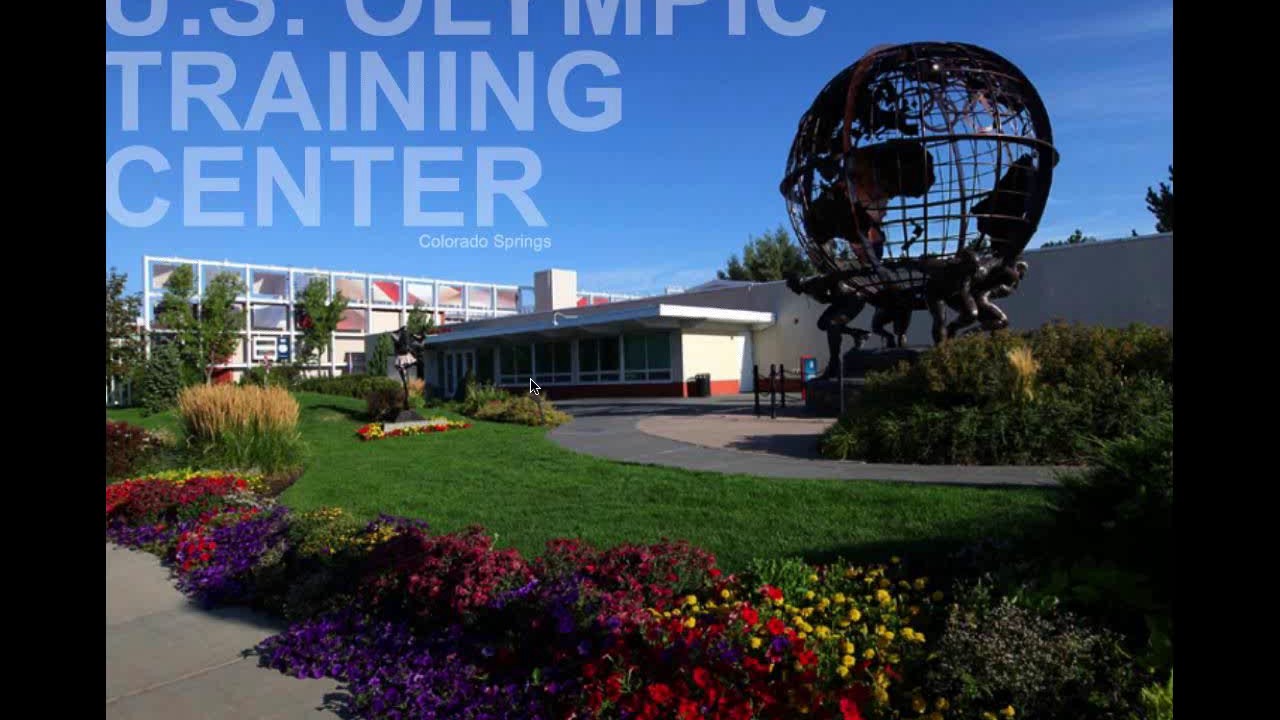
Wow. I'm gonna have to go see him in Colorado Springs since I get up there.
It's just so crazy how these small moments, right?
Oh, I love that.
Small moments.
That's where my physics and spirituality all meet together in the great technology of the universe. And you and I have to connect more often.
Yeah, let's do it.
Even though when we connect, it feels as if we always connect.
That's true.
Which is really cool, and I look forward to sharing a stage with you. I'd love to do a fireside chat or something as well. Let's do it. Let's do it. Well, John K. Coyle, Olympic silver medalist, who I am most proud of. I'm most proud of that. I think it's a great thing because that story is much more powerful than if you probably actually won the gold.
Agreed.
And it's tremendous. Congratulations. This is Dave Meltzer with Entrepreneurs: The Playbook.
More from John


Olympic Medalist To "The Time Guy" - John Coyle Explains Chronoception & How Humans Process Time

Applying 'Design Thinking' to Your Strengths | Prof John K. Coyle | MILE Webinar

How to design moments that help you live (almost) forever | John Coyle | TEDxNaperville