John K. Coyle on Designing For Your Strengths
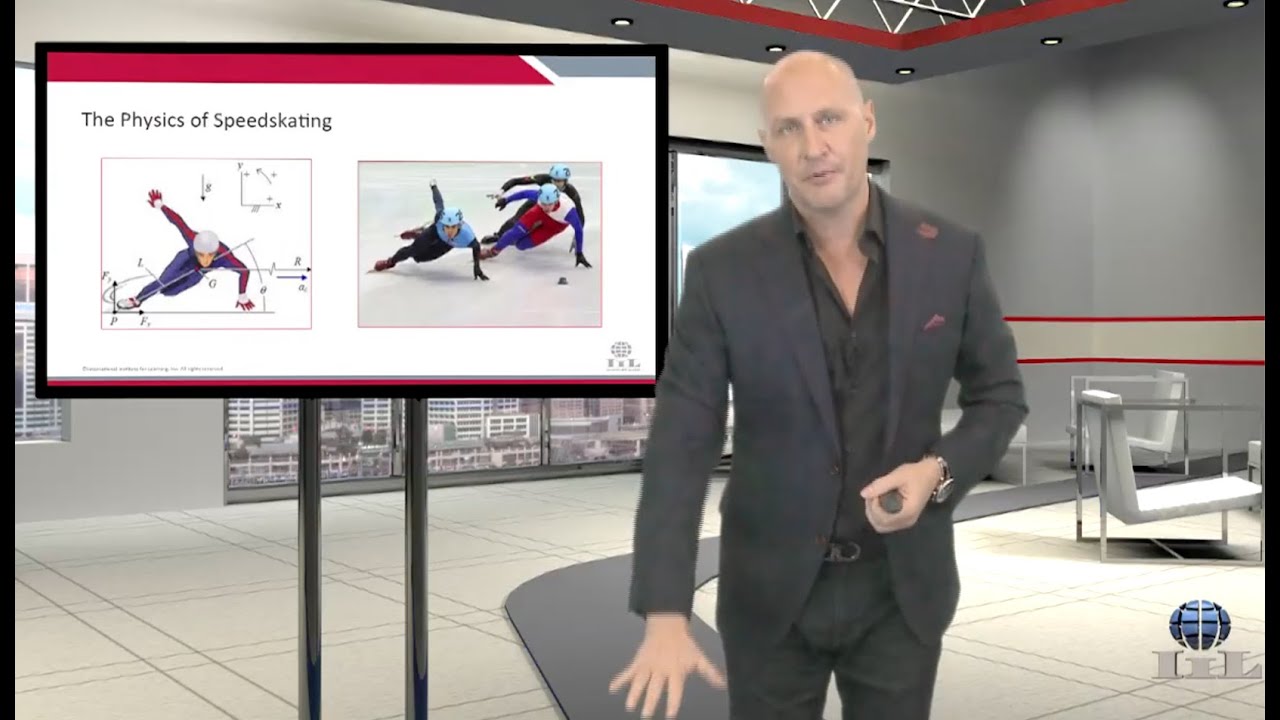
Olympic speed skater John K. Coyle broke U.S. records by stopping endurance training and doubling down on his natural sprint power instead. He applies design thinking to argue that lasting success comes from amplifying strengths, not fixing weaknesses, using examples like archer Matt Stutzman and practical tools like StrengthsFinder.
Chapters
On your marks, get set— Hello, I'm John K. Coyle, and I'm here today to share with you something that I care a lot about, and it's something called design thinking. Design thinking is a process out of Stanford that is used ubiquitously in companies like Apple and Google and Cisco. And I'll define it for you really quickly here, but mostly I'm going to tell you some stories and show you how you can apply this process to your life, your career, and your enterprise. So here's a 5-step version that I like. First step being accept that you have a problem. That sounds obvious, but as Dave Evans from Stanford puts it, you can't solve a problem you're not willing to have. Second step is to define it. Do we really understand this problem? Have we gathered the data to truly get beneath the surface? The third is empathy or empathizing with the customer or situation you're solving for. By the way, most problem-solving processes ignore this step. Fourth is you generate ideas, ideate, and that is without judgment. That's really critical. And finally, fifth is you prototype, test, and repeat. But always circling back to, in this iterative process, do we really understand the core problem? But first, a story. I grew up in Michigan. On a lake. And every winter as the snows blew in, the lake would freeze over and we kids would grab our skates and our shovels and we'd go out and clear off a patch of black ice and skate around and play hockey and do some racing. And I think I was 10 years old when my father discovered that I was the fastest kid on the lake on skates. And so he said to me, why don't we take you to a speed skating race? And that sounded like a good idea to me. So we drove downtown Detroit to this beautiful black oval of ice. It was shiny and you could see your breath in the air on this really crisp Saturday morning. And I lined up against 8 or 9 other boys and girls, and then the starter raised his pistol, he shot the gun, and I scrambled across the line fully expecting amazing things to happen. But what happened instead, I watched as these graceful figures disappeared around the corner in front of me. And by the time I hit the backstretch, I couldn't even see them anymore. It was only a 3-lap race, and by the end of the second lap, all 8 of them sped past me, lapping me. So I did what any good competitive kid would do. I skidded to a stop, proceeded to exit the ice. The race is over, right? Wrong. No, no, the parents and coaches, they weren't having any of that. No, no, you must get back out there, finish the race. And they made me finish the race in tears, and I vowed never ever to speed skate again. Fortunately, I didn't follow through on that vow, and I continued to practice and train. And by the end of that year, I managed to get 3rd place in the Michigan State Championships. The next year, at age 11, I won the Michigan State Championships. At age 12, I won the Nationals for the first time. At age 13, I made the National Team as the youngest member. And then I went on to go to the Winter Olympic Games, where I brought home a silver medal. Now, you won't remember me, and you won't remember my event, but you'll definitely remember those Olympics for 3 reasons, which I will share with you now. Her and— wait for it— I, why? Why me? The most watched piece of TV for 16 years running until a Super Bowl beat it a few years ago. So when you achieve some level of success in sports or your career or academics, sometimes people ask you what the secret to your success is, and, and it's often these things, right? Never give up. Never give in. Quitters never prosper. Good things come to those who wait. And this is all great advice for kids. I think that sometimes this same great advice for kids goes off the rails for adults and becomes a collective adult neurosis, particularly for high achievers. Now if you're wondering if I just called you crazy, yes, I probably did because you probably are. That's okay. So am I. But first, why is this good advice for kids? So the Stanford Marshmallow Experiment. If we recall this, starting in 1972, psychological behavioral study of kids 5 to 8 years old, they gave them the choice of 1 marshmallow now or 2 in 5 minutes. And as it turns out, as they've continued to study this cohort, they're now in their 50s, the 2 marshmallow kids have been more successful in every measurable way. Level of income, level of education, level of health, wellness, relationships, you name it. The ability to delay gratification has led to good things. But as I mentioned before, I think the same psychological behavioral impact for kids becomes a really negative thing for adults. And how does that happen? Well, if 1 marshmallow now for 2 and 5 minutes becomes 1 marshmallow now for 10,000 and 2 years becomes 1 marshmallow now for 10 million and 100 years— Now you've probably done this. We've all done it because we're wired to do it. But it is actually crazy when you're facing down a challenge that you can't conquer and you continually beat your head against it. That makes no sense. Well, let me prove it to you that it is crazy. First, I'll introduce some childhood guidance and then some adult wisdom. We'll see the inherent paradox. First, the childhood guidance. If at first you don't succeed, try, try, try again. As it turns out, Wikipedia adds a third try. And then the adult wisdom. The definition of insanity is repeating the same thing over and over and over again— I added the third over— and expecting different results. As you can see, these 2 statements are saying the exact opposite thing. So what is the right approach? Well, I have some advice from my 40-plus years on this planet I'd like to share with you. If at first you don't succeed, quit. Thanks. That's the rest. No, I'm actually not leaving, but you get the idea. Actually, that's not the right advice, but I will share with you what an amazing coach and master coach shared with me all through my developing years, which if at first you don't succeed, Race your strengths. Design for your strengths and design around your weaknesses. Don't try to fix them. But let me illuminate. So I'm 21 years old. I'm just about to graduate from Stanford in California with no coach, no training program, and I still managed to get 12th place in the world that year in the sport of speed skating. So by graduating and joining the Olympic team full-time, which I proceeded to do, I thought I could go from 12th to 6th to 1st in the 2 years I had to prepare for the next Olympics. I joined the team in Colorado Springs, very excited. After I arrived there, they put us through a couple of tests. These were the SATs, as it were, and ACTs for sport. On the 3rd day I was there, I got a manila envelope under my door. I showed up to this building across campus. I sat down, put on my cycling gear, and right at 9:00 a.m., the door at the end of the hallway slammed open. Oh, no. And one of my teammates staggered through the door. He was breathing so hard he sounded like a horse. His face was white, his legs were pink. And as he got closer, I asked him, Chris, how was it? And he merely gave me a bloodshot gaze and shook his head. He couldn't even speak. And so I walked down the hallway and I entered this room. It was like a beehive of activity, almost like a hospital room with acoustic tile ceilings and machinery all around and people in white lab coats. And the doctor spoke to me and said, get on the bike and take off your shirt. So I did. And I got on the bike and took off my jersey. And then they put this viscous goop all over my chest and back and attached wires across the room to each of the machines until I was strung up like a wedding gazebo. And then the coup de grâce was this weird strappy helmet they shoved down and over my head and shoved a tube into my mouth. And then the doctor looked at me and he said, are you ready? And I wasn't. And I shook my head. And he wasn't talking to me. And the woman behind me grabbed a hose, attached it to the tube. This tube went to the last machine in the room. This is the test, the VO2 max. How much oxygen can you breathe while pedaling the bike? And then the doctor said, are you ready? And I shook my head and he simply said, 3, 2, 1, start pedaling. So what could I do? So I started pedaling and I got the pedals moving and then the doctor explained, we're going to put 150 watts of resistance on the bike. You're going to pedal at 90 RPMs for 2 minutes and then every 2 minutes we're going to raise the watts of resistance by 25 and the RPMs by 5 until you finish. Yeah, I quickly did that math. The only way out of this escalator is to die, right? The only way out is to not be able to do anything anymore. But what could I do? I started pedaling and I made it through the first 2 minutes quite easily. And right at the end of 2 minutes, the littlest intern came out with her white lab coat and then she pried my pinky off the handlebars, jabbed it with an ordinary house pin, squeezed some blood into a vial, and then walked away without so much as a please or thank you. And every 2 minutes the little vampire's back for a new digit, so I got holes in all my fingers. And then I had to make it to 6 minutes and then 7, and my pulse is raging and I'm sweating and I think, I can make 8. And right then the doctor walks out very nonchalant, looks at me, looks at his watch and says, yeah, you're about half done. And I'm thinking, this thing only gets harder. There's no way I'm making it 8 more minutes. And right at 8, as my legs start to slow down, everybody fouls in the room. They start shouting at you, keep going, gotta keep going, make 2 more minutes. Oh, my God. So I make 2 more minutes. And make another minute, make one more minute. So I make a minute. Make 30 seconds. Make 30. Make 20. Make 10. Make 5. And this game continues until finally at 13 minutes, 26 seconds, my legs, my lungs, my heart give out. I slither off the bike. My pulse was 225. And as I'm walking towards the door, the vampire was back. She's very excited about something. And she smiles at me super creepy and says, you have the best lactic acid we've ever measured. And I said, that's great. I don't know what that means. That's great. And then she smiled even more creepy and she says, you're good at suffering. Okay, what does that mean? So I slammed through the door, I start shuffling down the hallway leaning against it. Some guy's trying to ask me questions, I just ignored him and gave him a bloodshot glare. Went back to my room and I got my results from the door and I was pretty excited to open them. Now true story, the guy that passed me in the hallway was none other than Lance Armstrong, age 17, his first time at the Olympic Training Center. As he passed me in the hallway, he offered me some EPO, testosterone, ster— all right, no, he didn't. He was only 17. He'd barely started doping. But I digress. It really was him, though. And I wish he had offered me those things, because when I got my results, it was not what I wanted to read. When I was done at 13:26, Lance was only half done in a test that only gets harder. He went 26 and a half minutes. And I had the lowest score of anybody on the team. Exactly what an aspiring Olympic athlete wants to read. So I did what any good competitive kid would do. I disavowed the results. The doctor, the vampire— clearly this isn't me. And then I took this test twice more over the next 2 years, and I scored a 52, and then a 52, and then a 52. So this brings me to the first point: if you're going to design your life for your strengths and design around your weaknesses, you have to know and accept you have them. And we all do. So I'm going to put a list up here, and why don't you take a look, maybe pause this, And identify your top 5. Use this list if you want or pick one, but make a note because I'm going to come back to this and perform a little magic trick. Okay. So a couple days later, there was a new test and I was in a new room with carpeting and no machinery and no lab coats, just 2 guys and a stationary bike. And they said, listen, we're going to get you on the bike. You're going to pedal as fast as you can go for 30 seconds. We'll measure your peak and average power output. We'll have you out of here in a couple of minutes. And I thought, all right, this is right up my alley. I'm more of a sprinter. This should go well. I got on the bike. I pushed on the pedals. And they said, oh, we're going to put the resistance on now. You'll want to test it. I pushed down on the pedal, and all that happened is that I went up. So I pushed down again, and all that happened is I went up. And then I jumped up and down on one of the pedals, and after the third bounce, the pedal moved 1 inch and then stopped. And I looked at them like, hey, there's something wrong with it. 3, 2, 1, start pedaling. So what could I do? I'm going to do this. I pushed down with every ounce of energy with my right leg. I pulled up with every ounce of energy with my left leg. And after 1 second, I got 1 rotation. But then I started getting the flywheel moving. And at 2 seconds, I hit 30 RPMs. And then at 3 seconds, 80. 4 seconds, 150. 5 seconds, 200. 6 seconds, 240. At 7 seconds, I pegged out at 250 RPMs. My legs were windmilling. I could feel the heat rising from the wheel. I could smell it in the air. And for the first time, people are interested in me for not being terrible. And they're screaming at me, go, go, go, you're killing it. And so 8, 9, 10, 11, 12 seconds, I had it pegged out at 250. And I can remember somewhere about that point, sort of looking around the room a little bit cocky. And then how does that phrase go? Pride goes before the fall. Right around 13 seconds, it was like the world exploded, like being simultaneously dipped in gasoline, set on fire, and drowning at the same time. All oxygen left my body. Everything began to burn. And my RPMs dropped from 250 to 200, to 150, down to 100. And they're in my face screaming, keep going, keep going, you can't quit. And then I could no longer hear their voices because that's when the helicopter entered this room, this weird shuddering sound that turned the buzzing of cicadas over my head as the lights got lighter, the darks got darker, and everything grew black. And when I woke up, I was on a cot in another room. And the little vampire was back stabbing holes in my fingers. And that wasn't cool. And the guy was on the phone. He was making me mad too. He's all happy. Everybody's happy. He's like, yeah, yeah, I know, I know. He's the first one to pass out on the bike. Fantastic. In a sport where the shortest event is 40 seconds, I can't even stay comatose for 18. And sure enough, I go back to my room and I got my document under the door and I didn't want to open it, but eventually I did. And sure enough, the lowest average power output of the team. Not surprising considering I was asleep for the second half. But then they cut the data by intervals and as it turns out, I had an advantage for the first half. And then they cut it by 1-second intervals, and there was a true anomaly in the data. From somewhere between 2 and 4 seconds, I had a peak power output that was way beyond the rest of the team, a small thermonuclear reactor in each quadricep. And this was interesting, but I didn't quite know what to do with it at the time. But this is actually an advantage that I was able to use later, and I'll share that with you. But for me, I was just disappointed. And this brings me to a second point. If you're going to design for your strengths, you have to know— What they are. The specific nature of your strengths. Weaknesses can be very broad. I am bad at all endurance sports. I am bad at all hand-eye sports. Strengths are very specific. You might be a good communicator. Okay, to whom about what? To a large audience, medium-sized audience, a small audience? Are you good as a narrator and storyteller? Are you better at taking complex things and making them simple, or simple things and finding the inherent complexity? Maybe you're better with data and analytics. Maybe you're better with a— With people. Smaller group, maybe you're a good facilitator, getting people to bond, or maybe you're better one-on-one. And if so, are you a coach, a listener, or a challenger? All right, here I'll break down my only strengths as an athlete. I was fast until I wasn't if the race lasted longer than a minute. I was okay, I was fast as a sprinter. Sprinter's a better definition, but yeah, I was an okay runner, maybe regional level. So break it all the way down. I am fast as a sprinter in sports requiring huge bursts of power against resistance While traveling at high speeds, balancing, turning only left with a group of people trying to kill me. This is the only thing in the world I'm good at, which defines 2 sports: short track speed skating and velodrome cycling, the 2 sports I've gone to the world championships in. So what are your strengths? I'll put this list up. You don't have to choose from here, but make a note against 5 of these and we'll circle back to this like I mentioned before. Okay, so at this point I had my data, so back to design thinking. The coaches came to me and they said, we have to accept we have a problem. I said, I accept that we have a problem. Your problem is, as they defined it, that you lack endurance. You need— and then they jumped, skipped empathy, and went right to problem solving. What we need to do is fix your lack of endurance by teaching you how to go farther faster. And the way we're going to do that, jumping right to solutioning, is we're going to have you train harder than everybody on the team and do longer intervals and longer runs and longer rides and longer skating. And more work than everybody so that you're ready in 2 years. And I did exactly what they said. And for the next 2 years, when everybody else was doing jumps or squats, I was doing 100-mile bike rides and 16-mile runs. And I went from 12th in the world to 34th in the world to not even making the team, finishing 30th place in the US trials that I had won 2 years prior. And this is what it felt like, like a life of quiet desperation, as Thoreau described it. It was miserable. So at this point I was ready to quit, but I didn't. Now here's what's really interesting is weaknesses and strengths are often facets of the same thing. You hold them up to the light and turn them over and they can be part of the same thing. Being a weak aerobic person makes me more often than not a strong anaerobic person. And so which of your strengths are also weaknesses and vice versa? Here's your original 2 lists. If you're creative, you're probably disorganized. If you are a big picture strategist, you're probably bad with details. If you are calm, you're probably unemotional. If you're practical, you're probably critical. If you are direct and honest, you're probably blunt and rude, and so on. All of these strengths come at a cost. They have a dark side, and that's okay. And when you can accept that, only then can you start to design your life for what you're best at. So how do you do that? The number one way to design around weaknesses is to simply admit you have them. But nobody likes to do this. We want to all be perfect. So how to do that? Well, one of the best ways is to let people know. I have a coworker, his name was McRae. My third day as an SVP in a pretty high job, he pulled me aside in the hallway and he said, John, I just wanted to let you know I'm kind of a jerk. And I was looking for the joke. I thought he was going to tell a joke. But no, he actually kept going. He's like, I tend to say whatever comes in my head. I can't really process things directly and I'll tend to make you mad in meetings because I'll just say what I'm thinking. I'm sorry in advance. And everybody loved this guy because he told you how he was going to show up and then he shows up that way. And we used to then leverage that strength by bringing him into meetings where we needed somebody to tell the truth. We're all in love with an idea, we bring in McRae and we say, all right, what do you think? And then he'd tell us. So being direct and honest is a great superpower. It also comes at the risk of being perceived as being blunt and rude. But the day you can give up on trying to be everything to everybody is the day you can start to double down on what you do well. Here's the other thing about strengths and weaknesses. If you try to fix a weakness, a true weakness, not a skill gap, you run the risk of destroying the corresponding strength. By trying to fix my aerobic weakness, I got no better at that. I went from 52 to 52 to 52. But at the same time, my peak power went from 1740 to 1500 to 1260 in 2 years. So I got no better at what I was bad at, and I got a lot worse at what I was good at. If you try to fix being blunt and rude, you're probably no longer direct and honest, and that's how bad ideas are born. Nobody raises their hand in a meeting and says, does anybody besides me think this is a bad idea? And so forth. The third thing is, if you have a weakness on this list and you didn't write down the corresponding strength, You probably have it. And if you're not sure, just ask somebody. You can't put on the cape if you don't know your superpower. Time 5. Speaking of superpowers, this man is Matt Stutzman. You may or may not know him, but I think he's the greatest living example that I know of somebody whose weakness is also an incredible superpower. Matt's 35. He lives in Iowa. He drives a pickup truck. Got 3 kids, he hunts, he gardens, he's just a normal guy except— and that's my daughter, by the way— except that he was born with no arms. So everything we take for granted with opposable thumbs is simply harder for Matt. But still, he's learned to adapt and he ties his shoes and feeds himself by using his feet. But still, there's just some stuff that's harder, like sports. Or sports. Matt holds the world record for the longest accurate archery shot for 7 years running now. He was silver in London, 4th in Rio because he had a malfunction in his bow, and he's on the able-bodied US Olympic team for 2020 for Tokyo. This all not despite his weaknesses, but because. Matt's legs are twice as strong as our arms. He shoots with more compression than anybody in the world. He can practice more hours than anybody in the world because of the same thing that is a weakness that has turned over and become incredible superpower. And every day Matt gets to put on the cape. Maybe you can too. So after 2 years of this, of no progress— back to my story— I was ready to quit. I'd seen no improvement. In fact, I'd gone backwards, and I was miserable and just banging my head against the wall. But that's when I started thinking back to design thinking and am I solving the right problem? Is fixing my weaknesses the right approach? I remember my coach's words of designing for my strengths. Why wasn't I doing that? And granted, these were the Olympic coaches with good intentions and the best in the world, but it just wasn't working for me. And there's this brief window you get when you're willing to quit something but you haven't where you can get this thing called perspective. And sometimes when you can back up and look at your problem from a distance, you can see that it looks just like this, that has edges. And all you need to do is back up, try a slightly different approach. Move to the left or right and then you can suddenly achieve success when you've been so thwarted before. And so I decided to quit the team, not the sport. And nobody wanted this to happen, but I decided to move to Milwaukee, start training on my own, and start designing for my strengths. And so in order to give you a little backdrop on my sport, here's the results of an event in my sport from the 2002 Games. Not my Olympics, but I show it to you for a reason because it's a really hard sport. Look at the difference between the gold and silver medal after a lifetime of training. 2/100 of a second. Look at the difference between 1st and 10th after a lifetime of training. 33/100. Let me just clap that out for you. In that space, 10 people went by and that determined the difference between a gold medal, a hero's welcome, and being sent back to Siberia for 4 more years because you got 10th place at the Olympics. And the physics of the sport are quite challenging as well. So here's how it works. In short track, you enter a corner with an 8-meter radius going 33 miles an hour. You exit the corner going the opposite direction 2 seconds exactly later going 33 miles an hour. That is 0 to 66 in 2 seconds. No car on the planet can do that, not even the new Tesla. When you do the math on the G-forces, it is 3 Gs. So it's triple your body weight, and you're never on 2 legs at the same time. So let's break that down for you. For a 166-pound skater that has a 500-pound one-legged squat from deeper than 90 degrees while tilted at 70 degrees, Traveling 33 miles an hour on an 18-inch-long, 1-millimeter-wide blade on ice headed directly at a wall. It's hard. And because of that, almost everybody in the world was skating a track that looked like this, setting up very wide for the corners, coming out very wide from the corners, doing about 11-meter radius, and going about 10% farther than strictly necessary. And I thought, wait, what if I could design this for my strengths? What if I could skate a track that looked like this? I wouldn't have to go farther faster. I could simply go less far, potentially less fast. And this would require a huge burst of power for about 2 to 2.5 seconds, the only thing in the world I'm good at. And so I started practicing this every day in Milwaukee on my own. And after a couple of months there were some rumblings from the team and people were upset that I was getting to train on my own and do my own thing. And so I decided to drive to Lake Placid to join the team for a week-long training camp. Oh, no. To try to smooth over some ruffled feathers. And after I arrived there, after the first 2-hour practice, the coach pulled me aside right afterwards and said, I'm sorry, John, but the team and the coaches have voted you have to go home. I got voted off the island by my own team. And so I was so angry. I got in the car, just humiliated, and I drove 18 hours back to Milwaukee. And then every day I practiced like this. And this was probably one of the best things that happened to me because training on your own is hard. You know, the Olympic coaches make you do everything. But every day after that, I would get up and flip the single-finger salute to Lake Placid, get on the ice, and I never missed a practice after that. And a year to the day of not making the Olympic team, I showed up to the most important meet of the year, which was in New York, 7 days in advance. On the day I got there in prep for the world team trials, I got the flu. The real flu, not the fake flu, not the 2-hour or the 1-day version. I was down for the count for 5 days, throwing up with Fever. 6th day, I did 3 laps, threw up, and got off the ice. 7th day was the first day of a 3-day meet with 13 races, starting with a 1,000-meter time trial to separate the wheat from the chaff. They take the top 16 to move on, and the other 100 go home. And I was sure I was going home, but what could I do? I lined up on the line. I was there already. And it's run pursuit style with one other skater. And my pair skater was 2nd in the Olympic trials in this event the year before. So I thought, all I have to do is not get caught by him, and then maybe I'll live to skate another day. So they shot the gun, I skated right across the line, went straight towards that first block, skated very tight, wasn't pushing it too hard because I was sick. But after a couple laps, the first of several strange things happened. I started to catch my pair skater. And after 4 laps, I caught him, and the coaches made him swing wide. I went inside of him. And after 6 laps, I noticed the next strange thing. It had gotten quiet. Now, this is a hockey rink. There's 400 people in there. It's usually very noisy. It had gotten quiet and their faces pressed against the glass as I looked up for the first time. And so I decided to look at the lap cards to see my lap time and it said 0.2. And I couldn't make sense of that because 10.2 is too slow. I gotta hope I'm not going that slow. And 9.2 is too fast. I don't skate that fast. So I didn't know what to think of that, so I just kept going. And then I finished the 9 laps of the race and then I coasted around the corner. I was OK. I wasn't completely destroyed. And I saw some bustling in the coach's box and then my pseudo-former coach had jumped out on the ice and was— Oh my God. holding his stopwatch and he kind of looked angry. So I'm trying to steer around him and he stays in my way, so I had to skid to a stop. And then he holds it up again and he's like, Coyle, what the hell have you been doing? And I was about to burst into tears because I'm thinking, all right, I'm going home. I knew this wasn't going to work. And then he looks at me and he smiles. And I said, I have been sick. But he looks at me and he smiles and he says, no, you don't understand. Now remember the margins in this sport. He says, you just broke the U.S. record By 5 seconds. You just broke the world record by more than a full second. Same me, same skates, same skin suit. Better question, better answer. And I went on to set every single U.S. record back to back by a large margin. I went on to the World Championships that year to set the fastest time in the year in the 500 meters. And I don't keep this little piece of paper with me. All right, maybe I do. But I digress. So how to distill this down? I think Marcus Buckingham does it well, so I'll use his words. Each person's greatest room for growth is in the area of his or her greatest strengths. And that you excel only by maximizing your strengths, never by fixing your weaknesses. Also, I heard somebody say once, I can't attribute it, but what the world doesn't want from you is to get slightly better at what you're mediocre at. What the world wants from you is to get amazing at something you're already great at. And you can learn to derive intrinsic satisfaction from that activity. I started having fun again. So, This matters in teams. It really matters. We go to the Olympics as 4 different guys. I'm the biggest, the tallest, the fastest lap times, but we're skating on figure skating ice, and I'm big, and I'm sinking in, and it's not working for me, and I'm struggling. And so instead of being the anchor, we decided who should be the anchor, and we went to the next fastest guy on the team, and he's another big guy, Andy. So we decided not to skate Andy. We went to the 3rd fastest guy on the team, Randy. Smaller, lighter, skates on slush really well. Maybe Randy should finish. But The 4th fastest guy on the team, the slowest guy on the team, is also the lightest with the best endurance. And ultimately we chose him to anchor the relay leg for the Olympic Games for the gold medal final. And thank God we did because he went out there for his last exchange with a big smile on his face. He wasn't tired and he passed his way from bronze to silver, almost to gold. If we had another half lap, he would have gotten there. And that's because we chose the right person for the right situation with the right skill set to shine. And that's what you need to do on your teams. If we hire for diversity, of background experience and skills and make everybody do the same job the same way, you've just wasted all of that investment. All right, so I'm a weird anecdote, right? I go to cold countries in winter turning circles, turning only left. So you want a case study, right? Well, I'm going to give you one. This is my coach, Mike Walden. Mike was an amazing master coach. Mike had a short, pithy phrase for everybody on the team. Mine was, Coyle, you got to win it at the line. And I can remember as an 11-year-old thinking, well, no doubt. Where else am I going to win it? But this was actually complex code. Every person on the team had their own short phrase. I'll break mine down for you. It meant, Coyle, you have no aerobic motor. You only have an anaerobic motor, making you a sprinter, which means you must time your sprint to barely win right at the line, because if you go too early, everyone will pass you. And if you go too late, well, you've gone too late. So, Coyle, you've got to win it at the line. Teammate Frankie Andreu had a different phrase. You've got to drop the sprinters. Translation, Frankie, you have no anaerobic motor. You can't sprint. So if you don't drop all the sprinters prior to the finish line, then they're going to pass you at the line every time. And so on. So everybody on the team had their own pithy phrase. Frankie went on to 9 Tours de France, team leader for 2, and he was 4th place in the Olympics. Here's what Mike created in our team, our club: 12 world champions, 10 Olympians, 6 Olympic medals. And for 40 years, 28% of all post-World War II cycling medalists were from my club. This is of both genders of all ages. So that's 20 medals a year. 10 of them were won by my club for 40 years. In the '80s to the '90s, my years, we were 52% of all medals won. So every other person on the podium came from one club. And this is— nobody came from anybody else. They were all local, a club of 70 families. So if you doubt that doubling down on people's strengths and finding their superpowers leads to results, Here's your case study. Mike died in '96, and I didn't go to the funeral. He had been my coach for 16 years, but I was busy, I guess. And then in '97, I showed up to his driveway for our club team ride. That's where team rides left from, so we still left from there even though he was gone. And his widow, Harriet, pulled me aside, and she brought me in the house. I'd never been inside. And she said, I just want to tell you something. Mike was really fond of you. And I looked at her and I was like, I kind of thought he hated me because he only yelled at me. She said, no, he pushed you because he believed in you. He knew you'd be an Olympic champion someday and now you are. And here's the heartbreaking part. I never once said thank you to Mike, not once in those 16 years. So if you have a challenger in your life you've not thanked, don't wait too long like I did. Thank you. Time to fire. All right, let's pull this all together. Back to design thinking: accept, define, empathize, ideate, prototype. How do you use this process to design your life, your career, your team for your strengths? First, you have to accept— know and accept you have weaknesses. Nobody likes to do this, but you do. We all do. Nobody is perfect. Second, you need to find out the specific nature of your strengths. I like Myers-Briggs. I like StrengthsFinder. I like Kolbe. Use these or ask 10 people. What your top 5 strengths and weaknesses are. You'll like the first list, you won't like the second, but you'll find they're facets of the same thing. Next, you need to have empathy for yourself. You need to be in your own shoes and say, this is who I am, this is the way I'm going to show up. Once you can let go of some of your weaknesses and admit that you have them, it's like taking off a sandbag, and you can finally thrive and become the person you're supposed to be. Fourth is you need to generate ideas. Right? What do I need to do differently now? What can I steer my life, my career, my hobbies, my sports, my academics— what can I start doubling down on? Now it's hard to see your way out of your own situation. There's a quote from the South: you can't read the label from inside the jar. Well, that means it's really hard to see your way out. So that's when you ask other people. Get other people's opinions. LinkedIn is great for this when it comes to business or other challenging quandaries. Use LinkedIn to get experts' opinions. And how you can improve your business, your life, your passions. And then finally, you need to prototype and test. Try something new. Test things out. How do you know if you're working in your area of strengths? Well, you get in something called the flow state, which is where your timekeepers in your brain shut off. It's when you say, oh, where did those 3 hours go? Or time stood still, or both. When you're doing your very best work, time shuts off. So put a pin in that and keep track of those moments, and that's what you should be doing more of. Great. And how do you know when to quit then? You can Google anything. You will not find this t-shirt. It had to be Photoshopped. We don't love quitting, but sometimes quitting is the right thing to do. But how do you know when? You can't be good at anything in a week. But I think there's roughly a 2-year rule, right? You don't want to do something for 35 years and then only finally have some success. So I think roughly 2 years of intense focus on something, if you're not seeing results in a job, in a career, academics, Even a relationship, it might be time to either reframe your approach, quit, or make it a hobby. That's what golf is for. Now the people that quit for the right reasons always say the same thing: That was the best decision I ever made, because they'd moved on to something even better. I didn't even know the end of this quote until recently. Most men live lives of quiet desperation and go to the grave with the song still in them. I just pray that not be you. I'm going to close with a really brief story here on why I think designing for strengths really matters. 3 years of training and racing on my own at the top of my game all around the world, and then in prep for the next Olympics, I decided to rejoin the Olympic team. I thought I was finally ready for their style of training, and so I did, and I ended up not making the team again. I got overtrained again, wrong approach of fixing my weaknesses didn't work, and I was so humiliated that I got off the ice after the last race, and I moved to Arizona and had nothing to do with the sport. For a decade. I didn't talk about it. I didn't watch it. Nothing. Then I got a call from NBC and they said, will you be our analyst for the next Olympics? And I couldn't say no to that, of course. So I showed up to the Olympics and was welcomed back by the families and skaters. They all knew me. I knew most of them. And on the 16th day of the 17 days of the Winter Olympics, a parent pulled me aside and in about 20 seconds changed the entire trajectory of my life. So there we are at the Winter Olympics and we're at dinner and this parent pulls me aside and he said, John, I want to tell you something. It's really important. I said, okay. He looked nervous. He looked emotional. And then he said, I just want you to know that we wouldn't be here right now if it wasn't for you. And I said, I don't know what you mean. He said, you won't remember, but 12 years ago after you won your medal, you brought it to a little event in Bay City, Michigan. I brought my son Alex. He was 11 years old at the time. You put your medal around his neck. He'd never speed skated before in his life. And tomorrow he's skating for the gold medal. And that blew my mind. In my head for 12 years, I had been a one-timer first loser. One Olympics only, second place. And suddenly that was gone. For the first time, I was proud of having an Olympic medal. I know that sounds crazy, but that's what it took. And it changed everything. I started coaching. I got my daughter skating. I got highly involved, started announcing. And most importantly, I started talking about it. By the way, this is all I do for a living. I travel all around the world telling this story because of that one moment. So I realized how important that moment was, and so I wrote Al an email that night thanking him and letting him know how important his words were. And he wrote me back 2 days later after he flew home from the Olympics. And I'm going to close by reading a snippet of that letter to you because I think it applies to everybody that's watching this video. that has passions and has strengths and needs to double down on them. John, I am deeply touched and moved by your words and reaction. After I read your email, I went up to Alex's bedroom and looked at his bulletin board that holds only the most meaningful awards and memories of his childhood and skating career. Pinned near the right border in a Ziploc baggie is a napkin from Steamer's Pub with your signature on it dated 1994, along with the picture of you with Alex and your silver medal. I then went to our Torino Olympic photos and found the picture of you with Alex and his bronze medal. Which he won the very next night. I printed it off, returned to the bulletin board, carefully opened the bag, gently slid the new photo in, resealed the bag, and pinned it back in the exact same hole. I stepped back and contemplated the many things that had to have taken place in so many people's lives in order for those 2 photos to be in that bag together, hanging on a bulletin board in a boy's bedroom where he only dreamed of such success. As I stood and stared, I was overwhelmed by emotion as I again attempted to comprehend the awesome unifying power of the Olympic Games and values. Thank you for sharing success with us 12 years ago, and thank you for including Alex and me in the circle of success 12 years later. And this is the part that I think is so important. I guess you never know just how important the things you choose to do or say, or choose not to do or say, may turn out to be. I didn't remember Alex at first, but then I did. It was such a short moment though, but it was meaningful to him. And now fast forward, I love the denouement of the story. I got a call from Alex about 3 years ago. We've become great friends over the years. He was very excited. He said, John, I just want you to be the first to know I just got off the phone with the U.S. Olympic Committee. I've accepted the head coach position for U.S. speed skating. I'll be taking the team It was just a small moment many years ago, but it really mattered. And same with his father pulling me aside. When you design a platform for your strengths, it matters. People watch, they listen, and it impacts people's lives. You might not find out for 12 years, may never find out, but it really makes a difference. I want to say thank you for sticking through this presentation with me, and good luck in finding new ways to solve old problems. Thank you.
More from John


Olympic Medalist To "The Time Guy" - John Coyle Explains Chronoception & How Humans Process Time

Applying 'Design Thinking' to Your Strengths | Prof John K. Coyle | MILE Webinar

How to design moments that help you live (almost) forever | John Coyle | TEDxNaperville