John Kim: $5M Raised to Build the Future of Recruiting with a Marketplace for Specialized Talent
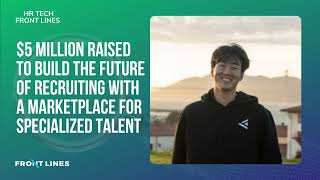
John Kim's Paraform raised $5 million in a single day by building a marketplace that matches companies with specialized contingency recruiters. The platform has signed up 10-15k recruiters, serves 200+ companies, and is doubling month-over-month. Kim argues aligned incentives and platform features solve quality concerns that plague traditional contingency recruiting.
Chapters
Welcome to Category Visionaries, the show dedicated to exploring exciting visions for the future from the founders who are on the front lines building it. In each episode, we'll speak with a visionary founder who's building a new category or reimagining an existing one. We'll learn about the problem they solve, how their technology works, and unpack their vision for the future. I'm your host, Brett Stapper, CEO of Frontlines Media. Now let's dive right into today's episode. Hey everyone, and welcome back to Category Visionaries. Today we're speaking with John Kim, co-founder and CEO of Paraform, a recruiting platform that's raised $5 million in funding. John, how are you?
Great, Brent, how are you?
I'm doing awesome, and I'm super excited for this interview. So I first found you when I saw a post on LinkedIn about your seed round, which you raised in one day. So talk to us about that one-day fundraise.
Yeah, I think I have to be perfectly honest, I thought about before posting, I was like, oh, should I really do this? This is going to create too much noise, but I think it's good for getting the word out there. But yeah, it did happen in one day. Basically, we actually weren't raising. We weren't really cash constrained. We were growing, just like focusing on product and growth. And we actually made a very important hire for one of our customers. It's a company called Hightouch. They're a very fast-growing Series B startup, really respect what they do and the team they're building there. And essentially we helped them hire an engineering leader, and they've been struggling to hire that role for 8 months. And not because they were doing something wrong. It was just incredibly hard role to recruit for. And we filled it in 2 months, including Christmas and New Year's. So it was pretty quick. And I think it was a testament to what our marketplace could do for our customers. And the head of engineering there, his name is Corey. He actually introduced us to the general partners at A-Star Capital who led our seed round. And I just went over there with my co-founder in their office in North Beach. Just like thinking, you know, we'll say hi, you know, develop a good relationship. And yeah, it ended up being like we pitched them and then we got a text saying, hey, do you want to grab drinks at 5 PM? So we met them again that night. We talked for a few more hours and we got our term sheet. And I think it was very clear that they wanted to work with us and we really liked them as well. Super great investors. So yeah, that's kind of the whole story. Yeah.
Amazing. Well, glad that you shared that. That's what led to having you on the podcast. So let's talk a little bit about the company and really what the platform does. So can you give us just a high-level overview of what the platform does and the value it brings?
Yeah, for sure. So it's a marketplace. On one side, there is companies that are hiring difficult, hard-to-fill positions. On the other side, there are specialized recruiters that can help you place those roles. So pretty simple. It's a recruiter marketplace. And imagine a scenario where you want to hire a product security engineer. I'm actually talking about one of our customers as well. You want to hire a product security engineer. Yes, you might have a talent team and you have a good network work with other engineers on your team, but you have a high bar, you're struggling to fill the role. What happens if you post that role on our platform is based on the requirements you have, no matter how niche, it matches you with recruiters with the relevant network and experience. So that customer who posted the product security engineer role on our platform matched with recruiters from Brex, Airtable, ex-Brex and Airtable, who happened to recruit product security engineers for like 5+ years in their career. So they obviously know all these good product security engineers in their network that they can just give them a call. So it's like leveraging recruiter networks, but also their time and expertise to look and target these talent pools you want to go after. So really it's a new way to leverage like relationships, recruiter networks, and work with a ton of people to, you know, fill your most difficult positions. And we've been seeing a lot of success there so far. Yeah.
And then where did this idea come from for such an innovative approach to recruiting?
Yeah, so when we first got started, we wanted to solve a real problem, and my co-founder and I at the time were surrounded by a lot of early-stage founders. Actually, like the YC, I think Summer '22 or '23 batch was finishing up, and a lot of our friends were like, hey, we really need to recruit founding engineers. Like that was our number one problem. And we looked at all the methods they were using to hire founding engineers, like whether it's their network, which is finite, or posting a job online, like that obviously is a lot of noise and the quality is not that good. We just like assessed all these methods. Methods, and none of them seemed like slam dunks. So we thought there needs to be a new approach. And we first started off by making a marketplace, like a referral, like bounty marketplace, where essentially an engineer could refer another engineer and that company pays them a bounty for making that hire. It was good. Like, I mean, the quality was fine, but it was sort of hard to scale because if you think about it, you know, even if you're the most well-connected engineer, the amount of people you know that are available to work that are interested in that position and also a good fit is pretty narrow. That's a pretty narrow window. And also it seemed like the incentive structures weren't like that sort of aligned between all parties. And so we were like, oh, okay, like this works, but it's not growing as fast as we want to. And then we sort of pivot into more like professional recruiters and it made sense. You know, it had all 3 things, consistency, you know, because it's their job, they were used to it, they were professionals, they get paid, they have a bigger network and they also have the ability to expand their network really quickly. You know, they do sourcing, right? They have all these networks. Networks that they built. So yeah, we pivoted to more professional recruiters and have been growing since then. Yeah.
And are there any numbers or metrics that you can share that highlight some of that growth and adoption you're seeing?
Yeah, so we doubled this month from last month, which is good. We 10x'd our revenue from last year. And also like when it comes to recruiter signups, I think we crossed like somewhere in between 10,000 to 15,000 recruiters have signed up. Obviously, like they all specialize in different areas and niches. And yeah, we helped like a bunch of companies, I think 200+ companies with hiring so far. Yeah.
This show is brought to you by Frontlines Media, a podcast production studio that helps B2B founders launch, manage, and grow their own podcast. Now, if you're a founder, you may be thinking, I don't have time to host a podcast. I've got a company to build. Well, that's exactly what we built our service to do. You show up and host and we handle literally everything else. To set up a call to discuss launching your own podcast, visit frontlines.io/podcast. Now back to today's episode. And what are you doing to attract those companies from a marketing perspective? What's that growth engine look like?
Yeah, so we mainly have like, I mean, it largely divides into like outbound, inbound, and referrals. With outbound, we're inspired by a lot of companies like Retool, Ramp, and built this outbound engine where we would specifically like target people in a scalable way. So if anyone is interested, actually, I'd recommend reading the Retool operator Playbook by David, one of the founders of Retool, and he kind of outlines how he thought about outbound. And I think outbound gets a lot of like hate and, you know, it comes with like mixed results, but I think if you really execute it well with the right tools, it's really good. And it's one of those things where you can like always rely on, and it's like your proprietary strength rather than like referrals or your network, which depletes, right? So we built this outbound engine where we have these emails that we use. And then do prospecting and use like a bunch of tools to like reach out to target accounts. So that's been working really well. Inbound, we do a lot of like organic social, like mainly posting on LinkedIn. So we create content around how like these really fast growing companies make really critical hires. We post about success stories and just share content, and that leads to people being interested and then booking a demo to post on our platform. And actually a lot of our customers also come from word of mouth and referrals. I think really that's the only viral way to grow. It's like if you create a product that your customer loves so much that they tell 5 other people and those 5 people then tell another 5 people and so on, like pretty quickly before you even realize you're growing really fast. So we try to focus on like a very good product and customer like experience after they onboard. So those are, I think, the main 3 channels we use to grow our customer base.
The outbound side, what's the tool stack look like? What tools are you using?
Yeah, definitely like very happy to share this. So the first end, which is prospecting, we work with contract VAs or SDRs, VA as in virtual assistant, I think is short for. We know a friend who knows a lot of like remote workers in the Philippines. And the reason why we chose to work with remote like contractors, like essentially humans other than like AI tools or scrapers for prospecting is we realized that the way you prospect is so important when it comes to conversion rate and how you win deals. You don't have that much outbound capacity because of Google's policies and like you can't just hit up everyone in the world. So it's quite expensive to spend one seat on a bad prospect. So we actually think that it's really important to care about like quality at the top of the funnel. So we work with these contract SDRs and, you know, our lead source is people who are hiring, right? So let's say there's a job board and there's a lot of big startups that are hiring. We would then, you know, work with these VAs and SDRs to help with prospecting. And then I use Clay to like clean up that data. So whether it's like, you know, yeah, splitting first name and last name, everything from that to some custom workflows. And then once the data is cleaned up, I use SmartLead and/or Apollo to send out emails and manage all the outbound campaigns. And then once that's done, obviously demo booked, and then Yeah, it's close one after the sales call. Yeah.
So cold emailing is not dead then.
It's definitely not. I think a lot of people think that, but I mean, it works for us.
So I think bad cold emailing is dead. You know, some of the pitches that I get, they're just awful and I'll never respond to them in a million years. But every now and then I see good pitches and I always respond to good cold emails. So I think bad cold emailing is definitely dead.
Yeah. I think like I can also say that I don't really respond to cold emails myself and it's kind of funny that I use it to like get our customers. But I think what I realized was I really thought from like the ground up, right? Like what kind of cold emails, if I ever do, do I respond to? And it's not like an email with very good copy or some catchy like hook or subject line. It's really the only ones I would ever respond to is if it's really relevant and a pressing problem right now. Like it doesn't have to be that good of a cold email. Like I would have like a sort of quick glance at and know whether this is relevant to me. And that made me realize that actually cold emailing, like timing is the most important. And if you want to get timing right at scale, you need some level of volume. Like it depends on what industry you're in and what kind of buyers you're targeting. But in our case, like if it's, I don't know, heads of talent or head of engineering or recruiters or founders, some of them are doing the recruiting on their own. Some of them are using this method. Like it's pretty hard to tell like whether they're going to be like a great customer or like the right customer profile. So we actually try to like engineer luck a little bit by using like a little bit of volume-based approach, but still like targeted messaging. And that way we can like increase that surface area of hitting the right person who has that relevant problem at scale. So yeah, I think that's kind of our strategy.
And what kind of volume are you looking at? Are you sending like 5,000 emails a day, 50,000 emails a day, or 500 emails a day?
Not that much. I think it's probably closer to, yeah, it's probably closer to 500. Like definitely not in the thousands. We probably could, but at the At the moment, yeah, it's, it's probably a good reminder to increase it, but yeah.
Now what about, you know, you have a unique point of view here on the recruiting space. Are there any people that you run into who don't agree with this perspective and like, don't think that this approach to recruiting can work or is everyone on board as soon as you have a chance to explain it?
Yeah, that's a really great question. So if you think about who our customers are, they're very adjacent or actually pretty exactly similar to people who would work with recruiting agencies and external recruiters. So if you think about that as our customer base, there's definitely a lot of debate around like, oh, like all recruiters should be in-house or contingency recruiting is bad, or there's a lot of discourse around that. I agree that recruiting has a lot of noise and there's a lot of bad recruiters as much as there are good ones. And so that kind of created this negative connotation around even the word recruiter, I think. But I feel like my personal take is contingency recruiting The incentives are actually like more aligned. And I realized this when we were experimenting with different product lines or thinking about, okay, like what happens when we engage a recruiter? I think the fact that you get paid for results is a good thing, especially in recruiting, like whether it comes to speed, whether it comes to quality. I think it just has all these checks and balances that work. And some of the best recruiters I know are agency recruiters, like I think there are things that in-house recruiters are very good at, such as like implementing a good process, looking after candidate experience, employer branding. These are all very, very important things. But when push comes to shove, like when you kind of need results, like you just need good candidates in your pipeline, I actually saw a lot of contingency recruiters outperforming in-house recruiters. And not to say one's like better than the other, you need both in different situations, but I think pound for pound when it comes to sourcing, And just getting good candidates to be interested in your company at the top of funnel, I do think contingency recruiters are very good. So we do get some objections saying like, oh, we'll never work with an external recruiter, but that's actually where our product comes in. We have all these marketplace incentives, features where all the concerns you have around contingency recruiting, oh, incentives are not aligned. It's very hard to control quality. It's hard to communicate what our standards are, you know, things like that. We actually have features and things built out to combat. So I think that's why a lot of people who were previously not open to doing so use our platform and continue to do so. And it's like a win-win situation for both contingency recruiters and companies. Yeah.
This show is brought to you by The Global Talent Co., a marketing leader's best friend in these times of budget cuts and efficient growth.
We help marketing leaders find, hire, vet, and manage amazing marketing talent for 50 to 70% less than their US and European counterparts.
To book a free consultation, visit globaltalent.co. What's your market category? How do you think about the market category that you're in?
Yeah, I think first and foremost, the marketplace, like I think we would just be categorized similar to like, I don't know, Airbnb, Uber, Instacart, what have you, because yeah, fundamentally we're connecting two people who want to be connected. And I obviously the subgroup within that is recruiting or talent acquisition. I think there's a lot of recruiting startups in different spaces. Like there's the ATSs. Like I would say they're more like a B2B SaaS that's solving a manual problem in recruiting. So it's like more like B2B SaaS than recruiting. When I think recruiting, I think of like true recruiting startups, even like I think Triplebyte was one thing in the early days where like your performance, your customers evaluate you for helping them make a hire rather than like, oh, making the interview scheduling more seamless or having a careers page that's easily be able to like set up using an ATS, right? So I would say first category is marketing. Place, and then second would be recruiting.
What do you think is the future of the platform? Let's maybe zoom out 3 to 5 years into the future. What's that big picture vision look like?
Yeah, so like I said, our market is like the external recruiting market, which I believe is like a $700 billion market globally and growing. And that obviously splits into like temp staffing, permanent, like RPO. There's like different categories in there, but fundamentally I think of it as like there's that market and we're trying to put as big of a slice of that onto our marketplace. And right now we're working on one category, which is like mainly focused on like early stage, like really fast growing early stage companies that need to fill difficult positions. And then we're moving on market as well. So now we have enterprise customers like Series D companies and above. So obviously moving on market is one thing and we've proven that actually we can. And, you know, I think we'll be tackling different industries as well, like not just tech, but corporate, like finance. All these other industries you can think of. And then we definitely thought of us as being a global company from day one. Due to like natural demand, we've been able to try our product in different like regions. Just people ask, hey, could you help with this? And really the way people work with external recruiters and engage with our platform is very homogenous across the world. And recruiting is all online. It's not like there's some like regulation or some kind of physical supply side you have to secure. It's all online. So we definitely want to expand globally as well. And then once there's like that distribution, obviously there's probably more product lines that we can launch and also diversify our supply side, right? Like, you know, right now it's just recruiters, but maybe there's more to it.
Amazing. And final question, if we look ahead for the next, let's say 12 months, what is your number one top priority that you're focused on?
Yeah, it's a bit cliché, but definitely growing our team. And I can also say that 100% of our team came from Paraform platform, like recruiters on our platform helped us. Like we used our own product and it worked. Like we're building, you know, I'm really learning from my own customers that hiring is so important. Every day I'm just reminded how important this is. I think there was this quote by like Steve Jobs and someone asked, like some journalist was like, what product are you the most proud of? And he's like, everyone thought he would say like the Mac or the iPhone, but he said his team at Apple. That was the most, that was the best product he built. And I think I resonate with that a lot because Yeah, I think like recruiting is the most important thing, your strongest moat and differentiator when building a company. I think, you know, the cost of building software is going down, the cost of starting a business is going down, and I think really the way, only way you differentiate is that. So we're laser focused on building a great team internally, and if someone asks like, hey, after one year, if you didn't achieve this, what would you like regret the most? It's like not building a strong team. So we're a pretty like small and lean team. Trying to do a lot with that, but yeah, just growing now since our company is growing. So yeah, that's probably like my number one focus. And I think everything else follows through, like product, go-to-market, things like that all follow as a function of that.
And, uh, one more question actually, since you're an SF, I'm an SF, is SF dead?
Oh, absolutely not. Absolutely not. I think like this is like maybe, you know, on Twitter people say, hey, like don't come to SF. Like you see homeless people everywhere, whatever. I mean, there's definitely areas that like, are not ideal to live in, right? But it's a very small area in SF. I think SF is as lively as ever. I think still the place where the smartest people in the world come to pursue their ambition. Like if you really think about it, there's this small area on earth where so much value has been created. Like I think that network effect the city has is just not going anywhere. And I moved here 2 years ago from Australia. And I tell my smartest friend in Australia, all friends in Australia, hey, you have to move here. This is where you need to be as like a young, ambitious person. So yeah, definitely not. And I love SF.
Totally agree with you. All right, John, this has been a lot of fun. Before we wrap, if there's any founders that are listening in that want to follow along with your journey, where should they go?
Yeah, I think mainly I'm active on LinkedIn. So if you want to follow myself or Paraform on LinkedIn, you'll be able to sort of keep up with the story. Yeah.
Amazing. Thanks so much for taking the time.
Thank you, Brett.
This episode of Category Visionaries is brought to you by Frontlines Media, Silicon Valley's leading podcast production studio. If you're a B2B founder looking for help launching and growing your own podcast, visit frontlines.io/podcast. And for the latest episode, search for Category Visionaries on your podcast platform of choice. Thanks for listening, and we'll catch you on the next episode.
More from John



The AI Recruiting Platform Used by Palantir, Shopify & Coinbase | Warp speed | Episode 2




Surprising a Million-Dollar Recruiter With a Porsche and a Suite at the Four Seasons