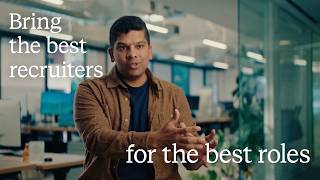
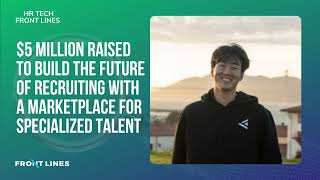
In this interview, John Kim, founder and CEO of Paraform, shares his personal and professional journey—from growing up in Korea and studying robotics, to launching his first startup during COVID and being acquired at age 21. A chance meeting in New York led him to San Francisco, where he and co‑founder Jeff identified a glaring problem among fellow startups: the high cost and inefficiency of hiring founding engineers. This insight sparked the creation of Paraform, an AI‑powered recruiting platform that matches specialized third‑party recruiters with companies seeking talent. Kim describes how the platform now serves high‑profile clients such as Palantir, Shopify, Coinbase, and others, having facilitated over 1,000 hires and paid more than $10 million to recruiters in a single quarter, directly impacting recruiters’ lives. He explains the contrarian, recruiter‑first strategy, positioning recruiters as data‑rich talent agents akin to sports agents in a talent war, and argues that while AI will commoditize many aspects of hiring, great talent will remain irreplaceable. The conversation concludes with Kim praising Warp’s payroll and HR service for its speed, reliability, and exceptional customer support, highlighting a personal anecdote where Warp’s rapid response on a Saturday night cemented his trust in the platform.
Chapters
I was born in Korea and then I moved all over the world, you know, every 2 to 3 years. And I remember seeing everything and just seeing how big the world is. I always loved building things, so I studied robotics in college. And then COVID happened and I couldn't go to labs anymore. You know, as a mechanical engineering student, like, it's a very big limitation. So I think that's when I decided to start my first company. With my roommate who actually joined the company as well, which is exciting. So that's probably like the first thing that kind of led me to think about, okay, like this is like when I want to start my first company. The other thing is I think I had— I lived sort of my life on a very like, I guess, normal timeline of like, oh, like when you're 20 you do this, when you're 30 you do that. But I had like a health scare when I was 18 and it was thankfully nothing. It was just like a false alarm. But I think that actually made me rethink about the timeline. And it's like, oh, I shouldn't live life based on like the standard sort of timeline that everyone has. But, you know, I almost thought about it in a very compressed way. And I think those two things was like a catalyst to really thinking about what I want to do. And that's when I decided to build my first company. I scaled it to a certain scale. We got acquired by a Series D tech company at the time. I got to be part of an exec team doing product at quite a young age, at 21. So got to experience both sides. And then, yeah, I was randomly on a business trip to New York, actually. I think that's where we first met, too. And my co-founder, Jeff, he's from here. And then I met his friends and just saw like-minded people. And they convinced me to move to San Francisco 3 years ago. And I basically never left since then. And then that's how Paraform came about. Yeah. At the time, we were working at a coworking space, which means there were other startups around us. And we asked them the question, what is your sort of number one problem right now? And how much would you pay us to solve it? And pretty much every single one of them said hiring founding engineers, and they'll pay us like $30,000 or more to solve that problem. And we were just sort of shocked. I remember, wow, how inefficient is recruiting or the matchmaking? And also, how important is it for these people to care this much? And I think that's when we first like dived into this space. We tried many different solutions. Like, we were recruiters ourselves. We built all these different tools, software tools. But recruiting didn't get any easier with all those solutions. And I think ultimately, after iterating a lot, we got to what we're building at Paraform today. Paraform is an AI-powered recruiting platform that connects specialized recruiters with companies who are looking for talent. So the value prop for companies is we enable every company in the world to access on-demand specialized recruiters for any number of roles they have. And so we work with customers like Palantir, Shopify, Coinbase, Decagon, Rippling, many others. And for the recruiters that help these companies, we help them build and scale independent sustainable businesses. So yeah, really exciting stuff. I think like definitely we crossed like 1,000 total hires through the platform. I think if you just imagine what that actually means. Sometimes we used to make one hire every maybe month. There was no liquidity in the marketplace. It barely worked. I remember making no revenue for the first year running the company. And now we make so many hires every single day that it sort of became this notification on our dashboard. But often, ideally as much as possible, but every month. As a team, we zoom out and think about the impact we created. And if you think about 1,000 hires, like, that's like at companies like Warp. That's at companies like Palantir. Like, just doing very, very meaningful work. Like, these are not just any jobs. This is, you know, potentially life-changing jobs for a lot of these people. Like, our mission is to help our customers fulfill their mission, right? And what better way to do that than, you know, helping them hire the best talent? We paid more than $10 million in the last quarter alone to recruiters. And these recruiters are paying their mortgage. They are, you know, they paid for their wedding. You know, they just, someone just had a newborn who said like, because of Paraform, they're able to have like, you know, grow a family. So I think just like, I think that's the most rewarding, just the amount of impact we're able to create. Yeah. I think we were the first to sort of focus on the recruiters, right? And if you think about it, it's, especially in the early days, that was a very, like, quote unquote contrarian, non-obvious thing to do. Like, why would you go after recruiters? Like, aren't you just introducing another layer? But in fact, actually, the learning was that recruiters, specifically third-party recruiters, are I think the richest source of the talent market data of, like, they know when candidates are moving to what company, what they really want, all these things. So I think our sort of, quote unquote, contrarian take on solving this problem is focusing and starting with the recruiters. And we really think that recruiters will sort of be like sports agents, right? Like, you see this sort of happen where people are doing M&A just to hire talent. Like, you know, it's a talent war out there. And I think as AI gets better and better over time, it'll commoditize a lot of things— data, compute, all these things. But I think, you know, the last thing it will commoditize and possibly never commoditize is great talent. I think there was an article called like rule of 3 and 10 or something. So like the idea is that any system you have when you're 3 people, if you keep that and you get to 10, it breaks. And then from 10 to 30, it breaks again. And 30 to 100, it breaks again. I can mention as a happy Warp customer, Warp didn't break when we were going from 5 to 50. It supported our needs when it was just me and my co-founder and 1 employee to all the way to 50 people. So I think certain systems break, but Warp didn't. Yeah. We used this sort of more legacy vendor for our payroll when it was just 3 people. And yeah, it just had a lot of unnecessary features. In fact, it just slowed things down. I think I paid to make things more streamlined and efficient, but it slowed things down. And also, the customer support, it didn't really feel like they cared about each customer, whereas— and that's kind of why we switched to Warp. When we started using you guys, I think, you know, the amount of time it takes us to get through a payroll session, right? The amount of time it takes us to onboard a new hire, like these things all condensed. I think it gets kind of reflected in your name, Warp, like it does, it's really fast. And I think it just reduces the amount of time we spend on all these items. So I would say for HR and payroll, Warp has been very good for that. Yeah. Hey, I'm John. I'm one of the founders and CEO of Paraform, and we're building an AI-powered recruiting platform that connects specialized recruiters with companies that are looking for talent. I think one story I remember very vividly about Warp is we were sort of switching from a legacy provider. And one of the number one sort of reasons why we were frustrated is, well, not only does it slow us down, but also they just don't seem to care about their customers. The customer support was just very, very poor. We had to call them 10 times just to get on the phone. And I remember sort of like, okay, let's try out Warp and this is something we want to use. And I remember on a Saturday night at 10:00 PM, and I don't want to set this as the standard, but on a Saturday night at 10:00 PM, I messaged sort of someone on the team about— and I wasn't expecting to hear back. I was obviously thinking, okay, on Monday I'll hear back. And then within a minute, you just get a response, a detailed on how to fix something. And I think that was like the moment where it's like, okay, I can like trust. 'Cause like I think with payroll and HR, it's such a, it's very sensitive, important data. You know, it's mission critical. Like what, you know, if you're kind of like late with payroll or something's wrong, it's like a big deal, right? So trust is really important. And the fact that like there's someone on the other side where like, you know, it's like very reliable. And I think that was just missing with like other providers. And I think Warb really had that. Don't expect, again, a Saturday customer support or anything, but I remember that being a really special moment.