Ask Me Anything with FieldLark AI and John Kempf
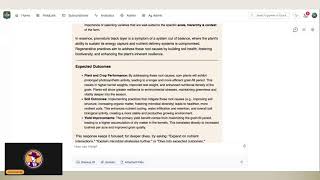
John Kempf demonstrates FieldLark AI in a live Ask-Me-Anything format (product launch week). He runs multiple agronomy queries through FieldLark and comments on responses: managing downy mildew (soil amendments, environment, foliar and long-term strategies), differences between amine nitrogen and urea (plant uptake, urease/nitrification inhibitors, protected urea), root knot nematode treatments (microbial allies, humic drenches, rotations, biofumigant cover crops), and delaying black layer in corn (nutrient timing, K, P, micronutrients). He highlights FieldLark's ability to ask clarifying questions, generate 'explore further' prompts, and the planned analytics/algorithmic engine for precise, repeatable recommendations.
Chapters
All right. Hi friends. Welcome everyone. I've been pretty excited about our launch of fieldlark this week and making it publicly available. I've talked about it on the podcast. I described the vision of how we're developing it and some of the things that we're working on. I just wanted to show you some of the capabilities that we're working and that we've developed just with the, the chat feature alone. So I'm not going to get into projects and using the projects, but I'm, I'm just going to focus on what capabilities Field Lark has because it's, I'm quite impressed with the results that we're getting back from it. So what I'm going to do is I'm going to, in our previous, ask me anything last, what was it last.
Week or the week before?
I didn't, wasn't able to get to all the questions that were, that were asked. And so I'm going to pop in with a couple of those questions and see what field art comes back to and I'll just offer my commentary as well. And if you have any questions that you would like to have asked, just pop those into the chat. I'll see those here and depending on how rapidly they come through and how many we have, I will be able to answer those and run those through Field ARC as well. So one of the questions that was asked last week was what are possible solutions for Downy mildew?
Is it possible to prevent it with soil amendments?
And so I gave this answer a quick pass in our live ask me anything, but I wanted to bring it into fieldlark as well. All right, so with fieldlark, fieldlark is specifically trained, instructed to, if you ask it a simple question like this, you can just ask it for. So it's, it's now coming back and saying, oh, I can give you better information and better feedback if, if you tell me exactly what's going on, what crop are you growing?
What stage is it at? Where are you located?
How severe is the disease? The more information you give it. If you give it all this information in the very first prompt, it won't ask you this, this follow up question. But if it's missing context, it's going.
To ask for additional contextual information.
Or it can just go ahead and give you, right now it's just going ahead and giving you general advice. So general general recommendations. It's describing environmental controls and air circulation and water management. It starts talking about foliar applications. So these are, as you can see, these are very, very general applications, very general recommendations and it also dives into your long term preventions and soil amendments, which is exactly what the lady asked for. Who asked this question in our original ask me anything. So it describes some specific soil amendments but as you can see this is very high level general advice. So I'm also, I'm just going to go into more detail and I'm going to say I am growing cucumbers, we've just started harvest. And disease is quite severe. So now I've answered some more questions.
I'm giving it some more context about exactly. I haven't yet told it location, I haven't told it about rainfall and the.
Type of pressure that we're getting. So we'll see what Fieldworks comes back.
With when I ask it more questions here or give it more detail.
One of the capabilities that Field ARC has that I am not going to use today. I'm going to run another live stream here in the next couple of days. But we also have if you go upper right hand corner, I'm here on.
A computer screen, this is a floating bar on.
A phone. But here you can also run projects and so I could upload SAP analysis, soil analysis, I can upload all types of documents and store them in a.
Project and ask questions around that particular project.
Well, this is the first time I've.
Experienced this in quite some time but apparently fieldlark is getting stuck. So to my disappointment, what do we do here? Isn't it magical what happens when you're on a live stream? All right, we're back in here in field lark and I'm back here to my original question in the historical chat and I'm going to post in that follow up response once more to see what response we get back. All right, here we go. So Field ARC says thank you for providing that crucial context and here are.
Some short term treatments.
Here are things that you can do immediately.
But if you remember the original question was what can we do with soil amendments? So describes building Humus cover cropping Composting.
Corporation describes the importance of the rise of Fiji cycle Redox dynamics.
So this is still quite generic information, quite general information. And so now I want to dive deeper because the question was specifically about soil amendments. So I'm going to ask what soil amendments could contribute to.
Just going to ask resistance making deliberately asking these questions at a very high level and not giving it a lot of detail. All right, so we get into soil.
Amendments and now when asked that specific question it starts talking about specific beneficial bacterial and fungal species in populations that can, that can suppress downy mildew, that can change plant physiology. Starts talking about calcium, phosphorus, potassium, specific microbial inoculants. So this is, this is an example of these, these chatbots. This is just like Chat GPT or Grok or Gemini. One of these other major chatbots is you. You get different types of information back.
Based on the questions that you ask.
The more detailed your prompt is, the better a question you get in response. And so I've been asking a very high level question without a lot of detail just to see how it responds and interesting. Fieldlark has this additional explore further section that you can get into. And so here's question number five. Here is what are the root causes and the major contributing factors that lead to severe downy mildew problems in cucumber crops? And field ARC will respond to that question. So I'm just going to type in number five and it will recognize that.
I'm asking about question number five here and let's see how it responds. All right, so understanding why behind the problem.
Root causes and contributing factors to severe.
Downy mildew environmental conditions, High humidity, prolonged.
Leaf wetness, cooler temperatures, plant susceptibility due to nutritional imbalance and stress, excess of nitrogen, efficiencies in key structural and signaling nutrients.
Again talking about calcium, phosphorus, potassium and silicon.
And you can now take this information similar to the earlier response and dig deeper into which soil amendments contain those elements that might improve the long term plant resistance. So this is, I'm quite pleased we started here in this particular chat on downy mildew with fairly high level, high level discussion, not looking at any specific details but as you dig deeper you can just continue to dig in and get more and more information out. So here's these, these further questions here. Question number two is what are the most effective cover crop species or mixes.
For building soil suppressiveness against downy mildew incurred rotations. This is, this is an awesome question.
And by the way, none of these, these are questions that Field Lark is generating on its own based on the conversation. So the longer you stay in one chat you have the ability here to just start a new chat. But the longer you stay in one chat, Field ARC will remember what you've talked about previously and it will remember your previous responses and the things that you tell it and the information that you provide it and so, and remember the things that you're interested in. So the answers as if you stay in one chat the answers continue to.
Get better and better and better as you Refine it as you go along.
All right, so I wanted to ask it question number two up here was.
Effective cover crop species or mixes for building soil suppressiveness. All right, so what are they? What cover crops build soil suppressiveness.
Here is describing some of the mechanisms, increased humus formation and some of the.
Redox dynamics that contribute to downy mildew resistance.
When you think about it, this is here when we talk about disease suppressive soils. This is an indirect mechanism because downy mildew is an airborne fungal disease. It's not a soil borne pathogen. But it is still possible to change the soil dynamics such that the plant has greater immune function and that we still have some resistance and resistance mechanisms. So it gives you a recommendation. Specific types of grasses, legumes, the specific impact they have, brassicas, broadleaves, et cetera. And this again, this is a domain.
Where there's constant improvement happening here.
All right, so I'm going to switch gears. There was a question that was asked in the ama. What's the difference between amine nitrogen and urea?
I'm going to open a new chat, I'm going to paste the question in here.
And the question was, what are the differences between amine nitrogen and urea?
I understand that urea has amine hydrogen in it. It would be good to understand what the practical differences are from an agronomic perspective. Let's see what field ARC has to say.
You notice here we've got a more detailed question and so field arc and it's not about a crop. So field ARC didn't ask for further context.
It's able to answer this question very directly.
So what a wonderful question.
Understand the nuances of various forms of nitrogen is key to truly regenerative and efficient nutrient management.
Something that I completely concur with. So getting to the heart of it, Amine nitrogen and urea amid NH2 is the fundamental form of nitrogen that plants.
Ultimately use to build proteins.
And then it describes how plants absorb nitrogen as either ammonium or nitrate or directly as amine nitrogen and use that.
To synthesize amino acids and proteins.
So describes the urease enzyme, the transformation in soil ammonia to ammonium. So there's, there's really great application or great information here about, oh, I love this plant uptake and energy costs. Describing the three different forms of plants mineral nitrogen that plants can absorb.
Ah, this is cool. Look all the way at the bottom here. Practical implication, the form of nitrogen applied influences where carbohydrates are preferentially utilized in the plant foliar urea can be a highly efficient way to deliver nitrogen, especially when rapid uptake and minimal energy expenditures are desired. This, this whole section, this is, this.
Is a really great answer. This is a better answer than I.
Would have been able to give. More detailed, more comprehensive and all of the information is right there.
So now this, the author of this question asked a follow up question or kind of part two. And here there's discussion about urease inhibitors.
Which I'm not particularly a fan of, just for the record, talks about polymer coated urea.
But this question originally had a follow up question and I'm now going to ask Fieldlark the follow up question which.
Was what is your opinion on protected urea? Are there any other means of protecting urea? As this is becoming mandatory in the UK and in Europe and so there, obviously there's.
Fieldlark proactively already gave us some recommendations for proactively managing urea with urease inhibitors.
With placement and with polymer coated urea. Let's see what else it has to say. All right, here we go.
Further explanation of urease inhibitors. Further explanation of nitrification inhibitors, which are.
Also important, or at least they are if we're going down this pathway. Urease inhibitors just prevent the first half of the process. The second half is the nitrification. So the reality is you need both combined, which very few products have, at.
Least that I'm aware of, and describing.
Polymer coated urea as well.
So there's a lot of detail here. And look at this says addressing symptoms, not root causes.
Protected urea is a technological fix for a problem often exacerbated by degraded soil health.
High nitrogen losses are often a symptom.
Of low soil organic matter, poor soil structure and imbalanced or suppressed soil microbiome.
This is why I love Fieldlark, because we didn't train or teach FieldArc to say any of this. Instead we just simply said we want you to look at these microbiome and nutrient interactions from a first principles perspective and from the perspective of enhancing and developing plant health and soil health and.
The microbiome that is associated with them.
That's it. We didn't say urea is bad news. Fieldmark arrived at that all on its own. By looking at all of the available literature and the evidence and developing this, I'm completely in agreement that protected urea.
Is a technological fix for a problem.
It's not. And you know what's interesting is when you have very healthy microbially active soils, it will actually degrade the breakdown. It will speed up the degradation of.
Polymer in the case of polymer coated.
Urea and break it down even faster. So the healthier the soil, the less of an impact polymer coating has. So just the framing and the way that field ARC is describing these interactions is this is. I'm so impressed by the approach and.
The types of recommendations that it is.
Making simply as a result of looking at information differently from a first principles perspective. And so I've glossed over and skimmed over a bunch of information. It describes the outcomes that you should be able to expect by managing urea.
And managing nitrogen differently from a plant.
And crop performance perspective. It's describing the soil outcomes you should be able to expect. It's describing the yield improvements you should be able to expect. And now we go back to this explore further section where you can dig in deeper and here's a really good question. First question on the top of the list. How do microbial quorum sensing and rhizophagy.
Specifically contribute to nitrogen cycling and retention in a healthy soil?
That's kind of a cool question.
And actually I've never asked Fieldlark about rhizophagy. I want to know what it has to say. So I'm going to punch in question number one. The waiting message here is that it's eavesdropping on the earthworm. So that's kind of cool. All right.
Quorum sensing nitrogen cycling describes first it describes microbial quorum sensing, sophisticated cell to cell communication system.
And then it talks about the regulation.
Of nitrogen fixation and the contribution nitrogen cycling and retention, the coordination of nitrification and denitrification. So it describes how with quorum sensing, the microbial, the microbiome actually determines how much ammonium to convert to nitrate or how much, how rapidly to convert urea. So there's, there's all of this, this microbial communication that happens. Then it describes the rhizophagy cycle and its impacts on nitrogen. So this is, this is pretty awesome. I'm so impressed with the answers like these. These are better answers than I would.
Be able to come up with in many cases right off the top of my head.
And because just also the answers are.
So thorough and they're complete. And the follow up questions, how does the plant's redox state influence its ability to engage in the rhizophagy cycle and acquire nitrogen microbes? So I happen to know that question number one is an extremely important question.
Because the form of nitrogen, the quantity.
Of nitrogen that plants absorb is from a molecular or an atomic weight Perspective.
Is one of the most significant redox factors that changes plants redox state and has the capacity to produce an imbalance within the plant very quickly which then changes, it changes rhizosphere ph. So plants absorbing nitrate vs alkal vs ammonium one has the effect of alkalizing the rhizosphere ph and the other has.
The effect of acidifying it. One has the effect of a reducing effect and the other has an oxidizing effect.
And so the absorption of other nutrients.
Of calcium and zinc and manganese and.
Copper is significantly influenced by the form of nitrate, excuse me, by the form of nitrogen that plants are absorbing. And this gives you the opportunity to.
Dig into that and to really understand that well.
So I'm, I'm very impressed with, with.
Fieldlark and the answers that it is asking here.
So all right, I'm going to we have a few more questions. If any of you have any questions that you would like for me to respond to, you can just type those into the comments here on the live stream and I'm happy to entertain those.
And to ask those as well.
I'm going to ask one more question here that was asked about root knot nematodes.
Going to switch to a new chat.
And the question was I've recently discovered.
Root knot nematode infestation. I know of many treatments, but since I keep vegetables constantly growing in all my beds, are there any faster treatments I can use for soil and plant resistance? Also, what do you recommend for preventative maintenance in the future?
So I know how I would answer.
This question and I don't even remember. I may have answered it in the live stream, in the, in the AMA previously.
But I'm curious to see what Fieldlark how field arc responds because essentially what this, this individual is asking for is they're asking for short term treatments but.
Also for long term preventative maintenance.
And field arc is asking for more context for specific vegetable crops and so.
Forth, which I don't know and I don't, I don't have, I don't know any of this information.
So I'm just going to ask it.
To proceed with general advice. Let's see what it comes back with.
Now the way that I would answer this question, we have quite a bit of experience with a combination that we've.
Put together of humicarb and rebound molybdenum.
And C crop that I know to.
Be quite effective and also rejuvenate depending on the soil context.
All right, so proceed with general advice. So describes root knot Nematodes in brief and then it gives you a set of short term treatments. So there's a couple of organisms here that produce nematocity compounds.
Look at this. Consider a soil Drencher fertilizer. Application of a broad spectrum microbial inoculant, particularly those rich and beneficial fungi and bacteria. Combine this with a high quality humic acid product such as AEA's humicarb can significantly boost microbial proliferation and soil carbon cycling.
So I don't think, in fact I.
Don'T think I'm certain that Fieldlark has not yet been trained on our nematode protocol, hasn't yet been trained on many of our specific protocols because we've been wanting to see and to evaluate what types of results it comes back with.
And just based on very comprehensive literature review and first principles thinking it's coming.
Up with recommendations that are very similar to what we are already doing. Some recommendations for foliar applications for plant resistance which is actually I would, I would take a slightly different approach here. I would recommend Fotomag, although the micropak and macro pack combination could also work. But that can also be effective because it changes the, changes the physiological profile, the carbohydrate and protein profile in the root system which absolutely has an effect on root, not nematodes.
So now it goes to long term.
Preventions, starts talking about strategic crop rotations.
Cover cropping makes recommendations for specific types of crops.
So certain cover crops like specific varieties.
Of marigolds or sun hemp release biofumigant.
Compounds or create conditions that are unfavorable for nematode survival.
Planting describes recommended rotations. So this, I would say this recommendation is probably about 80% of the way.
There, maybe even more than that, 90%.
The one thing that I would add is here at the top it does say beneficial.
I'm trying to remember.
Let's dig deeper into, into the specific.
Fungi and bacteria that it is describing because. I'm going to ask what microbes can be added.
So I'm just going to ask it to go deeper.
What specific microbes can be added? Look at that. Question number one was how do specific beneficial fungi bacteria. Well, I know how, I want to know which ones. I want to dig deeper into which ones. Second question is what are the key.
Indicators of a healthy nematode suppressive soil.
Microbiome and how can they be monitored?
Third question is on SAP analysis. Fourth question is what are some specific.
Non host or nematode resistant vegetable varieties?
And this fifth question, what are the Root causes and contributing factors that lead.
To root knot nematode problems in agricultural system. That would have been an interesting one to ask as well. But let's see what field ARC has to say here.
All right, so key microbial allies against root knot nematodes. It describes nematode trapping fungi, which is awesome. Antagonistic fungi, Trichoderma, Aspergillus, Penicillium, verticillium, a number of these beneficial bacteria and nematophagous fungi, bia, Metarizium.
All right, this is good.
This is. So what you see here is out of, just because of my personal curiosity.
And what I understand about the microbiome.
Interactions, I would have liked to see this detail. I was hoping to see this detail in my first answer, but it didn't.
Show up in the first answer when.
It just described biological, kind of described biological soil amendments in general. But you can ask, you can take any of these questions, you can just dig deeper and to say what specific microbes and why and you get a much more detailed answer. So it's something important to remember when interacting with Fieldlark or with any of the, with any of these large language models as AIs that there are. There are token limits to an answer.
To a response that you get back.
And if you're not satisfied with the response, you ask it for more detail or you ask it to dig deeper.
Into a specific area and you'll often get much more comprehensive information.
On the other hand, if you don't want a deep and comprehensive answer, you just want something simple, fast, to the point. Tell it to do that as well. Tell it. Just give me a brief summary.
Give me a bullet point summary of the answer. Just answer in brief and you'll get exactly what you're looking for.
So here's a question from Josh Thurman. Hi Josh, good to see you here. Josh asked, let's look at delaying black layer, but perhaps not as a nutritional.
Sense, but more of a metric of hormones and how, perhaps looking at PEPC and glutathione and how to elicit responses. Oh, Josh, you're right.
You, you want to go deep into the weeds, don't you?
I'm trying to figure out how.
I don't think I can copy and paste in here. So we're just going to, I'm going to go to a new chat and ask the question. I'm just going to start with a very simple high level question. How can I delay black layer development in corn with nutrition management.
And see.
What response we get.
Back because I actually, I have experience with this. I know how to do this. I've had this conversation with several mentors of mine and we've done fair bit of work with this in the field.
The rule of thumb, there's some variation.
Of course, depending on which part of the country that you're in and water limitations and so forth. But the rule of thumb that one of my mentors told me from Iowa was that trying to remember the start date of this. I think the start date was R1, but he said that every day you can delay black layer after R1, you gain an additional five bushels of yield per acre. So delaying black layer in corn is actually kind of, is a very significant deal from a yield improvement perspective. And it's largely related to. Well, it's related to several things, but.
It'S related in particular to cell membrane strength and turgor pressure within the cells.
At the base of that developing corn kernel.
All right, it's asking for specific, more context. Corn varieties, soil types. And so I am going to skip all of that. It's already given us part of a recommendation. So nutritional stat strategies for delaying black layer development. Sustained phosphorus and potassium availability. Field Lark got this one exactly right. Most potassium gets applied at the beginning of the season where it has the least impact on yield. So potassium supply later during grain fill period is absolutely critical. Micronutrient balance, especially boron, zinc. It got that right. Calcium for structural integrity. It was. Field arc is correct on this one. Optimizing redux, redox dynamics and microbial activity.
Field Lark is knocking this one pretty much out of the park. All right, look at these great questions. What are the specific environmental stressors that can accelerate black layer development and how can nutrition help mitigate them?
What are the root causes and contributing.
Factors that lead to premature black layer development in corn? That's a good one. Let's ask question number four. I want to ask. Follow up on four.
All right. Root causes and contributing factors to premature black layer development.
We've got nutrient imbalances and deficiencies. And I'll definitely, I'm with Fieldlark that this one belongs here at the top of the list as priority number one. Again, it's highlighting boron and potassium in the previous example. I mean, as far as I'm concerned, calcium and silicon also deserve to be highlighted.
And it's talking about weather stresses, disruptive microbial activity.
This is quite thorough, quite a thorough explanation. Disease and pest pressure, which I would argue is associated with nutritional imbalances which actually show up Again here, imbalanced nutrition, such as excess nitrogen, insufficient calcium, or trace minerals, are often more susceptible to disease and insect pressure as their cell walls are weaker and their internal chemistry is less robust.
You know, this is just. I'm just blown away. This is so incredible because again, we didn't teach Fieldlark any of this. We didn't teach Fieldlark that plants with.
Imbalanced nutrition are more susceptible to disease and insect pressure.
We didn't do any of that. Instead, we asked it to look at our internal data. We asked it to look at the existing body of knowledge that is publicly available and to look at those nutrient interactions and disease and plant physiology associations from a first principles perspective, from trying to identify the root cause. Why is the root cause of a particular disease or a particular physiological reaction? And these are the types of answers that Field ARC is coming up with, the same types of answers, the same types of approaches that leading agronomists have.
Been taking for decades.
And so this is pretty remarkable. I'm actually very, very pleased with the results that they're coming back.
Now.
Is it perfect? Is it 100% accurate and correct? We know that these large language models have inherent challenges. They are imperfect, they're imprecise, they have strength that, that they have strengths and that they are an incredible librarian, that you can ask them a question. They have access to all of this information that you can't ever possibly hope to all learn and all have access.
To and to all recall and retain.
But it also, so it has that strength going for it. And then when we dig in and we test, we need to go in now and, and test all these various things. If, if we're responsible for a crop.
If we're working with growers or on.
Our own farm, we can now go in and say, tell me more about the use of boron and calcium and.
Potassium for delaying black layer.
How does that work exactly? What are the optimal times? What are the optimal forms? Which forms are best absorbed? What stage of crop should they best be applied? And then check that with experienced agronomists who have experience using these types of approaches and who are familiar with these concepts of plant physiology. Because the reality is, Fieldlark, because of its access to this large library of knowledge, is able to provide more comprehensive answers than even I am able to provide and that any other agronomist will.
Be able to provide.
So its answers are more comprehensive, but.
They lack local knowledge, they lack local context, they lack creativity, they lack.
Yeah, there is, there is still a need to partner this artificial intelligence with.
Human intelligence in the field and understanding what is happening and what's going on.
So I want to say thank you to all of you who've listened here, who've joined our live stream. I ask that you please sign up to fieldlark and test it. Let us know how it's working for you, please share it with your friends and if you can, please share it on social media, tag us and tell us, tell us about what you're learning with it, what you've discovered that surprised you. And I just, I'd love to hear your feedback and what is that you're learning with it. So I will. I haven't gotten into the topic of working with projects. If you have any familiarity with, with other AIs you're familiar with, I'm sure with being able to upload soil analysis.
SAP analysis and so forth, and having that analyzed for you, there are better.
Ways of doing that that are in development. So if you look at my screen here, I have some things showing up on my nav bar that you don't have when you sign into Field Arc. This one section here is analytics, and that is I mentioned in the podcast that we are working on building this algorithmic engine that you can actually. So this is separate from a project.
Although if we're fortunate, we might be able to get the two to link.
So with we're separately building this algorithmic engine that you can put in soil and SAP analysis and tissue analysis data that is tied to a certain block.
A certain field, a certain geographic location.
And the difference between the algorithmic engine where you put in all this analytical information is that unlike a chatbot or an AI, an AI has this inherent variability. You ask it the same question five different times and you're going to get five responses that are slightly different. There's maybe 70 or 80% overlap, but there's slight variability. With an algorithmic engine, you have precision, you have repeatability. It evaluates all of that information. It's informed by the chatbot and vice versa. The chatbot is informed by the algorithmic engine, but you get consistent, repeatable, reliable.
Recommendations that are more accurate.
And I think while they will without question, they'll be more consistent than human.
Recommendations based on what we're seeing at these very early stages.
So there's a lot of fun stuff that we're working on behind the scenes that we expect to release. I'm not going to commit to a certain timeline.
We'd love to see it in the, in the coming three to five months.
But it'll take as long as it.
Takes to make it awesome.
If we can make it as awesome as we've made Field Arch so far, that's.
That's the vision that we're striving for.
So thank you all for being here. Please share it with your friends, and.
I'll chat with all of you again sometime soon.
Have an awesome day.
More from John

Episode 186: The Power of Precision Management and Multi-Species Covers with Mike Thompson





Podcast Extra: John Kempf on Soil Biophysics, Plant Immunity & Foliars on the Permaculture...


