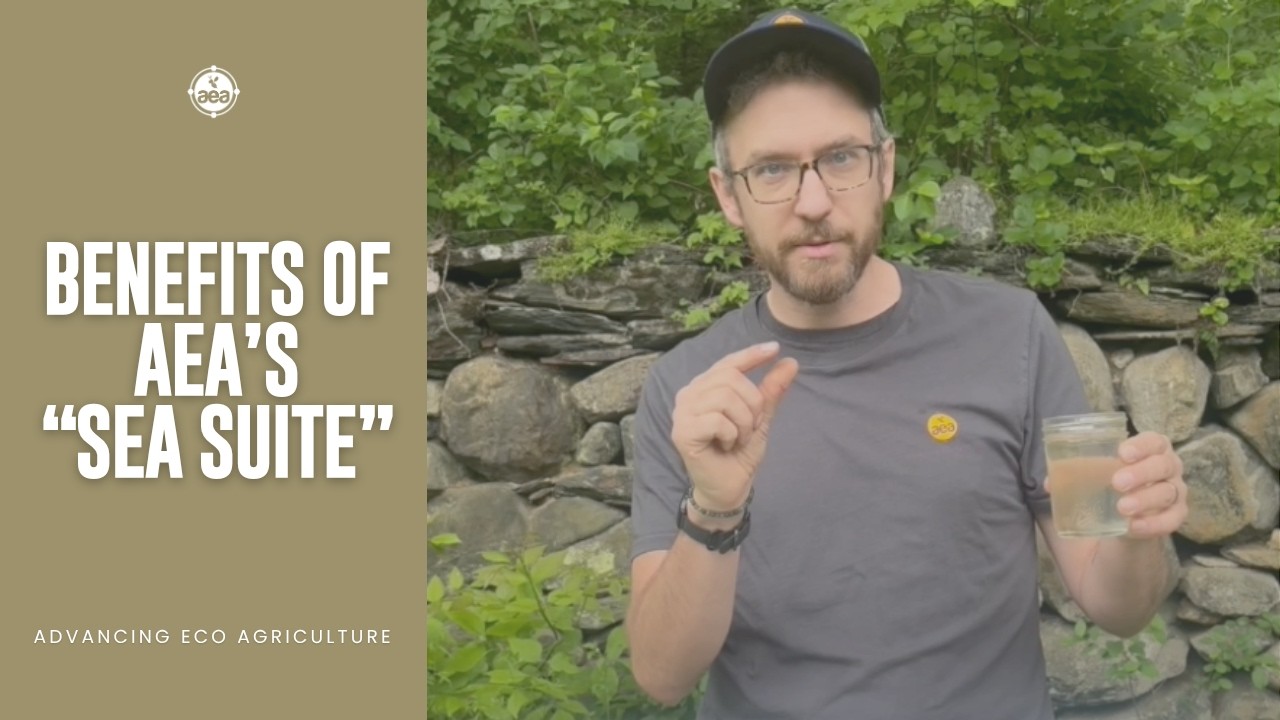
In this solo presentation, John Kempf introduces AEA’s “Sea Suite,” a trio of ocean‑derived agricultural inputs—SeaShield, SeaStim, and SeaCrop. He explains how each product is uniquely processed (cold‑processed fish hydrolysate, mechanically processed seaweed concentrate, and desalinated seawater concentrate) and why those methods preserve complex bioactive compounds that heat or chemical extraction would destroy. Kempf describes the agronomic functions of each: SeaShield supplies lipids, chitin, and amino nitrogen to support soil fungi and can be applied as a soil primer or foliar spray; SeaStim delivers complex carbohydrates and hormonal triggers as a plant biostimulant, suitable for foliar, fertigation, or soil use; SeaCrop provides trace minerals (including 3 % magnesium) and aids plant stress tolerance (frost, drought, hail) while also enhancing droplet deliquescence for better foliar uptake. He emphasizes the broad utility of these products for farms of any scale, notes recommended low application rates, and directs viewers to AEA’s website for detailed usage guidelines.
Chapters
Um, it smells really bad. It smells vaguely like the ocean. This one smells kind of weird, but not as bad as the fish. The ocean can provide tremendous resources to a farm. Here at AEA, we have a lineup of products that we call our Sea Suite because they all have sea in the name. They represent the breadth of what the ocean has to offer, from animal to vegetable to mineral. And they're really useful for any farm at any scale. These are some of our absolutely most broadly useful products, and I want to explain today what they are and importantly how they're made, because that's really what separates them from other things out there that might look similar on the label but are not going to perform nearly at all as well in the field. So this is Sea Shield. This is a cold-processed fish hydrolysate. When you're buying liquid fish, do not buy a heat-treated emulsion. Stay away from that. Look for a cold-processed hydrolysate. If it's manufactured with heat treatment, that's going to break down a lot of the complex compounds that are what make fish so effective. Sea Shield does some incredible things. We use it as a key part of our soil primer program. Because soil fungi love the lipids contained within it. It also contains chitin from the seafood byproducts, and you can look up chitin for all the great things that does. It has some trace amino nitrogen in there, uh, just a lot of good stuff. One of our consultants told me that it just makes everything gooder, and that's a really great way to describe what, uh, fish hydrolysate can do. It can be soil applied or in a foliar depending on your needs. Really, really useful tool. So next up here we have Sea Stim. This is a seaweed concentrate. It's made from a diversity of Pacific kelp species, and what sets this apart is that it is mechanically processed. A lot of the liquid seaweeds you'll find out there are chemically extracted, often with potassium hydroxide. What that chemical extraction will do is again break down a lot of the complex compounds in here that are what make it so effective. So SeaStim, because it's mechanically processed, retains all those compounds and makes it so much more effective to use. It has complex carbohydrates to feed the plant. It triggers some hormonal responses. It serves as a plant biostimulant, etc., etc., etc. We have a whole webinar called The Benefits of Seaweed in Agriculture, which explains the benefits of seaweed in agriculture. You should really check it out because seaweed is an incredibly valuable tool. It's really useful even at small rates. It can go in foliar sprays. It can go in fertigation soil applications. It's one of those things that if your budget allows, uh, it could go out in every single application and you'd be better off for it. Okay, last but not least, this is called Sea Crop. This is concentrated seawater, and importantly, it has been desalinated. So a lot of the other concentrated seawater products you'll find out there, um, are up to 95% sodium chloride by weight. This has been desalinated, so a lot lower levels of sodium chloride. One of the benefits of seawater is as a source of trace minerals. So if a mineral is in the ocean, it's going to be in here. Those trace minerals serve as enzyme cofactors. So plants need those enzymes in order to perform important functions. Sometimes they're pretty niche functions, and they don't need a lot of those enzymes, so they don't need very many of those minerals at all, even parts per billion levels, but they can be vital functions. One of the ways we use this a lot is in stress reduction programs for plants. So frost prevention, drought tolerance, hail recovery, things like that. This has incredibly useful applications for plant stress. It also has 3% magnesium. It's an efficient source of magnesium if you need that. A great thing about it is it goes out at really small rates, like a pint per acre. Really cost-effective. Another one of those things that could work its way into almost every application if it's in your budget. It does lots of crazy stuff. It raises the point of deliquescence in a droplet, which means that a drop— a spray droplet will stay liquid on the leaf longer before evaporating, so it'll have more chance to absorb a foliar. Again, really cool, interesting, and useful. SeaCrop, a seawater concentrate. So hopefully this gives you an idea of the breadth of resources from the ocean that we have here at AEA. Animal, vegetable, mineral. SeaShield, SeaStim, SeaCrop. Um, check it out. You can learn more on our website about application rates, timing, and particular use cases for these. Wish you a really happy growing season.