Bud Optimization Management
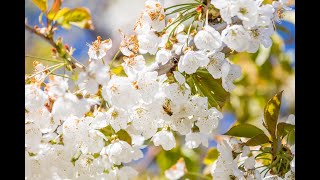
John Kempf explains how fall foliar sprays of manganese, boron, zinc, calcium, and kelp can boost bud vigor and frost resistance in fruit and nut trees. Growers who timed applications right saw 6 degrees of frost protection and measurable yield gains. Fall applications work better than spring ones.
Questions this video answers
About 6 degrees Fahrenheit of additional frost resistance (varies by crop and bud stage).
(1) 14–21 days before bud initiation and for ~4–6 weeks after bud initiation; (2) pre-dormancy: the 4–6 weeks before leaf drop (dormancy).
Reported yield increases ranged ~16–29% and revenue increases ~16–40% across several varieties/case studies.
Began testing in 2014; adopted across the operation by 2016.
Chapters
Good afternoon friends. Welcome to the webinar where we are talking about post harvest nutrient applications to increase bud quality and bud performance for next year's crop. We've observed a lot of interesting things over the last couple of years working with tree fruit and perennial crops. This entire topic is extremely relevant for any and all perennial crops. So tree fruit, nuts, berries and so forth. For almost all these perennial crops, we are setting the buds for next year's crop either during this cropping season or in some cases in the case of the berry plants, where we're setting those buds in the fall just before dormancy and in some cases even during the dormancy period with strawberries, for example. So we've learned that we have a tremendous capacity to increase the number of buds to influence bud size and quality and frost resistance, freezing resistance. There's many different ways that we can shape the bud vigor and bud strength that we have that is going to determine the next year's crop based on how we manage attrition this year. So wanted to talk about some of the things that we've learned and some of the changes that you can make on your operation threat the webinar. I'm going to go through a slide deck and talk about some of the pieces that we've learned and you're welcome to ask any questions at any point. If you look at the bottom of your screen, you'll see a Q and a question box. You can put in any questions or anything that I missed speaking about that you would like to learn more about. And I will speak to those as well. So going to share my screen and begin with some of the good stuff. All right, so we've learned there's a couple of really major pieces that we want to talk about in this webinar and just describe how you can change them and how you can influence them in your operation. The first is how to increase the number of fruit buds for some crops. If you are growing plums or cherries, for example, it's not so much about the number of fruit buds as it is about pollination, making sure that you have good pollination to set the number of fruit that are present. So set the number of the blossoms that are present. Rather then for some crops we do want to increase the number of fruit buds because that is a direct correlation to the number of fruit that we can eventually harvest. The second major piece to talk about is how to increase the quality those buds. This speaks directly to pollination. Buds are very interesting in that buds and flowers, these reproductive parts of the plant have the highest trace mineral concentrations of any part of the plant. The concentrations of copper and zinc and manganese and boron in pollen and pollen tubes, stamen, pistols, all the reproductive parts of the plant can be as much as 60 to 80 times higher than they are in leaf tissue or in the trunk or branches. So we have extremely high trace mineral concentrations, extremely high nutrient concentrations. And it's when we have imbalances of these nutrients that we have poor pollination. Pollination, when you think about pollination, pollination is simply an issue of if we have challenges with pollination, we simply have a problem with getting enough high quality pollen to actually access the ovary. And so that can be a problem of poor pollen tubes or poor pollen strength. There's a number of different pieces that can come into play, but all of those can be impacted and affected by the way that we manage attrition. I also want to talk about how to increase freezing resistance for buds in the spring. Based on experiences we've had so far on a number of different crops, it seems we can gain about 6 degrees Fahrenheit, additional frost resistance. So from whatever level the buds would typically freeze at. And this, of course, depends on the stage of the bud and the crop species that we're talking about. We can generally gain about 6 degrees Fahrenheit based on nutrient management. From that point, an additional piece is how to reduce disease susceptibility at blossoming and pollination. If you think about it, what is happening at blossoming and pollination? You have, as all these blossoms pollinate, particularly for us, a tree or perennial plant that all pollinates in a very condensed time window, in a matter of a couple of weeks, you have this. It's the equivalent of the plant or the tree becoming pregnant. You have this tremendous hormonal shift that happens very quickly. And when that hormonal shift is supported with the right nutrition, the plant remains very healthy and keeps right on going. If it is not supported with the right nutrition, then this hormone, you can essentially produce a hormonal imbalance that can lead to tremendous disease and insect susceptibility. When you think about many diseases that first impact blossoms and then spread throughout the rest of the plant, or they affect other parts of the tree, right at this stage, this often happens. This disease susceptibility at blossoming and pollination often happens because of this hormonal shift. And so I want to talk about that piece a little bit as well. So the challenge. The challenge and the opportunity that we have with these perennial crops is Simply that for tree, fruit and nut crops, these plants trigger bud initiation for the reproductive buds. The reproductive buds for next year's crop are being set while the current crop is still on the tree. And I expect if you're a professional grower, if you're growing apples or pears or cherries, you will know what that is. It's obviously different for every region of the country. Different in some cases for different varieties, but in general, in broad brushstrokes covering much of the geographic United States, many of these tree fruit will trigger bud initiation, usually during June or July. So in many cases, the fruit is still on the plant. This year's crop is still on the tree or on the bush while we are setting next year's crop. So this is actually, this interplay between current year fruit and next year's buds are the reason why some varieties in some soil types have challenges with biennial bearing. The challenge with biennial bearing is in one year a tree has a very heavy fruit load and its energy is completely committed to filling out that fruit load. It does not have adequate energy to both fill the fruit load and to develop the buds for the next year's crop. So the buds are sacrificed and only a very small number of buds are set. Then the following year, 12 months later, there's a small number of buds. And so now the tree has a surplus of energy. It has more energy than it needs to fill those buds, and now it sets, or to fill those fruit, and now it sets a tremendous number of buds for the next year's crop. So you have this self perpetuating cycle and you can, you can short circuit all of that very easily in the year when you have a heavy fruit load, when you have a year that have a really heavy fruit load and you provide the tree with a tremendous amount of energy, a surplus of energy it can have, a tree can have enough energy to fill a very heavy fruit load and to set large number of buds for next year's crop at the same time. So when you do that, when you can achieve that, now you've just solved a biennial bearing at one shot. So this is, this is the challenge that we have to work with and that we want to. And so we have this challenge of the period of bud initiation. And then we also have a tremendous opportunity to shift and change what is happening in the tree after we take the fruit off and after we harvest the fruit. And again, this is more relevant for some trees and some varieties than for others. In some cases, we may not be harvesting the crop until the Tree is actually dormant. So it's not always appropriate to speak of post harvest. There's kind of two. There's two different windows that we need to think about. We need to think about the period starting 14 to 21 days before bud initiation and for about four to six weeks thereafter during the bud initiation period. And we need to think of the period the last four weeks before, four to six weeks before dormancy, those two periods, and for some varieties and trees and some environments, those may overlap and they may be the same. But those are the two periods where we can have the greatest influence on the next year's crop. For berry crops, blueberries and raspberries, etc. Strawberries, bud initiation is triggered as the plant begins approaching dormancy and has a lot less energy. So blueberries, for example, as we go into dormancy with a blueberry plant, and for a number of other berry plants as well, the buds are already present. The number of buds have already been determined by the number of shoot wood, fruit, wood, fruiting wood, as we would call it, that has been developed for the next year's crop. The only question is how many of those buds that have been set or that have been triggered at each node are going to be vegetative or are going to be reproductive. So we can actually shift the number of buds that are vegetative versus reproductive as well, based on how we manage attrition. So inadequate or imbalanced attrition at bud initiation leads to these challenges. One, it leads to fewer number of buds. It can lead to June drop, as it's called in some species, or it can just lead to general fruit abortion. It can lead to smaller and weak buds, and specifically, I would say, a lack of uniformity. One of the things that we've observed is that as plants become healthier, the buds will become increasingly uniform. So if you think of a blueberry plant, for example, there can be substantial differences, which this is actually a great example, this image. There can be substantial differences in bud size and the stage of flower development between the buds at the furthest, most tips and those that are further away from the tip. The only way you can balance that out. Growers often ask us to work on helping to condense harvest. And very often, I would say, for most varieties of berries that produce over an extended period of time for fresh market harvest and so forth, we can condense the harvest period of many varieties by roughly 30% simply and bring it closer together simply by increasing bud uniformity and making sure that the buds are very uniform from the tip all the way back to the very last bud. So the way to achieve this, of course, if you want to have a high degree of uniformity, then to achieve that, you simply need to make sure that every bud has a surplus of energy. They have a lot of energy. And so even when the bud that is farthest away from the tip has the same amount of energy as the bud that is at the tip, now you have a high degree of uniformity across the entire set. And that uniformity will lead to blossoms opening and pollinating in a much shorter time period, which will lead to crop maturity in a condensed time period as well. For some crops, this is extremely valuable. It's certainly there are substantial labor savings and cost savings because when you're doing fresh market hand pick harvest, you can now go through the field a fewer number of times and harvest more of the crops with each pass. So there are very substantial labor efficiencies to be gained. Another challenge that we can address with nutrition management is frost protection and freezing in the spring. And I'll talk a little bit about how we can accomplish that. And I already spoke about blueberry buds remaining vegetative rather than reproductive. We can shift how those express themselves based on nutrient profiles as well. So specific nutrient imbalances which we really want to pay attention to for bud vigor and quality. The first is the potassium to calcium ratio. And this is. I've spoken elsewhere about the challenges with excess of potassium actually creating a calcium deficiency. And we want to avoid potassium applications in the spring until we are past the cell division stage and we get into the cell expansion phase of fruit development. But in the fall, post harvest or during the fruit field period, the potassium to calcium ratio becomes particularly important to manage in the four to six weeks window before dormancy. And in this case, I would not suggest that you should avoid all potassium applications. Instead I would suggest that you look at SAP analysis report and you make sure that you have enough potassium and enough calcium, because both of them are extremely important for freezing resilience the following spring. Here's why, and I'll expand on this in a little bit as well, when we talk about freezing specifically. But potassium, potassium is very similar to sodium, has a very similar biochemical characteristics inside the cell and in plant SAP. And you know what happens when you add salt or sodium to ice water. It will lower the freezing temperature of ice water from 32 degrees down to zero. So it becomes a lot more difficult to freeze. And potassium can do the same thing. The potassium can do the same thing inside the cell and in the fluid outside and around the cell in the bud. And it can help really lower freezing susceptibility and freezing temperature. But we still have to be careful. You want enough potassium, but there is still the potential for problems with surplus potassium. So do not apply potassium in this dormancy or just pre dormancy period, just because it sounds like a great idea, because you can actually greatly reduce your fruit size the next year if you apply potassium and your plants don't actually need it with calcium. I would say based on experience and observation, you are not going to hurt next year's crop in any way by applying calcium at this point in the pre dormancy period. So you can pretty much, it's safe to apply calcium at this point, almost irregardless of what is happening, what's going on. Again, you can use a SAP analysis to determine whether you actually need it and whether it will be of any benefit. But what calcium does in the buds is it will, with an adequate level of calcium, you get much stronger cell membranes. And that increased cell membrane strength is going to give you increasing freezing resistance as well. Now, I sometimes get asked the question, well, can we wait to put on these applications until springtime? And the answer is, yes, you can. And you can still get, you can still achieve benefit and have an effect on freezing resistance and pollination. All these various things I'll be talking about by putting these nutrient applications on the spring. But you will only achieve about 30 to 40% of the results that you will when you apply them in the fall. So there is a much bigger crop response with a fall application. Because when you apply these nutrients on the leaves in the fall, just before dormancy, the leaves pick up the nutrients. At this point, the trees and the plants are putting everything they can into the budwood. So any nutrients that you apply are absorbed from the leaves and they go directly into the buds, which is where they have the greatest impact for bud health throughout the winter months and into the following spring. The second nutrient which is very important to manage is zinc. And it's probably safe to assume that many of you are already applying zinc in the fall, in the predomancy period. It's a fairly common and fairly standard application, but I think so the reason zinc is important is because for many crops, for many of the spur bearing plants in particular, the number of sugars that are moved into the sugars that are moved into the fruit during the fruit fill period, a substantial percentage of those come from spur leaves. So if you're growing apples or pears or cherries, In a pruning system. If you're growing cherries in a pruning system that is dependent on spur bearing fruit, you need to have large, vigorous spur leaves. The larger the spur leaves, the more photosynthesis, the more sugar you can produce, the larger the fruit can be. And to achieve this, there is a direct correlation between zinc and leaf size. So if we can apply the zinc in the fall and get it into all the buds, spur buds, as well as other buds, it will lead to very large leaf size the following spring. And there's something else that will lead to that as well. We'll talk about urea applications in just a moment. The next nutrient which is very important is manganese. And I cannot, cannot understate the importance of manganese. This is the single most common nutrient deficiency that we see on so many of the orchards that we work with that has the biggest impact on bud quality and on yield and disease resistance. This has so many effects and so many benefits. What is happening is that many growers are applying zinc without applying manganese. And the zinc, their soils and their trees and their and their plants are often manganese deficient to begin with. Then they apply zinc but don't apply manganese. And the result is that you have an even greater functional manganese deficiency if you do nothing else. From what you've learned on this webinar, I hope that you make manganese applications. In other conversations where I talk about cell division versus cell expansion and developing large fruit in the spring. Manganese plays a critical, critical role in managing potassium and getting potassium into the embryo in the right amount at the right time. It also, literally, there is, I could speak for an hour just about the benefits that manganese can have when applied at this stage. It's extremely important for pollen strength, for pollen tube development if you want to increase pollination. If you have a variety that doesn't pollinate well, such as Regina cherries or any variety of any species, putting on a manganese application along with these other trace minerals has the capacity. I don't want to say it will, but it has the potential to take pollination from poor pollination to extraordinary pollination in a single year. It's not something that you have to do repeatedly or that you have to wait for a long period of time to get results. If you apply it in the fall pre dormancy and you get it into the buds, you can have really strong pollination immediately right the next year. And that can be a really big deal for crops that don't or for some varieties that don't pollinate well, the next nutrient which actually ties into manganese we just spoke about with pollination is boron. So boron synergizes with manganese to manage the calcium and potassium relationship, which is very important. And boron is also connected with manganese in the pollination and reproductive process. So invariably when we talk about hormonal imbalances happening for disease and insect susceptibility in the spring at blossoming and pollination, there's almost always a connection to boron and manganese showing up for those diseases and when those diseases become present. So we typically, I like to see, instead of simply applying zinc in the fall, it is very important to apply manganese. In fact, I would say it's more important to apply manganese and boron than it is to apply zinc. And you can apply all three of those in combination. So how do you manage this? The solution to developing all these characteristics that I'm talking about is to apply very targeted, very specific nutritional foliars at two stages, not just one stage, but two stages. I want to separate these out. For some crops, they might be at the same time or they might not be. So there is the bud initiation stage. For some crops, bud initiation will happen while this year's fruit is still on the tree. And for some crops it might happen during dormancy or post dormancy. The second application should happen four to six weeks pre dormancy. So this is, we sometimes call it post harvest. It is post harvest for some crops. For other crops, there, there may still be fruit on the tree that hasn't come off. In the case of nuts, for example, where we need to really look very closely at the last four to six weeks before the plant goes dormant, in which case there might still be fruit on the tree. So I want to give you a couple of examples of some of the things that we've observed and growers that we have worked with. Mike Omeg from Omeg Orchards in the Dalles, Oregon with sweet cherry production, started testing post harvest applications in 2014 and he has used them on his entire operation since 2016 for the last two years. And with the post harvest applications, we observed substantially larger cherry size. In many cases, a gain of one row size or half a row size average across the entire block and higher yields in the treated versus the control blocks. For the post harvest applications. And on one block of Regina, there was a, after the 2014, the severe 2014 freeze, there was 110% of normal yield on the treated block where the post harvest application had been applied as compared to an identical block of control with no post harvest applications that was completely wiped out. It was in fact the the entire trees were. It was not just the buds that were frozen, it was the entire tree and all the branches that were frozen. They at first they topped worked the entire trees and took them down to just the trunk in an effort to regrow them. But they eventually ended up completely replanting, taking out all the trees and replanting the entire block. So this was a pretty incredible story of freeze resistance based on an attritional application can make a huge difference. And so there are row size differences. This was on gross Miller Bings and you can see that we've increased the row size has generally moved up the the spread has moved up one or half a row size from ten row majority to nine and a half row majority. The second case study was with Jamie Simonian Simonian Fruit in California outside of Fresno working with plums, nectarines, peaches, a number of different stone fruit crops. And they did their first post harvest applications in 2016. There's a very substantial increase in fruit size and quality in 2017. And in addition now in 2018 they've also they're noticing that they're harvesting much more marketable fruit per tree. They deliberately during pruning process, during the pruning they left a lot more fruit on the tree and they're still able to size those fruit and get larger fruit while they also have more fruit on the tree as a result of how they're managing nutrients. So from 2017 compared to 2016. Remember the post harvest applications were put on the fall of 2016 and in 2017 that shifted nectarine sizes on Avedisian and red Ryan nectarines and it shifted the number of boxes of 48s and 56s they had. If you look at the the bar graph in or the spread graph, you'll see that in 2017 we had a much larger proportion of larger fruit, more 48s and more 56s as compared to in 2017. Excuse me, 2016 when we had more 64s and 72s was where we peaked. This is a really interesting table with some interesting, some really interesting information. So increases in yield. This was again as a result of the post harvest applications based on a SAP analysis we got yield increases that range anywhere from 16 to 29% and grade increases. In other words, the number of marketable fruit, fruit that did not have to be thrown out. And actually sorry, I misspeaking, grade increases are actually increases in fruit size as well. So pretty substantial increases in fruit size that resulted in a revenue increase of anywhere from 16 to 40% for these four different varieties. So the reason I'm pointing this out and wanted to talk about this a little bit is because from my perspective, the greatest loss of yield potential occurs when post harvest applications are missed. This is the one golden opportunity. Anything that you do after harvest or in this bud initiation and pre dormancy period is when you're going to have the biggest impact on next year's crop of anything else that you can do. There is nothing, there are no spring applications, there is nothing that you can do that can match the impact that these applications can have the following year. During, during the actual fruit filled period. There are absolutely things that can go wrong if you are unable to irrigate, you don't have enough water, you get hail damage, or there's a number of things that can go wrong that can cause you to have a substantial yield loss during the actual production period. But in terms of setting buds and creating the potential for an extraordinary crop, there's nothing, absolutely nothing that you can do that can have the impact of a pre dormancy and a bud initiation nutrient management protocol. So how do you do this? How do you make it happen? When I was describing the potassium and calcium interplay, I mentioned the importance of using SAP analysis. There are two nutrients in particular that I would suggest you should not apply in the fall pre dormancy unless you have a SAP analysis and know where the tree is at. And those two nutrients would be potassium and zinc. If you apply either of those in excess more than the tree requires, you will actually lose quality of your crop the following year. So be very careful not to apply those two, to over apply those two. And the only way that you're going to know for certain whether the tree needs them or not is with a SAP analysis. So the growers that we work with, we begin by conducting a SAP analysis so that we know exactly what the plant's nutritional profile is and then apply what's missing and don't apply what you already have enough of. There is no, there is no additional value and no additional benefit that can be gained from adding more potassium or more zinc when you already have more than the plant requires. So then the, so the periods, periods that we need to look at are this. The critical period from my perspective, from many of these different crops begins at bud initiation, 14 to 21 days before bud initiation and after bud initiation for four to six weeks. For almost all these perennial crops, the second really important stage is pre dormancy, four to six weeks before dormancy. And again, for some perennial plants, these two periods might overlap, and for some they might be completely different. So our goals during this period are that one, we want to increase the size of the buds. We want to get as large a bud size as we can, because of course, that is going to directly correlate to the size of future fruit as well. We want to increase the number of buds, we want to, specifically the number of reproductive buds. We want to increase frost resistance, we want to increase disease resistance, and we want to increase leaf size for all leaves, but particularly for spur leaves, since those are going to contribute to fruit size. So how do we accomplish those five things? I spoke about some of the critical nutrient interactions. Actually, there are a couple more that I would like to speak to for just a moment that pop into my mind. One of them is when we, when we look at increasing, this is not. Both of these are not so much nutrient applications as they are. You can almost think of them as being biolognes. The one is when we think about increasing freezing resistance, frost resistance, we've observed that applications of seaweed are very important and very effective for increasing disease resistance. This characteristic appears to be the result of a group of compounds whose name I know very well, but is escaping me at the moment. A group of betaine osmoregulators that shape the. I'm going to say they affect the amount and the crystallization capacity of water inside the cell. So because they influence water inside the cell as well as influencing cell membranes, they change the cells freezing susceptibility, which is a really big deal. So seaweed in predomancy applications is a really important component. The second piece, which is really important, which again is kind of an industry standard, many growers already know this and are applying it is a pre dormancy application of urea. And this, this application is very interesting. So we're looking at, again, depending on region and variety, many growers are applying somewhere between 20 and 30 pounds of urea as a foliar application two to three weeks before dormancy. And this is a strong enough application, has a strong enough effect that it actually has the effect of burning leaves and in some cases stripping leaves off the trees. But what happens is the urea is absorbed by the leaf and it's rapidly moved into the bud and it actually remains in the bud in the form of urea. So there is not a lot of metabolic activity happening inside the bud similar to what there would be in a leaf. So the urea does not get converted to nitrates or to amino acids. And as a result of that, urea, if you recall, has a very high salt index, similar to sodium and similar to potassium. So because of this very high salt index, it has the characteristic again of lowering the freezing temperature. So urea applications just before dormancy, you do not want to apply it four to six to eight weeks ahead of time, because if you do, or in smaller quantities that don't burn the leaves, because what will happen if you apply it earlier, there will still be a benefit, but there is enough time for the plant to convert it and to metabolize it and switch it from urea into amino acids and proteins. So there is still a benefit from that happening, but it's not the same as putting the urea application on just before the plant goes dormant and before it has the chance to convert it. So the critical nutrients, critical nutrients to apply at these two stages are manganese, boron, zinc and calcium. And I spoke about potassium earlier as well, but I would say 90% of the time we do not find potassium to be deficient. If it is deficient, it's very important to apply it. But most of the time we do not see potassium shortages that would require an application. So the key products, critical products to apply at these two stages. The first is Accelerate. Accelerate is a product that we developed specifically for this bud initiation and pre dormancy period. Accelerate contains manganese, it contains seaweed and the cytokinins. It contains a very unique strain of seaweed or I should say kelp actually that is not commonly used in agriculture. That contains high concentrations of these betaine osmoregulators that will help increase freezing resistance and then rebound boron, rebound zinc for the boron zinc applications, holocal for calcium and then again urea at dormancy. So that would be a typical nutritional protocol that we would apply of the critical products that are needed. And then you can, you may need to apply additional products above and beyond that based on what your SAP analysis is telling you. So it's really, you want to conduct a SAP analysis and then apply products specifically based on what those report and what you need to make the changes. Don't miss your window of opportunity. This is again just to reiterate what I was describing earlier. This is the window in which you can have the greatest impact on plants into the future and on your future crop. So please reach out to your AEA consultant, call our team on the phone, we have a really great team and connect with them directly. And let's figure out what we can do with your crop to make a difference this next year. So I'm going to switch to questions and see what questions you guys have shared. There's a couple here now, questions on seaweed applications. So kind of the industry standard is Ascophyllum, Ascophyllum nodosum in particular. And there's also other species that are used. There's a couple of bladderwracks and bull kelps that are used. And there's increasingly a number of different growers are using Eklonia maxima coming from South Africa. But the seaweed species that we use there are two different strains of Laminaria and Laminaria is the kelp that is actually used. When you purchase an iodine supplement, a human grade iodine supplement for human health, then the active ingredient in that iodine supplement is going to be Laminaria kelp. It has extremely high trace mineral concentrations, substantially higher than ascophyllum. The iodine and the selenium for example, I think are approximately 10 times higher. It also, it grows very deep and deep, much deeper than ascophyllum, deep and cold ocean water. And because of growing in very cold water, growing very slowly, it has much higher concentrations of cytokinins and these various plant hormones that we're really looking for. So we've used that kelp specifically to develop our sea stem and also accelerate. So that kelp species is in both of those products. Mike Deltona has asked another question. What about using these products during normal apple bud formation period or the bud initiation period? The answer is yes, absolutely. So all of these products that I've described, with the exception of urea, are appropriate for both stages. So both the bud initiation stage and the pre dormancy period, those two separate windows are the exact same plant hormones will be functioning. And you want to produce the same type of physiological responses inside the buds. So you would use that same product lineup at both of those stages to produce these effects. It's a great question, Mike. Thanks for asking that. Laurie has asked a question. Do you define dormancy as the moment the leaves fall or when terminal buds form? And in the context of this conversation, I'm referring to dormancy as leaf drop. So leaf drop in the fall is what I'm referring to as a dormant period. So you want to the key time to shape buds and provide nutrition for buds is going to be in the four to six week window before that happens. Because what is happening in that four to six week window is the leaves are naturally pulling out all the nutrients that they can, that are mobile and all the sugars that are mobile, they're, they're moving out of the leave and they're moving out of the leaves and moving into the bud. So that's the, that's kind of the golden window to transfer nutrients into the buds that have the greatest impact the following spring. If you have any additional follow up questions, feel free to send me. You can send me an email directly as well. If there are other topics that you would like me to address in future webinars or on the podcast, you can reach me directly. My email is john kemp.com youm can also reach me on social Media, Twitter and LinkedIn and so forth. And I will invite you as well to also listen to the podcast. I'm really having a lot of fun. I'm really enjoying being on the podcast and interviewing some really extraordinary people who have some great insights. And actually in the next, I think we'll be posting an episode with Dr. Lynn Long on sweet cherry production, which is a very relevant topic for, for all tree fruit production. I think you'll really enjoy that. Thank you all for attending. I hope that you found this information useful and enjoyable and the slide deck will be available for anyone. We'll be circulating an email to all of you so that you have access to that afterwards. Thanks for attending and I hope you have an awesome day. Thanks everyone. Bye.
More from John

Episode 186: The Power of Precision Management and Multi-Species Covers with Mike Thompson





Podcast Extra: John Kempf on Soil Biophysics, Plant Immunity & Foliars on the Permaculture...


