Capturing Residue to Build Soil Organic Matter
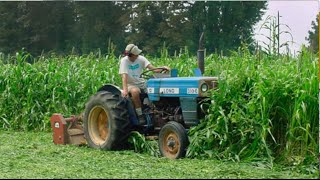
John Kempf explains why crop residue alone doesn't build stable soil organic matter. You need fungal decomposition instead of bacterial breakdown, plus residues with 38-42% lipid content. A fungal stimulant product showed visible fungal decomposition in about two and a half weeks.
Questions this video answers
Approximately 38–42% (cited from William Jackson's Organic Soil Conditioning).
About two and a half weeks.
Chapters
Hi friends. This is a rerun and a recording of a webinar that we hosted recently, which the recording did not go so well, and we've had many requests for access to an online recording. So we thought we would rerun the content, the information, and post it so that all of you could access it. The topic for the discussion that we want to talk about is how to capture crop residue to rapidly build soil organic matter. We have worked with many farmers who have been incorporating crop residue and growing cover crops, incorporating cover crops, in some cases for decades, without really building soil organic matter very rapidly, in fact, in some cases even losing soil organic matter. So the question has been raised is why are on these soils in which so much organic material and organic residues are being added, are we not building stable soil organic matter? So we have learned that there are two very critical pieces to developing and building soil organic matter quickly. The first piece is, is there is a very specific microbial process that needs to be in place in order for organic materials to develop into stable humic substances that last in the soil indefinitely. The second piece is a very critical ingredient, a very special ingredient in crop residues and in cover crops that directly correlates to the amount of stable humic substances that are produced when that organic residue is decomposed. There are two reasons why organic materials are not properly converted to organic matter. The first reason is simply a lack of biological digestion when we don't have good biological digestive systems happening in the soil profile because of too much water, lack of air, whatever the case might be. This is an image of a farm in Northeast Ohio that I worked with very closely. And this farm was systematically drain tiled. In spring of 2015, when the drain tile went through, crop residue was turned up from a field that had not been tilled for 37 years. So that crop residue remained in the soil profile for 37 years. This is what it looked like. There was this layer that had been plowed down decades ago, 6 to 8 inches deep, of what appeared to be goldenrod and ironweed and possibly other weeds as well that were still almost identifiable from what had been incorporated all those years ago. This can be a really significant problem, and I think is a much bigger problem on more soils than many farmers realize. Whenever we have tight compacted soils that don't have enough oxygen, you would be amazed what proportion of organic materials are never properly digested in the soil profile. The second reason that organic crop residues and organic materials are not properly converted to organic matter is because we have the improper biological digestive process, we have biological digestion that doesn't lead to the formation of stable humic substances. And I want to describe how this works. So when we look at this cover crop, cover crop of sorghum Sudan grass that is approaching 6ft tall, how much of this cover crop do you think will build stable soil organic matter? The answer is none. Not 1% of this total biomass that is represented by this crop will be converted to stable humic substances that will remain in the soil for an extended period of time. And I want to explain why this is happening. There are two very distinct and very different digestive processes that happen in the soil profile. The first is when we have soils which are dominated by bacterial communities, when we have bacterial domination and primarily bacterial digestion, that bacterial digestive process is referred to as mineralization, simply because when we have very rapid bacterial digestion, the bacterial community, the population of that bacterial community explodes very quickly. They begin feeding on the crop residue and they incorporate the minerals and the nutrients contained within that crop residue into their own cells. Then, as that bacterial population cycles, nutrients contained within their cells are now made available to other organisms in the soil profile, such as fungi, protoz and nematodes and others, and are eventually released into the soil profile in a form in which plants can absorb them. So this mineralization process, driven by bacteria, results in the very rapid degradation of COVID crops and the development of nutrients that plants can absorb. So we can think of this cover crop as a crop fertilizer. It is not a soil builder, it is a crop fertilizer. The nutrients contained within this crop, given the right temperature and moisture conditions, are going to be released and made available for the following crop in a period of 10 to 14 days at the outside edge, as much as three weeks. But in a relatively short time, the nutrients contained within the sorghum Sudan grass are going to be available for the following crop. Now, this is an example of a point that leads to the next piece, which is that the amount of organic residue, the amount of organic material that is incorporated into a soil structure, has no correlation to the quantity of stable humic substances that are produced. There's a really interesting reason why this happens. There is a second digestive process that is very different from the bacterial digestive process. And this occurs when we have soils which are fungally dominated. When we have soils which are fungally dominated, the fungal digestive process is very different from the mineralization process, which is driven by bacteria. When fungi ingest something, cover crop residue or plant residue from a crop that we have harvested, they do not release it back into the soil profile. Fungi simply digest residue over and over and over again until it reaches a point at which it can be digested no further. At that point which it can be digested no further, it is then released back into the soil profile and is now referred to as a stable humic substance. Humic substances are the end result of fungal decomposition. Sometimes people refer to humic substances as a food source for fungi. This is not correct because humic substances are in essence the end result of fungal decomposition, meaning they can be decomposed no further. These are the compounds that have a half life in the soil profile ranging into the hundreds of years. So if you want to build soil organic matter that is really stable and lasts decades or longer, we really have to focus on developing and building fungal digestive processes in the soil profile. Now, there's one really interesting piece I mentioned that fungi digest crop residues until they reach a point at which it can be digested no further. That cutoff point is established by the lipid concentrations, in other words, by the fat concentrations. Stable humic substances have a lipophilic acid content in the vicinity of 38 to 42%, according to William Jackson's book Organic Soil Conditioning and several of the references contained within that book. So what, what that means is we can have two fields with a cover crop or with crop residue. Let's say we have two fields with a crop residue. Both contain 10,000 pounds of biomass per acre. If one field has a 2% fat content on a dry matter basis, and the second field has an 8% fat content on a dry matter basis, the field with an 8% fat content is going to produce 4 times more stable organic matter and 4 times more stable humic substances than the field that has a 2% fat content. It has nothing to do with the total amount of biomass. It has everything to do with the total amount of fat per acre. So, and the lipids per acre, which is really what we need to be thinking about. See, it's very interesting that when we. When you look at fungal digestion of lipids, bacteria can't digest lipids. This is why we used to store meat in fats years ago, because bacteria cannot invade fats and they can't begin digesting fats, fungi can. So when we have a cover crop that is really mature, this is a cover crop that is going to be primarily digested by fungi. And as a result, we should consider this cover crop to be a soil builder. It is going to build stable humic substances. It is Not a crop fertilizer. So when you look at the differences between these two, both mature cover crops and lush immature cover crops or crop residues contain lipids to a certain degree. So why is it that mature cover crops are primarily digested by fungi and can be considered a soil builder, where lush cover crops are digested by bacteria and can be considered crop fertilizer. The difference between the two, in addition to the fat content, is also the nitrogen to carbon ratios. So when you have a lush, vegetative, rapidly growing cover crop in a very narrow nitrogen to carbon ratio, the bacteria will utilize those proteins, those amino acids, and the plant that contains a narrow nitrogen to carbon ratio and digest it very rapidly trigger the mineralization process. Whereas if you have a cover crop that has lignified, that has become mature, or where you have mature crop residue, this is going to be primarily digested by fungi because it doesn't have the narrow nitrogen to carbon ratio, it doesn't have the high protein content that is required by bacteria. One of the things that we have observed in production agriculture, many farmers will apply nitrogen to crop residue to, to help digest that residue faster. And this can certainly help get rid of the residue. But whenever nitrogen is applied to crop residue, you simply trigger that mineralization process again because you are triggering and narrowing the nitrogen to carbon ratio and triggering bacterial digestion. If you want to develop true fungal digestion, do not apply nitrogen onto crop residue. Put on other biostimulants, such as rejuvenate or other materials that can rapidly enhance the digestion of that crop residue without increasing the nitrogen to carbon ratio. So in essence, you can think of COVID crops as having two different purposes. They can either be used for a crop fertilizer or they can be used for a soil builder. One cover crop is never going to serve both purposes. It will be either for one or for the other, never for both. An example of growing a crop in which we can see the high lipid content. We can observe the high lipid content in the field when we have this expression of glossy waxy leaves and a glossy sheen on the leaf surface as an indicator of a plant that has a very high oil content. So I wanted to demonstrate some examples of fungal digestion in the field and what that can look like. So this is an example of a commercial corn farm, no till corn roundup ready corn on which rejuvenate was applied in late October of 2013. This is a single field with a treated and a couple an untreated control. This picture was taken the middle of December and did I say mid October? I meant mid November. The rejuvenate was applied two and a half weeks before this picture was taken. So it would have been late November. If you look at these two pictures, it doesn't appear at first obvious glance to be any significant differences, but there are in fact, some very significant differences. If you look at the picture on the right, which is the untreated control on the corn stalk on the stem in the center of the picture, the center part of the stem is still completely white, has not begun decomposing at all in mid December. If you look at the image on the left, you can see the center part of the corn stem here has turned completely black and is beginning to fall apart and decompose. That is the first signal of very strong fungal decomposition. And this happened two and a half weeks after a rejuvenate application. So we have another set of pitchers from the exact same field. And here we see the same thing. The untreated pitcher on the right and the stalk and the stem still has a very clear white pith and white center where the stalk on the left on the treated side of the field, the internal white pith has already completely decomposed and the internal part of the stalk is completely black. Different picture from a different field. This was also in the fall of 2013. This is actually a field that had been consecutive corn on corn, no till corn for seven years. If I'm not mistaken. Rejuvenate was applied in May, in spring on the treated side, which in this case is on the right. So on the left we have the untreated, and you can see that the corn stalk has very strong integrity. The outside part of the stem is still very strong, whereas on the treated side we have the stalks that are beginning to already completely break apart on the inside and to be digested very quickly. This is very important to note that if we would have sprayed nitrogen onto this crop residue, there would have been a different digestive process that would have happened, bacterial digestion instead of fungal digestion. You wouldn't get this black appearance. And the outside part of the stem would degrade as fast as the inside part of the stem because you supplied adequate levels of nitrogen for the bacteria to digest it very quickly and very readily. There is actually a slight color difference when you look at these two fields. The field on the right is the untreated section. The field on the left is the treated section of the earlier. The earlier pictures that we looked at. And you can see a slight color difference. These pictures were taken the same time, the same day, same lighting conditions, and have not been contrast adjusted in any way. So you can see that there are slight color differences when you look at the entire field as a whole. All of this happened very quickly just two and a half weeks after an application of a fungal stimulant One of the pieces that we want to talk about in the near future on a future webinar is how to build soil organic matter while we are growing a crop. Some of the tools and the techniques that we have learned to utilize, which incorporate and allow plants to develop really high oil costs while they are growing, allows us to build really aggressive and really strong fungal digestive systems in the rhizosphere and in the soil profile. So this image is a picture of a strawberry transplant one week after being transplanted, and you can see the really strong fungal hyphae development that developed in that soil profile within a week of being transplanted, even without irrigation on bare ground. So one of the things that we've observed is how it is possible to actually build soil organic matter while we are growing a crop. This is one of the pieces that we want to talk about very soon. So thank you for listening. We hope that you enjoyed this and you found the information helpful. Please leave your comments below and we hope to talk with you soon.
More from John

Episode 186: The Power of Precision Management and Multi-Species Covers with Mike Thompson





Podcast Extra: John Kempf on Soil Biophysics, Plant Immunity & Foliars on the Permaculture...


