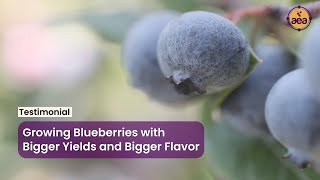
Aaron Wills runs a pick-your-own farm in Minnesota and uses AEA products to grow bigger, sweeter blueberries, strawberries, and raspberries. After three seasons, he's seen better fruit set, more consistent blooms, and less pest pressure. He applies the products as foliar sprays on blueberries and through irrigation on strawberries, with extra applications after harvest to prep next year's buds.
Questions this video answers
Aaron Wills, owner of Little Hill Berry Farm in Northfield, Minnesota.
Organic blueberries, strawberries, and raspberries.
Approximately 75% is pick-your-own and about 25% is picked by staff and sold at the farm (no regular farmer's market or wholesale).
Three seasons.
About three applications (post-harvest).
Chapters
You know, using AEA product has helped us increase yield, I mean, just from the bottom line perspective. And so it's definitely made us more profitable because we're not having to grow more acres of berries to get more berries, you know, increasing our yield of our existing planting. And it's much cheaper, frankly, to do that than to plant a whole other acre of blueberries at the end of the day. Healthier plants, more productive plants, plants that's always going to pay for itself. My name is Aaron Wills. I'm the owner of Little Hill Berry Farm in Northfield, Minnesota. We grow organic blueberries, strawberries and raspberries. So we sell pretty much 100% of our fruit at our farm. So we don't go to farmer's markets. We don't really do wholesale. Probably 75% is pick your own. And then maybe 25% or so we pick ourselves and just sell here at the farm. So we're really focused on people coming here and being a part of the farm. I didn't grow up on a farm, but both my parents did a lot of my relatives farm, and I was really around farming a lot as a kid, but I never really connected it with growing food, actually, because, you know, most people I knew were growing corn and beans and, you know, I never really ate that stuff that they grew. And so, you know, I think in my 20s I just started kind of like asking that question about, like, where does my food come from? How was it grown? And, you know, I met some people who were growing food and kind of really started to learn about all the different ways people do grow food and wanting to eat food that, like, was healthy for me and for the planet too, frankly, which, like runoff in Minnesota especially, a lot of problems with just runoff into our rivers and streams and so wanting it to not be only be good for me, but also be good for the environment. We grow a lot of perennials, so in those, you know, we don't necessarily have cover crops, although we cover crops sort of before we plant. But kind of around our farm, we planted these pollinator strips of like native wildflowers and grasses, right? Habitat for the bugs and insects and pollinators. Pollinators. In other parts of our farm where we are growing more like annuals, you know, we're usually using a rotation where we're growing cover crop one year, planting a cash crop like pumpkins or something the next year, and then like rotating a cover crop kind of every other year just to sort of like build the soil. Working with AEA has been A great experience. I feel like I've learned a lot and become a better farmer and also like have been given solutions, you know, ways to make our plants healthier in a really positive way. You know, we're just like supporting the plants, you know, to be more productive, be healthier. So it's something that we absolutely will continue to do. So like, if we have problems, we need to find a solution for them and like, think creatively. That's just not going to include just like kind of a major killing spray essentially or like a weed, you know, kill killing spray. So it's just never really been an option in our minds. So we've had to like, think of other ways to like solve problems.
This is the third season I've been working with them and they've seen increased fruit set. The timing of bloom and pollination has been more consistent. The pest pressure is just not, not there anymore. This year was his best blueberry season yet. You know, so every year he's just had increased, you know, Berry said and, and yield response with us.
Also, like the flavor is good. We haven't lost the flavor just because we have larger berries. But I would say like the biggest probable change is that like the berry size stays good size throughout the harvest period. You know, we used to have like big berries and they would get small. I think the plants have just, they're healthier now and they can support, you know, multiple rounds of good sized berries. So we do foliar applications primarily in our blueberries. You know, we're using a lot of the like sea crop C stem products and then like micronutrients. And it's for like fruit development, pollination also, you know, winter hardiness kind of too. That's something we, we're kind of on the border here in Minnesota. Gets pretty cold. And then in strawberries we do more of like fertigation. So we're putting the products through our drip system. It's just not as easy for us to do foliar there. And so it's nice to have a different option with blueberries. You know, after we harvest them there, they start to form the fruit buds that we're going to have for next year. And so those fruit buds need to form in the fall and then over winter. And so like improving the health of the buds when they're formed is like kind of the first step, having a good fruit crop the next year. And so it's kind of like the season isn't really over. When you're done harvesting, you know, you want the plants to continue to be healthy and strong going into winter.
A post harvest foliar we do about three applications so those are also customized if you've been using plant SAP analysis but those will actually determine which shoots are buds and which shoots are going to be growth next season.
For us success is you know one being like financially sustainable that we can pay ourselves and pay our employees well and then also just really happy customers. I mean people that come here really enjoy it and so to be able to provide a great experience something that they remember just like great tasting fruit. I mean our goal is always that people get the best tasting fruit they've ever had here if there's other growers who are struggling or looking for their looking to improve their plant health or productivity the AEA is really accessible. Talk over what your problems are and see if they can help you. And so it's a really easy thing to do to make a phone call.