Growing Wine Grapes with Regenerative Systems
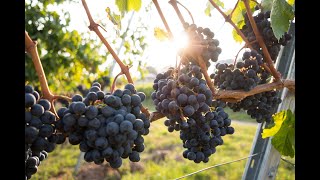
John Kempf and Greg Pennyroyall discuss regenerative viticulture at Wilson Creek Winery, where a treated 4-acre block showed 18-30% yield increases and better disease resistance. Key practices include biweekly SAP analysis, fall compost and gypsum applications, foliar seaweed, cover crops, and 33-38% less irrigation water.
Chapters
Very honored to be joined here by Greg Pennyroyall from Wilson Creek Winery. We've had lots of fun working with Greg with their wine grape production the last few years, and I wanted him to share some of his thoughts and his perspective. So why don't we begin there? Greg, I'd love to hear your perspective on the work that you've done at the winery the last couple of years, your approach, what you've learned and what you've observed.
Sure. Well, first of all, thanks very much. It's great to be doing another webinar with you, John. So the last time we did one, I think, is almost three years ago about when we started this program. When we started the program, we sort of had no idea how much of an integrated graded program it really should be. We just started doing some foliars. We obviously did the plant SAP analysis, which was just like an epiphany to get that kind of feedback on a regular basis. But where we fell short is we didn't adjust every foliar based on the plant SAP analysis. We sort of just had a kind of a standard program you follow? Made a few tweaks, but we really didn't follow the program that well the following fall. Oh, I might also add that we started small. We had one block of what, about 4 acres? Block 9 is about 4 acres. One block of 4 acres compared to an identical control block that was 2 acres. And so we did sort of the full AEA program on that 4 acres and took a look at the difference as far as actual yield. There was a marginal yield difference between that, but that has to do with the physiology of the grape. And we'll get to that in a minute. What we did notice, though, is an immediate improvement in the first of all, the quality of the grapes. Look, we're winemakers first and foremost. I identify myself as. I tell the crew all the time that we're not growing grapes, we're growing wine. We're making wine here. So the ultimate sort of determination of quality is what kind of wine does it make? And even in that first year, we were going into Block 4, which is our control block, and then we jumped over to block nine. And of course, we're always eating grapes while we're harvesting. It's hard work out there. It's thirsty. Eating some of the grapes is a good way to keep going. And when we got to the Block 9, I'll never forget, Pedro leans over to me and goes, these don't taste like grapes. These taste like wine. And he was right. It had that quality. It had shape, it had approach, it had finish. It tasted like wine. That's when I knew we were onto something. I knew our systems needed a lot of work, but I knew we were really onto something with this. So that following year, we applied the fall soil program. I'm going to go back a couple years before that, before we started doing any of this. Pedro and I started working together here about five years ago. Pedro's been here 20 years. Pedro has been here since day one. When I got here, I was studying with Elaine Ingham. I was going to be making compost tea. I love Elaine to pieces. She's just a dear, dear person. But she was like, all you need to do is compost tea. It'll take care of everything. It doesn't. It helps. So the first thing we did is add a lot of compost. I did a sheet composting about, oh, about 40 something tons of yard waste per acre, sheet composted and worked it in. But before that, we actually had a dozer here, and we had really bad compaction. So I took the four tines off the dozer and just left two and did two, you know, under the wheel ripper. I figured, well, I'll do it once with a dozer, get a good rip, and then, you know, open things up and then go from there. The ground was so hard that the back end of the dozer was lifted up and often wouldn't settle down. It was running on the front of the tracks. And this is a D8. This isn't some little garden tractor. This is a D8 with only two rippers. And it's riding up like this, and we're like. And when the sheets came up, they came up in these large blocks. It looked like almost concrete. We've gone from there to this year, actually. You and I spoke and we decided another rip under the wheel would probably be pretty good. I'm pretty much in a no till system here. Occasionally I'll do a rip. And I went to a no till drill this year. We ran it in our 110 horsepower Kubota in third gear. No problem. It just opened it up.
Oh, wow.
Yeah. I mean, what a difference. We had another funny story. We were harvesting and we had some outside guys come in and they'd go, hey, man, what's wrong with your vineyard? You go, what do you mean, what's wrong with the vineyard? Goes, the ground is all spongy. What's wrong with it? So anyway, so the program we started that's, you know, the fall soil application really helped. That following year, which would have been last year, we expanded it to most of the home vineyard and a few outside vineyards. We made some adjustments to the foliar. We actually made a lot of adjustments to the foliar based on the SAP analysis. We got much better at working the system. That was the big improvement part of what we figured out. We had this consistent problem with calcium, and we kept looking at the calcium issue until we figured out our problem wasn't not enough calcium. This is excessive magnesium in the soil. So with that in mind, we. You know, David Miller works very closely with us. By the way, you've got a really good staff. I've worked with a lot of agronomists in my career. Your staff is just first rate. Anyway, we analyzed it, and the big shift we made this year is we're really focusing on that calcium. Calcium drives so many things that until we figure that out, and as you have taught all of us, LCM doesn't absorb particularly well through the leaves, and it surely doesn't translocate. You really need to get it through the xylem out of the soil. So we shifted our focus and put a fair amount of gypsum. We just did a whole foliar program with Rejuvenate to get soil biology going. Fortunately, we're finally getting some rains now, so hopefully it'll rain in. We were quite dry until two weeks ago, but that's the shift we have this year on Block 9 and some of our smaller blocks that we had in the second year of the program, that would have been last harvest, 2019 harvest, I consistently saw anywhere between an 18 and 30% increase in yields, a phenomenal increase in quality. You could just tell when you were in one of those blocks. The leaf looked good, the color was good, that internode spacing was less. The ratio of width to height, which is the zinc, you know, issue looked good. I mean, just so many of those parameters looked good. But the part that was amazing is we had vineyards that in the past. We had a Zinfandel vineyard. It's almost 40 years old, that vineyard. The year before, we only got about a ton and a half to the acre. This year we got three and a half tons to the acre. And the quality is phenomenal. We had a Cinso block that's actually a pretty healthy block. The year before, we got three and a half tons to the acre. This year we got close to six tons. But that six tons was the best Cinso we've ever harvested. So as winemakers, we're very concerned about. Yield is not my number one priority. It's quality. But if I can bump my yield up 20, 30%, it more than pays for the program. That's what I'm looking at as an absolute minimum ROI in yield to pay for the program. But it needs to have commensurate quality. So that's kind of where we're at now. What we're looking forward for the 2020 season is we are spending much more time figuring out exactly what the management system is going to look like, being much more organized about when we gather data, how we gather it, when we make decisions. One of the major breakthroughs we made is when we looked at your critical points of influence webinar and we looked back at what we've been doing. We had sort of a major epiphany in that. Great physiology is interesting because the apical meristematic cells that form the buds for the following year happen right after fruit set of the prior year. So this year is 2020. I'm going to do.
We're going to.
We have early bud break, we're going to have flower set, then we're going to have pollination, then we're going to have fruit fill, and then it's going to go back to regenerative and it's going to set the cells for the following year. That's why you often go back to reproductive. Yes, it's just back to reproductive. That kind of visual you developed is really helpful in us thinking about where the plant is. And it makes us realize that if you want to increase your yield, your plant has to be healthy at that point because it is setting its potential cells at that point. Once it. And what's interesting about grapes, it actually sets a primary, primordial, a secondary and a tricary. We noticed in the blocks that where we had the good nutritional program, we had two really nice large clusters. Those were the one that was the genetic expression of the primary bud, you know, the primordial bud, the primary one. When it expresses, you get these beautiful clusters. No mildew. I mean, just ripe consistently through. A Cabernet is famous for not ripening consistently. These were just consistently ripe. It ripened a little later. I mean, just. It was beautiful. And some of the ones that we weren't having such great results with, you would sometimes get one cluster and a couple of smaller ones. That's a primary, maybe a secondary. And then we went to outside vineyards where they're just really having struggles. All these little tiny clusters of fruit, you know, the tritery cluster. So this is a really important concept as grape growers to have to realize is you have to get the nutritional balance right after fruit fill to get a good harvest for the following year. If there's one thing winemakers need to be is patient. It takes a long time to make wine.
There are two different points that you made that I would like to understand a little bit better. You mentioned that you observed much better quality and better flavor. Were you measuring that quality? Were you observing any differences in acids or tannin profile, or was that just flavor and mouthfeel? And the second question is, you also mentioned observing differences in powdery mildew with the cabernet. Right now, have you observed any differences with disease resistance?
Yes. So first on the quality, we don't have the laboratory facilities to do a full quality panel. However, we do measure acid to brix ratio, and on those blocks, it retained consistently higher acids to the brix ratio. The other thing is, you know, we kind of do a mini bioassay on all of our harvests and it's called wine. You add yeast or something, and consistently on Block 9, you just get this beautiful curve of fermentation. When you have grapes that have excessive nitrates and don't have complex amines, amino acids, proteins, all the way up, the complex nitrogens, you get this spike and a crash. This was called a stalled fermentation. It's really common in winemaking. Once you get the nitrogen and I am sure the secondary metabolites, the minerals, and I mean the secondary nutrients that minerals, you get this beautiful slow curve where it just ferments and it ferments really slowly and it just keeps going up until it's dry and it just runs out of food and there's usually too much alcohol in there too. It just stops. That's a natural fermentation and that's what we saw in those blocks. So the winemaker was really happy with it too. One of our goals is I want my winemaker to only do artistic chemistry. Not so if he's going to manipulate the wine or whatever, I want him to do it for artistic reasons, not because it has excessive nitrates. You have to add yeast, auto yeast to it. On the powdery mildew we saw, actually, we saw no powdery mildew on the block. Now that I think about it, it was. We. We sprayed. We were still using stylet oil. We. We actually sprayed it less and we used stylet oil. We used a couple as a precautionary spray when it was just high in the gubler index, the powdery mildew index, compared to other blocks that weren't getting the nutritional treatment. They all had small spots of mildew that we had to drop out. This is another thing. That's when we look at the actual cost. It's expensive to go out and run that many sprays from a nutritional point of view. But when you actually take out the cost of not having to spray powdery mildew and the cost of the fungicides, it starts to make the equation work a lot better. So we didn't do an actual controlled experiment where we used, you know, had a block that wasn't getting anything, but in that block that was in the third year and the other block that was in the second year, we saw virtually no powdery mildew. We also saw no botrytis. Later in the season, we had one block that was petite syrah that was very prone to botrytis. And we got a tiny bit in that block, but that's because it's on a head train system, and we are converting that to a vsp, a vertical shoot position on a wire. It's just taking layout. It's. No, it's not a good indication.
Greg, when you say you saw no powder mildew in these blocks, how did that compare with. With your other blocks? Was it a year with heavy powdery mildew pressure? Not so much. What was the context?
It was a modest pressure meter, even though in some of the outside vineyards, it actually got pretty heavy powdery mildew because it was cool. So as a comparison, our Chardonnay block had no powdery mildew, zero. And we had an outside vineyard that we lost about 30%. And we were spraying that outside vineyard twice as much as we were spraying our internal vineyard. So it makes a difference.
Pedro, what have you been observing in terms of managing the vines? Are you observing a different plant structure with different node spacing buds, so forth? What's going on with vine management now that we're managing nutrition a bit differently?
What we have I doing everything to present for me, the most important for me is pruning. You know, I need depends what kind.
Of fruit it is.
Then we make it a space that exactly the fruit needed. I protect when raising right now is when you. We don't have too much meat about that. That's why the first is the pruning. The second is clean. All the soccer remove, everything. The sucrose around the base fruit that.
We have in the.
In the cordon, in the branch, that. Why is the other second the Next step, that we clean better or remove all the soaker. And that way, I never have problem about mildew right now.
Yeah, and that's a really good point that Pedro brings up. This is part of an integrated system. It's not just nutrition. You also have to pay attention to your canopy management. Pedro is the king of canopy management. He knows how to open up fruit. But where the nutritional program pays off is we're actually. We do more spacing of our shoots, and we have more of an open canopy, but we're producing more fruit per cluster. So our actual yields are going up, but our canopy is more open. The other benefit that didn't dawn on us is if you, you know, for all the other vineyard owners out there, you know what a dog cabernet is to harvest. It's really hard to get in there. Clusters are small. It's just hard to harvest. Except for those blocks that had that primary apical meristematic expression. You know, where you get those primary cells. It was just two giant clusters, and it's just clip, clip, boom, in the bucket, move on. Instead of snip, snip, snip, pulling leaves and just. Yeah, it makes a huge difference. So we compared the cost of machine harvest to hand labor. Hand labor costs about 30% more in a block that has small clusters. With the big clusters, the hand labor actually cost us a couple percent less because it was so easy to harvest. And then we got to hand harvesting. We don't like machines. Machines beat pines. I'd rather hand harvest. Not to mention I'd rather pay, you know, our crew than pay International Harvester or Plunk or whoever. You know, we love them, but I love my guys better.
Greg, a question has come through from David Liebman. How was the vigor of the vines with the regenerative protocol compared to other blocks? Is the regenerative protocol significantly increase vigor? Did you see much of a response?
That's actually a great question. With our old program, where we're using, you know, a mixture of kind of biologics and some of the organics, what we saw was really inconsistent. We would see some vines that would shoot these long shoots and others that were kind of stunted. But we've seen with this is much more consistency, the inner node spacing is a little bit tighter, which we thought would be a challenge because now your fruit is closer to the cordone and both your clusters are a little tighter. But we just haven't seen that as a problem in the past. We would have clusters that touched, and you immediately get Mold, we don't see that so much anymore anyway. What we see is a overall increase in the number of leaves, but a decreased internode length. And the reason that's such a benefit, especially for a hot climate, the old VSP system is, you know, you put your vines up on a wire, then you put them up on a second wire. The fruit is in the fruit zone and it kind of looks like this beautiful hedge. Well, now we put them up on the first wire and let about 30% of the vines kind of hang out. And then on the top wire we let even more hang out. So we have this sort of mixed canopy. The fruit is always still in the middle, but we have a little more of an umbrella and more of an umbrella on the top top. And what that does is it protects the fruit from the intense heat and sun, but still gives us an open canopy. So to specifically answer the question is I am seeing a small increase in vigor as measured by canopy, but more leaves. The inner node spacing is tighter and the leaves are. We're actually getting bigger leaves too, which is, which is interesting. So I would say overall an increase, but consistency is.
How has this influenced and affected your irrigation water management? There's a question that has come through from Nicholas. How does, what does irrigation management look like?
Another great question. When we added organic matter to the soil and then we did the fall soil primer program, we have reduced our irrigation from historical norms. So I'm now comparing it to the D8 bulldozer days. Compared to that, we are watering about 33 to 38% less with a higher yield and less often hold the water more often. One thing that's a little bit of a variable is with grapes, when you get hot weather, it really pays. We will, during a hot spell, water every night, short drinks every night to keep the plant hydrated so the plant can recover. But we see better results with that. We had the first of our 115plus degree days happen three years ago and we've had one every year except last year because it's so bad. But anyway, on the valley wide lost about 30% of the fruit during that heat spell and we lost what, maybe 2, 3%. Not much, just an occasional cluster here and there. It's interesting what grapes do is they'll pick an individual cluster and import that entire cluster and leave the rest. Grapes are really smart. They know how to manage stress really well. So overall we're using less water, we're using it more efficiently. I'm not sure how much of that is Soil and how much of that is plant. Even though the other benefit we've had is our cover crops work every year now, too. Even in a dry season like this first year, we planted cover crops and it rained. I got barely 2 inches of growth. This year we had a similar dry year and I still got almost 14 inches now. Yeah. With very little rain.
What does your cover crop program look like? What types of COVID crops are you planting and when and how are you managing those?
So it's always a fall planting because we're taking advantage of the seasonal rains. Season here is from November to April. I use a broad mix. My anchor is oats. I usually have about 50% oats in the mix. I just really like oats. They are changing the soil ecosystem. We used to get a lot of broadleaf weeds with the oats. It's gone to almost all grass. I always throw some legumes, some vetch, cow peas, bell beans. What else do we have in there? I love medic because it holds out on the heat. So it's been a little bit of a shotgun approach. But as we do it every year, we're kind of tightening that up. And, you know, some of it's a cost. The other thing I love about oats is you get a lot of biomass and. And they're relatively inexpensive. Actually, in one of your seminars, we learned about the whole oxidative, reductive benefits of having oats in the system. And so we were kind of wondering why oats work so well. And then when we're all sitting in the seminar, we looked at each other and go, oh, that's what's going on.
Yeah. So that actually leads me to. We haven't really given an introduction. We've talked about the program and what you've been doing from a very macro perspective, but we haven't really talked about how you're managing nutrition differently. And so I'd like to take a few moments to just offer some thoughts and comments. For those of you who are not familiar with our work at Advancing Eco Agriculture, we approach plant nutrition and managing plant nutrition with the perspective and the objective that we want to produce high yield and we want to produce functional immune systems and resistance to disease. At the same time, we know that all of us have our own immune systems. We don't get the flu just because we're exposed to it. We don't get the cold just because we're exposed to it. And the same is true of plants as well. We know that plants can be exposed to powdery, mildew or to Xylella or to Canker, and they'd respond to it differently. We understand that some varieties are resistant, some are more susceptible. But the question that we should be asking is what are the foundational causes behind that? And we believe that the causes of disease and insect susceptibility are a result of nutritional imbalances. And as a result of that belief, we seek to manage and balance plant nutrition a bit differently. Yes, we want the high yields, we want premium quality, and we also want to balance nutrition for disease resistance. So I'm going to do a quick screen share. There are a lot of references which point to diseases being correlated with specific nutritional profiles or specific nutritional imbalances. And I did not do an in depth, exhaustive review of the literature, but I wanted to quickly pull up some references to just give you an example of some of the information that is out there that we can find.
Pedro just identified the grapes as cab franchise. Good call.
Probably from you.
I would guess he's. He's the master.
No, that.
I don't think that might be my vineyard. No, it's not my vineyard. There'd be more leaves on it if it was. We don't leave in that hard. Those clusters also have a little bit of inconsistency in ripening in size.
So the foundational premise is that we believe that diseases. I'm going to use powdery mildew as an example. Powdery mildew is not present because of a lack of applied stylet oil or a lack of fungicide applications or a lack of elemental sulfur, but that they're actually present because of imbalanced nutrition. And so some of the references that I pull up for this. I'll just give you a very quick rundown on powdery mildew specifically. Here's one on foliar applications of phosphate, describing how different phosphorus applications and different forms of phosphorus, specifically potassium phosphate, mono and dipatazium phosphate, can influence cowrie mildew and can produce a significant crop response and resistance. And this is a specific article on lime sulfur. And of course, we understand the challenges that lime sulfur has. But the question that we should ask ourselves is what if we didn't consider lime and sulfur calcium polysulfide as acting topically, which we know it does, but what would the effect be? The plant had adequate calcium and sulfur within the cell, within the cell membranes. What if we approached it from a nutritional perspective instead of from a fungicidal perspective? We've observed in many crops that when we think about copper applications for bacterial disease control or sulfur Applications that when we actually supply these nutrients as plant nutrients in a nutritional form rather than a fungicidal form, we can actually get the same or much bigger response than we can when we apply it topically to the leaf surface. Here are some additional papers that talked about the impact of sulfur and of copper and manganese with various grapevine diseases. So I wanted to share those. I wasn't actually able to find a screenshot of these articles, but they're in the literature that a lot of them are published in book format. So those are available. Here's one on copper biological control of several different diseases. This one was actually not from a fungicidal but from an internal nutrition perspective. Then we go back to sulfur. Again, the important here's actually this paper on sulfur amino acids of plants as an overview is really a description of the impact that sulfur has internally within the plant instead of applied externally and topically. Talking about protein synthesis, the formation of different stop enzymes or stop amino acids to form complete enzymes and complete proteins and how that contributes to resistance to powdery mildew and to canker and to other diseases. I've actually found several very interesting papers on sursilica and reporting as much as a 60 to a 70% reduction when we had adequate levels of silica within the plant. And we can actually use this in the growing season with foliar applications of silicon, which are a lot of fun. That's foliar applications of potassium silicate for powdery mildew control are an effective tool, but they are a challenging tool to manage because potassium silicate doesn't get along with anything else in the spray tank. Spray tank and the lines have to be absolutely clean and it must be applied completely by itself, otherwise you turn the entire tank into glue. So it's an interesting material. The research indicates that it's very effective, but it is a bit challenging to work with. So there's this research on silicon. I actually have another paper that reports something similar. And if we change the frame, instead of thinking of silicon from a perspective of a foliar application of potassium silicate, what happens when we consider the application or the absorption from the root system? So it should actually be possible to have the plant absorb enough silicon from the soil profile to give it this resistance to powder mill. Not should, but we know it's possible because we're able to measure that when we use SAP analysis. Greg spoke a little bit about SAP analysis and in the context of silicon, there's one comment worth making is we find a direct correlation between the level of microbial activity and silica absorption from the soil. So when you have really active biology, so when your soils change from D8 bulldozer soil to something that you could rip and have this really active soil biology, that is going to translate to increased silicon absorption in the soil, which is going to give you more resistance to powdery mildew. 20 minute review of the literature on powdery mildew correlated with specific nutritional profiles reveals that what is in the literature reveals a correlation between imbalances of phosphorus, sulfur, copper and manganese. That's what I've been able to identify so far. And that was simply with very preliminary research. I think with some deeper digging, we could probably find more correlations. So I wanted to switch gears away from Havre mildew. I know that's kind of a major one, but also speak a bit about red blotch. I know the virus infection is a significant problem for some growers in some areas. Also Xyloa. Greg, a few moments ago you mentioned the implications of redox and oxidized environments versus reduced environments. The profile for Xylea is really interesting. Actually. It corresponds directly to a an oxidized environment within the soil profile. I'm not certain about within the plant, but in order for Xylela to really thrive, it really thrives in the presence of nitrate and oxidized manganese. And when we have reduced manganese and ammonium nutrition instead of nitrate nutrition, Xylella infections drop off significantly. Very significantly. In the book Mineral Nutrition and Plant Disease, there's this one sentence, this one paragraph that really caught my attention. It took some time to dig up the reference, but it says molybdenum, like other heavy metals, deactivates viruses by denaturing their protein coat. And in this, molybdenum appears to be a particularly effective metal or metalloid. That really caught my attention because we have worked with different crops over the years, potatoes in particular, where we applied generous amounts of molybdenum and we tested and knew for certain that the planted seed was infected with a certain percentage of viral DNA and the harvested crop contained no virus infections. So something shut it off, something shut it down, possibly molybdenum. So actually took some time for me to find the paper, but I was able to find a copy of this paper just a few days ago. And paper reported that applications of sodium molybdate, they did this research with tobacco mosaic virus as well as other viruses, and they reported as much as a 90% inhibition of viral DNA when molybdenum was applied as a foliar spray or applied it to the plant lead surface. So I find that to be pretty remarkable. So I wanted to share these examples as an overview to say that the research exists in the literature to describe disease susceptibility or resistance correlated with specific nutritional profiles, and that when we manage nutrition differently, it's possible to greatly reduce the presence or the impact of powdery mildew or red blotch or canker or whatever the case might be. Which, going back to you, Greg, is exactly what you were describing that you observed and experienced with powdery mildew pressure.
Yeah, John, I got to tell you an interesting story on that. We were at the Sustainable Ag Conference up at San Luis Obispo this year. At the end of every presentation where they were looking at either varietal or cultivation practices to lessen the spread of powdery mildew, fungal pathogens like you type, or viral infections like xf, we would ask, did you do plant SAP analysis? Every single one of them said no, until we got to the professor from South Africa who was looking at fungal canker diseases. And he said, yes, we do plant SAP analysis because we have to find the sickest vines. They're the only ones that will get the fungus. That's what they are using plant SAP analysis for. And we're like hitting ourselves in the forehead going, are you crazy? Don't you see the correlation here? But they don't. I'm glad you brought this up. This is actually something I really wanted to mention to this group is we've taken some time to get to that point. I think we are at the very beginning of that second level of the plant health pyramid. We're probably running at maybe 35, 40% photosynthetic efficiency. I think we now know what we need to do as far as putting a system together to get us up to that next level once we can do this. The universities are incredibly interested in doing some research with this. They just have no clue how to approach it. And so it behooves us who are in the field really on the cutting edge to work with the universities, get some research behind this, and guide them towards nutritionally based research. At the University of California, Riverside, I'm fortunate to work with Philippe Rothschild, I think is his last name. He discovered that there were plans, plants in Temecula that did not get Pierce's disease, that's Tallulah friosta. And they couldn't figure out the correlation until he realized that every single one of these plants had a very specific microbiome connection. They all had a similar microbiome that had certain bacteria and certain fungi species in there. And they correlated that with the ability of those vineyards to not get XF everything around them was getting it. The second they sprayed Roundup, they lost it. We are planning on doing a couple of, you know, test studies and if there are other vineyard owners out there that would like to, you know, kind of join us in this research, I'd love to hear from them because I'd love to have a couple of test plots throughout the state, especially places like up in Napa where there's currently xylophideos. You know, Pierce's is really exploding up there.
Thanks for sharing those thoughts, Greg. We have a number of questions that have come through. First question, curious to know if the open canopy is helping with late season moisture from light rains or fog drying up to minimize mold formation on the fruit.
Absolutely. It does a number of things. We get so much sunlight now, we really don't have to worry about getting sun into the canopy anymore, so we don't leave. That's the other thing. If you do properly pruning and proper suckering that Pedro was talking about before, you don't have to leaf thin later in the season and you don't have to drop fruit.
Next question. Do you use liquid seaweed or kelp in your foliar spray program? Do you apply this before or after bloom? Any observed or known improvements?
It is part of every AEA mix we have. So the answer is yes. You know, we have a small growers group. We have a lot of small growers here. So once a month I get together with them and I'm eventually trying to work it out so they can use these products. But some of them are just using regular seaweed and kelp, mostly Acadian. I think it's the brand they sell here and you see tremendous results. It's immediate, it's obvious and it's really strong and pretty much at all phases, but especially at fruit set and fruit fell.
A question here from Andrew Johnson on going back to your cover crops. How do you manage your cover crops at the end of the life cycle? Do you leave them standing? Are you mowing them down? Windrowing them? What's happening?
I currently mow them because I'm after the mulch effect. If I had a crimper, I'd crimp it. But right now I am just using them as a mulch. I just mow them down.
How frequently are you using SAP analysis? Earlier in the conversation, you Mentioned that you want to be a bit more efficient with SAP analysis. How are you doing it now and how are you hoping to do it in the future?
Great question. We do it every two weeks. We tried last year adjusting it a little bit to physiological cycles and it just having those two week intervals just works out better. One of the epiphanies that we had last year is I was defining my old leaf as the leaf opposite the fruit. Because it usually is your fully developed, best old leaf on the bottom. The problem with that is we are seeing kind of odd. We weren't seeing those classic movements of nutrients from the old leaf to the new leaf. And what's dawned on us is we think that the leaf opposite the fruit isn't a good example for old leaf. It's a good example for opposite the fruit leaf that the old leaf is actually the one below that. So last year we did every other week on nine blocks, I think nine or ten. This year I'm cutting the numbers down because I have a sense of how consistent they are. So I can use certain blocks as my indicator blocks and I know the rest are going to be pretty similar. But what I am doing is on three out of the six blocks, I'm adding that. We're adding another variable. We're adding that leaf below the fruit leaf, the fruit leaf and then the upper leaf. And if that shows us different data, we might just modify that because it's. What's really interesting is we'll now have three data points. What's moving from the old, what's moving to the young, what's moving to the fruit. Some real insights.
How long are you continuing your SAP analysis in the season? Are you going all the way through until harvest? Are you going after harvest?
I generally like to do one after harvest and then I do one additional one. What I'm guessing is about a month before senescence, because we're doing fall foliar sprays. And I want to make sure that we are adjusting on that. To be honest, I'd probably like to do one more just before senescence to kind of see what it's going to bed with. But we haven't done that. So I think I'll do that this year.
Okay.
You gotta make sure these tap analysis, once you start doing them, they're totally addictive. You start to see these trends and you start to see this stuff and we'll have it on the screen and it's like we're flipping back and forth and going, oh man, look at this trend, look at this trend, the other thing I mentioned about the trends that we're going to start looking at is instead of using a consistent baseline, we are going to experiment with saying, okay, at the different critical points of influence, should there be higher or lower levels of this? And doing sort of a second analysis saying, during this phase, shouldn't we really be up here? And if we are, what results did we see?
You know, Greg, I find it really interesting that I'm of course a big advocate of SAP analysis and routinely in response to the blog, I get emails and messages on social media all the time with people commenting that, well, we can't justify the cost of doing SAP analysis. We can't afford to do it that often. We only want to do two or three per year. And I can tell who those people are. Those are people who've never used SAP analysis. It's really very simple. They haven't done it because when you actually see the quality and the integrity of the data and how valuable and helpful it is, you quickly realize that you can't afford not to use SAP analysis that consistently. And in the few cases where growers have indicated that, oh, SAP analysis is unproven technology or it hasn't been proven yet, those were the growers who tried to use it only a few times per year. You really need the entire, you need to use it as a system so you can observe the trends.
The trends are remarkable, which is why we're going back to that every other week. It's remarkable what you can see with it.
Greg, there's a few questions here that you're really going to like. Can you please speak to water management practices and assuming that AEA encourages more consistent moisture for vines as opposed to the historic dogmatic approach of them needing to suffer near drought conditions for great quality.
Okay, so even before aea, when I was learning from Pedro, he says, you know, this deficit irrigation stuff, it's kind of bullshit. And we have more or less followed that. He taught me that even beforehand. The actual system, I have soil sensors. I have a two foot, a three foot and occasionally a four foot soil sensor, a one foot, two foot, three foot, occasionally a two, four foot soil sensor. I do pressure bombs bi weekly. In the summer I use simis, you know, so we're doing evapotranspiration, but ultimately what we look at is just what do the vines look like, is there moisture available? What do the tendrils look like, like? And the pressure bomb is actually my best tool because it's actually telling you how much stress the Plant, specifically, is under. But to that end, we never actually stress the plants. This whole thing of deficit irrigation, I just haven't seen the results. Plants that aren't healthy will produce higher levels of phenolics and certain secondary metabolites under stress. Healthy plants produce them anyway, and they produce more the less you stress them. I think that whole deficit irrigation thing happened because everybody's functioning on that first tier of the plant health pier. Once you move up, that's no longer a really viable concept. And there's some studies. I'll send you a link to a really interesting study that was done out in Washington about not doing deficit irrigation. And fortunately, you know, it's in the Horse Haven Hills area, which naturally has really good volcanic soils. So they showed that deficit irrigation does not improve grape quality or wine quality.
I think it's really interesting, and you answered the question exactly the same way that I would have, Craig, in that it depends on where you are with plant health. And as you move up in the plant health pyramid, healthier plants actually produce more of these phenolic and aromatic compounds naturally, just as a result of their level of health. And I know that it's a different plant, and I know that it's not quite the same, but we're still talking about production of terpenoids and phenolic compounds, aromatic compounds, so forth. I challenge anyone to try to persuade a cannabis grower to do deficit irrigation on a cannabis crop.
Yes.
They do everything possible to keep an optimal environment.
Yes.
Another question that is here is, how was your summer weed pressure under your drip lines? We have been surprised to find that our weed pressure is actually reduced. Could this be from the microbials in the drip irrigation application? What have you observed?
I would agree with that. So we have gone from having a mix of woody and broadleaf weeds to having most of the grasses that are generally pretty easy to maintain. I own a Clemens radius, which is under the row culture, so we'll cultivate it down once or twice. But as long as you don't have large weeds growing up into the canopy, I kind of don't get this obsession with having to have the underside of the canopy perfectly clean. As long as it's under control, it's fine. If you have the whole idea of plants stealing water and nutrients from vines, I think is a total misnomer. First of all, they're in a different, you know, they're perennials, they're deep, deep. It's a whole different biological level. With that cultivation we're now seeing, it's easy to cultivate. Yeah. So we're seeing a big improvement. That and the other thing that I just don't worry about that much. Even in the mid row. I'll mow maybe twice a year, once when it's tall and then once just before harvest just to kind of clean things up and make sure it's safe. It's kind of the same with gophers. Really aggressive with gophers on my young plants because they do damage on the old plants. I don't see them doing any damage. And all they're doing is opening up the soil and tilling it for me. I put up some owl boxes and leave them alone.
I suspect you have lower gopher populations than a few of the growers that we work with.
That's probably might be true. That being said, I am a real advocate of owl boxes. I did a labor cost savings and each one of my owl boxes saves me about 24 to $2800 per year per box.
Wow.
Yeah, they're a great investment and they're fun to watch. Company all night. Yeah, they come our.
More from John

Episode 186: The Power of Precision Management and Multi-Species Covers with Mike Thompson





Podcast Extra: John Kempf on Soil Biophysics, Plant Immunity & Foliars on the Permaculture...


